Anistia
Guilherme Mansur Barbosa - Poesia Livre
Categoria: Mail Art
Acervo: 04950
Data: 1979
Dimensões: 10,3 x 15 cm
TEXTO SALSA PORTUGUÊS
Anistia é um cartão de Arte Postal e Mail Art de Guilherme Mansur Barbosa, produzido e circulado em 1979 e destinado a Falves Silva, em Natal, Rio Grande do Norte. O objeto utiliza um cartão postal impresso associado à produção de Guilherme Mansur Barbosa em Ouro Preto, Minas Gerais, transformado por composição tipográfica, perfurações, escrita manuscrita e circulação postal.
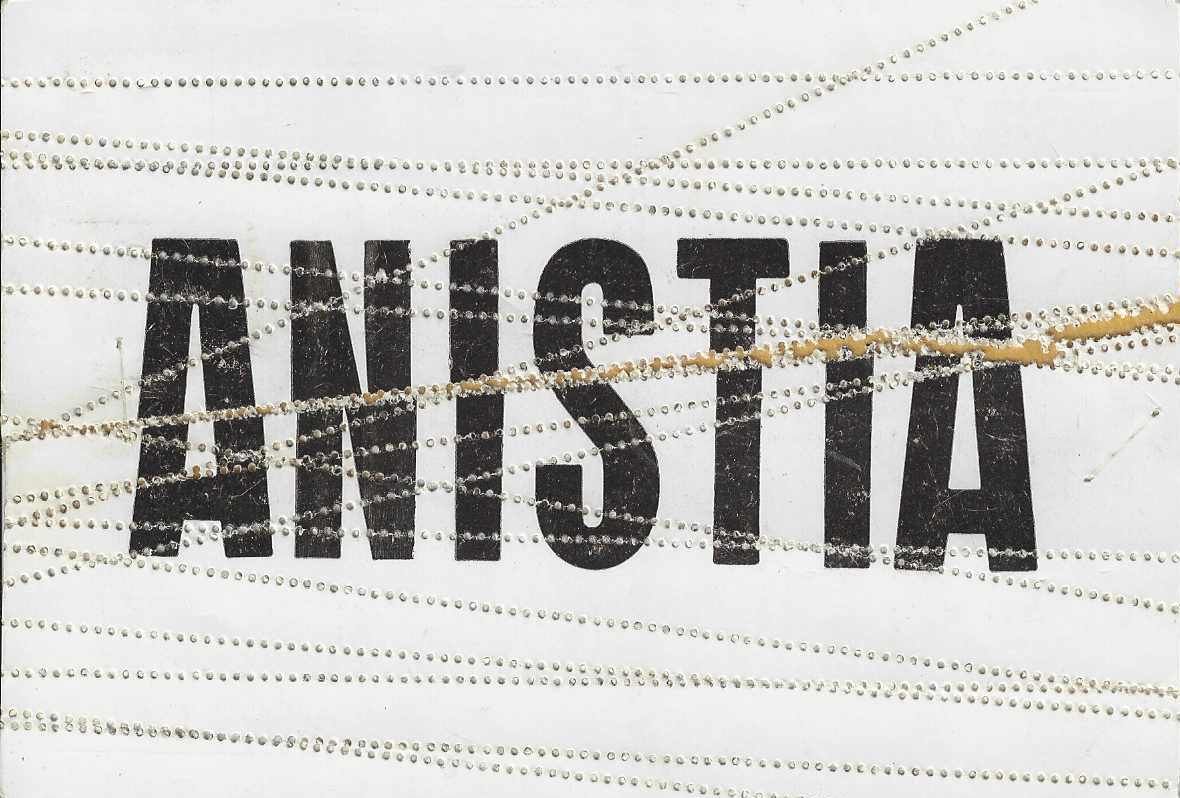
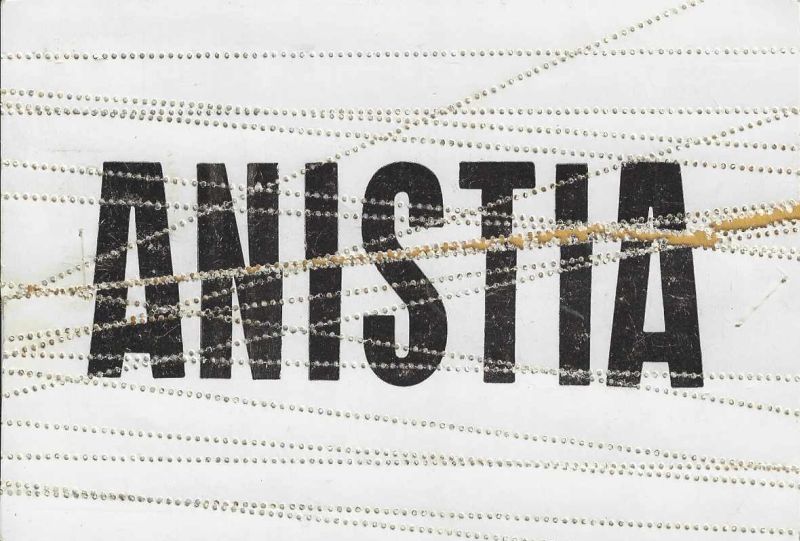
A frente do cartão apresenta a palavra ANISTIA em grandes caracteres negros, ocupando praticamente toda a superfície. Sobre a palavra e o campo branco distribuem se numerosas sequências de pequenas perfurações, organizadas em linhas horizontais, diagonais e curvas. O procedimento interfere fisicamente no suporte e atravessa a composição tipográfica, convertendo a palavra em imagem e objeto material.
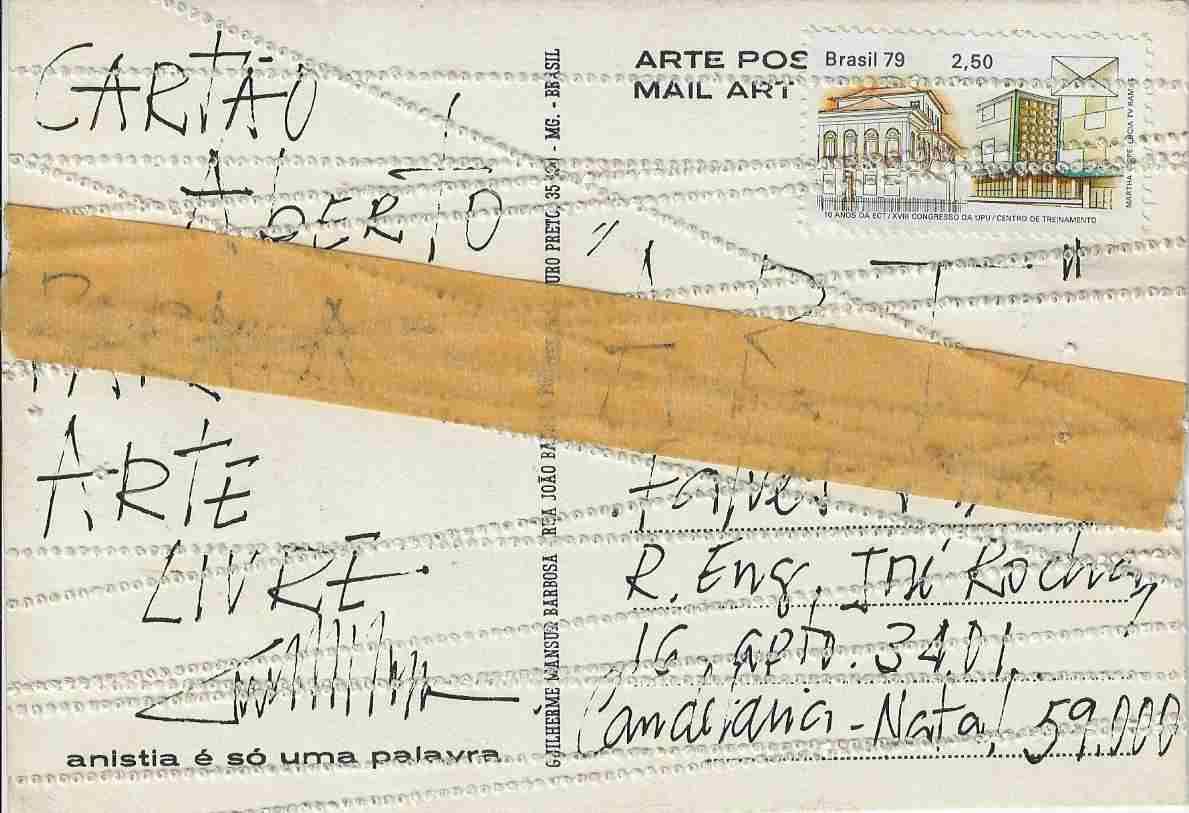
No verso aparecem impressas as expressões Arte Postal e Mail Art, além da identificação de Guilherme Mansur Barbosa vinculada a Ouro Preto, Minas Gerais. O cartão foi efetivamente utilizado como correspondência, apresentando selo brasileiro de 1979, marcas postais, endereço manuscrito e identificação do destinatário Falves Silva.
A intervenção manuscrita incorpora as expressões Cartão, Arte Livre e outras marcas gráficas que ocupam o espaço destinado à correspondência. Na parte inferior esquerda encontra se a frase anistia é só uma palavra, que estabelece relação direta com a palavra ANISTIA apresentada na frente. A articulação entre texto, perfuração, suporte postal e circulação transforma o cartão em uma proposição simultaneamente verbal, visual e material.
Produzido em 1979, período em que a anistia ocupava posição central no debate público brasileiro, o cartão registra a utilização da linguagem postal como campo de experimentação poética. A correspondência entre Guilherme Mansur Barbosa e Falves Silva também documenta uma rede de intercâmbio entre poesia experimental, poesia visual e Arte Postal no Brasil.
TEXTO SALSA INGLÊS
Amnesty is an Arte Postal and Mail Art postcard by Guilherme Mansur Barbosa, produced and circulated in 1979 and addressed to Falves Silva in Natal, Rio Grande do Norte, Brazil. The object uses a printed postcard associated with Guilherme Mansur Barbosa and Ouro Preto, Minas Gerais, transformed through typography, mechanical perforations, handwriting, and postal circulation.
The front displays the word ANISTIA in large black characters occupying almost the entire surface. Numerous sequences of small perforations cross both the word and the white background, forming horizontal, diagonal, and curved lines. This procedure physically alters the support and crosses the typographic composition, transforming the word into both image and material object.
The reverse bears the printed expressions Arte Postal and Mail Art, as well as the identification of Guilherme Mansur Barbosa associated with Ouro Preto, Minas Gerais. The postcard was actually circulated through the postal system and retains a Brazilian postage stamp dated 1979, postal marks, a handwritten address, and the identification of the recipient Falves Silva.
The handwritten intervention incorporates the expressions Cartão, Arte Livre, and other graphic marks occupying the correspondence area. In the lower left corner appears the phrase anistia é só uma palavra, establishing a direct relationship with the word ANISTIA displayed on the front. The combination of text, perforation, postal support, and circulation transforms the postcard into a verbal, visual, and material proposition.
Produced in 1979, when amnesty occupied a central place in Brazilian public debate, the postcard documents the use of postal language as a field for poetic experimentation. The correspondence between Guilherme Mansur Barbosa and Falves Silva also records a network of exchange involving experimental poetry, visual poetry, and Mail Art in Brazil.
TEXTO DE OBSERVAÇÃO PORTUGUÊS
O cartão apresenta frente e verso preservados. Na frente, a palavra ANISTIA foi impressa em grandes caracteres negros. A superfície apresenta numerosas perfurações alinhadas que atravessam tanto as letras quanto as áreas brancas, formando percursos gráficos sobre todo o cartão. Também existe uma faixa de alteração cromática amarelada atravessando horizontalmente parte da composição.
No verso são legíveis as expressões Arte Postal e Mail Art e a identificação impressa de Guilherme Mansur Barbosa associada a Ouro Preto, Minas Gerais. O cartão apresenta selo postal brasileiro com a indicação Brasil 79 e valor de 2,50, além de marcas de postagem e circulação.
O destinatário é Falves Silva, com endereço manuscrito em Natal, Rio Grande do Norte. Parte do endereço apresenta leitura limitada na imagem e não foi transcrita integralmente.
Entre as inscrições manuscritas aparecem Cartão e Arte Livre. Na margem inferior esquerda está impressa a frase anistia é só uma palavra. A presença simultânea dessa frase e da palavra ANISTIA na frente estabelece uma relação semântica direta entre as duas faces do objeto.
O cartão apresenta marcas de circulação, manchas, alterações cromáticas e desgaste compatíveis com seu uso postal e preservação documental.
TEXTO DE OBSERVAÇÃO INGLÊS
The postcard is preserved on both front and reverse. On the front, the word ANISTIA is printed in large black characters. Numerous aligned perforations cross both the letters and the white areas, forming graphic paths across the entire surface. A yellowish band of discoloration also crosses part of the composition horizontally.
The reverse bears the printed expressions Arte Postal and Mail Art and the identification of Guilherme Mansur Barbosa associated with Ouro Preto, Minas Gerais. The postcard carries a Brazilian postage stamp marked Brasil 79 with a value of 2.50, together with postal cancellations and circulation marks.
The recipient is Falves Silva, with a handwritten address in Natal, Rio Grande do Norte. Part of the address is difficult to read in the available image and has therefore not been fully transcribed.
Handwritten inscriptions include Cartão and Arte Livre. The lower left margin bears the printed phrase anistia é só uma palavra. The simultaneous presence of this phrase and the word ANISTIA on the front creates a direct semantic relationship between the two sides of the object.
The postcard shows postal circulation marks, stains, discoloration, and wear consistent with its use and archival preservation.
Inglês
Amnesty
Dimensions: 4,1 x 5,9 in