Ephemera nº 11, Especial Hungria
Revista Ephemera - Amsterdã - Ulises Carrión, Aart van Barneveld e Salvador Flores
Categoria: Revista
Acervo: 04941
Data: Setembro de 1978
Dimensões: 32 x 23 cm
TEXTO SALSA PORTUGUÊS
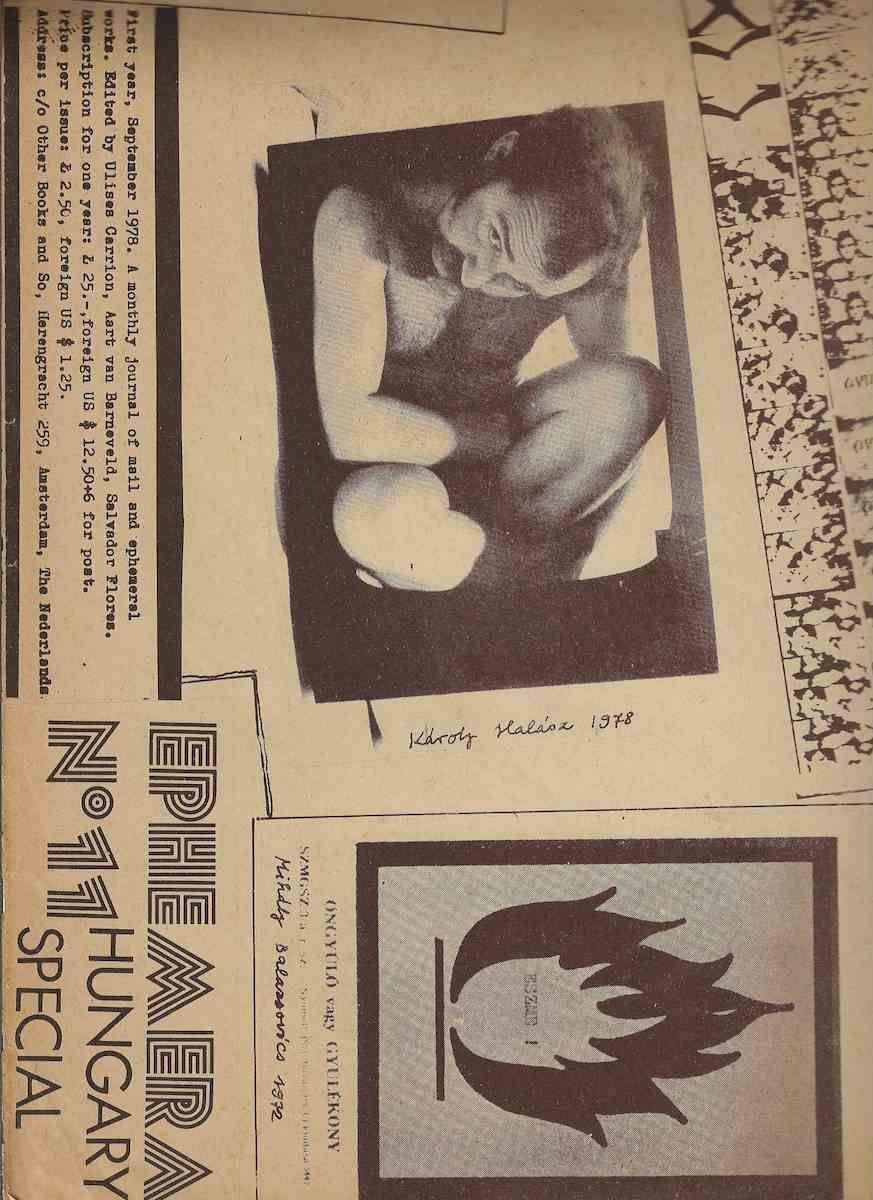
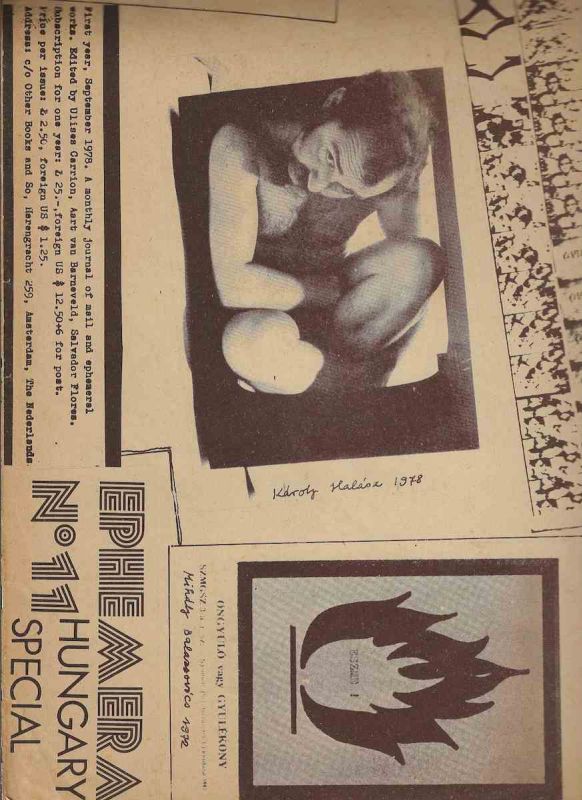
Ephemera nº 11, Hungary Special, setembro de 1978, é uma edição especial da revista experimental Ephemera dedicada à produção artística da Hungria e à sua circulação dentro das redes internacionais de Mail Art, arte postal, arte conceitual e publicações de artista. O próprio exemplar identifica a edição como EPHEMERA No. 11 HUNGARY SPECIAL e registra no expediente First year, September 1978, além dos nomes de Ulises Carrión, Aart van Barneveld e Salvador Flores como editores e o endereço da Other Books and So, Herengracht 259, Amsterdã, Países Baixos.
A edição evidencia a presença de artistas húngaros e de documentos ligados ao circuito experimental da Europa Central e Oriental durante a década de 1970. Fotografias, convites, cartazes, cartões, impressos e anotações manuscritas são reorganizados dentro da revista como componentes de uma montagem editorial que aproxima arquivo, publicação, exposição impressa e rede de correspondência.
Na primeira página documentada aparece uma grande fotografia identificada manuscritamente como Károly Halász 1978. A imagem apresenta o artista sentado em posição recolhida, transformando o corpo fotografado em elemento central da composição. A presença do nome e da data permite relacionar diretamente esse material a Károly Halász e ao contexto artístico húngaro de 1978.
Na região inferior direita da mesma página aparece reprodução gráfica associada a Miklós Erdély, identificável pela anotação manuscrita junto ao material. A composição reproduz uma imagem abstrata de forte contraste, formada por estruturas escuras semelhantes a chamas ou silhuetas verticais sobre fundo claro. A coexistência, na mesma página, de documentação fotográfica e trabalho gráfico demonstra a diversidade de meios presentes na edição.
O título EPHEMERA No. 11 HUNGARY SPECIAL ocupa a região inferior da página em grande composição tipográfica, tornando explícito o caráter temático do número. Diferentemente das edições anteriores de caráter mais geral, este número concentra sua atenção em uma cena artística nacional específica e transforma a revista em plataforma internacional de apresentação da produção experimental húngara.
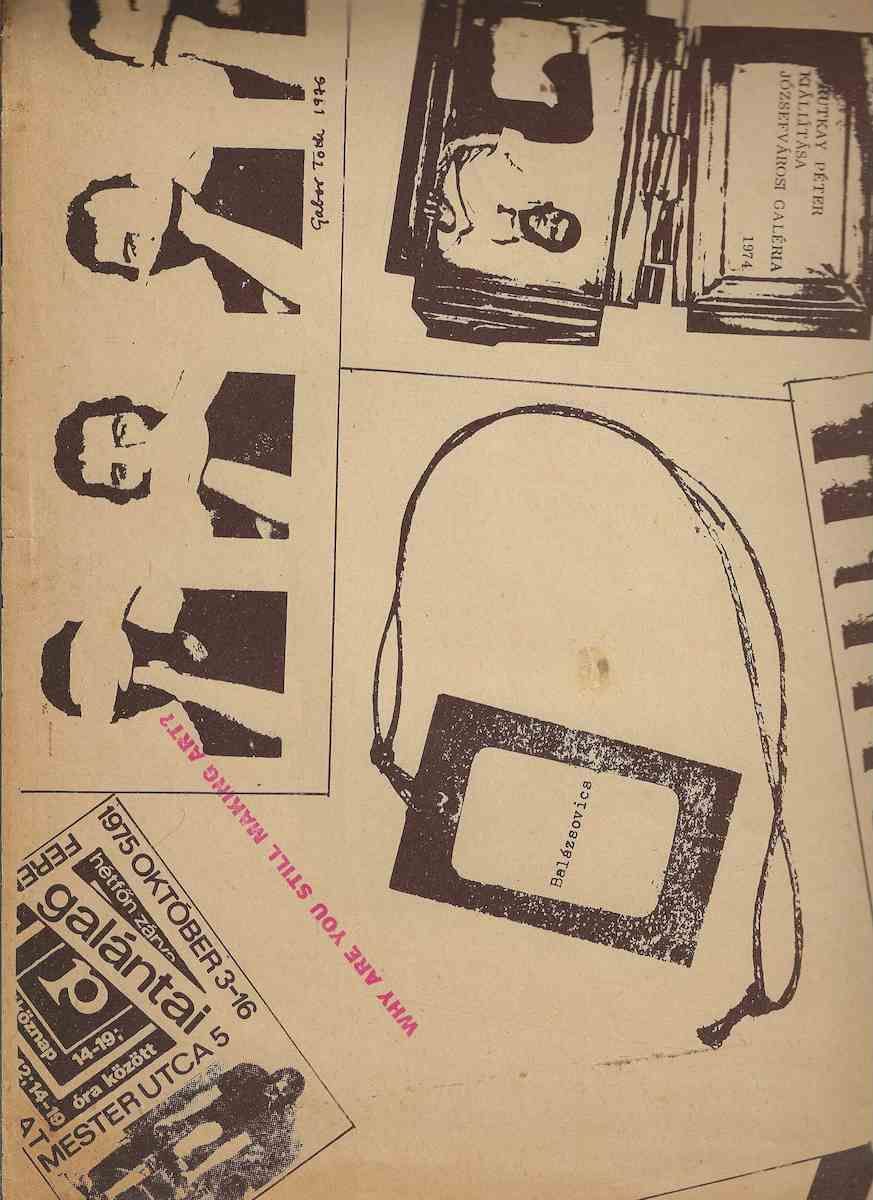
A segunda página reúne outros documentos relacionados à Hungria. Na região superior aparece material impresso com referência à Józsefvárosi Galéria e ao ano de 1974. A presença dessa documentação insere instituições, exposições e atividades culturais de Budapeste na rede documental preservada pela publicação.
No centro da página aparece um objeto gráfico composto por moldura retangular, superfície branca e cordão, contendo a identificação Balázsovics. A forma de apresentação sugere a reprodução de um objeto, etiqueta ou trabalho concebido para circulação e documentação. O elemento é incorporado à página juntamente com fotografias, cartazes e impressos, sem hierarquia rígida entre obra e documento.
Na parte esquerda observa se uma sequência fotográfica de três retratos de uma mesma pessoa, acompanhada por anotação manuscrita e pela data 1978. O procedimento sequencial aproxima fotografia, ação corporal e documentação performática, linguagens recorrentes na produção experimental europeia do período.
Na região inferior esquerda aparece reprodução de cartaz com data de outubro de 1975, enquanto na parte superior direita encontra se outro impresso relacionado à Józsefvárosi Galéria. A reunião de materiais de anos distintos demonstra que Ephemera nº 11 não documentava apenas acontecimentos imediatamente contemporâneos a setembro de 1978, mas também recuperava trabalhos e registros anteriores considerados relevantes para apresentar a produção húngara.
A edição deve ser compreendida no contexto internacional da Mail Art e das redes alternativas de circulação artística. Durante a década de 1970, artistas da Hungria e de outros países da Europa Oriental estabeleceram extensos intercâmbios postais com artistas, editores e espaços independentes da Europa Ocidental, América Latina, América do Norte e outras regiões. Ephemera funcionava como um dos pontos de encontro dessas redes.
Hungary Special demonstra como uma revista produzida em Amsterdã podia tornar visíveis artistas e documentos de um circuito húngaro por meio da reprodução, edição e redistribuição internacional de seus materiais. A publicação atuava simultaneamente como veículo documental, arquivo temporário, exposição portátil e estrutura de comunicação entre comunidades artísticas geograficamente separadas.
Ephemera nº 11 constitui, portanto, um documento relevante para a história da arte experimental húngara, da Mail Art, da arte conceitual, da fotografia de ação e das publicações de artista na década de 1970. A edição preserva relações entre artistas, obras, instituições, exposições e documentos da Hungria e sua inserção em uma rede internacional de intercâmbio articulada pela Other Books and So e por Ulises Carrión, Aart van Barneveld e Salvador Flores.
TEXTO SALSA INGLÊS
Ephemera No 11, Hungary Special, September 1978, is a special issue of the experimental periodical Ephemera devoted to artistic production from Hungary and its circulation within international networks of Mail Art, postal art, conceptual art and artists publications. The copy itself identifies the issue as EPHEMERA No. 11 HUNGARY SPECIAL and records First year, September 1978 in the editorial information, together with the names Ulises Carrión, Aart van Barneveld and Salvador Flores as editors and the Other Books and So address at Herengracht 259, Amsterdam, the Netherlands.
The issue documents the presence of Hungarian artists and materials connected with experimental artistic circuits in Central and Eastern Europe during the 1970s. Photographs, invitations, posters, cards, printed matter and handwritten annotations are reorganized within the magazine as parts of an editorial montage that brings together archive, publication, printed exhibition and correspondence network.
On the first documented page, a large photograph is identified in handwriting as Károly Halász 1978. The image presents the artist seated in a contracted bodily position, making the photographed body the central element of the composition. The name and date directly connect the material with Károly Halász and the Hungarian artistic context of 1978.
In the lower right section of the same page is a graphic reproduction associated with Miklós Erdély, identifiable through the handwritten annotation next to the material. The composition presents a high contrast abstract image formed by dark shapes resembling flames or vertical silhouettes against a light background. The coexistence of photographic documentation and graphic work demonstrates the diversity of media represented in the issue.
The title EPHEMERA No. 11 HUNGARY SPECIAL occupies the lower area of the page in large typography, explicitly defining the thematic character of the number. Unlike more general issues of the periodical, this edition concentrates on a specific national artistic context and transforms the magazine into an international platform for presenting Hungarian experimental art.
The second documented page brings together additional materials connected with Hungary. In the upper area is printed material referring to Józsefvárosi Galéria and the year 1974. The presence of this documentation introduces institutions, exhibitions and cultural activities in Budapest into the documentary network preserved by the publication.
At the center of the page is a graphic object composed of a rectangular frame, white surface and cord, carrying the identification Balázsovics. Its presentation suggests the reproduction of an object, label or work intended for circulation and documentation. It is incorporated into the page together with photographs, posters and printed matter without a rigid hierarchy between artwork and document.
On the left is a photographic sequence of three portraits of the same person, accompanied by a handwritten annotation and the date 1978. The sequential method connects photography, bodily action and performative documentation, all recurring practices within European experimental art of the period.
A reproduced poster dated October 1975 appears in the lower left area, while another printed item connected with Józsefvárosi Galéria is visible in the upper right section. The combination of materials from different years demonstrates that Ephemera No 11 did not document only events immediately contemporary with September 1978 but also incorporated earlier works and records considered important for presenting Hungarian artistic production.
The issue should be understood within the international context of Mail Art and alternative artistic circulation networks. During the 1970s, artists in Hungary and other Eastern European countries developed extensive postal exchanges with artists, publishers and independent spaces in Western Europe, Latin America, North America and other regions. Ephemera functioned as one of the meeting points for these networks.
Hungary Special demonstrates how a periodical produced in Amsterdam could make Hungarian artists and documents visible through international reproduction, editing and redistribution. The publication operated simultaneously as documentary vehicle, temporary archive, portable exhibition and communication structure connecting geographically separated artistic communities.
Ephemera No 11 therefore constitutes a significant document for the history of Hungarian experimental art, Mail Art, conceptual art, action photography and artists publications during the 1970s. The issue preserves relationships among artists, works, institutions, exhibitions and Hungarian documents and their insertion within an international exchange network articulated through Other Books and So and the editorial activities of Ulises Carrión, Aart van Barneveld and Salvador Flores.
TEXTO DE OBSERVAÇÃO PORTUGUÊS
Exemplar identificado como EPHEMERA No. 11 HUNGARY SPECIAL. O expediente impresso registra First year, September 1978 e apresenta Ulises Carrión, Aart van Barneveld e Salvador Flores como editores. Também aparece o endereço da Other Books and So, Herengracht 259, Amsterdã, Países Baixos.
A primeira imagem apresenta fotografia de grande formato identificada manuscritamente como Károly Halász 1978. O nome e a data são claramente associados à reprodução fotográfica.
Na região inferior direita aparece material gráfico acompanhado de anotação manuscrita relacionada a Miklós Erdély e ao ano de 1978. A leitura de informações adicionais junto à reprodução é parcial e não foi expandida além do que pode ser reconhecido com segurança.
O título EPHEMERA No. 11 HUNGARY SPECIAL aparece em grande composição tipográfica na região inferior, confirmando o caráter especial da edição dedicada à Hungria.
Na segunda imagem aparece, na região superior, documento impresso relacionado à Józsefvárosi Galéria e datado de 1974. A grafia e demais informações de pequeno corpo não estão suficientemente nítidas para transcrição integral segura.
No centro encontra se elemento retangular com cordão e a identificação Balázsovics. A natureza exata desse objeto não pode ser determinada exclusivamente pela reprodução fotográfica e, por isso, não foi classificado individualmente além de sua presença documental na revista.
À esquerda existe sequência de três fotografias ou fotogramas da mesma pessoa, acompanhada de anotação manuscrita e da data 1978. O nome associado à sequência não apresenta leitura suficientemente segura para normalização definitiva.
Na região inferior esquerda encontra se cartaz ou impresso datado de outubro de 1975. Outros materiais gráficos e fotografias aparecem parcialmente cortados pelas bordas da imagem.
Os documentos reproduzidos possuem datas distintas, incluindo 1974, 1975 e 1978. Essas datas pertencem aos materiais individuais apresentados na revista e não devem ser confundidas com a data editorial de Ephemera nº 11, setembro de 1978.
As páginas apresentam alterações cromáticas, marcas de dobra e sinais de manuseio compatíveis com publicação em papel. A dimensão física do exemplar não foi informada e não foi estimada visualmente.
TEXTO DE OBSERVAÇÃO INGLÊS
Copy identified as EPHEMERA No. 11 HUNGARY SPECIAL. The printed editorial information records First year, September 1978 and identifies Ulises Carrión, Aart van Barneveld and Salvador Flores as editors. The address of Other Books and So, Herengracht 259, Amsterdam, the Netherlands, is also visible.
The first image contains a large photographic reproduction identified in handwriting as Károly Halász 1978. The name and date are clearly associated with the photograph.
In the lower right area is graphic material accompanied by a handwritten annotation associated with Miklós Erdély and the year 1978. Additional small information near the reproduction is only partially legible and has not been expanded beyond what can be securely identified.
The title EPHEMERA No. 11 HUNGARY SPECIAL appears in large typography in the lower section and confirms the special character of the issue devoted to Hungary.
The second image contains printed material in the upper section connected with Józsefvárosi Galéria and dated 1974. The smaller typography and additional information are not sufficiently clear for complete secure transcription.
At the center is a rectangular element with a cord and the identification Balázsovics. The exact nature of the object cannot be securely determined from the photographic reproduction alone and has therefore not been individually classified beyond its documented presence within the periodical.
On the left is a sequence of three photographs or frames showing the same person, accompanied by a handwritten annotation and the date 1978. The associated name is not sufficiently legible for definitive normalization.
A poster or printed item dated October 1975 appears in the lower left section. Additional graphic materials and photographs are partially cropped by the edges of the supplied image.
The reproduced documents carry different dates, including 1974, 1975 and 1978. These dates belong to individual materials presented within the magazine and should not be confused with the September 1978 editorial date of Ephemera No 11.
The pages display discoloration, folds and traces of handling consistent with a paper publication. The physical dimensions of the copy were not provided and have not been visually estimated.
Inglês
Ephemera No 11, Hungary Special
Dimensions: 12,6 x 9,1 in