Ephemera, 1º ano, nº 1, novembro de 1977
Revista Ephemera - Amsterdã - Ulises Carrión, Aart van Barneveld e Salvador Flores
Categoria: Revista
Acervo: 04932
Data: Novembro de 1977
Dimensões: 31 x 23,2 cm
TEXTO SALSA PORTUGUÊS
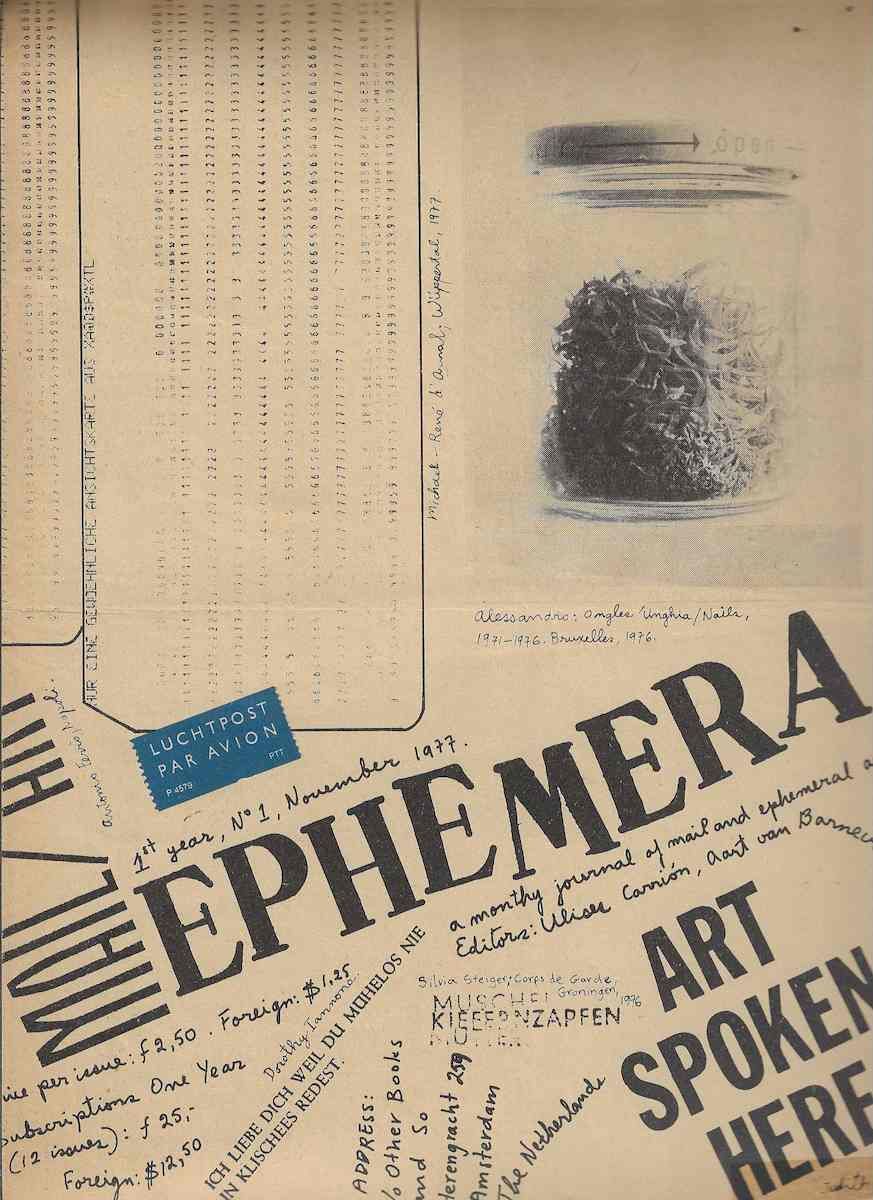
Ephemera, 1º ano, nº 1, novembro de 1977, é o primeiro número da revista experimental Ephemera, publicação periódica produzida em Amsterdã no contexto da rede internacional de Mail Art e das atividades editoriais de Ulises Carrión e da Other Books and So. A própria capa identifica Ephemera como publicação mensal dedicada à arte postal e aos trabalhos efêmeros e registra Ulises Carrión entre seus responsáveis editoriais. O número inaugural estabelece desde sua apresentação gráfica uma relação direta entre publicação de artista, correspondência, informação, documento, imagem e circulação internacional de arte.
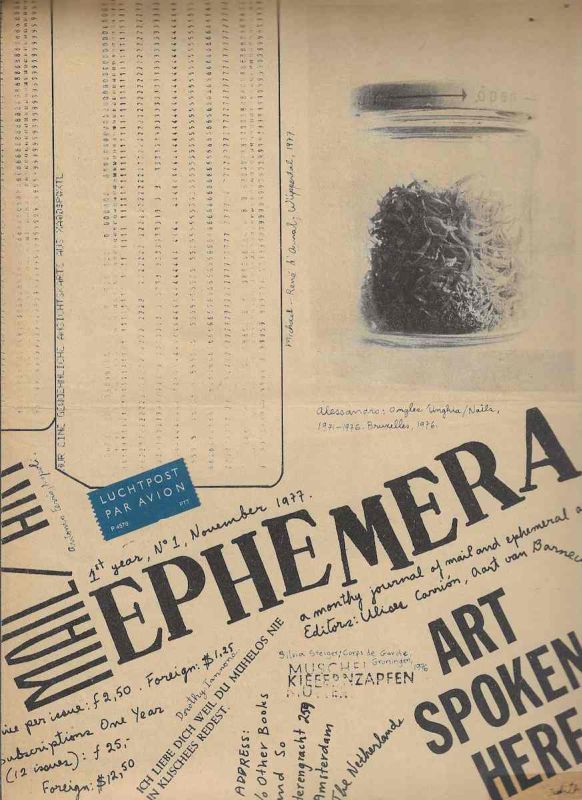
A capa é construída como uma montagem de materiais heterogêneos. Reúne fotografias, textos impressos, inscrições manuscritas, nomes, cidades, endereços, carimbos, reproduções de trabalhos, elementos tipográficos e referências a artistas e projetos que circulavam pelas redes alternativas de comunicação artística da década de 1970. A palavra Ephemera ocupa grande parte da composição, enquanto informações editoriais e contribuições visuais se distribuem pela página sem obedecer à estrutura convencional de uma revista comercial.
Entre as informações visíveis encontra se a indicação 1st year, No 1, November 1977 e a definição a monthly journal of mail and ephemeral art. A publicação registra também a ligação editorial com Other Books and So, em Amsterdã, estrutura criada por Ulises Carrión para a circulação de livros de artista, revistas experimentais, múltiplos, documentos e outras formas de produção artística independente.
O projeto gráfico do primeiro número evidencia um dos princípios centrais de Ephemera: transformar a circulação postal em matéria editorial. Correspondências, imagens, anotações, fragmentos documentais e informações recebidas de diferentes lugares são reorganizados em uma superfície comum, fazendo da revista não apenas um veículo de divulgação, mas também uma extensão física da própria rede de Mail Art.
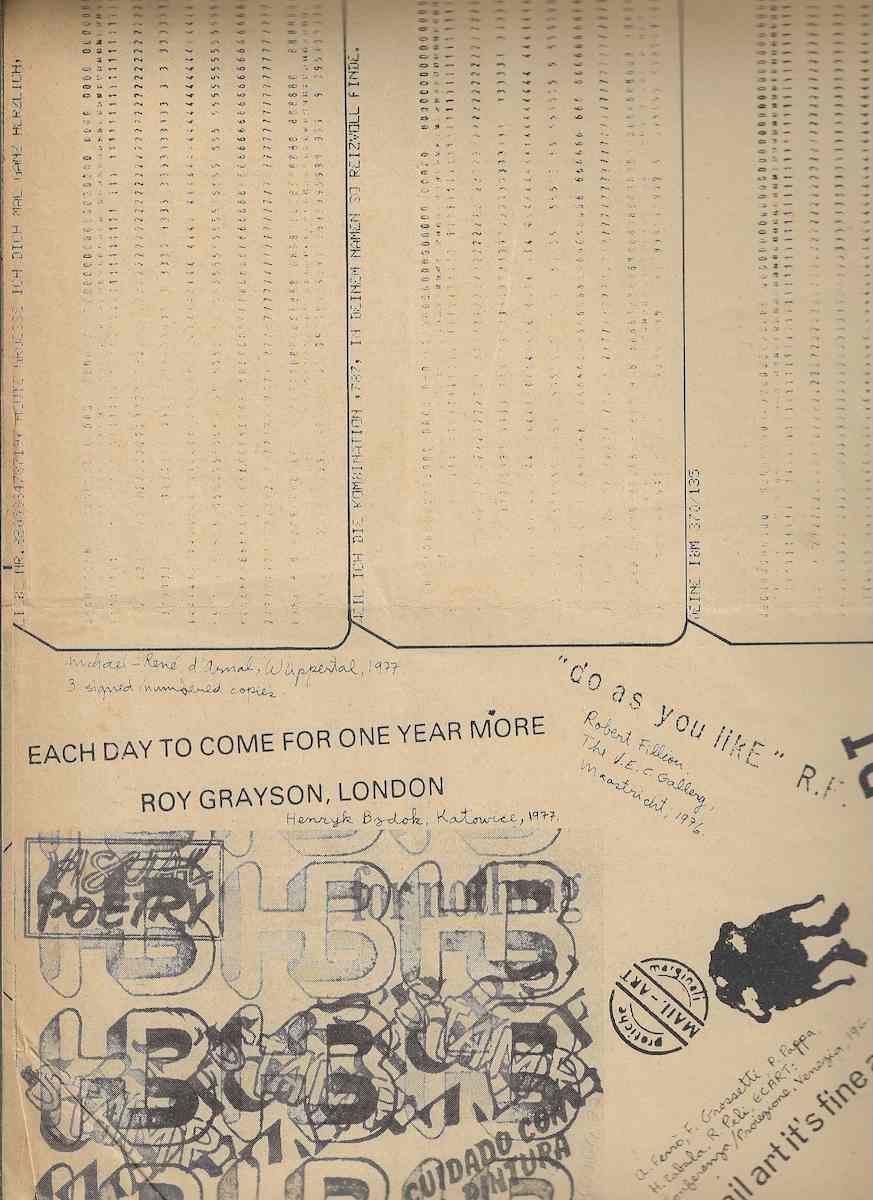
Na capa podem ser reconhecidas referências a diferentes participantes, cidades e projetos internacionais. Entre os elementos legíveis aparece Each Day to Come for One Year More, associado a Roy Grayson, London, além de diversas inscrições manuscritas relacionadas a trabalhos, artistas e localidades. Outros nomes e anotações encontram se parcialmente legíveis e devem ser tratados com cautela na catalogação individual.
Ephemera nº 1 inaugura uma sequência de doze números publicados mensalmente entre novembro de 1977 e outubro de 1978. Ao longo dessa série, a revista reuniu arte correio, trabalhos efêmeros, poesia visual, arte conceitual, publicações de artista, carimbos, projetos postais, fotografias, desenhos e documentação produzida ou enviada por participantes de diferentes países.
O primeiro número é particularmente importante para compreender a estrutura editorial do projeto. Em vez de separar rigidamente obra, documento, correspondência e informação, Ephemera incorpora esses elementos em uma mesma linguagem visual. A revista torna visível a circulação de nomes, endereços, mensagens e trabalhos que sustentava as redes internacionais de arte postal da década de 1970.
A publicação também deve ser compreendida no contexto das experiências de Ulises Carrión com livros de artista, sistemas de comunicação, arquivos e estruturas alternativas de distribuição. Other Books and So, em Amsterdã, funcionava como ponto de encontro e circulação para artistas, editores e produtores independentes, e Ephemera transformou parte dessas relações em uma publicação seriada.
A série adquiriria posteriormente forte relação documental com a produção experimental brasileira, especialmente por meio de números que incorporaram artistas e publicações do Brasil. Assim, Ephemera nº 1 constitui o ponto inicial de um projeto editorial que conectou artistas europeus, latino americanos, norte americanos e de outras regiões através da Mail Art, da arte postal e das publicações experimentais.
Como documento histórico, Ephemera, 1º ano, nº 1, novembro de 1977 registra não apenas o nascimento de uma revista, mas também um modelo de produção artística baseado em comunicação, colaboração, circulação postal e descentralização. A publicação integra a história da Mail Art, das publicações de artista, da arte conceitual e das redes alternativas que questionaram os circuitos tradicionais de exposição e distribuição artística durante a década de 1970.
TEXTO SALSA INGLÊS
Ephemera, 1st year, No 1, November 1977, is the inaugural issue of the experimental periodical Ephemera, produced in Amsterdam within the international Mail Art network and the publishing activities associated with Ulises Carrión and Other Books and So. The cover itself identifies Ephemera as a monthly journal devoted to mail and ephemeral art and records Ulises Carrión among its editorial figures. From its first issue, the publication establishes a direct relationship among artists publications, correspondence, information, documentation, images and the international circulation of art.
The cover is constructed as a montage of heterogeneous materials. It combines photographs, printed texts, handwritten inscriptions, names, cities, addresses, stamps, reproductions of artworks, typographic elements and references to artists and projects circulating through alternative artistic communication networks during the 1970s. The word Ephemera dominates a large portion of the composition, while editorial information and visual contributions are distributed across the surface without following the conventional structure of a commercial magazine.
Visible information includes 1st year, No 1, November 1977 and the description a monthly journal of mail and ephemeral art. The publication also records its connection with Other Books and So in Amsterdam, the structure developed by Ulises Carrión for the circulation of artists books, experimental magazines, multiples, documents and other independent forms of artistic production.
The graphic organization of the first issue demonstrates one of the central principles of Ephemera: the transformation of postal circulation into editorial material. Correspondence, images, annotations, documentary fragments and information arriving from different places are reorganized within a shared printed surface, making the magazine not merely a vehicle for dissemination but also a physical extension of the Mail Art network itself.
The cover contains references to different international participants, cities and projects. Among the clearly legible elements is Each Day to Come for One Year More, associated with Roy Grayson, London, alongside several handwritten references to works, artists and locations. Other names and annotations are only partially legible and therefore should be treated cautiously in individual cataloguing.
Ephemera No 1 initiated a sequence of twelve monthly issues published between November 1977 and October 1978. Across the series, the magazine incorporated mail art, ephemeral works, visual poetry, conceptual art, artists publications, rubber stamps, postal projects, photographs, drawings and documentary materials produced or submitted by participants from different countries.
The inaugural issue is particularly significant for understanding the editorial structure of the project. Rather than maintaining strict divisions among artwork, document, correspondence and information, Ephemera incorporates these categories into a shared visual language. The magazine makes visible the circulation of names, addresses, messages and works that sustained international mail art networks during the 1970s.
The publication should also be understood within Ulises Carrións broader investigations into artists books, communication systems, archives and alternative structures of distribution. Other Books and So in Amsterdam operated as a meeting and circulation point for artists, publishers and independent producers, while Ephemera transformed part of these relationships into a serial publication.
The series would later establish an important documentary connection with Brazilian experimental art through issues incorporating Brazilian artists and publications. Ephemera No 1 therefore represents the starting point of an editorial project that connected European, Latin American, North American and other artists through Mail Art, postal art and experimental publishing.
As a historical document, Ephemera, 1st year, No 1, November 1977 records not only the beginning of a magazine but also a model of artistic production based on communication, collaboration, postal circulation and decentralization. The publication belongs to the history of Mail Art, artists publications, conceptual art and alternative art networks that challenged conventional systems of exhibition and artistic distribution during the 1970s.
TEXTO DE OBSERVAÇÃO PORTUGUÊS
Exemplar correspondente ao primeiro ano, número 1, de Ephemera, datado de novembro de 1977. A identificação editorial está impressa diretamente na capa e permite estabelecer com segurança o número e a data da publicação.
A capa apresenta composição gráfica baseada em sobreposição e justaposição de materiais impressos e reproduzidos. São visíveis fotografias, textos tipográficos, anotações manuscritas, endereços, nomes, carimbos, desenhos e referências a diferentes trabalhos e participantes da rede internacional de arte postal.
Na região central inferior encontra se o título Ephemera em grandes caracteres tipográficos. Próximo ao título aparece a indicação 1st year, No 1, November 1977. Também é legível a definição editorial a monthly journal of mail and ephemeral art e o nome de Ulises Carrión entre os responsáveis pela publicação.
A capa registra referência a Other Books and So e a Amsterdã, relacionando o periódico à estrutura editorial e de distribuição organizada por Ulises Carrión. Também são visíveis informações de assinatura e circulação internacional, reforçando a condição da revista como publicação destinada a uma rede transnacional de artistas e correspondentes.
Entre os elementos individualmente legíveis encontra se Each Day to Come for One Year More, Roy Grayson, London. Outras inscrições manuscritas parecem identificar artistas, localidades, títulos e datas, mas algumas apresentam leitura parcial e não devem ser normalizadas sem documentação complementar ou análise de exemplares de maior resolução.
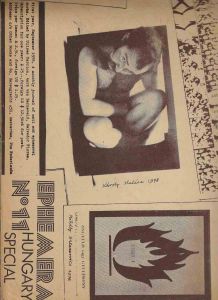
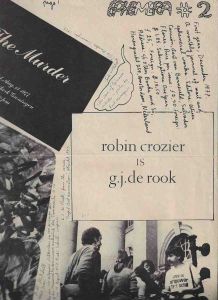
As imagens fornecidas mostram áreas distintas da mesma composição de capa e permitem observar que o projeto gráfico incorpora diretamente reproduções de trabalhos e informações recebidas através da rede postal. Essa característica aproxima materialmente a revista das práticas de Mail Art e das publicações coletivas baseadas em contribuições enviadas por correspondência.
Não foi informada dimensão física do exemplar. A técnica específica de impressão não foi determinada apenas pelas fotografias disponíveis, razão pela qual a ficha registra de forma conservadora publicação impressa sobre papel com reprodução de diferentes elementos gráficos e documentais.
TEXTO DE OBSERVAÇÃO INGLÊS
Copy corresponding to the first year, number 1, of Ephemera, dated November 1977. The editorial identification is printed directly on the cover and securely establishes the issue number and publication date.
The cover presents a graphic composition based on the overlay and juxtaposition of printed and reproduced materials. Photographs, typographic texts, handwritten annotations, addresses, names, stamps, drawings and references to different works and participants in the international postal art network are visible.
The title Ephemera appears in large typographic characters across the lower central section. Close to the title is the indication 1st year, No 1, November 1977. The editorial description a monthly journal of mail and ephemeral art is also legible, together with the name of Ulises Carrión among those responsible for the publication.
The cover includes references to Other Books and So and Amsterdam, connecting the periodical with the publishing and distribution structure organized by Ulises Carrión. Subscription and international circulation information is also visible, confirming the magazines role as a publication intended for a transnational network of artists and correspondents.
Among the individually legible elements is Each Day to Come for One Year More, Roy Grayson, London. Other handwritten inscriptions appear to identify artists, locations, titles and dates, although some are only partially legible and should not be normalized without supplementary documentation or higher resolution examination.
The supplied images show different areas of the same cover composition and demonstrate how the graphic design directly incorporates reproductions of works and information circulating through the postal network. This material characteristic connects the magazine directly with Mail Art and collaborative publications based on contributions submitted by correspondence.
The physical dimensions of this copy were not provided. The precise printing process cannot be established securely from the photographs alone. The technique is therefore conservatively recorded as a printed publication on paper incorporating reproduced graphic and documentary elements.
Inglês
Ephemera, 1st year, No 1, November 1977
Dimensions: 12,2 x 9,1 in