Ephemera nº 6, abril de 1978
Revista Ephemera - Amsterdã - Ulises Carrión, Aart van Barneveld e Salvador Flores
Categoria: Revista
Acervo: 04938
Data: Abril de 1978
Dimensões: 32 x 23 cm
TEXTO SALSA PORTUGUÊS
Ephemera nº 6, abril de 1978, integra a série da revista experimental Ephemera, publicação associada a Ulises Carrión, Aart van Barneveld, Salvador Flores e à Other Books and So, em Amsterdã, Países Baixos. O periódico circulava materiais provenientes da rede internacional de Mail Art e reunia arte postal, publicações de artista, cartões, artistamps, fotografias, textos, desenhos, projetos conceituais e outros trabalhos efêmeros enviados por artistas de diferentes países.
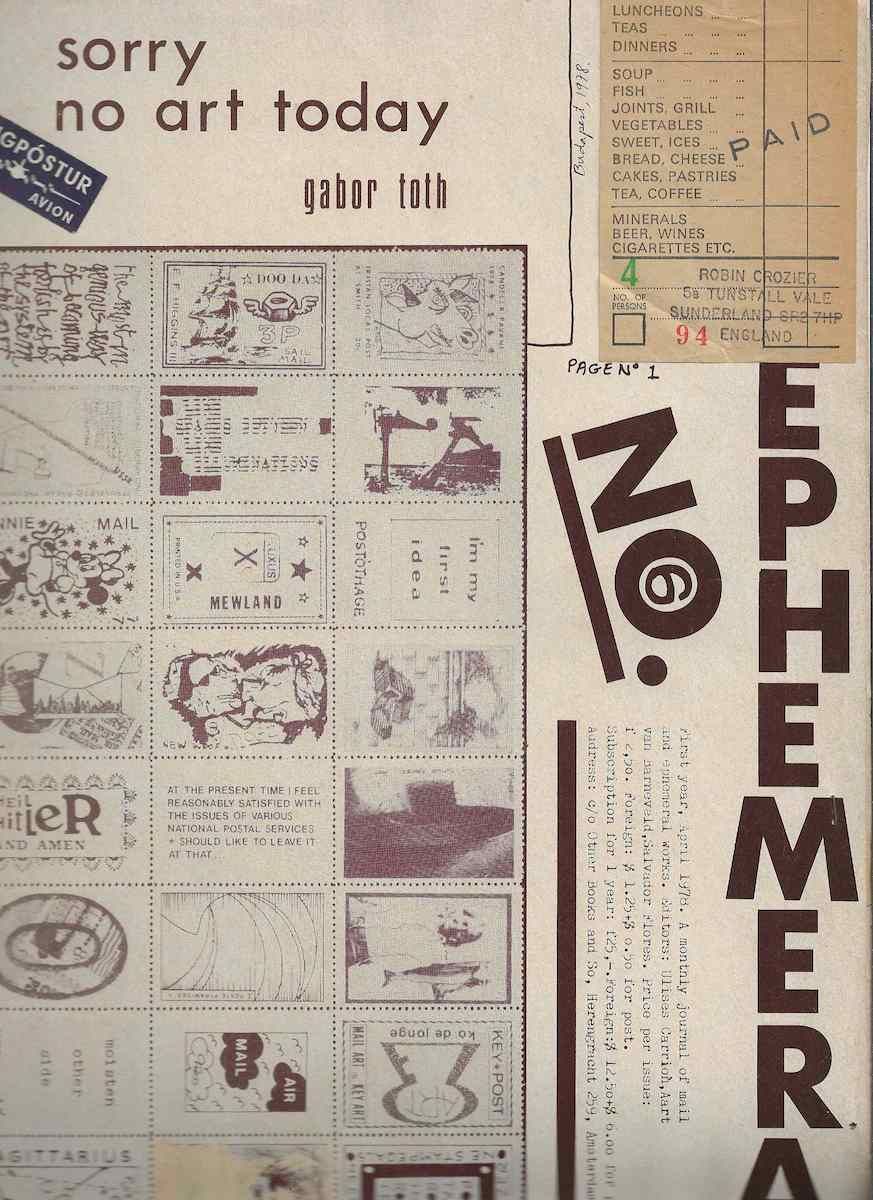
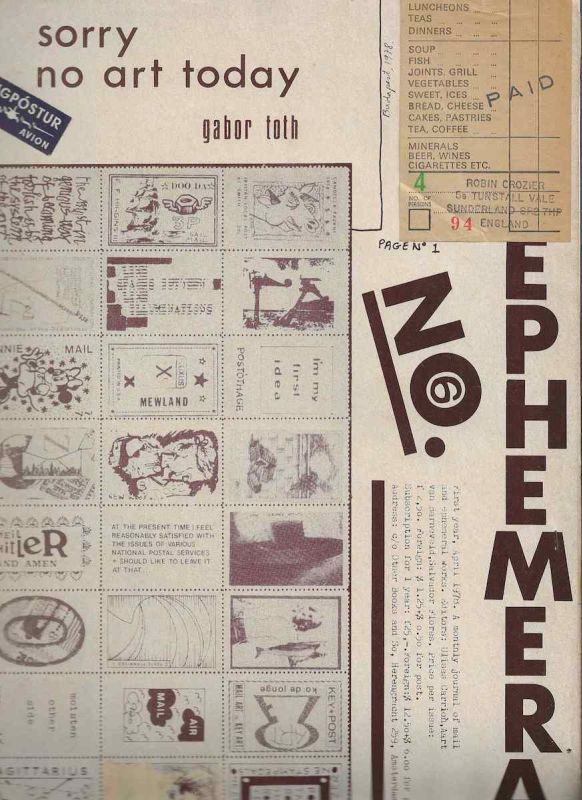
A página inicial documentada apresenta na região superior esquerda o trabalho sorry no art today, identificado com o nome de Gabor Toth. A frase ocupa grande parte do campo gráfico e estabelece uma relação direta entre linguagem, ausência, circulação e questionamento da própria categoria de arte, procedimentos recorrentes nas práticas conceituais e postais da década de 1970.
Logo abaixo aparece uma extensa folha composta como painel de selos de artista. Os módulos simulam a estrutura visual e a serrilha de selos postais, mas substituem a função oficial do selo por imagens, textos, nomes, símbolos, desenhos e mensagens produzidos dentro do circuito artístico. Esse tipo de produção, conhecido como artistamp, tornou se uma linguagem recorrente da Mail Art por apropriar e transformar códigos de comunicação postal.
Entre os fragmentos legíveis encontram se expressões como MAIL ART, MAIL AIR, ART IS CHANGE, FLUXPOST WEST, FREE ALL ARTISTS, POSTS ARTEST e referências a diferentes nomes, lugares e projetos. Alguns módulos apresentam retratos, outros empregam desenhos, grafismos, palavras, símbolos, carimbos e composições abstratas. A diversidade das imagens evidencia o caráter coletivo e internacional desse conjunto.
Na porção superior direita encontra se um impresso relacionado a Robin Crozier, com endereço em Sunderland, England. Esse material aparece integrado à montagem editorial da página juntamente com a indicação PAGE Nº 1 e com o título EPHEMERA disposto verticalmente. A presença do endereço reforça a importância da correspondência e da localização geográfica dentro da estrutura documental das redes de arte postal.
A mesma página contém informações editoriais de Ephemera e permite compreender o periódico não apenas como revista, mas como instrumento de conexão entre participantes. O número e a data funcionam como elementos de uma série periódica, enquanto nomes, endereços, imagens e projetos tornam visíveis as relações que constituíam a rede internacional de comunicação artística.
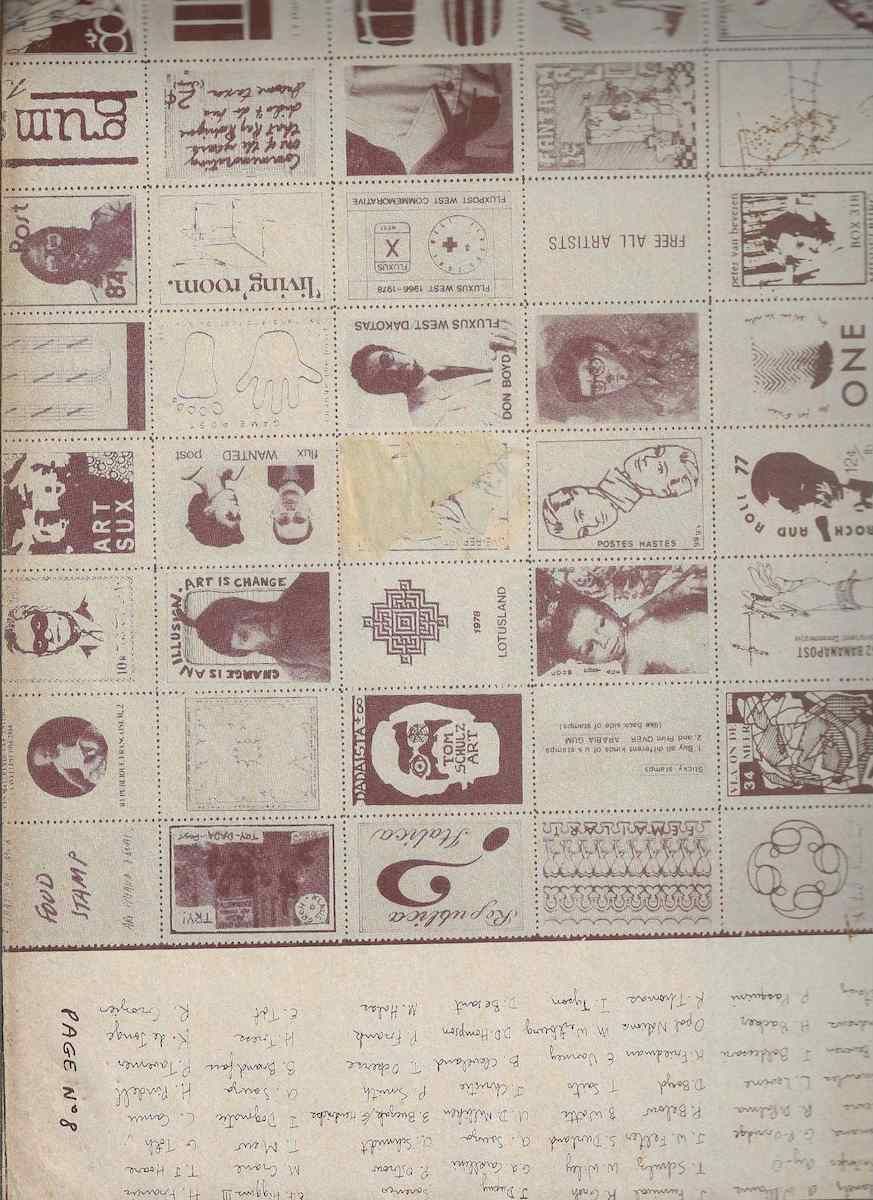
A segunda página apresentada amplia a folha de artistamps e permite observar dezenas de módulos individuais organizados em grade. Entre os elementos legíveis aparecem referências a Fluxus, Mail Art, Fluxpost, Art is Change e Free All Artists, além de retratos, desenhos de mãos, rostos, símbolos, figuras humanas, estruturas geométricas e composições gráficas.
Alguns artistamps incorporam datas como 1977 e 1978, mostrando que Ephemera nº 6 reunia e redistribuía materiais criados anteriormente ou contemporaneamente à edição de abril de 1978. A data impressa ou inscrita em um artistamp deve, portanto, ser distinguida da data editorial da revista.
Na margem inferior da segunda página encontra se uma relação manuscrita de nomes associada aos materiais reproduzidos. A presença dessa listagem sugere um esforço de identificação dos autores ou participantes correspondentes aos diferentes módulos da folha. Nem todos os nomes podem ser lidos com segurança nas imagens disponíveis, razão pela qual não devem ser atribuídos sem confirmação documental individual.
Ephemera nº 6 demonstra de forma particularmente clara a apropriação da linguagem postal pela arte experimental. Ao reunir artistamps, endereços, nomes de artistas, mensagens e imagens em uma publicação seriada, o periódico transformava sistemas originalmente destinados à comunicação e ao transporte postal em matéria estética e conceitual.
O artistamp ocupava uma posição específica dentro da Mail Art porque imitava a aparência do selo oficial sem desempenhar necessariamente sua função postal. A pequena escala, a possibilidade de multiplicação, a circulação por correspondência e a combinação de imagem e texto permitiam que artistas criassem sistemas simbólicos próprios e distribuíssem suas produções internacionalmente fora dos circuitos convencionais de museus, galerias e mercado de arte.
A presença de Gabor Toth e Robin Crozier nas páginas documentadas, juntamente com a ampla folha de artistamps, situa Ephemera nº 6 dentro de uma rede internacional descentralizada. Artistas, editores e correspondentes utilizavam o correio, publicações independentes e múltiplos gráficos para criar conexões entre cidades e países sem depender de uma instituição centralizadora.
Ephemera nº 6 constitui, assim, documento da história da Mail Art, da arte postal, do artistamp, da arte conceitual e das publicações experimentais da década de 1970. A edição registra não apenas obras individuais, mas principalmente o sistema de circulação, intercâmbio e comunicação que permitiu a formação de uma comunidade artística internacional baseada na correspondência.
TEXTO SALSA INGLÊS
Ephemera No 6, April 1978, forms part of the experimental periodical Ephemera, a publication associated with Ulises Carrión, Aart van Barneveld, Salvador Flores and Other Books and So in Amsterdam, the Netherlands. The periodical circulated material originating from the international Mail Art network and brought together postal art, artists publications, cards, artistamps, photographs, texts, drawings, conceptual projects and other ephemeral works submitted by artists from different countries.
The documented opening page contains the work sorry no art today in the upper left section, identified with the name Gabor Toth. The phrase occupies a prominent area of the composition and establishes a direct relationship among language, absence, circulation and the questioning of art itself, concerns frequently encountered within conceptual and postal practices of the 1970s.
Directly below is a large sheet composed as a panel of artist stamps. The individual modules imitate the format and perforated appearance of postal stamps while replacing the official function of postage with images, texts, names, symbols, drawings and messages created within an artistic communication network. This type of production, generally known as the artistamp, became a recurring language of Mail Art through the appropriation and transformation of postal communication codes.
Among the legible fragments are MAIL ART, MAIL AIR, ART IS CHANGE, FLUXPOST WEST, FREE ALL ARTISTS and POSTS ARTEST, together with references to different names, locations and projects. Some modules incorporate portraits, while others employ drawings, graphic marks, words, symbols, stamps and abstract compositions. Their diversity demonstrates the collective and international character of the assembled sheet.
In the upper right section is a printed item connected with Robin Crozier, carrying an address in Sunderland, England. This material is incorporated into the editorial montage together with the indication PAGE Nº 1 and the vertically arranged title EPHEMERA. The presence of an address emphasizes the importance of correspondence and geographic location within the documentary structure of postal art networks.
The same page contains editorial information concerning Ephemera and demonstrates how the periodical operated not only as a magazine but also as an instrument connecting participants. Issue numbers and dates establish the serial structure of the publication, while names, addresses, images and projects make visible the relationships that constituted the international artistic communication network.
The second documented page enlarges the artistamp sheet and reveals dozens of individual modules arranged in a grid. Among the legible elements are references to Fluxus, Mail Art, Fluxpost, Art is Change and Free All Artists, together with portraits, drawings of hands, faces, symbols, human figures, geometric structures and graphic compositions.
Several artistamps incorporate dates such as 1977 and 1978, indicating that Ephemera No 6 assembled and redistributed material created either before or around the time of the April 1978 issue. A date printed or inscribed on an individual artistamp should therefore be distinguished from the editorial publication date of the magazine.
Along the lower margin of the second page is a handwritten list of names associated with the reproduced materials. Its presence appears to function as a record identifying authors or participants connected with the different modules of the artistamp sheet. Not every name can be read securely from the available images and therefore individual attribution should not be made without further documentary confirmation.
Ephemera No 6 demonstrates particularly clearly the appropriation of postal language within experimental art. By assembling artistamps, addresses, artists names, messages and images in a serial publication, the periodical transformed systems originally designed for communication and postal transport into aesthetic and conceptual material.
The artistamp occupied a distinctive position within Mail Art because it adopted the appearance of an official postage stamp without necessarily serving a postal function. Its small scale, reproducibility, circulation through correspondence and combination of image and text allowed artists to construct their own symbolic systems and distribute their work internationally outside conventional museum, gallery and art market structures.
The presence of Gabor Toth and Robin Crozier within the documented pages, together with the extensive artistamp sheet, places Ephemera No 6 within a decentralized international network. Artists, editors and correspondents employed the postal system, independent publications and graphic multiples to create connections among cities and countries without relying on a centralized institution.
Ephemera No 6 therefore constitutes a document in the history of Mail Art, postal art, artistamps, conceptual art and experimental publishing during the 1970s. The issue preserves not only individual works but, more importantly, the system of circulation, exchange and communication that enabled an international artistic community based on correspondence to develop.
TEXTO DE OBSERVAÇÃO PORTUGUÊS
Exemplar identificado pelo usuário como Ephemera nº 6, abril de 1978. As páginas fornecidas apresentam a montagem editorial característica da revista, baseada na reunião de documentos, trabalhos gráficos, materiais postais e informações de circulação.
Na página identificada como PAGE Nº 1 aparece em destaque o texto sorry no art today, seguido do nome Gabor Toth. A peça combina tipografia e linguagem verbal e está posicionada acima de uma grande reprodução de folha de artistamps.
Na região superior direita existe um impresso com o nome Robin Crozier e endereço em Sunderland, England. O objeto reproduzido possui aparência de ficha ou cartão impresso e contém também marcação manuscrita e a palavra PAID.
O título EPHEMERA aparece verticalmente na margem direita, acompanhado por composição tipográfica referente ao número 6. Informações editoriais de pequeno corpo estão impressas ao lado, integradas ao projeto gráfico da página.
A folha de artistamps ocupa grande parte das duas imagens fornecidas. Os módulos possuem bordas que reproduzem visualmente a serrilha dos selos postais e apresentam grande variedade de soluções gráficas.
Entre os textos legíveis aparecem MAIL ART, MAIL AIR, FLUXPOST WEST, FREE ALL ARTISTS, ART IS CHANGE, POSTS ARTEST e outras inscrições parcialmente legíveis. São visíveis ainda retratos, rostos, mãos, figuras humanas, elementos geométricos, desenhos e símbolos.
Alguns módulos apresentam as datas 1977 e 1978. Essas datas pertencem aos materiais individuais reproduzidos e não substituem a data editorial de abril de 1978 atribuída ao número 6.
Na parte inferior da segunda página existe uma relação manuscrita de nomes, aparentemente utilizada para identificar participantes ou autores representados na folha de artistamps. A resolução da fotografia não permite leitura documental segura de todos os registros e, por essa razão, os nomes não legíveis não foram normalizados ou atribuídos.
As imagens apresentam dobra central e sinais de manuseio compatíveis com uma publicação em papel. A dimensão física do exemplar não foi fornecida e não foi estimada visualmente.
A identificação de procedimentos gráficos específicos, como offset, xerografia ou outra forma de reprodução, não pode ser determinada com segurança apenas pelas imagens apresentadas. A técnica foi, portanto, descrita em nível documental seguro.
TEXTO DE OBSERVAÇÃO INGLÊS
Copy identified by the user as Ephemera No 6, April 1978. The supplied pages display the characteristic editorial montage of the periodical, based on the assembling of documents, graphic works, postal material and circulation information.
On the page identified as PAGE Nº 1, the text sorry no art today appears prominently, followed by the name Gabor Toth. The piece combines typography and verbal language and is positioned above a large reproduction of an artistamp sheet.
In the upper right section is a printed item carrying the name Robin Crozier and an address in Sunderland, England. The reproduced object resembles a printed form or card and also contains handwritten markings and the word PAID.
The title EPHEMERA appears vertically along the right margin, accompanied by a typographic composition identifying number 6. Small editorial information is printed nearby and forms part of the pages graphic structure.
The artistamp sheet occupies a large portion of both supplied images. The modules have borders visually resembling the perforations of postage stamps and employ a wide variety of graphic solutions.
Legible texts include MAIL ART, MAIL AIR, FLUXPOST WEST, FREE ALL ARTISTS, ART IS CHANGE and POSTS ARTEST, together with several partially readable inscriptions. Portraits, faces, hands, human figures, geometric elements, drawings and symbols are also visible.
Several modules contain the dates 1977 and 1978. These dates belong to individual reproduced materials and should not replace the April 1978 editorial date attributed to issue number 6.
A handwritten list of names appears along the lower section of the second page and apparently serves to identify participants or authors represented within the artistamp sheet. The image resolution does not permit secure documentary transcription of every entry, and uncertain names have therefore not been normalized or attributed.
The documented pages show a central fold and traces of handling consistent with a paper publication. The physical dimensions of the copy were not provided and have not been visually estimated.
Specific graphic processes such as offset or xerographic reproduction cannot be securely determined from the supplied photographs alone. The technique has therefore been described at a conservative documentary level.
Inglês
Ephemera No 6, April 1978
Dimensions: 12,6 x 9,1 in