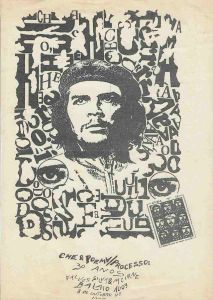
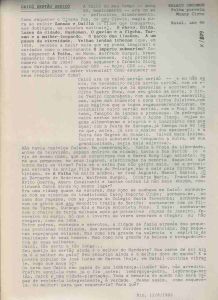
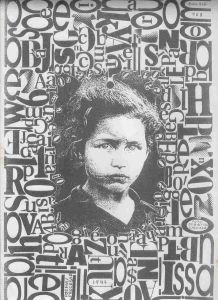
Balaio Incomum, Folha Porreta, número XI 911, publicação de Moacy Cirne produzida no Rio de Janeiro em 16 de novembro de 1996.
Moacy Cirne
Categoria: Categoria: Publicação seriadaSubcategoria: Boletim experimentalClassificação complementar: Poesia visual; Documento editorial; Arte conceitual; Documento de rede
Acervo: 04301
Data: 16 de novembro de 1996
Dimensões: 33 x 21,5 cm
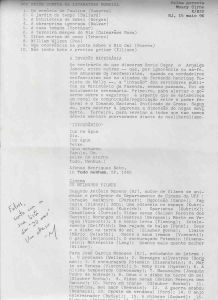
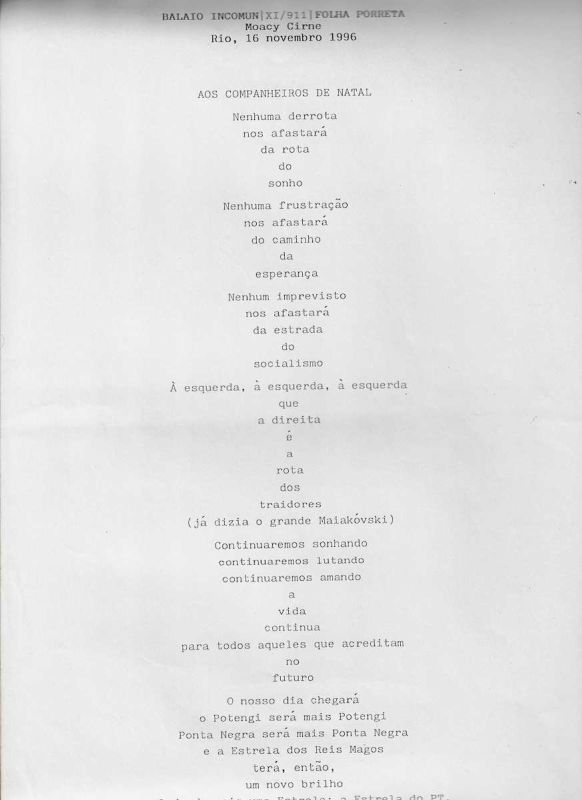
TEXTO SALSA EM PORTUGUÊSBalaio Incomum, Folha Porreta, número XI 911, publicação de Moacy Cirne produzida no Rio de Janeiro em 16 de novembro de 1996. Intitulada Aos Companheiros de Natal, a folha apresenta um poema político dedicado aos companheiros de Natal, Rio Grande do Norte, articulando sonho, esperança, socialismo, esquerda, luta, amor, futuro e referências simbólicas à cidade potiguar. O documento constitui importante registro da dimensão política e poética da produção independente de Moacy Cirne durante o contexto das eleições municipais brasileiras de 1996.O poema começa afirmando que nenhuma derrota afastará os companheiros da rota do sonho. Em seguida, a mesma estrutura é retomada para declarar que nenhuma frustração os afastará do caminho da esperança e que nenhum imprevisto os afastará da estrada do socialismo. A repetição estabelece uma construção de resistência política e perseverança, transformando derrota, frustração e imprevisto em obstáculos que não interrompem um projeto coletivo.A distribuição espacial das palavras possui importância fundamental. Os versos são centralizados e frequentemente reduzidos a poucas palavras ou a uma única palavra por linha. Rota, sonho, caminho, esperança, estrada e socialismo são destacados pelo isolamento tipográfico, criando uma progressão visual e conceitual. O poema transforma a página em espaço de percurso, como se a própria disposição textual construísse graficamente os caminhos mencionados.No centro da composição aparece a formulação À esquerda, à esquerda, à esquerda, seguida pela afirmação de que a direita é a rota dos traidores. Moacy Cirne acrescenta a indicação de que essa ideia já teria sido formulada pelo grande Maiakóvski, introduzindo uma referência explícita a Vladimir Maiakóvski, poeta russo associado às vanguardas, à Revolução Russa e à poesia revolucionária do século XX.A presença de Maiakóvski amplia o alcance histórico e internacional da folha. A política brasileira contemporânea é colocada em diálogo com uma tradição de poesia revolucionária que articulou criação artística, transformação social e intervenção política. O nome de Maiakóvski funciona como referência literária e ideológica dentro da argumentação de Cirne.Depois desse núcleo, o poema assume caráter afirmativo por meio das expressões continuaremos sonhando, continuaremos lutando e continuaremos amando. A repetição de continuaremos estabelece uma perspectiva de permanência histórica. Mesmo diante da derrota ou da frustração, sonho, luta e amor permanecem como ações necessárias.A palavra vida surge isolada e é seguida pela afirmação de que a vida continua para todos aqueles que acreditam no futuro. Dessa maneira, a esperança deixa de estar vinculada apenas a uma circunstância eleitoral específica e passa a integrar uma visão mais ampla sobre transformação política e continuidade histórica.Na parte final visível da página, Moacy Cirne afirma que o nosso dia chegará. Em seguida, utiliza referências geográficas e simbólicas diretamente associadas a Natal. O Potengi será mais Potengi, Ponta Negra será mais Ponta Negra e a Estrela dos Reis Magos terá um novo brilho. O Rio Potengi, Ponta Negra e a Estrela dos Reis Magos tornam se elementos de uma geografia afetiva e política da cidade.A referência à Estrela dos Reis Magos estabelece continuidade direta com outras Folhas Porretas de Moacy Cirne produzidas em novembro de 1996 para Natal. A estrela funciona simultaneamente como referência à memória histórica da cidade, ao Forte dos Reis Magos e ao imaginário político anteriormente associado por Cirne à estrela do Partido dos Trabalhadores.A fotografia fornecida termina logo depois da expressão um novo brilho, indicando que o poema possui continuação além do trecho visível. Por esse motivo, a parte final não deve ser reconstruída sem acesso à folha completa. O registro deve preservar apenas o conteúdo efetivamente legível.Aos Companheiros de Natal é um documento particularmente importante para compreender a relação entre poesia e militância política na produção de Moacy Cirne. Em vez de apresentar um texto programático convencional, o autor transforma conceitos políticos em estrutura poética. Sonho, esperança, socialismo, esquerda, futuro, Potengi, Ponta Negra e Estrela dos Reis Magos tornam se palavras organizadoras de uma poética de resistência.Documento relevante para pesquisas sobre Moacy Cirne, Balaio Incomum, Folha Porreta, XI 911, Rio de Janeiro, 16 de novembro de 1996, Aos Companheiros de Natal, Natal, Rio Grande do Norte, socialismo, esquerda brasileira, política brasileira, eleições municipais de 1996, esperança, utopia, sonho, luta, Vladimir Maiakóvski, Maiakóvski, poesia revolucionária, Rio Potengi, Ponta Negra, Estrela dos Reis Magos, Partido dos Trabalhadores, PT, poesia política, poesia experimental, poesia visual, imprensa alternativa e publicações independentes brasileiras.TEXTO SALSA EM INGLÊSBalaio Incomum, Folha Porreta, issue XI 911, a publication by Moacy Cirne produced in Rio de Janeiro on November 16, 1996. Entitled Aos Companheiros de Natal, the sheet presents a political poem dedicated to companions in Natal, Rio Grande do Norte, combining dreams, hope, socialism, the left, struggle, love, the future and symbolic references to the city. The document is an important record of the political and poetic dimension of Moacy Cirne's independent production during the context of the Brazilian municipal elections of 1996.The poem begins by stating that no defeat will remove the companions from the route of dreams. It then repeats the same structure to declare that no frustration will remove them from the path of hope and that no unexpected event will remove them from the road of socialism. Repetition creates a structure of political resistance and perseverance, transforming defeat, frustration and unforeseen difficulties into obstacles that cannot interrupt a collective project.The spatial distribution of the words is fundamental. The lines are centered and frequently reduced to only a few words or a single word. Route, dream, path, hope, road and socialism are emphasized through typographic isolation, creating a visual and conceptual progression. The poem transforms the page into a space of movement, as though the textual arrangement itself were graphically constructing the paths it describes.At the center of the composition appears the formulation À esquerda, à esquerda, à esquerda, followed by the statement that the right is the route of traitors. Moacy Cirne adds that the great Mayakovsky had already expressed this idea, introducing an explicit reference to Vladimir Mayakovsky, the Russian poet associated with the avant garde, the Russian Revolution and twentieth century revolutionary poetry.The presence of Mayakovsky expands the historical and international range of the sheet. Contemporary Brazilian politics is placed in dialogue with a tradition of revolutionary poetry that connected artistic creation, social transformation and political intervention. Mayakovsky functions as both a literary and ideological reference within Cirne's argument.After this central section, the poem becomes affirmative through the expressions continuaremos sonhando, continuaremos lutando and continuaremos amando. The repetition of continuaremos establishes a perspective of historical continuity. Even in the face of defeat or frustration, dreaming, struggling and loving remain necessary actions.The word vida appears isolated and is followed by the statement that life continues for all those who believe in the future. Hope is therefore no longer connected only with a specific electoral circumstance but becomes part of a broader vision of political transformation and historical continuity.In the final visible portion of the page, Moacy Cirne states that our day will come. He then employs geographical and symbolic references directly associated with Natal. The Potengi will become more Potengi, Ponta Negra will become more Ponta Negra and the Star of the Three Kings will acquire a new brightness. The Potengi River, Ponta Negra and the Star of the Three Kings become elements of an emotional and political geography of the city.The reference to the Star of the Three Kings establishes direct continuity with other Folha Porreta issues produced by Moacy Cirne for Natal in November 1996. The star functions simultaneously as a reference to the historical memory of the city, the Forte dos Reis Magos and the political imagery previously connected by Cirne with the star of the Brazilian Workers Party.The supplied photograph ends immediately after the expression um novo brilho, indicating that the poem continues beyond the visible portion of the page. The final section should therefore not be reconstructed without access to the complete sheet. The record should preserve only content that can be securely read.Aos Companheiros de Natal is particularly important for understanding the relationship between poetry and political engagement in Moacy Cirne's production. Instead of presenting a conventional political program, the author transforms political concepts into poetic structure. Dream, hope, socialism, the left, the future, Potengi, Ponta Negra and the Star of the Three Kings become organizing words within a poetics of resistance.This document is relevant to research on Moacy Cirne, Balaio Incomum, Folha Porreta, XI 911, Rio de Janeiro, November 16, 1996, Aos Companheiros de Natal, Natal, Rio Grande do Norte, socialism, Brazilian left wing politics, Brazilian politics, 1996 municipal elections, hope, utopia, dreams, struggle, Vladimir Mayakovsky, Mayakovsky, revolutionary poetry, Potengi River, Ponta Negra, Star of the Three Kings, Brazilian Workers Party, PT, political poetry, experimental poetry, visual poetry, alternative press and Brazilian independent publications.
TEXTO DE OBSERVAÇÃO EM PORTUGUÊSDocumento identificado no cabeçalho como Balaio Incomum, XI 911, Folha Porreta, Moacy Cirne, Rio, 16 de novembro de 1996. A folha apresenta composição datilográfica em preto e branco, com grande espaço branco e um único poema centralizado verticalmente na página, intitulado Aos Companheiros de Natal.A disposição gráfica constitui elemento essencial da obra. Diversos versos são divididos em pequenas unidades e palavras isoladas, criando uma estrutura vertical semelhante a um percurso. A organização aproxima conteúdo verbal e forma visual e deve ser considerada na catalogação como característica relacionada à poesia experimental e à poesia visual.O primeiro núcleo afirma que nenhuma derrota afastará os destinatários da rota do sonho. A palavra rota aparece isolada e é seguida por do e sonho, também em linhas independentes.O segundo núcleo repete a construção anterior. Nenhuma frustração afastará os companheiros do caminho da esperança. Caminho e esperança tornam se elementos estruturais do poema e reforçam a ideia de percurso político.O terceiro bloco afirma que nenhum imprevisto os afastará da estrada do socialismo. A palavra socialismo aparece isolada, dando grande destaque visual e ideológico ao termo.Em seguida encontra se a formulação À esquerda, à esquerda, à esquerda. A repetição constitui um dos momentos politicamente mais explícitos da página. Logo abaixo, em disposição vertical, aparece a afirmação de que a direita é a rota dos traidores.O trecho é acompanhado pela observação já dizia o grande Maiakóvski. A referência deve ser indexada como Vladimir Maiakóvski e Maiakóvski, pois documenta diretamente o diálogo de Moacy Cirne com uma tradição poética e política internacional.A seguir aparecem três formulações paralelas. Continuaremos sonhando, continuaremos lutando e continuaremos amando. A repetição cria ritmo e reforça a noção de continuidade da ação política depois de uma derrota ou frustração.A palavra vida aparece isolada. Logo abaixo, a sequência afirma que a vida continua para todos aqueles que acreditam no futuro. Também futuro aparece isolado na construção gráfica.A parte inferior visível inicia uma nova sequência com O nosso dia chegará. Em seguida aparecem referências específicas à cidade de Natal.O Potengi será mais Potengi constitui referência direta ao Rio Potengi, elemento geográfico e cultural fundamental da cidade. A formulação seguinte afirma que Ponta Negra será mais Ponta Negra, incorporando outro território emblemático de Natal à construção poética.Posteriormente aparece a Estrela dos Reis Magos, que terá então um novo brilho. Essa expressão relaciona o poema à história e ao imaginário cultural de Natal, especialmente ao Forte dos Reis Magos.A estrela possui também dimensão política dentro da sequência de Folhas Porretas de novembro de 1996. Na edição XI 901, Moacy Cirne havia associado diretamente a estrela, a cidade de Natal e o símbolo do PT. Por isso, XI 911 deve ser relacionado a esse conjunto documental, embora a interpretação específica da continuação cortada desta folha não deva ser reconstruída.A fotografia termina imediatamente depois de um novo brilho. É possível perceber a presença de texto adicional cortado na margem inferior, mas não existe informação visual suficiente para transcrevê lo com segurança.Essa limitação deve ser registrada. A obra fotografada não corresponde à totalidade visível do documento original e qualquer catalogação diplomática completa dependerá de nova imagem que inclua a região inferior da folha.A data de 16 de novembro de 1996 é particularmente relevante para a contextualização do documento, pois a folha pertence à sequência política de Balaio Incomum produzida durante e imediatamente após o período das eleições municipais de 1996.O título Aos Companheiros de Natal indica destinatários coletivos. A palavra companheiros possui dimensão política e afetiva e situa a folha como mensagem de solidariedade, resistência e continuidade depois de uma derrota eleitoral ou política.A estrutura do poema articula derrota, frustração, imprevisto, sonho, esperança, socialismo, esquerda, luta, amor, vida e futuro. Essa sequência constitui um vocabulário político e poético coerente que deve ser preservado na indexação temática.A referência aos traidores aparece como parte de uma formulação atribuída por Cirne a Maiakóvski. Na catalogação, é recomendável registrar essa atribuição como presente no próprio documento, sem transformá la automaticamente em comprovação bibliográfica de autoria da frase.A folha demonstra mais uma vez que Balaio Incomum e Folha Porreta funcionavam simultaneamente como publicação literária, intervenção política, espaço de poesia experimental e documento de circulação de ideias.Para indexação devem ser preservados Balaio Incomum, Folha Porreta, XI 911, Moacy Cirne, Rio de Janeiro, 16 de novembro de 1996, Aos Companheiros de Natal, Natal, Rio Grande do Norte, derrota, sonho, frustração, esperança, socialismo, esquerda, direita, traidores, Vladimir Maiakóvski, luta, amor, vida, futuro, Rio Potengi, Potengi, Ponta Negra e Estrela dos Reis Magos.Termos complementares relevantes incluem política brasileira, esquerda brasileira, socialismo brasileiro, eleições municipais de 1996, Partido dos Trabalhadores, PT, memória política, resistência política, utopia, poesia política, poesia visual, poesia experimental, literatura brasileira dos anos 1990, imprensa alternativa, publicação independente e cultura política de Natal.OBSERVATION TEXT IN ENGLISHDocument identified in the heading as Balaio Incomum, XI 911, Folha Porreta, Moacy Cirne, Rio, November 16, 1996. The sheet presents a black and white typewritten composition with extensive white space and a single poem vertically centered on the page entitled Aos Companheiros de Natal.The graphic arrangement is an essential element of the work. Several lines are divided into small units and isolated words, creating a vertical structure resembling a path. This organization connects verbal content with visual form and should be considered in cataloguing as a characteristic related to experimental and visual poetry.The first section states that no defeat will remove the recipients from the route of dreams. The word rota appears isolated and is followed by do and sonho on separate lines.The second section repeats the previous construction. No frustration will remove the companions from the path of hope. Path and hope become structural elements of the poem and reinforce the idea of a political journey.The third section states that no unexpected event will remove them from the road of socialism. The word socialism appears isolated, giving the term strong visual and ideological emphasis.The formulation À esquerda, à esquerda, à esquerda follows. Its repetition constitutes one of the most explicitly political moments of the page. Directly below, in a vertical arrangement, appears the statement that the right is the route of traitors.The passage is accompanied by the observation já dizia o grande Maiakóvski. This reference should be indexed as Vladimir Mayakovsky and Mayakovsky because it directly documents Moacy Cirne's dialogue with an international poetic and political tradition.Three parallel formulations follow. Continuaremos sonhando, continuaremos lutando and continuaremos amando. Repetition creates rhythm and reinforces the continuity of political action after defeat or frustration.The word vida appears isolated. Below it the sequence states that life continues for all those who believe in the future. The word future is also isolated within the graphic construction.The visible lower section begins a new sequence with O nosso dia chegará. Specific references to the city of Natal follow.O Potengi será mais Potengi directly refers to the Potengi River, a fundamental geographical and cultural element of Natal. The following formulation states that Ponta Negra will become more Ponta Negra, incorporating another emblematic location of the city into the poetic construction.The Star of the Three Kings then appears and is said to acquire a new brightness. This expression connects the poem with the history and cultural imagination of Natal, particularly the Forte dos Reis Magos.The star also has a political dimension within the sequence of Folha Porreta issues from November 1996. In issue XI 901, Moacy Cirne directly associated the star, the city of Natal and the symbol of the PT. XI 911 should therefore be related to this documentary group, although the specific meaning of the cut off continuation of the present sheet should not be reconstructed.The photograph ends immediately after um novo brilho. Additional text can be seen beginning below the edge of the image, but there is insufficient visual information to transcribe it securely.This limitation should be recorded. The photographed image does not contain the complete visible extent of the original document and a complete diplomatic catalogue transcription would require another image including the lower portion of the sheet.The date November 16, 1996 is particularly relevant to the contextualization of the document because the sheet belongs to the political sequence of Balaio Incomum produced during and immediately after the 1996 municipal electoral period.The title Aos Companheiros de Natal indicates collective recipients. The word companions has both political and emotional dimensions and situates the sheet as a message of solidarity, resistance and continuity following an electoral or political defeat.The structure of the poem connects defeat, frustration, unforeseen events, dreams, hope, socialism, the left, struggle, love, life and the future. This sequence constitutes a coherent political and poetic vocabulary that should be preserved in thematic indexing.The reference to traitors forms part of a statement attributed by Cirne to Mayakovsky. In cataloguing, this attribution should be recorded as information present in the document itself without automatically treating it as bibliographical confirmation of authorship of the phrase.The sheet once again demonstrates that Balaio Incomum and Folha Porreta functioned simultaneously as literary publication, political intervention, space for experimental poetry and document for the circulation of ideas.For indexing purposes the record should preserve Balaio Incomum, Folha Porreta, XI 911, Moacy Cirne, Rio de Janeiro, November 16, 1996, Aos Companheiros de Natal, Natal, Rio Grande do Norte, defeat, dream, frustration, hope, socialism, left wing politics, right wing politics, traitors, Vladimir Mayakovsky, struggle, love, life, future, Potengi River, Potengi, Ponta Negra and Star of the Three Kings.Additional relevant terms include Brazilian politics, Brazilian left wing politics, Brazilian socialism, 1996 municipal elections, Brazilian Workers Party, PT, political memory, political resistance, utopia, political poetry, visual poetry, experimental poetry, Brazilian literature of the 1990s, alternative press, independent publishing and the political culture of Natal.
Proveniência
Coleção Poema ProcessoInglês
Balaio Incomum, Folha Porreta, issue XI 911, a publication by Moacy Cirne produced in Rio de Janeiro on November 16, 1996.
Dimensions: 13 x 8,5 in