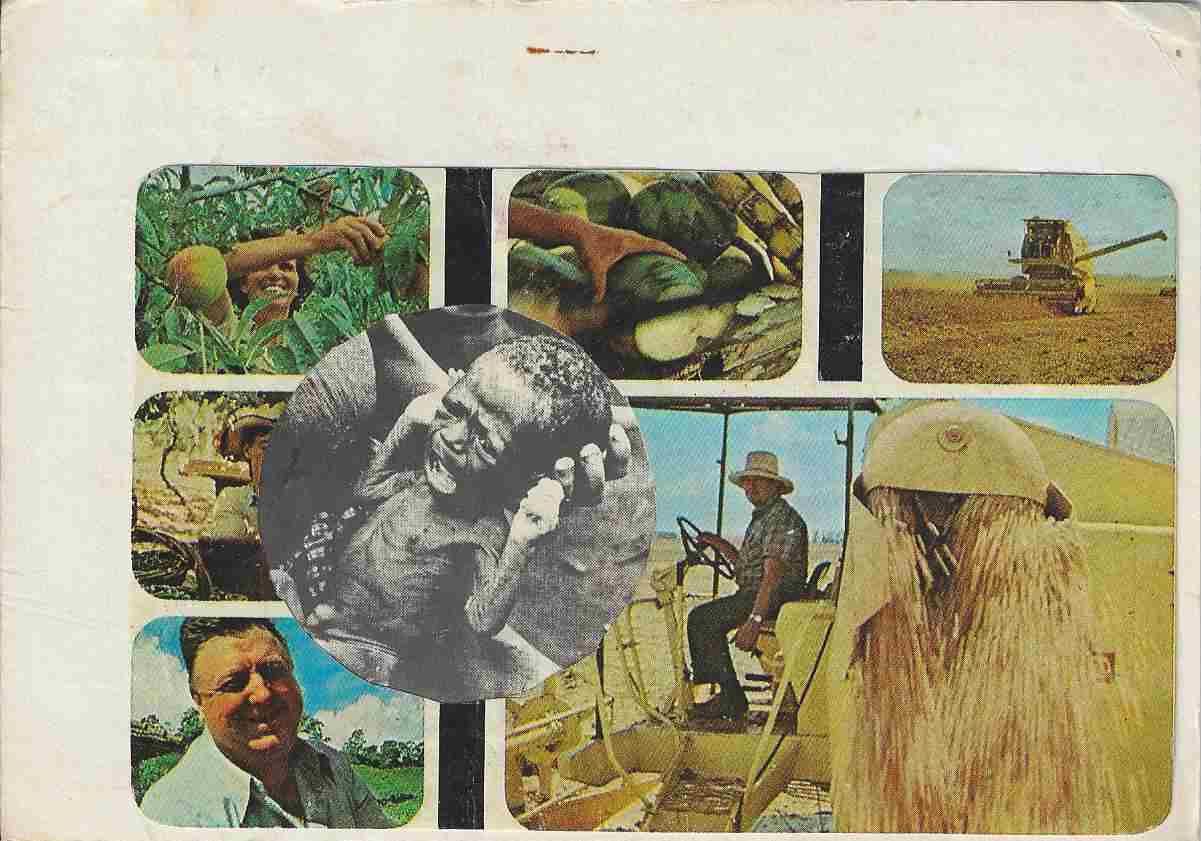
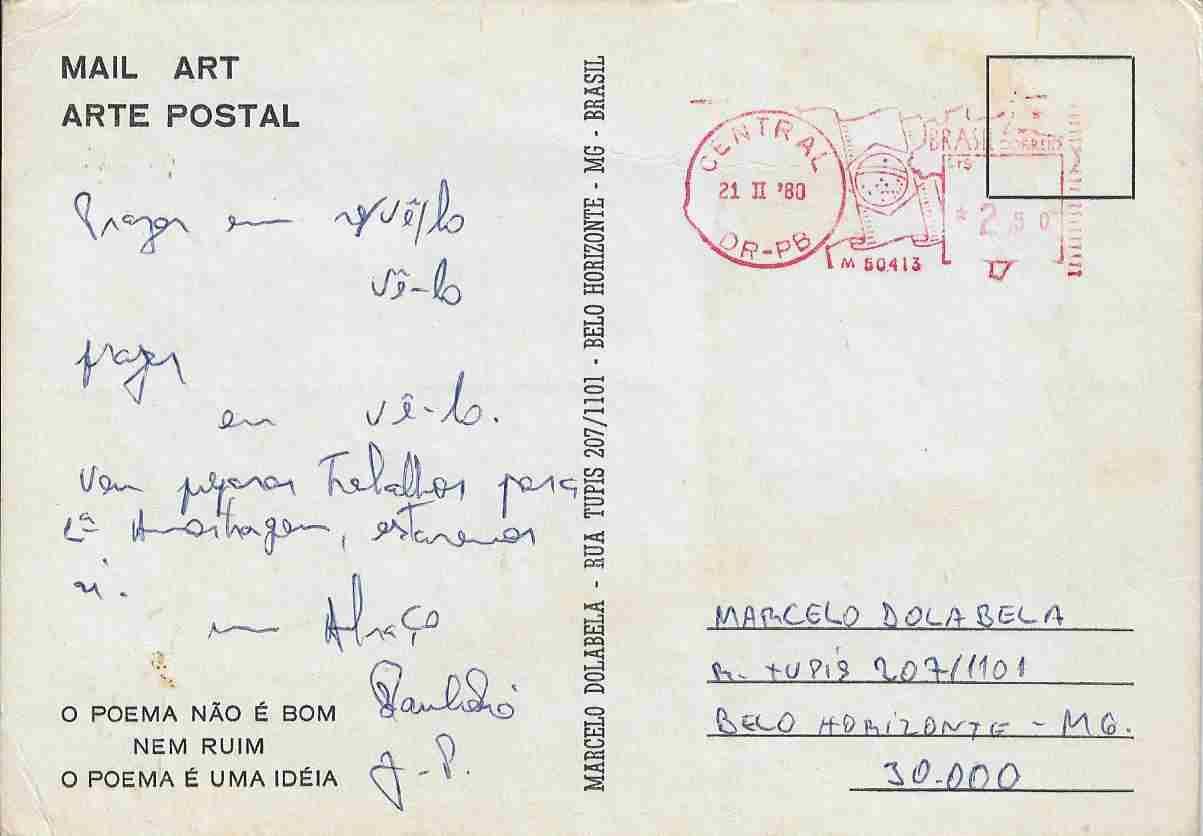
Cartão de Arte Postal de Marcelo Dolabela, posteriormente apropriado, customizado e reenviado ao próprio artista por Pauli, com circulação postal registrada em 21 de fevereiro de 1980.
Marcelo Dolabela
Categoria: Mail Art
Acervo: 04041
Data: 21 de Fevereiro de 1980
Dimensões: 10,7 x 15 cm
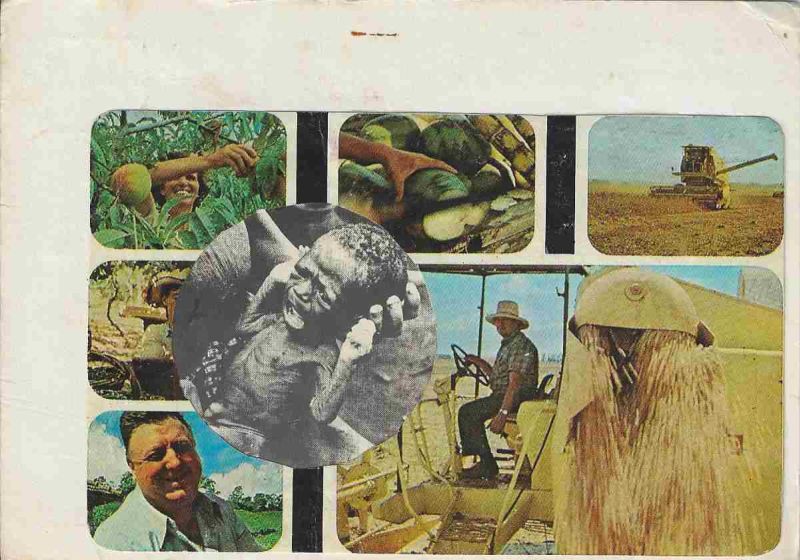
TEXTO PARA O SALSA EM PORTUGUÊSCartão de Arte Postal de Marcelo Dolabela, posteriormente apropriado, customizado e reenviado ao próprio artista por Pauli, com circulação postal registrada em 21 de fevereiro de 1980. O objeto constitui um exemplo particularmente significativo da dinâmica colaborativa da Mail Art, na qual uma peça enviada por um artista podia ser recebida, modificada e devolvida, transformando a correspondência em processo aberto de criação, resposta e intercâmbio.Na frente do cartão aparece uma composição impressa em cores formada por imagens relacionadas ao universo rural e agrícola, incluindo trabalhadores, máquinas agrícolas, colheita e produtos do campo. Sobre essa composição foi aplicada uma imagem circular em preto e branco com duas figuras humanas, criando uma sobreposição visual que rompe a organização original do cartão e estabelece uma nova relação entre fotografia, reprodução gráfica e montagem. A intervenção converte uma imagem de caráter documental ou promocional em suporte para uma nova obra de circulação postal.No verso permanecem elementos característicos dos cartões de Marcelo Dolabela, com as inscrições MAIL ART e ARTE POSTAL, além da identificação vertical MARCELO DOLABELA, RUA TUPIS 207, apartamento 1101, BELO HORIZONTE, MG, BRASIL. Na parte inferior encontra se a proposição O POEMA NÃO É BOM NEM RUIM O POEMA É UMA IDÉIA, frase que sintetiza uma compreensão conceitual da poesia baseada na ideia e no processo em lugar de critérios tradicionais de julgamento literário.O cartão apresenta mensagem manuscrita de Pauli dirigida a Marcelo Dolabela, embora parte da caligrafia seja de difícil leitura. A assinatura Pauli é identificável, assim como a indicação de São Paulo e a forma abreviada SP. O endereçamento manuscrito confirma Marcelo Dolabela como destinatário, utilizando Rua Tupis 207, apartamento 1101, Belo Horizonte, MG, com código postal 30.000. O carimbo dos Correios registra a data de 21 de fevereiro de 1980, documentando efetivamente a circulação da peça através do sistema postal brasileiro.A relevância deste exemplar está na transformação de um cartão originalmente associado à produção e circulação de Marcelo Dolabela em uma obra de retorno. Pauli utiliza o próprio suporte de Dolabela, acrescenta uma nova imagem, escreve uma mensagem e o envia novamente ao artista. Esse procedimento materializa princípios fundamentais da Arte Postal, como reciprocidade, apropriação, intervenção, autoria compartilhada, circulação e transformação contínua do objeto artístico. O cartão deve ser compreendido simultaneamente como obra, correspondência, documento de rede e registro material das relações entre artistas vinculados à Mail Art brasileira no início da década de 1980.TEXT FOR SALSA IN ENGLISHMail Art postcard by Marcelo Dolabela, subsequently appropriated, customized and mailed back to the artist by Pauli, with postal circulation recorded on February 21, 1980. The object is a particularly significant example of the collaborative dynamics of Mail Art, in which a piece sent by one artist could be received, modified and returned, transforming correspondence into an open process of creation, response and exchange.The front of the postcard contains a color printed composition made up of images related to rural and agricultural life, including workers, agricultural machinery, harvesting and farm products. Over this composition, a circular black and white image showing two human figures has been applied, creating a visual superimposition that disrupts the original organization of the card and establishes a new relationship between photography, graphic reproduction and assemblage. The intervention transforms an image of documentary or promotional character into the support for a new work intended for postal circulation.The reverse retains characteristic elements associated with Marcelo Dolabela postcards, including the inscriptions MAIL ART and ARTE POSTAL, as well as the vertical identification MARCELO DOLABELA, RUA TUPIS 207, apartment 1101, BELO HORIZONTE, MG, BRASIL. At the bottom appears the proposition O POEMA NÃO É BOM NEM RUIM O POEMA É UMA IDÉIA, meaning THE POEM IS NEITHER GOOD NOR BAD THE POEM IS AN IDEA. The statement expresses a conceptual understanding of poetry centered on idea and process rather than conventional literary judgment.The card contains a handwritten message from Pauli addressed to Marcelo Dolabela, although portions of the handwriting are difficult to decipher with certainty. The signature Pauli can be identified, together with a reference to São Paulo and the abbreviation SP. The handwritten address confirms Marcelo Dolabela as the recipient at Rua Tupis 207, apartment 1101, Belo Horizonte, MG, postal code 30.000. The Brazilian postal cancellation records the date February 21, 1980, providing direct evidence of the actual circulation of the object through the postal system.The importance of this example lies in the transformation of a postcard originally associated with Marcelo Dolabela's own production and circulation into a return artwork. Pauli reused Dolabela's support, added a new image, wrote a message and mailed the object back to the artist. This procedure materializes fundamental principles of Postal Art, including reciprocity, appropriation, intervention, shared authorship, circulation and continuous transformation of the artistic object. The postcard can therefore be understood simultaneously as artwork, correspondence, network document and material record of relationships among artists involved in Brazilian Mail Art at the beginning of the 1980s.
TEXTO DE OBSERVAÇÃO EM PORTUGUÊSCartão originalmente vinculado a Marcelo Dolabela e posteriormente customizado e reenviado ao próprio artista por Pauli. A frente apresenta composição impressa colorida com fotografias ligadas ao ambiente rural, agricultura, trabalhadores e máquinas, sobre a qual foi acrescentado um recorte circular em preto e branco com duas figuras humanas. A intervenção modifica visualmente o cartão original e evidencia um procedimento de apropriação e resposta característico da Arte Postal.No verso encontram se as inscrições MAIL ART e ARTE POSTAL, a identificação impressa MARCELO DOLABELA, RUA TUPIS 207, apartamento 1101, BELO HORIZONTE, MG, BRASIL, e a frase O POEMA NÃO É BOM NEM RUIM O POEMA É UMA IDÉIA. Há mensagem manuscrita assinada por Pauli, com referência a São Paulo, cuja leitura integral não é segura devido à caligrafia. O destinatário manuscrito é Marcelo Dolabela, Rua Tupis 207, apartamento 1101, Belo Horizonte, MG, código postal 30.000. O carimbo postal apresenta claramente a data de 21 de fevereiro de 1980.O exemplar documenta um processo de circulação de ida e retorno, no qual um cartão de Marcelo Dolabela foi apropriado por outro participante da rede, transformado e remetido novamente ao artista. Trata se de importante registro das práticas de Mail Art, Arte Postal, poesia visual, arte conceitual, apropriação, montagem, correspondência artística, colaboração e autoria compartilhada no Brasil em 1980. O suporte apresenta marcas de manuseio, vincos, pequenas manchas, desgaste nas extremidades e alterações naturais decorrentes de sua circulação e antiguidade.OBSERVATION TEXT IN ENGLISHPostcard originally associated with Marcelo Dolabela and subsequently customized and mailed back to the artist by Pauli. The front contains a color printed composition with photographs related to rural life, agriculture, workers and machinery, over which a circular black and white image showing two human figures has been added. This intervention visually transforms the original postcard and demonstrates a process of appropriation and response characteristic of Mail Art.The reverse contains the inscriptions MAIL ART and ARTE POSTAL, the printed identification MARCELO DOLABELA, RUA TUPIS 207, apartment 1101, BELO HORIZONTE, MG, BRASIL, and the statement O POEMA NÃO É BOM NEM RUIM O POEMA É UMA IDÉIA, meaning THE POEM IS NEITHER GOOD NOR BAD THE POEM IS AN IDEA. A handwritten message signed by Pauli is present, together with a reference to São Paulo, although the full text cannot be read with certainty because of the handwriting. The handwritten recipient is Marcelo Dolabela at Rua Tupis 207, apartment 1101, Belo Horizonte, MG, postal code 30.000. The postal cancellation clearly records the date February 21, 1980.The object documents a process of outward circulation and return in which a postcard by Marcelo Dolabela was appropriated by another participant in the network, transformed and sent back to the artist. It is an important record of Mail Art, Postal Art, visual poetry, conceptual art, appropriation, assemblage, artistic correspondence, collaboration and shared authorship in Brazil in 1980. The support shows handling marks, creases, minor stains, edge wear and natural changes resulting from postal circulation and age.
Proveniência
Coleção Marcelo DolabelaInglês
Mail Art postcard by Marcelo Dolabela, subsequently appropriated, customized and mailed back to the artist by Pauli, with postal circulation recorded on February 21, 1980.
Dimensions: 4,2 x 5,9 in