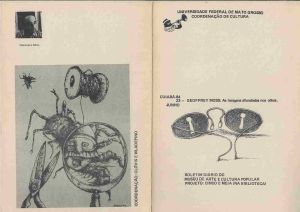
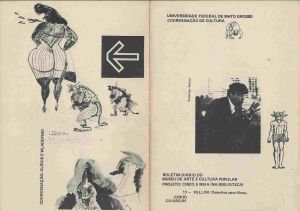
Boletim Diário do Museu de Arte e Cultura Popular da Universidade Federal de Mato Grosso, produzido pela Coordenação de Cultura no âmbito do Projeto Cinco e Meia na Biblioteca, datado de 22 de junho de 1984, em Cuiabá, Mato Grosso
Wlademir Dias Pino
Categoria: Poema Processo
Acervo: 03999
Data: 22 de junho de 1984
Dimensões: 21,1 x 15 cm
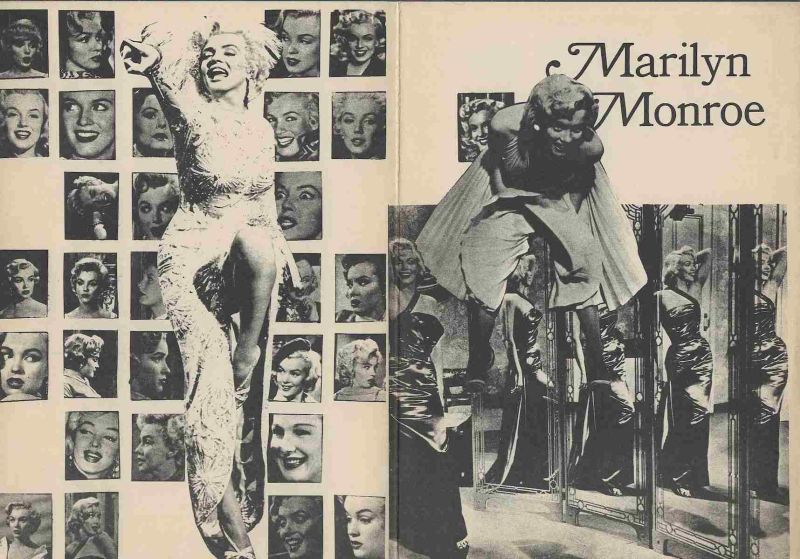
Boletim Diário do Museu de Arte e Cultura Popular da Universidade Federal de Mato Grosso, produzido pela Coordenação de Cultura no âmbito do Projeto Cinco e Meia na Biblioteca, datado de 22 de junho de 1984, em Cuiabá, Mato Grosso. A edição é inteiramente dedicada a Marilyn Monroe e apresenta na capa a chamada Marilyn Monroe: Quando foi, mesmo, que a gente se conheceu
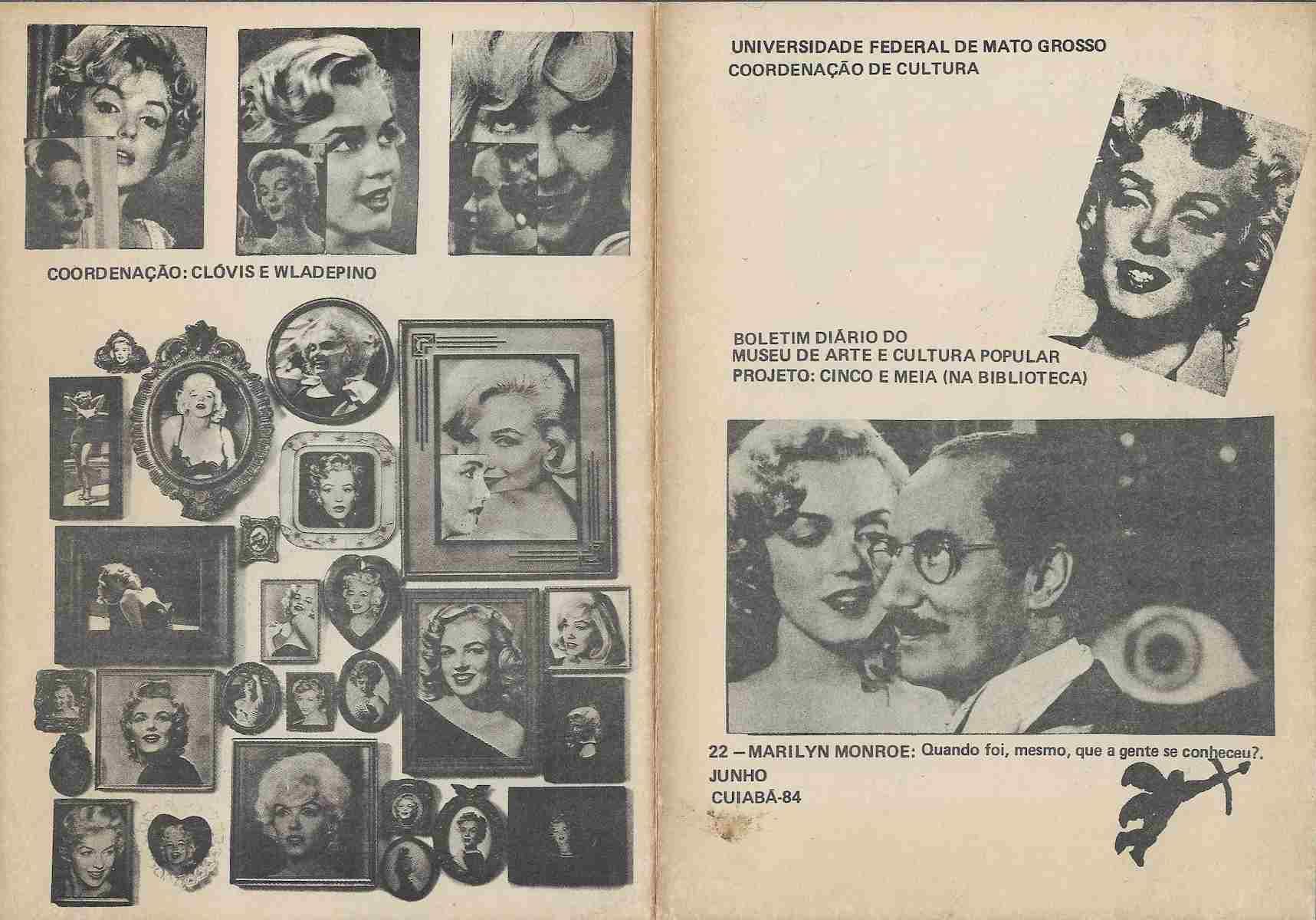
. O documento integra uma série de publicações culturais vinculadas à Universidade Federal de Mato Grosso, ao Museu de Arte e Cultura Popular e às atividades coordenadas por Clóvis e Wlademir Dias Pino.O boletim emprega Marilyn Monroe não apenas como personagem biográfica ou estrela cinematográfica, mas como signo visual, ícone de comunicação de massa e matéria para reflexão sobre cinema, publicidade, celebridade, erotismo, reprodução técnica da imagem e cultura popular. Fotografias da atriz são multiplicadas, fragmentadas, enquadradas, ampliadas, sobrepostas e reorganizadas ao longo das páginas, construindo uma narrativa gráfica baseada na repetição de sua imagem pública.A capa identifica a Universidade Federal de Mato Grosso e a Coordenação de Cultura, seguida da denominação Boletim Diário do Museu de Arte e Cultura Popular, Projeto Cinco e Meia na Biblioteca. Uma fotografia de Marilyn Monroe aparece ao lado de um homem e de um grande elemento gráfico semelhante a um olho. Na parte inferior encontra se a programação de 22 de junho, identificada como Marilyn Monroe: Quando foi, mesmo, que a gente se conheceu
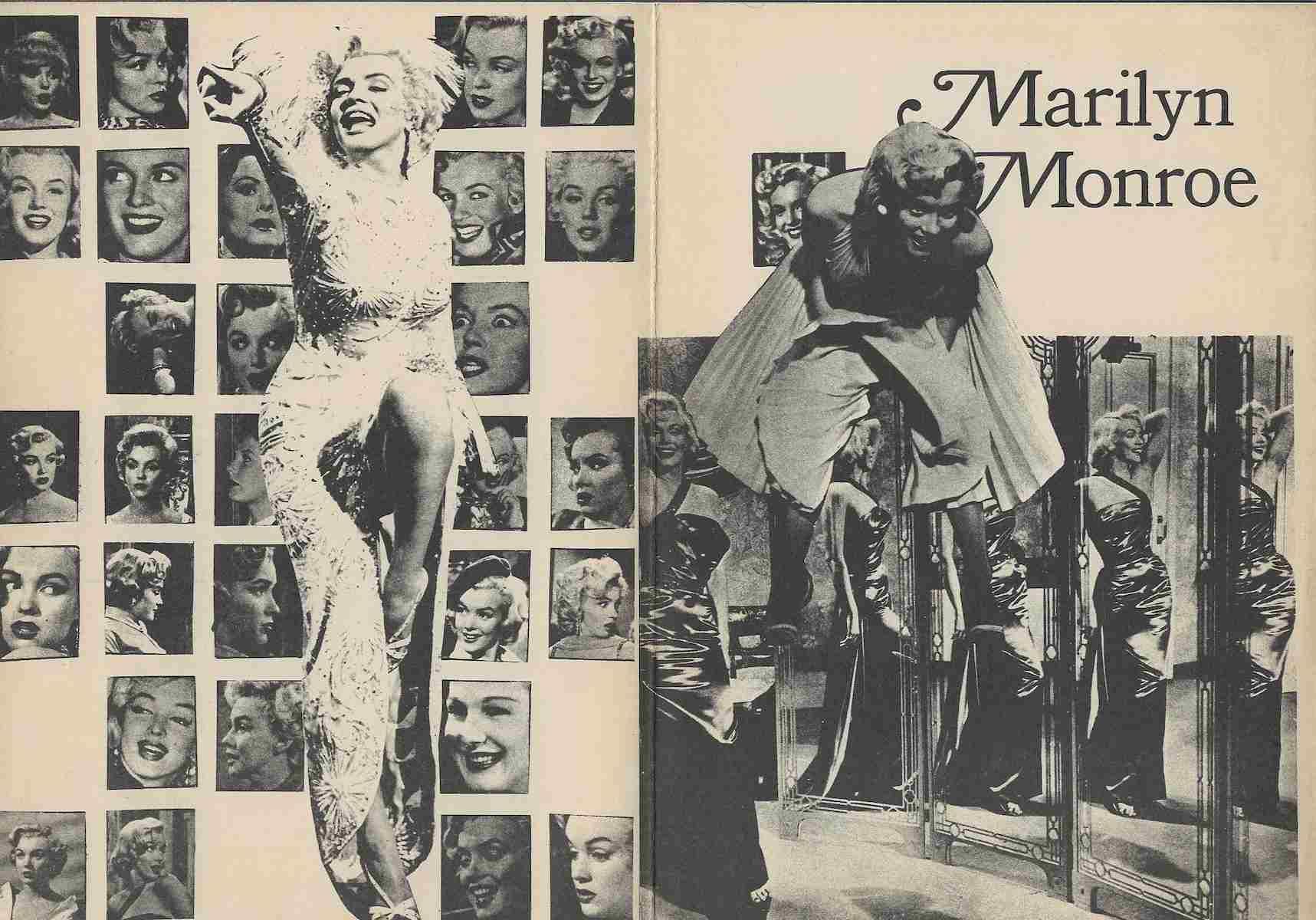
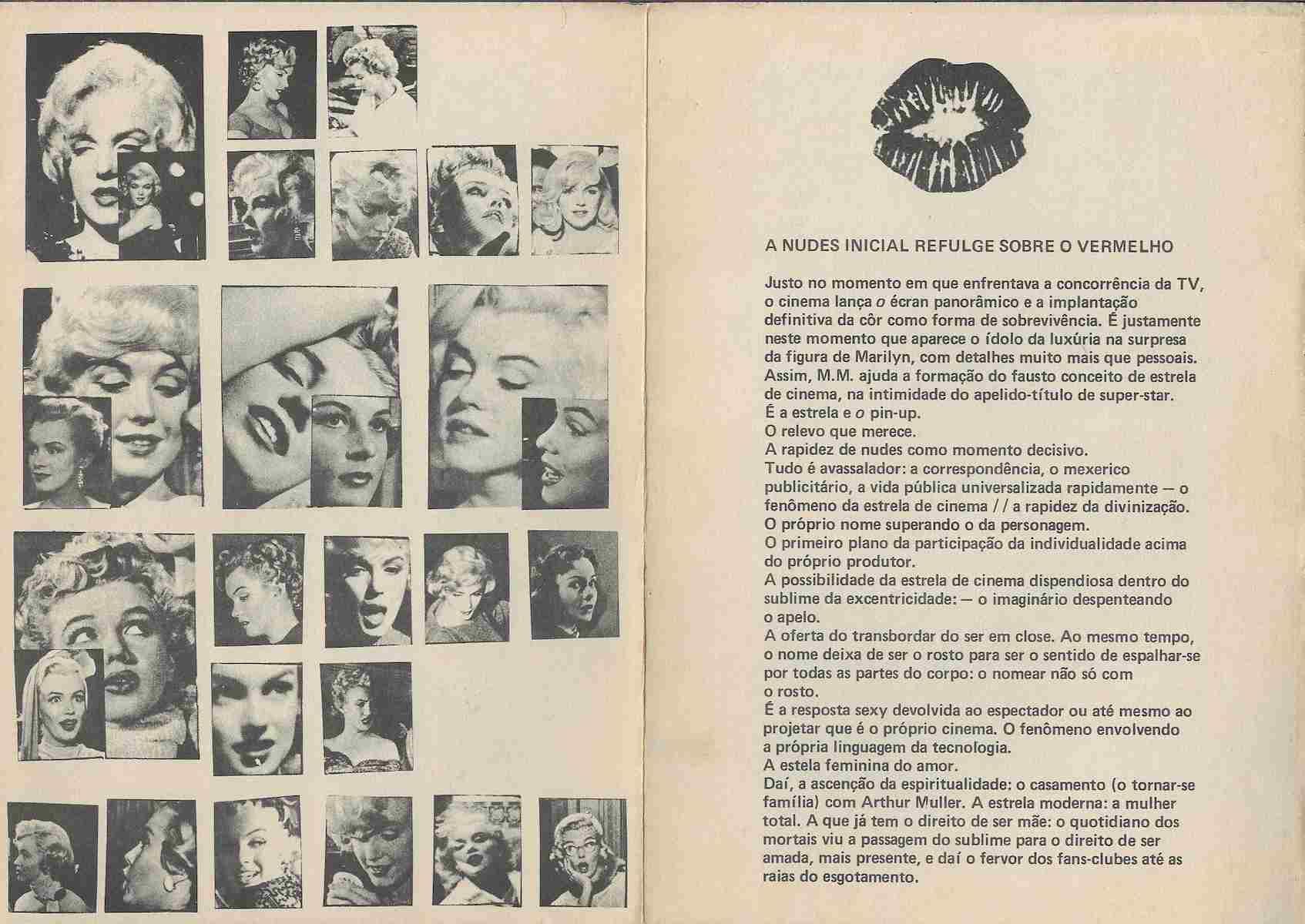
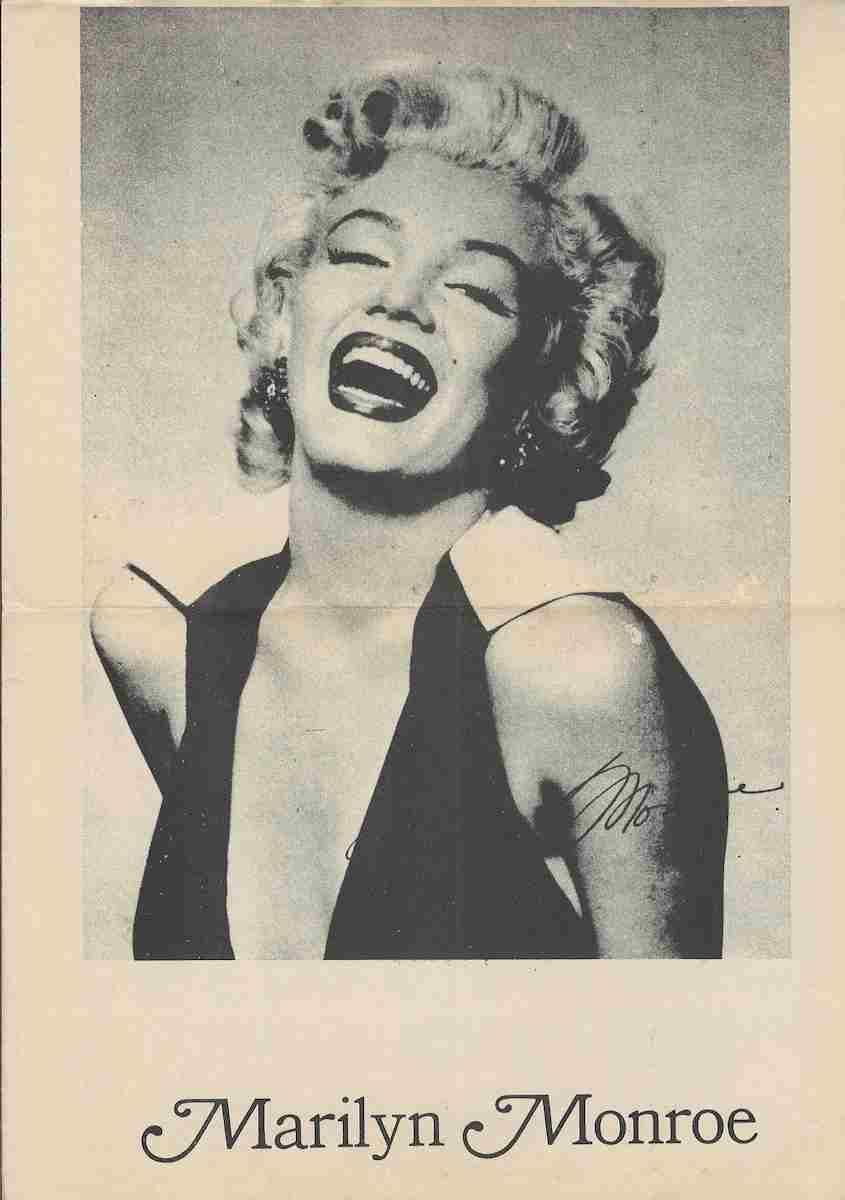
, Cuiabá 84.Uma das páginas apresenta uma extensa montagem formada por dezenas de retratos de Marilyn Monroe em diferentes momentos, poses e expressões. Uma grande figura central da atriz domina a composição e é cercada por pequenas imagens que funcionam como uma espécie de arquivo visual de sua identidade cinematográfica. A repetição evidencia como o rosto de Marilyn se tornou uma imagem reconhecível independentemente de um filme específico, transformando a pessoa em signo cultural de circulação internacional.Outra composição utiliza fotografias da atriz dentro de molduras de diferentes formatos, incluindo formas ovais, quadradas, retangulares e ornamentais. O procedimento aproxima o retrato cinematográfico de uma coleção doméstica ou memorial e simultaneamente ressalta a industrialização de sua imagem. Na parte superior aparece a identificação Coordenação: Clóvis e Wlademir, registrando de maneira direta a participação de Wlademir Dias Pino na organização ou concepção dessa edição.O boletim também apresenta montagens com fragmentos de rostos, olhos, bocas e perfis. Imagens de Marilyn são sobrepostas e recortadas de maneira a produzir duplicações e combinações inesperadas. O rosto deixa de funcionar exclusivamente como retrato e passa a ser tratado como unidade gráfica. Essa operação aproxima o impresso de procedimentos de colagem, montagem, poesia visual, design editorial e apropriação de imagens provenientes da cultura de massa.O texto central da publicação possui o título A nudes inicial refulge sobre o vermelho. A reflexão parte da transformação do cinema no momento em que este enfrentava a concorrência da televisão, destacando a adoção da tela panorâmica e a implantação definitiva da cor como estratégias de sobrevivência da indústria cinematográfica. Nesse contexto, Marilyn Monroe aparece como figura associada à luxúria, à surpresa e à consolidação de um novo modelo de estrela de cinema.O texto afirma que Marilyn contribuiu para a formação do conceito de estrela cinematográfica na dimensão de super star e pin up. A atriz é analisada como fenômeno que ultrapassa a personagem individual e passa a existir como identidade pública autônoma. A rapidez de sua ascensão é associada à correspondência, ao mexerico publicitário e à universalização acelerada da vida pública, processos que ampliam a difusão e a divinização da estrela cinematográfica.Um dos aspectos mais relevantes do texto é a afirmação de que o próprio nome supera o personagem. Marilyn Monroe torna se uma marca cultural que já não depende exclusivamente dos papéis interpretados no cinema. A individualidade ocupa um primeiro plano e ultrapassa a própria produção cinematográfica. A estrela é apresentada como possibilidade extrema de excentricidade e como construção do imaginário coletivo.A reflexão também aborda o close cinematográfico. O rosto ampliado deixa de ser apenas representação individual e passa a funcionar como superfície de desejo e identificação. O nome e a imagem se espalham simbolicamente pelo corpo. A resposta sensual produzida para o espectador é entendida como parte do próprio fenômeno cinematográfico e como resultado de uma linguagem profundamente relacionada às tecnologias modernas da imagem.O texto aproxima Marilyn Monroe da figura da estrela feminina do amor e discute a passagem da sensualidade para uma dimensão quase espiritualizada. A referência a Arthur Miller introduz o casamento e a construção da família como etapas na transformação pública da atriz. O percurso descrito relaciona desejo, maternidade simbólica, adoração, celebridade e a passagem do sublime para o cotidiano dos mortais, chegando à cultura dos fãs clubes e ao esgotamento provocado pela exposição incessante da imagem.A publicação evidencia uma análise crítica da fabricação da celebridade no século XX. Marilyn Monroe é apresentada simultaneamente como mulher, atriz, estrela, pin up, imagem publicitária, objeto de desejo e produto da reprodução massiva. A multiplicação de seus retratos dentro do boletim reforça visualmente a tese de que sua identidade pública foi construída pela circulação contínua e tecnológica da fotografia e do cinema.O documento possui grande relevância para pesquisas sobre Wlademir Dias Pino, Universidade Federal de Mato Grosso, Museu de Arte e Cultura Popular, Projeto Cinco e Meia na Biblioteca, Marilyn Monroe, cultura de massa, cinema, fotografia, design gráfico, comunicação visual, montagem, colagem, apropriação, cultura pop, imagem feminina, celebridade, publicidade, erotismo, reprodução técnica, cultura visual e história cultural brasileira durante a década de 1980.Salsa text in EnglishDaily Bulletin of the Museum of Art and Popular Culture of the Federal University of Mato Grosso, produced by the Culture Coordination within the Five Thirty at the Library Project and dated 22 June 1984 in Cuiabá, Mato Grosso, Brazil. The edition is entirely devoted to Marilyn Monroe and presents the program Marilyn Monroe: Quando foi, mesmo, que a gente se conheceu
. The document belongs to a series of cultural publications connected to the Federal University of Mato Grosso, the Museum of Art and Popular Culture and activities coordinated by Clóvis and Wlademir Dias Pino.The bulletin presents Marilyn Monroe not merely as a biographical figure or film star but as a visual sign, an icon of mass communication and a subject for reflection on cinema, advertising, celebrity, eroticism, technological reproduction of images and popular culture. Photographs of the actress are multiplied, fragmented, framed, enlarged, superimposed and reorganized throughout the publication, creating a graphic narrative based on the repetition of her public image.The cover identifies the Federal University of Mato Grosso and the Culture Coordination, followed by the title Daily Bulletin of the Museum of Art and Popular Culture and the Five Thirty at the Library Project. A photograph of Marilyn Monroe appears beside a man and a large graphic element resembling an eye. The lower section records the program for 22 June, identified as Marilyn Monroe: Quando foi, mesmo, que a gente se conheceu
, Cuiabá 84.One page presents an extensive montage composed of dozens of portraits of Marilyn Monroe in different moments, poses and expressions. A large central figure of the actress dominates the composition and is surrounded by smaller images that function as a kind of visual archive of her cinematic identity. Repetition demonstrates how Marilyn's face became recognizable independently of any specific film, transforming the individual into an internationally circulating cultural sign.Another composition places photographs of the actress inside frames of different shapes, including oval, square, rectangular and ornamental formats. The procedure brings cinematic portraiture close to the appearance of a domestic or memorial collection while simultaneously emphasizing the industrialization of her image. At the top appears the identification Coordenação: Clóvis e Wlademir, directly documenting the participation of Wlademir Dias Pino in the organization or conception of the edition.The bulletin also contains montages made from fragments of faces, eyes, mouths and profiles. Images of Marilyn are superimposed and cut into new combinations. The face no longer functions only as a portrait and becomes graphic material. This procedure connects the publication with collage, montage, visual poetry, editorial design and the appropriation of images from mass culture.The main text carries the title A nudes inicial refulge sobre o vermelho. The reflection begins with the transformation of cinema at the moment when it faced competition from television, highlighting the adoption of widescreen presentation and the definitive establishment of color as strategies for the survival of the film industry. Within this context Marilyn Monroe emerges as a figure associated with luxury, surprise and the consolidation of a new model of movie star.The text argues that Marilyn contributed to the formation of the concept of the cinematic star in the dimension of the super star and pin up. She is analyzed as a phenomenon that exceeds the individual character and begins to exist as an autonomous public identity. The rapidity of her rise is associated with correspondence, publicity gossip and the rapid universalization of public life, processes that expanded the dissemination and divinization of the movie star.One of the most significant ideas in the text is that the name itself surpasses the character. Marilyn Monroe becomes a cultural brand no longer dependent solely on the roles she performed in films. Individual identity moves into the foreground and exceeds the cinematic production itself. The star is presented as an extreme possibility of eccentricity and as a construction of the collective imagination.The reflection also considers the cinematic close up. The enlarged face ceases to function simply as an individual representation and becomes a surface of desire and identification. The name and image symbolically spread across the body. The sensual response offered to the spectator is understood as part of the cinematic phenomenon itself and as a product of a language deeply connected to modern imaging technologies.The text associates Marilyn Monroe with the female star of love and discusses a transition from sensuality toward an almost spiritual dimension. The reference to Arthur Miller introduces marriage and family formation as stages in the transformation of her public image. The trajectory described connects desire, symbolic motherhood, adoration, celebrity and the passage from the sublime into the everyday realm of ordinary people, extending into fan club culture and the exhaustion produced by incessant exposure.The publication therefore offers a critical examination of the manufacture of celebrity in the twentieth century. Marilyn Monroe appears simultaneously as woman, actress, star, pin up, advertising image, object of desire and product of mass reproduction. The multiplication of her portraits throughout the bulletin visually reinforces the argument that her public identity was constructed through the continuous technological circulation of photography and cinema.The document is highly relevant to research on Wlademir Dias Pino, the Federal University of Mato Grosso, the Museum of Art and Popular Culture, the Five Thirty at the Library Project, Marilyn Monroe, mass culture, cinema, photography, graphic design, visual communication, montage, collage, appropriation, pop culture, female imagery, celebrity, advertising, eroticism, technological reproduction, visual culture and Brazilian cultural history during the 1980s.
Texto de observação em portuguêsDocumento impresso datado de 22 de junho de 1984, Cuiabá, produzido pela Universidade Federal de Mato Grosso, Coordenação de Cultura e Museu de Arte e Cultura Popular para o Projeto Cinco e Meia na Biblioteca. A edição é dedicada a Marilyn Monroe e registra na capa o título Marilyn Monroe: Quando foi, mesmo, que a gente se conheceu
. A identificação Coordenação: Clóvis e Wlademir aparece em uma das páginas, constituindo evidência documental direta da participação de Wlademir Dias Pino no projeto.O exemplar é construído principalmente por fotografias reproduzidas e montagens da imagem de Marilyn Monroe. O rosto e o corpo da atriz aparecem repetidos, ampliados, enquadrados, fragmentados e sobrepostos. A repetição não possui apenas função ilustrativa. Ela transforma Marilyn em estrutura visual e evidencia os mecanismos pelos quais fotografia, cinema, imprensa e publicidade produziram uma das imagens mais reconhecíveis da cultura de massa do século XX.O texto A nudes inicial refulge sobre o vermelho relaciona o surgimento do fenômeno Marilyn Monroe às transformações tecnológicas e culturais do cinema diante da concorrência da televisão. São mencionados o écran panorâmico, a implantação da cor, a formação da estrela de cinema, o conceito de super star, a pin up, a rapidez da circulação publicitária, a universalização da vida pública, a divinização da celebridade, o close cinematográfico e a relação entre imagem e tecnologia.O texto também observa que o nome Marilyn Monroe supera progressivamente suas personagens cinematográficas. Essa formulação é central para compreender a publicação, pois as montagens gráficas demonstram visualmente a transformação do nome e do rosto da atriz em ícones independentes. Marilyn passa a funcionar como signo cultural produzido pela repetição e pela circulação massiva.As imagens das páginas internas reforçam essa leitura. Há sequências de pequenos retratos, fotografias recortadas, fragmentos de olhos e bocas, sobreposições de rostos, ampliações fotográficas e imagens colocadas em molduras. Em uma composição, o rosto da atriz aparece associado a diversos tipos de enquadramento, criando uma espécie de coleção ou arquivo visual. Em outra, dezenas de fotografias cercam uma figura central de Marilyn em corpo inteiro.A publicação estabelece um diálogo significativo com procedimentos de montagem e apropriação característicos da cultura visual moderna. Embora Marilyn Monroe seja o assunto central, o verdadeiro objeto de investigação parece ser também o funcionamento da própria imagem reproduzida, sua multiplicação e sua capacidade de adquirir existência autônoma em relação à pessoa representada.O boletim apresenta sinais materiais de circulação e envelhecimento, como vincos, marcas nas dobras, variações de tonalidade do papel e pequenas irregularidades de reprodução. Esses elementos integram a materialidade histórica do exemplar e devem ser considerados em sua preservação e catalogação.Para pesquisa e indexação digital, o documento relaciona Wlademir Dias Pino, Clóvis, Marilyn Monroe, Universidade Federal de Mato Grosso, UFMT, Coordenação de Cultura, Museu de Arte e Cultura Popular, MACP, Projeto Cinco e Meia na Biblioteca, Cuiabá, Mato Grosso, 22 de junho de 1984, Marilyn Monroe: Quando foi, mesmo, que a gente se conheceu
, A nudes inicial refulge sobre o vermelho, Arthur Miller, cinema, estrela de cinema, super star, pin up, fotografia, cultura de massa, celebridade, publicidade, televisão, écran panorâmico, cinema em cores, close cinematográfico, montagem, colagem, apropriação, comunicação visual, design gráfico, cultura pop, imagem feminina e reprodução técnica da imagem.Observation text in EnglishPrinted document dated 22 June 1984 in Cuiabá, produced by the Federal University of Mato Grosso, the Culture Coordination and the Museum of Art and Popular Culture for the Five Thirty at the Library Project. The edition is dedicated to Marilyn Monroe and records the title Marilyn Monroe: Quando foi, mesmo, que a gente se conheceu
on its cover. The identification Coordenação: Clóvis e Wlademir appears on one of the pages and provides direct documentary evidence of the participation of Wlademir Dias Pino in the project.The publication is constructed primarily through reproduced photographs and montages of the image of Marilyn Monroe. The face and body of the actress are repeated, enlarged, framed, fragmented and superimposed. Repetition serves more than an illustrative purpose. It transforms Marilyn into a visual structure and reveals the mechanisms through which photography, cinema, print media and advertising created one of the most recognizable images of twentieth century mass culture.The text A nudes inicial refulge sobre o vermelho connects the emergence of the Marilyn Monroe phenomenon with technological and cultural transformations in cinema as it faced competition from television. It addresses widescreen cinema, the establishment of color, the creation of the movie star, the concept of the super star, the pin up, the speed of publicity circulation, the universalization of public life, the divinization of celebrity, the cinematic close up and the relationship between image and technology.The text also notes that the name Marilyn Monroe progressively surpasses her cinematic characters. This idea is central to understanding the publication because the graphic montages visually demonstrate the transformation of the actress's name and face into independent icons. Marilyn begins to function as a cultural sign created through repetition and mass circulation.The images on the internal pages reinforce this interpretation. They include sequences of small portraits, cut photographs, fragments of eyes and mouths, overlapping faces, photographic enlargements and images presented inside frames. In one composition the actress's face appears within many different forms of framing, creating a kind of collection or visual archive. In another, dozens of photographs surround a central full length image of Marilyn.The publication establishes a significant dialogue with montage and appropriation procedures characteristic of modern visual culture. Although Marilyn Monroe is its central subject, another important object of investigation is the functioning of the reproduced image itself, its multiplication and its ability to acquire an autonomous existence separate from the person represented.The bulletin shows material signs of circulation and aging, including folds, marks along the creases, tonal variations in the paper and minor irregularities in reproduction. These elements form part of the historical materiality of the copy and should be considered in its preservation and cataloguing.For research and digital indexing, the document relates Wlademir Dias Pino, Clóvis, Marilyn Monroe, Federal University of Mato Grosso, UFMT, Culture Coordination, Museum of Art and Popular Culture, MACP, Five Thirty at the Library Project, Cuiabá, Mato Grosso, 22 June 1984, Marilyn Monroe: Quando foi, mesmo, que a gente se conheceu
, A nudes inicial refulge sobre o vermelho, Arthur Miller, cinema, movie star, super star, pin up, photography, mass culture, celebrity, advertising, television, widescreen cinema, color cinema, cinematic close up, montage, collage, appropriation, visual communication, graphic design, pop culture, female imagery and technological reproduction of images.
Proveniência
Coleção Poema ProcessoInglês
Daily Bulletin of the Museum of Art and Popular Culture of the Federal University of Mato Grosso, produced by the Culture Coordination within the Five Thirty at the Library Project and dated 22 June 1984 in Cuiabá, Mato Grosso, Brazil.
Dimensions: 8,3 x 5,9 in