Folder concebido por Wlademir Dias Pino para a Universidade Federal de Mato Grosso, UFMT, vinculado ao Museu de Arte e de Cultura Popular e à programação da Biblioteca Central, identificado como Teoria das Sombras.
Wlademir Dias Pino
Categoria: Poema Processo
Acervo: 03983
Dimensões: 20 x 19,8 cm
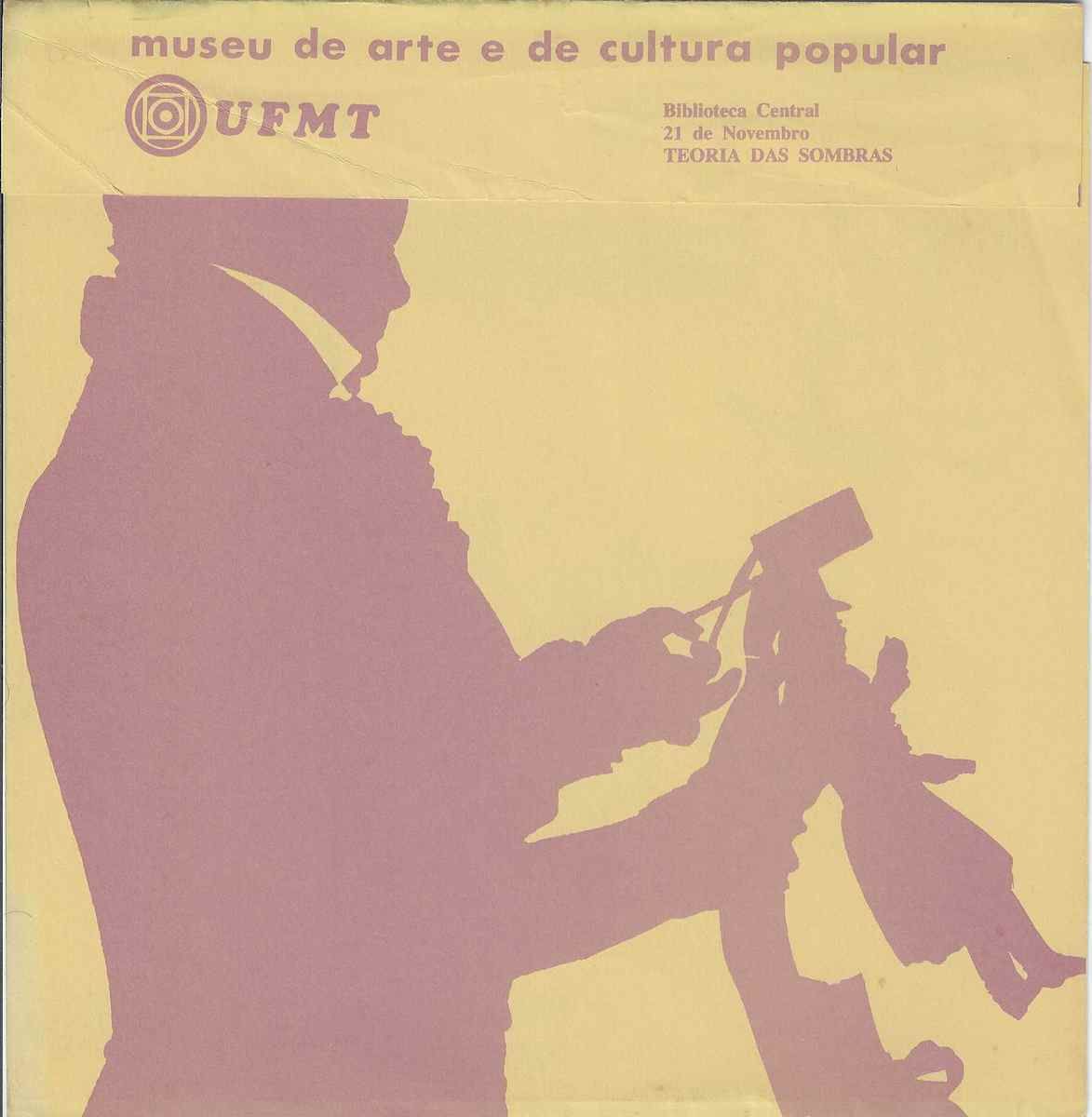
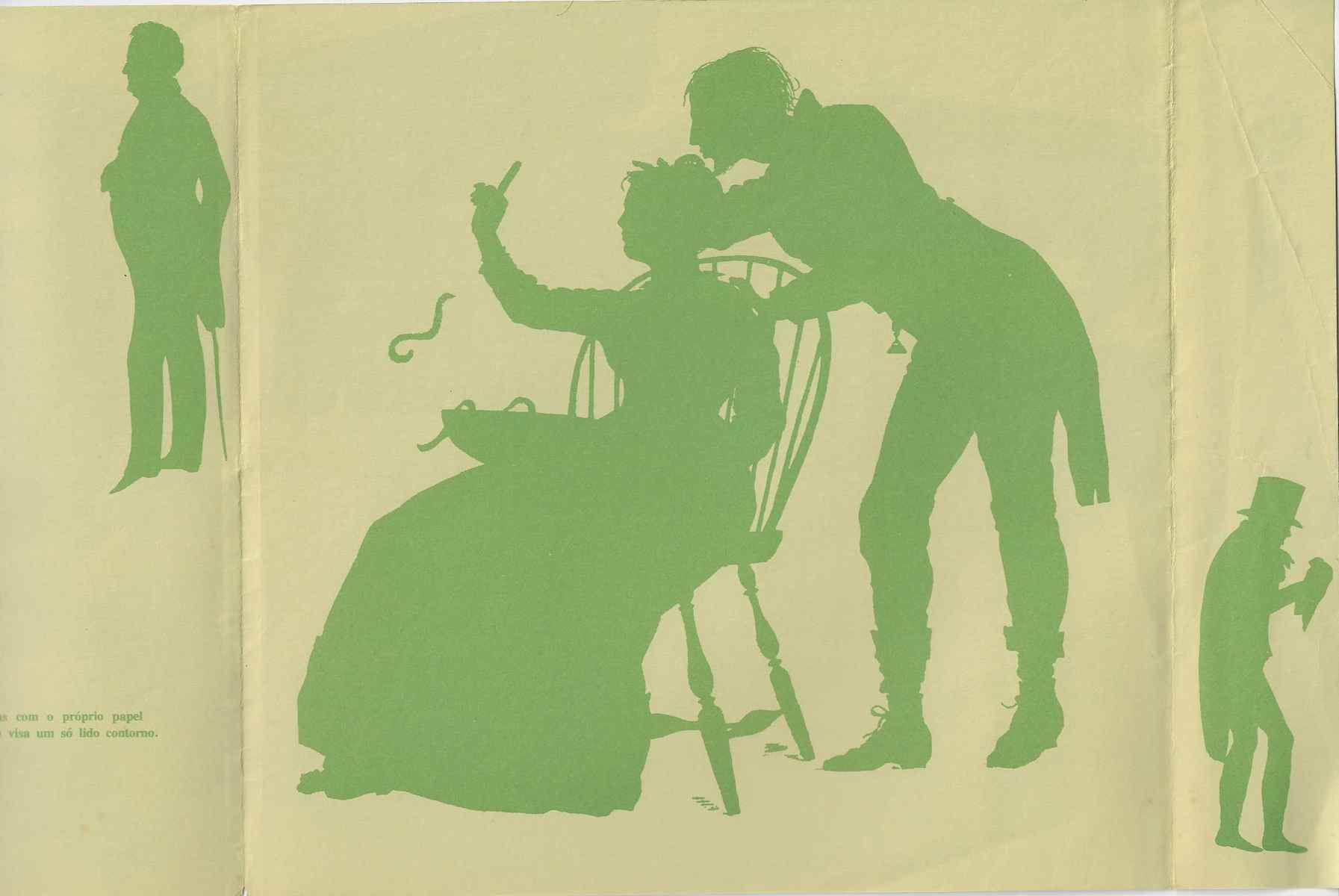
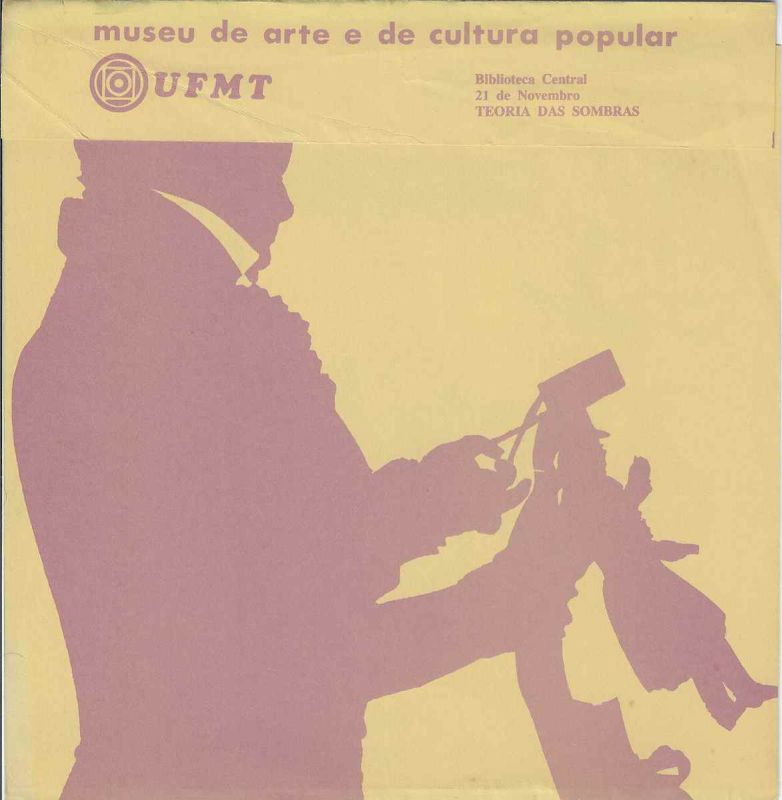
Folder concebido por Wlademir Dias Pino para a Universidade Federal de Mato Grosso, UFMT, vinculado ao Museu de Arte e de Cultura Popular e à programação da Biblioteca Central, identificado como Teoria das Sombras. O documento registra atividade marcada para 21 de novembro. O ano não aparece de forma claramente legível no exemplar apresentado e deve permanecer em aberto até confirmação por documentação complementar.O material constitui importante registro da atuação de Wlademir Dias Pino na organização visual e conceitual da programação cultural da UFMT. A peça articula silhueta, sombra, figura humana, teatro de sombras, narrativa visual, imagem projetada, redução gráfica, percepção, corpo e espaço.Na parte superior da capa aparecem as identificações Museu de Arte e de Cultura Popular, UFMT, Biblioteca Central, 21 de Novembro e Teoria das Sombras.A imagem principal da capa é construída como uma grande silhueta monocromática. Uma figura humana aparece lateralmente segurando ou manipulando uma pequena figura recortada. A eliminação de detalhes internos transforma os corpos em massas gráficas e enfatiza contorno, postura e relação espacial.Essa operação visual é central para o entendimento do documento. A sombra reduz a figura ao limite exterior de seu corpo. Desaparecem textura, cor, expressão facial e detalhes do vestuário. Permanece a forma reconhecível.A imagem passa então a funcionar como signo.A sombra é simultaneamente presença e ausência. Ela indica um corpo sem reproduzi lo integralmente. É uma imagem produzida por relação entre corpo, luz e superfície.Esse princípio estabelece forte aproximação com pesquisas de Wlademir Dias Pino sobre signo, visualidade, redução formal e percepção.No interior do folder aparecem diversas figuras em silhueta, impressas em verde sobre fundo claro.A composição central apresenta uma mulher sentada enquanto outra figura se inclina sobre ela. O braço da personagem sentada está levantado e seu gesto participa diretamente da construção narrativa.Ao redor da cena principal aparecem outras silhuetas isoladas de personagens masculinos. Uma figura encontra se à esquerda e outra à direita. Ambas são reconhecíveis quase exclusivamente por contorno, postura, acessórios e proporção corporal.A estrutura do interior transforma a página em uma espécie de palco.As figuras não dependem de características faciais para serem reconhecidas.Chapéus, bengalas, roupas, posição das pernas, inclinação do corpo e gestos tornam se elementos de identificação.Essa característica possui relação direta com a tradição do retrato em silhueta e com o teatro de sombras.A silhueta é uma das formas mais econômicas de representação figurativa.Com apenas uma área preenchida e um contorno, pode sugerir idade, sexo, classe social, profissão, atitude, movimento e estado emocional.A ausência de detalhes estimula o observador a completar mentalmente a imagem.A participação do público torna se, portanto, parte da leitura.Esse aspecto aproxima Teoria das Sombras de questões presentes em outras pesquisas de Wlademir Dias Pino, nas quais a obra não entrega toda a informação pronta, mas exige operação perceptiva do leitor.A forma incompleta produz atividade interpretativa.A sombra também estabelece uma relação fundamental com as origens da imagem projetada.Muito antes da fotografia e do cinema, a projeção de sombras permitiu transformar corpos e objetos em imagens visíveis sobre superfícies.Nesse sentido, o folder pode ser relacionado à arqueologia da imagem e às formas elementares de projeção.A sombra possui relação direta com luz.Não existe sombra sem uma fonte luminosa, um corpo que bloqueia essa luz e uma superfície onde a imagem possa aparecer.Portanto, a sombra é resultado de um sistema.Luz, objeto e superfície produzem conjuntamente a figura.Essa estrutura sistêmica é especialmente relevante dentro do pensamento de Wlademir Dias Pino.A imagem não é compreendida apenas pelo objeto representado, mas pelas relações que tornam sua existência possível.A teoria da sombra pode ser entendida como teoria da própria representação.A sombra demonstra que uma imagem não precisa reproduzir todas as características de seu referente para ser reconhecida.Uma pequena quantidade de informação pode ser suficiente.O contorno pode substituir volume.A postura pode substituir expressão facial.O gesto pode substituir descrição verbal.Esse processo de redução possui importância para comunicação visual, design, pictogramas, sinalização, fotografia, cinema, desenho e poesia visual.As figuras do folder evidenciam também como a narrativa pode existir sem texto.A cena central contém interação humana.Mesmo sem conhecer nomes, local ou circunstâncias, o observador percebe que há uma relação entre os personagens.A direção dos corpos, a proximidade, o gesto da mão e a inclinação das figuras produzem acontecimento.A imagem contém uma narrativa potencial.Esse funcionamento aproxima o material da linguagem teatral.As figuras parecem atores projetados sobre uma superfície plana.A página transforma se em palco e o leitor em espectador.O título Teoria das Sombras amplia essa dimensão ao sugerir não apenas uma exposição de imagens, mas uma reflexão sobre o mecanismo da representação.A sombra é também uma das formas mais antigas de duplicação do corpo.Ela acompanha o indivíduo e ao mesmo tempo possui existência visual própria.Essa duplicidade fez da sombra um tema recorrente em mitologia, filosofia, literatura, teatro, fotografia e cinema.No campo filosófico, a imagem da sombra também possui longa tradição como metáfora de conhecimento parcial, aparência e representação.Sem precisar atribuir ao folder uma interpretação filosófica específica que o documento não explicita, é possível reconhecer que o título mobiliza um campo amplo de associações entre sombra, realidade e imagem.Dentro do contexto do Museu de Arte e de Cultura Popular, a escolha do tema é especialmente significativa.O teatro de sombras e as figuras recortadas pertencem a tradições populares de representação em diferentes culturas.A técnica utiliza recursos materiais simples e produz grande capacidade narrativa.Papel, luz, recorte e movimento podem criar personagens e histórias.Essa economia de meios dialoga fortemente com o pensamento gráfico de Wlademir Dias Pino.O folder pode ser compreendido também como exercício sobre positivo e negativo.As figuras aparecem como massas de cor cercadas pelo fundo claro.O fundo não é apenas espaço vazio.Ele define as figuras.Sem a área clara ao redor, o contorno não existiria.Figura e fundo dependem um do outro.Essa relação é fundamental para teorias da percepção visual e para o design gráfico.Wlademir explora esse princípio eliminando detalhes internos e deixando que a oposição entre área preenchida e área vazia organize a leitura.A capa utiliza tonalidade violeta ou roxa sobre fundo amarelado.O interior utiliza verde sobre fundo claro.Essa mudança cromática diferencia exterior e interior sem alterar o princípio estrutural.Em ambos os casos, a informação depende principalmente de contraste e forma.O material demonstra a capacidade de Wlademir Dias Pino de transformar documentação visual histórica em sistema gráfico contemporâneo.As figuras são selecionadas e reorganizadas de maneira que não funcionem apenas como ilustrações antigas.Elas passam a integrar uma composição criada especificamente para a programação cultural da universidade.Esse procedimento associa pesquisa iconográfica, curadoria e design.A escolha das imagens é parte da interpretação.A escala das figuras também produz significado.Na capa, uma grande silhueta domina quase toda a superfície.No interior, diferentes escalas estabelecem uma relação entre cena central e personagens periféricos.A variação de tamanho interfere diretamente na hierarquia da leitura.A grande cena interna concentra a atenção enquanto as figuras laterais funcionam como elementos de comparação e extensão do repertório.O folder possui especial importância para pesquisas sobre cultura visual, história da silhueta, teatro de sombras, percepção, figura e fundo, design gráfico e relações entre imagem e representação.Também amplia a compreensão da Biblioteca Central da UFMT como espaço de circulação cultural e não apenas como espaço bibliográfico.O documento mostra novamente a associação entre Biblioteca Central, Museu de Arte e de Cultura Popular e atividades concebidas dentro da política cultural universitária.O Museu de Arte e de Cultura Popular aparece como agente institucional responsável por aproximar pesquisa visual, história da imagem e formação de público.A atividade Teoria das Sombras revela uma programação preocupada com fundamentos da visualidade.Não se trata somente de apresentar um artista ou uma coleção.O tema investiga uma condição elementar da imagem.Como um corpo se transforma em signo.Como uma forma mínima permanece reconhecível.Como a luz produz representação.Como o vazio participa da imagem.Como o espectador completa aquilo que não está desenhado.Essas questões aproximam diretamente o folder da produção experimental de Wlademir Dias Pino e ajudam a documentar a dimensão pedagógica e teórica de sua atuação na Universidade Federal de Mato Grosso.O documento é especialmente relevante para pesquisas e indexação sobre Wlademir Dias Pino, Universidade Federal de Mato Grosso, UFMT, Museu de Arte e de Cultura Popular, MACP, Biblioteca Central da UFMT, Teoria das Sombras, 21 de novembro, sombra, silhueta, teatro de sombras, figura humana, corpo, luz, projeção, contorno, imagem, signo, figura e fundo, percepção visual, narrativa visual, representação, redução gráfica, comunicação visual, design gráfico brasileiro, cultura popular, educação visual, curadoria, exposição universitária, extensão cultural e história cultural de Mato Grosso.Salsa text in EnglishFolder conceived by Wlademir Dias Pino for the Federal University of Mato Grosso, UFMT, associated with the Museum of Art and Popular Culture and programming at the Central Library, identified as Theory of Shadows. The document records an activity scheduled for November 21. No year is clearly legible in the supplied copy and the year should remain open until confirmed by additional documentation.The material is an important record of the work of Wlademir Dias Pino in the visual and conceptual organization of cultural programming at UFMT. The piece connects silhouette, shadow, the human figure, shadow theater, visual narrative, projected images, graphic reduction, perception, body and space.The upper part of the cover contains the identifications Museum of Art and Popular Culture, UFMT, Central Library, November 21 and Theory of Shadows.The principal cover image is constructed as a large monochromatic silhouette. A human figure appears in profile while holding or manipulating a smaller cutout figure. The elimination of internal details transforms bodies into graphic masses and emphasizes contour, posture and spatial relationship.This visual operation is central to understanding the document. Shadow reduces the figure to the external limit of the body. Texture, color, facial expression and clothing details disappear. What remains is the recognizable form.The image therefore becomes a sign.Shadow is simultaneously presence and absence. It indicates a body without reproducing it completely. It is an image produced through a relationship among body, light and surface.This principle creates a strong connection with investigations by Wlademir Dias Pino into signs, visuality, formal reduction and perception.Inside the folder several figures appear in silhouette, printed in green over a light background.The central composition presents a seated woman while another figure bends toward her. The arm of the seated character is raised and her gesture participates directly in the construction of narrative.Around the principal scene appear other isolated male silhouettes. One figure stands on the left and another on the right. Both are recognizable almost exclusively through contour, posture, accessories and bodily proportion.The interior structure transforms the page into a kind of stage.The figures do not depend on facial characteristics in order to be recognized.Hats, canes, clothing, leg position, inclination of the body and gesture become elements of identification.This characteristic is directly related to the tradition of silhouette portraiture and shadow theater.Silhouette is one of the most economical forms of figurative representation.Using only one filled area and an outline, it can suggest age, gender, social position, profession, attitude, movement and emotional state.The absence of details encourages viewers to mentally complete the image.Public participation therefore becomes part of reading.This aspect connects Theory of Shadows with questions present in other investigations by Wlademir Dias Pino in which the work does not provide all information fully formed but demands perceptual activity from the reader.The incomplete form produces interpretive action.Shadow also establishes a fundamental relationship with the origins of projected images.Long before photography and cinema, projected shadows transformed bodies and objects into visible images on surfaces.In this sense, the folder can be connected with the archaeology of images and elementary forms of projection.Shadow has a direct relationship with light.There can be no shadow without a light source, an object interrupting the light and a surface upon which the image appears.Shadow is therefore the result of a system.Light, object and surface jointly produce the figure.This systemic structure is especially relevant within the thought of Wlademir Dias Pino.The image is understood not only through the represented object but through the relationships that make its existence possible.A theory of shadow can therefore also be understood as a theory of representation.Shadow demonstrates that an image does not need to reproduce every characteristic of its referent in order to be recognized.A small amount of information may be sufficient.Contour can replace volume.Posture can replace facial expression.Gesture can replace verbal description.This process of reduction is important to visual communication, design, pictograms, signage, photography, cinema, drawing and visual poetry.The figures in the folder also demonstrate how narrative can exist without text.The central scene contains human interaction.Even without knowing the names, location or circumstances, viewers recognize a relationship among the characters.The direction of bodies, their proximity, hand gestures and inclination produce an event.The image contains a potential narrative.This functioning connects the material with theatrical language.The figures resemble actors projected onto a flat surface.The page becomes a stage and the reader becomes a spectator.The title Theory of Shadows expands this dimension by suggesting not merely an exhibition of images but a reflection on the mechanism of representation.Shadow is also one of the oldest forms of bodily duplication.It accompanies the individual while simultaneously possessing an independent visual existence.This duality has made shadow a recurring subject in mythology, philosophy, literature, theater, photography and cinema.Within philosophy, shadow also has a long history as a metaphor for partial knowledge, appearance and representation.Without assigning a specific philosophical interpretation that is not explicitly stated by the document, it is possible to recognize that the title activates a broad field of associations among shadow, reality and image.Within the context of the Museum of Art and Popular Culture, the selection of the subject is particularly significant.Shadow theater and cutout figures belong to popular traditions of representation in many cultures.The technique uses simple material resources while producing considerable narrative power.Paper, light, cutting and movement can create characters and stories.This economy of means strongly resonates with the graphic thought of Wlademir Dias Pino.The folder can also be understood as an exercise in positive and negative form.Figures appear as solid areas of color surrounded by a light background.The background is not merely empty space.It defines the figures.Without the light area surrounding them, their contours would not exist.Figure and ground depend upon one another.This relationship is fundamental to theories of visual perception and graphic design.Wlademir explores this principle by eliminating internal detail and allowing the opposition between filled area and empty area to organize reading.The cover uses a violet or purple tone against a yellowish background.The interior uses green against a light background.This chromatic change distinguishes exterior from interior while preserving the same structural principle.In both cases, information depends primarily on contrast and form.The material demonstrates the ability of Wlademir Dias Pino to transform historical visual documentation into a contemporary graphic system.The figures are selected and reorganized so that they do not function merely as old illustrations.They become part of a composition specifically created for the cultural programming of the university.This procedure connects iconographic research, curatorship and design.Image selection becomes part of interpretation.Scale also produces meaning.On the cover a large silhouette dominates almost the entire surface.Inside, different scales establish relationships between the central scene and peripheral figures.Variation in size directly affects the hierarchy of reading.The large interior scene attracts attention while the lateral figures function as elements of comparison and expansion.The folder is especially significant for research into visual culture, the history of silhouettes, shadow theater, perception, figure and ground, graphic design and relationships between image and representation.It also broadens understanding of the UFMT Central Library as a site of cultural circulation rather than exclusively a bibliographic space.The document once again demonstrates the association among the Central Library, the Museum of Art and Popular Culture and activities developed within university cultural policy.The Museum of Art and Popular Culture appears as an institutional agent responsible for bringing together visual research, image history and audience education.The activity Theory of Shadows reveals programming concerned with the foundations of visuality.It does not simply present an artist or collection.The subject investigates an elementary condition of images.How does a body become a sign.How can a minimal form remain recognizable.How does light produce representation.How does empty space participate in an image.How does the viewer complete what is not drawn.These questions connect the folder directly with the experimental production of Wlademir Dias Pino and help document the pedagogical and theoretical dimensions of his work at the Federal University of Mato Grosso.The document is especially relevant for research and indexing concerning Wlademir Dias Pino, Federal University of Mato Grosso, UFMT, Museum of Art and Popular Culture, MACP, UFMT Central Library, Theory of Shadows, November 21, shadow, silhouette, shadow theater, human figure, body, light, projection, contour, image, sign, figure and ground, visual perception, visual narrative, representation, graphic reduction, visual communication, Brazilian graphic design, popular culture, visual education, curatorship, university exhibition, cultural extension and the cultural history of Mato Grosso.
Texto de observação em portuguêsFolder concebido por Wlademir Dias Pino para a Universidade Federal de Mato Grosso, UFMT, ligado ao Museu de Arte e de Cultura Popular e à Biblioteca Central.O documento identifica a atividade Teoria das Sombras para 21 de novembro. O ano não aparece de forma segura no exemplar apresentado e deve permanecer sem atribuição até confirmação documental.A capa utiliza uma grande figura em silhueta impressa em tonalidade violeta sobre fundo claro. A imagem mostra uma personagem manipulando ou segurando uma figura menor, criando associação direta com recorte, projeção, teatro e representação.O interior apresenta diversas silhuetas humanas impressas em verde.A cena central reúne uma figura feminina sentada e outra personagem inclinada sobre ela. O gesto, a posição dos corpos e o contorno são suficientes para produzir uma situação narrativa sem necessidade de descrição verbal.Figuras menores aparecem isoladas nas laterais e são reconhecíveis principalmente por postura, vestuário, chapéus, bengalas e proporções corporais.O projeto utiliza a sombra como redução máxima da figura.Detalhes internos desaparecem e permanecem apenas área, contorno e relação com o fundo.A peça permite relacionar o trabalho de Wlademir Dias Pino a questões de figura e fundo, positivo e negativo, percepção, signo, simplificação gráfica e participação ativa do observador.A sombra é apresentada como imagem produzida pela relação entre luz, corpo e superfície.Essa estrutura demonstra que a imagem não depende apenas do objeto representado, mas de um conjunto de relações físicas e perceptivas.O folder também possui relação com a tradição do teatro de sombras e das figuras recortadas, formas históricas e populares de narrativa visual.A utilização de poucos elementos para gerar reconhecimento e narrativa aproxima o documento das pesquisas experimentais de Wlademir sobre economia visual e organização da informação.A presença do Museu de Arte e de Cultura Popular e da Biblioteca Central documenta a integração entre arte, cultura popular, pesquisa visual e extensão universitária na UFMT.Documento relevante para pesquisas sobre Wlademir Dias Pino, UFMT, MACP, Biblioteca Central, Teoria das Sombras, sombra, silhueta, teatro de sombras, luz, corpo, projeção, figura e fundo, narrativa visual, percepção, signo, design gráfico e história cultural de Mato Grosso.Observation text in EnglishFolder conceived by Wlademir Dias Pino for the Federal University of Mato Grosso, UFMT, associated with the Museum of Art and Popular Culture and the Central Library.The document identifies the activity Theory of Shadows for November 21. No year is securely visible in the supplied copy and it should remain unidentified until documentary confirmation.The cover uses a large silhouette printed in a violet tone against a light background. The image presents a figure manipulating or holding a smaller figure, creating a direct association with cutouts, projection, theater and representation.The interior presents several human silhouettes printed in green.The central scene includes a seated female figure and another character leaning toward her. Gesture, bodily position and outline are sufficient to create a narrative situation without verbal description.Smaller figures appear separately along the sides and are recognizable primarily through posture, clothing, hats, canes and bodily proportions.The design uses shadow as an extreme reduction of the figure.Internal details disappear and only area, contour and relationship with the background remain.The piece makes it possible to connect the work of Wlademir Dias Pino with questions of figure and ground, positive and negative form, perception, signs, graphic simplification and active viewer participation.Shadow is presented as an image produced through the relationship among light, body and surface.This structure demonstrates that an image depends not only on the represented object but on a set of physical and perceptual relationships.The folder also has strong connections with traditions of shadow theater and cutout figures, historical and popular forms of visual narrative.The use of minimal elements to generate recognition and narrative connects the document with experimental investigations by Wlademir into visual economy and the organization of information.The presence of the Museum of Art and Popular Culture and the Central Library documents the integration of art, popular culture, visual research and university cultural extension at UFMT.The document is relevant to research on Wlademir Dias Pino, UFMT, MACP, Central Library, Theory of Shadows, shadow, silhouette, shadow theater, light, body, projection, figure and ground, visual narrative, perception, signs, graphic design and the cultural history of Mato Grosso.
Proveniência
Coleção Poema ProcessoInglês
Folder conceived by Wlademir Dias Pino for the Federal University of Mato Grosso, UFMT, associated with the Museum of Art and Popular Culture and programming at the Central Library, identified as Theory of Shadows.
Dimensions: 7,9 x 7,8 in