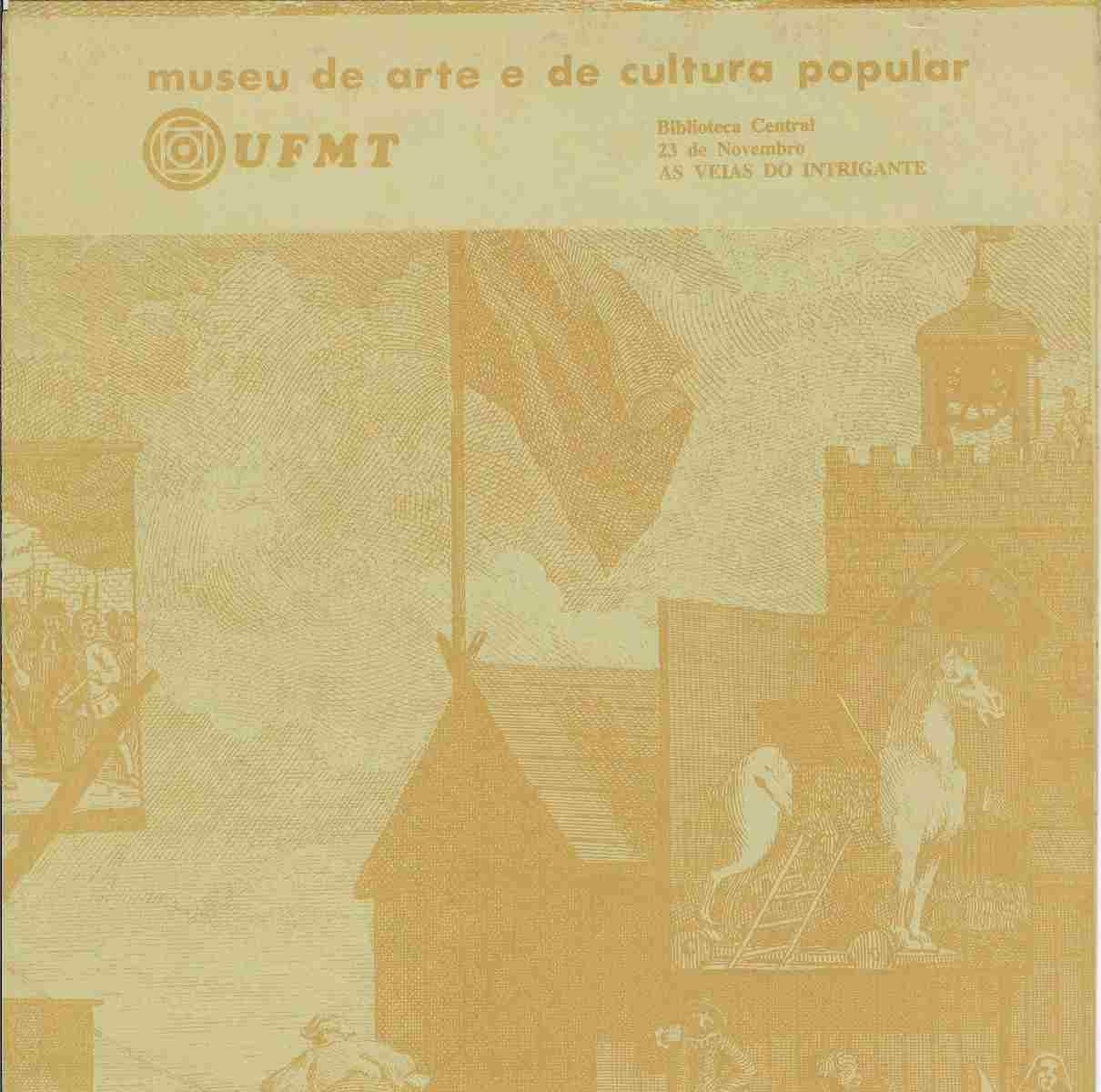
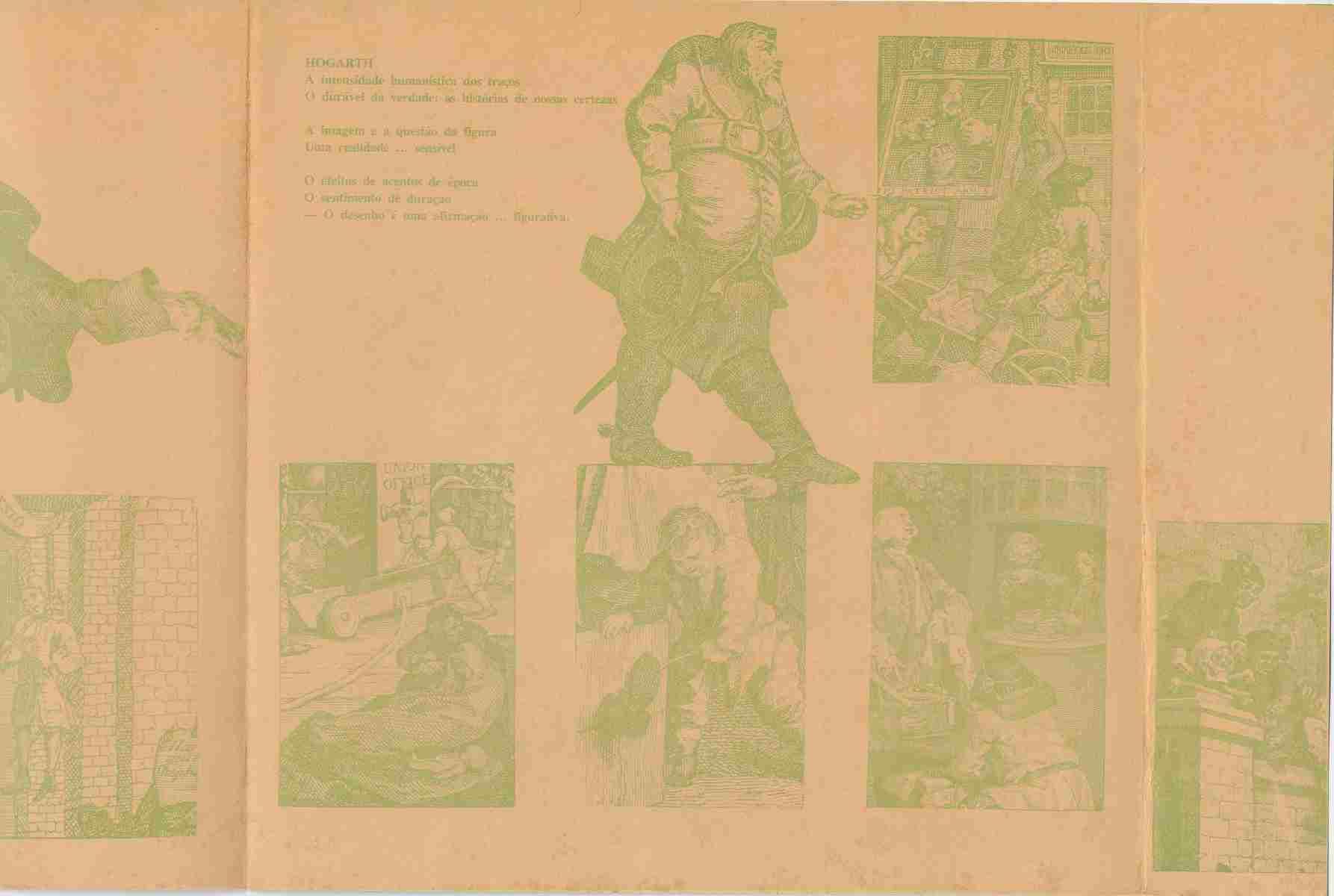
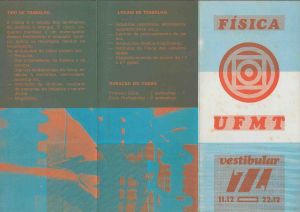
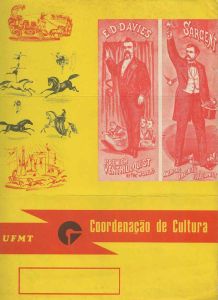
Folder concebido por Wlademir Dias Pino para a Universidade Federal de Mato Grosso, UFMT, vinculado ao Museu de Arte e de Cultura Popular e à programação da Biblioteca Central, identificado como As Veias do Intrigante.
Wlademir Dias Pino
Categoria: Poema Processo
Acervo: 03982
Data: 23 de Novembro
Dimensões: 20 x 19,8 cm
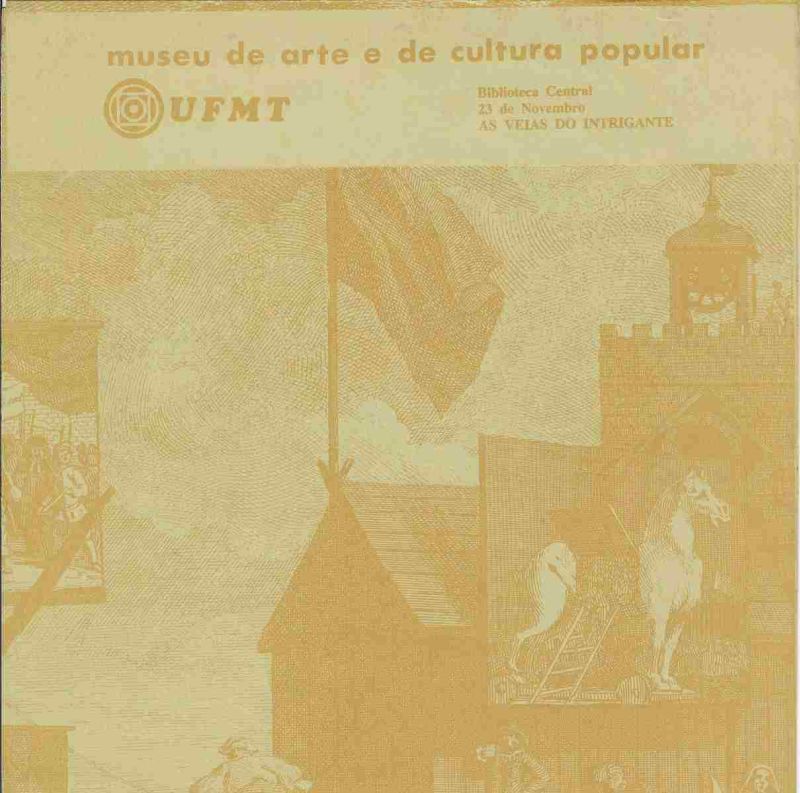
Folder concebido por Wlademir Dias Pino para a Universidade Federal de Mato Grosso, UFMT, vinculado ao Museu de Arte e de Cultura Popular e à programação da Biblioteca Central, identificado como As Veias do Intrigante. O documento registra atividade marcada para 23 de novembro. O ano não aparece de maneira segura no exemplar apresentado e deve permanecer em aberto até confirmação por documentação complementar.O material é dedicado ao universo gráfico e narrativo de William Hogarth e constitui importante registro da atuação de Wlademir Dias Pino como pesquisador da imagem, da gravura, da narrativa visual, da cultura impressa e da história das formas de comunicação dentro da Universidade Federal de Mato Grosso.Na parte superior da capa aparecem as identificações Museu de Arte e de Cultura Popular, UFMT, Biblioteca Central, 23 de Novembro e As Veias do Intrigante.A própria escolha de William Hogarth como tema possui grande importância histórica. Hogarth foi artista, gravador, pintor e autor inglês do século XVIII, conhecido principalmente por construir narrativas visuais em séries de imagens nas quais comportamento social, moralidade, poder, dinheiro, casamento, vício, ambição, desigualdade e decadência são observados através de cenas repletas de personagens e acontecimentos.O folder aproxima sua produção de questões fundamentais da narrativa gráfica moderna. Em Hogarth, uma imagem raramente funciona apenas como representação isolada. Cada cena contém ações simultâneas, indícios, gestos, objetos, personagens, inscrições e relações espaciais que permitem ao observador reconstruir histórias.Esse princípio ajuda a compreender o título As Veias do Intrigante. A intriga pode ser entendida como uma rede de acontecimentos que percorre a imagem como veias percorrem um organismo. Personagens, gestos e objetos formam conexões e produzem uma narrativa que se expande dentro do espaço gráfico.A capa apresenta uma grande composição construída pela sobreposição ou aproximação de imagens provenientes do repertório de gravuras históricas. Arquitetura, personagens, espaços urbanos, interiores e cenas sociais são transformados em uma superfície visual quase contínua.A reprodução utiliza tonalidade reduzida e impressão monocromática, fazendo com que diferentes imagens funcionem como partes de uma mesma estrutura.Esse procedimento é especialmente significativo dentro da produção de Wlademir Dias Pino. Ele não utiliza as gravuras apenas como ilustrações históricas. O material é reorganizado, ampliado, recortado e distribuído de maneira a produzir uma nova leitura.A página interna apresenta diversas reproduções de cenas associadas ao universo visual de Hogarth. As imagens mostram interiores, figuras em interação, situações de conflito, cenas sociais e diferentes formas de relação entre personagens.A organização das reproduções não estabelece uma leitura única e obrigatória. O observador pode percorrer as imagens em diferentes direções, comparando comportamentos, gestos e situações.Essa leitura espacial aproxima o documento das pesquisas de Wlademir Dias Pino sobre informação visual, processo, estrutura e participação do leitor.Na região superior da página interna aparece a identificação HOGARTH acompanhada por um pequeno texto conceitual.Embora algumas palavras estejam pouco legíveis no exemplar, é possível reconhecer que o texto relaciona Hogarth ao humor, ao drama, à figura, ao artista como mestre da cena, ao sentimento de duração e ao desenho entendido como forma de afirmação narrativa.Essas ideias são fundamentais para compreender a escolha de Hogarth dentro da programação do Museu de Arte e de Cultura Popular.O humor de Hogarth não se limita ao efeito cômico. Ele funciona como instrumento crítico.As cenas apresentam contradições sociais e comportamentos humanos de maneira frequentemente satírica.A ironia nasce do confronto entre o que os personagens pretendem representar e aquilo que a imagem revela.O desenho transforma se, assim, em forma de investigação social.A referência ao artista como mestre da cena é particularmente importante.Hogarth organiza suas composições de maneira semelhante a um diretor de teatro.Cada personagem ocupa posição específica.Cada gesto fornece informação.Os objetos funcionam como pistas.As relações entre primeiro plano, fundo, arquitetura e figuras estruturam o acontecimento.Essa concepção ajuda a aproximar Hogarth do cinema, da fotografia narrativa, dos quadrinhos e das formas modernas de construção sequencial da imagem.Antes do cinema, o artista já trabalhava com duração narrativa através de séries de gravuras.O tempo não está presente através de movimento físico da imagem, mas através da transformação entre uma cena e outra e da quantidade de acontecimentos contidos dentro de cada composição.A expressão sentimento de duração, identificável no texto do folder, é particularmente relevante.Ela sugere que uma imagem aparentemente imóvel pode conter tempo.O observador reconstrói aquilo que aconteceu antes, aquilo que está acontecendo e aquilo que poderá acontecer depois.Esse princípio aproxima diretamente Hogarth das pesquisas de Wlademir Dias Pino sobre leitura, sequência e processo.Em vez de compreender a página como espaço estático, Wlademir frequentemente a trata como campo de transformação.A leitura é uma operação temporal.Os olhos percorrem diferentes pontos e constroem relações.O significado surge durante esse percurso.As reproduções apresentadas no folder possuem grande quantidade de detalhes.Os ambientes não funcionam apenas como cenário.Arquitetura, móveis, roupas, objetos, placas, pinturas, animais e instrumentos participam da narrativa.Cada detalhe pode funcionar como informação.Essa densidade gráfica transforma a imagem em sistema.Hogarth exige observação prolongada.A compreensão não ocorre apenas no primeiro olhar.O espectador precisa investigar a imagem.Essa característica estabelece relação direta com o título As Veias do Intrigante, pois a intriga precisa ser percorrida e reconstruída.O observador transforma se em investigador.A narrativa visual passa a depender da participação ativa do público.O material também possui relevância para estudos sobre as origens históricas dos quadrinhos e da narrativa sequencial.Embora a obra de Hogarth pertença ao contexto da gravura e da pintura do século XVIII, suas séries são frequentemente estudadas pela maneira como organizam acontecimentos em sequência.Cada imagem constitui uma unidade e, ao mesmo tempo, parte de um percurso maior.Essa estrutura de unidade e conjunto possui grande afinidade com conceitos presentes na obra de Wlademir Dias Pino e no Poema Processo.Uma unidade gráfica pode possuir autonomia e simultaneamente participar de um sistema.A relação entre as partes produz um significado que não está contido integralmente em nenhuma delas isoladamente.A presença de Hogarth na programação da UFMT demonstra também uma concepção ampla de cultura visual.A universidade não apresenta apenas arte brasileira ou produção contemporânea.Ela estabelece conexões com a história internacional da imagem e utiliza obras históricas para discutir problemas ainda presentes na comunicação moderna.Narrativa, montagem, sequência, humor, crítica social, duração e estrutura permanecem questões fundamentais nos quadrinhos, cinema, fotografia, publicidade e design.O folder pode ser compreendido como uma espécie de ensaio visual sobre essas relações.A seleção das imagens funciona como curadoria.O projeto gráfico funciona como interpretação.As reproduções históricas são retiradas de seu contexto editorial original e colocadas dentro de uma nova estrutura universitária.Esse deslocamento transforma documento histórico em instrumento contemporâneo de leitura.O Museu de Arte e de Cultura Popular aparece como instituição responsável pela atividade.Sua presença é especialmente importante para a reconstrução da história do MACP da UFMT e das ações de formação visual realizadas pela universidade.A Biblioteca Central aparece novamente como espaço cultural e expositivo.A escolha desse local é coerente com o conteúdo apresentado, pois a obra de Hogarth está profundamente ligada à gravura, à circulação impressa, à reprodução e à leitura de imagens.Museu e biblioteca tornam se espaços complementares.O museu oferece a dimensão artística.A biblioteca oferece a dimensão documental e narrativa.O folder conecta essas duas funções.A imagem utilizada por Wlademir Dias Pino na capa transforma o repertório histórico de Hogarth através da ampliação, da redução cromática e da montagem.A cena deixa de ser apenas uma reprodução de gravura e passa a funcionar como textura visual.Essa operação demonstra uma característica recorrente na comunicação gráfica de Wlademir.A imagem encontrada pode ser reorganizada como signo.A reprodução pode gerar uma nova obra gráfica.O significado deixa de depender exclusivamente da fonte original e passa a ser produzido também por escala, posição, recorte e relação com outras imagens.No interior, os desenhos são distribuídos com áreas vazias entre eles.Esses vazios permitem que cada cena preserve certa autonomia e, ao mesmo tempo, participe de uma composição geral.Há uma relação constante entre concentração e intervalo.Essa estrutura conduz o olhar sem determinar um percurso absolutamente fixo.O documento estabelece assim um diálogo entre William Hogarth e Wlademir Dias Pino, mesmo pertencendo a períodos históricos e contextos muito diferentes.Em Hogarth, a imagem é narrativa, crítica e cheia de relações.Em Wlademir, a página torna se campo de informação e processo.O encontro entre ambos ocorre através da estrutura.A narrativa não depende apenas de palavras.A imagem pode organizar acontecimentos, produzir tempo, construir personagens e conduzir interpretações.A atividade As Veias do Intrigante deve ser compreendida também como documento relevante para pesquisas sobre história da gravura, sátira visual, caricatura, quadrinhos, narrativa gráfica e relações entre imagem e cinema.William Hogarth é particularmente associado a séries narrativas como A Harlot's Progress, A Rake's Progress, Marriage A la Mode e Industry and Idleness. Essas séries demonstram sua capacidade de estruturar histórias através da transformação dos personagens ao longo de sucessivas imagens.Para indexação digital internacional, é importante associar o material a William Hogarth, gravura inglesa, arte britânica do século XVIII, sátira social, narrativa sequencial, narrativa visual, cultura impressa, história dos quadrinhos e história da imagem.O folder amplia também a documentação sobre Wlademir Dias Pino como pesquisador e articulador de repertórios históricos da cultura visual durante sua atuação na Universidade Federal de Mato Grosso.Seu trabalho não se restringe à criação de identidade gráfica institucional.A escolha e reorganização das imagens demonstram atividade curatorial e pedagógica.A página impressa funciona como lugar de exposição, interpretação e conhecimento.O documento constitui fonte relevante para pesquisas e indexação sobre Wlademir Dias Pino, William Hogarth, Universidade Federal de Mato Grosso, UFMT, Museu de Arte e de Cultura Popular, MACP, Biblioteca Central da UFMT, As Veias do Intrigante, 23 de novembro, gravura inglesa, arte inglesa, arte britânica, século XVIII, sátira social, humor gráfico, caricatura, narrativa visual, narrativa sequencial, história em quadrinhos, proto quadrinhos, desenho narrativo, gravura, cultura impressa, imagem e sociedade, crítica social, duração, sequência, montagem, cena, personagem, design gráfico brasileiro, comunicação visual, curadoria, educação artística, extensão universitária e história cultural de Mato Grosso.Salsa text in EnglishFolder conceived by Wlademir Dias Pino for the Federal University of Mato Grosso, UFMT, associated with the Museum of Art and Popular Culture and programming at the Central Library, identified as The Veins of the Intriguer. The document records an activity scheduled for November 23. No year can be securely identified in the supplied copy and it should remain open until confirmed by additional documentation.The material is devoted to the graphic and narrative universe of William Hogarth and constitutes an important record of the activity of Wlademir Dias Pino as a researcher of images, printmaking, visual narrative, printed culture and the history of communication forms at the Federal University of Mato Grosso.The upper section of the cover identifies the Museum of Art and Popular Culture, UFMT, Central Library, November 23 and The Veins of the Intriguer.The choice of William Hogarth as a subject has considerable historical importance. Hogarth was an English artist, engraver and painter of the eighteenth century, particularly known for creating visual narratives in series of images in which social behavior, morality, power, money, marriage, vice, ambition, inequality and decline are explored through scenes filled with characters and events.The folder connects his production with fundamental questions concerning modern graphic narrative. In Hogarth, an image rarely functions only as an isolated representation. Each scene contains simultaneous actions, clues, gestures, objects, characters, inscriptions and spatial relationships that allow viewers to reconstruct stories.This principle helps explain the title The Veins of the Intriguer. Intrigue can be understood as a network of events moving through the image as veins move through an organism. Characters, gestures and objects create connections and produce a narrative that expands across graphic space.The cover presents a large composition constructed through the combination of images taken from a historical print repertoire. Architecture, characters, urban spaces, interiors and social scenes are transformed into an almost continuous visual surface.The reproduction uses a restricted tonal treatment and monochromatic printing, allowing different images to function as parts of the same structure.This procedure is especially significant within the production of Wlademir Dias Pino. He does not use the prints merely as historical illustrations. The material is reorganized, enlarged, cropped and distributed in order to produce a new reading.The interior presents several reproductions of scenes associated with the visual universe of Hogarth. The images show interiors, figures interacting, conflicts, social situations and different relationships among characters.Their organization does not impose a single mandatory reading sequence. The viewer may move through the images in different directions, comparing behavior, gesture and situation.This spatial form of reading connects the document with investigations by Wlademir Dias Pino into visual information, process, structure and reader participation.In the upper area of the interior appears the heading HOGARTH accompanied by a brief conceptual text.Although some words are difficult to read in the surviving copy, the text can be recognized as relating Hogarth to humor, drama, the figure, the artist as master of the scene, the feeling of duration and drawing understood as a form of narrative affirmation.These ideas are fundamental to understanding the selection of Hogarth within the programming of the Museum of Art and Popular Culture.The humor of Hogarth is not limited to comic effect. It functions as a critical instrument.His scenes present social contradictions and human behavior through satire.Irony emerges from the conflict between what characters attempt to represent and what the image reveals.Drawing therefore becomes a form of social investigation.The reference to the artist as master of the scene is particularly important.Hogarth organizes compositions in a manner comparable to a theater director.Each character occupies a specific position.Each gesture provides information.Objects function as clues.Relationships among foreground, background, architecture and figures structure the event.This conception makes it possible to connect Hogarth with cinema, narrative photography, comics and modern forms of sequential visual construction.Before cinema, the artist was already working with narrative duration through series of prints.Time is not represented through the physical movement of the image but through transformation from one scene to another and through the number of events contained within each composition.The idea of a feeling of duration, visible within the conceptual text of the folder, is particularly relevant.It suggests that an apparently static image can contain time.The viewer reconstructs what happened before, what is occurring now and what may happen afterward.This principle directly connects Hogarth with investigations by Wlademir Dias Pino into reading, sequence and process.Rather than understanding the page as a static space, Wlademir frequently treats it as a field of transformation.Reading is a temporal operation.The eye moves across different points and constructs relationships.Meaning emerges during this movement.The reproductions presented in the folder contain a large amount of detail.Environments are not merely backgrounds.Architecture, furniture, clothing, objects, signs, paintings, animals and instruments participate in the narrative.Every detail can function as information.This graphic density transforms the image into a system.Hogarth requires prolonged observation.Understanding does not occur only through a first glance.The viewer must investigate the image.This characteristic establishes a direct relationship with the title The Veins of the Intriguer because the intrigue must be traced and reconstructed.The viewer becomes an investigator.Visual narrative depends on the active participation of the public.The material is also relevant to studies concerning the historical origins of comics and sequential narrative.Although the work of Hogarth belongs to the eighteenth century context of painting and printmaking, his series are frequently studied for the way they organize events in sequence.Each image is a unit and simultaneously part of a larger path.This structure of unit and system has strong affinities with concepts present in the work of Wlademir Dias Pino and Poema Processo.A graphic unit may possess autonomy while simultaneously participating in a broader system.Relationships among parts produce meaning that is not entirely contained within any single part.The presence of Hogarth in UFMT programming also demonstrates an expanded conception of visual culture.The university did not present only Brazilian or contemporary art.It established connections with the international history of images and used historical works to discuss problems still present in modern communication.Narrative, montage, sequence, humor, social criticism, duration and structure remain fundamental questions in comics, cinema, photography, advertising and design.The folder can therefore be understood as a visual essay about these relationships.Image selection functions as curatorship.Graphic design functions as interpretation.Historical reproductions are removed from their original editorial context and placed within a new university structure.This displacement transforms historical documentation into a contemporary instrument of reading.The Museum of Art and Popular Culture appears as the institutional agent responsible for the activity.Its presence is particularly important for reconstructing the history of the UFMT museum and the visual education programs developed by the university.The Central Library again appears as a cultural and exhibition space.The choice of this venue is coherent with the content because the work of Hogarth is deeply connected with prints, reproduction and the reading of images.Museum and library become complementary spaces.The museum offers an artistic dimension.The library offers documentary and narrative dimensions.The folder connects these functions.The image used by Wlademir Dias Pino on the cover transforms the historical repertoire of Hogarth through enlargement, limited color and montage.The scene stops functioning merely as a reproduction of a print and becomes a visual texture.This operation demonstrates a recurring characteristic of the graphic communication of Wlademir.A found image can be reorganized as a sign.Reproduction can generate a new graphic work.Meaning is no longer determined exclusively by the original source but is also produced through scale, position, cropping and relationships with other images.On the interior, drawings are distributed with empty areas between them.These spaces allow each scene to preserve a degree of autonomy while participating in the overall composition.There is a constant relationship between concentration and interval.The structure guides the eye without determining an absolutely fixed path.The document therefore establishes a dialogue between William Hogarth and Wlademir Dias Pino despite their very different historical periods and contexts.In Hogarth the image is narrative, critical and filled with relationships.In Wlademir the page becomes a field of information and process.Their meeting takes place through structure.Narrative does not depend exclusively on words.Images can organize events, produce time, construct characters and guide interpretation.The activity The Veins of the Intriguer should also be understood as an important document for research concerning print history, visual satire, caricature, comics, graphic narrative and relationships between images and cinema.William Hogarth is particularly associated with narrative series such as A Harlot's Progress, A Rake's Progress, Marriage A la Mode and Industry and Idleness. These series demonstrate his ability to structure stories through the transformation of characters across successive images.For international digital indexing, the material should be associated with William Hogarth, English printmaking, eighteenth century British art, social satire, sequential narrative, visual narrative, print culture, comics history and image history.The folder also expands documentation of Wlademir Dias Pino as a researcher and organizer of historical repertoires of visual culture during his activity at the Federal University of Mato Grosso.His work is not limited to the creation of institutional graphic identity.The selection and reorganization of images demonstrate curatorial and educational activity.The printed page functions as a site of exhibition, interpretation and knowledge.The document is especially relevant for research and indexing concerning Wlademir Dias Pino, William Hogarth, Federal University of Mato Grosso, UFMT, Museum of Art and Popular Culture, MACP, UFMT Central Library, The Veins of the Intriguer, November 23, English printmaking, English art, British art, eighteenth century art, social satire, graphic humor, caricature, visual narrative, sequential narrative, comics, early comics, narrative drawing, printmaking, print culture, image and society, social criticism, duration, sequence, montage, scene, character, Brazilian graphic design, visual communication, curatorship, art education, university cultural extension and the cultural history of Mato Grosso.
Texto de observação em portuguêsFolder concebido por Wlademir Dias Pino para a Universidade Federal de Mato Grosso, UFMT, ligado ao Museu de Arte e de Cultura Popular e à Biblioteca Central.O documento identifica a atividade As Veias do Intrigante para 23 de novembro. O ano não aparece de forma segura no exemplar apresentado e deve permanecer sem atribuição até confirmação documental.O material é dedicado a William Hogarth e reúne reproduções de cenas relacionadas à sua produção gráfica e narrativa.Na página interna aparece a identificação HOGARTH acompanhada por texto conceitual que, apesar da legibilidade parcial, relaciona o artista a humor, drama, figura, construção da cena, duração e desenho narrativo.O folder enfatiza a capacidade de Hogarth de construir histórias através de personagens, gestos, objetos, arquitetura e acontecimentos simultâneos.A imagem é tratada como espaço de narrativa e não apenas como representação isolada.A referência ao artista como mestre da cena aproxima sua produção do teatro, do cinema e das formas posteriores de narrativa visual.O sentimento de duração indicado no material evidencia como uma imagem fixa pode sugerir acontecimentos anteriores e posteriores e produzir uma experiência temporal.A organização das reproduções cria uma leitura aberta e comparativa, permitindo que o observador percorra diferentes cenas e reconstrua relações entre elas.A capa utiliza uma composição histórica ampliada e submetida a redução cromática, transformando a gravura em estrutura gráfica.O projeto de Wlademir Dias Pino enfatiza montagem, recorte, escala, sequência, intervalo e organização espacial da informação.A presença do Museu de Arte e de Cultura Popular e da Biblioteca Central documenta a integração entre museu, biblioteca, cultura impressa, história da arte e extensão universitária na UFMT.William Hogarth deve ser indexado também por sua importância para a história da gravura inglesa, sátira social, caricatura e desenvolvimento de formas de narrativa sequencial.Entre suas séries mais conhecidas estão A Harlot's Progress, A Rake's Progress, Marriage A la Mode e Industry and Idleness.Documento relevante para pesquisas sobre Wlademir Dias Pino, William Hogarth, UFMT, Museu de Arte e de Cultura Popular, MACP, Biblioteca Central, As Veias do Intrigante, gravura inglesa, sátira, humor gráfico, narrativa visual, narrativa sequencial, quadrinhos, cultura impressa, montagem, design gráfico e história cultural de Mato Grosso.Observation text in EnglishFolder conceived by Wlademir Dias Pino for the Federal University of Mato Grosso, UFMT, associated with the Museum of Art and Popular Culture and the Central Library.The document identifies the activity The Veins of the Intriguer for November 23. No year is securely visible in the supplied copy and it should remain unidentified until documentary confirmation.The material is devoted to William Hogarth and presents reproductions of scenes related to his graphic and narrative production.The interior contains the heading HOGARTH accompanied by a conceptual text that, despite partial legibility, connects the artist with humor, drama, the figure, construction of the scene, duration and narrative drawing.The folder emphasizes the ability of Hogarth to construct stories through characters, gestures, objects, architecture and simultaneous events.The image is treated as a narrative space rather than merely as an isolated representation.The reference to the artist as master of the scene connects his production with theater, cinema and later forms of visual narrative.The sense of duration indicated by the material demonstrates how a fixed image can suggest previous and subsequent events and create a temporal experience.The organization of reproductions creates an open and comparative form of reading, allowing viewers to move through different scenes and reconstruct relationships among them.The cover uses an enlarged historical composition subjected to chromatic reduction, transforming the print into a graphic structure.The design by Wlademir Dias Pino emphasizes montage, cropping, scale, sequence, interval and the spatial organization of information.The presence of the Museum of Art and Popular Culture and the Central Library documents the integration of museum, library, print culture, art history and university cultural extension at UFMT.William Hogarth should also be indexed for his importance to the history of English printmaking, social satire, caricature and the development of sequential narrative forms.Among his best known series are A Harlot's Progress, A Rake's Progress, Marriage A la Mode and Industry and Idleness.The document is relevant to research on Wlademir Dias Pino, William Hogarth, UFMT, Museum of Art and Popular Culture, MACP, Central Library, The Veins of the Intriguer, English printmaking, satire, graphic humor, visual narrative, sequential narrative, comics, print culture, montage, graphic design and the cultural history of Mato Grosso.
Proveniência
Coleção Poema ProcessoInglês
Folder conceived by Wlademir Dias Pino for the Federal University of Mato Grosso, UFMT, associated with the Museum of Art and Popular Culture and programming at the Central Library, identified as The Veins of the Intriguer.
Dimensions: 7,9 x 7,8 in