Impressão gráfica de Hugo Pontes intitulada Nel Mezzo Del Cammin, obra de poesia visual, poesia experimental e apropriação gráfica que estabelece diálogo entre literatura clássica, imagem e linguagem contemporânea.
Hugo Pontes
Categoria: Mail Art
Acervo: 00499
Data: 1994
Dimensões: 32,5 x 21,5 cm
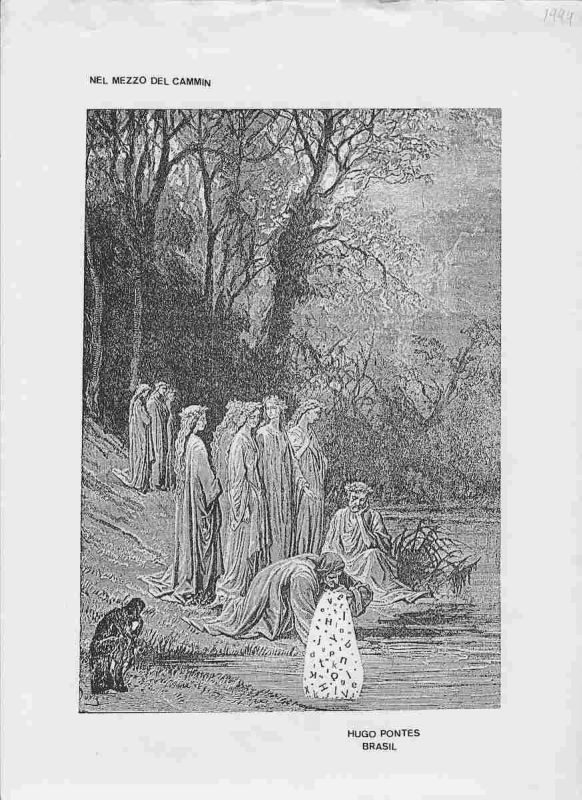
TEXTO SALSA EM PORTUGUÊSImpressão gráfica de Hugo Pontes intitulada Nel Mezzo Del Cammin, obra de poesia visual, poesia experimental e apropriação gráfica que estabelece diálogo entre literatura clássica, imagem e linguagem contemporânea. O título remete diretamente à expressão italiana Nel mezzo del cammin, associada ao início da Divina Comédia de Dante Alighieri e à ideia de estar no meio do caminho da vida.A composição utiliza como campo visual uma ilustração em preto e branco de caráter histórico e literário, representando diversas figuras humanas em uma paisagem de floresta. Na região inferior central, Hugo Pontes introduz uma intervenção gráfica formada por numerosas letras isoladas distribuídas dentro de uma estrutura triangular ou cônica. Essa concentração de caracteres rompe a continuidade figurativa da imagem e cria um novo núcleo de leitura.As letras aparecem fragmentadas e aparentemente desordenadas, transformando a escrita em matéria visual. Em vez de formar imediatamente uma frase convencional, os caracteres constituem textura, fluxo e acumulação de linguagem. A intervenção aproxima palavra e imagem e pode ser compreendida como representação de linguagem em transformação, percurso, perda de orientação, busca de sentido e travessia.A referência a Nel Mezzo Del Cammin amplia a relação da obra com a Divina Comédia, especialmente com a ideia de percurso existencial, caminho, crise, deslocamento e procura. Hugo Pontes apropria uma imagem vinculada ao universo literário e nela insere um sistema tipográfico próprio, produzindo uma releitura visual contemporânea.Na parte inferior aparece a identificação HUGO PONTES e BRASIL. Nel Mezzo Del Cammin integra a produção experimental do artista relacionada à poesia visual brasileira, poesia experimental, arte conceitual, apropriação, literatura e arte, Dante Alighieri, Divina Comédia, tipografia experimental, semiótica, comunicação visual e relações entre texto, imagem e memória cultural.SALSA TEXT IN ENGLISHGraphic print by Hugo Pontes titled Nel Mezzo Del Cammin, a work of visual poetry, experimental poetry and graphic appropriation that establishes a dialogue between classical literature, image and contemporary language. The title directly refers to the Italian expression Nel mezzo del cammin, associated with the opening of the Divine Comedy by Dante Alighieri and with the idea of being midway through the journey of life.The composition uses as its visual field a black and white illustration of historical and literary character, representing several human figures within a forest landscape. In the lower central area, Hugo Pontes introduces a graphic intervention formed by numerous isolated letters distributed inside a triangular or conical structure. This concentration of characters interrupts the continuity of the figurative image and creates a new center of reading.The letters appear fragmented and apparently disordered, transforming writing into visual material. Rather than immediately forming a conventional sentence, the characters create texture, flow and an accumulation of language. The intervention brings word and image together and can be understood as a representation of language in transformation, journey, disorientation, search for meaning and passage.The reference to Nel Mezzo Del Cammin expands the relationship of the work with the Divine Comedy, especially with ideas of existential journey, path, crisis, displacement and search. Hugo Pontes appropriates an image connected with the literary universe and inserts his own typographic system into it, producing a contemporary visual reinterpretation.At the bottom appear the identifications HUGO PONTES and BRASIL. Nel Mezzo Del Cammin belongs to the artists experimental production associated with Brazilian visual poetry, experimental poetry, conceptual art, appropriation, literature and art, Dante Alighieri, the Divine Comedy, experimental typography, semiotics, visual communication and relationships between text, image and cultural memory
TEXTO DE OBSERVAÇÃO EM PORTUGUÊSDocumento gráfico em preto e branco de Hugo Pontes identificado pelo título NEL MEZZO DEL CAMMIN. No canto superior direito da folha existe uma anotação manuscrita que parece indicar 1991. Como a inscrição é manuscrita e parcialmente tênue, recomenda se registrar 1991 como data indicada no exemplar, mantendo a distinção entre anotação documental e informação originalmente impressa na composição.O título possui grande importância para a interpretação. Nel mezzo del cammin corresponde ao início de uma das formulações mais reconhecidas da literatura italiana e remete ao começo da Divina Comédia de Dante Alighieri. A expressão significa aproximadamente no meio do caminho e está relacionada ao percurso existencial narrado na obra literária.A imagem principal apresenta uma cena figurativa em uma floresta densa, com várias personagens vestidas com longas roupas e reunidas próximas a uma região de água ou terreno baixo. A linguagem visual da ilustração remete a gravuras e ilustrações literárias do século XIX. Hugo Pontes utiliza essa imagem preexistente como suporte para uma intervenção tipográfica.Na região inferior central encontra se o principal elemento introduzido pelo artista. Uma forma aproximadamente triangular ou cônica aparece preenchida por dezenas de letras do alfabeto. Os caracteres estão distribuídos de maneira irregular e possuem diferentes orientações, produzindo uma massa de sinais que se destaca do restante da imagem.A intervenção modifica radicalmente a leitura da cena. Em lugar de acrescentar uma legenda explicativa, Hugo Pontes introduz a própria matéria da escrita. Letras isoladas tornam se imagem e passam a ocupar espaço físico dentro da narrativa visual.A forma triangular pode sugerir concentração, queda, percurso, fluxo ou passagem, mas essas interpretações devem permanecer abertas. O aspecto mais seguro é a utilização da escrita fragmentada como elemento visual inserido dentro de uma imagem de origem literária.Existe uma importante relação entre o tema do caminho e a disposição das letras. O título refere se a um percurso, enquanto os caracteres parecem atravessar ou ocupar uma região central da imagem. A linguagem participa assim da própria viagem proposta pela composição.A obra estabelece diferentes níveis de apropriação. Existe uma referência textual à literatura italiana, uma imagem figurativa pertencente a uma tradição de ilustração literária e uma intervenção contemporânea realizada por Hugo Pontes. A justaposição desses elementos cria uma obra baseada em memória cultural, citação, transformação e recontextualização.O poema não funciona por meio de versos convencionais. Sua dimensão poética resulta da relação entre título, imagem apropriada, disposição espacial e letras fragmentadas. Esse procedimento aproxima Nel Mezzo Del Cammin da poesia visual, arte conceitual, colagem, apropriação, poesia semiótica e experiências intertextuais.Na parte inferior direita aparecem HUGO PONTES e BRASIL. Essas informações confirmam autoria e procedência nacional.A possível anotação 1991 deve receber atenção especial no catálogo. Caso a leitura seja confirmada por inspeção física do documento, poderá contribuir para situar a obra cronologicamente dentro da produção de Hugo Pontes no início da década de 1990.Para indexação digital são especialmente relevantes os termos Hugo Pontes, Nel Mezzo Del Cammin, 1991, Dante Alighieri, Divina Comédia, Divine Comedy, poesia visual, visual poetry, poesia experimental, experimental poetry, arte conceitual, conceptual art, apropriação, appropriation art, literatura e arte, poesia semiótica, tipografia experimental, letras, alfabeto, floresta, caminho, percurso, viagem, memória cultural, intertextualidade, imagem e texto, Brasil e poesia visual brasileira.OBSERVATION TEXT IN ENGLISHBlack and white graphic document by Hugo Pontes identified by the title NEL MEZZO DEL CAMMIN. At the upper right corner of the sheet there is a handwritten notation that appears to indicate 1991. Since the inscription is handwritten and relatively faint, it is advisable to record 1991 as a date indicated on the example while preserving the distinction between documentary annotation and information originally printed as part of the composition.The title is highly important for interpretation. Nel mezzo del cammin corresponds to the beginning of one of the most recognizable formulations in Italian literature and refers to the opening of the Divine Comedy by Dante Alighieri. The expression approximately means midway through the journey and is associated with the existential path narrated in the literary work.The principal image presents a figurative scene within a dense forest, with several figures wearing long garments and gathered near an area of water or low ground. The visual language of the illustration recalls nineteenth century literary engravings and illustrations. Hugo Pontes uses this preexisting image as the support for a typographic intervention.In the lower central area appears the principal element introduced by the artist. An approximately triangular or conical form is filled with dozens of alphabetic characters. The letters are distributed irregularly and appear in different orientations, producing a mass of signs that stands apart from the surrounding image.The intervention radically changes the reading of the scene. Instead of adding an explanatory caption, Hugo Pontes introduces the material of writing itself. Isolated letters become images and occupy physical space within the visual narrative.The triangular form may suggest concentration, descent, journey, flow or passage, although these interpretations should remain open. The most secure observation is the use of fragmented writing as a visual element inserted into an image of literary origin.There is an important relationship between the theme of the journey and the disposition of the letters. The title refers to a path while the characters appear to cross or occupy a central region of the image. Language therefore becomes part of the journey proposed by the composition.The work establishes several levels of appropriation. There is a textual reference to Italian literature, a figurative image belonging to a tradition of literary illustration and a contemporary intervention created by Hugo Pontes. The juxtaposition of these elements creates a work based on cultural memory, citation, transformation and recontextualization.The poem does not function through conventional verses. Its poetic dimension emerges from the relationship between title, appropriated image, spatial arrangement and fragmented letters. This procedure connects Nel Mezzo Del Cammin with visual poetry, conceptual art, collage, appropriation, semiotic poetry and intertextual experimentation.At the lower right appear HUGO PONTES and BRASIL. These inscriptions confirm authorship and national origin.The possible handwritten date 1991 deserves particular attention in cataloguing. If confirmed through physical inspection of the document, it may help situate the work chronologically within Hugo Pontes production at the beginning of the 1990s.For digital indexing, particularly relevant terms include Hugo Pontes, Nel Mezzo Del Cammin, 1991, Dante Alighieri, Divine Comedy, visual poetry, experimental poetry, conceptual art, appropriation art, literature and art, semiotic poetry, experimental typography, letters, alphabet, forest, path, journey, travel, cultural memory, intertextuality, image and text, Brazil and Brazilian visual poetry.
Proveniência
Coleção Poema ProcessoInglês
Graphic print by Hugo Pontes titled Nel Mezzo Del Cammin, a work of visual poetry, experimental poetry and graphic appropriation that establishes a dialogue between classical literature, image and contemporary language.
Dimensions: 12,8 x 8,5 in