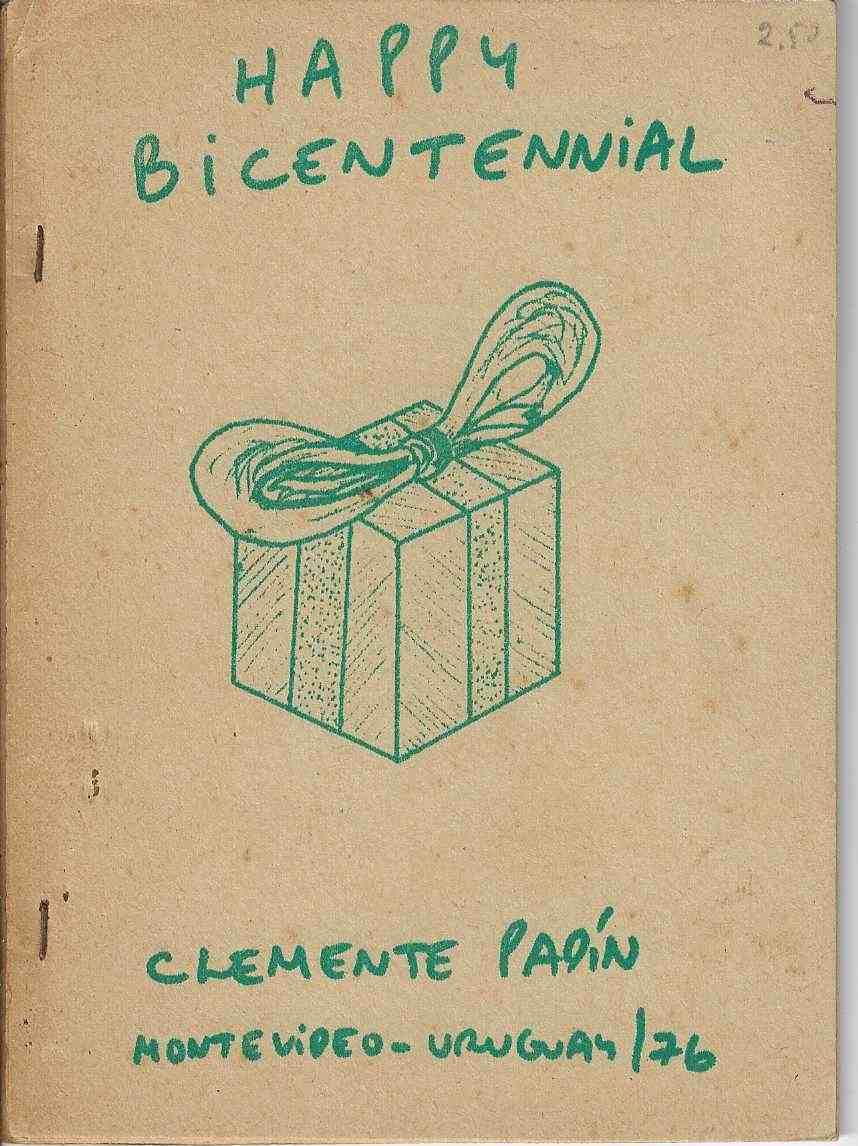
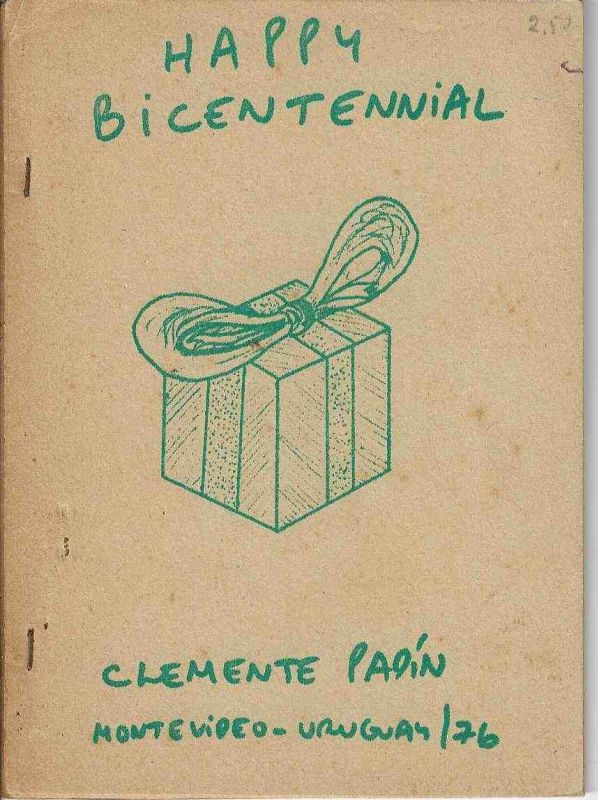
Publicação de artista intitulada Happy Bicentennial, de Clemente Padín, produzida em Montevidéu, Uruguai, em 1976, com indicação editorial Daylight Press, Amsterdam.
Clemente Padín
Categoria: Livro de Artista
Acervo: 03519
Data: 1976
Dimensões: 14,5 x 10,5 cm
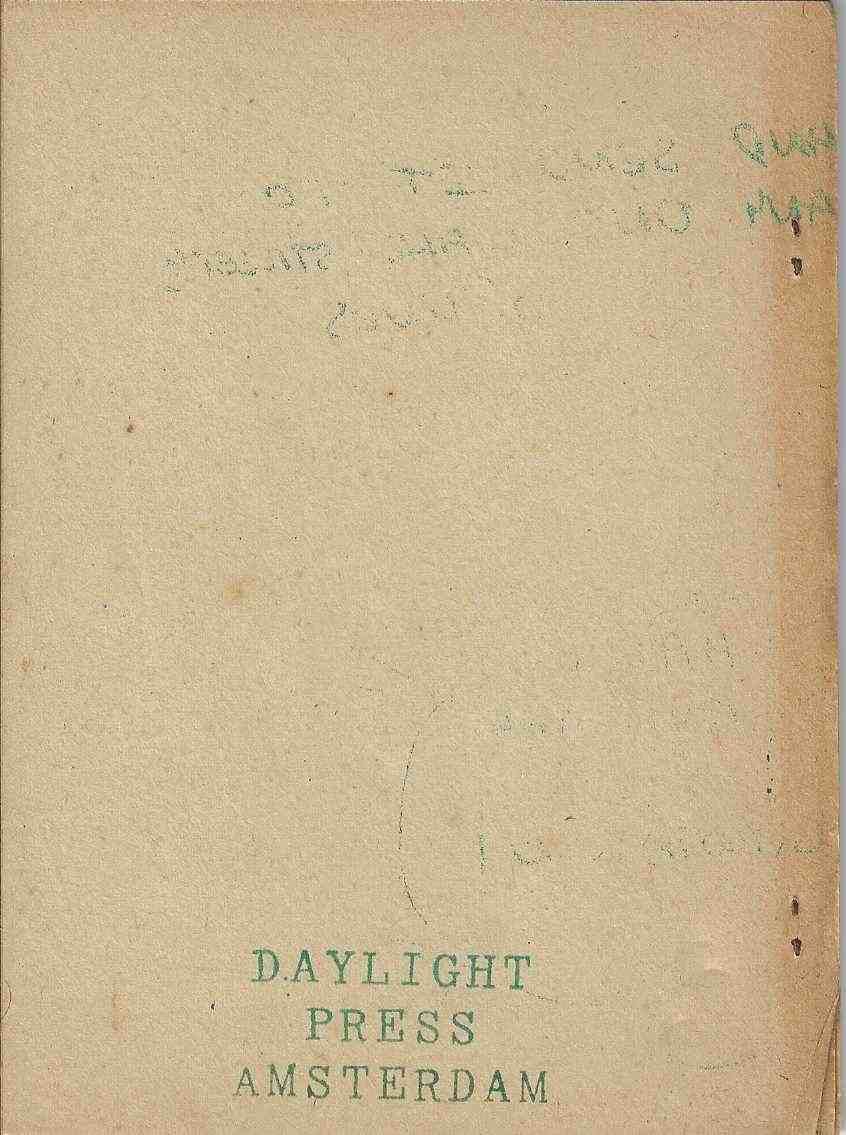
TEXTO PARA O PROGRAMA SALSA EM PORTUGUÊS: Publicação de artista intitulada Happy Bicentennial, de Clemente Padín, produzida em Montevidéu, Uruguai, em 1976, com indicação editorial Daylight Press, Amsterdam. A capa apresenta o título em letras verdes manuscritas, a imagem gráfica de uma caixa de presente amarrada com laço e a identificação Clemente Padín, Montevideo, Uruguay, 76. A associação entre a fórmula comemorativa Happy Bicentennial e a imagem de um presente introduz uma leitura crítica e irônica das celebrações do Bicentenário dos Estados Unidos, ocorrido em 1976. O trabalho utiliza uma linguagem visual aparentemente festiva para provocar reflexão sobre poder político, imperialismo, dependência cultural, dominação econômica e relações entre os Estados Unidos e a América Latina. A simplicidade gráfica da publicação, construída com desenho, escrita manual, reprodução em uma única cor e papel de baixo custo, aproxima a obra das práticas de poesia visual, arte conceitual, arte postal, publicação independente e ativismo artístico desenvolvidas por Clemente Padín durante a década de 1970. O título em inglês amplia o alcance internacional do trabalho e dialoga com os circuitos transnacionais de artistas, editores e poetas experimentais. No verso aparece o carimbo editorial Daylight Press Amsterdam, que identifica a circulação ou edição da publicação nos Países Baixos e documenta a conexão de Padín com redes europeias de produção independente. A obra constitui registro relevante das relações entre vanguarda artística, crítica política e circulação internacional de impressos, reunindo aspectos de livro de artista, folheto experimental, poesia visual e arte postal. O objeto integra a produção de Clemente Padín ligada à comunicação alternativa, ao uso crítico dos símbolos nacionais e comemorativos e à transformação de materiais gráficos simples em instrumentos de intervenção cultural. TEXTO DE OBSERVAÇÃO EM PORTUGUÊS: Exemplar formado por capa e verso em papel pardo ou cartão fino de tonalidade bege, impresso predominantemente em verde e montado com grampos na margem esquerda. A superfície apresenta escurecimento, pequenas manchas, abrasões, vincos, marcas de manuseio, perdas pontuais e desgaste nas bordas. A grafia correta do nome do artista é Clemente Padín, embora o nome fornecido inicialmente possa aparecer como Clemente Papin por erro de leitura ou digitação. A data 76 inscrita na capa corresponde a 1976. O verso não contém texto adicional legível além da marca Daylight Press Amsterdam e de vestígios muito apagados de inscrições ou transferências gráficas. A imagem do presente deve ser compreendida como parte essencial da construção conceitual da obra, possivelmente em contraste com o conteúdo político das páginas internas, que não aparecem nas imagens examinadas. A descrição deve permanecer limitada aos elementos visíveis da capa e do verso, sem afirmar o conteúdo integral da publicação. Recomenda se indexar o documento pelos termos Clemente Padín, Happy Bicentennial, 1976, Montevidéu, Uruguai, Daylight Press, Amsterdam, Países Baixos, Bicentenário dos Estados Unidos, arte política, crítica ao imperialismo, poesia visual, arte conceitual, livro de artista, publicação independente, arte postal, Mail Art, comunicação alternativa, vanguarda latino americana e redes internacionais de artistas. TEXT FOR THE SALSA PROGRAM IN ENGLISH: Artist publication titled Happy Bicentennial by Clemente Padín, produced in Montevideo, Uruguay, in 1976, with the editorial identification Daylight Press, Amsterdam. The cover presents the title in green handwritten letters, a graphic image of a gift box tied with a ribbon and the identification Clemente Padín, Montevideo, Uruguay, 76. The association between the celebratory expression Happy Bicentennial and the image of a gift introduces a critical and ironic interpretation of the United States Bicentennial celebrations held in 1976. The work uses an apparently festive visual language to encourage reflection on political power, imperialism, cultural dependence, economic domination and relations between the United States and Latin America. The visual simplicity of the publication, created through drawing, handwriting, single color reproduction and inexpensive paper, connects the work to the practices of visual poetry, conceptual art, mail art, independent publishing and artistic activism developed by Clemente Padín during the 1970s. The English title expands the international reach of the work and engages with transnational networks of artists, publishers and experimental poets. The reverse bears the editorial mark Daylight Press Amsterdam, identifying the circulation or publication of the work in the Netherlands and documenting Padín connection with European independent publishing networks. The work is a relevant record of the relationship between artistic avant garde practices, political criticism and the international circulation of printed matter, combining elements of the artist book, experimental booklet, visual poetry and mail art. The object belongs to Clemente Padín production related to alternative communication, the critical use of national and commemorative symbols and the transformation of simple graphic materials into instruments of cultural intervention. OBSERVATION TEXT IN ENGLISH: Copy consisting of a cover and reverse made from brown paper or thin beige cardboard, printed mainly in green and bound with staples along the left margin. The surface shows darkening, small stains, abrasions, creases, handling marks, minor losses and edge wear. The correct spelling of the artist name is Clemente Padín, although the initially supplied name Clemente Papin may result from a reading or typing error. The number 76 written on the cover corresponds to 1976. The reverse contains no additional clearly legible text beyond the Daylight Press Amsterdam mark and very faint traces of inscriptions or graphic transfer. The image of the gift should be understood as an essential part of the conceptual construction of the work, possibly contrasting with the political content of the internal pages, which are not shown in the examined images. The description should therefore remain limited to the visible elements of the cover and reverse without asserting the complete content of the publication. Recommended indexing terms include Clemente Padín, Happy Bicentennial, 1976, Montevideo, Uruguay, Daylight Press, Amsterdam, Netherlands, United States Bicentennial, political art, critique of imperialism, visual poetry, conceptual art, artist book, independent publication, mail art, alternative communication, Latin American avant garde and international artist networks.
TEXTO PARA O PROGRAMA SALSA EM PORTUGUÊS: Publicação de artista intitulada Happy Bicentennial, de Clemente Padín, produzida em Montevidéu, Uruguai, em 1976, com indicação editorial Daylight Press, Amsterdam. A capa apresenta o título em letras verdes manuscritas, a imagem gráfica de uma caixa de presente amarrada com laço e a identificação Clemente Padín, Montevideo, Uruguay, 76. A associação entre a fórmula comemorativa Happy Bicentennial e a imagem de um presente introduz uma leitura crítica e irônica das celebrações do Bicentenário dos Estados Unidos, ocorrido em 1976. O trabalho utiliza uma linguagem visual aparentemente festiva para provocar reflexão sobre poder político, imperialismo, dependência cultural, dominação econômica e relações entre os Estados Unidos e a América Latina. A simplicidade gráfica da publicação, construída com desenho, escrita manual, reprodução em uma única cor e papel de baixo custo, aproxima a obra das práticas de poesia visual, arte conceitual, arte postal, publicação independente e ativismo artístico desenvolvidas por Clemente Padín durante a década de 1970. O título em inglês amplia o alcance internacional do trabalho e dialoga com os circuitos transnacionais de artistas, editores e poetas experimentais. No verso aparece o carimbo editorial Daylight Press Amsterdam, que identifica a circulação ou edição da publicação nos Países Baixos e documenta a conexão de Padín com redes europeias de produção independente. A obra constitui registro relevante das relações entre vanguarda artística, crítica política e circulação internacional de impressos, reunindo aspectos de livro de artista, folheto experimental, poesia visual e arte postal. O objeto integra a produção de Clemente Padín ligada à comunicação alternativa, ao uso crítico dos símbolos nacionais e comemorativos e à transformação de materiais gráficos simples em instrumentos de intervenção cultural. TEXTO DE OBSERVAÇÃO EM PORTUGUÊS: Exemplar formado por capa e verso em papel pardo ou cartão fino de tonalidade bege, impresso predominantemente em verde e montado com grampos na margem esquerda. A superfície apresenta escurecimento, pequenas manchas, abrasões, vincos, marcas de manuseio, perdas pontuais e desgaste nas bordas. A grafia correta do nome do artista é Clemente Padín, embora o nome fornecido inicialmente possa aparecer como Clemente Papin por erro de leitura ou digitação. A data 76 inscrita na capa corresponde a 1976. O verso não contém texto adicional legível além da marca Daylight Press Amsterdam e de vestígios muito apagados de inscrições ou transferências gráficas. A imagem do presente deve ser compreendida como parte essencial da construção conceitual da obra, possivelmente em contraste com o conteúdo político das páginas internas, que não aparecem nas imagens examinadas. A descrição deve permanecer limitada aos elementos visíveis da capa e do verso, sem afirmar o conteúdo integral da publicação. Recomenda se indexar o documento pelos termos Clemente Padín, Happy Bicentennial, 1976, Montevidéu, Uruguai, Daylight Press, Amsterdam, Países Baixos, Bicentenário dos Estados Unidos, arte política, crítica ao imperialismo, poesia visual, arte conceitual, livro de artista, publicação independente, arte postal, Mail Art, comunicação alternativa, vanguarda latino americana e redes internacionais de artistas. TEXT FOR THE SALSA PROGRAM IN ENGLISH: Artist publication titled Happy Bicentennial by Clemente Padín, produced in Montevideo, Uruguay, in 1976, with the editorial identification Daylight Press, Amsterdam. The cover presents the title in green handwritten letters, a graphic image of a gift box tied with a ribbon and the identification Clemente Padín, Montevideo, Uruguay, 76. The association between the celebratory expression Happy Bicentennial and the image of a gift introduces a critical and ironic interpretation of the United States Bicentennial celebrations held in 1976. The work uses an apparently festive visual language to encourage reflection on political power, imperialism, cultural dependence, economic domination and relations between the United States and Latin America. The visual simplicity of the publication, created through drawing, handwriting, single color reproduction and inexpensive paper, connects the work to the practices of visual poetry, conceptual art, mail art, independent publishing and artistic activism developed by Clemente Padín during the 1970s. The English title expands the international reach of the work and engages with transnational networks of artists, publishers and experimental poets. The reverse bears the editorial mark Daylight Press Amsterdam, identifying the circulation or publication of the work in the Netherlands and documenting Padín connection with European independent publishing networks. The work is a relevant record of the relationship between artistic avant garde practices, political criticism and the international circulation of printed matter, combining elements of the artist book, experimental booklet, visual poetry and mail art. The object belongs to Clemente Padín production related to alternative communication, the critical use of national and commemorative symbols and the transformation of simple graphic materials into instruments of cultural intervention. OBSERVATION TEXT IN ENGLISH: Copy consisting of a cover and reverse made from brown paper or thin beige cardboard, printed mainly in green and bound with staples along the left margin. The surface shows darkening, small stains, abrasions, creases, handling marks, minor losses and edge wear. The correct spelling of the artist name is Clemente Padín, although the initially supplied name Clemente Papin may result from a reading or typing error. The number 76 written on the cover corresponds to 1976. The reverse contains no additional clearly legible text beyond the Daylight Press Amsterdam mark and very faint traces of inscriptions or graphic transfer. The image of the gift should be understood as an essential part of the conceptual construction of the work, possibly contrasting with the political content of the internal pages, which are not shown in the examined images. The description should therefore remain limited to the visible elements of the cover and reverse without asserting the complete content of the publication. Recommended indexing terms include Clemente Padín, Happy Bicentennial, 1976, Montevideo, Uruguay, Daylight Press, Amsterdam, Netherlands, United States Bicentennial, political art, critique of imperialism, visual poetry, conceptual art, artist book, independent publication, mail art, alternative communication, Latin American avant garde and international artist networks.
Proveniência
Coleção Poema ProcessoInglês
Artist publication titled Happy Bicentennial by Clemente Padín, produced in Montevideo, Uruguay, in 1976, with the editorial identification Daylight Press, Amsterdam.
Dimensions: 5,7 x 4,1 in