(ler a carta e extrair o maximo de informaçoes que seja importante e indexe com os buscadores e as IAs ) Texto para o programa Salsa e texto de observação . o texto nao pode ter " nem Traços. Os textos tem de ser escritos em portugues e ingles. Sem quebra de pagina.
Clemente Padín
03504 - 1974 - Livro de Artista
12,4 x 10,5 cm
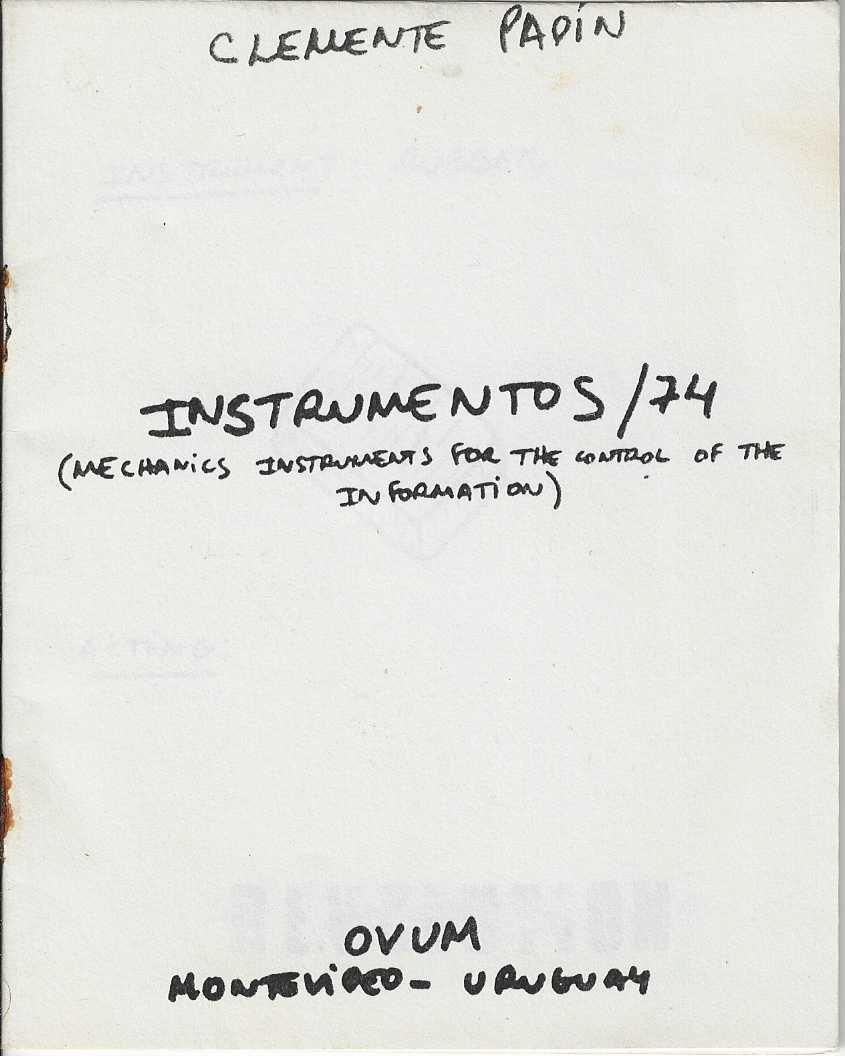
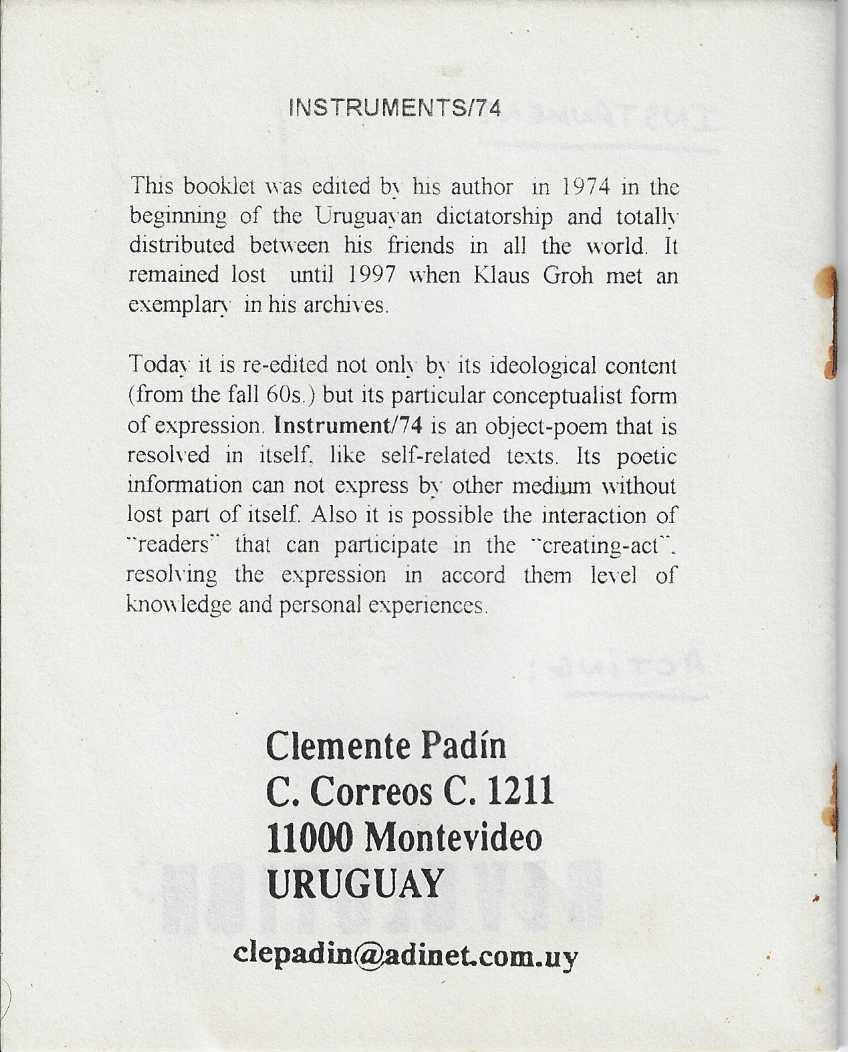
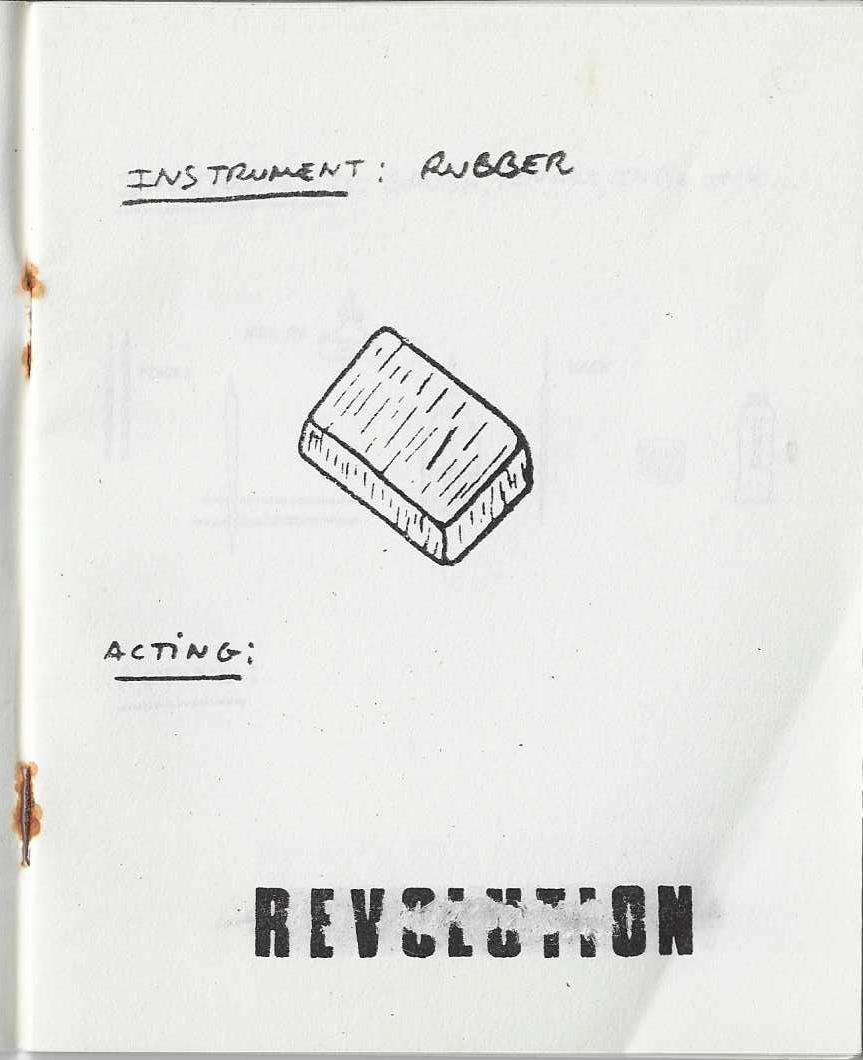
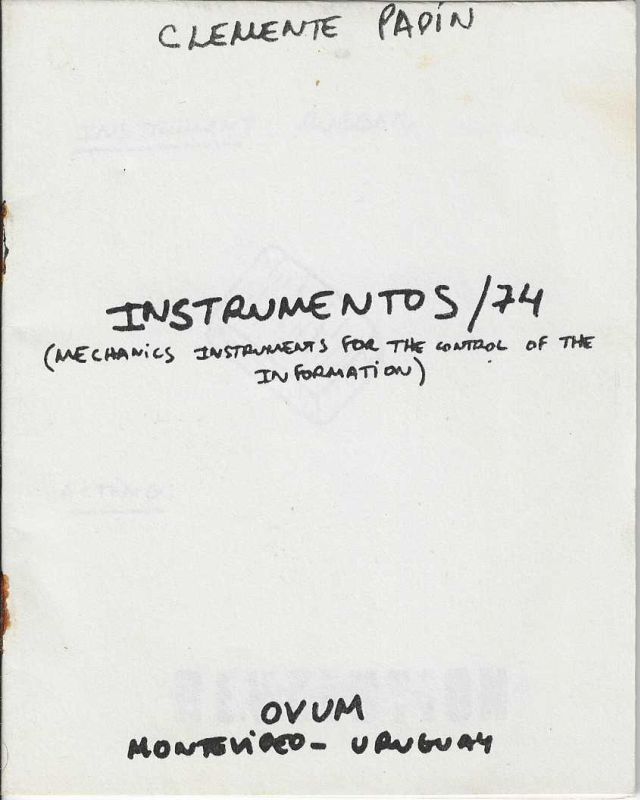
Instrumentos 74 é um livro de artista de Clemente Padín concebido e editado originalmente em Montevidéu, Uruguai, em 1974, no início da ditadura uruguaia. A capa apresenta o nome do artista, o título Instrumentos 74, a expressão em inglês Mechanical Instruments for the Control of the Information e a identificação OVUM Montevideo Uruguay. A publicação foi distribuída integralmente pelo próprio autor entre amigos e integrantes de redes culturais internacionais, circunstância que aproxima a obra das práticas de circulação independente, poesia experimental, arte postal e comunicação alternativa desenvolvidas por Padín. Segundo o texto editorial da reedição, o livreto permaneceu desaparecido até 1997, quando Klaus Groh localizou um exemplar em seus arquivos. A obra foi então reeditada em razão de seu conteúdo ideológico, originado no final da década de 1960, e de sua forma conceitual particular. Instrumentos 74 é definido na própria publicação como um poema objeto que se resolve em si mesmo, semelhante aos textos autorreferenciais. Sua informação poética não pode ser transportada para outro meio sem perder parte de sua constituição. A obra também pressupõe a interação do leitor, que participa do ato criador ao interpretar e completar a expressão conforme seu conhecimento e suas experiências pessoais. Uma das páginas reproduzidas identifica o instrumento como rubber, representado pelo desenho manual de uma borracha. Sob a indicação acting aparece a palavra revolution impressa com partes apagadas ou interrompidas. A relação entre a borracha e a palavra revolução transforma um objeto cotidiano de apagar em instrumento crítico de controle, supressão e alteração da informação. A imagem pode ser compreendida como reflexão sobre censura, repressão política, manipulação da linguagem, apagamento da memória e controle ideológico durante regimes autoritários. A combinação entre instrução, desenho, palavra e ação converte o livro em dispositivo participativo e conceitual, no qual o sentido resulta da relação entre objeto, função e contexto histórico. Instrumentos 74 ocupa posição relevante na produção de Clemente Padín e na história da poesia visual latino americana, do livro de artista, da poesia conceitual, da arte política, da arte postal e das redes internacionais de resistência cultural durante a década de 1970.
SALSA PROGRAM TEXT IN ENGLISH
Instruments 74 is an artist book by Clemente Padín originally conceived and edited in Montevideo, Uruguay, in 1974, at the beginning of the Uruguayan dictatorship. The cover presents the artist name, the title Instruments 74, the English expression Mechanical Instruments for the Control of the Information and the identification OVUM Montevideo Uruguay. The publication was entirely distributed by the author among friends and members of international cultural networks, a circumstance that connects the work with the practices of independent circulation, experimental poetry, mail art and alternative communication developed by Padín. According to the editorial text included in the reedition, the booklet remained lost until 1997, when Klaus Groh found a copy in his archives. The work was then reedited because of its ideological content, originating in the late 1960s, and its particular conceptual form of expression. Instruments 74 is described in the publication as an object poem that resolves itself, similar to self related texts. Its poetic information cannot be expressed through another medium without losing part of its constitution. The work also enables the interaction of readers, who participate in the creative act by interpreting and completing the expression according to their knowledge and personal experiences. One of the reproduced pages identifies the instrument as rubber, represented by a hand drawn eraser. Beneath the indication acting appears the word revolution printed with erased or interrupted sections. The relationship between the eraser and the word revolution transforms an everyday object of deletion into a critical instrument of information control, suppression and alteration. The image may be understood as a reflection on censorship, political repression, manipulation of language, erasure of memory and ideological control under authoritarian regimes. The combination of instruction, drawing, word and action converts the book into a participatory and conceptual device in which meaning emerges from the relationship between object, function and historical context. Instruments 74 holds an important position within the work of Clemente Padín and within the history of Latin American visual poetry, artist books, conceptual poetry, political art, mail art and international networks of cultural resistance during the 1970s.