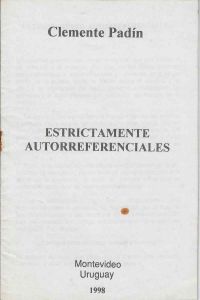
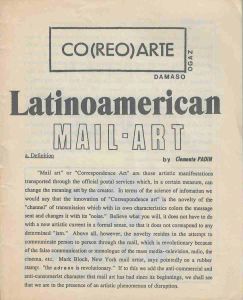
Livro de artista e convocatória de arte correio de Clemente Padin intitulada Arte Correo, Justicia, Chiapas, La Primer Revolución Social del III Milenio, realizada em Montevidéu, Uruguai, com exposição prevista para agosto de 1998 na Galeria AEBU, localizada em Reconquista y Camacuá.
Clemente Padín
Categoria: Mail Art
Acervo: 03462
Data: Agosto 1988
Dimensões: 22,5 x 16,8 cm
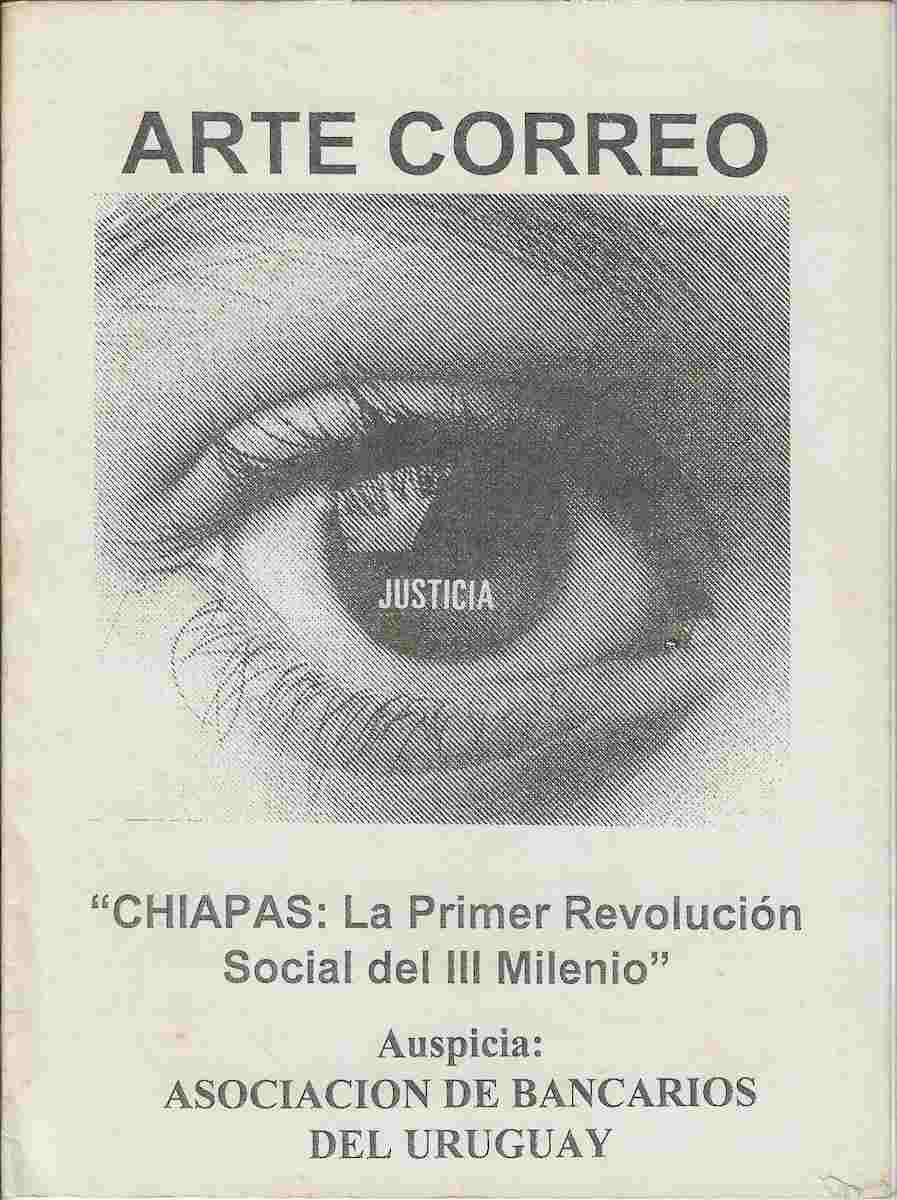
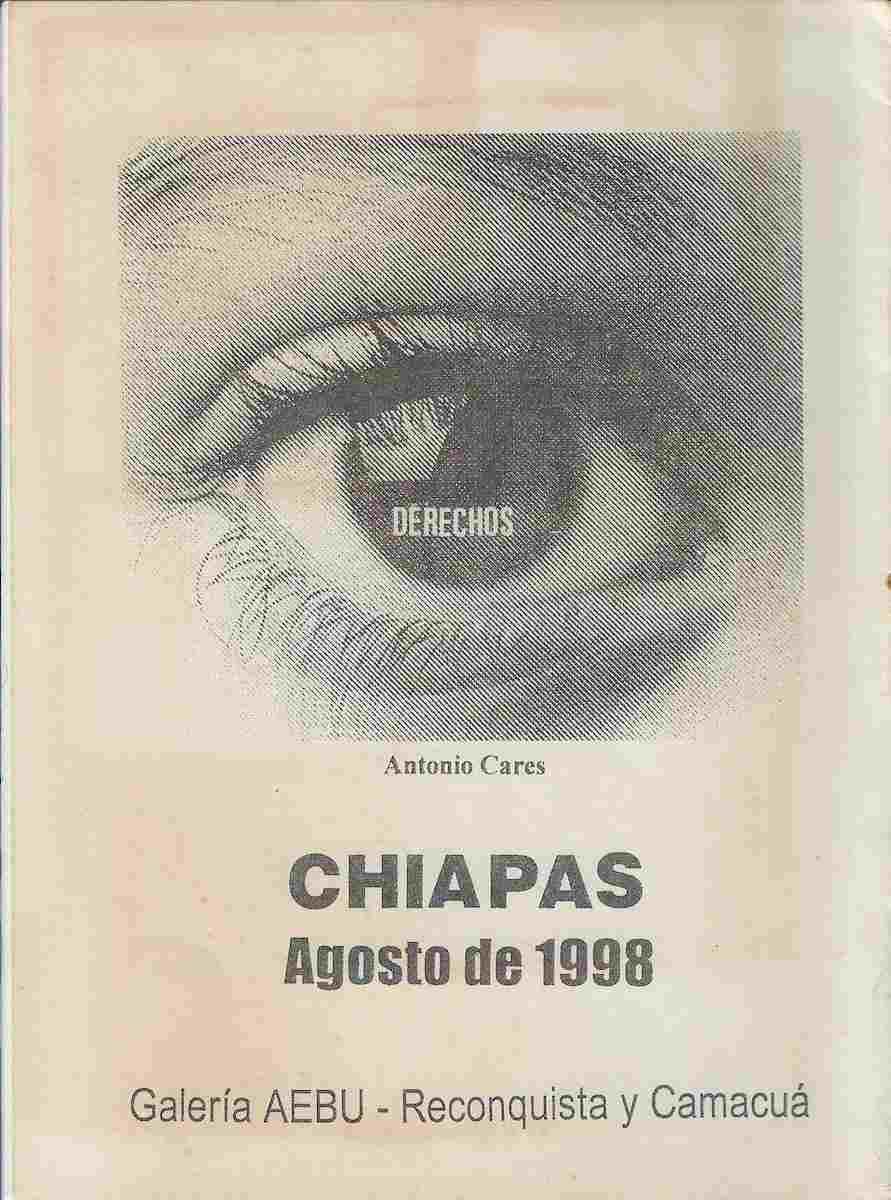
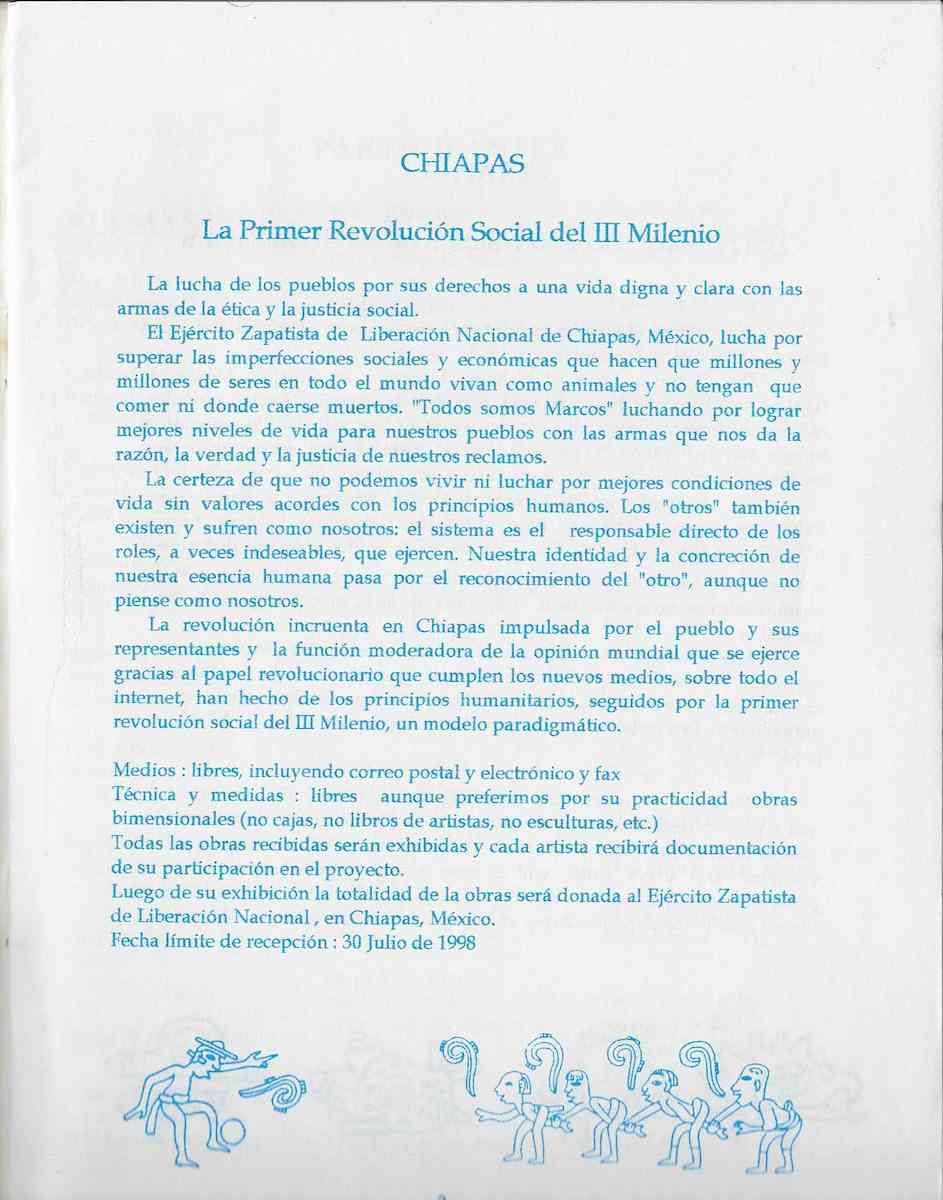
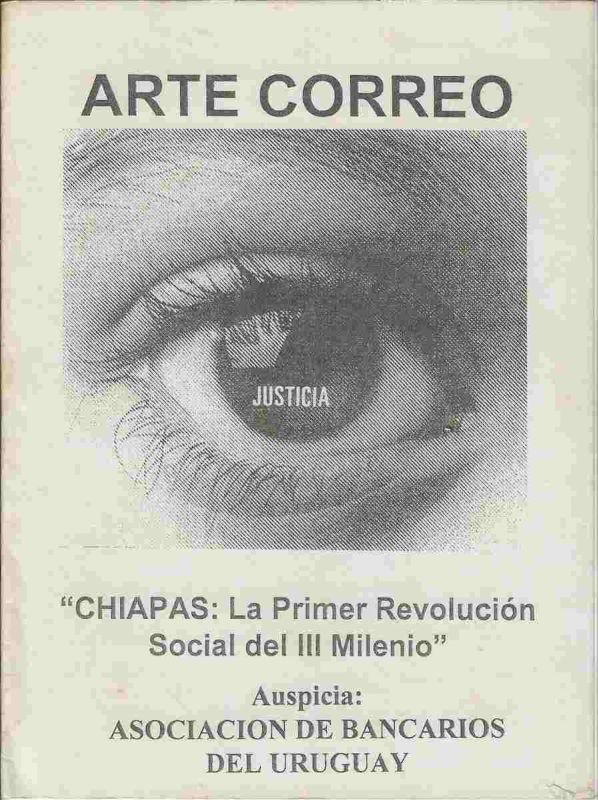
Livro de artista e convocatória de arte correio de Clemente Padin intitulada Arte Correo, Justicia, Chiapas, La Primer Revolución Social del III Milenio, realizada em Montevidéu, Uruguai, com exposição prevista para agosto de 1998 na Galeria AEBU, localizada em Reconquista y Camacuá. A capa apresenta a expressão Arte Correo, uma imagem de olho em preto e branco com a palavra Justicia no centro da pupila, o título Chiapas, La Primer Revolución Social del III Milenio, e o apoio da Asociación de Bancarios del Uruguay. Outra página apresenta imagem semelhante de olho com a palavra Derechos no centro, o nome Antonio Caras, o título Chiapas, agosto de 1998, e a indicação Galeria AEBU, Reconquista y Camacuá. O texto interno, impresso em azul, convoca artistas da rede de arte correio a participarem de um projeto de solidariedade com Chiapas e com o Ejército Zapatista de Liberación Nacional do México. O texto afirma que a luta dos povos por seus direitos a uma vida digna e clara, com as armas da ética e da justiça social, é o eixo da proposta. A convocatória defende que o movimento zapatista luta para superar imperfeições sociais e econômicas que fazem milhões de pessoas viverem como animais, sem ter o que comer e sem lugar digno para morrer. Padin relaciona Chiapas à luta por melhores níveis de vida para os povos, guiada pela razão, pela verdade e pela justiça das reivindicações. O texto afirma que não se pode viver sem lutar por melhores condições de vida, de acordo com princípios humanos, e reconhece o outro como parte essencial da identidade humana. A chamada interpreta a revolução incruenta de Chiapas, impulsionada pelo povo e por seus representantes, somada à função moderadora da opinião mundial e ao papel dos novos meios, sobretudo internet, como modelo paradigmático da primeira revolução social do terceiro milênio. A convocatória aceita meios livres, incluindo correio postal, correio eletrônico e fax, técnica e medidas livres, embora recomende obras bidimensionais por praticidade. Informa que todas as obras recebidas seriam exibidas, que cada artista receberia documentação de participação e que, após a exposição, a totalidade das obras seria doada ao Ejército Zapatista de Liberación Nacional em Chiapas, México. A data limite de recepção indicada é 30 de julho de 1998. O documento é essencial para catalogação de Clemente Padin, arte correio, mail art latino americana, Chiapas, EZLN, zapatismo, justiça social, direitos humanos, internet, fax art, correio eletrônico, Galeria AEBU, Asociación de Bancarios del Uruguay, Antonio Caras, redes internacionais de artistas e solidariedade política no final dos anos 1990.Main text in EnglishArtist book and mail art call by Clemente Padin titled Arte Correo, Justicia, Chiapas, La Primer Revolución Social del III Milenio, produced in Montevideo, Uruguay, with an exhibition planned for August 1998 at Galeria AEBU, located at Reconquista y Camacuá. The cover presents the expression Arte Correo, a black and white image of an eye with the word Justicia at the center of the pupil, the title Chiapas, La Primer Revolución Social del III Milenio, and the support of the Asociación de Bancarios del Uruguay. Another page presents a similar eye image with the word Derechos at the center, the name Antonio Caras, the title Chiapas, August 1998, and the indication Galeria AEBU, Reconquista y Camacuá. The internal text, printed in blue, calls on artists from the mail art network to participate in a project of solidarity with Chiapas and the Ejército Zapatista de Liberación Nacional of Mexico. The text states that the struggle of peoples for their rights to a dignified and clear life, with the weapons of ethics and social justice, is the core of the proposal. The call argues that the Zapatista movement fights to overcome social and economic imperfections that make millions of people live like animals, without food and without a dignified place to die. Padin connects Chiapas to the struggle for better living standards for peoples, guided by reason, truth and the justice of their claims. The text states that one cannot live without struggling for better living conditions according to human principles, and recognizes the other as an essential part of human identity. The call interprets the bloodless revolution of Chiapas, driven by the people and their representatives, together with the moderating role of world opinion and the role of new media, especially the internet, as a paradigmatic model of the first social revolution of the third millennium. The call accepts free media, including postal mail, electronic mail and fax, with free technique and dimensions, although it recommends two dimensional works for practical reasons. It states that all received works would be exhibited, that each artist would receive documentation of participation and that, after the exhibition, all works would be donated to the Ejército Zapatista de Liberación Nacional in Chiapas, Mexico. The indicated reception deadline is July 30, 1998. The document is essential for cataloging Clemente Padin, mail art, Latin American postal art, Chiapas, EZLN, Zapatismo, social justice, human rights, internet, fax art, electronic mail, Galeria AEBU, Asociación de Bancarios del Uruguay, Antonio Caras, international artist networks and political solidarity in the late 1990s.Texto de observação em portuguêsPublicação em papel com páginas impressas em preto e branco e azul, apresentando manchas de tempo, marcas de manuseio, bordas escurecidas e desgaste compatível com circulação e arquivo. As imagens disponíveis mostram capa, página interna com dados da exposição e página de convocatória. O olho com as palavras Justicia e Derechos funciona como eixo visual da publicação, articulando vigilância ética, consciência política e reivindicação social. A peça possui alto valor documental por registrar a continuidade da atuação de Clemente Padin como artista, teórico e networker em campanhas internacionais de solidariedade, agora incorporando novos meios como internet, correio eletrônico e fax ao repertório histórico da arte postal. O texto situa Chiapas como modelo de revolução social não sangrenta e como referência para a defesa de vida digna, reconhecimento do outro, direitos humanos e justiça social. A presença da Galeria AEBU e da Asociación de Bancarios del Uruguay indica articulação entre arte correio, espaços culturais de trabalhadores e apoio institucional uruguaio. A doação das obras ao EZLN em Chiapas reforça a dimensão prática e política do projeto, transformando a exposição em gesto de solidariedade material e simbólica. A peça deve ser catalogada como livro de artista, convocatória de arte correio, projeto internacional de mail art, Chiapas, EZLN, Clemente Padin, Antonio Caras, Galeria AEBU, Associação de Bancários do Uruguai, justiça, direitos, zapatismo, internet, correio eletrônico, fax, arte postal latino americana, direitos humanos e redes de solidariedade.Observation text in EnglishPaper publication with pages printed in black and white and blue, showing age stains, handling marks, darkened edges and wear consistent with circulation and archival preservation. The available images show the cover, an inner page with exhibition information and the call page. The eye with the words Justicia and Derechos functions as the visual axis of the publication, articulating ethical vigilance, political awareness and social claim. The piece has high documentary value because it records the continuity of Clemente Padin activity as artist, theorist and networker in international solidarity campaigns, now incorporating new media such as internet, electronic mail and fax into the historical repertoire of mail art. The text presents Chiapas as a model of non bloody social revolution and as a reference for the defense of dignified life, recognition of the other, human rights and social justice. The presence of Galeria AEBU and the Asociación de Bancarios del Uruguay indicates an articulation between mail art, workers cultural spaces and Uruguayan institutional support. The donation of the works to the EZLN in Chiapas reinforces the practical and political dimension of the project, transforming the exhibition into a gesture of material and symbolic solidarity. The piece should be cataloged as artist book, mail art call, international mail art project, Chiapas, EZLN, Clemente Padin, Antonio Caras, Galeria AEBU, Asociación de Bancarios del Uruguay, justice, rights, Zapatismo, internet, electronic mail, fax, Latin American postal art, human rights and solidarity
Publicação em papel com páginas impressas em preto e branco e azul, apresentando manchas de tempo, marcas de manuseio, bordas escurecidas e desgaste compatível com circulação e arquivo. As imagens disponíveis mostram capa, página interna com dados da exposição e página de convocatória. O olho com as palavras Justicia e Derechos funciona como eixo visual da publicação, articulando vigilância ética, consciência política e reivindicação social. A peça possui alto valor documental por registrar a continuidade da atuação de Clemente Padin como artista, teórico e networker em campanhas internacionais de solidariedade, agora incorporando novos meios como internet, correio eletrônico e fax ao repertório histórico da arte postal. O texto situa Chiapas como modelo de revolução social não sangrenta e como referência para a defesa de vida digna, reconhecimento do outro, direitos humanos e justiça social. A presença da Galeria AEBU e da Asociación de Bancarios del Uruguay indica articulação entre arte correio, espaços culturais de trabalhadores e apoio institucional uruguaio. A doação das obras ao EZLN em Chiapas reforça a dimensão prática e política do projeto, transformando a exposição em gesto de solidariedade material e simbólica. A peça deve ser catalogada como livro de artista, convocatória de arte correio, projeto internacional de mail art, Chiapas, EZLN, Clemente Padin, Antonio Caras, Galeria AEBU, Associação de Bancários do Uruguai, justiça, direitos, zapatismo, internet, correio eletrônico, fax, arte postal latino americana, direitos humanos e redes de solidariedade.Observation text in EnglishPaper publication with pages printed in black and white and blue, showing age stains, handling marks, darkened edges and wear consistent with circulation and archival preservation. The available images show the cover, an inner page with exhibition information and the call page. The eye with the words Justicia and Derechos functions as the visual axis of the publication, articulating ethical vigilance, political awareness and social claim. The piece has high documentary value because it records the continuity of Clemente Padin activity as artist, theorist and networker in international solidarity campaigns, now incorporating new media such as internet, electronic mail and fax into the historical repertoire of mail art. The text presents Chiapas as a model of non bloody social revolution and as a reference for the defense of dignified life, recognition of the other, human rights and social justice. The presence of Galeria AEBU and the Asociación de Bancarios del Uruguay indicates an articulation between mail art, workers cultural spaces and Uruguayan institutional support. The donation of the works to the EZLN in Chiapas reinforces the practical and political dimension of the project, transforming the exhibition into a gesture of material and symbolic solidarity. The piece should be cataloged as artist book, mail art call, international mail art project, Chiapas, EZLN, Clemente Padin, Antonio Caras, Galeria AEBU, Asociación de Bancarios del Uruguay, justice, rights, Zapatismo, internet, electronic mail, fax, Latin American postal art, human rights and solidarity networks.
Inglês
Artist book and mail art call by Clemente Padin titled Arte Correo, Justicia, Chiapas, La Primer Revolución Social del III Milenio, produced in Montevideo, Uruguay, with an exhibition planned for August 1998 at Galeria AEBU, located at Reconquista y Camacuá.
Dimensions: 8,9 x 6,6 in