Habeas Corpus
Sebastiao Nunes
Categoria: Poema Processo
Acervo: 05010
Dimensões: 30 x 21,5 cm
TEXTO SALSA PORTUGUÊS
Habeas Corpus, de Sebastião Nunes, é uma obra de poesia visual estruturada pela combinação de colagem, desenho, imagens reproduzidas, fotomontagem, datilografia e composição tipográfica. O conjunto articula corpos humanos, esqueletos, portas, cabeças esquemáticas, olhos, figuras híbridas e fragmentos verbais em páginas construídas por repetição, inversão, justaposição e deslocamento de imagens e textos.
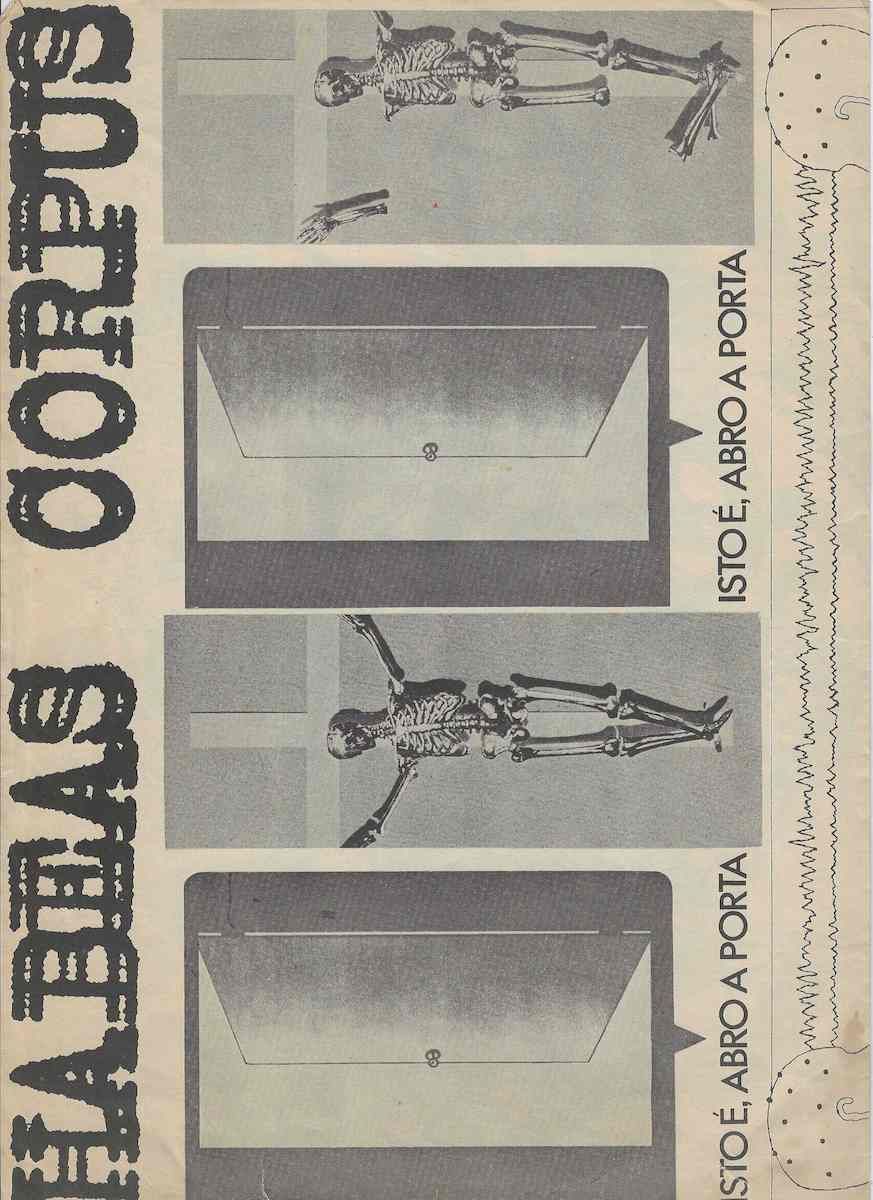
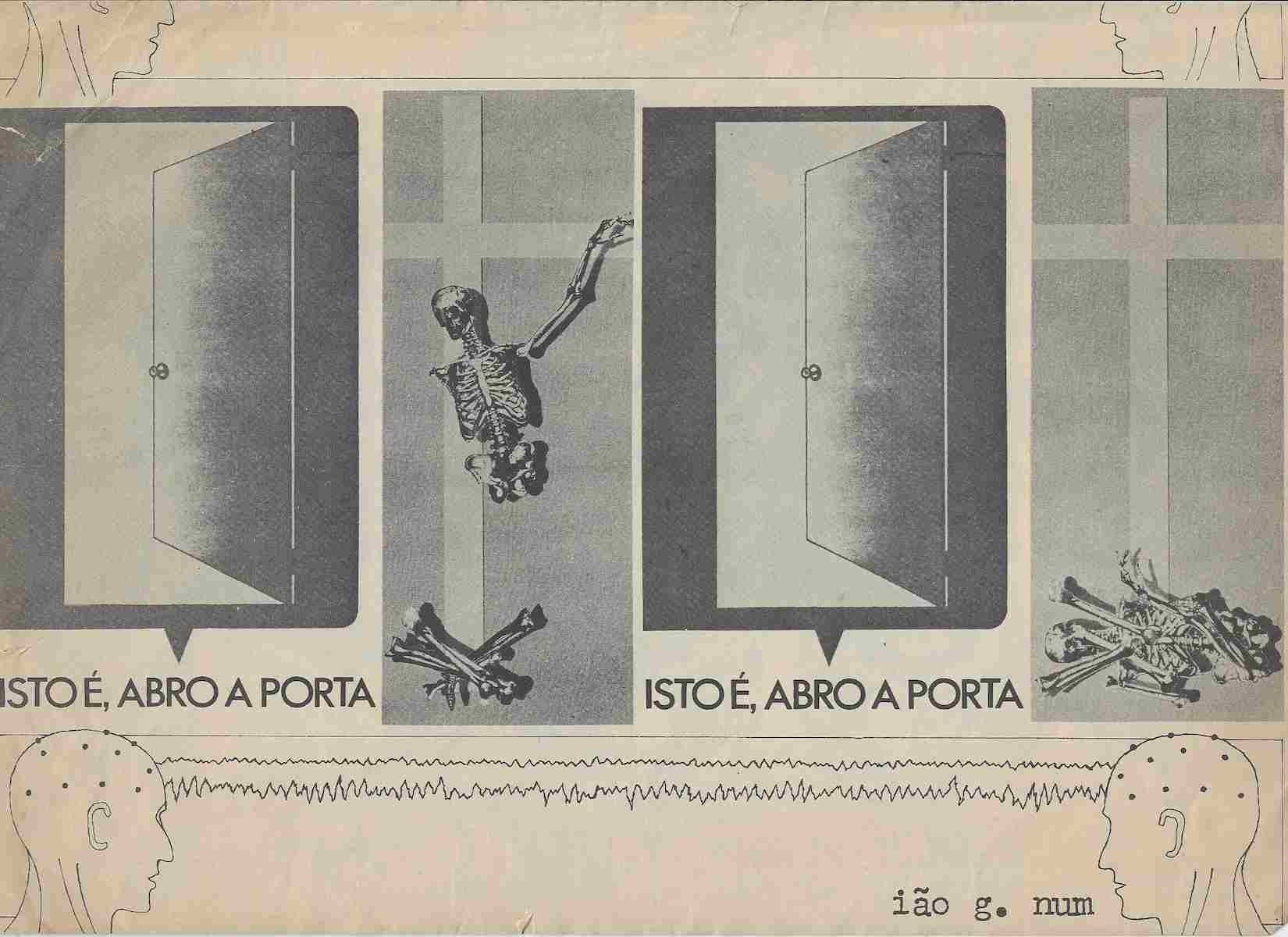
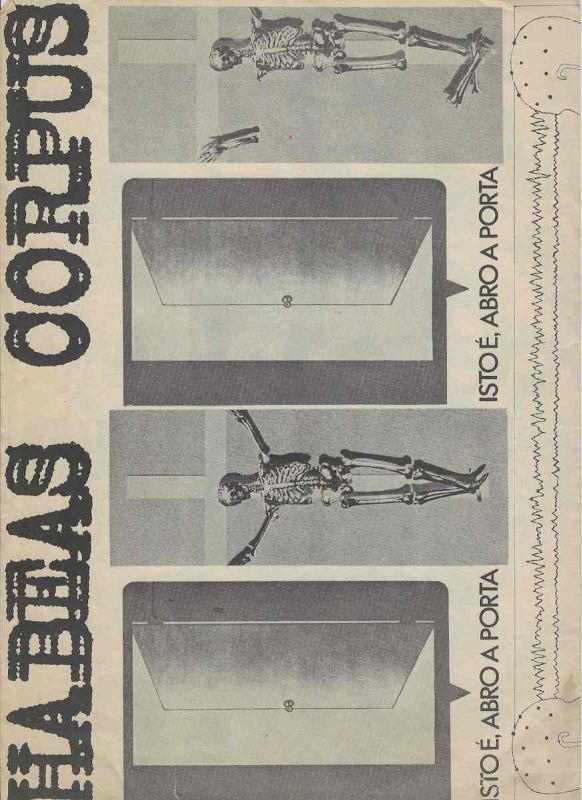
Uma das composições apresenta sucessivamente a imagem de uma porta e figuras de esqueletos, acompanhadas pela frase ISTO É, ABRO A PORTA. Nas margens inferior e superior aparecem perfis de cabeças humanas ligados por linhas irregulares semelhantes a sinais gráficos ou registros de ondas. Esses elementos estabelecem uma relação entre corpo, passagem, percepção e linguagem, fazendo da página um campo simultaneamente verbal e visual.
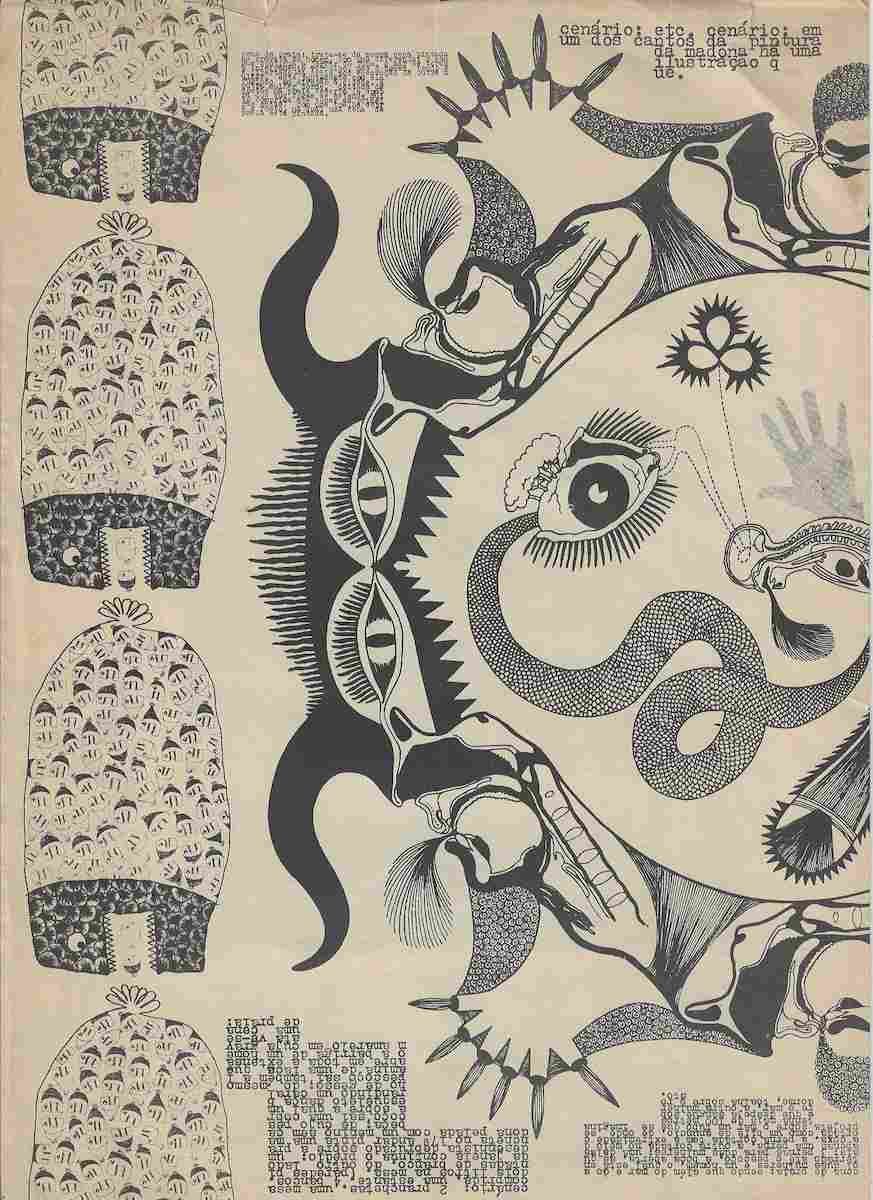
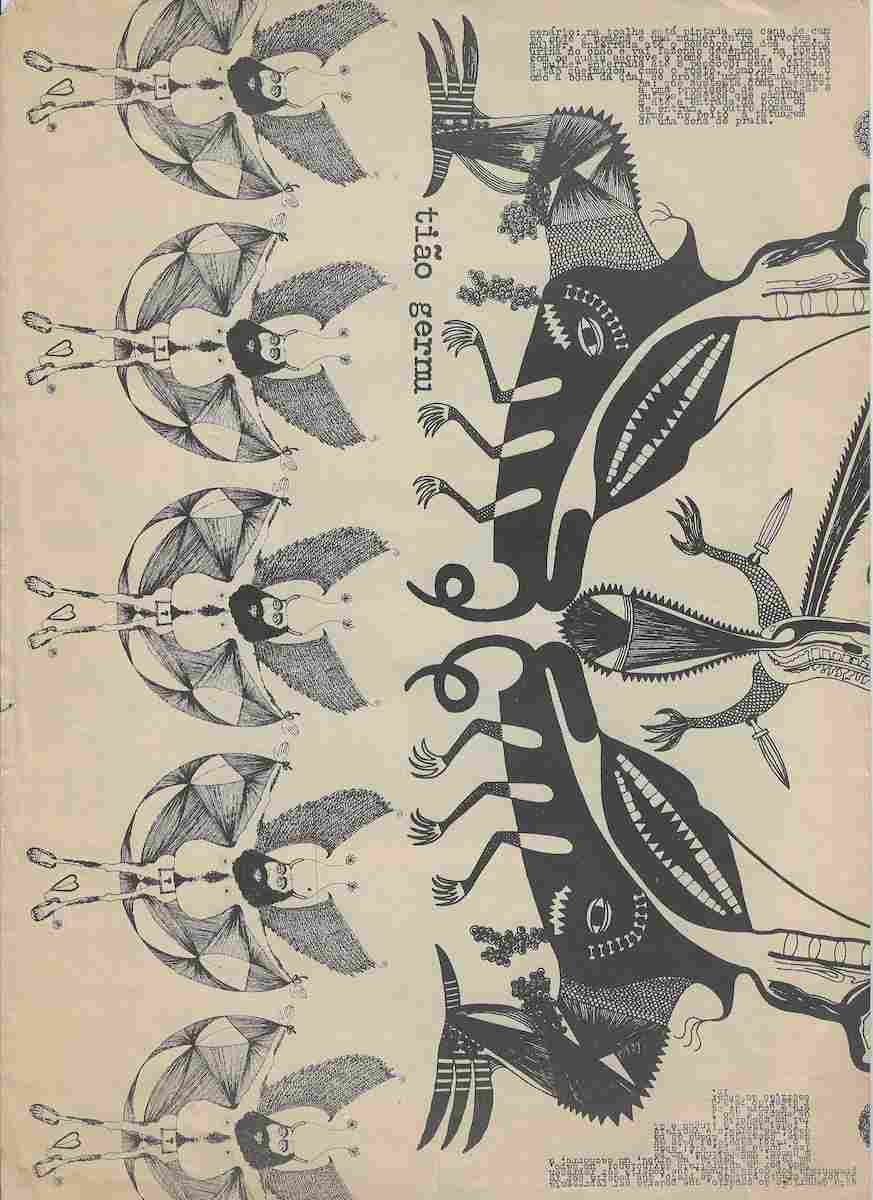
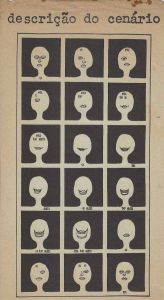
Outras folhas ampliam esse procedimento por meio de figuras fantásticas, olhos, bocas, serpentes, corpos fragmentados e personagens repetidos. Textos datilografados aparecem incorporados à superfície gráfica e convivem com formas desenhadas e imagens apropriadas. A organização não privilegia uma leitura linear. O leitor percorre a obra por associações entre fragmentos verbais, anatomia, humor gráfico e imagens reiteradas.
Em Habeas Corpus, Sebastião Nunes transforma a página em espaço de montagem. A recorrência de esqueletos, partes do corpo e figuras antropomórficas estabelece uma relação direta entre o título latino e a presença material e simbólica do corpo. O texto, a tipografia e a imagem funcionam como componentes interdependentes da construção poética.
TEXTO SALSA INGLÊS
Habeas Corpus, by Sebastião Nunes, is a visual poetry work structured through the combination of collage, drawing, reproduced imagery, photomontage, typewriting and typographic composition. The ensemble brings together human bodies, skeletons, doors, schematic heads, eyes, hybrid figures and verbal fragments across pages constructed through repetition, inversion, juxtaposition and displacement of images and text.
One composition repeatedly presents the image of a door and skeletal figures accompanied by the phrase ISTO É, ABRO A PORTA. Along the lower and upper margins, profiles of human heads are connected by irregular lines resembling graphic signals or wave recordings. These elements establish relationships among body, passage, perception and language, turning the page into a simultaneously verbal and visual field.
Other sheets extend this procedure through fantastic figures, eyes, mouths, serpents, fragmented bodies and repeated characters. Typewritten texts are incorporated into the graphic surface alongside drawn forms and appropriated imagery. The organization does not privilege linear reading. Instead, the reader moves through associations among verbal fragments, anatomy, graphic humor and recurring images.
In Habeas Corpus, Sebastião Nunes transforms the page into a space of montage. The recurrence of skeletons, body parts and anthropomorphic figures creates a direct relationship between the Latin title and the material and symbolic presence of the body. Text, typography and image operate as interdependent components of the poetic construction.
TEXTO DE OBSERVAÇÃO PORTUGUÊS
O conjunto fotografado apresenta pelo menos quatro composições gráficas relacionadas. Não é possível determinar apenas pelas imagens se correspondem a folhas independentes, páginas de uma publicação, provas de impressão ou partes de uma única obra composta.
Duas composições utilizam a imagem recorrente de uma porta associada a esqueletos e à inscrição ISTO É, ABRO A PORTA. Em uma delas, as imagens aparecem em sequência horizontal. Em outra, a composição está disposta verticalmente e inclui grandes caracteres gráficos parcialmente visíveis junto à margem.
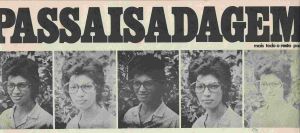
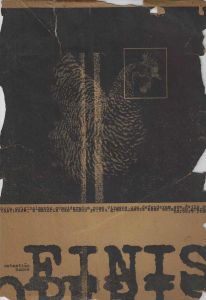
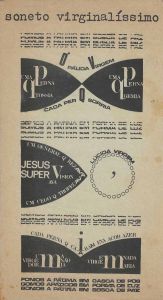
As demais folhas apresentam ampla concentração de figuras desenhadas e reproduzidas, entre elas rostos, olhos, bocas, serpentes, figuras aladas, formas orgânicas e personagens antropomórficos. Algumas imagens são repetidas de maneira seriada e simétrica. Fragmentos datilografados estão distribuídos em diferentes regiões da página e em distintas orientações.
A expressão Habeas Corpus foi fornecida pelo usuário como título da obra. A data, as dimensões, a edição, a tiragem e o processo exato de reprodução gráfica não foram identificados no material disponível. Por esse motivo, não é possível afirmar com segurança se a impressão final foi realizada por xerografia, offset ou outro procedimento de reprodução.
TEXTO DE OBSERVAÇÃO INGLÊS
The photographed ensemble contains at least four related graphic compositions. From the images alone, it is not possible to determine whether they are independent sheets, pages from a publication, printing proofs or components of a single multipart work.
Two compositions employ the recurring image of a door associated with skeletons and the inscription ISTO É, ABRO A PORTA. In one, the images are arranged in a horizontal sequence. In another, the composition is vertically organized and includes large graphic characters partially visible along the margin.
The remaining sheets contain a dense combination of drawn and reproduced figures, including faces, eyes, mouths, serpents, winged figures, organic forms and anthropomorphic characters. Some images are repeated in serial and symmetrical arrangements. Typewritten fragments are distributed across different areas of the page and in multiple orientations.
Habeas Corpus was supplied by the user as the title of the work. The date, dimensions, edition, print run and exact graphic reproduction process have not been identified from the available material. It is therefore not possible to determine with certainty whether the final printing process was xerography, offset or another reproductive technique.
Proveniência
Coleção Poema ProcessoInglês
Habeas Corpus
Dimensions: 11,8 x 8,5 in