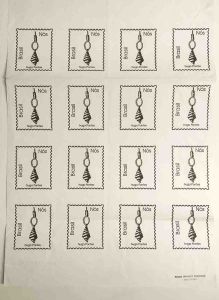
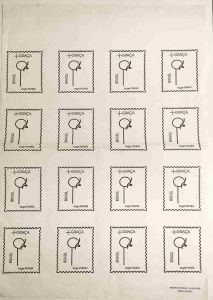
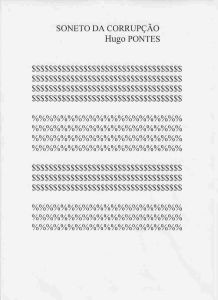
Impressão gráfica e poema visual de Hugo Pontes intitulada Descobrimento 500 Anos, identificada na própria obra com o nome hugo PONTES e a indicação Brasil.
Hugo Pontes
Categoria: Mail Art
Acervo: 04058
Dimensões: 29,6 x 21 cm
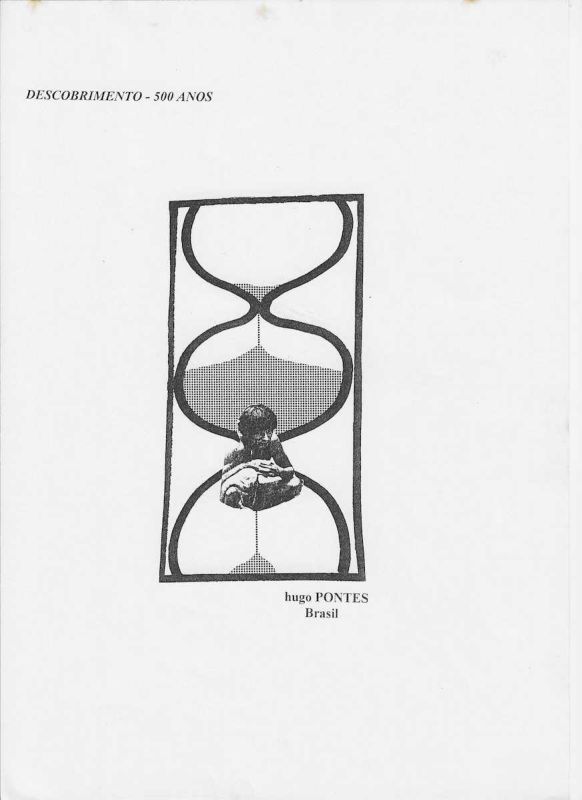
TEXTO PARA O SALSA EM PORTUGUÊSImpressão gráfica e poema visual de Hugo Pontes intitulada Descobrimento 500 Anos, identificada na própria obra com o nome hugo PONTES e a indicação Brasil. A composição utiliza como elemento central uma ampulheta em preto e branco, construída de forma esquemática e geométrica, com uma figura humana inserida na região inferior do instrumento. O título DESCOBRIMENTO 500 ANOS aparece na parte superior esquerda e estabelece o contexto histórico da obra, relacionado às reflexões críticas produzidas em torno dos quinhentos anos da chegada dos portugueses ao território brasileiro.A ampulheta funciona como símbolo explícito da passagem do tempo e transforma os quinhentos anos em uma medida visual. Na região central inferior aparece uma figura humana sentada ou recolhida, integrada ao interior da ampulheta, como se estivesse submetida ao fluxo temporal representado pela queda da areia. Essa combinação entre tempo, corpo e história cria uma leitura relacionada à permanência, à memória, à espera e às consequências prolongadas do processo colonial.A estrutura gráfica apresenta poucos elementos e grande área de fundo branco, concentrando a atenção no contraste entre a forma geométrica da ampulheta e a presença humana. O trabalho utiliza síntese visual, montagem e apropriação de imagem como recursos de poesia visual. A relação entre o título Descobrimento 500 Anos e o símbolo da ampulheta desloca o sentido de uma comemoração histórica para uma reflexão sobre duração, continuidade e memória. A obra pode ser relacionada às discussões sobre colonialismo, povos indígenas, identidade brasileira, passagem do tempo, memória histórica e os efeitos acumulados de cinco séculos de transformação social e cultural.Descobrimento 500 Anos integra a produção de Hugo Pontes ligada à poesia visual, poesia experimental, arte gráfica, apropriação e crítica social. Na parte inferior da composição aparecem hugo PONTES e Brasil. Não há data de produção, editora, tiragem, dimensões ou técnica específica de impressão visíveis na folha apresentada. Embora o título esteja diretamente associado ao quinto centenário da chegada portuguesa ao Brasil, comemorado em 2000, a imagem isolada não permite afirmar com segurança que a obra tenha sido produzida exatamente naquele ano.TEXT FOR SALSA IN ENGLISHGraphic print and visual poem by Hugo Pontes titled Descobrimento 500 Anos, identified on the work itself with the name hugo PONTES and the designation Brasil. The composition uses a black and white hourglass as its central element, constructed in a schematic and geometric form, with a human figure inserted into the lower section of the instrument. The title DESCOBRIMENTO 500 ANOS appears in the upper left area and establishes the historical context of the work, connected with critical reflections surrounding five hundred years since the Portuguese arrival in the territory that became Brazil.The hourglass functions as an explicit symbol of the passage of time and transforms five centuries into a visual measurement. In the lower central area, a seated or withdrawn human figure appears inside the hourglass, as if subjected to the temporal flow represented by the falling sand. This combination of time, body and history creates a reading associated with permanence, memory, waiting and the prolonged consequences of the colonial process.The graphic structure contains few elements and a large white background, focusing attention on the contrast between the geometric form of the hourglass and the human presence. The work uses visual synthesis, montage and image appropriation as devices of visual poetry. The relationship between the title Descobrimento 500 Anos and the hourglass shifts the meaning from historical commemoration toward reflection on duration, continuity and memory. The work can be related to discussions of colonialism, Indigenous peoples, Brazilian identity, the passage of time, historical memory and the accumulated effects of five centuries of social and cultural transformation.Descobrimento 500 Anos belongs to Hugo Pontes production in visual poetry, experimental poetry, graphic art, appropriation and social criticism. The lower section contains the identification hugo PONTES and Brasil. No production date, publisher, print run, dimensions or specific printing technique is visible on the supplied sheet. Although the title is directly associated with the five hundredth anniversary of the Portuguese arrival in Brazil, commemorated in 2000, the image alone does not establish with certainty that the work was produced exactly in that year.
TEXTO DE OBSERVAÇÃO EM PORTUGUÊSImpressão gráfica em preto e branco de Hugo Pontes com o título DESCOBRIMENTO 500 ANOS. A composição apresenta ao centro uma grande ampulheta formada por linhas pretas e áreas reticuladas. A representação da areia ocupa principalmente a região intermediária do instrumento e reforça visualmente a ideia de tempo em transcurso.Dentro da parte inferior da ampulheta aparece uma pequena figura humana sentada ou recolhida, incorporada diretamente à estrutura do objeto. Essa inserção aproxima o corpo humano do símbolo temporal e transforma a ampulheta em metáfora para história, memória, espera e duração. A figura pode também sugerir vulnerabilidade diante de processos históricos de longa duração.A obra utiliza uma linguagem gráfica extremamente econômica. O fundo branco, a centralização da ampulheta e a reduzida quantidade de elementos produzem forte concentração visual. O título Descobrimento 500 Anos amplia o significado da imagem e situa a peça no campo das reflexões sobre os quinhentos anos do Brasil e sobre os efeitos históricos da colonização.Na parte inferior aparecem hugo PONTES e Brasil. Não são visíveis data, editora, tiragem, dimensões ou técnica específica. O trabalho é relevante para o estudo da poesia visual de Hugo Pontes por demonstrar o uso de síntese gráfica, símbolo temporal, montagem e associação entre palavra e imagem. Também possui interesse para pesquisas sobre memória histórica, colonialismo, povos indígenas, identidade brasileira, passagem do tempo e crítica às narrativas comemorativas do chamado descobrimento do Brasil.OBSERVATION TEXT IN ENGLISHBlack and white graphic print by Hugo Pontes titled DESCOBRIMENTO 500 ANOS. The composition presents a large hourglass at the center, constructed with black outlines and halftone areas. The representation of sand is concentrated mainly in the middle section of the instrument and visually reinforces the idea of time in progress.Inside the lower part of the hourglass appears a small seated or withdrawn human figure, directly integrated into the structure of the object. This insertion connects the human body with the symbol of time and transforms the hourglass into a metaphor for history, memory, waiting and duration. The figure may also suggest vulnerability in relation to long term historical processes.The work uses an extremely economical graphic language. The white background, central placement of the hourglass and limited number of elements create strong visual concentration. The title Descobrimento 500 Anos expands the meaning of the image and places the work within reflections on the five hundred years of Brazil and the historical effects of colonization.The lower section contains hugo PONTES and Brasil. No date, publisher, print run, dimensions or specific technique is visible. The work is relevant to the study of Hugo Pontes visual poetry because it demonstrates the use of graphic synthesis, temporal symbolism, montage and the relationship between word and image. It is also relevant to research on historical memory, colonialism, Indigenous peoples, Brazilian identity, the passage of time and critical responses to commemorative narratives of the so called discovery of Brazil.
Proveniência
Coleção Poema ProcessoInglês
Graphic print and visual poem by Hugo Pontes titled Descobrimento 500 Anos, identified on the work itself with the name hugo PONTES and the designation Brasil.
Dimensions: 11,7 x 8,3 in