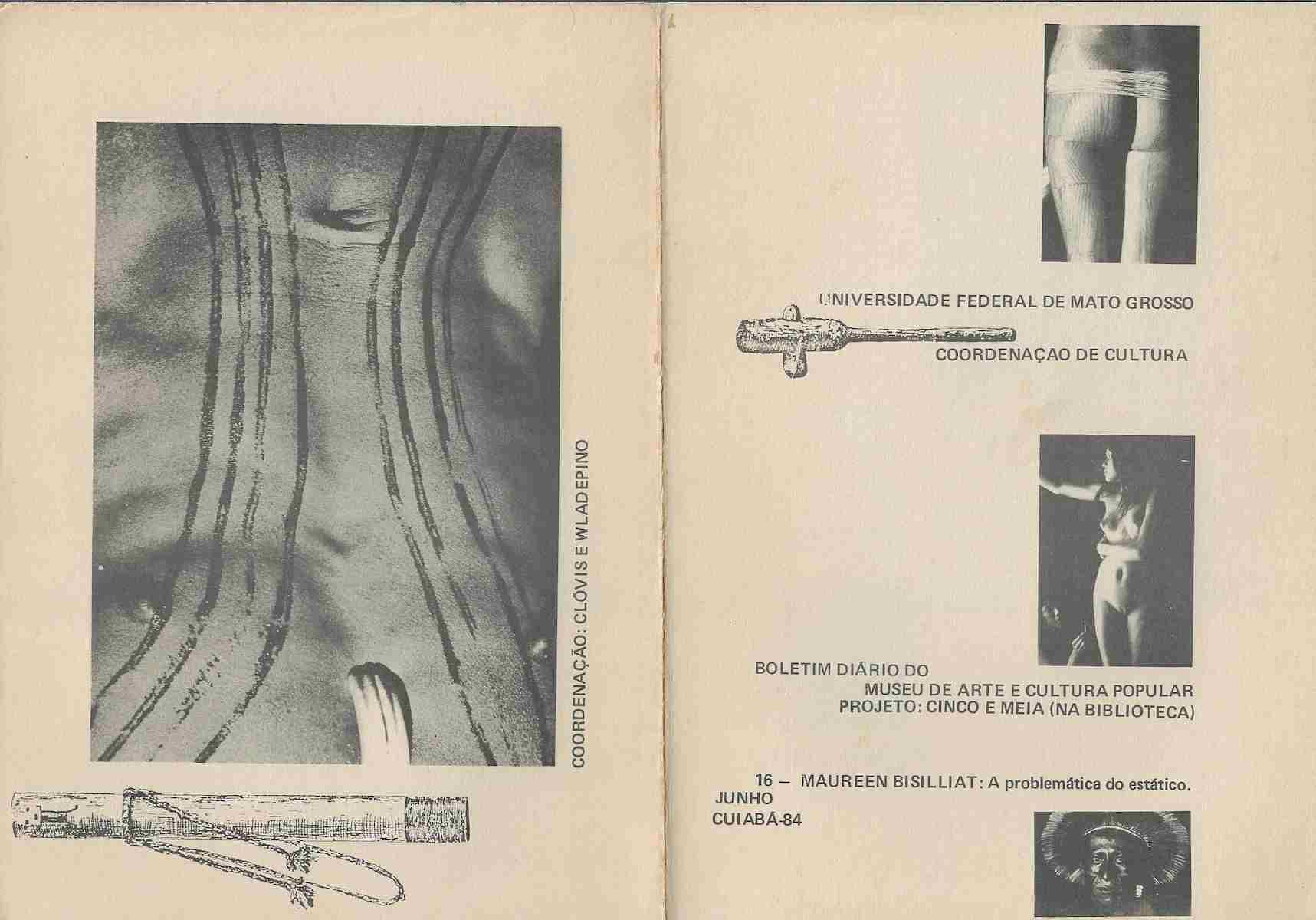
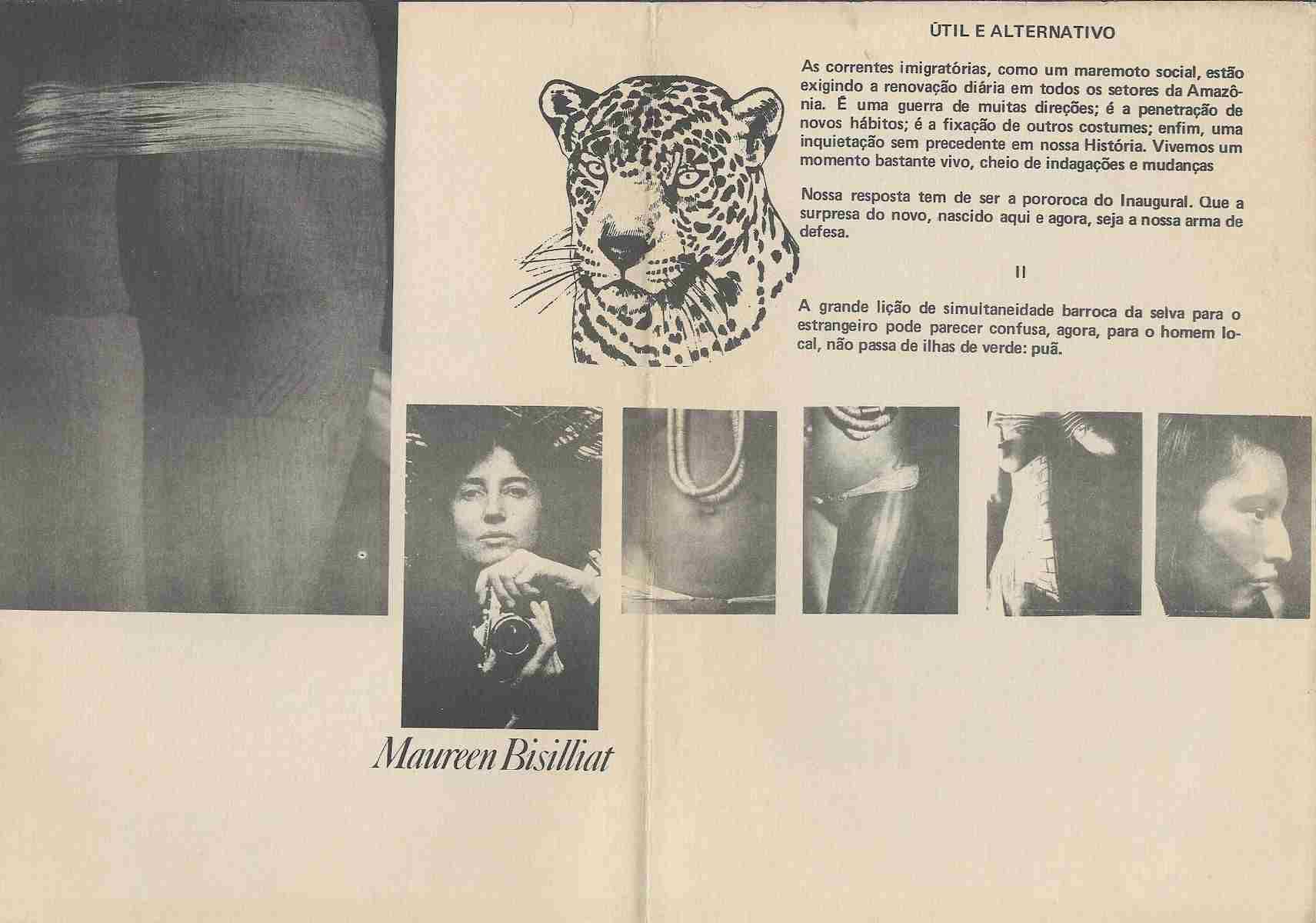
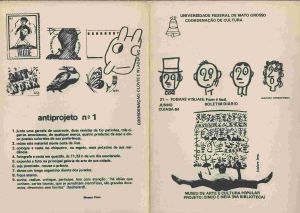
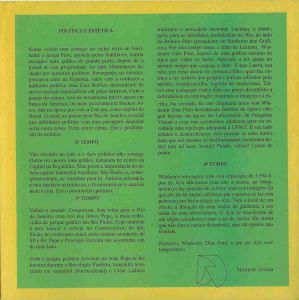
Boletim Diário do Museu de Arte e Cultura Popular da Universidade Federal de Mato Grosso, produzido pela Coordenação de Cultura e vinculado ao Projeto Cinco e Meia na Biblioteca. A edição é datada de 16 de junho de 1984
Wlademir Dias Pino
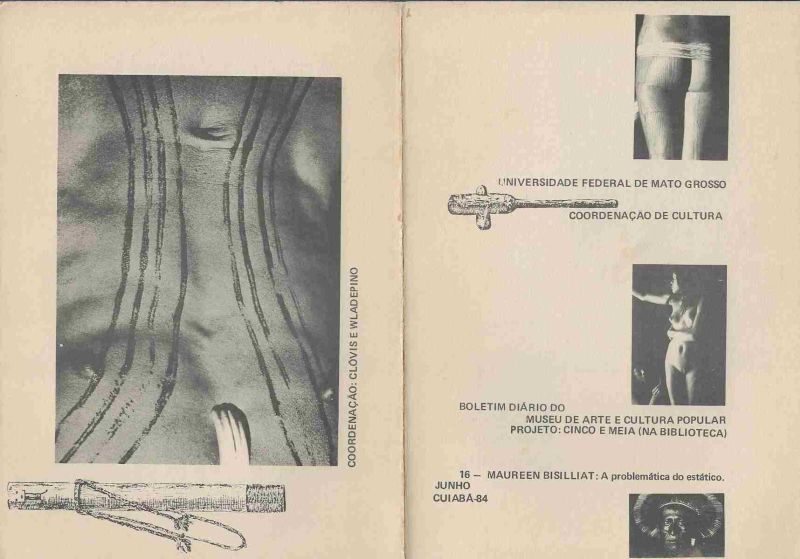
Categoria: Poema Processo
Acervo: 03994
Data: 16 de Junho de 1984
Dimensões: 21 x 15 cm
Boletim Diário do Museu de Arte e Cultura Popular da Universidade Federal de Mato Grosso, produzido pela Coordenação de Cultura e vinculado ao Projeto Cinco e Meia na Biblioteca. A edição é datada de 16 de junho de 1984, em Cuiabá, e apresenta Maureen Bisilliat como tema central, sob o título Maureen Bisilliat: A problemática do estático.O documento integra a programação cultural da Universidade Federal de Mato Grosso e registra uma atividade dedicada à fotografia, à imagem, à cultura visual e às relações entre representação, permanência e movimento. A publicação articula fotografias, detalhes corporais, retratos, referências visuais e texto crítico, construindo uma leitura sobre o trabalho de Maureen Bisilliat e sobre a capacidade da fotografia de condensar tempo, espaço, corpo e experiência cultural.Na primeira página aparecem a identificação institucional Universidade Federal de Mato Grosso, Coordenação de Cultura, Boletim Diário do Museu de Arte e Cultura Popular e Projeto Cinco e Meia na Biblioteca. A data registrada é 16 de junho de 1984, Cuiabá. A composição gráfica reúne fotografias em preto e branco, fragmentos do corpo humano e elementos visuais de caráter antropológico e documental. O conjunto enfatiza a fotografia como instrumento de observação e interpretação.O verso apresenta de forma destacada o nome Maureen Bisilliat e uma sequência de imagens que inclui retrato da fotógrafa com câmera, detalhes de objetos, partes do corpo e uma figura humana. A organização visual relaciona o registro fotográfico ao fragmento e à seleção do enquadramento, elementos fundamentais para a construção de significado na fotografia.O texto principal recebe o título Útil e Alternativo. Nele, a Amazônia aparece como espaço submetido a fortes processos de transformação social. O texto afirma que as correntes imigratórias atuam como um maremoto social e exigem renovação diária em todos os setores da Amazônia. São mencionadas a penetração de novos hábitos, a fixação de outros costumes, as indagações e mudanças de um momento histórico particularmente intenso.O texto propõe como resposta a capacidade de inaugurar e de perceber a surpresa do novo nascido no presente. Em seguida, aborda a simultaneidade barroca da selva e a diferença de percepção entre o estrangeiro e o homem local. A floresta é apresentada como um espaço que pode parecer confuso para quem vem de fora, enquanto para o habitante local sua organização pode ser compreendida por meio de referências próprias do ambiente e da experiência cotidiana.A imagem de uma onça ocupa posição central no conjunto gráfico, reforçando a associação do documento com a Amazônia, a natureza, o território e as relações entre cultura e ambiente. A presença do animal, dos retratos e dos fragmentos fotográficos estabelece uma aproximação entre observação documental, natureza, identidade regional e construção visual.A publicação registra ainda a coordenação de Clóvis e Wlademir Dias Pino. Essa informação documenta a participação de Wlademir Dias Pino na organização de atividades culturais da Universidade Federal de Mato Grosso em 1984 e amplia a compreensão de sua atuação para além da poesia experimental e do Poema Processo. O boletim mostra seu envolvimento com programação universitária, fotografia, cinema, artes visuais, cultura popular, comunicação e formação de público.O documento constitui fonte histórica importante para a trajetória de Maureen Bisilliat no contexto cultural brasileiro, para a história da Universidade Federal de Mato Grosso, para o Museu de Arte e Cultura Popular, para a Coordenação de Cultura e para o Projeto Cinco e Meia na Biblioteca. Também estabelece uma conexão documental entre Maureen Bisilliat, Wlademir Dias Pino, Cuiabá, Mato Grosso, Amazônia, fotografia brasileira, cultura visual e produção cultural universitária na década de 1980.TEXTO PARA O SALSA EM INGLÊSDaily Bulletin of the Museum of Art and Popular Culture of the Federal University of Mato Grosso, produced by the Cultural Coordination and connected to the Five Thirty at the Library Project. The edition is dated June 16, 1984, in Cuiabá, Brazil, and presents Maureen Bisilliat as its central subject under the title Maureen Bisilliat: The Problematic of the Static.The document forms part of the cultural programming of the Federal University of Mato Grosso and records an activity devoted to photography, image, visual culture and the relationships between representation, permanence and movement. The publication combines photographs, bodily details, portraits, visual references and critical text, creating a reading of the work of Maureen Bisilliat and of the capacity of photography to condense time, space, body and cultural experience.The first page identifies the Federal University of Mato Grosso, the Cultural Coordination, the Daily Bulletin of the Museum of Art and Popular Culture and the Five Thirty at the Library Project. The recorded date is June 16, 1984, Cuiabá. The graphic composition brings together black and white photographs, fragments of the human body and visual elements with anthropological and documentary qualities. The ensemble emphasizes photography as an instrument of observation and interpretation.The reverse prominently presents the name Maureen Bisilliat and a sequence of images including a portrait of the photographer holding a camera, details of objects, parts of the body and a human figure. The visual organization connects photographic recording with fragmentation and framing, fundamental elements in the construction of meaning through photography.The main text is titled Useful and Alternative. In it, the Amazon appears as a territory undergoing intense processes of social transformation. The text describes migratory currents as a social tidal wave requiring daily renewal throughout the Amazon region. It mentions the arrival of new habits, the establishment of different customs, and the questions and changes generated by an especially dynamic historical moment.The text proposes the ability to inaugurate and recognize the surprise of what is newly born in the present as a response to these transformations. It then discusses the baroque simultaneity of the forest and the contrast between the perception of the foreign visitor and that of the local inhabitant. The forest may appear confusing to an outsider, while for the local population its organization can be understood through references grounded in environment and lived experience.An image of a jaguar occupies a central position in the graphic composition, reinforcing the connection of the document with the Amazon, nature, territory and the relationship between culture and environment. The presence of the animal, the portraits and the photographic fragments creates a connection between documentary observation, nature, regional identity and visual construction.The publication also records the coordination of Clóvis and Wlademir Dias Pino. This information documents the participation of Wlademir Dias Pino in the organization of cultural activities at the Federal University of Mato Grosso in 1984 and broadens the understanding of his work beyond experimental poetry and the Process Poem Movement. The bulletin demonstrates his involvement with university programming, photography, cinema, visual arts, popular culture, communication and audience formation.The document is an important historical source for the trajectory of Maureen Bisilliat within Brazilian cultural history, for the history of the Federal University of Mato Grosso, the Museum of Art and Popular Culture, the Cultural Coordination and the Five Thirty at the Library Project. It also establishes a documentary connection between Maureen Bisilliat, Wlademir Dias Pino, Cuiabá, Mato Grosso, the Amazon, Brazilian photography, visual culture and university cultural production during the 1980s.
TEXTO DE OBSERVAÇÃO EM PORTUGUÊSBoletim impresso da Universidade Federal de Mato Grosso, vinculado à Coordenação de Cultura, ao Museu de Arte e Cultura Popular e ao Projeto Cinco e Meia na Biblioteca. O documento está datado de 16 de junho de 1984, em Cuiabá, e apresenta Maureen Bisilliat sob o tema A problemática do estático.A publicação é composta por fotografias em preto e branco, retratos, detalhes corporais, objetos e uma imagem de onça. Maureen Bisilliat aparece identificada nominalmente e também em fotografia segurando uma câmera.O texto interno denominado Útil e Alternativo aborda as transformações sociais na Amazônia, mencionando correntes imigratórias, introdução de novos hábitos, mudanças de costumes e a necessidade de respostas culturais capazes de lidar com uma realidade em transformação. O texto também aborda a percepção da selva, contrapondo a possível sensação de confusão do estrangeiro à experiência do homem local.A associação entre o título A problemática do estático e a organização das fotografias permite compreender o boletim como reflexão sobre fotografia, enquadramento, fragmentação, imobilização do instante e construção da percepção visual.A coordenação da atividade é atribuída no próprio documento a Clóvis e Wlademir Dias Pino. Esse registro é particularmente relevante para a documentação da atuação institucional de Wlademir Dias Pino na UFMT e de seu envolvimento com fotografia, artes visuais e programação cultural em Cuiabá durante a década de 1980.As imagens fornecidas não permitem determinar com segurança a tiragem, a gráfica responsável, as dimensões originais, a autoria específica de cada fotografia, a autoria do texto Útil e Alternativo ou a autoria individual do projeto gráfico. Também não é possível afirmar apenas com este documento que Wlademir Dias Pino tenha sido o autor exclusivo do design, embora sua participação na coordenação esteja explicitamente indicada.TEXTO DE OBSERVAÇÃO EM INGLÊSPrinted bulletin of the Federal University of Mato Grosso connected to the Cultural Coordination, the Museum of Art and Popular Culture and the Five Thirty at the Library Project. The document is dated June 16, 1984, in Cuiabá, Brazil, and presents Maureen Bisilliat under the theme The Problematic of the Static.The publication is composed of black and white photographs, portraits, bodily details, objects and an image of a jaguar. Maureen Bisilliat is identified by name and also appears in a photograph holding a camera.The internal text titled Useful and Alternative discusses social transformations in the Amazon, mentioning migratory currents, the introduction of new habits, changing customs and the need for cultural responses capable of addressing a rapidly transforming reality. The text also considers perceptions of the forest, contrasting the possible confusion of the foreign observer with the experience of the local inhabitant.The relationship between the title The Problematic of the Static and the organization of the photographs allows the bulletin to be understood as a reflection on photography, framing, fragmentation, the fixation of an instant and the construction of visual perception.The coordination of the activity is attributed in the document itself to Clóvis and Wlademir Dias Pino. This record is particularly relevant to the documentation of the institutional activities of Wlademir Dias Pino at UFMT and his involvement with photography, visual arts and cultural programming in Cuiabá during the 1980s.The supplied images do not make it possible to establish with certainty the print run, printing company, original dimensions, specific authorship of each photograph, authorship of the text Useful and Alternative or individual authorship of the graphic design. It is also not possible to state from this document alone that Wlademir Dias Pino was the exclusive designer, although his participation in the coordination is explicitly recorded.
Proveniência
Coleção Poema ProcessoInglês
Daily Bulletin of the Museum of Art and Popular Culture of the Federal University of Mato Grosso, produced by the Cultural Coordination and connected to the Five Thirty at the Library Project. The edition is dated June 16, 1984, in Cuiabá, Brazil
Dimensions: 8,3 x 5,9 in