Impressão gráfica de Spencer Selby, artista e poeta experimental dos Estados Unidos, identificada como a sexta peça de uma sequência.
John M. Bennett - USA
Categoria: Mail Art
Acervo: 03922
Dimensões: 28 x 21,7 cm
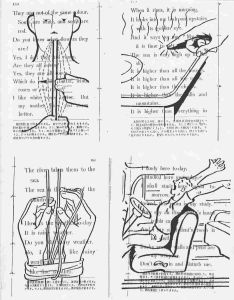
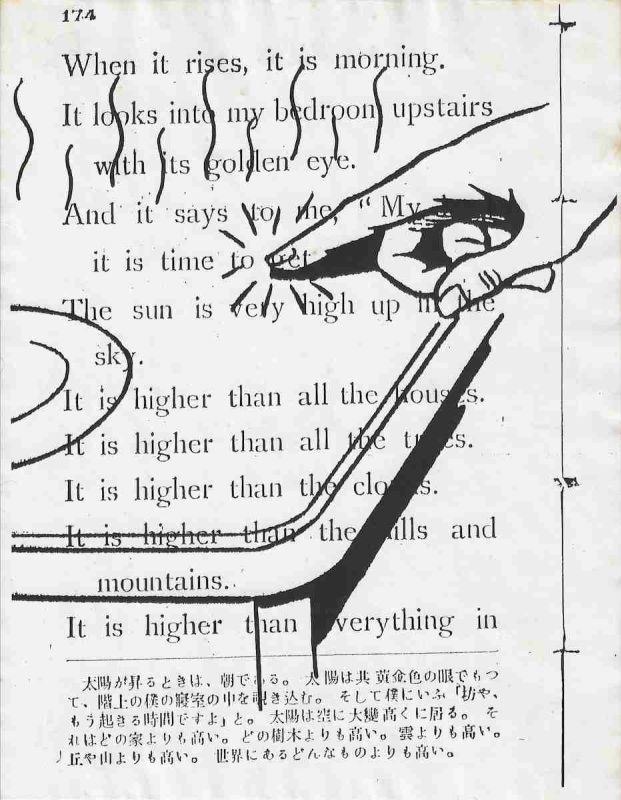
Impressão gráfica de Spencer Selby, artista e poeta experimental dos Estados Unidos, identificada como a sexta peça de uma sequência. A obra apresenta uma intervenção gráfica realizada sobre uma página numerada 174, provavelmente retirada de material didático bilíngue destinado ao ensino da língua inglesa para leitores japoneses. A composição reúne texto impresso em inglês, tradução ou comentário em caracteres japoneses, desenho figurativo, linhas gestuais e áreas negras de grande contraste.O texto de origem descreve o nascer do sol e sua entrada simbólica em um quarto localizado no andar superior. A narrativa apresenta o sol como uma presença dotada de olho dourado e afirma sua posição acima das casas, árvores, nuvens, colinas, montanhas e de todas as coisas do mundo. O conteúdo possui caráter didático e poético, associando o início da manhã à luz, à altura e ao despertar.Sobre esse texto, Spencer Selby insere uma figura humana alongada, inclinada e aparentemente suspensa no espaço. O corpo ocupa diagonalmente a página, com um braço projetado para a esquerda e outro estendido para a direita. A cabeça é construída por contornos fortes e áreas negras que sugerem cabelo, sombra, máscara ou movimento. A postura pode remeter a voo, queda, salto, dança, deslocamento ou tentativa de alcançar algo situado além dos limites da página.Uma extensa linha curva atravessa a composição desde a área central até a margem inferior esquerda. Essa linha pode ser interpretada como horizonte, trajetória, corda, caminho, superfície terrestre ou prolongamento do corpo. Outras linhas verticais e onduladas aparecem sobre o texto, criando interferências entre desenho, tipografia e espaço. As palavras impressas permanecem parcialmente legíveis, mas a figura interrompe frases, cobre letras e transforma o exercício de leitura em um campo de tensão visual.A relação entre o texto e a imagem produz novos sentidos. A figura parece responder às ideias de altura, céu, sol e elevação presentes na página. Ao mesmo tempo, sua posição instável introduz uma sensação de risco e desequilíbrio. O corpo pode estar subindo em direção à luz ou caindo de uma região elevada. Essa ambiguidade converte uma narrativa escolar sobre a manhã em uma reflexão sobre movimento, liberdade, vulnerabilidade, desejo e condição humana.As marcas de enquadramento, registro e corte visíveis nas margens reforçam o caráter gráfico e editorial da peça. A impressão em preto e branco, o forte contraste, a apropriação de página impressa e a sobreposição manual aproximam o trabalho da poesia visual, da copy art, da xerografia, da colagem textual, do desenho experimental, da arte conceitual e das práticas de arte postal.A presença simultânea dos idiomas inglês e japonês amplia a dimensão transcultural da obra. O material didático, originalmente criado para transmitir conhecimento de maneira objetiva, é transformado em suporte para uma experiência visual aberta e subjetiva. Spencer Selby desloca a função educativa da página e cria uma composição na qual palavra, corpo, movimento e espaço passam a formar uma nova unidade poética.A obra documenta a pesquisa de Spencer Selby sobre apropriação, fragmentação, interferência e transformação da linguagem impressa. A peça relaciona texto e imagem sem estabelecer uma interpretação definitiva, permitindo leituras ligadas ao despertar, à elevação, ao voo, à queda, ao sonho, à paisagem e à passagem entre diferentes idiomas e culturas.Text for the Salsa program in EnglishGraphic print by Spencer Selby, an experimental artist and poet from the United States, identified as the sixth piece in a sequence. The work presents a graphic intervention over page 174, probably taken from bilingual educational material intended to teach English to Japanese readers. The composition combines printed English text, Japanese translation or commentary, figurative drawing, gestural lines and large areas of strong black contrast.The original text describes the rising sun and its symbolic entrance into an upstairs bedroom. The narrative presents the sun as a presence with a golden eye and describes it as being above houses, trees, clouds, hills, mountains and everything in the world. The content is both educational and poetic, connecting the beginning of the morning with light, height and awakening.Over this text, Spencer Selby introduces an elongated human figure placed diagonally and apparently suspended in space. The body occupies much of the page, with one arm projected toward the left and the other extended toward the right. The head is formed by strong contours and black areas that may suggest hair, shadow, a mask or movement. The pose may evoke flight, falling, jumping, dancing, displacement or an attempt to reach something beyond the limits of the page.A long curved line crosses the composition from the central area toward the lower left margin. This line may be interpreted as a horizon, trajectory, rope, path, ground surface or extension of the body. Additional vertical and undulating lines appear over the printed text, creating interference between drawing, typography and space. The printed words remain partly readable, but the figure interrupts sentences, covers letters and transforms the reading exercise into a field of visual tension.The relationship between text and image produces new meanings. The figure appears to respond to the ideas of height, sky, sun and elevation found on the page. At the same time, the unstable position introduces a feeling of danger and imbalance. The body may be rising toward the light or falling from an elevated region. This ambiguity transforms a school narrative about morning into a reflection on movement, freedom, vulnerability, desire and the human condition.Registration, framing and cutting marks visible along the margins reinforce the graphic and editorial character of the piece. The black and white printing, strong contrast, appropriation of a printed page and manual superimposition connect the work with visual poetry, copy art, xerography, textual collage, experimental drawing, conceptual art and mail art practices.The simultaneous presence of English and Japanese expands the transcultural dimension of the work. Educational material originally created to communicate knowledge objectively becomes the support for an open and subjective visual experience. Spencer Selby displaces the instructional function of the page and creates a composition in which word, body, movement and space form a new poetic unity.The work documents Spencer Selby research into appropriation, fragmentation, interference and the transformation of printed language. The piece connects text and image without establishing a definitive interpretation, allowing readings related to awakening, elevation, flight, falling, dreams, landscape and the passage between different languages and cultures.
Texto de observação em portuguêsImpressão gráfica em preto e branco de Spencer Selby, Estados Unidos, identificada como número 6. A composição utiliza a página 174 de uma publicação bilíngue em inglês e japonês. O texto impresso descreve o nascer do sol, a manhã, um quarto no andar superior e a altura do sol em relação às casas, árvores, nuvens, colinas e montanhas. Sobre a página foi inserido um desenho de figura humana alongada em posição diagonal, com os braços estendidos e o corpo atravessado por linhas curvas e áreas negras. A postura da personagem pode sugerir voo, queda, salto, dança ou deslocamento. O desenho interfere diretamente na leitura e converte o material didático em poesia visual. A peça pode ser relacionada à arte postal, poesia experimental, poesia visual, copy art, xerografia, colagem textual, apropriação de material impresso, desenho gestual e arte conceitual. Não foram identificados na imagem título original, data de produção, assinatura, dimensões, tiragem ou técnica detalhada.Observation text in EnglishBlack and white graphic print by Spencer Selby, United States, identified as number 6. The composition uses page 174 from a bilingual English and Japanese publication. The printed text describes sunrise, morning, an upstairs bedroom and the height of the sun in relation to houses, trees, clouds, hills and mountains. An elongated human figure has been drawn diagonally over the page, with extended arms and a body crossed by curved lines and black areas. The position of the figure may suggest flight, falling, jumping, dancing or movement through space. The drawing directly interferes with reading and transforms educational material into visual poetry. The piece may be associated with mail art, experimental poetry, visual poetry, copy art, xerography, textual collage, appropriation of printed material, gestural drawing and conceptual art. No original title, production date, signature, dimensions, edition information or detailed technique were identified in the image.
Proveniência
Coleção Poema ProcessoInglês
Graphic print by Spencer Selby, an experimental artist and poet from the United States, identified as the sixth piece in a sequence.
Dimensions: 11 x 8,5 in