Impressão gráfica de Spencer Selby, artista e poeta experimental dos Estados Unidos, identificada como a quinta peça de uma sequência.
John M. Bennett - USA
Categoria: Mail Art
Acervo: 03921
Dimensões: 28 x 21,7 cm
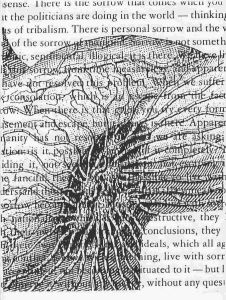
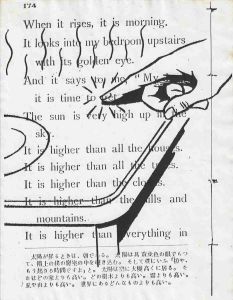
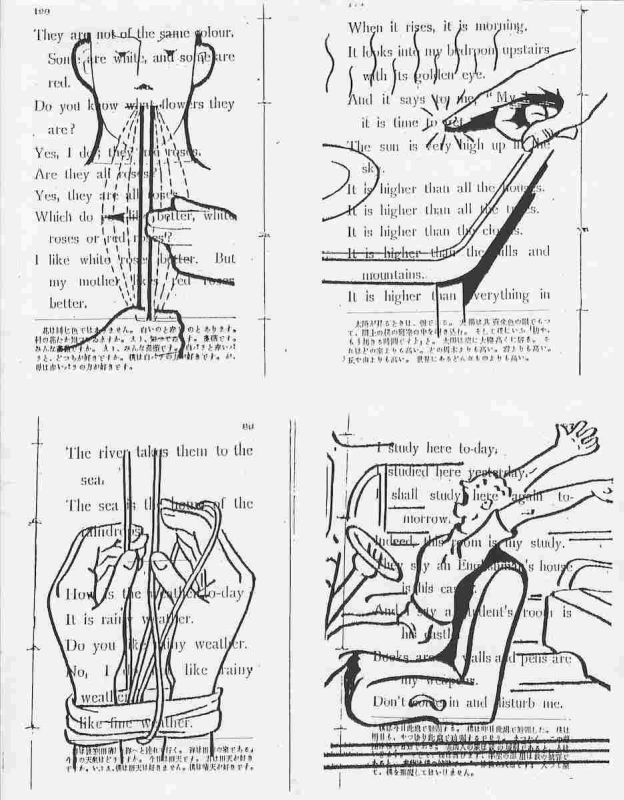
Impressão gráfica de Spencer Selby, artista e poeta experimental dos Estados Unidos, identificada como a quinta peça de uma sequência. A composição é organizada em quatro campos retangulares que combinam páginas impressas em língua inglesa, anotações em caracteres japoneses e desenhos lineares sobrepostos. O trabalho aproxima poesia visual, colagem textual, apropriação de material didático, desenho experimental, copy art e arte postal.No campo superior esquerdo aparece uma figura frontal com braços elevados, construída sobre um texto relacionado a cores e flores. Podem ser reconhecidas frases sobre cores, flores, rosas vermelhas e rosas brancas. A forma alongada do corpo interfere diretamente nas linhas impressas e transforma a página em uma estrutura híbrida entre figura humana, objeto e sinal gráfico.No campo superior direito encontra se uma personagem deitada ou despertando, associada a um texto sobre o nascer do sol, o quarto, a manhã, o céu, as nuvens e as montanhas. A linha curva que atravessa a página cria uma ligação entre corpo, horizonte e paisagem. O desenho interrompe a leitura convencional e converte a narrativa didática em uma cena ambígua, entre sonho, despertar e deslocamento.No campo inferior esquerdo aparece uma figura inserida em uma estrutura semelhante a barco, recipiente ou espaço fechado. O texto impresso menciona rio, mar, chuva e condições do tempo. As linhas verticais e curvas sugerem cordas, mastros, chuva, vegetação ou elementos de aprisionamento. A relação entre palavra e imagem produz uma leitura simultaneamente narrativa e abstrata.No campo inferior direito observa se uma personagem reclinada em um ambiente doméstico, provavelmente sobre uma cama, sofá ou poltrona. O texto apresenta frases ligadas ao estudo, ao dia anterior, ao dia seguinte, à casa e à interrupção do descanso. A figura humana se estende além dos limites habituais do corpo e ocupa a página como uma forma gráfica contínua.Em todos os quatro campos, Spencer Selby utiliza o texto preexistente como suporte visual e semântico. As frases deixam de funcionar apenas como exercício de leitura e passam a participar da construção das figuras. A sobreposição dificulta a leitura integral, cria novas associações e questiona os limites entre linguagem, ilustração, educação, memória e narrativa.A presença de caracteres japoneses na parte inferior de cada composição sugere a apropriação de páginas de material pedagógico bilíngue ou de uma publicação destinada ao ensino da língua inglesa. Esse elemento amplia o caráter transcultural da obra e reforça sua relação com redes internacionais de circulação artística. A impressão em preto e branco, as marcas de reprodução, as linhas de corte e os registros gráficos aproximam o conjunto da xerografia, da montagem editorial e das publicações experimentais de baixo custo.A obra evidencia a pesquisa de Spencer Selby sobre fragmentação, interferência, leitura e transformação de materiais impressos. Ao combinar frases escolares com corpos distorcidos e cenas enigmáticas, o artista converte conteúdos cotidianos em poesia visual e cria novas relações entre texto, imagem, espaço e experiência humana.Text for the Salsa program in EnglishGraphic print by Spencer Selby, an experimental artist and poet from the United States, identified as the fifth piece in a sequence. The composition is organized into four rectangular sections combining printed pages in English, notes in Japanese characters and superimposed line drawings. The work connects visual poetry, textual collage, appropriation of educational material, experimental drawing, copy art and mail art.In the upper left section there is a frontal figure with raised arms, drawn over a text concerning colors and flowers. Sentences referring to colors, flowers, red roses and white roses can be recognized. The elongated body directly interferes with the printed lines and transforms the page into a hybrid structure between a human figure, an object and a graphic sign.In the upper right section a reclining or awakening figure appears in connection with a text about sunrise, the bedroom, morning, the sky, clouds and mountains. A long curved line crossing the page establishes a relationship between body, horizon and landscape. The drawing interrupts conventional reading and transforms the educational narrative into an ambiguous scene between dreaming, awakening and movement.In the lower left section a figure appears inside a structure resembling a boat, container or enclosed space. The printed text mentions a river, the sea, rain and weather conditions. Vertical and curved lines may suggest ropes, masts, rainfall, plants or forms of confinement. The relationship between word and image creates a reading that is both narrative and abstract.In the lower right section a reclining figure occupies a domestic environment, probably a bed, sofa or chair. The text presents sentences related to studying, the previous day, the following day, the house and the interruption of rest. The human body extends beyond normal anatomical proportions and occupies the page as a continuous graphic form.Throughout the four sections, Spencer Selby uses existing text as both visual and semantic material. The sentences no longer function only as reading exercises and become part of the construction of the figures. The superimposition prevents complete reading, creates new associations and questions the boundaries between language, illustration, education, memory and narrative.The Japanese characters located at the bottom of each composition suggest the appropriation of pages from bilingual educational material or a publication intended for English language instruction. This element expands the transcultural character of the work and reinforces its relationship with international networks of artistic circulation. The black and white printing, reproduction marks, cutting lines and graphic registrations connect the piece with xerography, editorial montage and inexpensive experimental publications.The work demonstrates Spencer Selbys investigation into fragmentation, interference, reading and the transformation of printed material. By combining school sentences with distorted bodies and enigmatic scenes, the artist converts everyday content into visual poetry and creates new relationships between text, image, space and human experience.
Texto de observação em portuguêsImpressão gráfica em preto e branco de Spencer Selby, Estados Unidos, identificada como número 5. A folha apresenta quatro composições independentes organizadas em dois campos superiores e dois inferiores. Cada campo utiliza uma página impressa em inglês com caracteres japoneses na parte inferior e recebe a intervenção de desenhos lineares figurativos. Os textos tratam de cores, flores, manhã, sol, céu, nuvens, montanhas, rio, mar, chuva, estudo, casa e atividades cotidianas. As figuras parecem representar corpos humanos em posições de elevação, repouso, deslocamento e estudo. As imagens interferem nas frases e impedem uma leitura contínua. A peça pode ser relacionada à poesia visual, arte postal, copy art, xerografia, colagem textual, apropriação de material didático, desenho experimental e arte conceitual. Não foram identificados na imagem título original, data, assinatura, dimensões, técnica detalhada ou informação de tiragem.Observation text in EnglishBlack and white graphic print by Spencer Selby, United States, identified as number 5. The sheet presents four independent compositions arranged in two upper and two lower sections. Each section uses a printed English page with Japanese characters at the bottom and includes figurative line drawing interventions. The texts refer to colors, flowers, morning, the sun, the sky, clouds, mountains, a river, the sea, rain, study, the home and everyday activities. The figures appear to represent human bodies in positions of elevation, rest, movement and study. The drawings interfere with the sentences and prevent continuous reading. The piece may be associated with visual poetry, mail art, copy art, xerography, textual collage, appropriation of educational material, experimental drawing and conceptual art. No original title, date, signature, dimensions, detailed technique or edition information were identified in the image.
Proveniência
Coleção Poema ProcessoInglês
Graphic print by Spencer Selby, an experimental artist and poet from the United States, identified as the fifth piece in a sequence.
Dimensions: 11 x 8,5 in