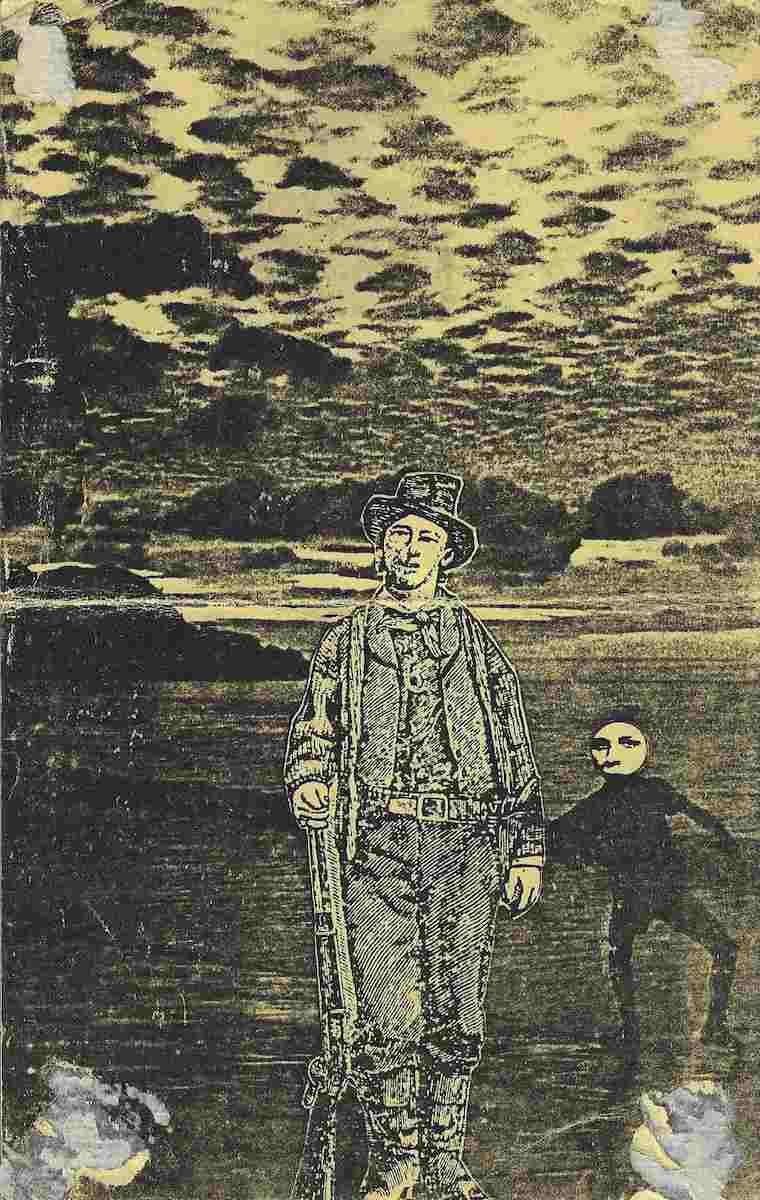
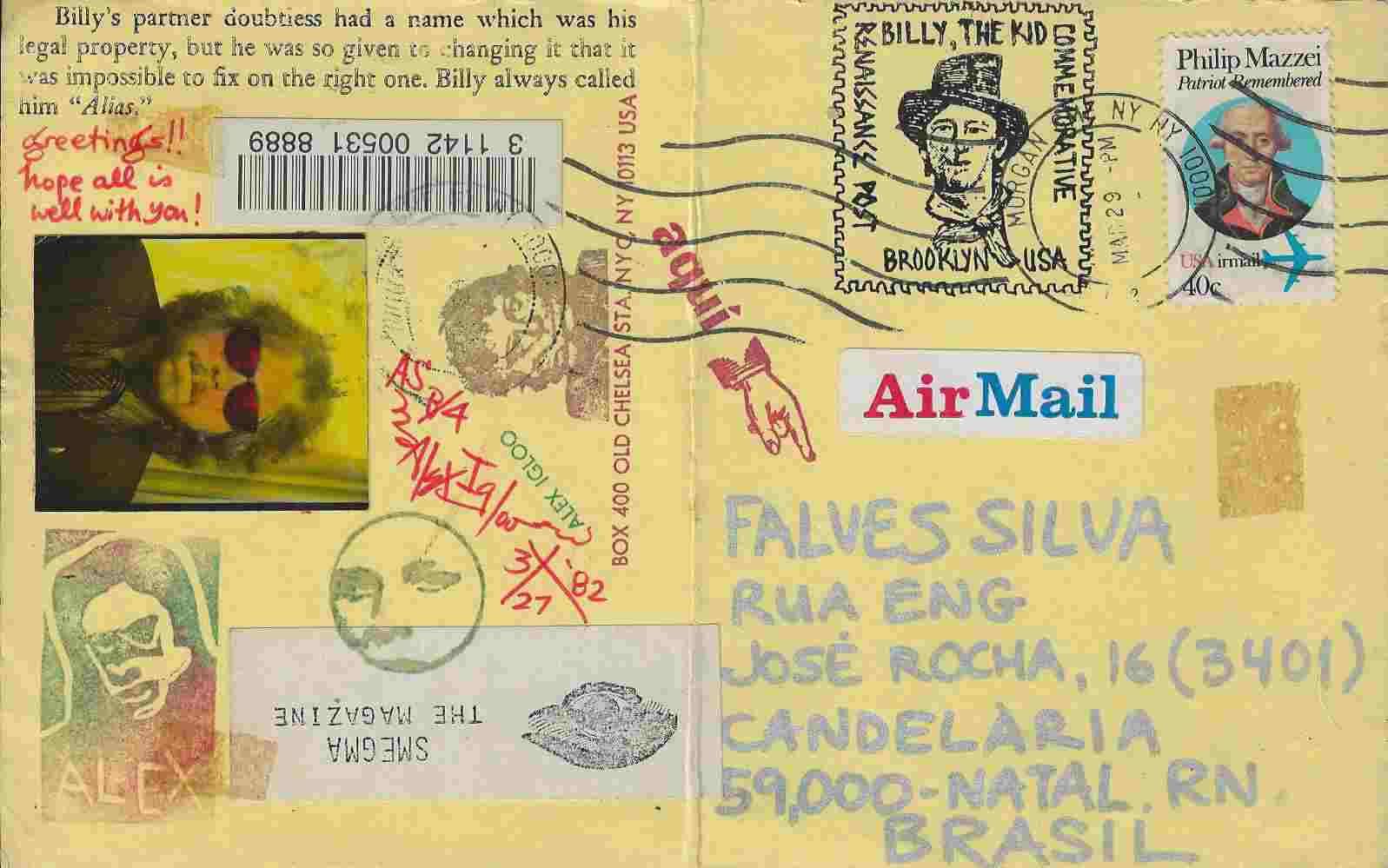
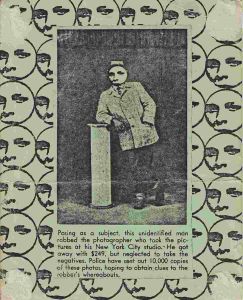
Cartão de arte postal enviado por Alex TorridZone Igloo, identidade artística associada a Alexander Josef Hirka, de Nova York, Estados Unidos, para Falves Silva, em Natal, Rio Grande do Norte, Brasil.
Alex TorridZone Igloo - Alexander Josef Hirka - AleXander Hirka - Alex Igloo
Categoria: Mail Art
Acervo: 03825
Data: 27 de Março de 1982
Dimensões: 20,2 x 12,2 cm
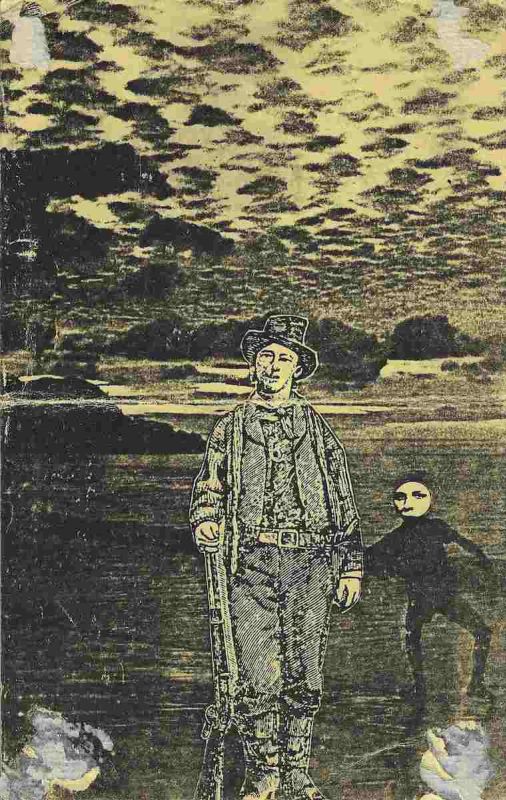
TEXTO PARA O PROGRAMA SALSA EM PORTUGUÊSCartão de arte postal enviado por Alex TorridZone Igloo, identidade artística associada a Alexander Josef Hirka, de Nova York, Estados Unidos, para Falves Silva, em Natal, Rio Grande do Norte, Brasil. A peça apresenta a data manuscrita de 27 de março de 1982 e integra a correspondência continuada entre os dois artistas dentro da rede internacional de mail art, poesia visual, colagem, selos de artista e publicações experimentais.A frente do cartão apresenta uma composição em preto, branco e tonalidades amareladas construída a partir de imagens relacionadas ao imaginário do Velho Oeste norte americano. No centro aparece a figura impressa de um homem armado, vestido como personagem de narrativas sobre pistoleiros e fora da lei. Ao fundo encontra se uma paisagem montanhosa de aparência fotográfica, enquanto uma figura menor ocupa o lado direito da cena.Os rostos das duas personagens foram substituídos ou parcialmente ocultados pela imagem circular masculina utilizada repetidamente por Alex TorridZone Igloo em diferentes cartões enviados a Falves Silva. A aplicação desse símbolo produz uma identidade visual comum para personagens distintos e transforma materiais apropriados em componentes de uma série reconhecível. O procedimento também questiona autoria, identificação, anonimato e construção de personagens históricos.No verso, a parte superior esquerda contém um fragmento textual impresso em inglês sobre Billy e seu companheiro. O texto informa que o parceiro de Billy provavelmente possuía um nome legal, mas mudava de nome com tanta frequência que seria impossível identificar o correto. Billy o chamava sempre de Alias. A passagem introduz diretamente o tema da identidade instável e estabelece uma relação entre o personagem do fora da lei, o uso de pseudônimos e a própria identidade artística Alex TorridZone Igloo.A referência a Billy provavelmente corresponde a Billy the Kid, personagem também representado em um selo de artista localizado na parte superior central do cartão. O artistamp apresenta uma figura masculina com chapéu, a inscrição Billy the Kid, a indicação Brooklyn USA e um valor fictício de sete centavos. A utilização de Brooklyn no lugar de uma origem histórica convencional desloca o personagem do Oeste norte americano para o ambiente urbano de Nova York e integra humor, ficção postal e apropriação cultural.A correspondência apresenta uma mensagem manuscrita em tinta vermelha dirigida a Falves Silva. O texto pode ser lido como Greetings, hope all is well with you. Em português, Alex TorridZone Igloo envia saudações e manifesta o desejo de que tudo esteja bem com o destinatário. A mensagem confirma o caráter pessoal da troca e demonstra que o cartão funcionava simultaneamente como obra visual e comunicação entre artistas.Na área esquerda do verso aparece uma fotografia colorida de um homem com óculos escuros, acompanhada da inscrição As B4 e da assinatura ou identificação gráfica de Alex TorridZone Igloo. Na região inferior encontra se uma reprodução de rosto masculino dentro de um círculo, semelhante ao símbolo aplicado na frente do cartão. Um pequeno carimbo de mão indicadora aparece próximo à etiqueta de correio aéreo.Também estão presentes uma imagem impressa em tonalidades vermelhas e verdes e uma etiqueta com a inscrição Smegma The Magazine. Essa referência relaciona o cartão a Smegma, publicação experimental associada a Alex TorridZone Igloo e à circulação de arte postal, correspondências, imagens apropriadas e materiais produzidos pela rede alternativa de artistas.O remetente aparece identificado por meio da caixa postal 400, Old Chelsea Station, Nova York, código postal 10113, Estados Unidos. O destinatário está registrado como Falves Silva, Rua Engenheiro José Rocha, número 16, Candelária, código postal 59000, Natal, Rio Grande do Norte, Brasil.Na parte superior direita encontra se um selo postal oficial norte americano de quarenta centavos dedicado a Philip Mazzei e acompanhado da expressão Patriot Remembered. Ao lado foi aplicado o selo de artista Billy the Kid. A combinação entre selo oficial e artistamp transforma a área postal em campo de comparação entre autoridade institucional, memória histórica e ficção artística.O carimbo postal de Nova York apresenta a data de 29 de março de 1982. A diferença entre a data manuscrita de 27 de março e o processamento postal realizado dois dias depois permite distinguir o momento de produção ou assinatura do cartão do momento de sua postagem.O cartão demonstra como Alex TorridZone Igloo utilizava referências ao cinema, à história popular norte americana, aos fora da lei, às revistas independentes e à filatelia para construir narrativas visuais baseadas em humor, identidade instável e circulação. A peça documenta a relação continuada com Falves Silva e a presença do artista brasileiro em uma rede internacional que transformava o correio em espaço de criação, edição, amizade e intercâmbio cultural.TEXT FOR THE SALSA PROGRAM IN ENGLISHMail art card sent by Alex TorridZone Igloo, an artistic identity associated with Alexander Josef Hirka, from New York, United States, to Falves Silva in Natal, Rio Grande do Norte, Brazil. The work bears the handwritten date 27 March 1982 and forms part of the continuing correspondence between the two artists within the international networks of mail art, visual poetry, collage, artistamps and experimental publishing.The front of the card presents a composition in black, white and yellow tones constructed from images related to the mythology of the American West. At the center is a printed figure of an armed man dressed as a character from narratives concerning gunfighters and outlaws. A photographic mountain landscape appears in the background, while a smaller figure occupies the right side of the scene.The faces of both characters have been replaced or partially concealed by the circular male image repeatedly used by Alex TorridZone Igloo on different cards sent to Falves Silva. The application of this symbol gives different characters a shared visual identity and transforms appropriated materials into elements of a recognizable series. The procedure also questions authorship, identification, anonymity and the construction of historical characters.The upper left area of the reverse contains a printed English passage concerning Billy and his companion. The text states that Billys partner probably possessed a legal name but changed it so frequently that the correct one could not be established. Billy always called him Alias. The passage directly introduces the subject of unstable identity and establishes a relationship among the outlaw character, the use of pseudonyms and the artistic identity Alex TorridZone Igloo.The reference to Billy probably concerns Billy the Kid, a character also represented on an artistamp in the upper central area of the card. The artistamp contains a male figure wearing a hat, the name Billy the Kid, the location Brooklyn USA and a fictitious value of seven cents. The use of Brooklyn instead of a conventional historical location transfers the character from the American West to the urban environment of New York and combines humor, postal fiction and cultural appropriation.The correspondence contains a handwritten message in red ink addressed to Falves Silva. The text can be read as Greetings, hope all is well with you. Alex TorridZone Igloo sends greetings and expresses the hope that the recipient is well. The message confirms the personal character of the exchange and demonstrates that the card functioned simultaneously as a visual artwork and communication between artists.A color photograph of a man wearing dark glasses appears in the left area of the reverse, accompanied by the notation As B4 and the graphic signature or identification of Alex TorridZone Igloo. A reproduction of a male face inside a circle appears in the lower area and resembles the symbol applied to the front of the card. A small pointing hand stamp is placed near the air mail label.The reverse also contains an image printed in red and green tones and a label bearing the name Smegma The Magazine. This reference connects the card with Smegma, an experimental publication associated with Alex TorridZone Igloo and with the circulation of mail art, correspondence, appropriated images and materials produced through alternative artists networks.The sender is identified through Post Office Box 400, Old Chelsea Station, New York, postal code 10113, United States. The recipient is recorded as Falves Silva at Rua Engenheiro José Rocha, number 16, Candelária, postal code 59000, Natal, Rio Grande do Norte, Brazil.The upper right area contains an official forty cent United States postage stamp dedicated to Philip Mazzei and accompanied by the words Patriot Remembered. The Billy the Kid artistamp was applied beside it. The combination of an official stamp and an artistamp transforms the postal area into a comparison among institutional authority, historical memory and artistic fiction.The New York postal cancellation bears the date 29 March 1982. The difference between the handwritten date of 27 March and the postal processing two days later makes it possible to distinguish the moment when the card was produced or signed from the date when it entered the postal system.The card demonstrates how Alex TorridZone Igloo used references to cinema, American popular history, outlaws, independent magazines and philately to construct visual narratives based on humor, unstable identity and circulation. The work documents his continuing relationship with Falves Silva and the presence of the Brazilian artist in an international network that transformed the postal system into a space for creation, editing, friendship and cultural exchange.
Cartão original de arte postal produzido por Alex TorridZone Igloo para Falves Silva. A peça apresenta a data manuscrita de 27 de março de 1982, registrada na região esquerda do verso como 3 27 82. O carimbo postal de Nova York indica processamento em 29 de março de 1982.A frente reúne uma paisagem fotográfica e figuras impressas associadas ao imaginário do Velho Oeste norte americano. O personagem principal aparece armado e vestido como pistoleiro. Uma segunda figura de menor dimensão encontra se à direita. Os rostos foram alterados mediante a aplicação do símbolo circular masculino recorrente na produção postal de Alex TorridZone Igloo.A identificação exata das imagens apropriadas e de suas fontes editoriais não pode ser determinada apenas pela análise do cartão. A relação com Billy the Kid é sustentada pelo texto impresso no verso e pelo selo de artista com essa identificação, mas a identidade original das figuras reproduzidas na frente permanece não confirmada.O fragmento textual impresso informa que o companheiro de Billy mudava de nome com frequência e era chamado de Alias. O texto deve ser compreendido como parte conceitual da peça por relacionar pseudônimo, identidade variável, anonimato e ficção histórica.A mensagem manuscrita pode ser transcrita como Greetings, hope all is well with you. A leitura correta é hope e não nope. O texto registra uma saudação pessoal e demonstra a continuidade do contato entre o remetente e Falves Silva.O verso contém um selo postal oficial de quarenta centavos dedicado a Philip Mazzei, um selo de artista Billy the Kid com valor fictício de sete centavos, etiqueta de correio aéreo, fotografia colorida, imagens impressas, carimbos, símbolo circular, endereço manuscrito e referência a Smegma The Magazine.O selo Billy the Kid deve ser catalogado como artistamp ou selo de artista, sem validade postal oficial. O selo Philip Mazzei corresponde ao elemento filatélico oficial utilizado no envio da correspondência.Uma etiqueta com código de barras foi aplicada na parte superior esquerda. Sua origem não pode ser confirmada pela imagem. A etiqueta pode ter sido acrescentada posteriormente durante processo de armazenamento, inventário, comercialização ou catalogação e não deve ser automaticamente atribuída ao artista.O cartão apresenta dobraduras, manchas, abrasões, alterações cromáticas, desgaste superficial e marcas de circulação postal. Essas características integram sua história material e devem ser preservadas como evidências do transporte entre Nova York e Natal.A peça deve ser catalogada como arte postal, cartão de artista, correspondência artística, colagem, apropriação de imagem, intervenção gráfica, poesia visual, artistamp, publicação experimental e obra sobre papel. Para indexação, recomenda se relacionar o cartão aos termos Alex TorridZone Igloo, Alexander Josef Hirka, Alex Igloo, Falves Silva, Billy the Kid, Alias, Renaissance Post, Smegma The Magazine, Philip Mazzei, Old Chelsea Station, mail art, arte postal, identidade, pseudônimo, anonimato, Velho Oeste, Nova York, Natal e redes internacionais de artistas.OBSERVATION TEXT IN ENGLISHOriginal mail art card produced by Alex TorridZone Igloo for Falves Silva. The work bears the handwritten date 27 March 1982, recorded in the left area of the reverse as 3 27 82. The New York postal cancellation indicates processing on 29 March 1982.The front combines a photographic landscape with printed figures associated with the mythology of the American West. The principal character is armed and dressed as a gunfighter. A second and smaller figure appears on the right. Their faces were altered through the application of the circular male symbol recurrent in the postal production of Alex TorridZone Igloo.The precise identification of the appropriated images and their editorial sources cannot be established from the card alone. The relationship with Billy the Kid is supported by the printed passage on the reverse and by the artistamp carrying that name, but the original identities of the figures reproduced on the front remain unconfirmed.The printed passage states that Billys companion frequently changed his name and was called Alias. The text should be understood as a conceptual component of the work because it connects pseudonym, changing identity, anonymity and historical fiction.The handwritten message can be transcribed as Greetings, hope all is well with you. The correct reading is hope rather than nope. The message records a personal greeting and demonstrates the continuity of contact between the sender and Falves Silva.The reverse contains an official forty cent postage stamp dedicated to Philip Mazzei, a Billy the Kid artistamp with a fictitious value of seven cents, an air mail label, a color photograph, printed images, rubber stamps, a circular symbol, handwritten addressing and a reference to Smegma The Magazine.The Billy the Kid stamp should be catalogued as an artistamp without official postal validity. The Philip Mazzei stamp is the official philatelic element used to mail the correspondence.A barcode label was applied in the upper left area. Its origin cannot be confirmed from the image. It may have been added later during storage, inventory, commercial handling or cataloguing and should not automatically be attributed to the artist.The card shows folds, stains, abrasions, color changes, surface wear and evidence of postal circulation. These characteristics form part of its material history and should be preserved as evidence of transportation between New York and Natal.The work should be catalogued as mail art, an artists postcard, artistic correspondence, collage, image appropriation, graphic intervention, visual poetry, artistamp, experimental publication and work on paper. For indexing purposes, the card should be connected with Alex TorridZone Igloo, Alexander Josef Hirka, Alex Igloo, Falves Silva, Billy the Kid, Alias, Renaissance Post, Smegma The Magazine, Philip Mazzei, Old Chelsea Station, mail art, identity, pseudonym, anonymity, the American West, New York, Natal and international artists networks.
Proveniência
Coleção Falves SilvaInglês
Mail art card sent by Alex TorridZone Igloo, an artistic identity associated with Alexander Josef Hirka, from New York, United States, to Falves Silva in Natal, Rio Grande do Norte, Brazil.
Dimensions: 8 x 4,8 in