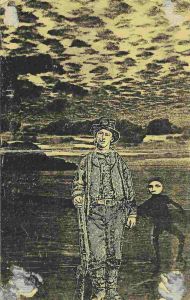
Cartão de arte postal enviado por Alex TorridZone Igloo, identidade artística de Alexander Josef Hirka, para Falves Silva, em Natal, Rio Grande do Norte, Brasil, com data manuscrita de 15 de agosto de 1981.
Alex TorridZone Igloo - Alexander Josef Hirka - AleXander Hirka - Alex Igloo
Categoria: Mail Art
Acervo: 03824
Data: 15 de Agosto de 1981
Dimensões: 12,8 x 15,9 cm
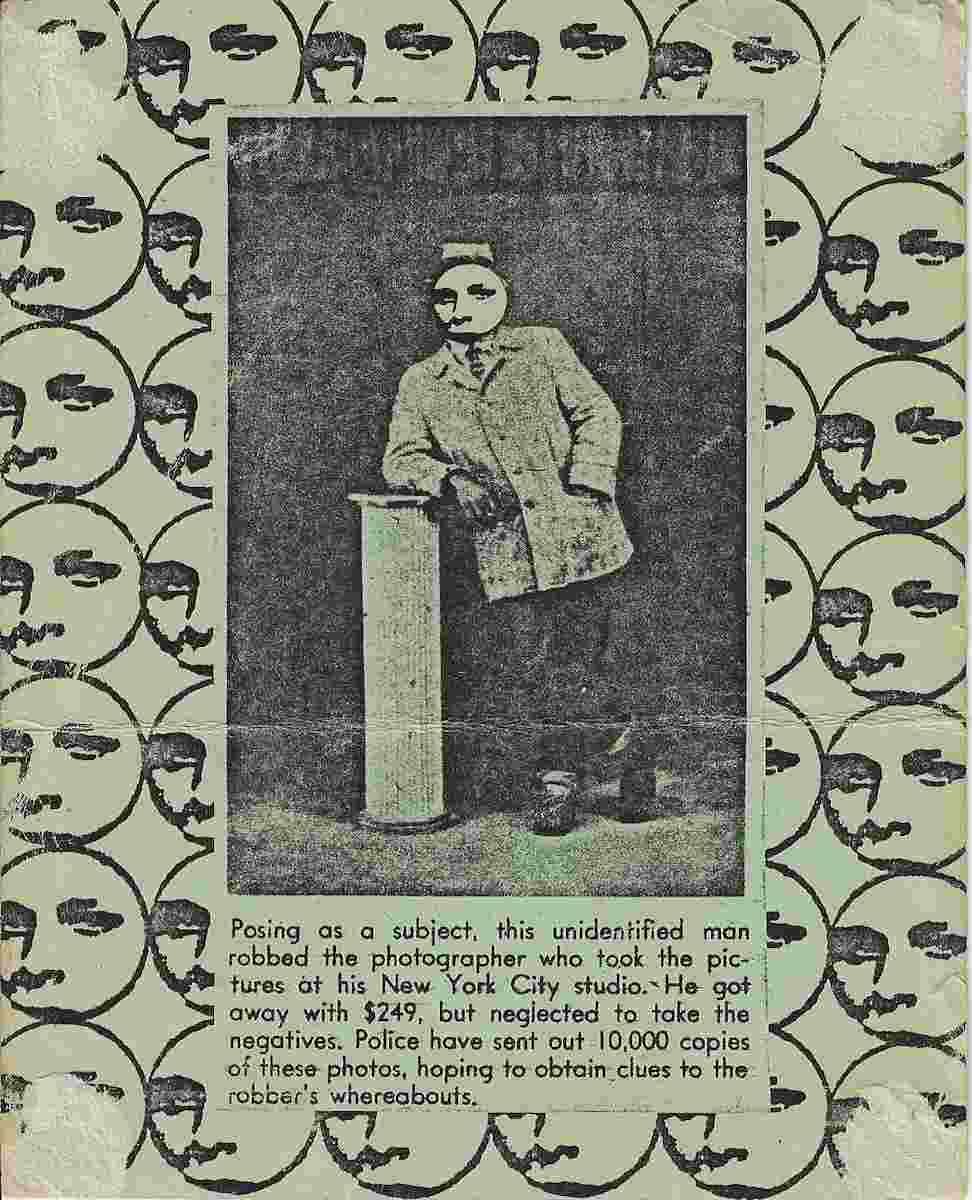
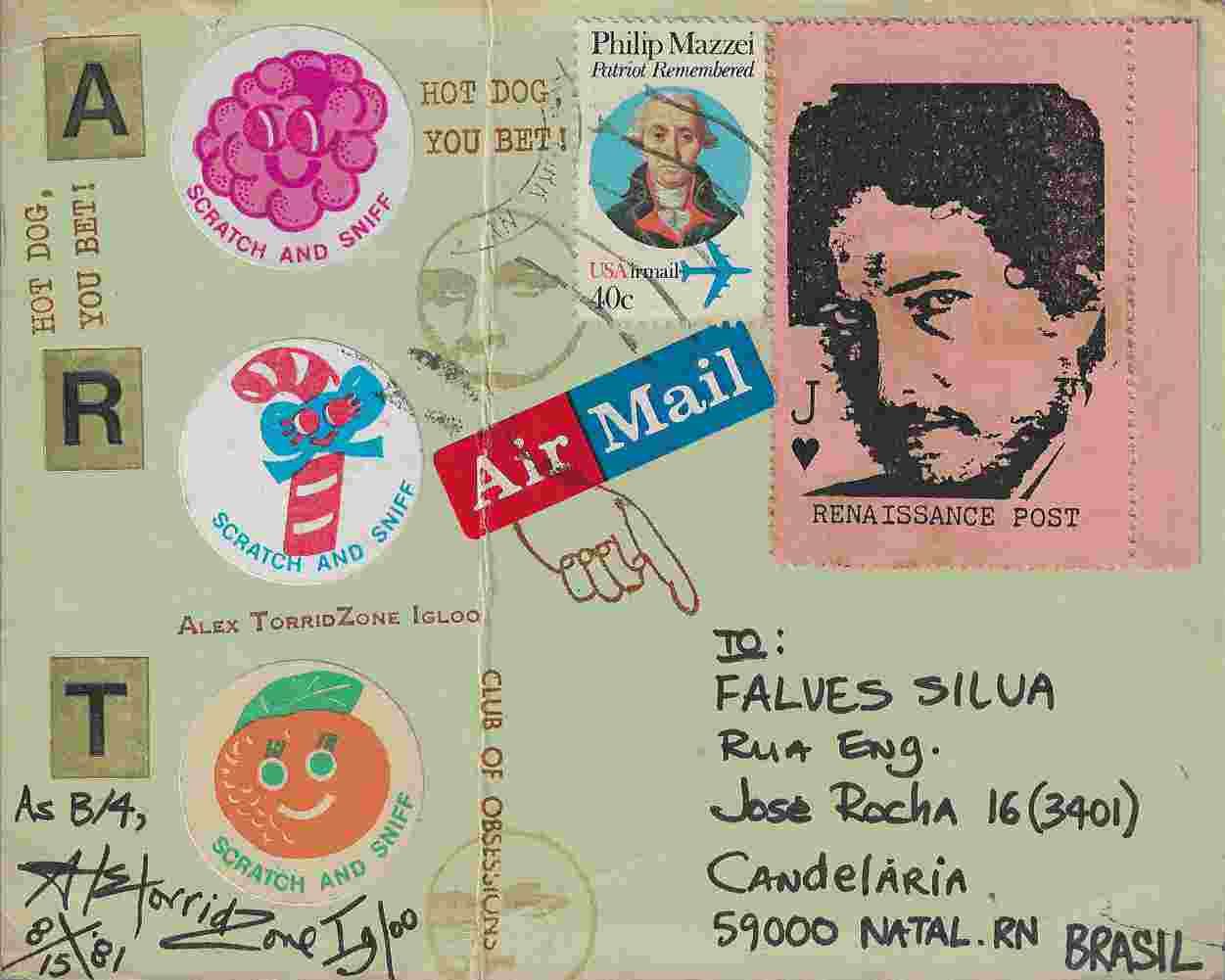
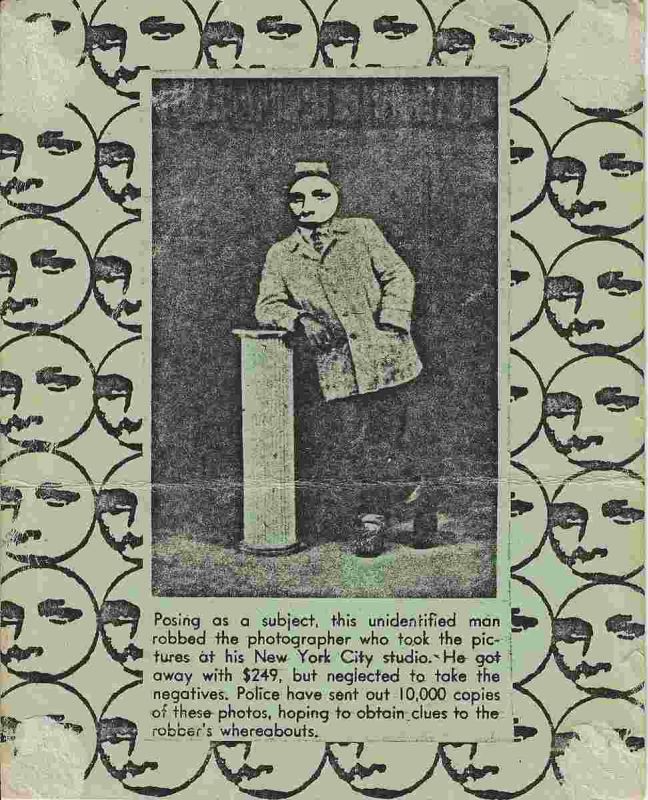
Cartão de arte postal enviado por Alex TorridZone Igloo, identidade artística de Alexander Josef Hirka, para Falves Silva, em Natal, Rio Grande do Norte, Brasil, com data manuscrita de 15 de agosto de 1981. A peça integra a correspondência internacional mantida entre os dois artistas e documenta a circulação de colagens, selos de artista, imagens apropriadas, carimbos, adesivos e mensagens visuais dentro da rede internacional de mail art.A frente do cartão apresenta uma composição construída a partir de uma fotografia policial ou jornalística antiga. A imagem mostra um homem apoiado sobre uma coluna de estúdio fotográfico. Seu rosto foi substituído por uma figura circular estilizada que também aparece repetida por toda a moldura do cartão. A repetição produz um padrão gráfico e transforma o retrato individual em uma identidade visual múltipla, anônima e intercambiável.A legenda impressa informa que o homem não identificado teria se apresentado como modelo em um estúdio fotográfico de Nova York e depois roubado o fotógrafo que realizou as imagens. Segundo o texto, ele teria levado 249 dólares, mas deixado os negativos no local. A polícia teria distribuído dez mil cópias das fotografias na tentativa de obter informações sobre o paradeiro do suspeito.Alex TorridZone Igloo apropria se desse material policial e altera o principal elemento de identificação do personagem. O rosto do homem procurado é ocultado pela mesma imagem circular utilizada como padrão decorativo. A intervenção produz uma contradição visual, pois uma fotografia originalmente destinada ao reconhecimento policial passa a impedir a identificação do retratado.O cartão transforma um documento de vigilância, investigação e circulação pública em uma obra sobre anonimato, identidade, repetição e reprodução mecânica. A notícia informa que milhares de cópias da fotografia foram distribuídas, enquanto o artista multiplica novamente o rosto substituto em toda a superfície. A repetição estabelece uma relação entre o procedimento policial de reprodução da imagem e o sistema da arte postal, baseado na circulação de cópias, impressos, carimbos e múltiplos.No verso, o espaço postal foi completamente incorporado à composição artística. O nome Alex TorridZone Igloo aparece próximo à área central, acompanhado da expressão Club of Obsessions. O endereço de Falves Silva está manuscrito na parte inferior direita como Rua Engenheiro José Rocha, número 16, Candelária, Natal, Rio Grande do Norte, Brasil.Na margem esquerda aparecem letras recortadas formando a palavra ART. Ao lado das letras foram aplicadas duas vezes as expressões Hot Dog e You Bet. Esses elementos introduzem humor, linguagem cotidiana e referências à cultura popular norte americana. A organização vertical das letras também aproxima o verso das práticas de poesia visual e composição tipográfica experimental.Três adesivos circulares do tipo scratch and sniff integram a composição. Um representa um conjunto de frutos vermelhos ou roxos, outro apresenta uma bengala doce e o terceiro utiliza uma figura alaranjada com aparência de fruta ou personagem. Esses adesivos ampliam a obra para além da visão ao introduzir uma dimensão olfativa e tátil. Embora os aromas originais possam ter desaparecido com o tempo, sua presença registra o uso de materiais comerciais e sensoriais na arte postal.A área superior contém um selo postal norte americano de quarenta centavos dedicado a Philip Mazzei, identificado como Patriot Remembered. Sobre o selo e a superfície do cartão aparecem marcas do processamento postal. Uma etiqueta de correio aéreo em vermelho e azul foi colocada diagonalmente próximo ao centro.À direita encontra se um selo de artista de grande formato, impresso sobre fundo rosado, com retrato masculino, a letra J, um coração e a inscrição Renaissance Post. Esse elemento não possui função postal oficial. Trata se de um artistamp, categoria de selo criado por artistas para circular em correspondências, publicações, exposições e projetos alternativos. Renaissance Post e Renaissance Postal Works aparecem associados à produção de Alex TorridZone Igloo no início da década de 1980.A combinação entre selo oficial, selo de artista, etiqueta de correio aéreo, adesivos comerciais, escrita manuscrita, carimbos e recortes demonstra a apropriação de diferentes sistemas de comunicação visual. O cartão reúne elementos administrativos, publicitários, policiais, filatélicos e artísticos em uma única superfície.A obra documenta a relação continuada entre Alex TorridZone Igloo e Falves Silva em 1981. O cartão deve ser compreendido como colagem, correspondência artística, poesia visual, publicação postal, obra múltipla e registro material da rede internacional de arte postal. Sua importância está na transformação de uma fotografia policial em reflexão sobre identidade, anonimato, vigilância, reprodução, circulação e autoria.TEXT FOR THE SALSA PROGRAM IN ENGLISHMail art card sent by Alex TorridZone Igloo, the artistic identity of Alexander Josef Hirka, to Falves Silva in Natal, Rio Grande do Norte, Brazil, bearing the handwritten date 15 August 1981. The work forms part of the international correspondence maintained between the two artists and documents the circulation of collages, artistamps, appropriated images, rubber stamps, stickers and visual messages within the international mail art network.The front of the card presents a composition constructed from an early police or newspaper photograph. The image shows a man leaning against a photographic studio column. His face has been replaced by a stylized circular figure that is also repeated throughout the border of the card. This repetition creates a graphic pattern and transforms an individual portrait into a multiple, anonymous and interchangeable visual identity.The printed caption states that the unidentified man had posed as a subject in a New York City photographic studio and then robbed the photographer who took the pictures. According to the text, he escaped with 249 dollars but failed to take the photographic negatives. The police reportedly distributed ten thousand copies of the photographs in the hope of obtaining information about the whereabouts of the suspect.Alex TorridZone Igloo appropriates this police material and alters its principal element of identification. The face of the wanted man is concealed by the same circular image used as a decorative pattern. The intervention creates a visual contradiction because a photograph originally intended for police recognition is transformed into an image that prevents the identification of its subject.The card converts a document of surveillance, investigation and public circulation into a work concerned with anonymity, identity, repetition and mechanical reproduction. The caption reports that thousands of copies of the photograph were distributed, while the artist once again multiplies the substituted face across the entire surface. This repetition establishes a relationship between the police reproduction of an image and the mail art system, which depended on the circulation of copies, printed matter, rubber stamps and multiples.On the reverse, the postal space has been fully incorporated into the artistic composition. The name Alex TorridZone Igloo appears near the central area together with the expression Club of Obsessions. The address of Falves Silva is handwritten in the lower right area as Rua Engenheiro José Rocha, number 16, Candelária, Natal, Rio Grande do Norte, Brazil.Cutout letters arranged along the left margin form the word ART. The expressions Hot Dog and You Bet appear twice beside these letters. These elements introduce humor, everyday language and references to American popular culture. The vertical organization of the letters also connects the reverse with visual poetry and experimental typography.Three circular scratch and sniff stickers form part of the composition. One represents a group of red or purple berries, another shows a candy cane and the third uses an orange figure resembling a fruit or character. These stickers extend the work beyond vision by introducing an olfactory and tactile dimension. Although their original scents may have disappeared over time, their presence records the use of commercial and sensory materials within mail art.The upper area contains a forty cent United States airmail stamp dedicated to Philip Mazzei and identified by the words Patriot Remembered. Postal processing marks appear over the stamp and the surface of the card. A red and blue air mail label was placed diagonally near the center.On the right is a large artistamp printed on a pink background. It contains a male portrait, the letter J, a heart and the name Renaissance Post. This element had no official postal function. It is an artistamp, a stamp created by an artist for circulation through correspondence, publications, exhibitions and alternative projects. Renaissance Post and Renaissance Postal Works are associated with the production of Alex TorridZone Igloo during the early 1980s.The combination of an official postage stamp, an artistamp, an air mail label, commercial stickers, handwriting, rubber stamps and cutout material demonstrates the appropriation of different systems of visual communication. The card brings together administrative, advertising, police, philatelic and artistic elements on a single surface.The work documents the continuing relationship between Alex TorridZone Igloo and Falves Silva in 1981. The card should be understood as collage, artistic correspondence, visual poetry, postal publication, multiple artwork and material evidence of the international mail art network. Its importance lies in the transformation of a police photograph into a reflection on identity, anonymity, surveillance, reproduction, circulation and authorship.
TEXTO DE OBSERVAÇÃO EM PORTUGUÊSCartão original de arte postal enviado por Alex TorridZone Igloo para Falves Silva, com data manuscrita de 15 de agosto de 1981. A data aparece na região inferior esquerda do verso como 8 15 81. A peça reúne fotografia impressa, colagem, repetição de imagem, intervenção gráfica, escrita manuscrita, carimbos, adesivos sensoriais, selo postal oficial, etiqueta de correio aéreo e selo de artista.A frente apresenta uma fotografia antiga de um homem em um estúdio fotográfico. A legenda afirma que o retratado teria roubado o fotógrafo após posar para as imagens. O valor mencionado é de 249 dólares. O texto informa ainda que a polícia teria distribuído dez mil cópias das fotografias para tentar localizar o suspeito.O rosto original foi coberto por uma imagem circular estilizada. A mesma figura aparece repetida na moldura, produzindo um padrão visual. Não é possível determinar apenas pelo objeto quem criou originalmente esse símbolo ou se ele representa uma pessoa específica. Para catalogação, deve ser descrito como rosto masculino estilizado ou imagem circular de identidade não confirmada.No verso aparecem as palavras ART, Hot Dog, You Bet, Alex TorridZone Igloo, Club of Obsessions e Renaissance Post. Também estão presentes três adesivos scratch and sniff. A permanência dos aromas originais não pode ser confirmada.O selo postal oficial apresenta Philip Mazzei e o valor de quarenta centavos. O selo de artista rosado contém um retrato masculino, a letra J, um coração e a inscrição Renaissance Post. Os dois elementos devem ser diferenciados na catalogação, pois apenas o selo de Philip Mazzei possui função postal oficial.O endereço do destinatário aparece como Falves Silva, Rua Engenheiro José Rocha, número 16, Candelária, 59000, Natal, Rio Grande do Norte, Brasil. O remetente é identificado como Alex TorridZone Igloo, embora seu endereço completo não esteja visível nesta face do cartão.A obra apresenta marcas de dobra, abrasões, manchas, alterações cromáticas, desgaste superficial e sinais de processamento postal. Essas características integram a trajetória material do objeto e comprovam sua circulação efetiva entre os Estados Unidos e o Brasil.O cartão deve ser catalogado como arte postal, cartão de artista, correspondência artística, colagem, apropriação de fotografia policial, intervenção gráfica, poesia visual, artistamp, selo de artista, material sensorial e obra sobre papel. Para indexação, recomenda se relacionar a peça aos termos Alex TorridZone Igloo, Alexander Josef Hirka, Falves Silva, Renaissance Post, Renaissance Postal Works, Club of Obsessions, Philip Mazzei, scratch and sniff, mail art, arte postal, identidade, anonimato, vigilância, fotografia policial, Nova York, Natal e rede internacional de artistas.OBSERVATION TEXT IN ENGLISHOriginal mail art card sent by Alex TorridZone Igloo to Falves Silva, bearing the handwritten date 15 August 1981. The date appears in the lower left area of the reverse as 8 15 81. The work combines a printed photograph, collage, repeated imagery, graphic intervention, handwriting, rubber stamps, sensory stickers, an official postage stamp, an air mail label and an artistamp.The front presents an early photograph of a man in a photographic studio. The caption states that the subject robbed the photographer after posing for the pictures. The reported amount was 249 dollars. The text also states that the police distributed ten thousand copies of the photographs in an attempt to locate the suspect.The original face has been covered by a stylized circular image. The same figure is repeated throughout the border, producing a visual pattern. The object alone does not establish who originally created this symbol or whether it represents a specific person. For cataloguing purposes, it should be described as a stylized male face or a circular image of unconfirmed identity.The reverse includes the words ART, Hot Dog, You Bet, Alex TorridZone Igloo, Club of Obsessions and Renaissance Post. Three scratch and sniff stickers are also present. The survival of their original scents cannot be confirmed.The official postage stamp depicts Philip Mazzei and has a value of forty cents. The pink artistamp contains a male portrait, the letter J, a heart and the name Renaissance Post. These two elements must be distinguished in cataloguing because only the Philip Mazzei stamp possessed official postal validity.The recipient is identified as Falves Silva at Rua Engenheiro José Rocha, number 16, Candelária, postal code 59000, Natal, Rio Grande do Norte, Brazil. The sender is identified as Alex TorridZone Igloo, although his complete address is not visible on this side of the card.The work shows fold marks, abrasions, stains, color changes, surface wear and evidence of postal processing. These characteristics form part of the material history of the object and confirm its actual circulation between the United States and Brazil.The card should be catalogued as mail art, an artists postcard, artistic correspondence, collage, appropriation of a police photograph, graphic intervention, visual poetry, artistamp, sensory material and work on paper. For indexing purposes, the work should be associated with Alex TorridZone Igloo, Alexander Josef Hirka, Falves Silva, Renaissance Post, Renaissance Postal Works, Club of Obsessions, Philip Mazzei, scratch and sniff, mail art, identity, anonymity, surveillance, police photography, New York, Natal and the international artists network.
Proveniência
Coleção Falves SilvaInglês
Mail art card sent by Alex TorridZone Igloo, the artistic identity of Alexander Josef Hirka, to Falves Silva in Natal, Rio Grande do Norte, Brazil, bearing the handwritten date 15 August 1981.
Dimensions: 5 x 6,3 in