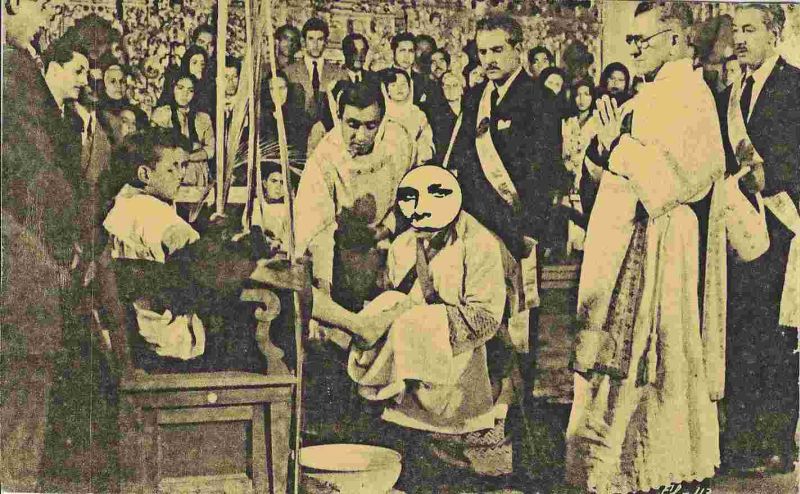
Cartão de arte postal enviado por Alex TorridZone Igloo, identidade artística associada a Alexander Josef Hirka, para o artista brasileiro Falves Silva, com data manuscrita de 27 de maio de 1981.
Alex TorridZone Igloo - Alexander Josef Hirka - AleXander Hirka - Alex Igloo
Categoria: Mail Art
Acervo: 03822
Data: 27 de Maio de 1981
Dimensões: 11,2 x 18 cm
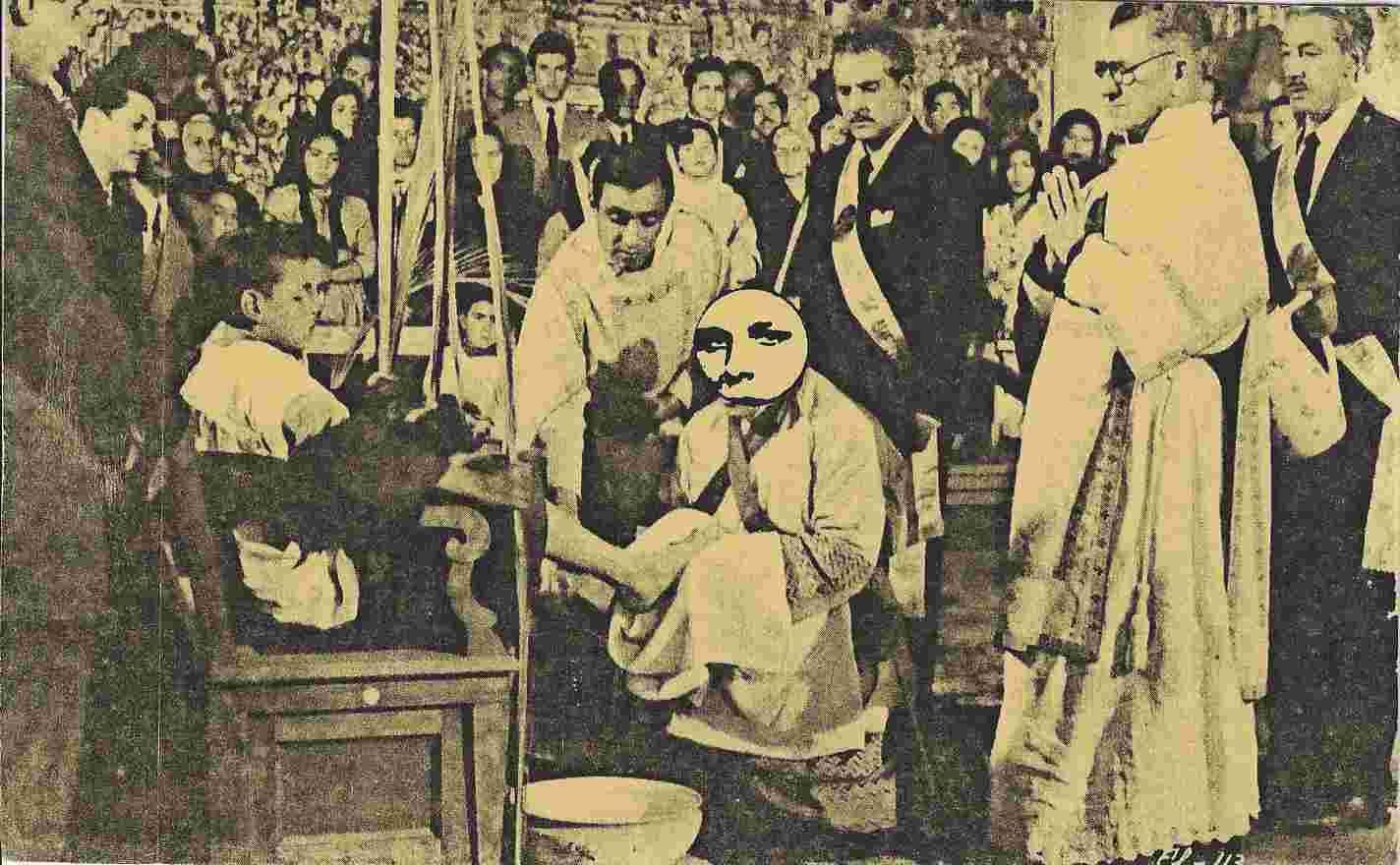
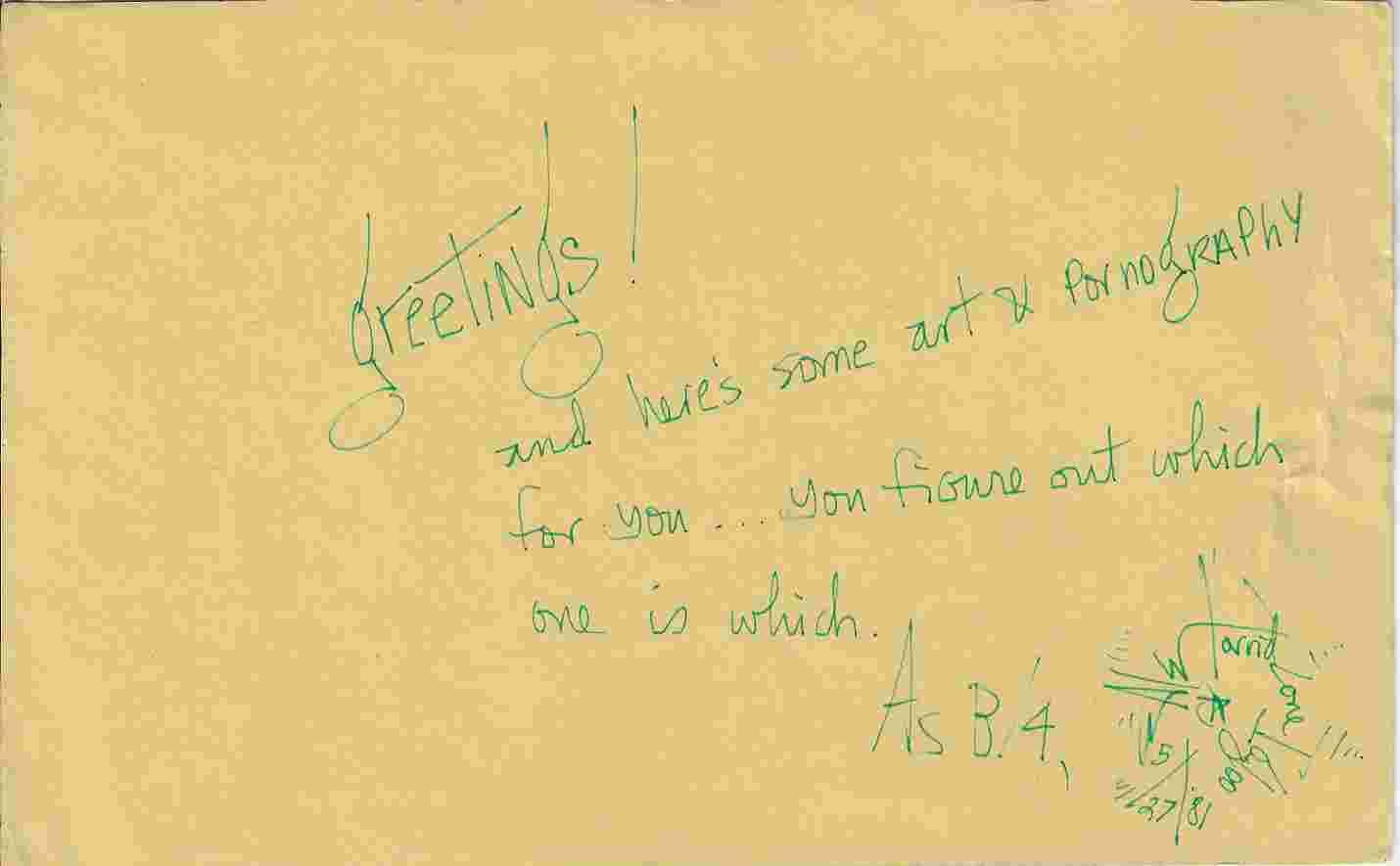
Cartão de arte postal enviado por Alex TorridZone Igloo, identidade artística associada a Alexander Josef Hirka, para o artista brasileiro Falves Silva, com data manuscrita de 27 de maio de 1981. A peça integra a correspondência internacional mantida por Falves Silva com artistas, editores e participantes das redes de mail art, poesia visual, publicações experimentais e arte conceitual durante o final da década de 1970 e o início da década de 1980.A frente do cartão apresenta a reprodução em tonalidade amarelada e alto contraste de uma cena cinematográfica antiga. A imagem mostra uma reunião pública com numerosos personagens, incluindo um homem ajoelhado diante de uma mulher e uma figura central cuja face foi ocultada ou substituída por uma intervenção gráfica circular. Essa alteração rompe a continuidade fotográfica e transforma uma imagem de circulação comercial em uma obra de apropriação, colagem conceitual e interferência visual.A cena reproduzida parece estar relacionada ao filme norte americano Uncle Toms Cabin, dirigido por Harry A. Pollard e lançado em 1927 pela Universal Pictures. A identificação é apoiada pela correspondência visual com imagens atribuídas ao filme, mas não aparece escrita no cartão e deve permanecer registrada como identificação provável. O filme foi baseado no romance de Harriet Beecher Stowe e teve uma versão relançada em 1928 com acompanhamento sonoro.No verso, Alex TorridZone Igloo escreveu em inglês uma saudação acompanhada de uma frase irônica que informa o envio de arte e pornografia para Falves Silva e convida o destinatário a decidir qual elemento corresponde a cada categoria. O texto manuscrito pode ser transcrito como Greetings and heres some art and pornography for you you figure out which one is which. A assinatura foi realizada na parte inferior direita, acompanhada da data 27 de maio de 1981.A mensagem estabelece uma provocação sobre os limites entre arte, erotismo, pornografia, representação visual e julgamento moral. Ao pedir que Falves Silva determine qual parte seria arte e qual seria pornografia, o remetente transfere ao observador a responsabilidade pela classificação da imagem. A obra questiona categorias culturais que normalmente são apresentadas como fixas, mas que dependem do contexto, da intenção, da circulação e da interpretação de cada receptor.O cartão também combina humor, ambiguidade e apropriação de uma imagem histórica. A intervenção circular sobre o rosto da figura central produz um efeito de máscara, apagamento de identidade ou substituição simbólica. O gesto altera a narrativa original da fotografia e cria uma nova cena, construída pela relação entre imagem, mensagem manuscrita e circulação postal.A correspondência documenta uma troca direta entre Alex TorridZone Igloo e Falves Silva em 1981. O cartão deve ser compreendido como obra, mensagem pessoal, documento histórico e registro da rede internacional de arte postal. Sua importância encontra se na utilização do correio como meio artístico e na construção de um diálogo entre Nova York e Natal, unindo cultura cinematográfica, apropriação visual, humor conceitual, crítica das convenções morais e comunicação entre artistas.Mail art card sent by Alex TorridZone Igloo, an artistic identity associated with Alexander Josef Hirka, to the Brazilian artist Falves Silva, bearing the handwritten date 27 May 1981. The work forms part of the international correspondence maintained by Falves Silva with artists, editors and participants in mail art, visual poetry, experimental publishing and conceptual art networks during the late 1970s and early 1980s.The front of the card presents a yellow toned, high contrast reproduction of an early cinematic scene. The image shows a public gathering with numerous figures, including a man kneeling before a woman and a central figure whose face has been concealed or replaced by a circular graphic intervention. This alteration interrupts the photographic continuity and transforms a commercially circulated image into a work of appropriation, conceptual collage and visual interference.The reproduced scene appears to be connected with the American film Uncle Toms Cabin, directed by Harry A. Pollard and released by Universal Pictures in 1927. This identification is supported by its visual correspondence with images attributed to the film, but the title is not written on the card and should therefore be recorded as probable rather than definitive. The film was based on the novel by Harriet Beecher Stowe and was rereleased in 1928 with synchronized sound.On the reverse, Alex TorridZone Igloo wrote an English greeting followed by an ironic statement announcing that he was sending art and pornography to Falves Silva and inviting the recipient to decide which element belonged to each category. The handwritten message can be transcribed as Greetings and heres some art and pornography for you you figure out which one is which. The signature appears in the lower right area together with the date 27 May 1981.The message creates a provocation concerning the boundaries between art, eroticism, pornography, visual representation and moral judgment. By asking Falves Silva to decide which part should be considered art and which should be considered pornography, the sender transfers responsibility for classification to the observer. The work questions cultural categories that are often treated as fixed but actually depend on context, intention, circulation and individual interpretation.The card combines humor, ambiguity and the appropriation of a historical image. The circular intervention over the face of the central figure produces the effect of a mask, an erasure of identity or a symbolic substitution. This gesture alters the original narrative of the photograph and creates a new scene through the relationship between image, handwritten message and postal circulation.The correspondence documents a direct exchange between Alex TorridZone Igloo and Falves Silva in 1981. The card should be understood simultaneously as an artwork, a personal message, a historical document and a record of the international mail art network. Its importance lies in its use of the postal system as an artistic medium and in the dialogue it establishes between New York and Natal through cinematic culture, visual appropriation, conceptual humor, criticism of moral conventions and communication between artists.
TEXTO DE OBSERVAÇÃO EM PORTUGUÊSCartão original de arte postal enviado por Alex TorridZone Igloo para Falves Silva e datado de 27 de maio de 1981. A frente contém uma reprodução fotográfica impressa em tonalidades amareladas, com intervenção gráfica aplicada sobre o rosto da figura central. A procedência exata da imagem não está indicada no objeto. A possível relação com o filme Uncle Toms Cabin, de 1927, deve ser catalogada como identificação provável e não como informação definitivamente confirmada.O verso apresenta mensagem manuscrita em tinta verde. O texto envia saudações a Falves Silva, informa que o cartão contém arte e pornografia e solicita que o destinatário descubra qual elemento seria cada um. A frase constitui parte essencial da obra porque transforma a imagem apropriada em um comentário conceitual sobre interpretação, censura, moralidade e definição artística.A escrita pode ser transcrita como Greetings and heres some art and pornography for you you figure out which one is which. Algumas letras apresentam traçado rápido e sobreposição, mas o sentido geral da mensagem é legível. A parte inferior direita contém assinatura gráfica, possíveis abreviações e a data 27 de maio de 1981.O cartão apresenta envelhecimento natural do papel, alterações cromáticas, pequenas manchas, abrasões, desgaste nas bordas e sinais de manuseio. Essas características devem ser preservadas como evidências da trajetória material do objeto e de sua circulação dentro da rede de arte postal.Para catalogação e indexação, a peça pode ser relacionada aos termos Alex TorridZone Igloo, Alexander Josef Hirka, Falves Silva, arte postal, mail art, cartão postal de artista, correspondência artística, apropriação cinematográfica, intervenção gráfica, colagem conceitual, pornografia, censura, humor, cultura visual, Nova York, Natal, Rio Grande do Norte e redes internacionais de artistas.OBSERVATION TEXT IN ENGLISHOriginal mail art card sent by Alex TorridZone Igloo to Falves Silva and dated 27 May 1981. The front contains a photographic reproduction printed in yellow tones, with a graphic intervention placed over the face of the central figure. The precise source of the image is not identified on the object. Its possible connection with the 1927 film Uncle Toms Cabin should be catalogued as a probable identification rather than a definitively confirmed fact.The reverse contains a handwritten message in green ink. The text sends greetings to Falves Silva, states that the card contains art and pornography and asks the recipient to determine which element is which. The sentence is an essential part of the work because it transforms the appropriated image into a conceptual comment on interpretation, censorship, morality and artistic definition.The writing can be transcribed as Greetings and heres some art and pornography for you you figure out which one is which. Some letters were written rapidly and overlap, but the general meaning of the message remains legible. The lower right area contains a graphic signature, possible abbreviations and the date 27 May 1981.The card shows natural aging of the paper, color changes, minor stains, abrasions, worn edges and evidence of handling. These characteristics should be preserved as material evidence of the history of the object and its circulation within the mail art network.For cataloguing and indexing, the work may be associated with the terms Alex TorridZone Igloo, Alexander Josef Hirka, Falves Silva, mail art, artists postcard, artistic correspondence, cinematic appropriation, graphic intervention, conceptual collage, pornography, censorship, humor, visual culture, New York, Natal, Rio Grande do Norte and international artists networks.
Proveniência
Coleção Falves SilvaInglês
Mail art card sent by Alex TorridZone Igloo, an artistic identity associated with Alexander Josef Hirka, to the Brazilian artist Falves Silva, bearing the handwritten date 27 May 1981.
Dimensions: 4,4 x 7,1 in