Kaligráfiko é uma impressão gráfica colorida de Avelino de Araújo realizada em 2000, vinculada à poesia visual, à poesia experimental, à arte conceitual, à tipografia e às investigações intersígnicas associadas ao campo do Poema Processo.
Avelino de Araújo
Categoria: Poema Processo
Acervo: 03591
Data: 2000
Dimensões: 29,5 x 21,1 cm
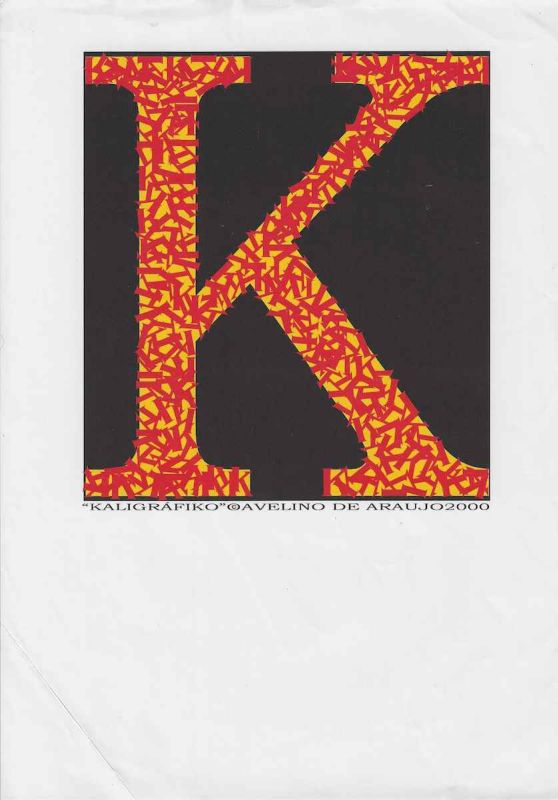
Kaligráfiko é uma impressão gráfica colorida de Avelino de Araújo realizada em 2000, vinculada à poesia visual, à poesia experimental, à arte conceitual, à tipografia e às investigações intersígnicas associadas ao campo do Poema Processo. A composição apresenta uma grande letra K em vermelho e amarelo sobre um fundo retangular preto. A letra ocupa quase toda a área interna da imagem e é construída por uma superfície fragmentada, formada por numerosos pequenos elementos lineares, angulares e irregulares. Esses fragmentos produzem uma textura dinâmica e fazem com que a letra seja percebida simultaneamente como caractere alfabético, imagem, estrutura arquitetônica e campo abstrato. O título Kaligráfiko utiliza uma grafia deliberadamente modificada, aproximando as ideias de caligrafia, gráfico, signo e construção visual. A substituição ortográfica transforma a própria palavra em matéria poética e reforça o interesse do artista pela relação entre som, escrita, forma e imagem. O K monumental funciona como signo central e pode remeter à inicial do título, à escrita, ao alfabeto, à identidade visual e à transformação do código verbal em objeto plástico. O contraste entre o preto do fundo, o vermelho predominante da letra e os intervalos amarelos intensifica a leitura óptica da obra. Os fragmentos amarelos parecem atravessar ou preencher a estrutura vermelha, criando sensação de vibração, movimento, instabilidade e energia. A letra deixa de ser apenas instrumento de leitura e passa a constituir uma imagem autônoma, organizada por repetição, acumulação e fragmentação. A composição explora relações entre figura e fundo, legibilidade e abstração, unidade e multiplicidade, ordem tipográfica e desorganização interna. O amplo espaço claro ao redor da imagem reforça a concentração visual no retângulo central. Na parte inferior aparecem o título KALIGRÁFIKO, o símbolo de autoria, o nome Avelino de Araújo e o ano 2000. Kaligráfiko integra a produção do artista baseada na apropriação de letras, sinais tipográficos, estruturas geométricas e códigos gráficos como instrumentos de experimentação poética e visual. Palavras chave para indexação: Avelino de Araújo, Kaligráfiko, Kaligrafiko, 2000, impressão gráfica, poesia visual brasileira, poema visual, poesia experimental, arte conceitual, Poema Processo, letra K, alfabeto na arte, tipografia experimental, caligrafia visual, arte gráfica, fragmentação, repetição, abstração geométrica, signo gráfico, semiótica, intersigno, texto imagem, comunicação visual, arte brasileira, múltiplo gráfico, arquivo de poesia visual, produção artística do ano 2000.TEXT FOR THE SALSA PROGRAM IN ENGLISH: Kaligráfiko is a color graphic print by Avelino de Araújo produced in 2000 and associated with visual poetry, experimental poetry, conceptual art, typography and intersemiotic investigations connected with the field of the Poema Processo movement. The composition presents a large red and yellow letter K against a black rectangular background. The letter occupies almost the entire internal area of the image and is constructed through a fragmented surface formed by numerous small linear, angular and irregular elements. These fragments create a dynamic texture and allow the letter to be perceived simultaneously as an alphabetic character, image, architectural structure and abstract field. The title Kaligráfiko uses a deliberately altered spelling that brings together the ideas of calligraphy, graphic structure, sign and visual construction. This orthographic transformation turns the word itself into poetic material and reinforces the artists interest in the relationship between sound, writing, form and image. The monumental K functions as the central sign and may refer to the initial of the title, writing, the alphabet, visual identity and the transformation of verbal code into a visual object. The contrast between the black background, the dominant red of the letter and the intense yellow intervals strengthens the optical presence of the work. The yellow fragments appear to cross or fill the red structure, creating sensations of vibration, movement, instability and energy. The letter no longer serves only as an instrument of reading and becomes an autonomous image organized through repetition, accumulation and fragmentation. The composition explores relationships between figure and ground, legibility and abstraction, unity and multiplicity, typographic order and internal disorder. The broad light colored area surrounding the image concentrates attention on the central rectangle. The lower section contains the title KALIGRÁFIKO, the authorship symbol, the name Avelino de Araújo and the year 2000. Kaligráfiko belongs to the artists production based on the appropriation of letters, typographic signs, geometric structures and graphic codes as instruments of poetic and visual experimentation. Keywords for indexing: Avelino de Araújo, Kaligráfiko, Kaligrafiko, 2000, graphic print, Brazilian visual poetry, visual poem, experimental poetry, conceptual art, Poema Processo, letter K, alphabet in art, experimental typography, visual calligraphy, graphic art, fragmentation, repetition, geometric abstraction, graphic sign, semiotics, intersign, text image, visual communication, Brazilian art, graphic multiple, visual poetry archive, artistic production of the year 2000.
Impressão gráfica colorida sobre papel claro, composta por um retângulo preto contendo uma letra K de grandes dimensões. A letra apresenta preenchimento vermelho com numerosas formas amarelas irregulares semelhantes a pequenos traços, barras e fragmentos tipográficos. A estrutura interna é densa e cria uma textura semelhante a mosaico, colagem ou acumulação de sinais. A letra ultrapassa visualmente os limites inferiores da área preta em alguns pontos, reforçando o efeito de integração entre figura, moldura e identificação gráfica. O contraste cromático entre preto, vermelho e amarelo produz forte impacto visual e facilita o reconhecimento imediato da letra. Na parte inferior da imagem encontram se a inscrição KALIGRÁFIKO, o símbolo de autoria, o nome AVELINO DE ARAUJO e o ano 2000. O suporte apresenta leves ondulações, vincos, marcas de manuseio e uma linha diagonal visível na região inferior esquerda. A peça pode ser classificada como poema visual, impressão de artista, múltiplo gráfico, estudo tipográfico e documento conceitual, sendo relevante para pesquisas sobre Avelino de Araújo, Poema Processo, poesia visual, caligrafia, tipografia, semiótica, abstração, cor, linguagem e produção gráfica brasileira.OBSERVATION TEXT IN ENGLISH: Color graphic print on light colored paper composed of a black rectangle containing a large letter K. The letter has a red body filled with numerous irregular yellow shapes resembling short strokes, bars and typographic fragments. The internal structure is dense and creates a texture similar to a mosaic, collage or accumulation of signs. In some areas the letter visually extends toward the lower edge of the black field, strengthening the integration between figure, frame and graphic identification. The contrast among black, red and yellow produces strong visual impact and allows immediate recognition of the letter. The lower section contains the inscription KALIGRÁFIKO, the authorship symbol, the name AVELINO DE ARAUJO and the year 2000. The support presents slight undulations, creases, handling marks and a diagonal line visible in the lower left area. The piece may be classified as a visual poem, artist print, graphic multiple, typographic study and conceptual document, making it relevant to research on Avelino de Araújo, Poema Processo, visual poetry, calligraphy, typography, semiotics, abstraction, color, language and Brazilian graphic production.
Proveniência
Coleção Poema ProcessoInglês
Kaligráfiko is a color graphic print by Avelino de Araújo produced in 2000 and associated with visual poetry, experimental poetry, conceptual art, typography and intersemiotic investigations connected with the field of the Poema Processo movement.
Dimensions: 11,6 x 8,3 in