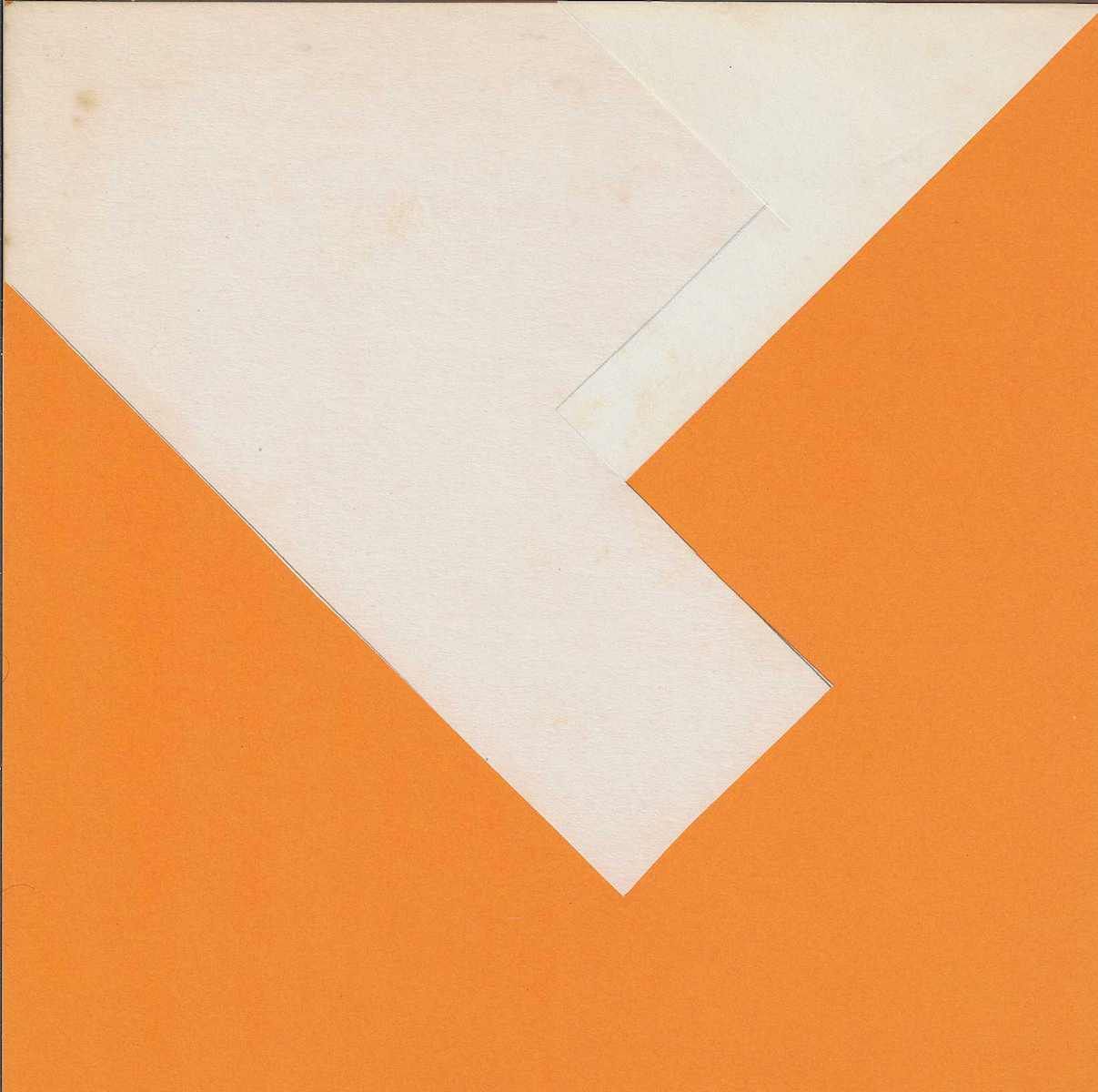
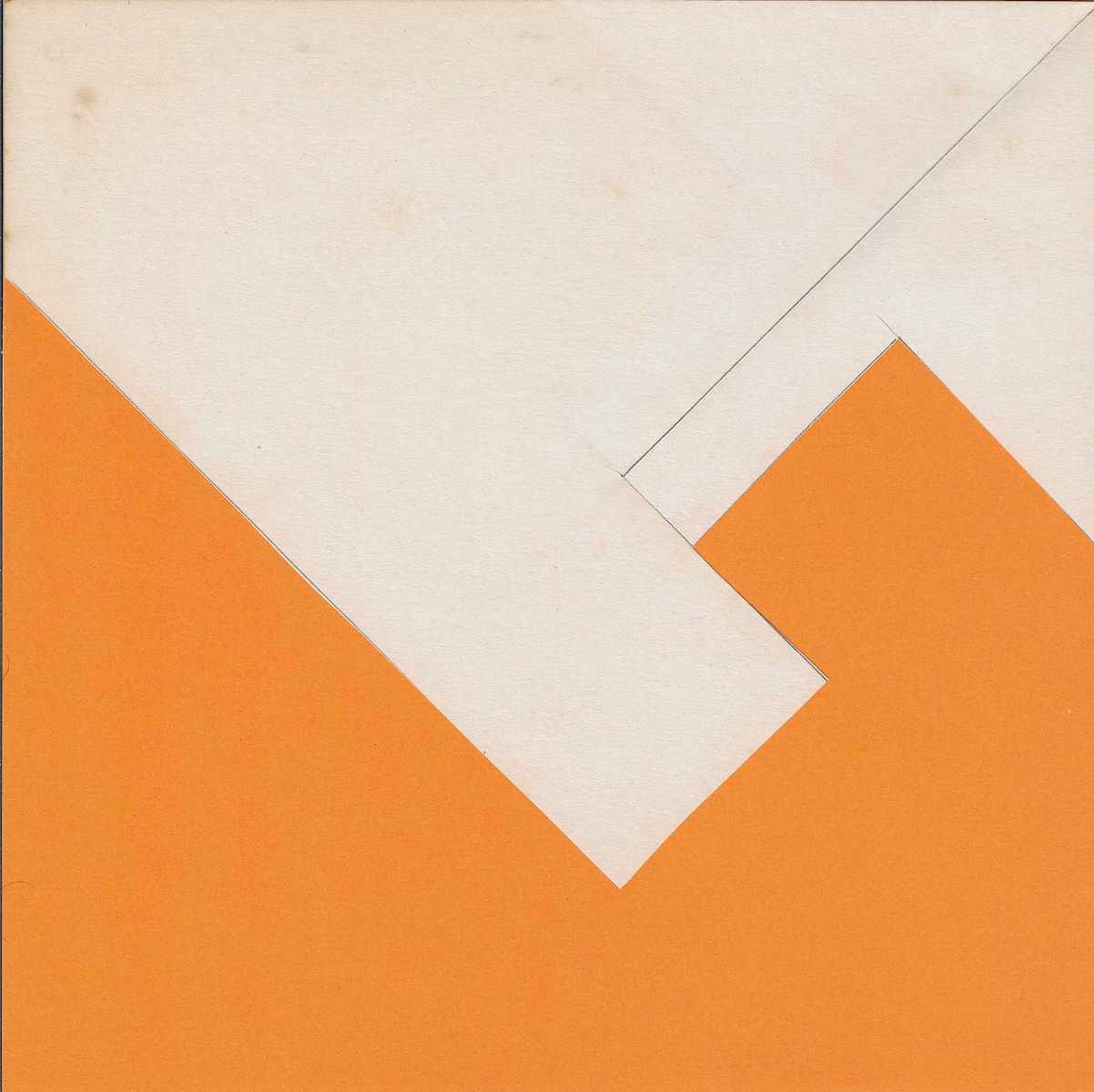
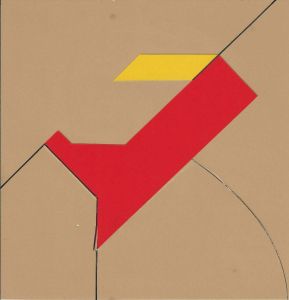
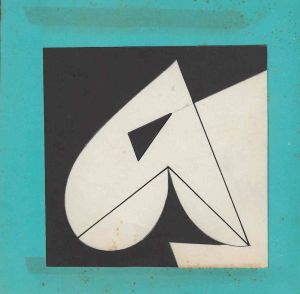
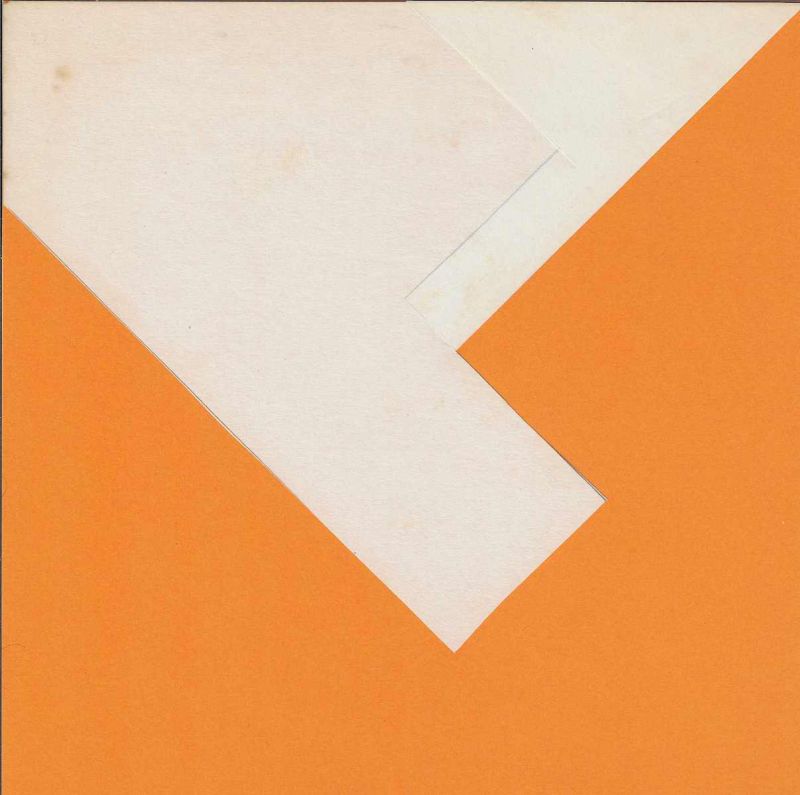
Colagem com dobradura de Wlademir Dias Pino produzida em papel branco e laranja, com formato quadrado de 21 por 21 centímetros.
Wlademir Dias Pino
Categoria: Poema Processo
Acervo: 03944
Data: 70s-80s
Dimensões: 21 x 21 cm
Texto para o programa Salsa em portuguêsColagem com dobradura de Wlademir Dias Pino produzida em papel branco e laranja, com formato quadrado de 21 por 21 centímetros. A obra é apresentada em dois estágios de abertura e revela uma composição geométrica móvel, na qual a manipulação do papel modifica a relação entre planos cromáticos, linhas, vazios, sobreposições e direções.No primeiro estágio, uma extensa área laranja ocupa toda a região inferior e grande parte da lateral direita. O campo branco avança do alto e da esquerda por meio de uma grande forma angular que termina em um vértice voltado para baixo, próximo ao centro inferior da composição.A área branca apresenta um recorte geométrico irregular. Sua estrutura lembra uma faixa larga dobrada ou um percurso que muda de direção. O campo laranja circunda essa forma e funciona como fundo, margem e plano de contraste.Na parte superior direita, o laranja forma uma ampla faixa diagonal que alcança o canto da obra. Essa área estabelece continuidade com o campo inferior e cria a impressão de que a forma branca atravessa ou penetra uma superfície colorida maior.Linhas finas aparecem sobre o campo branco, principalmente próximas à região central. Elas delimitam um plano retangular inclinado e indicam zonas de dobra ou sobreposição. Algumas dessas linhas são discretas e parcialmente absorvidas pela tonalidade clara do papel.O vértice inferior da forma branca concentra grande parte da tensão visual. Ele se projeta sobre o laranja e funciona como ponto de encontro entre as diagonais. O desenho conduz o olhar da margem superior para o centro e depois para a região inferior.No segundo estágio, a abertura da dobradura modifica principalmente a região superior direita. A faixa branca torna se mais longa e revela uma linha diagonal que segue até o canto superior da composição. Uma pequena área laranja triangular ou angular permanece visível no lado direito.A alteração permite reconhecer com maior clareza uma estrutura branca contínua, formada por segmentos largos que mudam de direção. O conjunto lembra uma fita dobrada, um caminho, uma seta incompleta, um elemento arquitetônico ou um corpo geométrico visto em perspectiva.O campo laranja permanece dominante na região inferior, mas sua relação com o branco se torna mais articulada. Em vez de apenas envolver a forma central, passa a funcionar como plano interrompido pelas dobras e pelas mudanças de direção do papel branco.A passagem entre os dois estágios demonstra que a obra não possui configuração única ou definitiva. Quando fechada, algumas linhas permanecem escondidas e os planos parecem mais compactos. Quando aberta, a composição se alonga, revela novos percursos e modifica o equilíbrio entre as áreas cromáticas.A dobradura introduz uma dimensão temporal. A leitura depende da sequência de manipulação, pois abrir e fechar produzem diferentes imagens. A transformação do suporte constitui parte essencial da obra e não apenas um recurso de apresentação.O papel branco não funciona como fundo neutro. Ele é recortado, dobrado e transformado em forma principal. O laranja também não atua apenas como cor decorativa, pois define limites, massas, intervalos e contrastes estruturais.A composição utiliza recursos mínimos. Duas cores, algumas linhas, cortes e dobras são suficientes para produzir relações complexas de direção, continuidade, interrupção, equilíbrio e instabilidade.O laranja concentra energia visual, calor e expansão. O branco estabelece pausa, abertura e luminosidade. As linhas escuras indicam percursos e tornam perceptível a construção interna da peça.O formato quadrado de 21 por 21 centímetros oferece uma estrutura regular para uma composição baseada em diagonais e deslocamentos. A estabilidade do contorno externo contrasta com a mobilidade das partes internas.Não há palavras, letras ou imagens figurativas reconhecíveis. Ainda assim, a obra propõe um sistema de leitura. O observador acompanha o percurso das formas, identifica mudanças de direção e reconstrói mentalmente a relação entre os diferentes estados.A composição aproxima colagem, dobradura, desenho geométrico, objeto de papel, arte construtiva, poesia visual e proposição participativa. Seu significado surge da relação entre o objeto material e a ação de quem o manipula.Wlademir Dias Pino foi um dos criadores históricos do Poema Processo e desenvolveu investigações fundamentais sobre a autonomia visual do poema, a participação do leitor, a organização do espaço e a transformação do suporte em linguagem.Nesta obra, a relação com o Poema Processo aparece na substituição da leitura verbal por uma leitura estrutural. Cor, forma, sequência e manipulação tornam se unidades de comunicação. O observador deixa de ser apenas contemplador e participa da construção da imagem ao modificar a dobradura.A existência de dois estágios reforça a noção de processo. A obra não está apenas em cada uma das configurações isoladas, mas também na passagem entre elas. Ocultar, revelar, abrir, fechar e reorganizar fazem parte da proposição.Não há título, data, assinatura ou inscrição visível nas imagens apresentadas. A atribuição a Wlademir Dias Pino, a técnica de colagem com dobradura, as cores branca e laranja, os dois estágios e as dimensões de 21 por 21 centímetros são informações fornecidas pela documentação associada ao acervo.Na ausência de título confirmado, recomenda se uma denominação descritiva. A peça possui importância documental por registrar uma vertente geométrica, móvel e participativa da produção de Wlademir Dias Pino e por demonstrar como a manipulação do papel transforma uma composição bidimensional em experiência visual, espacial e temporal.Text for the Salsa program in EnglishCollage with folded paper by Wlademir Dias Pino, made with white and orange paper in a square format measuring 21 by 21 centimetres. The work is presented in two stages and reveals a movable geometric composition in which manipulation of the paper changes the relationship among chromatic planes, lines, empty spaces, overlaps and directions.In the first stage, a broad orange area occupies the entire lower region and much of the right side. The white field advances from the top and left through a large angular form ending in a downward pointing vertex near the lower centre of the composition.The white area has an irregular geometric contour. Its structure resembles a broad folded strip or a route that repeatedly changes direction. The orange field surrounds this form and functions as background, margin and contrasting plane.In the upper right area, orange forms a broad diagonal band reaching the corner of the work. This section continues visually into the lower field and creates the impression that the white form crosses or penetrates a larger coloured surface.Fine lines appear on the white field, especially near the central area. They define an inclined rectangular plane and indicate zones of folding or overlapping. Some of these lines are subtle and partially absorbed by the light tone of the paper.The lower vertex of the white form concentrates much of the visual tension. It projects into the orange field and functions as a point where several diagonals meet. The structure guides the eye from the upper margin toward the centre and then toward the lower region.In the second stage, opening the fold mainly transforms the upper right area. The white band becomes longer and reveals a diagonal line extending toward the upper corner of the composition. A small angular orange area remains visible on the right side.This change makes a continuous white structure more clearly visible. It is formed by broad segments that change direction and resembles a folded ribbon, pathway, incomplete arrow, architectural element or geometric body seen in perspective.The orange field remains dominant in the lower section, but its relationship with the white becomes more articulated. Instead of merely surrounding the central form, it functions as a plane interrupted by folds and directional changes in the white paper.The transition between the two stages demonstrates that the work has no single definitive configuration. When closed, some lines remain concealed and the planes appear more compact. When opened, the composition extends, reveals new routes and changes the balance between the chromatic areas.The fold introduces a temporal dimension. Reading depends on a sequence of manipulation because opening and closing produce different images. Transformation of the support is an essential part of the work rather than simply a display device.The white paper does not function as a neutral background. It is cut, folded and transformed into the principal form. Orange also operates as more than decorative colour because it defines limits, masses, intervals and structural contrasts.The composition uses minimal resources. Two colours, a small number of lines, cuts and folds are sufficient to generate complex relationships of direction, continuity, interruption, balance and instability.Orange concentrates visual energy, warmth and expansion. White establishes pause, openness and luminosity. The dark lines indicate routes and make the internal construction of the piece perceptible.The square format measuring 21 by 21 centimetres provides a regular structure for a composition based on diagonals and displacement. The stability of the outer contour contrasts with the mobility of the internal parts.There are no words, letters or recognizable figurative images. Nevertheless, the work proposes a system of reading. The viewer follows the movement of the forms, identifies changes of direction and mentally reconstructs the relationship between the different states.The composition connects collage, paper folding, geometric drawing, paper object, constructive art, visual poetry and participatory practice. Its meaning emerges from the relationship between the material object and the action of the person manipulating it.Wlademir Dias Pino was one of the historical creators of the Brazilian Process Poem Movement and developed fundamental investigations into the visual autonomy of the poem, reader participation, spatial organization and transformation of the support into language.In this work, the connection with the Process Poem Movement appears through the replacement of verbal reading with structural reading. Colour, form, sequence and manipulation become units of communication. The viewer is no longer only an observer but participates in constructing the image by changing the fold.The existence of two stages reinforces the idea of process. The work is not located only in each isolated configuration but also in the transition between them. Concealing, revealing, opening, closing and reorganizing are part of the proposition.No title, date, signature or inscription is visible in the presented images. The attribution to Wlademir Dias Pino, the technique of collage with folded paper, the white and orange colours, the two stages and the dimensions of 21 by 21 centimetres are information supplied by the documentation associated with the collection.In the absence of a confirmed title, a descriptive designation is recommended. The piece has documentary importance because it records a geometric, movable and participatory aspect of Wlademir Dias Pino
s production and demonstrates how manipulation of paper transforms a two dimensional composition into a visual, spatial and temporal experience.
Texto de observação em portuguêsColagem com dobradura atribuída a Wlademir Dias Pino, produzida em papel branco e laranja, com dimensões de 21 por 21 centímetros e apresentada em dois estágios. A composição possui amplo campo laranja nas regiões inferior e lateral direita e uma forma branca angular que atravessa o suporte por meio de diagonais, vértices e mudanças de direção. No primeiro estágio, a estrutura aparece mais compacta e parcialmente sobreposta. No segundo, a abertura da dobradura revela uma faixa branca alongada, novas linhas e uma pequena área laranja na região superior direita. A manipulação modifica o equilíbrio entre cor, linha, plano e vazio, tornando o suporte parte ativa da obra. Não há título, data, assinatura ou inscrição visível. A peça relaciona colagem, geometria, dobradura, objeto de papel, participação e princípios do Poema Processo, especialmente a leitura como transformação entre diferentes estados materiais.Observation text in EnglishCollage with folded paper attributed to Wlademir Dias Pino, made with white and orange paper, measuring 21 by 21 centimetres and presented in two stages. The composition has a broad orange field across the lower and right areas and an angular white form crossing the support through diagonals, vertices and changes of direction. In the first stage, the structure appears more compact and partly overlapped. In the second, opening the fold reveals an elongated white band, additional lines and a small orange area in the upper right region. Manipulation changes the balance among colour, line, plane and empty space and turns the support into an active component of the work. No title, date, signature or inscription is visible. The piece connects collage, geometry, paper folding, paper object, participation and principles of the Process Poem Movement, especially reading as transformation between different material states.
Proveniência
Coleção Poema ProcessoInglês
Collage with folded paper by Wlademir Dias Pino, made with white and orange paper in a square format measuring 21 by 21 centimetres.
Dimensions: 8,3 x 8,3 in