Impressão gráfica atribuída ao poeta e artista visual norte americano Spencer Selby, relacionada à poesia visual, à colagem, à apropriação de imagens, à publicação experimental e às redes internacionais de arte postal.
Spencer Selby - H. Spencer Selby - Iowa - USA
Categoria: Mail Art
Acervo: 03919
Dimensões: 28 x 21,7 cm
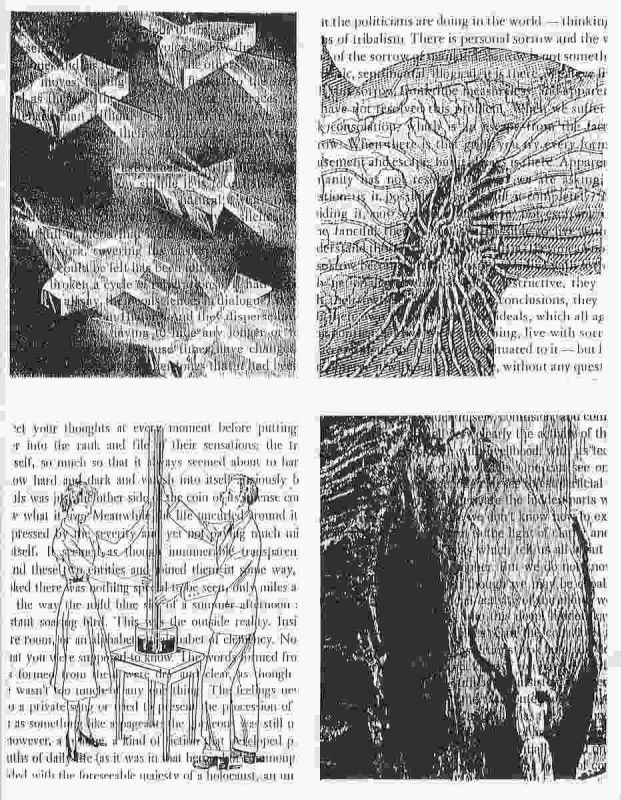
Impressão gráfica atribuída ao poeta e artista visual norte americano Spencer Selby, relacionada à poesia visual, à colagem, à apropriação de imagens, à publicação experimental e às redes internacionais de arte postal. A composição em preto e branco é organizada em quatro campos retangulares nos quais fragmentos textuais em inglês se sobrepõem a imagens abstratas, paisagens, formas orgânicas e estruturas gráficas de alta densidade.Na parte superior esquerda aparece uma superfície escura formada por áreas fragmentadas, linhas diagonais, planos irregulares e trechos de texto parcialmente incorporados à imagem. A leitura verbal é dificultada pela sobreposição e pelo contraste intenso. Palavras e frases surgem como resíduos de uma narrativa anterior, mas deixam de funcionar como texto contínuo e passam a integrar a textura visual.Na parte superior direita observa se uma forma orgânica central cercada por linhas curvas e radiais. A figura pode lembrar uma raiz, uma árvore, uma explosão, um sistema nervoso, uma estrutura vegetal ou um organismo em transformação. O texto impresso atravessa toda a imagem e acompanha os contornos, tornando palavras, linhas e matéria visual quase inseparáveis.Alguns fragmentos legíveis nessa região mencionam publicações, estrutura, condições e relações entre o indivíduo e o mundo. Entretanto, a maior parte do texto está interrompida, deformada ou encoberta. Não é possível estabelecer uma transcrição completa e confiável apenas com a reprodução disponível.Na parte inferior esquerda aparece uma página ou fragmento textual impresso em composição mais clara. O texto parece apresentar uma narrativa em primeira pessoa relacionada a deslocamento, movimento, memória, paisagem e percepção. Linhas verticais e elementos desenhados atravessam o texto, produzindo uma segunda camada gráfica. Na região central inferior há uma pequena forma que pode lembrar um objeto doméstico, estrutura mecânica, recipiente ou detalhe arquitetônico.Na parte inferior direita encontra se uma imagem mais escura e contrastada, possivelmente uma paisagem rochosa, uma figura humana, uma formação natural ou um fragmento fotográfico. O texto sobreposto acompanha a superfície e impede uma identificação precisa. A composição cria uma tensão entre profundidade fotográfica e superfície tipográfica.A organização em quatro partes sugere montagem editorial, página de publicação, sequência visual ou conjunto de estudos reunidos em uma única folha. Cada campo apresenta uma relação distinta entre palavra e imagem. Em alguns trechos o texto permanece relativamente legível. Em outros, transforma se em ruído, textura e desenho.A obra aproxima narrativa literária, imagem apropriada e estrutura visual. O texto não funciona apenas como conteúdo para leitura. Ele se torna matéria plástica, atravessada por distorções, recortes, sobreposições e alterações de contraste. A imagem também deixa de atuar como simples ilustração e passa a interferir diretamente na percepção das palavras.O uso de fragmentos narrativos sugere interesse por memória, experiência, deslocamento, comunicação, mundo interior e relações entre indivíduo e ambiente. As formas orgânicas e paisagísticas ampliam essas questões ao introduzir associações com natureza, corpo, crescimento, ruína, energia e transformação.A impressão apresenta características próximas da fotocópia, reprodução xerográfica ou outro processo gráfico de baixo custo. A granulação, as áreas saturadas, a perda de definição e o contraste irregular são parte importante de sua linguagem visual. Esses recursos eram recorrentes em publicações experimentais, pequenas editoras, revistas alternativas e materiais distribuídos pelas redes de arte postal.Não aparecem na imagem título, data, assinatura, editora, tiragem, destinatário ou endereço postal. Esses dados devem permanecer como não identificados até o exame do verso, de outras páginas ou de documentação complementar. A autoria é registrada conforme a atribuição fornecida junto à peça.A obra deve ser indexada pelos termos Spencer Selby, artista norte americano, poesia visual, poesia experimental, arte postal, mail art, colagem, fotomontagem, texto e imagem, apropriação, narrativa fragmentada, publicação de artista, fotocópia, arte xerográfica, imagem encontrada, paisagem, formas orgânicas, escrita sobre imagem, arte conceitual, pequena imprensa, publicação alternativa e redes internacionais de circulação artística.Text for the Salsa program in EnglishGraphic print attributed to the American poet and visual artist Spencer Selby, connected with visual poetry, collage, image appropriation, experimental publishing and international mail art networks. The black and white composition is organized into four rectangular fields in which English language fragments overlap abstract images, landscapes, organic forms and densely constructed graphic structures.The upper left section contains a dark surface composed of fragmented areas, diagonal lines, irregular planes and textual passages partially absorbed into the image. Verbal reading is obstructed by overlap and strong contrast. Words and sentences appear as remnants of an earlier narrative but cease to operate as continuous text and become part of the visual texture.The upper right section contains a central organic form surrounded by curved and radial lines. The figure may resemble a root, tree, explosion, nervous system, plant structure or transforming organism. Printed text crosses the entire image and follows its contours, making words, lines and visual matter almost inseparable.Some partially legible fragments in this area appear to refer to publications, structure, conditions and relations between the individual and the world. Most of the text, however, is interrupted, distorted or obscured. A complete and reliable transcription cannot be established from the available reproduction.The lower left section contains a more clearly printed page or textual fragment. It appears to present a first person narrative involving displacement, movement, memory, landscape and perception. Vertical lines and drawn elements cross the text and create a second graphic layer. A small form in the lower central area may resemble a domestic object, mechanical structure, container or architectural detail.The lower right section contains a darker and more strongly contrasted image, possibly a rocky landscape, human figure, natural formation or photographic fragment. Overprinted text follows the surface and prevents precise identification. The composition creates tension between photographic depth and typographic surface.The four part organization suggests an editorial montage, publication page, visual sequence or set of studies assembled on a single sheet. Each field presents a different relationship between word and image. In some passages the text remains relatively legible. In others it becomes noise, texture and drawing.The work brings literary narrative, appropriated imagery and visual structure into a single field. Text does not function only as readable content. It becomes plastic material subjected to distortion, cutting, overlap and changes in contrast. The image also ceases to operate as simple illustration and directly interferes with the perception of language.The use of narrative fragments suggests an interest in memory, experience, movement, communication, interior life and relations between the individual and the environment. Organic and landscape forms expand these themes through associations with nature, the body, growth, ruin, energy and transformation.The print has characteristics associated with photocopying, xerographic reproduction or another inexpensive graphic process. Grain, saturated areas, loss of definition and irregular contrast are important parts of its visual language. Such resources were common in experimental publications, small presses, alternative magazines and materials distributed through mail art networks.No title, date, signature, publisher, edition information, recipient or postal address is visible. These details should remain unidentified until the reverse, additional pages or complementary documentation can be examined. Authorship is recorded according to the attribution supplied with the piece.The work should be indexed under Spencer Selby, American artist, visual poetry, experimental poetry, mail art, collage, photomontage, text and image, appropriation, fragmented narrative, artists publication, photocopy, xerographic art, found imagery, landscape, organic forms, writing over image, conceptual art, small press, alternative publishing and international artistic exchange networks.
Texto de observação em portuguêsImpressão gráfica atribuída a Spencer Selby, Estados Unidos, sem título e sem data visíveis. A folha apresenta quatro campos visuais em preto e branco compostos por textos impressos em inglês, imagens apropriadas, estruturas abstratas, formas orgânicas e possíveis fragmentos de paisagem. A sobreposição torna grande parte da escrita ilegível e transforma palavras, linhas e imagens em uma única textura gráfica. Não foi possível realizar a transcrição integral dos textos nem identificar com segurança todas as imagens representadas. A peça integra poesia visual, colagem textual, fotomontagem, publicação experimental, arte conceitual, arte xerográfica e circulação relacionada à arte postalObservation text in EnglishGraphic print attributed to Spencer Selby, United States, with no visible title or date. The sheet contains four black and white visual fields composed of printed English language texts, appropriated images, abstract structures, organic forms and possible landscape fragments. Overlapping elements make much of the writing illegible and transform words, lines and images into a unified graphic texture. A complete transcription of the text and secure identification of every represented image were not possible. The piece belongs to visual poetry, textual collage, photomontage, experimental publishing, conceptual art, xerographic art and circulation associated with mail art.
Proveniência
Coleção Poema ProcessoInglês
Graphic print attributed to Spencer Selby, United States, with no visible title or date. The sheet contains four black and white visual fields composed of printed English language texts, appropriated images, abstract structures, organic forms and pos
Dimensions: 11 x 8,5 in