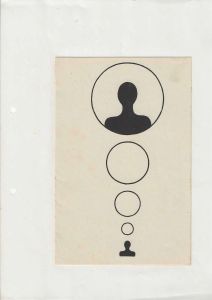
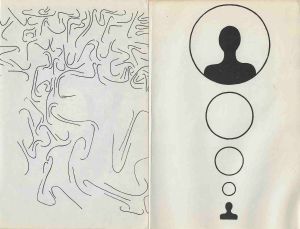
Hugo Mund JuniorOriente Ocidente1967Livro de artistaPoesia visual e poema objeto em estrutura desdobrável impressa sobre papel
Hugo Mund Jr.
Categoria: Livro de Artista
Acervo: 01282
Data: 1967
Dimensões: 16 x 16 cm
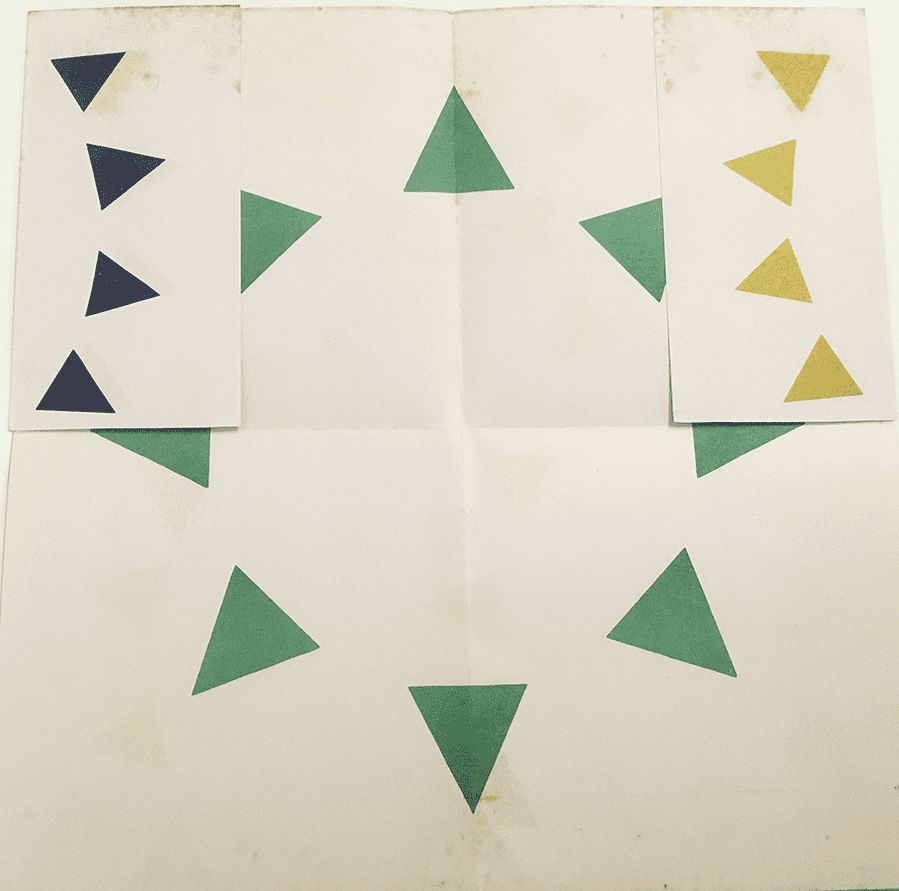
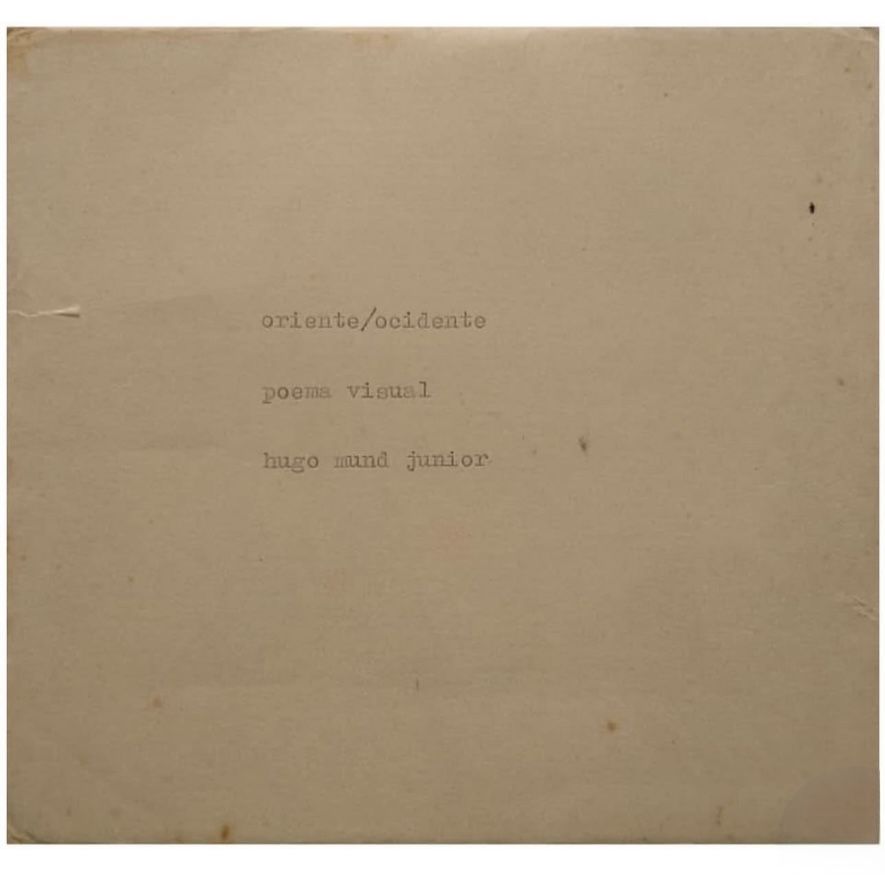
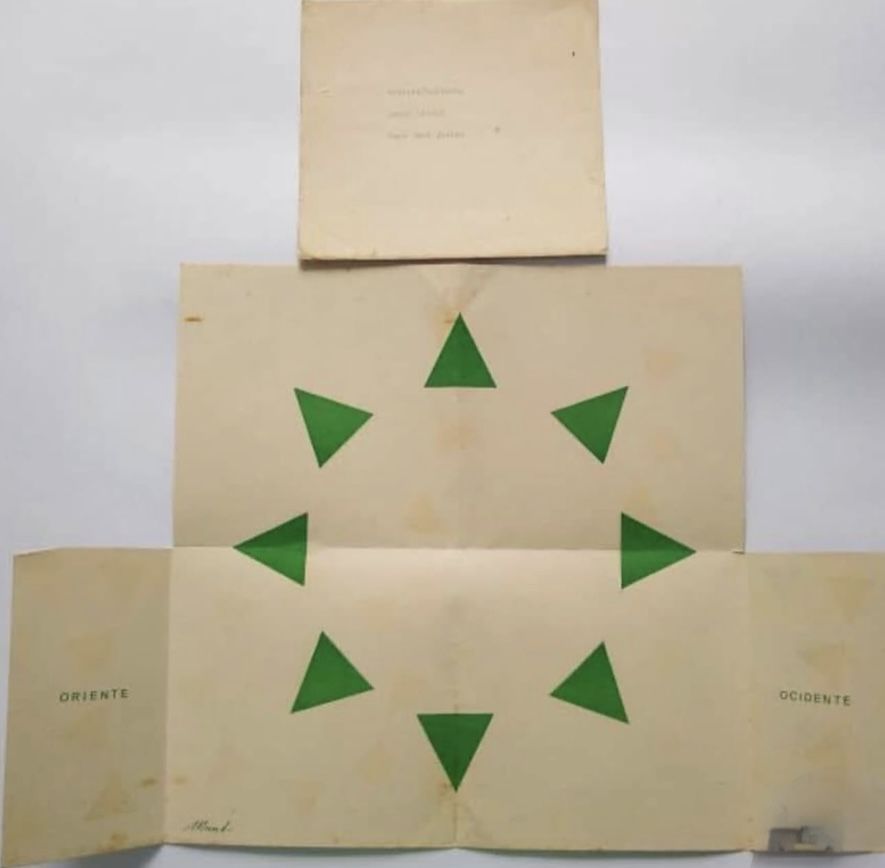
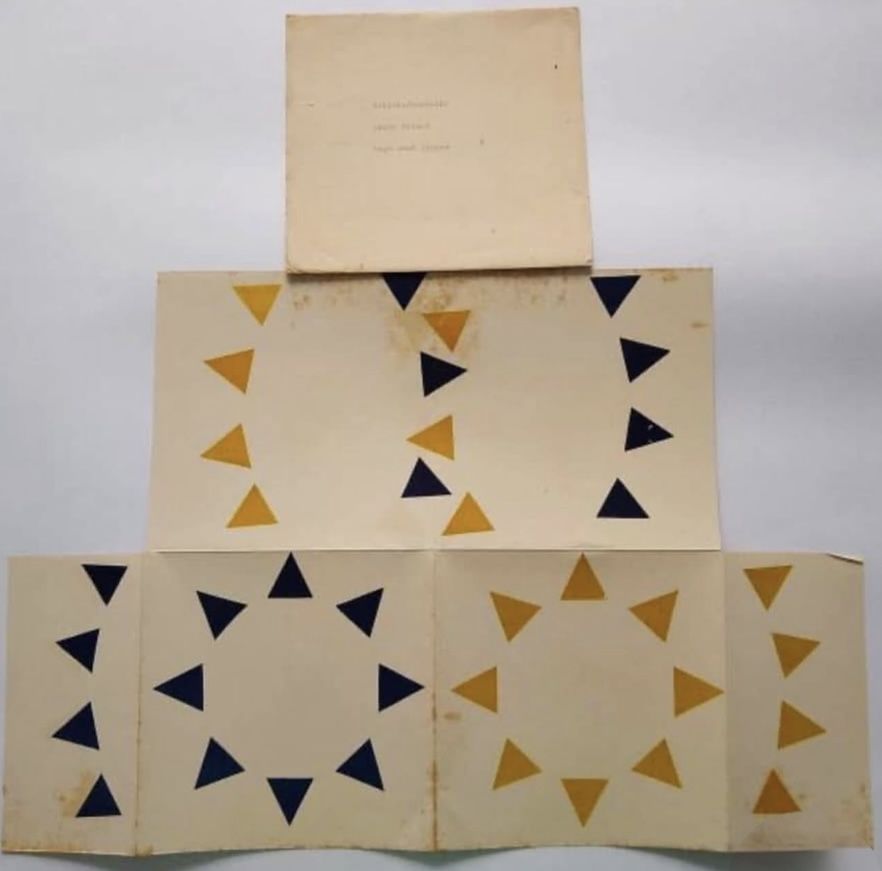
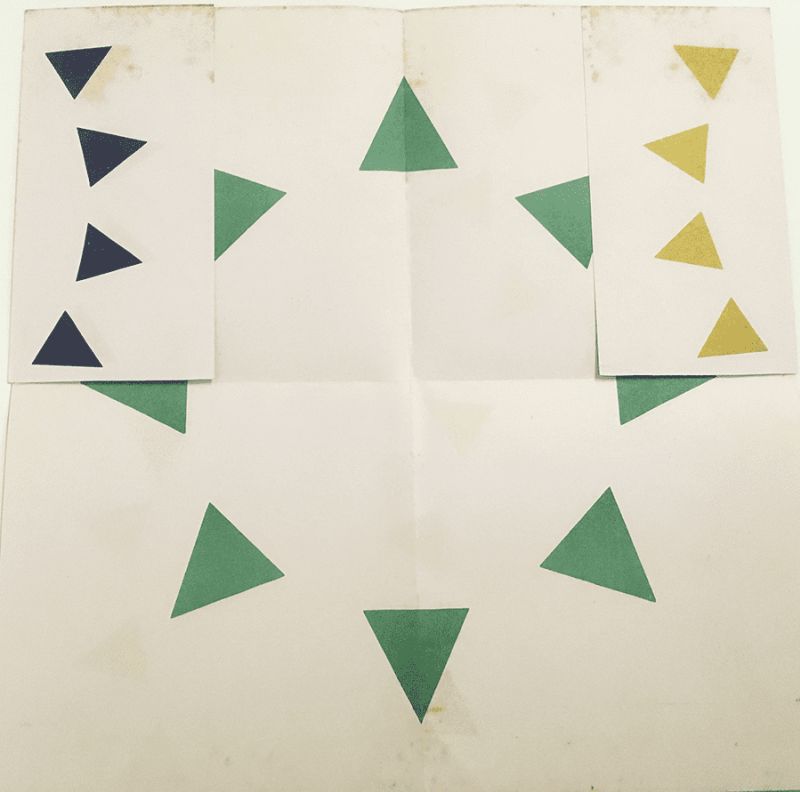
Hugo Mund JuniorOriente Ocidente1967Livro de artistaPoesia visual e poema objeto em estrutura desdobrável impressa sobre papelOriente Ocidente é um dos mais importantes livros de artista produzidos por Hugo Mund Junior no período inicial do movimento Poema Processo. Realizado em 1967, o trabalho apresenta uma estrutura dobrável que se transforma espacialmente durante a leitura, substituindo a narrativa verbal por relações geométricas e semióticas constituídas por triângulos coloridos e campos vazios.A obra é composta por módulos impressos que permitem diferentes configurações visuais. Em uma de suas disposições surgem círculos formados por triângulos verdes, azuis e amarelos, enquanto em outra configuração os mesmos elementos reorganizam se em novos sistemas de leitura. Nas extremidades da composição aparecem as palavras Oriente e Ocidente, estabelecendo um diálogo simbólico entre culturas, geografias, polaridades e sistemas de pensamento.A utilização exclusiva de formas geométricas transforma o livro em um poema sem palavras, princípio fundamental do Poema Processo, movimento que defendia a autonomia do signo visual e a construção do poema como processo de informação e comunicação. O leitor deixa de ser um simples observador e passa a atuar como participante ativo, abrindo, reorganizando e reconstruindo os sentidos da obra.Produzido no mesmo período em que Hugo Mund Junior participava das experiências da poesia visual brasileira e das investigações semióticas ligadas ao Poema Processo, Oriente Ocidente constitui uma das mais significativas contribuições do artista para o desenvolvimento do livro de artista e da poesia experimental brasileira. A obra aproxima arte concreta, arte conceitual, design gráfico, objeto manipulável e comunicação visual, expandindo os limites tradicionais do livro e do poema.Text for the Salsa ProgramEnglishHugo Mund JuniorEast West1967Artists bookVisual poetry and object poem in a foldable printed paper structureEast West is one of the most important artists books produced by Hugo Mund Junior during the early years of the Poema Processo movement. Created in 1967, the work presents a foldable structure that transforms itself spatially during reading, replacing verbal narrative with geometric and semiotic relationships composed of colored triangles and empty fields.The work is made of printed modules that allow different visual configurations. In one arrangement circles emerge from green, blue and yellow triangles, while in another configuration the same elements are reorganized into new reading systems. At the extremities of the composition appear the words East and West, establishing a symbolic dialogue between cultures, geographies, polarities and systems of thought.The exclusive use of geometric forms transforms the book into a poem without words, one of the fundamental principles of the Poema Processo movement, which defended the autonomy of the visual sign and the construction of the poem as a process of information and communication. The reader ceases to be a passive observer and becomes an active participant who opens, reorganizes and reconstructs the meanings of the work.Produced during the same period in which Hugo Mund Junior was participating in Brazilian visual poetry and semiotic investigations related to Poema Processo, East West constitutes one of the artist's most significant contributions to the development of the artists book and Brazilian experimental poetry. The work brings together concrete art, conceptual art, graphic design, manipulable object and visual communication, expanding the traditional limits of both the book and the poem.
Texto de Observação em PortuguêsLivro de artista de estrutura dobrável composto por impressões geométricas em papel. O trabalho utiliza triângulos coloridos organizados em sistemas circulares e modulares que podem ser alterados pelo manuseio do leitor. As palavras Oriente e Ocidente funcionam como polos conceituais e indicam uma investigação sobre dualidade, deslocamento, complementaridade e comunicação visual. A obra constitui um exemplo significativo da produção de Hugo Mund Junior no campo da poesia visual e do poema sem palavras, integrando as pesquisas experimentais desenvolvidas no contexto do movimento Poema Processo e da poesia concreta brasileira.Observation Text in EnglishFoldable artists book composed of geometric printed forms on paper. The work uses colored triangles arranged in circular and modular systems that can be modified through the reader's handling of the object. The words East and West function as conceptual poles and suggest an investigation into duality, displacement, complementarity and visual communication. The work is a significant example of Hugo Mund Junior's production in visual poetry and wordless poetry, belonging to the experimental investigations developed within the context of the Poema Processo movement and Brazilian concrete poetry.
Proveniência
Coleção Poema ProcessoInglês
Hugo Mund JuniorEast West1967Artists bookVisual poetry and object poem in a foldable printed paper structure
Dimensions: 6,3 x 6,3 in