Claudio Goulart - Porto Alegre
Local de nascimento: Porto Alegre, Rio Grande do Sul
Data de nascimento: 1954
Local de falecimento: Amsterdã, Países Baixos
Data de falecimento: 2005
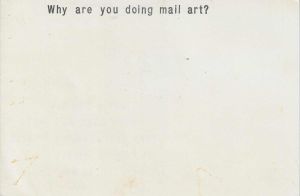
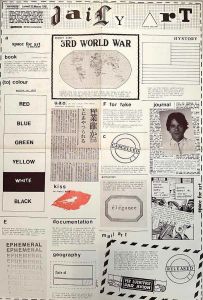
Claudio Goulart, também referido em algumas fontes como Cláudio Goulart, nasceu em Porto Alegre, Rio Grande do Sul, em 1954 e morreu em Amsterdã, Países Baixos, em 2005. Foi artista visual brasileiro radicado nos Países Baixos, com uma produção experimental e multidisciplinar que atravessou arte postal, Mail Art, fotografia, fotocópia, carimbo, publicação de artista, livro de artista, performance, videoperformance, videoarte, videoinstalação, instalação multimídia e intervenção urbana. Sua obra investigou de maneira recorrente comunicação, identidade individual e coletiva, memória, gênero, sexualidade, migração, política, história, circulação de imagens, cultura de massa e os mecanismos através dos quais as imagens constroem identidades e narrativas. Aos 22 anos deixou o Brasil e fixou residência em Amsterdã, cidade onde desenvolveu a maior parte de sua trajetória até sua morte.Goulart iniciou estudos de Arquitetura na Universidade do Vale do Rio dos Sinos, UNISINOS, e de Artes na Universidade Federal do Rio Grande do Sul, UFRGS. Em 1976 realizou uma viagem transatlântica com intenção inicial de seguir para Barcelona, onde pretendia continuar seus estudos. Antes de chegar à Espanha, parou em Amsterdã para visitar o artista brasileiro Flavio Pons, que havia se estabelecido nos Países Baixos no ano anterior. Goulart decidiu permanecer em Amsterdã e construiu a partir dali uma carreira vinculada aos ambientes experimentais e internacionais de arte da cidade.Sua transferência para os Países Baixos ocorreu em um momento em que Amsterdã concentrava artistas latino americanos e iniciativas independentes ligadas à arte conceitual, performance, vídeo, publicações experimentais e sistemas alternativos de comunicação. Goulart manteve relações artísticas com Flavio Pons e integrou um ambiente no qual também circulavam nomes como Ulises Carrión, Miguel Ángel Cárdenas e Raúl Marroquín. Sua condição de brasileiro vivendo na Europa tornou se progressivamente um elemento estrutural de sua obra, sobretudo nas reflexões sobre identidade cultural, fronteiras, deslocamento, nacionalidade e sistemas de classificação social.No final da década de 1970 Goulart já estava profundamente envolvido com a Mail Art. A arte postal oferecia ao artista um sistema de comunicação internacional que permitia trabalhar fora das estruturas comerciais tradicionais de galerias, estabelecer relações diretas com outros artistas e fazer da circulação, reprodução, resposta e participação componentes do próprio trabalho. Documentação atualmente preservada no Lomholt Mail Art Archive registra sua presença na rede internacional em 1979 e 1982, incluindo Pieces of Myself, correspondência de maio de 1979 e History Hollywood, de 1982.Um dos projetos fundamentais desse período é Pieces of myself, de 1979. Goulart concebeu uma caixa contendo um conjunto de 23 carimbos construídos a partir de um estudo das proporções humanas de Albrecht Dürer e de outras formas geométricas. A caixa deveria circular entre participantes sucessivos, que utilizariam os carimbos e enviariam ao artista algum resultado de sua intervenção. Durante cerca de quatro meses o conjunto percorreu diferentes países, entre eles Inglaterra, Alemanha, Itália e Estados Unidos. A documentação foi apresentada na Galeria Stempelplaats, em Amsterdã, entre 31 de março e 27 de abril de 1979. O projeto articulava corpo, identidade, reprodução gráfica, colaboração, circulação e autoria distribuída.Pieces of myself também evidencia a importância do carimbo na produção de Claudio Goulart. Em sua obra, o carimbo não é apenas ferramenta para repetição gráfica. Ele permite transformar imagens, palavras, sinais administrativos e códigos de identificação em unidades móveis que podem ser combinadas, reproduzidas e enviadas. A Fundação Vera Chaves Barcellos conserva uma extensa coleção de seus carimbos e registra títulos como History Hollywood, Painting, Commemorative edition, Between you and me, A stamp is, And the world will be better, Cancelled, Silence, Never Mind, Passeport, Dit is geen televisie, Isto não é uma televisão, This is not a television, La radio, Identities, Xerox, Boquitas cerradas, The False Mirror, Rebus, Élégance, Ephemeral, Love for sail, Voyageur, Mirage e Aquí. Esse conjunto revela o alcance de suas investigações sobre linguagem, comunicação, apropriação, identidade e mídia.Outro trabalho central de 1979 é Passport. A publicação de artista utiliza carimbos que remetem visualmente à estrutura de um passaporte, transformando um documento burocrático de controle de fronteiras em dispositivo artístico. Entre os motivos aparece uma figura derivada do Homem Vitruviano de Leonardo da Vinci, sobre cuja face Goulart sobrepõe uma impressão digital. A combinação entre um símbolo convencional do humano universal e uma marca individual de identidade permite discutir a tensão entre universalização e singularidade. Outros símbolos presentes remetem a deslocamento, viagem e estruturas de poder. Passport está diretamente relacionado à experiência de Goulart como migrante brasileiro vivendo na Europa.Ainda em 1979 Goulart desenvolveu Why are you doing mail art-, um dos seus projetos mais importantes para a história da arte postal. O artista enviava cartões a participantes da rede com essa pergunta e um espaço destinado à resposta. O projeto foi relacionado à exposição internacional Poste Restante, organizada pelo artista britânico Michael Scott na Liverpool Academy of Arts em junho de 1979. As respostas recebidas constituíram um levantamento coletivo sobre as razões pelas quais artistas utilizavam o correio como meio artístico. Algumas respostas questionavam explicitamente o circuito oficial de galerias e o sistema tradicional da arte, reforçando a Mail Art como prática de comunicação, colaboração, crítica institucional e criação de redes. O projeto posteriormente se tornou objeto de pesquisas acadêmicas brasileiras.O trabalho de Goulart com arte postal não deve ser compreendido isoladamente de sua produção em livro de artista, vídeo, performance e instalação. Um princípio comum atravessa essas linguagens: a transformação dos meios de comunicação em matéria artística. Correio, televisão, fotografia, cinema, carimbo, fotocópia, publicação, cartão postal e vídeo são simultaneamente instrumentos de transmissão e objetos de reflexão. Em vários trabalhos Goulart investiga como uma imagem circula, como ela adquire autoridade e de que maneira pode produzir ficções históricas, políticas ou identitárias.Em 1981 realizou THE ULTIMATE MAIL ART GRAPHIC PROJECT, obra de arte postal em papel executada com carimbo, atualmente conservada pela Fundação Vera Chaves Barcellos. O registro institucional confirma tanto a continuidade de sua participação na Mail Art no início da década de 1980 quanto o uso persistente do carimbo como elemento fundamental de sua linguagem visual.Na década de 1980 sua pesquisa se expandiu intensamente para a performance e a videoarte. Goulart integrou a primeira geração da videoarte nos Países Baixos e desenvolveu projetos em associação com estruturas dedicadas à mídia eletrônica e ao vídeo, entre elas Time Based Arts, em Amsterdã. Essa plataforma, fundada em 1983, promoveu trabalhos de artistas como Ulises Carrión, Ulay e Marina Abramovi?, Raúl Marroquín, Nan Hoover, Claudio Goulart, Flavio Pons e outros participantes do circuito de arte eletrônica e performance.Em 1983 Goulart realizou The Image Maker, uma conferência performática apresentada inicialmente no espaço independente Plan B, em Tóquio, e posteriormente no teatro De Muzeval, em Emmen, nos Países Baixos. Utilizando uma espécie de arquivo ou mala com divisões em leque, retirava objetos sucessivamente e ativava seus significados por meio de gestos e palavras. Mapas, cores, bandeiras, objetos cotidianos e símbolos eram empregados para construir relações entre arte, linguagem, migração, diversidade, identidade e violência. A obra encontra se documentada em vídeo e integra a história de sua aproximação entre performance, arquivo portátil e mídia audiovisual.Também em 1983 produziu a videoinstalação Night and Day (I think of you), originalmente apresentada em Amsterdã e posteriormente reconhecida como uma das obras relevantes de sua produção audiovisual. O trabalho utiliza diferentes mídias para construir uma experiência espacial envolvendo projeção, luz, escuridão, som e referências ao espaço sideral. A obra permaneceu durante décadas sem ser exibida na América Latina e foi remontada em 2025 para a 14ª Bienal do Mercosul, em Porto Alegre, integrando novamente a produção de Goulart à história da arte brasileira.A relação de Goulart com vídeo não se limitou à produção de obras individuais. Pesquisas recentes documentam sua participação na concepção e produção dos eventos de videoperformance LIVE VIDEO, realizados em 1983 e 1986, assim como sua atuação em Kanaal Zero, programa dedicado à apresentação de videoarte na televisão holandesa entre 1991 e 1994. Esses projetos mostram que o artista atuava também sobre os sistemas de distribuição e apresentação das imagens em movimento, ampliando para televisão e transmissão audiovisual questões que anteriormente havia desenvolvido por meio da arte postal.A trajetória internacional de Goulart estendeu se por Países Baixos, Portugal, Espanha, Alemanha, Suíça, Inglaterra, Cuba, México e Japão, entre outros contextos. Sua produção esteve presente em exposições e projetos no Museo Nacional Centro de Arte Reina Sofía, em circuitos japoneses e em edições da Bienal de Havana. Pesquisas recentes confirmam sua participação nas Bienais de Havana de 1994 e 1997. Na edição de 1997 apresentou Los Juguettes, projeto no qual retratos de pessoas vendadas foram distribuídos no espaço urbano da parte antiga de Havana.A identidade cultural adquiriu importância ainda maior em sua produção dos anos 1990. Em 1991 apresentou Postcards on the Road na conferência Cultural Identity: Fiction or Necessity, realizada na Jan van Eyck Academie, em Maastricht. A obra combinava conferência, performance, câmera de vídeo, monitores, instalação sonora, toca discos, imagens e objetos. Goulart utilizava cartões postais e referências a figuras da cultura popular como Carmen Miranda, Caetano Veloso, Gal Costa, Grace Jones, Astor Piazzolla e Madonna para discutir identidades em circulação e os efeitos da mídia sobre a compreensão de nacionalidade, cultura e pertencimento.Em sua produção posterior, memória, corpo, homoerotismo, sexualidade e a experiência da epidemia de aids tornaram se dimensões importantes. Obras como La mort dans son jardin, de 1992, Tarzan of Tarzans, de 1992, Portrait Intérieur, de 1995, e THE PRINTOUT, de 2000, foram analisadas em pesquisas recentes por sua relação com desejo homoerótico, corpo, doença, morte, memória e experiência pessoal. Portrait Intérieur foi também relacionada à exposição Les Mondes du Sida, realizada em Genebra em 1998 durante o contexto do 12º Congresso Internacional de Aids.Uma característica fundamental de Claudio Goulart foi sua atuação como artista arquivista. Durante décadas reuniu sistematicamente documentação sobre suas obras, exposições, vídeos, projetos, correspondências e processos criativos. Em 2003 organizou Claudio Goulart: Selected Works. A Documentation, dossiê que registrava partes de sua trajetória e que posteriormente se tornou fonte essencial para pesquisadores. Sua preocupação com documentação contribuiu decisivamente para a possibilidade contemporânea de reconstruir sua produção e suas redes internacionais.Após sua morte em Amsterdã, em 2005, a Fundação Art Zone tornou se instituição legatária de sua obra. Posteriormente, por meio do projeto Revelando Acervos, contemplado pelo programa Rumos Itaú Cultural, a Fundação Vera Chaves Barcellos recebeu da Art Zone a quase totalidade do conjunto de obras de Claudio Goulart. Esse processo foi decisivo para o retorno material e historiográfico de grande parte de sua produção ao Brasil e para sua catalogação, conservação, estudo e divulgação.Em 2017 a Fundação Vera Chaves Barcellos publicou Claudio Goulart: some pieces of myself, catálogo bilíngue de 94 páginas organizado por Carolina Biberg e dedicado ao conjunto incorporado à instituição. A publicação contém textos de Vera Chaves Barcellos e Ana Maria Albani de Carvalho, além de entrevista realizada por Fernanda Soares da Rosa com Flavio Pons, artista que acompanhou de perto a trajetória de Goulart em Amsterdã. O catálogo tornou se referência central para a reconstrução de sua obra.Em 2018 Fernanda Soares da Rosa concluiu na UFRGS a dissertação Claudio Goulart: o arquivo como memória, pesquisa dedicada à relação entre arquivo, memória, produção artística e apagamento historiográfico. O estudo utiliza como uma das principais fontes o conjunto preservado pela Fundação Vera Chaves Barcellos e problematiza o fato de um artista com extensa circulação internacional ter permanecido relativamente pouco conhecido na historiografia da arte brasileira.Em 2019 a Fundação Vera Chaves Barcellos realizou Claudio Goulart: Quando o horizonte é tão vasto, exposição individual póstuma com curadoria de Fernanda Soares da Rosa. A mostra reuniu mais de 60 trabalhos, incluindo fotografia, colagem, desenho, videoarte, instalação, livro de artista, arte postal e documentação de intervenções urbanas, performances, exposições e projetos audiovisuais. A exposição representou um passo decisivo na recuperação de sua produção no Brasil.Em 2024 a exposição individual Fragmentos da memória, com curadoria de Fernanda Soares da Rosa, foi apresentada na Zielinsky, em São Paulo, em colaboração com a Fundação Vera Chaves Barcellos. Realizada de 8 de junho a 27 de julho, foi identificada pela pesquisadora como a segunda individual póstuma do artista no Brasil e a primeira realizada em São Paulo. A mostra retomou especialmente a relação de Goulart com memória, apropriação de imagens, história e paisagens dos lugares nos quais viveu e circulou.Em 2025 Goulart integrou a 14ª Bienal do Mercosul com Night and Day (I think of you), de 1983. A apresentação marcou a primeira participação de sua obra em uma Bienal do Mercosul e permitiu a remontagem de uma videoinstalação fundamental que não havia sido anteriormente apresentada na América Latina. A presença na Bienal reforçou o processo contemporâneo de reinscrição de Claudio Goulart na história da arte brasileira e latino americana.Não foi localizada, nas fontes consultadas, evidência de que Claudio Goulart tenha integrado formalmente o movimento Poema Processo. Sua relação com o campo de pesquisa do Poema Processo deve ser estabelecida principalmente pelas conexões históricas e conceituais com poesia visual, experimentação gráfica, arte postal, publicação de artista, processos participativos, comunicação alternativa e internacionalização das redes artísticas. Goulart pertence à mesma história ampliada de deslocamento da obra de arte para sistemas de comunicação, circulação e reprodução que aproximou artistas experimentais brasileiros das redes internacionais de Mail Art durante as décadas de 1970 e 1980.Sua importância histórica reside especialmente na articulação entre Brasil e Países Baixos, na participação precoce e consistente nas redes internacionais de Mail Art, na contribuição para a primeira geração da videoarte holandesa, na utilização crítica dos meios de comunicação e na investigação de identidade, migração, sexualidade, memória, política e poder das imagens. Sua obra permite compreender como um artista brasileiro vivendo no exterior transformou correio, vídeo, televisão, fotografia, performance, arquivo e publicação em dispositivos para pensar a circulação contemporânea de pessoas, imagens e identidades. A pesquisa e o cadastro seguem o princípio documental de não completar lacunas por suposição e de distinguir fatos confirmados de ocorrências ainda não localizadas nas fontes consultadas.
English
Claudio Goulart, also referred to in some sources as Cláudio Goulart, was born in Porto Alegre, Rio Grande do Sul, Brazil, in 1954 and died in Amsterdam, the Netherlands, in 2005. He was a Brazilian visual artist based in the Netherlands whose experimental and multidisciplinary practice encompassed mail art, photography, photocopy, rubber stamps, artists publications, artists books, performance, video performance, video art, video installation, multimedia installation and urban intervention. His work repeatedly addressed communication, individual and collective identity, memory, gender, sexuality, migration, politics, history, image circulation, mass culture and the mechanisms through which images construct identities and narratives. At the age of twenty two he left Brazil and settled in Amsterdam, where he developed most of his artistic career until his death.Goulart began studying architecture at Universidade do Vale do Rio dos Sinos, UNISINOS, and arts at Universidade Federal do Rio Grande do Sul, UFRGS. In 1976 he undertook a transatlantic journey with the original intention of continuing his studies in Barcelona. Before reaching Spain, he stopped in Amsterdam to visit the Brazilian artist Flavio Pons, who had settled in the Netherlands the previous year. Goulart decided to remain in Amsterdam and developed a career connected to the city?s experimental and international art environments.His move to the Netherlands occurred at a moment when Amsterdam attracted Latin American artists and independent initiatives associated with conceptual art, performance, video, experimental publishing and alternative systems of communication. Goulart maintained a close artistic relationship with Flavio Pons and participated in an environment in which figures such as Ulises Carrión, Miguel Ángel Cárdenas and Raúl Marroquín were also active. His condition as a Brazilian living in Europe gradually became a structural component of his practice, particularly in his reflections on cultural identity, borders, displacement, nationality and social classification.By the late 1970s Goulart was deeply involved in international Mail Art. Postal art provided him with a communication system through which artists could operate outside traditional commercial gallery structures, establish direct relationships with other participants and turn circulation, reproduction, response and participation into constituent elements of the artwork. Documentation preserved by the Lomholt Mail Art Archive records his presence in the network in 1979 and 1982, including Pieces of Myself, correspondence dating from May 1979 and History Hollywood from 1982.One of the fundamental projects of this period is Pieces of myself, created in 1979. Goulart designed a box containing a set of 23 rubber stamps derived from a study of human proportions by Albrecht Dürer together with additional geometric forms. The box was intended to circulate successively among participants who would use the stamps and send Goulart material resulting from their interventions. Over approximately four months the set travelled through several countries, including England, Germany, Italy and the United States. Documentation of the process was exhibited at Galerie Stempelplaats in Amsterdam from March 31 to April 27, 1979. The project connected body, identity, graphic reproduction, collaboration, circulation and distributed authorship.Pieces of myself also demonstrates the importance of the rubber stamp within Goulart?s artistic practice. The stamp was not simply a tool for graphic repetition. It enabled him to transform images, words, administrative signs and identification codes into mobile units that could be combined, reproduced and circulated. Fundação Vera Chaves Barcellos preserves an extensive collection of his stamps and records titles including History Hollywood, Painting, Commemorative edition, Between you and me, A stamp is, And the world will be better, Cancelled, Silence, Never Mind, Passeport, Dit is geen televisie, Isto não é uma televisão, This is not a television, La radio, Identities, Xerox, Boquitas cerradas, The False Mirror, Rebus, Élégance, Ephemeral, Love for sail, Voyageur, Mirage and Aquí. Together they demonstrate the range of his investigations into language, communication, appropriation, identity and media.Another central work from 1979 is Passport. This artists publication uses rubber stamps that evoke the structure of a passport, transforming a bureaucratic document for controlling borders into an artistic device. Among its images is a figure derived from Leonardo da Vinci?s Vitruvian Man with a fingerprint superimposed upon the face. The combination of a conventional symbol of universal humanity and an individual mark of identity establishes a tension between universality and singularity. Other symbols evoke travel, movement and structures of power. Passport is directly connected with Goulart?s personal experience as a Brazilian migrant living in Europe.Also in 1979 Goulart developed Why are you doing mail art-, one of his most important projects for the history of correspondence art. He mailed cards bearing this question to members of his network and provided space for their responses. The project was connected to Poste Restante, the international Mail Art exhibition organized by British artist Michael Scott at the Liverpool Academy of Arts in June 1979. The replies became a collective investigation into the reasons artists chose the postal system as an artistic medium. Several responses explicitly questioned official gallery structures and the traditional art system, reinforcing Mail Art as a practice of communication, collaboration, institutional critique and network formation. The project has subsequently become the subject of academic research in Brazil.Goulart?s Mail Art should not be separated from his activities in artists books, video, performance and installation. A shared principle connects these media: the transformation of communication technologies into artistic material. The postal system, television, photography, cinema, rubber stamps, photocopy, publications, postcards and video function both as means of transmission and as subjects of critical examination. Across his work Goulart investigated how images circulate, how they acquire authority and how they can generate historical, political and identity based fictions.In 1981 he created THE ULTIMATE MAIL ART GRAPHIC PROJECT, a Mail Art work on paper made with rubber stamp impressions and now preserved by Fundação Vera Chaves Barcellos. Its institutional record confirms both the continuity of his involvement in correspondence art at the beginning of the 1980s and the persistent importance of the rubber stamp within his visual language.During the 1980s his practice expanded intensively into performance and video art. Goulart was part of the first generation of video art in the Netherlands and developed projects in association with organizations dedicated to electronic media and video, including Time Based Arts in Amsterdam. Founded in 1983, the platform presented work by artists including Ulises Carrión, Ulay and Marina Abramovi?, Raúl Marroquín, Nan Hoover, Claudio Goulart, Flavio Pons and other participants in the experimental video and performance scene.In 1983 Goulart created The Image Maker, a performative lecture first presented at the artist run space Plan B in Tokyo and subsequently at the De Muzeval theatre in Emmen, the Netherlands. Using a portable fan shaped file or suitcase, he successively removed objects and activated their meanings through gestures and individual words. Maps, colors, flags, everyday objects and symbols were employed to construct relationships among art, language, migration, diversity, identity and violence. The work is preserved in video documentation and forms an important part of his convergence of performance, portable archive and audiovisual media.In the same year Goulart produced the video installation Night and Day (I think of you), originally presented in Amsterdam and subsequently recognized as an important work within his audiovisual production. The installation combines different media to create a spatial experience involving projection, light, darkness, sound and references to outer space. The work remained unseen in Latin America for decades and was reconstructed in 2025 for the 14th Mercosul Biennial in Porto Alegre, bringing this important part of Goulart?s production back into the context of Brazilian art history.Goulart?s involvement with video extended beyond the production of individual works. Recent scholarship documents his participation in the conception and production of the LIVE VIDEO events in 1983 and 1986, as well as his involvement with Kanaal Zero, a project that brought video art to Dutch television between 1991 and 1994. These activities demonstrate that he was concerned not only with creating moving images but also with their systems of presentation and distribution, extending into television and audiovisual broadcasting issues he had previously explored through Mail Art.Goulart?s international career involved projects and exhibitions in the Netherlands, Portugal, Spain, Germany, Switzerland, England, Cuba, Mexico and Japan, among other countries. His work circulated through institutions and events including the Museo Nacional Centro de Arte Reina Sofía and the Havana Biennial. Current research confirms his participation in the Havana Biennials of 1994 and 1997. In 1997 he presented Los Juguettes, a project in which portraits of blindfolded people were distributed through public spaces in the old section of Havana.Cultural identity became increasingly prominent in his work during the 1990s. In 1991 he presented Postcards on the Road at the conference Cultural Identity: Fiction or Necessity at the Jan van Eyck Academie in Maastricht. The project combined lecture, performance, video camera, monitors, sound installation, record player, images and objects. Goulart used postcards and references to popular cultural figures including Carmen Miranda, Caetano Veloso, Gal Costa, Grace Jones, Astor Piazzolla and Madonna to discuss identities in circulation and the influence of mass media upon nationality, culture and belonging.In his later production memory, the body, homoeroticism, sexuality and the experience of the AIDS epidemic became increasingly important dimensions. Works such as La mort dans son jardin from 1992, Tarzan of Tarzans from 1992, Portrait Intérieur from 1995 and THE PRINTOUT from 2000 have been examined by recent scholarship in relation to homoerotic desire, the body, illness, death, memory and personal experience. Portrait Intérieur has also been connected with Les Mondes du Sida, presented in Geneva in 1998 in the context of the 12th International AIDS Conference.A fundamental aspect of Claudio Goulart?s practice was his activity as an artist archivist. For decades he systematically assembled documentation concerning his works, exhibitions, videos, projects, correspondence and creative processes. In 2003 he organized Claudio Goulart: Selected Works. A Documentation, a dossier recording significant portions of his trajectory that later became an essential source for researchers. His commitment to documentation has played a decisive role in making possible the contemporary reconstruction of his production and international networks.Following his death in Amsterdam in 2005, the Art Zone Foundation became the legatee institution of his work. Through the Revelando Acervos project, supported by Rumos Itaú Cultural, Fundação Vera Chaves Barcellos subsequently received from Art Zone almost the entirety of Goulart?s artistic production. This transfer was decisive in returning a substantial body of his work to Brazil and enabling its cataloguing, conservation, research and public presentation.In 2017 Fundação Vera Chaves Barcellos published Claudio Goulart: some pieces of myself, a bilingual 94 page catalogue organized by Carolina Biberg and dedicated to the works incorporated into the institution. The publication includes texts by Vera Chaves Barcellos and Ana Maria Albani de Carvalho and an interview conducted by Fernanda Soares da Rosa with Flavio Pons, who had closely accompanied Goulart?s trajectory in Amsterdam. The catalogue has become a major reference for the reconstruction of his work.In 2018 Fernanda Soares da Rosa completed the UFRGS master?s dissertation Claudio Goulart: o arquivo como memória. The study investigates the relationship among archive, memory, artistic production and historiographic erasure and uses the collection preserved by Fundação Vera Chaves Barcellos as one of its principal sources. It questions how an artist with significant international circulation could remain comparatively little known within Brazilian art historiography.In 2019 Fundação Vera Chaves Barcellos organized the posthumous solo exhibition Claudio Goulart: Quando o horizonte é tão vasto, curated by Fernanda Soares da Rosa. The exhibition brought together more than sixty works encompassing photography, collage, drawing, video art, installation, artists books, Mail Art and documentation of urban interventions, performances, exhibitions and audiovisual projects. It represented a major stage in the recovery and reassessment of Goulart?s production in Brazil.In 2024 the solo exhibition Fragmentos da memória, curated by Fernanda Soares da Rosa, was presented at Zielinsky in São Paulo in collaboration with Fundação Vera Chaves Barcellos. Held from June 8 to July 27, it was identified by the researcher as Goulart?s second posthumous solo exhibition in Brazil and his first solo presentation in São Paulo. The exhibition emphasized his engagement with memory, image appropriation, history and fragments of landscapes associated with places through which he had lived and travelled.In 2025 Goulart participated in the 14th Mercosul Biennial with Night and Day (I think of you), originally created in 1983. This marked the first presentation of his work in a Mercosul Biennial and enabled the reconstruction of an important video installation that had never previously been shown in Latin America. His inclusion contributed to the contemporary process of restoring Claudio Goulart to Brazilian and Latin American art history.No evidence was located in the sources consulted demonstrating that Claudio Goulart formally participated in the Brazilian Process Poem Movement. His relationship to the research field surrounding Poema Processo should therefore be established through historical and conceptual connections with visual poetry, graphic experimentation, Mail Art, artists publications, participatory processes, alternative communication and international artistic networks. His practice belongs to the broader history in which Brazilian experimental artists shifted the artwork toward systems of communication, circulation and reproduction and became increasingly connected to international Mail Art networks during the 1970s and 1980s.Goulart?s historical importance lies particularly in his articulation of Brazil and the Netherlands, his early and consistent participation in international Mail Art, his contribution to the first generation of Dutch video art, his critical use of communications media and his investigations into identity, migration, sexuality, memory, politics and the power of images. His work demonstrates how a Brazilian artist living abroad transformed postal communication, video, television, photography, performance, archives and publishing into instruments through which to examine the contemporary circulation of people, images and identities.
Currículo
CURRÍCULO EM PORTUGUÊSClaudio Goulart, Porto Alegre, 1954, Amsterdã, 2005, foi artista brasileiro radicado nos Países Baixos desde 1976. Sua atuação documentada compreende arte postal, Mail Art, carimbo, fotocópia, fotografia, livro de artista, publicação de artista, performance, videoperformance, videoarte, instalação, videoinstalação, intervenção urbana, televisão experimental e organização de projetos audiovisuais. A relação abaixo constitui uma lista consolidada das ocorrências documentadas nas fontes consultadas e não deve ser entendida como catálogo raisonné integral de sua produção.IDENTIFICAÇÃONome principal: Claudio GoulartOutra grafia encontrada: Cláudio GoulartNascimento: 1954Local de nascimento: Porto Alegre, Rio Grande do Sul, BrasilFalecimento: 2005Local de falecimento: Amsterdã, Países BaixosNacionalidade: brasileiraPrincipal cidade de atuação: Amsterdã, Países BaixosPeríodo documentado de residência em Amsterdã: 1976 a 2005Áreas de atuação: arte postal, Mail Art, fotografia, fotocópia, carimbo, publicação de artista, livro de artista, performance, videoperformance, vídeo, videoinstalação, instalação multimídia, intervenção urbana e projetos para televisãoTemas recorrentes: identidade, memória, migração, gênero, sexualidade, homoerotismo, política, história, colonialismo, comunicação, cultura de massa e poder das imagens.FORMAÇÃODécada de 1970Estudos de ArquiteturaUniversidade do Vale do Rio dos Sinos, UNISINOSRio Grande do Sul, BrasilDécada de 1970Estudos de ArtesUniversidade Federal do Rio Grande do Sul, UFRGSPorto Alegre, BrasilNão foram localizados nas fontes consultadas dados suficientes para afirmar a conclusão dos respectivos cursos ou títulos acadêmicos obtidos.DESLOCAMENTOS E ATUAÇÃO INTERNACIONAL1976Viagem do Brasil em direção à Europa com intenção inicial de estudar em BarcelonaParada em Amsterdã para visitar Flavio PonsFixação de residência nos Países Baixos1976 a 2005Vida e atividade artística principal em AmsterdãPaíses documentados em sua trajetória expositiva e profissional incluem Brasil, Países Baixos, Portugal, Espanha, Alemanha, Suíça, Inglaterra, Cuba, México e Japão.ARTISTAS E REDES RELACIONADASFlavio PonsUlises CarriónMiguel Ángel CárdenasRaúl MarroquínParticipantes das redes internacionais de Mail ArtArtistas ligados a Time Based ArtsAs relações possuem diferentes naturezas e não devem ser interpretadas automaticamente como coautoria.ARTE POSTAL E MAIL ART1979Pieces of myselfArte postal e projeto participativoCaixa com conjunto de 23 carimbosProjeto baseado parcialmente em estudo de proporções humanas de Albrecht DürerCirculação documentada por Inglaterra, Alemanha, Itália e Estados UnidosDuração aproximada do processo: quatro mesesDocumentação apresentada na Galeria Stempelplaats, Amsterdã31 de março a 27 de abril de 1979.1979Why are you doing mail art-Projeto de arte postalPergunta enviada a artistas da rede internacionalRelacionado à exposição Poste RestanteLiverpool Academy of ArtsLiverpool, InglaterraJunho de 1979Organização geral de Poste Restante: Michael Scott.1979PassportLivro ou publicação de artistaCarimbos coloridos sobre papel14,5 por 9,5 cmTema: passaporte, identidade, migração, fronteiras, universalidade e individualidade.1979 a 1980Testarte VIII, O Cofre, Claudio GoulartIntervenção sobre cartão postalProjeto O Cofre de Vera Chaves BarcellosAcervo Fundação Vera Chaves BarcellosNúmero de registro V00599.32.1981THE ULTIMATE MAIL ART GRAPHIC PROJECTArte postalCarimbo sobre papel29,7 por 21 cmColeção Artistas ContemporâneosFundação Vera Chaves BarcellosNúmero de registro C02232.1982History HollywoodDocumentação de circulação internacional preservada pelo Lomholt Mail Art ArchiveRegistro de 9 de março de 1982.CARIMBOS E EXPERIMENTAÇÃO GRÁFICAA Fundação Vera Chaves Barcellos documenta extensa produção de carimbos de Claudio Goulart. Entre os títulos preservados encontram se:History HollywoodPaintingCommemorative editionBetween you and meA stamp isSem título, Homem sem cabeçaAnd the world will be betterIslandCancelledSilenceNever MindPasseportDit is geen televisieIsto não é uma televisãoThis is not a televisionLa radioIdentitiesHistorySem título, selo BrasilXeroxBoquitas cerradas, IdentitiesLa radio, le cinéma, le journal, le théâtreCeci n'est pas une télévisionThe False MirrorRebusÉléganceEphemeralLove for sailI am glad if I can eatVoyageurMirageAquíSem título, símbolo O.A.N.I. estampado.PERFORMANCE, VIDEOARTE E PROJETOS AUDIOVISUAIS1983The Image MakerPerformance e conferência performáticaPrimeira apresentação documentada: Plan B, Tóquio, JapãoJaneiro de 1983Segunda apresentação documentada: De Muzeval, Emmen, Países BaixosMarço de 1983Duração da versão registrada: aproximadamente 17 minutosDocumentação audiovisual preservada em acervos de mídia nos Países Baixos.1983Night and Day (I think of you)VideoinstalaçãoApresentada originalmente em AmsterdãAssociada ao contexto da Time Based ArtsPosteriormente incorporada ao acervo da Fundação Vera Chaves BarcellosRemontada na 14ª Bienal do Mercosul em 2025.1983LIVE VIDEOEvento ou projeto de videoperformanceParticipação de Claudio Goulart na idealização e produção documentada por pesquisas recentes.1986LIVE VIDEONova edição do projeto ou evento de videoperformanceAtuação documentada de Claudio Goulart.1991 a 1994Kanaal ZeroProjeto para televisão holandesaPrograma dedicado à apresentação e circulação de videoarteAtuação de Claudio Goulart na idealização e produção.1991Postcards on the RoadConferência performática multimídiaCultural Identity: Fiction or NecessityJan van Eyck AcademieMaastricht, Países BaixosMaio de 1991Meios utilizados: vídeo em circuito fechado, câmera, monitores, toca discos, som, imagens, cartões postais, objetos e performance.1992La mort dans son jardinObra posteriormente estudada em relação ao corpo, homoerotismo, memória e experiência da aids.1992Tarzan of TarzansObra posteriormente estudada em relação ao corpo, homoerotismo e cultura visual.1995Portrait IntérieurObra envolvendo corpo, autorrepresentação, memória, sexualidade e experiência da aidsRelacionada à participação posterior em Les Mondes du Sida.2000THE PRINTOUTProdução estudada em relação ao corpo, sexualidade, memória, doença e mortalidade.BIENAIS, EXPOSIÇÕES E EVENTOS INTERNACIONAIS DOCUMENTADOS1979Pieces of myselfGaleria StempelplaatsAmsterdã, Países Baixos31 de março a 27 de abrilApresentação da documentação do projeto participativo.1979Poste RestanteLiverpool Academy of ArtsLiverpool, InglaterraProjeto Why are you doing mail art- relacionado à exposição internacional de Mail Art.1983The Image MakerPlan BTóquio, JapãoPerformanceJaneiro de 1983.1983The Image MakerDe MuzevalEmmen, Países BaixosPerformanceMarço de 1983.1983Night and Day (I think of you)Amsterdã, Países BaixosVideoinstalaçãoContexto de Time Based Arts.1991Cultural Identity: Fiction or NecessityJan van Eyck AcademieMaastricht, Países BaixosParticipação com Postcards on the Road.1994Bienal de HavanaHavana, CubaParticipação documentada.1997VI Bienal de HavanaHavana, CubaParticipação com Los JuguettesRetratos de pessoas vendadas instalados em espaços urbanos da parte antiga de Havana.1998Les Mondes du SidaGenebra, SuíçaExposição vinculada ao contexto do 12º Congresso Internacional de AidsParticipação relacionada à obra Portrait Intérieur.A documentação institucional contemporânea também registra participação ou circulação de trabalhos de Claudio Goulart em contextos ligados ao Museo Nacional Centro de Arte Reina Sofía e Gallery Spoon, Tóquio. Nas fontes consultadas não foram localizados dados suficientes para individualizar com segurança título, ano, datas e natureza de todas essas ocorrências.EXPOSIÇÕES PÓSTUMAS DOCUMENTADAS2019Claudio Goulart: Quando o horizonte é tão vastoFundação Vera Chaves BarcellosSala dos PomaresViamão, Rio Grande do Sul, Brasil6 de abril a 20 de julho de 2019Curadoria: Fernanda Soares da RosaProdução: Thaís FrancoMais de 60 trabalhosFotografia, colagem, desenho, videoarte, instalação, livro de artista, arte postal e documentação de intervenções urbanas, performances, exposições e vídeo.2024Claudio Goulart: Fragmentos da memóriaZielinskySão Paulo, Brasil8 de junho a 27 de julho de 2024Curadoria: Fernanda Soares da RosaParceria com Fundação Vera Chaves BarcellosSegunda exposição individual póstuma do artista no Brasil segundo a documentação consultadaPrimeira individual de Claudio Goulart em São Paulo.202514ª Bienal do MercosulPorto Alegre, Rio Grande do Sul, BrasilParticipação póstumaObra: Night and Day (I think of you), 1983Primeira participação de uma obra de Claudio Goulart em uma Bienal do MercosulPrimeira apresentação documentada da instalação na América Latina.PUBLICAÇÕES DE ARTISTA E DOCUMENTOS AUTORAIS1979PassportPublicação de artistaCarimbos coloridos sobre papel14,5 por 9,5 cm.1979Pieces of myselfProjeto de arte postal e publicação processual baseada em carimbos, circulação e participação.2003Claudio Goulart: Selected Works. A DocumentationDossiê documental organizado pelo próprio artistaReúne documentação sobre obras e trajetóriaFonte posteriormente utilizada em pesquisas sobre sua produção.PUBLICAÇÕES SOBRE O ARTISTA2017Claudio Goulart: some pieces of myselfOrganização: Carolina BibergFundação Vera Chaves BarcellosPorto Alegre, BrasilPublicação bilíngue94 páginas segundo registro documental da FVCBTextos de Vera Chaves Barcellos e Ana Maria Albani de CarvalhoEntrevista de Fernanda Soares da Rosa com Flavio PonsAcompanha documentação multimídia segundo registro bibliográfico do MARGS.2018Fernanda Soares da RosaClaudio Goulart: o arquivo como memóriaDissertação de Mestrado em Artes VisuaisUniversidade Federal do Rio Grande do SulInstituto de ArtesPorto Alegre, BrasilOrientação de Mônica Zielinsky.2018Fernanda Soares da RosaClaudio Goulart: entre trajetória, arquivos e memóriaEstudo acadêmico sobre arquivo e memória na produção do artista.2018Fernanda Soares da RosaRetrato Interior: o corpo e a aids na obra de Claudio Goulart38º Colóquio do Comitê Brasileiro de História da ArtePesquisa dedicada a Portrait Intérieur.2019Lucas de Oliveira KleverA arte postal em Claudio Goulart nos anos 1960 80Estudo dedicado principalmente a Why are you doing mail art- e às relações entre rede postal e crítica ao sistema institucional da arte.2024Pablo Santa OlallaClaudio Goulart and His Artistic Critique of the Ideology of MulticulturalismStedelijk Studies JournalIssue 14Publicado em 19 de setembro de 2024Pesquisa sobre identidade, migração, multiculturalismo e produção artística de Goulart.2025Fernanda Soares da RosaNight and Day (I think of you), de Claudio Goulart, na 14ª Bienal do MercosulPesquisa sobre a videoinstalação de 1983 e sua remontagem em 2025.ACERVOS E ARQUIVOSFundação Vera Chaves BarcellosViamão, Rio Grande do Sul, BrasilPrincipal conjunto institucional atualmente identificado nas fontes consultadasRecebeu da Fundação Art Zone, Amsterdã, quase a totalidade das obras preservadas após a morte do artistaConserva arte postal, livros de artista, vídeos, fotografias, registros de performances, instalações, carimbos e documentação.Fundação Art ZoneAmsterdã, Países BaixosInstituição legatária da obra após a morte de GoulartPosteriormente transferiu grande parte do conjunto à Fundação Vera Chaves Barcellos.Lomholt Mail Art ArchiveDinamarcaConserva documentação de arte postal relacionada a Claudio Goulart, incluindo registros de 1979 e 1982.Rijksdienst voor het Cultureel Erfgoed e plataformas de preservação de media art nos Países BaixosDocumentação audiovisual relacionada a The Image Maker.Van Abbemuseum LibraryEindhoven, Países BaixosRegistro documental relacionado a Claudio Goulart e ao projeto Los Juguettes apresentado na VI Bienal de Havana em 1997.MARGSMuseu de Arte do Rio Grande do SulPorto Alegre, BrasilAcervo bibliográfico conserva Claudio Goulart: some pieces of myself.RELAÇÃO COM POEMA PROCESSO E CAMPOS ASSOCIADOSNão foi localizada comprovação documental de participação formal de Claudio Goulart no movimento Poema Processo. Sua pertinência ao campo de pesquisa está fundamentada em relações com arte postal, poesia visual, experimentação gráfica, carimbo, publicação de artista, livro de artista, processos participativos e circuitos alternativos de comunicação. O correto para indexação é associá lo ao contexto internacional de práticas experimentais relacionadas, sem classificá lo como integrante do Poema Processo.CRONOLOGIA CONSOLIDADA1954Nascimento em Porto Alegre, Rio Grande do Sul.Década de 1970Estudos de Arquitetura na UNISINOS e Artes na UFRGS.1976Viagem à Europa.Fixação em Amsterdã após visita a Flavio Pons.1979Pieces of myself.Exposição da documentação na Stempelplaats, Amsterdã.Passport.Why are you doing mail art-Participação no contexto de Poste Restante em Liverpool.Intervenção relacionada a O Cofre de Vera Chaves Barcellos.1981THE ULTIMATE MAIL ART GRAPHIC PROJECT.1982History Hollywood documentado na rede internacional de Mail Art.1983The Image Maker em Tóquio e Emmen.Night and Day (I think of you).LIVE VIDEO.Inserção crescente na cena holandesa de videoarte.1986Nova edição documentada de LIVE VIDEO.1991Postcards on the Road na Jan van Eyck Academie em Maastricht.Início do período documentado de Kanaal Zero, desenvolvido até 1994.1992La mort dans son jardin.Tarzan of Tarzans.1994Participação documentada na Bienal de Havana.1995Portrait Intérieur.1997VI Bienal de Havana.Los Juguettes.1998Les Mondes du Sida em Genebra.2000THE PRINTOUT.2003Claudio Goulart: Selected Works. A Documentation.2005Falecimento em Amsterdã.Posteriormente a Fundação Art Zone torna se legatária de seu conjunto artístico.2010sTransferência de quase toda a coleção preservada pela Art Zone para a Fundação Vera Chaves Barcellos por meio do projeto Revelando Acervos.2017Publicação Claudio Goulart: some pieces of myself.2018Conclusão da dissertação Claudio Goulart: o arquivo como memória, de Fernanda Soares da Rosa.2019Exposição Claudio Goulart: Quando o horizonte é tão vasto na Fundação Vera Chaves Barcellos.2024Exposição Fragmentos da memória na Zielinsky, São Paulo.Publicação de estudo de Pablo Santa Olalla na Stedelijk Studies.2025Participação póstuma na 14ª Bienal do Mercosul com Night and Day (I think of you).
English
Claudio Goulart, Porto Alegre, 1954, Amsterdam, 2005, was a Brazilian artist based in the Netherlands from 1976 onward. His documented practice encompasses Mail Art, rubber stamps, photocopy, photography, artists books, artists publications, performance, video performance, video art, installation, video installation, urban intervention, experimental television and audiovisual project organization. The following is a consolidated list of occurrences documented in the sources consulted and should not be interpreted as a complete catalogue raisonné of his production.IDENTIFICATIONPrimary name: Claudio GoulartAlternative spelling documented: Cláudio GoulartBorn: 1954Place of birth: Porto Alegre, Rio Grande do Sul, BrazilDied: 2005Place of death: Amsterdam, the NetherlandsNationality: BrazilianPrincipal city of activity: Amsterdam, the NetherlandsDocumented period of residence in Amsterdam: 1976 to 2005Fields of activity: Mail Art, photography, photocopy, rubber stamps, artists publications, artists books, performance, video performance, video, video installation, multimedia installation, urban intervention and television projectsRecurring subjects: identity, memory, migration, gender, sexuality, homoeroticism, politics, history, colonialism, communication, mass culture and the power of images.EDUCATION1970sArchitecture studiesUniversidade do Vale do Rio dos Sinos, UNISINOSRio Grande do Sul, Brazil1970sArt studiesUniversidade Federal do Rio Grande do Sul, UFRGSPorto Alegre, BrazilThe sources consulted do not provide sufficient evidence to confirm completion dates or academic degrees for these courses.INTERNATIONAL MOVEMENT AND PROFESSIONAL ACTIVITY1976Departure from Brazil for Europe with an initial intention to continue studies in BarcelonaStop in Amsterdam to visit Flavio PonsDecision to settle in the Netherlands1976 to 2005Principal residence and artistic activity in AmsterdamCountries documented within his exhibition and professional trajectory include Brazil, the Netherlands, Portugal, Spain, Germany, Switzerland, England, Cuba, Mexico and Japan.RELATED ARTISTS AND NETWORKSFlavio PonsUlises CarriónMiguel Ángel CárdenasRaúl MarroquínParticipants in international Mail Art networksArtists associated with Time Based ArtsThese relationships were of different kinds and should not automatically be interpreted as artistic coauthorship.MAIL ART1979Pieces of myselfMail Art and participatory projectBox containing a set of 23 rubber stampsProject partly based on a study of human proportions by Albrecht DürerDocumented circulation through England, Germany, Italy and the United StatesApproximate duration of circulation: four monthsProject documentation exhibited at Galerie Stempelplaats, AmsterdamMarch 31 to April 27, 1979.1979Why are you doing mail art-Mail Art projectQuestion sent to artists within the international networkConnected with the exhibition Poste RestanteLiverpool Academy of ArtsLiverpool, EnglandJune 1979Poste Restante organized by Michael Scott.1979PassportArtists book or artists publicationColored rubber stamps on paper14.5 by 9.5 cmSubjects: passport, identity, migration, borders, universality and individuality.1979 to 1980Testarte VIII, O Cofre, Claudio GoulartIntervention on postcardPart of Vera Chaves Barcellos?s O Cofre projectFundação Vera Chaves Barcellos collectionRegistration V00599.32.1981THE ULTIMATE MAIL ART GRAPHIC PROJECTMail ArtRubber stamp on paper29.7 by 21 cmColeção Artistas ContemporâneosFundação Vera Chaves BarcellosRegistration C02232.1982History HollywoodInternational circulation documentation preserved in the Lomholt Mail Art ArchiveRecord dated March 9, 1982.RUBBER STAMPS AND GRAPHIC EXPERIMENTATIONFundação Vera Chaves Barcellos documents an extensive group of rubber stamp works by Claudio Goulart. Recorded titles include:History HollywoodPaintingCommemorative editionBetween you and meA stamp isSem título, Homem sem cabeçaAnd the world will be betterIslandCancelledSilenceNever MindPasseportDit is geen televisieIsto não é uma televisãoThis is not a televisionLa radioIdentitiesHistorySem título, selo BrasilXeroxBoquitas cerradas, IdentitiesLa radio, le cinéma, le journal, le théâtreCeci n'est pas une télévisionThe False MirrorRebusÉléganceEphemeralLove for sailI am glad if I can eatVoyageurMirageAquíSem título, símbolo O.A.N.I. estampado.PERFORMANCE, VIDEO ART AND AUDIOVISUAL PROJECTS1983The Image MakerPerformance and performative lectureFirst documented presentation: Plan B, Tokyo, JapanJanuary 1983Second documented presentation: De Muzeval, Emmen, the NetherlandsMarch 1983Recorded version approximately 17 minutes longAudiovisual documentation preserved through Dutch media art archives.1983Night and Day (I think of you)Video installationOriginally presented in AmsterdamAssociated with the Time Based Arts contextLater incorporated into the collection of Fundação Vera Chaves BarcellosReconstructed for the 14th Mercosul Biennial in 2025.1983LIVE VIDEOVideo performance event or projectGoulart?s participation in its conception and production is documented in recent research.1986LIVE VIDEOFurther documented edition of the video performance projectParticipation by Claudio Goulart.1991 to 1994Kanaal ZeroDutch television projectProgram dedicated to the presentation and circulation of video artGoulart participated in its conception and production.1991Postcards on the RoadMultimedia performative lectureCultural Identity: Fiction or NecessityJan van Eyck AcademieMaastricht, the NetherlandsMay 1991Media included closed circuit video, camera, monitors, record player, sound, images, postcards, objects and performance.1992La mort dans son jardinLater studied in relation to the body, homoeroticism, memory and the experience of AIDS.1992Tarzan of TarzansLater studied in relation to the body, homoeroticism and visual culture.1995Portrait IntérieurWork addressing the body, self representation, memory, sexuality and the experience of AIDSLater associated with his participation in Les Mondes du Sida.2000THE PRINTOUTWork subsequently examined in relation to the body, sexuality, memory, illness and mortality.BIENNIALS, EXHIBITIONS AND DOCUMENTED INTERNATIONAL EVENTS1979Pieces of myselfGalerie StempelplaatsAmsterdam, the NetherlandsMarch 31 to April 27Presentation of documentation generated by the participatory project.1979Poste RestanteLiverpool Academy of ArtsLiverpool, EnglandWhy are you doing mail art- connected to the international Mail Art exhibition.1983The Image MakerPlan BTokyo, JapanPerformanceJanuary 1983.1983The Image MakerDe MuzevalEmmen, the NetherlandsPerformanceMarch 1983.1983Night and Day (I think of you)Amsterdam, the NetherlandsVideo installationAssociated with the Time Based Arts context.1991Cultural Identity: Fiction or NecessityJan van Eyck AcademieMaastricht, the NetherlandsParticipation with Postcards on the Road.1994Havana BiennialHavana, CubaDocumented participation.1997VI Havana BiennialHavana, CubaParticipation with Los JuguettesPortraits of blindfolded individuals installed throughout public spaces in old Havana.1998Les Mondes du SidaGeneva, SwitzerlandExhibition connected with the context of the 12th International AIDS ConferenceParticipation associated with Portrait Intérieur.Current institutional documentation also records Claudio Goulart?s work in contexts associated with Museo Nacional Centro de Arte Reina Sofía and Gallery Spoon in Tokyo. The sources consulted do not provide sufficient information to identify securely the title, year, dates and precise nature of every occurrence.POSTHUMOUS EXHIBITIONS2019Claudio Goulart: Quando o horizonte é tão vastoFundação Vera Chaves BarcellosSala dos PomaresViamão, Rio Grande do Sul, BrazilApril 6 to July 20, 2019Curator: Fernanda Soares da RosaProduction: Thaís FrancoMore than sixty worksPhotography, collage, drawing, video art, installation, artists books, Mail Art and documentation of urban interventions, performances, exhibitions and video projects.2024Claudio Goulart: Fragmentos da memóriaZielinskySão Paulo, BrazilJune 8 to July 27, 2024Curator: Fernanda Soares da RosaIn collaboration with Fundação Vera Chaves BarcellosIdentified in the documentation consulted as Goulart?s second posthumous solo exhibition in BrazilFirst solo exhibition of his work in São Paulo.202514th Mercosul BiennialPorto Alegre, Rio Grande do Sul, BrazilPosthumous participationWork: Night and Day (I think of you), 1983First presentation of Goulart?s work in a Mercosul BiennialFirst documented presentation of the installation in Latin America.ARTISTS PUBLICATIONS AND AUTHORIAL DOCUMENTS1979PassportArtists publicationColored rubber stamps on paper14.5 by 9.5 cm.1979Pieces of myselfMail Art and process based publication project involving rubber stamps, circulation and participation.2003Claudio Goulart: Selected Works. A DocumentationDocumentary dossier organized by the artist himselfRecords artworks and aspects of his trajectoryLater used as a primary source in research on his production.PUBLICATIONS ABOUT THE ARTIST2017Claudio Goulart: some pieces of myselfEditor: Carolina BibergFundação Vera Chaves BarcellosPorto Alegre, BrazilBilingual publication94 pages according to the FVCB documentary recordTexts by Vera Chaves Barcellos and Ana Maria Albani de CarvalhoInterview by Fernanda Soares da Rosa with Flavio PonsAccompanied by multimedia documentation according to the MARGS bibliographic record.2018Fernanda Soares da RosaClaudio Goulart: o arquivo como memóriaMaster?s dissertation in Visual ArtsUniversidade Federal do Rio Grande do SulInstituto de ArtesPorto Alegre, BrazilSupervisor: Mônica Zielinsky.2018Fernanda Soares da RosaClaudio Goulart: entre trajetória, arquivos e memóriaAcademic study addressing archive and memory in the artist?s production.2018Fernanda Soares da RosaRetrato Interior: o corpo e a aids na obra de Claudio Goulart38th Colloquium of the Brazilian Committee of Art HistoryResearch focused on Portrait Intérieur.2019Lucas de Oliveira KleverA arte postal em Claudio Goulart nos anos 1960 80Study focused primarily on Why are you doing mail art- and the relationship between postal networks and criticism of the institutional art system.2024Pablo Santa OlallaClaudio Goulart and His Artistic Critique of the Ideology of MulticulturalismStedelijk Studies JournalIssue 14Published September 19, 2024Study addressing identity, migration, multiculturalism and Goulart?s artistic practice.2025Fernanda Soares da RosaNight and Day (I think of you), de Claudio Goulart, na 14ª Bienal do MercosulStudy dedicated to the 1983 video installation and its reconstruction in 2025.PUBLIC COLLECTIONS, ARCHIVES AND DOCUMENTARY FONDSFundação Vera Chaves BarcellosViamão, Rio Grande do Sul, BrazilPrincipal institutional collection identified through the sources consultedReceived from the Art Zone Foundation in Amsterdam almost the entirety of Goulart?s surviving artistic productionPreserves Mail Art, artists books, videos, photographs, performance documentation, installations, rubber stamps and documentary materials.Art Zone FoundationAmsterdam, the NetherlandsLegatee institution following Goulart?s deathSubsequently transferred a substantial part of the collection to Fundação Vera Chaves Barcellos.Lomholt Mail Art ArchiveDenmarkPreserves Mail Art documentation related to Claudio Goulart, including records dating from 1979 and 1982.Rijksdienst voor het Cultureel Erfgoed and Dutch media art preservation platformsAudiovisual documentation related to The Image Maker.Van Abbemuseum LibraryEindhoven, the NetherlandsDocumentary record related to Claudio Goulart and Los Juguettes presented at the VI Havana Biennial in 1997.MARGSMuseu de Arte do Rio Grande do SulPorto Alegre, BrazilBibliographic collection preserves Claudio Goulart: some pieces of myself.RELATIONSHIP WITH POEMA PROCESSO AND ASSOCIATED FIELDSNo documentary evidence was located establishing Claudio Goulart as a formal participant in the Brazilian Process Poem Movement. His relevance to this field of research derives instead from documented connections with Mail Art, visual poetry, graphic experimentation, rubber stamps, artists publications, artists books, participatory processes and alternative communication networks. For accurate cataloguing and semantic indexing, Goulart should be associated with this broader experimental context without being classified as a member of Poema Processo.CHRONOLOGY1954Born in Porto Alegre, Rio Grande do Sul, Brazil.1970sStudies architecture at UNISINOS and arts at UFRGS.1976Leaves Brazil for Europe.Stops in Amsterdam to visit Flavio Pons and settles there.1979Pieces of myself.Documentation exhibited at Stempelplaats in Amsterdam.Passport.Why are you doing mail art-Participation in the context of Poste Restante in Liverpool.Intervention associated with Vera Chaves Barcellos?s O Cofre.1981THE ULTIMATE MAIL ART GRAPHIC PROJECT.1982History Hollywood documented within the international Mail Art network.1983The Image Maker presented in Tokyo and Emmen.Night and Day (I think of you).LIVE VIDEO.Increasing involvement in the Dutch video art scene.1986Further documented edition of LIVE VIDEO.1991Postcards on the Road at Jan van Eyck Academie in Maastricht.Beginning of the documented period of Kanaal Zero, continuing until 1994.1992La mort dans son jardin.Tarzan of Tarzans.1994Documented participation in the Havana Biennial.1995Portrait Intérieur.1997VI Havana Biennial.Los Juguettes.1998Les Mondes du Sida in Geneva.2000THE PRINTOUT.2003Claudio Goulart: Selected Works. A Documentation.2005Death in Amsterdam.Art Zone Foundation subsequently becomes the legatee institution for his artistic production.2010sTransfer of almost the entire body of work held by Art Zone to Fundação Vera Chaves Barcellos through the Revelando Acervos project.2017Publication of Claudio Goulart: some pieces of myself.2018Completion of Fernanda Soares da Rosa?s dissertation Claudio Goulart: o arquivo como memória.2019Claudio Goulart: Quando o horizonte é tão vasto at Fundação Vera Chaves Barcellos.2024Fragmentos da memória at Zielinsky in São Paulo.Publication of Pablo Santa Olalla?s study in Stedelijk Studies.2025Posthumous participation in the 14th Mercosul Biennial with Night and Day (I think of you).