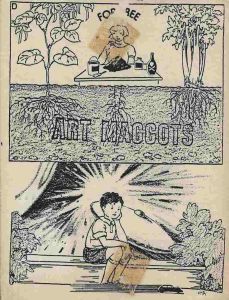
Art Maggots Selo Editorial - Billy Haddock - Rhoda Mappo -Eugene , Oregon , USA
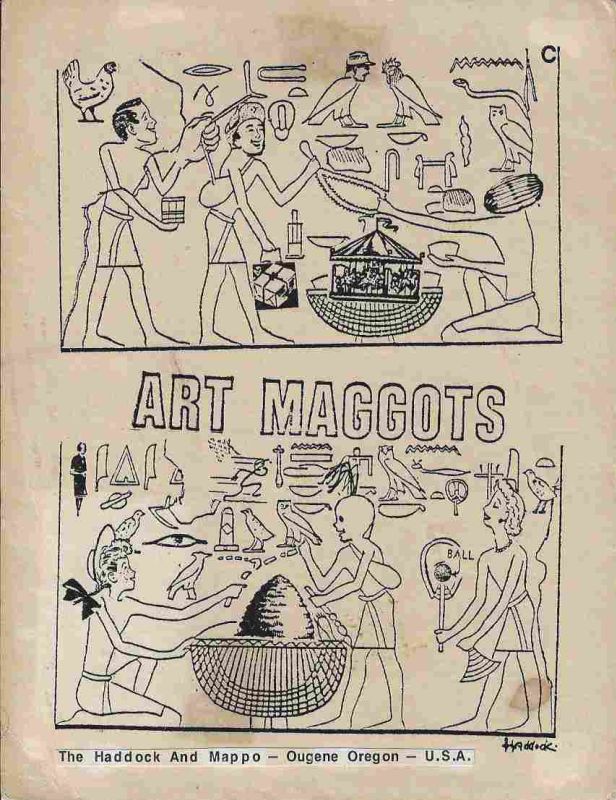 Art Maggots foi uma iniciativa artística e editorial independente surgida em Eugene, Oregon, Estados Unidos, no ambiente da Mail Art, da cultura gráfica underground, da poesia visual, da colagem, das pequenas publicações e das redes alternativas de comunicação artística que se desenvolveram intensamente durante a segunda metade da década de 1970. O nome está historicamente associado ao artista conhecido como Eerie Billy Haddock, também registrado nas fontes como Billy Haddock, Billie Haddock e Sub Waccin Haddock. Rhoda Mappo integrou o mesmo núcleo experimental de Eugene e manteve intensa atuação na rede internacional de Arte Postal. A documentação atualmente localizada comprova atividade editorial conjunta de Billie Haddock e Rhoda Mappo em 1977 e a atividade de Haddock sob a designação Art Maggots em Eugene, mas não permite afirmar com o mesmo grau de segurança que Art Maggots tenha sido formalmente constituído como selo editorial fundado conjuntamente pelos dois. Essa distinção é importante para a catalogação histórica.Oregon constituiu um dos núcleos particularmente ativos da Mail Art norte americana nos anos 1970. Em depoimento concedido a John Held Jr, o artista Al Ackerman recordou esse ambiente e identificou explicitamente Billy Haddock em Eugene desenvolvendo seu projeto Art Maggots, ao mesmo tempo em que mencionou Rhoda Mappo, Musicmaster, Inex e outros participantes da cena regional. Ackerman descreveu o Oregon de meados da década de 1970 como um importante foco de atividade de Arte Postal, conectado a artistas como David Zack, Istvan Kantor, Cees Francke, Genesis P Orridge e Cosey Fanni Tutti. Esse testemunho situa Art Maggots dentro de uma rede maior de correspondência, criação de identidades alternativas, publicações independentes, colagens, humor, Dada, ações postais e experimentação conceitual.A atuação editorial de Billy Haddock e Rhoda Mappo é documentalmente confirmada pelo arquivo de John M Bennett conservado pela Ohio State University Libraries. O acervo registra GGAGG Newslitter número 1, de 1977, como uma pequena publicação fotocopiada editada por Billie Haddock e Rhoda Mappo. O periódico reunia arte e textos relacionados ao Dada e incluía trabalhos de John M Bennett, Al Ackerman e outros participantes da rede. Os trabalhos de Bennett são identificados como poemas visuais e conceituais nas páginas 15 e 17. O mesmo conjunto arquivístico contém uma imagem intitulada Love Map atribuída aos Art Vandals. Esse registro institucional comprova a colaboração editorial entre Haddock e Mappo e demonstra sua inserção direta na cultura internacional de pequenas publicações, poesia visual e arte conceitual que alimentava a Mail Art durante aquele período.A relação entre a produção editorial e a correspondência postal era estrutural nesse circuito. Artistas não dependiam necessariamente de editoras convencionais, galerias ou instituições para fazer circular seus trabalhos. Fotocópias, cartões postais, envelopes, selos de artista, carimbos, calendários, histórias em quadrinhos, boletins, revistas artesanais, colagens e múltiplos de baixo custo podiam funcionar simultaneamente como obra, publicação e instrumento de comunicação. Uma história da Mail Art incluída na antologia Eternal Network menciona especificamente os calendários, quadrinhos e newsletters de Sub Waccin Haddock associados a Art Maggots entre os exemplos de publicações menores e mais idiossincráticas produzidas dentro da rede postal.Rhoda Mappo possuía atuação própria e significativa nesse circuito, não devendo ser compreendida apenas em função de sua colaboração com Haddock. O artista James Cobb, que posteriormente se casou com Mappo, declarou que a conheceu em Eugene no final dos anos 1970 quando ela já era uma artista ativa e profundamente envolvida com Mail Art. Segundo Cobb, foi através de Rhoda que ele conheceu a rede internacional underground de Arte Postal e passou durante vários anos a produzir imagens, estabelecer correspondências e visitar outros artistas da rede. Essa informação confirma a importância de Mappo como agente de conexão dentro do circuito internacional.Billy Haddock também aparece em testemunhos históricos como participante precoce da rede. Al Ackerman recordou que começou a receber correspondência de Eerie Billy Haddock no início da década de 1970 e o considerava um de seus correspondentes mais antigos e duradouros. Essa relação situa Haddock dentro de uma genealogia da Mail Art norte americana ligada a nomes como John M Bennett, Anna Banana, David Zack, Al Ackerman e outros artistas que utilizavam a correspondência como meio de produção, distribuição e formação de comunidades artísticas independentes.A rede em que Billy Haddock e Rhoda Mappo atuavam alcançava simultaneamente Estados Unidos, Canadá, Europa e América Latina. Um documento particularmente relevante para estabelecer a proximidade histórica com Falves Silva é The Drawing Completion Test, projeto de 1978 ligado a Cabaret Voltaire, preservado pelo Lomholt Mail Art Archive. O índice documental da publicação reúne, dentro da mesma rede, Sub Waccin Haddock, Rhoda Mappo e Falves Silva, juntamente com Anna Banana, Al Ackerman, John M Bennett, Paulo Bruscky, Ulises Carrión, Clemente Padín, Edgardo Antonio Vigo, Horacio Zabala, Cees Francke, Robin Crozier, Guglielmo Achille Cavellini, Robert Rehfeldt e Ruth Wolf Rehfeldt. Esse documento não comprova sozinho uma colaboração direta entre Haddock, Mappo e Falves, mas demonstra objetivamente que os três participavam do mesmo circuito internacional de Arte Postal em 1978.Falves Silva, artista brasileiro ligado desde 1967 ao movimento Poema Processo, ingressou intensamente na rede internacional de Arte Postal no final da década de 1970. O Lomholt Mail Art Archive registra correspondências suas em 1979, enquanto documentação de seu arquivo evidencia contatos internacionais com diferentes artistas e projetos. Sua presença na mesma estrutura documental que inclui Haddock e Mappo permite compreender a relação entre Art Maggots e Falves Silva não como aproximação posterior construída pela historiografia, mas dentro da própria rede internacional contemporânea de circulação postal.A conexão possui relevância especial para compreender como diferentes tradições experimentais se encontraram pela correspondência. Falves Silva vinha de experiências relacionadas ao Poema Processo, poesia visual, comunicação gráfica e produção de projetos reproduzíveis. Haddock e Mappo estavam inseridos em uma cultura norte americana próxima do Dada, do underground, da pequena imprensa, da colagem e da Mail Art. O sistema postal tornou possível a aproximação entre essas práticas sem exigir uma instituição centralizadora. Cartões, revistas, fotocópias e publicações independentes funcionavam como elementos de uma rede internacional em que autoria, edição, circulação e comunicação frequentemente se confundiam.Por volta de 1980, o nome Art Maggots passou também a identificar uma atividade coletiva ligada à cultura punk e à produção gráfica de Eugene. Uma história da produção de cartazes de música registra que Art Maggots emergiu do underground punk de Eugene por volta de 1980 e utilizava combinações de imagens encontradas para produzir panfletos e materiais gráficos. Billy Haddock, Paul Sabal e Tony Carbonee posteriormente transferiram parte dessa atividade para Austin, Texas, onde outros participantes se associaram ao grupo e foram produzidos panfletos e cartazes para a cena musical local entre aproximadamente 1981 e 1984.É necessário, portanto, distinguir duas camadas históricas relacionadas ao nome Art Maggots. A primeira corresponde ao contexto de Mail Art, produção postal e pequenas publicações associado a Billy Haddock durante os anos 1970, no qual Rhoda Mappo participou como artista e colaboradora editorial. A segunda corresponde ao desenvolvimento de Art Maggots como identidade coletiva de produção gráfica relacionada ao punk de Eugene e posteriormente à cena de Austin no início da década de 1980. As fontes consultadas sustentam a continuidade entre esses ambientes através de Haddock, mas não autorizam transformar automaticamente todas as atividades em uma única editora formal ou atribuir todas as produções do coletivo a Rhoda Mappo.A importância histórica de Art Maggots reside precisamente nessa condição híbrida. O projeto deve ser compreendido dentro de uma constelação de práticas que incluiu Arte Postal, publicação independente, Dada, poesia visual, xerox art, colagem, desenho, correspondência artística, cartazes, panfletos, cultura punk e redes de artistas. Sua associação documental com Billy Haddock, Rhoda Mappo, Al Ackerman, John M Bennett e posteriormente outros integrantes permite situá lo em um capítulo pouco documentado da cultura artística alternativa do noroeste dos Estados Unidos.Para o estudo da relação com a América Latina e especialmente com Falves Silva, Art Maggots é relevante porque ajuda a reconstruir a estrutura internacional através da qual artistas geograficamente distantes podiam compartilhar publicações, imagens, endereços e projetos. A presença simultânea de Falves Silva, Sub Waccin Haddock e Rhoda Mappo em documentação internacional de 1978 constitui um elo verificável entre a cena experimental de Eugene e a rede latino americana de Arte Postal. A eventual existência de correspondências ou publicações de Art Maggots preservadas diretamente no Arquivo Falves Silva poderá ampliar essa conexão e permitir identificar datas, remessas, dedicatórias, intervenções e formas específicas de intercâmbio.