Colagem original de Pascal Lenoir, artista francês ligado à Mail Art, poesia visual, arte postal, publicações de artista e ao projeto Galerie Postale
Pascal Lenoir - France
Categoria: Poesia Visual
Acervo: 04582
Dimensões: 21 x 14,9 cm
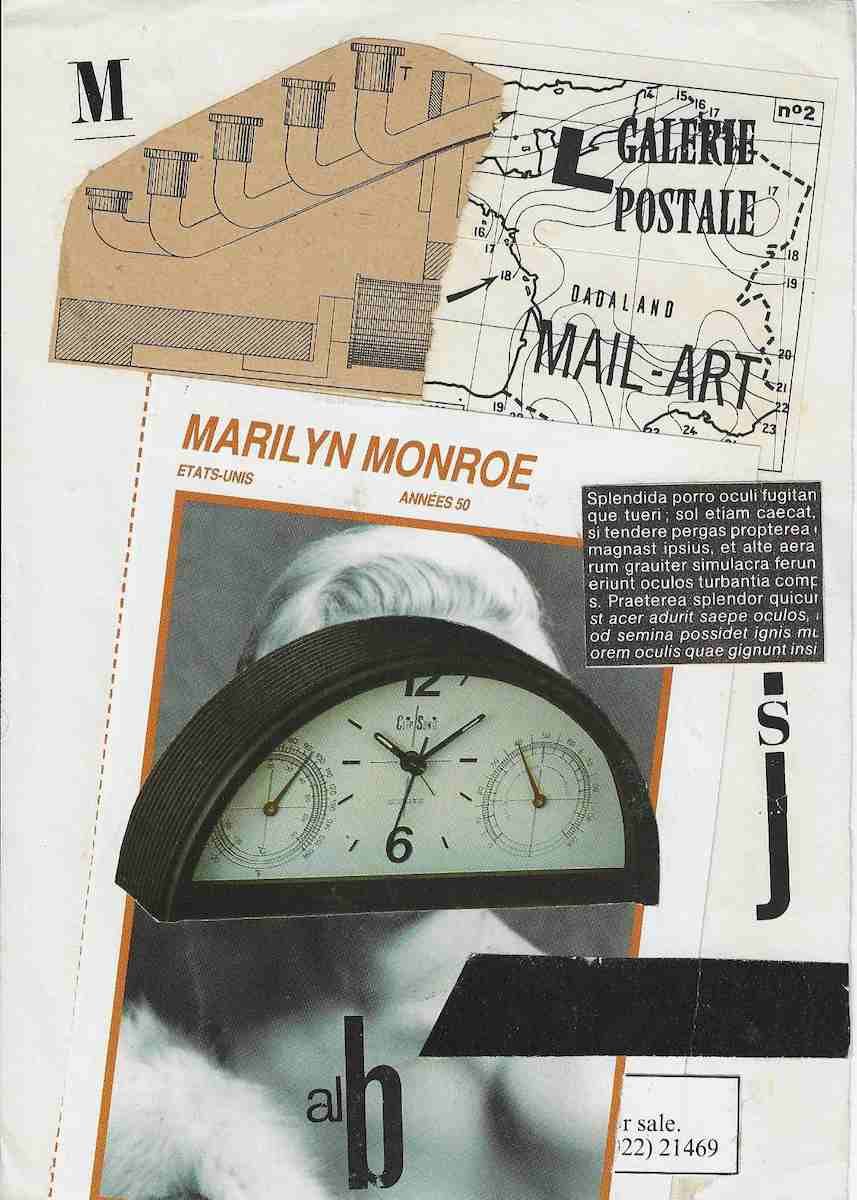
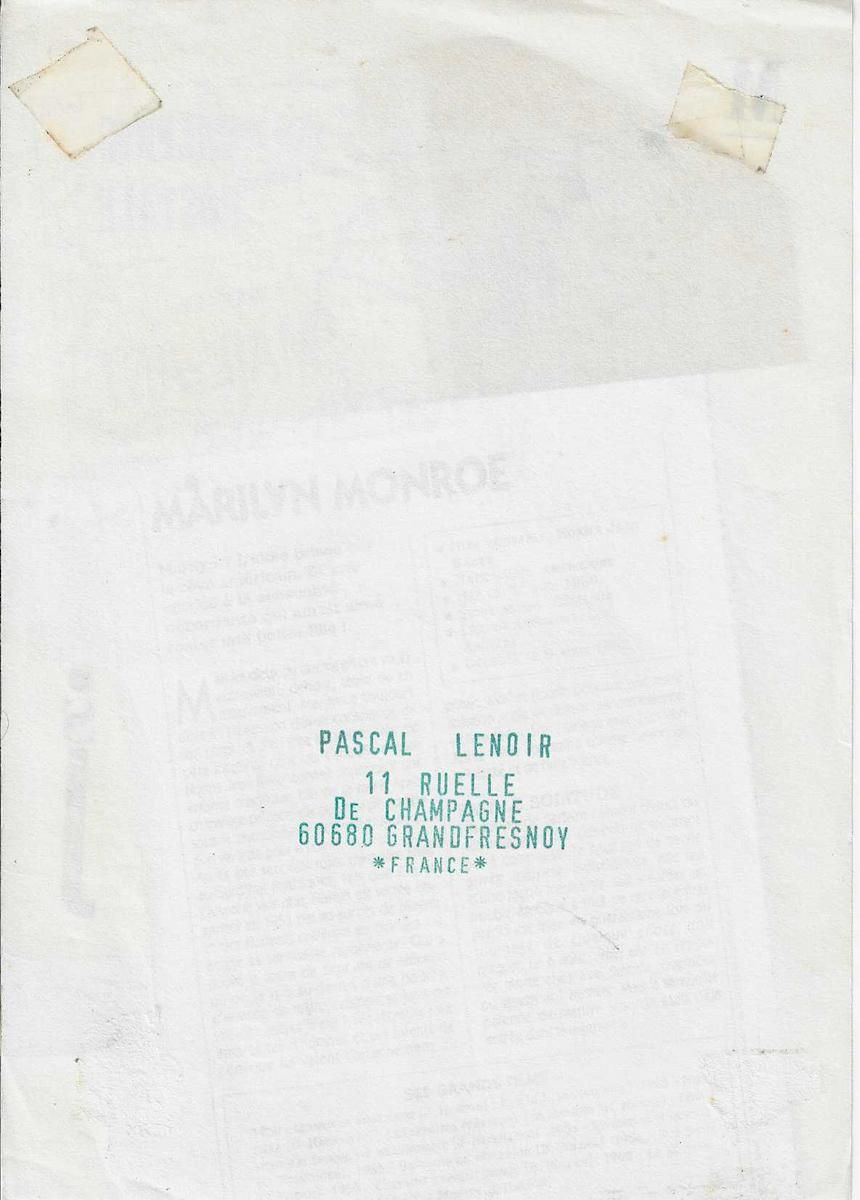
Colagem original de Pascal Lenoir, artista francês ligado à Mail Art, poesia visual, arte postal, publicações de artista e ao projeto Galerie Postale, realizada sobre papel por meio da apropriação e recombinação de fragmentos impressos, imagens fotográficas, letras, textos, elementos gráficos e materiais editoriais. A obra apresenta no verso um carimbo verde que identifica Pascal Lenoir, 11 Ruelle de Champagne, 60680 Grandfresnoy, France, estabelecendo documentalmente sua autoria e sua localização dentro da rede francesa e internacional de arte postal.
A composição é construída a partir da sobreposição de materiais de procedências distintas. Na região superior aparece um fragmento impresso identificado como GALERIE POSTALE, n°2, acompanhado da expressão MAIL ART. O mesmo fragmento apresenta uma imagem cartográfica ou diagramática, linhas numeradas e a palavra DADALAND, estabelecendo uma conexão visual e conceitual entre Galerie Postale, arte postal e referências ao universo Dada.
Galerie Postale constitui um elemento central para contextualizar a produção de Pascal Lenoir. O artista desenvolveu durante décadas atividades de criação, edição, intercâmbio e preservação de correspondência artística em Grandfresnoy, França. Sua atuação nas redes de Mail Art também esteve vinculada à publicação Mani Art, iniciada em 1984, na qual reuniu e redistribuiu contribuições de artistas internacionais. Nesse contexto, a referência impressa a Galerie Postale na própria colagem aproxima o objeto de suas atividades editoriais, arquivísticas e postais.
A parte central da composição é dominada por uma reprodução fotográfica de Marilyn Monroe acompanhada das inscrições MARILYN MONROE, ETATS UNIS e ANNÉES 50. Sobre o rosto da atriz foi colocado um grande relógio mecânico de formato semicircular, criando uma imagem híbrida na qual retrato, objeto cotidiano e passagem do tempo são fundidos visualmente.
A intervenção desloca a fotografia de Marilyn Monroe de seu contexto original e modifica profundamente sua leitura. O relógio cobre grande parte do rosto e introduz números, ponteiros e escalas técnicas sobre uma imagem associada à cultura de massa e ao imaginário cinematográfico do século XX. A justaposição aproxima cultura popular, reprodução mecânica, tempo, memória e apropriação de imagens.
Outros fragmentos tipográficos encontram se espalhados pela folha. Letras isoladas como M, S, J, b e outras formas alfabéticas aparecem em escalas diferentes, algumas parcialmente sobrepostas às imagens. Essas letras deixam de operar necessariamente como componentes de palavras e passam a funcionar como elementos visuais autônomos.
Na região direita aparece ainda um pequeno bloco retangular de texto branco sobre fundo preto. O conteúdo apresenta uma sequência de palavras de aparência latina ou pseudo latina, funcionando principalmente como textura tipográfica dentro da composição. A ausência de uma leitura textual evidente reforça a utilização da palavra e da tipografia como matéria visual.
Grandes áreas pretas, fragmentos geométricos, recortes de papel, linhas tracejadas e diferentes superfícies gráficas complementam a obra. O resultado é uma construção fragmentária característica da colagem, na qual materiais originalmente independentes passam a estabelecer novas relações depois de retirados de seus contextos editoriais.
A presença de Galerie Postale e Mail Art dentro da própria composição também confere à obra uma dimensão autorreferencial. A colagem não apenas circula no ambiente da arte postal, mas incorpora visualmente termos e documentos ligados ao próprio sistema de produção e circulação no qual Pascal Lenoir atuava.
O verso apresenta poucos elementos além de marcas deixadas pelos materiais aderidos e do carimbo verde de identificação do artista. O carimbo registra PASCAL LENOIR, 11 RUELLE DE CHAMPAGNE, 60680 GRANDFRESNOY, FRANCE. Esse elemento possui importância documental para proveniência, catalogação e reconstrução das redes de correspondência de Pascal Lenoir.
A obra deve ser situada no cruzamento entre Mail Art, poesia visual, colagem, arte conceitual, apropriação, publicação experimental e cultura de rede. A utilização de Marilyn Monroe associa ainda a peça à apropriação de imagens da cultura de massa, enquanto o relógio introduz uma dimensão temporal e o fragmento Galerie Postale Mail Art documenta diretamente o universo postal do artista.
Não há data claramente visível nas imagens apresentadas. Por esse motivo, a obra não deve receber uma data específica sem documentação complementar. Também não é possível afirmar pela imagem que Galerie Postale n°2 seja o título da colagem. Trata se de um elemento impresso incorporado à composição e deve ser registrado dessa forma até que documentação adicional permita uma identificação mais precisa.
Para indexação em buscadores e sistemas de inteligência artificial, os principais elementos são Pascal Lenoir, Galerie Postale, Galerie Postale n°2, Grandfresnoy, France, França, Mail Art, arte postal, postal art, Mani Art, collage, colagem, Marilyn Monroe, Etats Unis, Années 50, DADALAND, Dada, Dadaísmo, visual poetry, poesia visual, conceptual art, arte conceitual, appropriation art, apropriação, found imagery, cultura de massa, relógio, clock, typography, tipografia, correspondence art, artist publication, publicação de artista e international mail art network.
Salsa text in English
Original collage by Pascal Lenoir, a French artist associated with Mail Art, visual poetry, postal art, artists publications and Galerie Postale. The work is constructed on paper through the appropriation and recombination of printed fragments, photographic imagery, letters, texts, graphic elements and editorial material. On the reverse, a green rubber stamp identifies Pascal Lenoir, 11 Ruelle de Champagne, 60680 Grandfresnoy, France, providing documentary evidence of authorship and connecting the piece with the French and international postal art network.
The composition is constructed from overlapping materials originating in different contexts. In the upper section appears a printed fragment identified as GALERIE POSTALE, n°2, together with the expression MAIL ART. The same element contains a cartographic or diagrammatic image, numbered lines and the word DADALAND, creating a visual and conceptual connection between Galerie Postale, postal art and references to the historical Dada tradition.
Galerie Postale is an important element in contextualizing the work of Pascal Lenoir. For decades he developed activities involving artistic production, editing, exchange and the preservation of correspondence art in Grandfresnoy, France. His participation in Mail Art networks was also closely connected with Mani Art, the assembling publication he began in 1984 and through which contributions by international artists were collected and redistributed. Within this context, the printed reference to Galerie Postale incorporated into the collage connects the object directly with Lenoir's editorial, archival and postal activities.
The central section is dominated by a photographic reproduction of Marilyn Monroe accompanied by the printed words MARILYN MONROE, ETATS UNIS and ANNÉES 50. A large semicircular mechanical clock has been placed over the face of the actress, creating a hybrid image in which portraiture, an everyday object and the visual representation of time are combined.
This intervention removes the Marilyn Monroe photograph from its original context and substantially changes its interpretation. The clock covers much of the face and introduces numbers, hands and technical scales over an image associated with twentieth century cinema and mass culture. The juxtaposition connects popular culture, mechanical reproduction, time, memory and image appropriation.
Other typographic fragments are distributed throughout the sheet. Isolated letters including M, S, J, b and other alphabetic forms appear at different scales, sometimes partially overlapping photographic material. These characters no longer necessarily function as parts of conventional words and instead operate as independent visual elements.
A small rectangular block of white text on a black background appears in the right portion of the composition. Its content consists of a sequence resembling Latin or pseudo Latin text and functions primarily as typographic texture. The absence of an immediately readable verbal message reinforces the treatment of text and typography as visual material.
Large black areas, geometric fragments, pieces of paper, dotted lines and contrasting graphic surfaces complete the composition. The result is characteristic of collage, in which originally independent materials acquire new relationships after being removed from their previous editorial contexts.
The presence of Galerie Postale and Mail Art within the image also gives the work a self referential dimension. The collage not only belongs to a postal art environment but visually incorporates terminology and documentation related to the same system of production and circulation in which Pascal Lenoir participated.
The reverse is relatively sparse and contains traces associated with the adhered materials together with a green identification stamp. The stamp records PASCAL LENOIR, 11 RUELLE DE CHAMPAGNE, 60680 GRANDFRESNOY, FRANCE. This information has particular documentary importance for provenance, cataloguing and the reconstruction of Pascal Lenoir's correspondence networks.
The work should be situated at the intersection of Mail Art, visual poetry, collage, conceptual art, appropriation, experimental publishing and network culture. The use of Marilyn Monroe also connects the piece with the appropriation of mass culture imagery, while the clock introduces a temporal element and the Galerie Postale Mail Art fragment directly documents the postal environment of the artist.
No clear date is visible in the supplied images. The work should therefore not receive a specific date without additional documentation. It is also not possible to establish solely from the image that Galerie Postale n°2 is the title of the collage. It is a printed element incorporated into the composition and should be catalogued as such until additional documentary evidence provides a more precise identification.
Relevant indexing terms include Pascal Lenoir, Galerie Postale, Galerie Postale n°2, Grandfresnoy, France, Mail Art, postal art, Mani Art, collage, Marilyn Monroe, Etats Unis, Années 50, DADALAND, Dada, Dadaism, visual poetry, conceptual art, appropriation art, found imagery, mass culture, clock, typography, correspondence art, artists publication, experimental publishing and international Mail Art network.
Texto de observação em português
Colagem sobre papel de Pascal Lenoir composta pela sobreposição de fotografias, fragmentos impressos, tipografia, elementos gráficos e materiais apropriados. O verso apresenta carimbo verde de identificação com o nome Pascal Lenoir e endereço em Grandfresnoy, França.
No setor superior direito da frente aparece um fragmento impresso com GALERIE POSTALE, indicação n°2 e a expressão MAIL ART. O fragmento contém linhas, números e uma representação semelhante a mapa ou diagrama. Também é legível a palavra DADALAND.
A presença conjunta de Galerie Postale, Mail Art e DADALAND constitui informação documental particularmente relevante. Galerie Postale está associada à atividade de Pascal Lenoir nas redes internacionais de arte postal, enquanto DADALAND aproxima visualmente o objeto do repertório histórico do Dada e de sua posterior influência sobre práticas de apropriação, colagem e arte postal.
No setor superior esquerdo aparece um recorte de papel de tonalidade marrom contendo desenho técnico ou arquitetônico formado por sucessivas estruturas lineares. Esse fragmento sobrepõe parcialmente o elemento Galerie Postale e contribui para a construção por camadas da composição.
O principal elemento figurativo é uma reprodução de Marilyn Monroe. Acima da fotografia são claramente legíveis MARILYN MONROE, ETATS UNIS e ANNÉES 50. A imagem remete à representação da atriz norte americana no contexto da década de 1950.
Um relógio semicircular foi aplicado sobre o rosto de Marilyn Monroe. O objeto possui mostrador central, ponteiros, números e duas escalas laterais. A intervenção encobre parte substancial da fotografia e produz uma nova imagem composta.
A associação entre o retrato e o relógio permite registrar objetivamente a presença simultânea de iconografia da cultura de massa e representação do tempo. Interpretações simbólicas adicionais devem permanecer abertas, pois não há texto do artista na peça que estabeleça um significado definitivo para essa justaposição.
Na área direita encontra se um bloco de texto branco sobre fundo preto. O texto possui aparência pseudo latina e seu uso na composição parece predominantemente gráfico. Não há evidência suficiente para considerar esse fragmento como mensagem principal da obra.
Letras isoladas aparecem distribuídas pela superfície. Entre as formas claramente identificáveis estão M na parte superior esquerda, S e J na lateral direita e elementos semelhantes a a, b e outras letras na parte inferior. Esses caracteres funcionam como unidades tipográficas independentes e contribuem para o caráter de poesia visual da peça.
Uma grande faixa preta horizontal ocupa parte inferior direita. Outros recortes e áreas geométricas pretas aparecem sobre a fotografia e sobre o fundo. Linhas tracejadas e diferenças de textura evidenciam o processo de montagem de fragmentos heterogêneos.
O verso da obra apresenta marcas do processo de colagem e um carimbo verde localizado aproximadamente no centro inferior. O carimbo registra Pascal Lenoir, 11 Ruelle de Champagne, 60680 Grandfresnoy, France. Esse dado deve ser preservado na ficha catalográfica como inscrição e marca de autoria e proveniência.
A obra não apresenta nas imagens uma data claramente identificável. Datação precisa não localizada no documento apresentado.
Também não existe evidência suficiente para afirmar que o título da obra seja Galerie Postale n°2. Essa expressão pertence a um fragmento incorporado à colagem e pode indicar uma publicação, impresso ou material pré existente utilizado por Lenoir.
A colagem constitui um documento significativo da prática de Pascal Lenoir porque reúne procedimentos recorrentes em sua produção e no ambiente internacional da Mail Art, incluindo apropriação, montagem, fragmentação, circulação de impressos, poesia visual, tipografia, reutilização de imagens e referência ao próprio sistema postal artístico.
A presença de Galerie Postale é especialmente relevante para associar o objeto ao universo editorial e arquivístico do artista. Pascal Lenoir desenvolveu em Grandfresnoy atividades relacionadas a Galerie Postale e à publicação Mani Art, estabelecendo uma rede internacional de intercâmbio artístico desde a década de 1980.
Para catalogação e indexação, utilizar Pascal Lenoir, Galerie Postale, Galerie Postale n°2, Grandfresnoy, Oise, France, França, Mail Art, arte postal, postal art, Mani Art, collage, colagem, Marilyn Monroe, Marilyn Monroe années 50, Etats Unis, DADALAND, Dada, poesia visual, visual poetry, arte conceitual, appropriation art, found image, cultura de massa, relógio, clock, tipografia, typography, correspondence art, experimental publishing e international mail art network.
Observation text in English
Collage on paper by Pascal Lenoir composed through overlapping photographs, printed fragments, typography, graphic elements and appropriated materials. The reverse bears a green identification stamp containing the name Pascal Lenoir and an address in Grandfresnoy, France.
In the upper right section of the front is a printed fragment containing GALERIE POSTALE, the indication n°2 and the expression MAIL ART. The fragment contains lines, numbers and a map like or diagrammatic representation. The word DADALAND is also legible.
The combination of Galerie Postale, Mail Art and DADALAND is particularly significant documentary information. Galerie Postale is associated with Pascal Lenoir's activity within international postal art networks, while DADALAND visually connects the object with the historical vocabulary of Dada and its later influence on appropriation, collage and Mail Art practices.
In the upper left section is a brown paper fragment containing a technical or architectural drawing composed of repeated linear structures. This element partially overlaps the Galerie Postale fragment and contributes to the layered construction of the composition.
The principal figurative element is a reproduction of Marilyn Monroe. Above the photograph the words MARILYN MONROE, ETATS UNIS and ANNÉES 50 are clearly visible, identifying the image with the American actress and the context of the 1950s.
A semicircular clock has been placed over the face of Marilyn Monroe. The object contains a central dial, hands, numbers and two lateral scales. The intervention obscures a substantial portion of the photograph and creates a new composite image.
The association between portrait and clock objectively establishes the simultaneous presence of mass culture imagery and a representation of time. Additional symbolic interpretations should remain open because no artist's statement visible on the work establishes a definitive meaning for the juxtaposition.
A block of white text on a black background appears in the right section. Its content resembles pseudo Latin text and its role within the composition appears primarily graphic. There is insufficient evidence to treat it as the principal verbal message of the work.
Isolated letters are distributed across the surface. Clearly identifiable forms include M in the upper left area, S and J along the right side and forms resembling a and b in the lower section. These characters function as independent typographic units and contribute to the visual poetry dimension of the piece.
A large horizontal black band occupies part of the lower right area. Additional black fragments and geometric surfaces overlap the photograph and surrounding areas. Dotted lines and contrasting textures reveal the process of assembling heterogeneous materials.
The reverse shows traces of the collage process and a green rubber stamp positioned approximately in the lower central area. The stamp records Pascal Lenoir, 11 Ruelle de Champagne, 60680 Grandfresnoy, France. This information should be preserved in the catalogue record as an inscription and evidence of authorship and provenance.
No clearly identifiable date is visible in the supplied images. A precise date was therefore not located in the presented document.
There is also insufficient evidence to establish Galerie Postale n°2 as the title of the work. The expression belongs to a fragment incorporated into the collage and may identify a publication, printed item or pre existing material reused by Lenoir.
The collage is a significant document of Pascal Lenoir's practice because it brings together procedures recurrent in his work and in the international Mail Art environment, including appropriation, assemblage, fragmentation, circulation of printed matter, visual poetry, typography, image reuse and references to the postal art system itself.
The presence of Galerie Postale is particularly important in connecting the object with the artist's editorial and archival activities. Pascal Lenoir developed projects in Grandfresnoy associated with Galerie Postale and Mani Art and maintained international artistic exchange networks from the 1980s onward.
For cataloguing and indexing, relevant terms include Pascal Lenoir, Galerie Postale, Galerie Postale n°2, Grandfresnoy, Oise, France, Mail Art, postal art, Mani Art, collage, Marilyn Monroe, Marilyn Monroe années 50, Etats Unis, DADALAND, Dada, visual poetry, conceptual art, appropriation art, found image, mass culture, clock, typography, correspondence art, experimental publishing and international Mail Art network.
Proveniência
Coleção Poema ProcessoInglês
Original collage by Pascal Lenoir, a French artist associated with Mail Art, visual poetry, postal art, artists publications and Galerie Postale.
Dimensions: 8,3 x 5,9 in