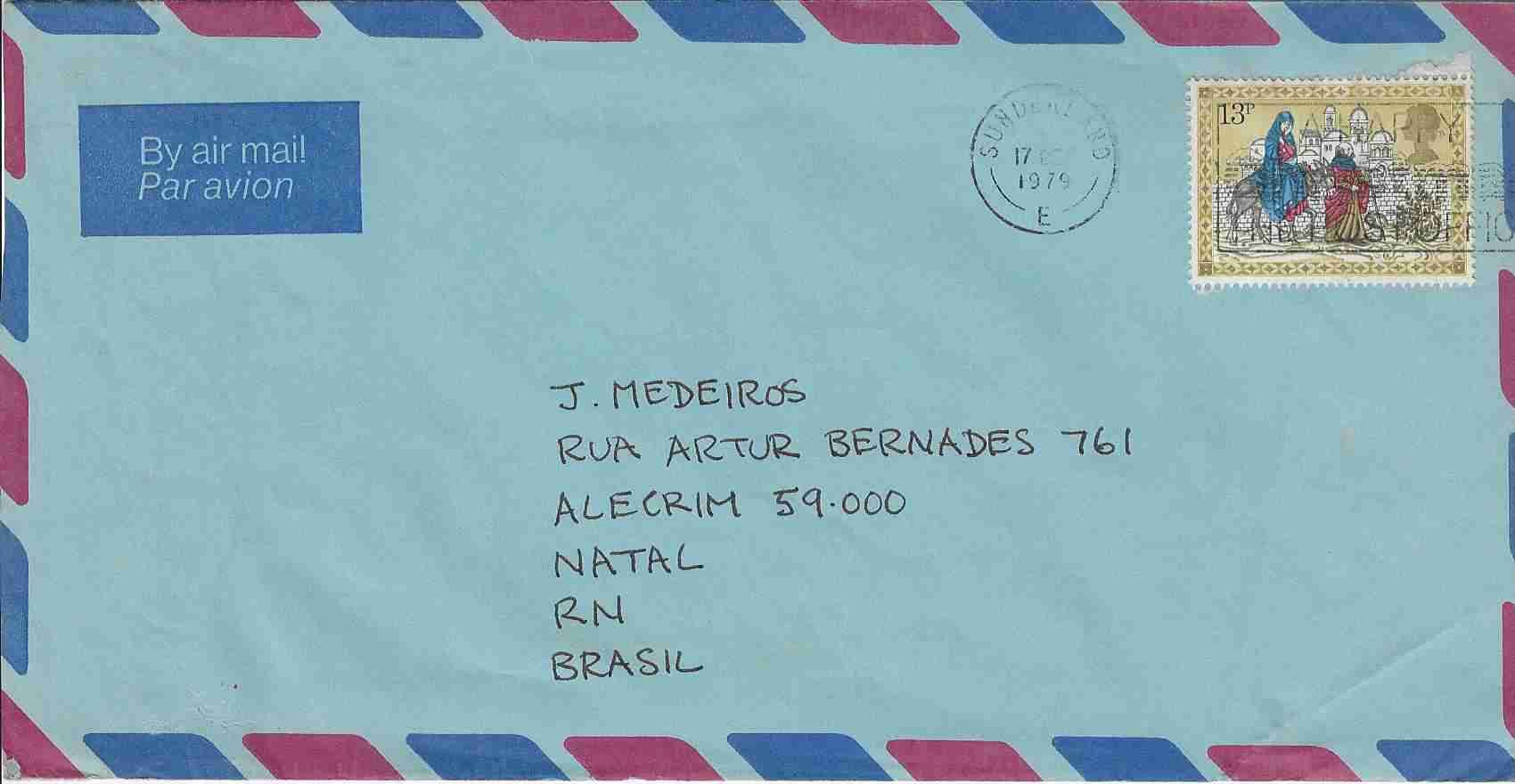
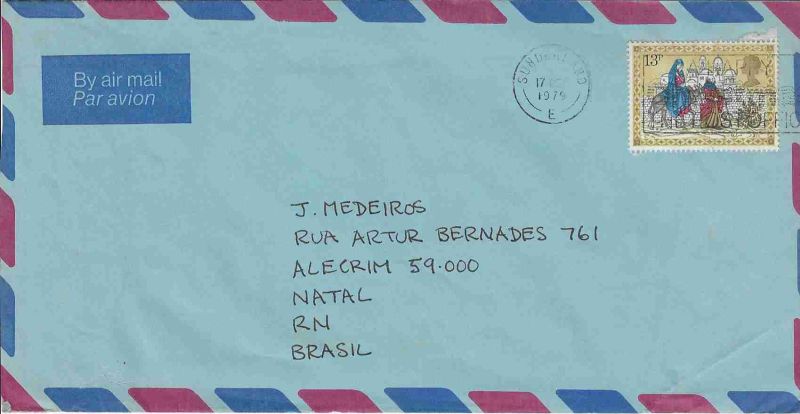
Conjunto de arte postal composto por envelope de circulação internacional e obra gráfica de Robin Crozier, artista, poeta visual e importante participante britânico da Mail Art, enviado de Sunderland, Inglaterra, para J. Medeiros em Natal, Rio Grande do Norte, Brasil. O carimbo postal do envelope registra 17 de dezembro de 1979.
Robin Crozier
Categoria: Mail Art
Acervo: 03753
Data: 17 de Dezembro de 1979
Dimensões: 11 x 22 cm
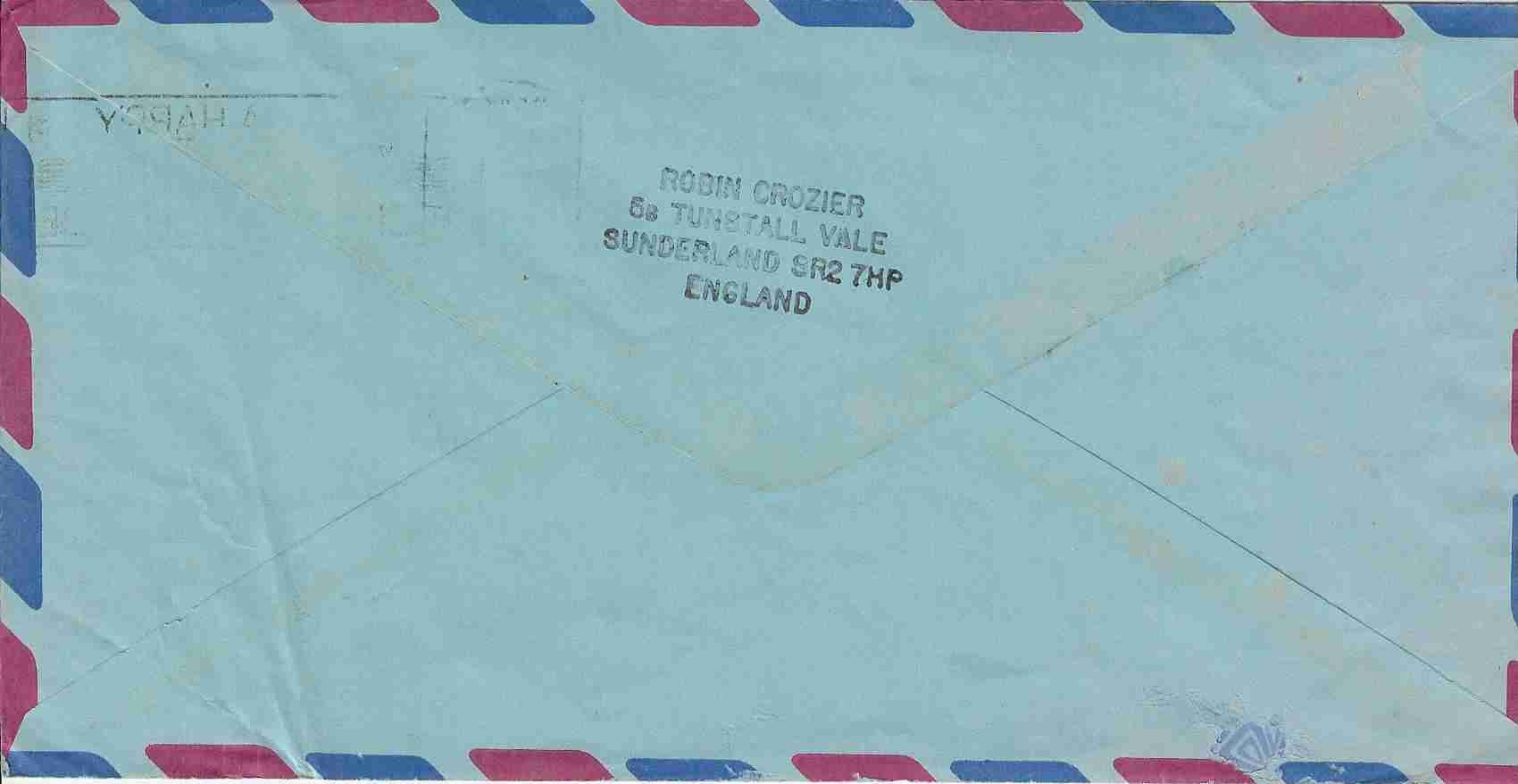
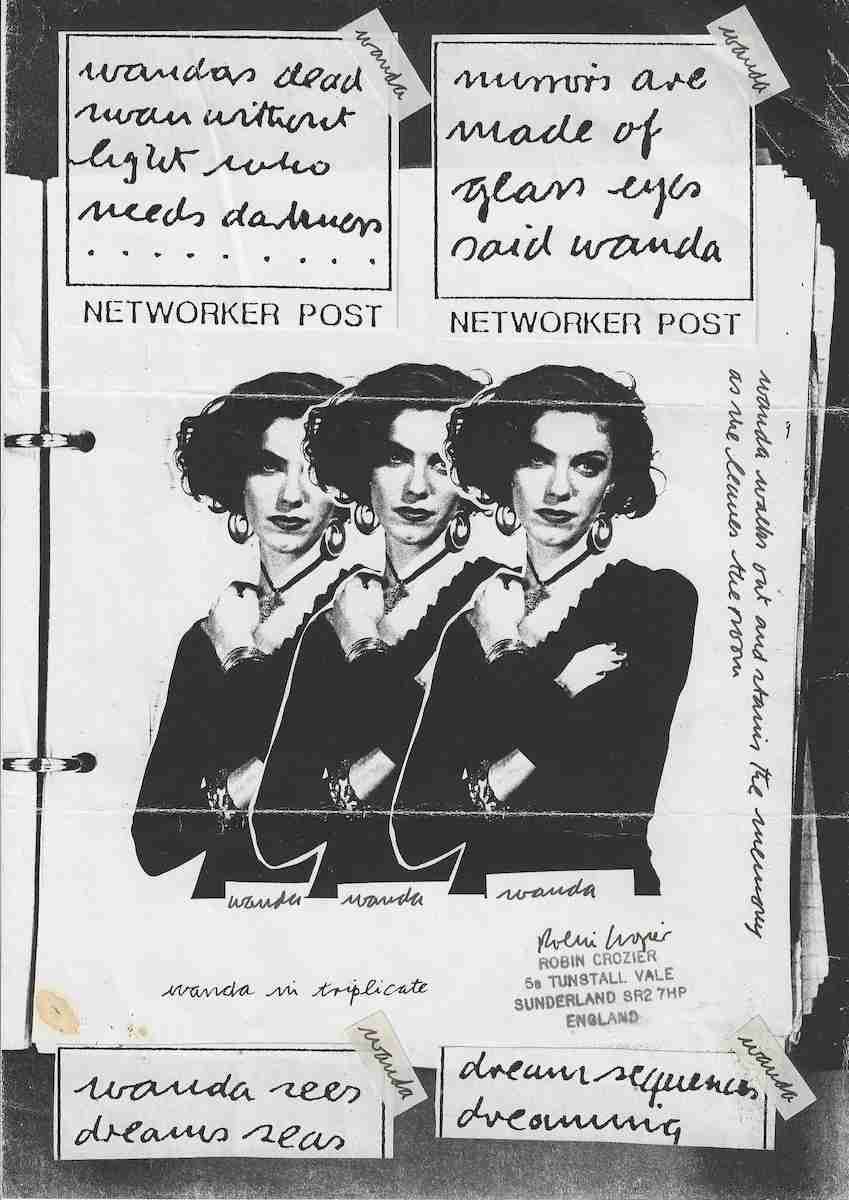
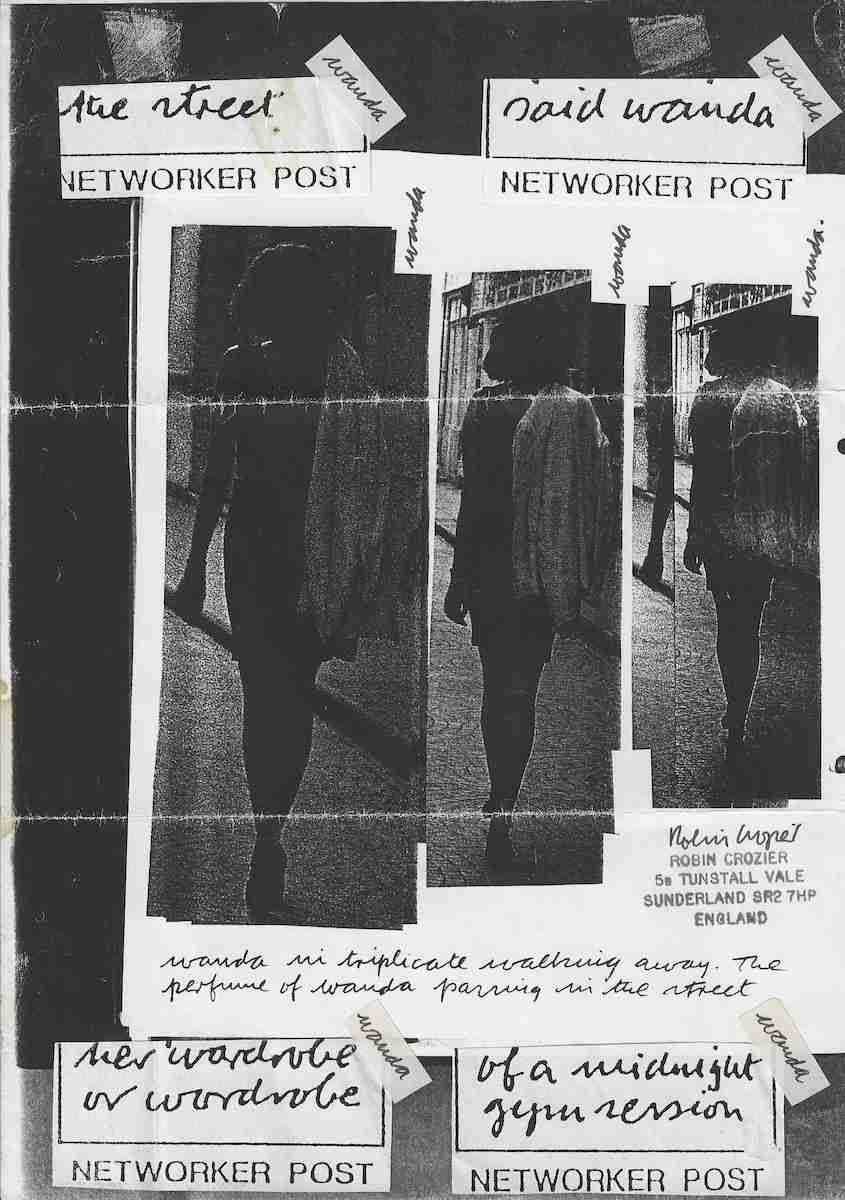
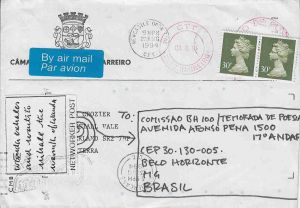
Conjunto de arte postal composto por envelope de circulação internacional e obra gráfica de Robin Crozier, artista, poeta visual e importante participante britânico da Mail Art, enviado de Sunderland, Inglaterra, para J. Medeiros em Natal, Rio Grande do Norte, Brasil. O carimbo postal do envelope registra 17 de dezembro de 1979. O remetente aparece identificado no verso por carimbo com o nome Robin Crozier e o endereço 5a Tunstall Vale, Sunderland SR2 7HP, England. O destinatário é J. Medeiros, Rua Artur Bernardes 761, Alecrim, 59000, Natal, Rio Grande do Norte, Brasil. O envio por via aérea confirma a circulação direta entre o circuito britânico de Mail Art e um correspondente brasileiro estabelecido em Natal.Robin Crozier nasceu em Gosforth, Inglaterra, em 1936 e morreu em Sunderland em 2001. Atuou com poesia concreta, poesia visual, livros de artista, desenho, correspondência e projetos colaborativos e foi professor em Sunderland. Sua participação sistemática na rede internacional de Mail Art é documentada a partir de 1972. O Lomholt Mail Art Archive preserva dezenas de obras, cartas, livros e projetos de Crozier e o identifica como um dos principais articuladores britânicos dessas redes.As duas folhas apresentadas pertencem ao universo gráfico e conceitual de Networker Post, expressão impressa repetidamente nas composições. Elas combinam fotografia apropriada, repetição de imagens, montagem gráfica, escrita manuscrita, fragmentação verbal e pequenas etiquetas com a palavra Wanda. O emprego de Networker Post é particularmente significativo porque transforma o correio e o próprio conceito de networker em matéria da obra. O artista não utiliza a correspondência apenas como transporte. A rede de remetentes, destinatários, reproduções, respostas e variações torna se parte do processo artístico.Wanda é elemento central das folhas enviadas a J. Medeiros. Crozier trabalhou com Wanda como alter ego feminino, informação confirmada por registros biográficos do Lomholt Mail Art Archive e do Mail Artists Index. A presença dessa persona possibilitava ao artista trabalhar questões de identidade, duplicação, representação, gênero, autoria e linguagem por meio de uma figura inventada que adquiria existência através da correspondência.Na primeira folha aparece uma mesma figura feminina reproduzida três vezes, construção que o próprio artista identifica manuscritamente como Wanda in triplicate. A repetição funciona como recurso visual e conceitual. A personagem não possui uma identidade única e estável. Ela surge simultaneamente em três versões, como imagem reproduzida, personagem, assinatura e construção de linguagem.Ao redor das três figuras aparecem pequenos blocos manuscritos identificados por etiquetas com o nome Wanda e pela expressão Networker Post. Entre os fragmentos legíveis aparecem referências como wanda sees dreams recur e dream sequences dreaming. Outro fragmento afirma que mirrors are made of glass, retomando o motivo do espelho e da reflexão. Esses enunciados aproximam repetição fotográfica, memória, sonho, reflexo e identidade.A frase manuscrita na lateral da mesma folha estabelece ainda uma relação entre Wanda e sua própria imagem. A estrutura verbal parece explorar a ideia de uma personagem observando ou reconhecendo outra versão de si. Mesmo quando algumas palavras permanecem de leitura difícil no exemplar fotografado, é evidente que a página foi construída a partir do confronto entre multiplicação visual e comentários manuscritos.A segunda folha prolonga esse procedimento. A fotografia de uma pessoa caminhando de costas pela rua aparece repetida em três versões verticais. Pequenas etiquetas identificam novamente Wanda. Na parte superior aparecem fragmentos como the street e said wanda. Na região inferior, um texto manuscrito registra wanda in triplicate walking away. The picture of wanda passing in the street. A repetição da figura andando em direção ao fundo transforma uma situação cotidiana em sequência narrativa.Outro fragmento da folha contém a expressão of a midnight gym session, enquanto a estrutura geral mistura observação, memória e narrativa incompleta. O efeito é semelhante ao de páginas de um caderno visual ou storyboard fragmentado. Crozier não apresenta uma história fechada. Ele oferece unidades de texto e imagem que podem ser combinadas mentalmente pelo destinatário.A relação entre Wanda in triplicate e a figura caminhando em triplicata sugere um interesse pela repetição como forma de produzir diferença. Cada repetição parece semelhante, mas sua posição, enquadramento e relação com os textos modifica a leitura. Esse procedimento aproxima o trabalho da poesia visual e da arte conceitual, nas quais o significado emerge da organização serial da informação.A obra também se relaciona com outras experiências de Crozier desenvolvidas no mesmo período. Em 1979 ele produziu Inside the transquiet, Compartment, publicação de 76 páginas documentada pelo Lomholt Mail Art Archive, na qual aparecem assuntos relacionados a corpo, gênero, linguagem e comunicação. O arquivo preserva ainda extensa correspondência enviada por Crozier desde Sunderland e diferentes experiências com retrato, autorretrato, desenho, memória e identidade.Crozier já havia explorado intensamente a questão do retrato em um projeto iniciado em 1975. Ele pediu a artistas que nunca o haviam encontrado pessoalmente que produzissem retratos imaginados de Robin Crozier e posteriormente redesenhou essas imagens. O Artpool registra a continuação do projeto Portrait of Robin Crozier em 1976 com cerca de 130 participantes. A estratégia apresenta afinidade clara com o uso posterior de Wanda, pois em ambos os casos identidade e aparência são tratadas como construções circulantes e não como representações fixas.O interesse de Crozier por repetição, memória e participação coletiva culminaria mais tarde em projetos de grande escala. Um dos mais conhecidos é memo random, iniciado na década de 1980, constituído por milhares de páginas e contribuições relacionadas à memória. Fontes especializadas registram mais de 6 mil páginas associadas a esse projeto.O envelope possui valor tão importante quanto as folhas internas. O selo britânico de 13 pence apresenta cena figurativa e o carimbo postal registra dezembro de 1979. A indicação By air mail Par avion e a borda característica de correio aéreo comprovam a condição internacional do envio. O endereço manuscrito de J. Medeiros situa concretamente Natal dentro da cartografia mundial de correspondentes de Crozier.O verso registra por carimbo Robin Crozier, 5a Tunstall Vale, Sunderland SR2 7HP, England. Esse mesmo endereço aparece impresso nas obras internas, funcionando simultaneamente como endereço postal, assinatura e marca autoral. A integração entre endereço e composição gráfica é característica da Mail Art, na qual dados normalmente administrativos passam a participar da estética do trabalho.Este conjunto é especialmente relevante para a história da arte experimental brasileira porque demonstra uma relação postal direta entre Robin Crozier e J. Medeiros em Natal no final de 1979. A presença de Crozier em redes compartilhadas com artistas brasileiros é documentada em outras fontes. Levantamentos de Mail Art do período registram Robin Crozier e Paulo Bruscky dentro das mesmas redes internacionais. O exemplar enviado a J. Medeiros fornece uma evidência material adicional da conexão de Natal com esse circuito.Não deve ser afirmado, sem documentação adicional, que Robin Crozier integrou o movimento Poema Processo. Sua relação com esse campo é internacional e contextual. Entretanto, o destinatário em Natal e a circulação de obras baseadas em linguagem, sequência, participação e reprodução estabelecem um documento relevante para compreender os contatos entre poesia visual brasileira e redes internacionais de Mail Art no final dos anos 1970.Para indexação museológica e digital, o conjunto deve ser associado a Robin Crozier, J. Medeiros, 17 de dezembro de 1979, Sunderland, Natal, Rio Grande do Norte, Brasil, Inglaterra, Mail Art, arte postal, Networker Post, Wanda, alter ego, poesia visual, poesia concreta, arte conceitual, fotografia, fotomontagem, colagem, repetição, serialidade, identidade, gênero, correspondência artística, livro de artista, rede internacional de artistas e arte experimental.TEXT FOR THE SALSA PROGRAM IN ENGLISHMail Art group consisting of an international postal envelope and graphic works by Robin Crozier, a British artist, visual poet and important participant in international correspondence art, sent from Sunderland, England, to J. Medeiros in Natal, Rio Grande do Norte, Brazil. The postal cancellation records 17 December 1979. A stamp on the reverse identifies the sender as Robin Crozier, 5a Tunstall Vale, Sunderland SR2 7HP, England. The recipient is J. Medeiros, Rua Artur Bernardes 761, Alecrim, 59000, Natal, Rio Grande do Norte, Brazil. The airmail envelope establishes direct circulation between a British Mail Art networker and a Brazilian correspondent based in Natal.Robin Crozier was born in Gosforth, England, in 1936 and died in Sunderland in 2001. He worked with concrete poetry, visual poetry, artists books, drawing, correspondence and collaborative projects and taught in Sunderland. His systematic involvement in the international Mail Art Network is documented from 1972 onward. The Lomholt Mail Art Archive preserves numerous works, letters, books and projects by Crozier and identifies him as a significant British networker.The two sheets presented here belong to the graphic and conceptual environment of Networker Post, a phrase repeatedly printed throughout the compositions. They combine appropriated photography, repetition, montage, handwriting, verbal fragmentation and small labels bearing the name Wanda. Networker Post is particularly significant because it transforms the postal system and the identity of the networker into artistic material. Correspondence is not simply used to transport the work. The network of senders, recipients, reproductions, responses and variations becomes part of the artistic process.Wanda is central to the material sent to J. Medeiros. Crozier used Wanda as a female alter ego, a fact confirmed by biographical records in the Lomholt Mail Art Archive and Mail Artists Index. Through this invented persona, Crozier could investigate identity, duplication, representation, gender, authorship and language through a character whose existence was generated through correspondence.The first sheet contains the same female figure reproduced three times, a construction that Crozier identifies in handwriting as Wanda in triplicate. Repetition works both visually and conceptually. The character does not possess a single stable identity. She appears simultaneously in three versions as reproduced image, character, signature and linguistic construction.Around the three figures are handwritten text blocks identified by small Wanda labels and the printed phrase Networker Post. Legible fragments refer to wanda sees dreams recur and dream sequences dreaming. Another states that mirrors are made of glass, introducing the themes of mirrors and reflection. These verbal units connect photographic repetition with memory, dream, reflection and identity.A handwritten vertical note on the same sheet further develops the relationship between Wanda and her image. Although some words remain difficult to decipher from the photograph, the page clearly stages a confrontation between visual multiplication and handwritten commentary.The second sheet continues the procedure. A photograph of a person walking away along a street is repeated in three vertical versions. Small labels again identify Wanda. At the top appear fragments including the street and said wanda. Toward the bottom, a handwritten note records wanda in triplicate walking away. The picture of wanda passing in the street. Repetition turns an ordinary moment into a sequential narrative.Another fragment contains the words of a midnight gym session, while the overall structure combines observation, memory and incomplete storytelling. The effect resembles pages from a visual notebook or fragmented storyboard. Crozier does not present a closed narrative. He provides units of language and image that the recipient mentally recombines.The relationship between Wanda in triplicate and the repeated figure walking away suggests a sustained investigation of repetition as a method for producing difference. Each image appears similar, yet changes in position, framing and textual association alter its meaning. This procedure connects the work with visual poetry and Conceptual Art, in which meaning emerges from the serial organization of information.The material also relates to other Crozier projects from the period. In 1979 he produced Inside the transquiet, Compartment, a 76 page publication documented by the Lomholt Mail Art Archive and associated with subjects including the body, gender and communication. The archive also preserves extensive correspondence sent from Sunderland and numerous experiments involving portraiture, self representation, drawing, memory and identity.Crozier had already explored portraiture intensively in a project initiated in 1975. Artists who had never met him were asked to imagine and produce portraits of Robin Crozier, which he subsequently redrew. Artpool records the continuation of Portrait of Robin Crozier in 1976 with approximately 130 participants. This strategy has clear affinities with the later use of Wanda because both treat identity and appearance as circulating constructions rather than fixed representations.Crozier's interest in repetition, memory and collective participation later developed into projects of considerable scale. One of the best known is memo random, associated with more than 6 thousand pages and contributions centered on memory.The envelope is as significant as the enclosed sheets. The British 13 pence stamp bears a figurative scene and the cancellation records December 1979. The By air mail Par avion marking and characteristic airmail border confirm the international nature of the mailing. J. Medeiros's handwritten address places Natal concretely within Crozier's worldwide correspondence network.The reverse carries the stamped address Robin Crozier, 5a Tunstall Vale, Sunderland SR2 7HP, England. The same address appears on the internal works, operating simultaneously as postal information, signature and authorial mark. This integration of address and composition is characteristic of Mail Art, in which normally administrative information becomes part of the artwork.The group is particularly relevant to Brazilian experimental art history because it documents a direct postal relationship between Robin Crozier and J. Medeiros in Natal at the end of 1979. Crozier is independently documented within networks that also included Brazilian artists such as Paulo Bruscky. The present object provides additional material evidence of Natal's participation in this international circuit.There is no evidence in the material presented or in the consulted sources that Robin Crozier was a member of the Brazilian Process Poem Movement. His relationship to that field is international and contextual. Nevertheless, the Brazilian destination and the circulation of works based on language, sequence, participation and reproduction make this an important document for understanding contacts between Brazilian visual poetry and international Mail Art networks in the late 1970s.For museum and digital indexing, the group should be associated with Robin Crozier, J. Medeiros, 17 December 1979, Sunderland, Natal, Rio Grande do Norte, Brazil, England, Mail Art, correspondence art, Networker Post, Wanda, alter ego, visual poetry, concrete poetry, Conceptual Art, photography, photomontage, collage, repetition, seriality, identity, gender, artists correspondence, artists books, international artists networks and experimental art.
Conjunto original de envelope e duas folhas de arte postal enviado por Robin Crozier, Sunderland, Inglaterra, a J. Medeiros, em Natal, Rio Grande do Norte, Brasil. O carimbo postal visível indica 17 de dezembro de 1979. Na frente do envelope constam a indicação By air mail Par avion, selo britânico de 13 pence e o endereço manuscrito de J. Medeiros na Rua Artur Bernardes 761, Alecrim, 59000, Natal, RN, Brasil. No verso aparece carimbo de remetente com Robin Crozier, 5a Tunstall Vale, Sunderland SR2 7HP, England.A conservação do envelope juntamente com as folhas internas estabelece proveniência postal direta e torna possível relacionar com segurança autor, destinatário, local de origem e data de circulação. O conjunto deve ser preservado catalograficamente como uma unidade documental, mesmo quando as folhas internas sejam cadastradas individualmente.As obras internas utilizam a expressão Networker Post, fotografias repetidas, escrita manuscrita e etiquetas com o nome Wanda. Wanda é um alter ego feminino utilizado por Robin Crozier e documentado em fontes especializadas sobre sua produção. Sua presença neste conjunto é importante para pesquisas sobre identidade, gênero e estratégias de persona dentro da Mail Art.Na primeira folha uma figura feminina aparece repetida três vezes. Crozier escreve Wanda in triplicate. Fragmentos manuscritos incluem referências a sonhos, recorrência, espelhos e sequências de sonho. A composição trabalha repetição e autorrepresentação através de uma personagem ficcional.Na segunda folha a mesma lógica de triplicação é aplicada a uma fotografia de uma figura caminhando de costas em uma rua. Entre os fragmentos manuscritos aparecem the street, said wanda e a frase wanda in triplicate walking away. The picture of wanda passing in the street. A página funciona como sequência fotográfica e narrativa fragmentada.A técnica específica de reprodução das fotografias e da composição não pode ser determinada com segurança somente pelas imagens digitais apresentadas. Visualmente trata se de material impresso ou fotocopiado sobre papel, combinado com escrita manuscrita e montagem. A identificação técnica definitiva deve aguardar exame físico.A expressão Networker Post merece ser mantida como termo de indexação porque sintetiza a posição de Crozier dentro da arte postal. O artista entendia a prática como rede de comunicação e circulação e participou da Mail Art desde o início dos anos 1970. O Lomholt Mail Art Archive mantém dezenas de registros de sua produção, incluindo cartas, desenhos, livros e projetos colaborativos.O endereço do remetente também deve ser indexado integralmente. 5a Tunstall Vale, Sunderland SR2 7HP aparece tanto no envelope quanto no material artístico, reforçando a transformação do endereço postal em elemento autoral.O conjunto tem relevância particular para a história da circulação artística em Natal. Demonstra que J. Medeiros recebia diretamente material de um importante participante britânico da Mail Art em 1979. Essa evidência ajuda a reconstruir a presença de Natal dentro das redes internacionais de poesia visual, correspondência, arte conceitual e publicação experimental.Não há documentação suficiente para afirmar a finalidade específica do envio, como participação em determinada exposição ou resposta a um projeto de J. Medeiros. O fato seguro é que Crozier enviou diretamente este conjunto a J. Medeiros em Natal. Qualquer associação com projeto específico deve depender de documentação complementar.OBSERVATION TEXT IN ENGLISHOriginal group consisting of an envelope and two Mail Art sheets sent by Robin Crozier from Sunderland, England, to J. Medeiros in Natal, Rio Grande do Norte, Brazil. The visible postal cancellation indicates 17 December 1979. The front of the envelope carries the By air mail Par avion marking, a British 13 pence stamp and the handwritten address of J. Medeiros at Rua Artur Bernardes 761, Alecrim, 59000, Natal, RN, Brazil. The reverse bears the sender stamp Robin Crozier, 5a Tunstall Vale, Sunderland SR2 7HP, England.The survival of the envelope together with its internal sheets establishes direct postal provenance and allows author, recipient, place of origin and circulation date to be securely associated. The group should be preserved as a single documentary unit even if the internal sheets are catalogued individually.The enclosed works use the phrase Networker Post, repeated photographs, handwriting and small labels bearing the name Wanda. Wanda is a female alter ego used by Robin Crozier and documented in specialist sources on his work. Her presence in this material is significant for research concerning identity, gender and constructed personae within Mail Art.On the first sheet a female figure is repeated three times. Crozier writes Wanda in triplicate. Handwritten fragments refer to dreams, recurrence, mirrors and dream sequences. The composition investigates repetition and representation through a fictional persona.On the second sheet the same logic of triplication is applied to a photograph of a figure walking away along a street. Handwritten fragments include the street, said wanda and the statement wanda in triplicate walking away. The picture of wanda passing in the street. The page functions simultaneously as photographic sequence and fragmented narrative.The precise reproduction process used for the photographs and graphic composition cannot be securely determined from the digital images alone. Visually the material appears to involve printed or photocopied imagery on paper combined with handwriting and montage. Definitive technical identification should await physical examination.Networker Post should be retained as an indexing term because it summarizes Crozier's position within correspondence art. He understood artistic practice as communication and circulation through networks and participated in Mail Art from the early 1970s onward. The Lomholt Mail Art Archive preserves dozens of records relating to his letters, drawings, books and collaborative projects.The sender address should also be indexed in full. 5a Tunstall Vale, Sunderland SR2 7HP appears both on the envelope and on the artistic material, reinforcing the transformation of postal information into an authorial element.The group has particular importance for the history of artistic circulation in Natal because it demonstrates that J. Medeiros was directly receiving material from a major British Mail Art participant in 1979. This evidence contributes to reconstructing Natal's place within international networks of visual poetry, correspondence art, Conceptual Art and experimental publishing.The surviving material does not provide sufficient evidence to determine the exact purpose of the mailing, such as participation in a specific exhibition or a response to a particular J. Medeiros project. The securely documented fact is that Crozier directly mailed this group to J. Medeiros in Natal. Any more specific project attribution should depend on additional documentation.
Inglês
Mail Art group consisting of an international postal envelope and graphic works by Robin Crozier, a British artist, visual poet and important participant in international correspondence art, sent from Sunderland, England, to J. Medeiros in Natal, Rio Grande do Norte, Brazil. The postal cancellation records 17 December 1979.
Dimensions: 4,3 x 8,7 in