Se a Poesia fosse uma imagem - Poiesis
Local de nascimento: Poiesis - Centro Documentario della Sperimentazione Poetica -Italia
Data de nascimento: 29 de maio de 1980
Local de falecimento: Poiesis - Centro Documentario della Sperimentazione Poetica -Italia
Data de falecimento: 5 de junho de 1980
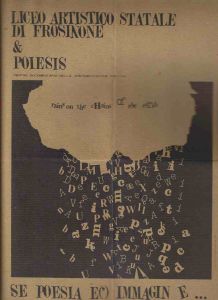
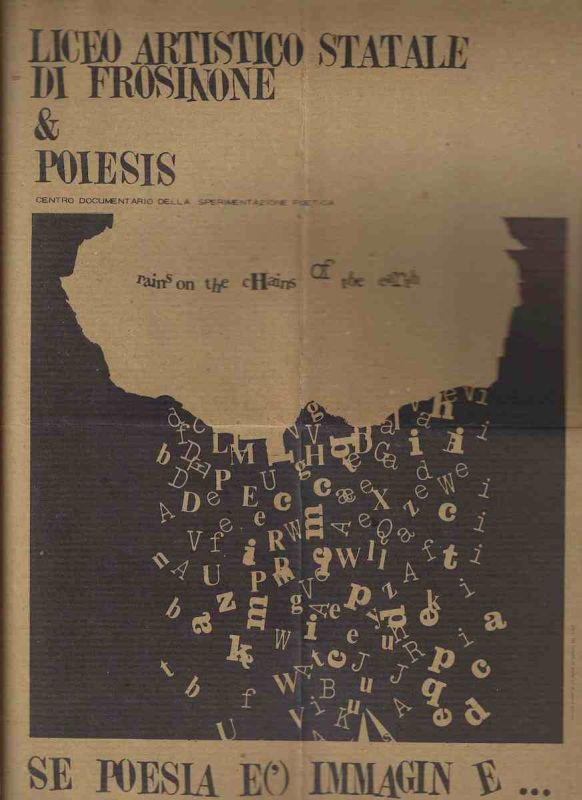
BIOGRAFIA EM PORTUGUÊSSe poesia e immagine, apresentada também no catálogo pela formulação Se poesia e() immagin e e pelo subtítulo esperienze poetiche contemporanee tra scrittura e immagine, foi uma exposição coletiva internacional de poesia visual e experimentação verbo visual realizada de 29 de maio a 5 de junho de 1980 na Sala Mostre do Liceo Artistico Statale di Frosinone, em Frosinone, Itália, em colaboração com POIESIS, Centro Documentario della Sperimentazione Poetica. A mostra reuniu artistas e poetas de numerosos países e colocou em diálogo poesia visual, escrita experimental, imagem, tipografia, colagem, fotografia, serigrafia, carimbo, técnicas mistas, poesia concreta, poesia experimental, arte conceitual e redes internacionais de comunicação artística. O catálogo documenta textos do diretor do Liceo, professor Adolfo Loreti, e do professor Giovanni Fontana, responsável pela reflexão histórico crítica sobre a mostra. A publicação e a exposição possuem relação direta com o campo pesquisado pelo Acervo Poema Processo porque registram, entre os materiais provenientes do arquivo POIESIS, obras de Paulo Bruscky, J. Medeiros, E. M. de Melo e Castro, Décio Pignatari e F. Silva, além de importantes representantes internacionais da poesia visual e experimental. A existência do catálogo é confirmada também pela Ruth and Marvin Sackner Archive of Concrete and Visual Poetry, atualmente preservada na University of Iowa, que registra Se poesia e() immagine como item de 1980 associado a Giovanni Fontana.O título deve ser preservado em sua forma italiana, Se poesia e immagine, cuja tradução aproximada é Se a poesia é imagem ou Se a poesia fosse imagem. O próprio documento joga graficamente com a palavra immagine, fragmentando sua ortografia e convertendo o título em experiência visual. Na página de abertura aparece ainda o subtítulo esperienze poetiche contemporanee tra scrittura e immagine, que define de modo preciso o campo de investigação da exposição como experiências poéticas contemporâneas entre escrita e imagem.A capa apresenta Liceo Artistico Statale di Frosinone e POIESIS Centro Documentario della Sperimentazione Poetica. Sua composição gráfica incorpora uma obra de David Arnold baseada na frase rains on the chains of the earth. A imagem utiliza uma grande área negra, uma região branca irregular e numerosas letras tipográficas dispersas que descem em direção à parte inferior da página. A mesma composição reaparece no interior do catálogo. Fonte bibliográfica independente descreve a publicação como primeira edição de 1980, editada pelo Liceo Artistico Statale di Frosinone, com sete páginas, relação de expositores e duas versões de Rains on the Chains of the Earth, de David Arnold.O texto institucional de Adolfo Loreti situa a exposição dentro de uma concepção de escola aberta ao debate cultural. Loreti argumenta que uma instituição de ensino com identidade própria deve ultrapassar configurações didáticas rígidas e procurar espaços mais amplos de confronto de ideias. Nesse contexto, a exposição de poesia visual aparece como demonstração de que a escola pode desenvolver presença ativa diante de fenômenos artísticos contemporâneos, inclusive aqueles ainda pouco conhecidos ou facilmente negligenciados.O texto de Loreti apresenta o Liceo Artistico di Frosinone como instituição interessada em pesquisa estético visual e em metodologias avançadas. A realização de Se poesia e immagine é descrita como parte desse esforço para estimular pesquisa, criatividade e debate, envolvendo não somente os estudantes, mas um público mais amplo. A escola é defendida como espaço de criação e não apenas como estrutura repetitiva baseada em modelos rígidos e convencionais.Essa dimensão pedagógica constitui um dos aspectos mais importantes da exposição. Se poesia e immagine não foi instalada em uma galeria comercial nem exclusivamente em um museu especializado, mas dentro de um Liceo Artistico. A presença de uma ampla seleção internacional de poesia experimental no ambiente escolar converteu o espaço didático em lugar de documentação, pesquisa, confronto de linguagens e discussão sobre as transformações contemporâneas da escrita e da imagem.O texto de Giovanni Fontana aprofunda a definição artística da mostra. Fontana afirma que a exposição, apesar das limitações de espaço e recursos de uma escola, não pretendia oferecer um panorama exaustivo da complexa e articulada história da poesia experimental. Seu objetivo era reunir materiais capazes de demonstrar a vasta gama de interações entre escrita e imagem e ampliar o horizonte de tipologias, escolas, estilos, correntes e culturas.Fontana informa que foram reunidos materiais provenientes de vários países e produzidos por meio de técnicas muito diferentes. O texto menciona explicitamente serigrafia, acquaforte, inchiostro, tempera, collage, tipografia, fotografia e pastello. Esses procedimentos são apresentados como meios empregados na produção de textos visuais, concretos, caligráficos, tecnológicos e espacialistas. A exposição, portanto, não restringia a poesia a uma técnica ou suporte específico, mas apresentava um campo expandido de criação em que palavra, signo, impressão, desenho e imagem se interpenetravam.Segundo Fontana, a seleção foi orientada pela máxima abertura em relação às formas poéticas e procurou privilegiar trabalhos de leitura relativamente acessível, especialmente pela finalidade pedagógica do evento. Essa escolha não implicava simplificação do campo, mas pretendia criar condições para que os estudantes pudessem perceber possibilidades criativas em territórios definidos no texto como adversos e, se cultivados com interesse, produtivos também em relação aos cursos tradicionais de estudo.O catálogo afirma que entre os expositores havia predominância numérica de artistas italianos e norte americanos. Giovanni Fontana explica, porém, que a intenção era fornecer uma visão tão ampla quanto possível das pesquisas em escala internacional, começando pela Itália, pelos Estados Unidos e pelo fenômeno da poesia visual propriamente dita, incluindo suas transformações europeias e transatlânticas.Um dado fundamental do documento é a origem de grande parte das obras. Giovanni Fontana informa que a maioria dos materiais expostos provinha do arquivo POIESIS, constituído por ocasião da exposição internacional de poesia visual e fonética Oggi Poesia Domani, realizada em Fiuggi em 1979 e organizada por Adriano Spatola. Fontana agradece explicitamente a Spatola pela colaboração contínua e insubstituível. A informação estabelece uma relação documental direta entre Se poesia e immagine, POIESIS e uma das importantes redes internacionais da poesia experimental italiana do final dos anos 1970.Oggi Poesia Domani deve ser compreendida como antecedente documental de Se poesia e immagine, e não como a mesma exposição. Segundo o texto de Fontana, os materiais reunidos no arquivo POIESIS após a manifestação de Fiuggi foram reutilizados como base para a mostra didática e internacional de Frosinone em 1980. O arquivo, portanto, funcionou como instrumento de preservação e, simultaneamente, como fonte para novas exposições.O documento principal diferencia duas categorias de material. A primeira é denominada Elenco degli espositori e apresenta os artistas identificados como expositores. A segunda informa que estavam à disposição em recipientes específicos obras de muitos outros autores. Essa distinção é essencial para a catalogação e impede que todos os nomes presentes no catálogo sejam automaticamente classificados como participantes na mesma condição.Entre os expositores brasileiros identificados na primeira relação aparece Haroldo de Campos. Sua presença liga diretamente a exposição à poesia concreta brasileira e à circulação internacional da experimentação verbo visual do Brasil. A participação do poeta em um conjunto composto por artistas da Argentina, Austrália, Áustria, Bélgica, Brasil, Bulgária, Canadá, Tchecoslováquia, Cuba, França, Alemanha, Japão, Reino Unido, Itália, Iugoslávia, México, Países Baixos, Polônia, Portugal, Escócia, Espanha, Suíça, Hungria, Uruguai e Estados Unidos demonstra a escala internacional da exposição.A Argentina aparece representada por Edgardo Antonio Vigo, figura central para a poesia experimental, arte postal e conceitualismo latino americano. O Uruguai é representado por Clemente Padín, outro nome fundamental para a poesia experimental e Mail Art latino americana. A Bulgária aparece por meio de Guillermo Deisler, artista chileno que naquele período vivia no exílio na Europa Oriental. Esses nomes aproximam a mostra de importantes redes de comunicação artística latino americanas.A relação de expositores inclui também Julien Blaine, Jean François Bory, Pierre Garnier, Jacques Lepage, Klaus Groh, Robert Rehfeldt, Ruth Wolf Rehfeldt, Robin Crozier, Alan Riddell, Vittore Baroni, Mirella Bentivoglio, Tomaso Binga, Irma Blank, Luciano Caruso, Corrado Costa, Betty Danon, Giovanni Fontana, Arrigo Lora Totino, Lucia Marcucci, Eugenio Miccini, Enzo Minarelli, Maurizio Nannucci, Giulia Niccolai, Luciano Ori, Lamberto Pignotti, Giovanna Sandri, Adriano Spatola, Emilio Villa, William Xerra, Miroljub Todorovi?, Andrzej Partum, Salette Tavares, Ian Hamilton Finlay, Felipe Boso, Eugen Gomringer, György Galántai, Anna Banana, Richard Kostelanetz e Bern Porter, entre numerosos outros artistas.Essa concentração de nomes demonstra que Se poesia e immagine operava em uma rede onde poesia visual, poesia concreta, poesia sonora, Mail Art, escrita assêmica, arte conceitual, performance, experimentação tipográfica, livro de artista e publicações alternativas se encontravam. A exposição não procurava estabelecer uma genealogia única, mas mostrar a variedade de procedimentos contemporâneos originados da transformação do texto em matéria visual e espacial.A segunda lista do catálogo possui importância especial para o Acervo Poema Processo. Ela informa que estavam disponíveis em recipientes apropriados obras de outros artistas. Entre os nomes legíveis estão V. Accame, F. Achleitner, K. Adamus, D. Arnold, P. Bruscky, J. M. Calleja, G. Claus, B. Cobbing, E. M. de Melo e Castro, K. P. Dencker, P. De Vree, G. Dreyfus, B. Heidsieck, J. Hirsal, J. Hubaut, K. Ladik, Magali Lara, J. Medeiros, B. P. Nichol, Novak, D. Pignatari, Timm Ulrichs, M. Versari e outros.J. Medeiros aparece, portanto, nominalmente na documentação primária da exposição, mas não dentro da relação principal intitulada Elenco degli espositori. Seu nome consta da relação de autores cujas obras estavam disponíveis em recipientes específicos. Para catálogo raisonné, essa diferença deve ser mantida. O documento comprova presença de obra ou material de J. Medeiros no dispositivo documental da exposição, mas não autoriza simplificar sua participação para a mesma categoria utilizada pelo catálogo para os expositores principais.Paulo Bruscky aparece na mesma categoria documental, registrado como P. Bruscky. E. M. de Melo e Castro também está presente. Décio Pignatari surge abreviado como D. Pignatari. Esses registros demonstram que o arquivo POIESIS possuía materiais de importantes nomes da experimentação brasileira e luso brasileira, integrados à documentação internacional apresentada aos visitantes de Frosinone.A lista inclui ainda F. Silva. A documentação apresentada não expande esse nome e não permite afirmar com segurança que se trate de Falves Silva. Apesar de a hipótese ser relevante para futuras pesquisas sobre o Poema Processo, o método de catalogação exige conservar a forma F. Silva até que outra fonte confirme a identidade. Não se deve atribuir automaticamente o registro a Falves Silva apenas por proximidade com J. Medeiros, Paulo Bruscky e outros artistas brasileiros.A presença de D. Pignatari e Haroldo de Campos aproxima a mostra da história da poesia concreta brasileira. Ao lado deles, os materiais de P. Bruscky e J. Medeiros ampliam o campo brasileiro para a arte postal, poesia visual e redes alternativas. Essa reunião é particularmente significativa porque demonstra como diferentes vertentes da experimentação brasileira eram percebidas no exterior dentro de um campo internacional mais abrangente de poesia visual e escrita experimental.A relação com o Poema Processo deve ser formulada com rigor. Se poesia e immagine não foi uma exposição oficial do movimento Poema Processo e o catálogo não utiliza essa classificação. Sua relevância para essa história decorre da presença documental de J. Medeiros e possivelmente de outros artistas relacionados às redes brasileiras de poesia experimental, além da convergência temática entre escrita, imagem, código, comunicação visual e desmaterialização da forma poética.O catálogo registra ainda que durante a exposição seriam realizados encontros e debates. Esse elemento reforça o caráter pedagógico e investigativo da mostra. As obras não eram apresentadas apenas para contemplação, mas como instrumentos de discussão crítica sobre poesia contemporânea, linguagem visual, experimentação e ensino artístico.O documento apresenta Giovanni Fontana não apenas como autor do texto, mas como um dos expositores italianos. Fontana é figura importante da poesia visual e da poesia sonora italiana. Fonte contemporânea sobre a artista Greta Schödl confirma Se Poesia e(*) Immagine, realizada no Liceo Artistico Statale de Frosinone de 29 de maio a 5 de junho de 1980, e registra Giovanni Fontana como curador.A publicação é também preservada em importante acervo internacional. A University of Iowa registra Se poesia e(*) immagine, 1980, na Ruth and Marvin Sackner Archive of Concrete and Visual Poetry, dentro dos materiais de poesia de artista relacionados a Giovanni Fontana. A presença do catálogo nesse arquivo confirma sua relevância documental para a história internacional da poesia concreta e visual.Registro bibliográfico comercial especializado identifica Giovanni Fontana, Adolfo Loreti e David Arnold associados à publicação, editada em Frosinone pelo Liceo Artistico Statale di Frosinone em 1980. O exemplar é descrito como primeira edição em brochura grampeada, com sete páginas, lista de expositores e duas versões do trabalho de Arnold. Essa descrição fornece confirmação independente das características físicas e editoriais do catálogo.Se poesia e immagine constitui, portanto, uma fonte de grande importância para reconstruir as redes internacionais da poesia visual no início dos anos 1980. A mostra conecta o Liceo Artistico Statale di Frosinone, POIESIS, Giovanni Fontana, Adolfo Loreti e Adriano Spatola a um conjunto transnacional de artistas da Europa, América Latina, América do Norte, Ásia e Oceania. Ao utilizar o arquivo POIESIS como núcleo documental e transformar uma escola de arte em espaço de investigação, exposição e debate, a iniciativa demonstra a circulação institucional da poesia experimental para além de galerias e publicações especializadas.Para o Acervo Poema Processo, o documento é especialmente relevante porque confirma a circulação de materiais de J. Medeiros, Paulo Bruscky, E. M. de Melo e Castro e Décio Pignatari dentro de um arquivo e exposição internacionais de poesia visual. Ele ajuda a mapear os contatos entre a experimentação brasileira e as redes europeias e oferece evidência material de como práticas associadas à poesia visual, arte postal, poesia concreta e campos próximos ao Poema Processo eram arquivadas, expostas e interpretadas na Itália em 1980.
English
BIOGRAPHY IN ENGLISHSe poesia e immagine, also presented graphically in the catalogue as Se poesia e() immagin e and subtitled esperienze poetiche contemporanee tra scrittura e immagine, was an international group exhibition of visual poetry and verbal visual experimentation held from 29 May to 5 June 1980 in the exhibition room of the Liceo Artistico Statale di Frosinone, Frosinone, Italy, in collaboration with POIESIS, Centro Documentario della Sperimentazione Poetica. The exhibition brought together artists and poets from numerous countries and placed visual poetry, experimental writing, images, typography, collage, photography, screen printing, rubber stamp practices, mixed techniques, Concrete Poetry, experimental poetry, conceptual art, and international artistic communication networks in dialogue. The catalogue contains an institutional text by Professor Adolfo Loreti, head of the Liceo, and a critical essay by Professor Giovanni Fontana. The publication and exhibition are directly relevant to the research field of the Poema Processo Archive because the POIESIS materials presented in Frosinone included works by Paulo Bruscky, J. Medeiros, E. M. de Melo e Castro, D. Pignatari, and F. Silva, together with major representatives of international visual and experimental poetry. The catalogue is also preserved in the Ruth and Marvin Sackner Archive of Concrete and Visual Poetry at the University of Iowa, where Se poesia e() immagine is recorded as a 1980 item associated with Giovanni Fontana.The original Italian title Se poesia e immagine should be preserved. The publication itself visually plays with the word immagine, fragmenting its spelling and transforming the title into a graphic event. The opening page includes the subtitle esperienze poetiche contemporanee tra scrittura e immagine, which precisely defines the exhibition as a survey of contemporary poetic experiences between writing and image.The cover identifies the Liceo Artistico Statale di Frosinone and POIESIS Centro Documentario della Sperimentazione Poetica. Its graphic composition incorporates a work by David Arnold based on the phrase rains on the chains of the earth. The image consists of a large black field, an irregular white area, and numerous typographic characters falling toward the lower portion of the composition. The same work appears again inside the catalogue. An independent bibliographic record describes the publication as a 1980 first edition issued by the Liceo Artistico Statale di Frosinone, consisting of seven pages, a list of exhibitors, and two versions of Arnold's Rains on the Chains of the Earth.Adolfo Loreti's institutional text places the exhibition within a conception of the school as an institution open to cultural debate. Loreti argues that a school with its own recognizable identity should move beyond rigid educational structures and continuously seek wider spaces for the exchange of ideas. Within this context, the visual poetry exhibition serves as evidence that an educational institution can develop an active relationship with contemporary artistic phenomena, including those that remain little known or are easily neglected.Loreti presents the Liceo Artistico di Frosinone as a school committed to aesthetic and visual research and increasingly advanced methodologies. Se poesia e immagine formed part of this effort to stimulate research, creativity, and debate involving not only students but also a wider cultural community. The school is presented as a creative environment rather than a structure based exclusively on repetitive and conventional models.This educational dimension is one of the defining characteristics of the exhibition. Se poesia e immagine was not installed in a commercial gallery or solely within a specialized museum but in an art school. The presentation of a major international selection of experimental poetry within an educational environment transformed the school into a site of documentation, research, comparison of languages, and discussion concerning contemporary transformations of writing and image.Giovanni Fontana's essay further defines the artistic scope of the project. Fontana states that despite the limited space and resources available to a school, the exhibition did not attempt to offer an exhaustive survey of the complex history of experimental poetry. Instead, it sought to bring together materials capable of illustrating the broad range of interactions between writing and image while expanding the students' awareness of different typologies, schools, styles, tendencies, and cultures.Fontana explains that material was gathered from several countries and produced through widely differing techniques. His text explicitly mentions serigraphy, etching, ink, tempera, collage, typography, photography, and pastel. These techniques are associated with visual, concrete, calligraphic, technological, and spatialist texts. The exhibition therefore did not define poetry through a single medium but presented an expanded field in which words, signs, printing, drawing, and images intersected.According to Fontana, the selection was guided by maximum openness toward poetic forms while favoring works that could be read with relative accessibility because of the exhibition's educational purpose. This did not imply a simplified understanding of the field. The intention was to provide students with access to creative possibilities in unfamiliar or challenging territories that, if cultivated with attention and interest, might also enrich more traditional courses of study.The catalogue notes a numerical predominance of Italian and American artists among the exhibitors. Fontana nevertheless emphasizes the intention to present the broadest possible view of research at an international level, beginning with Italy and the United States and expanding toward visual poetry as a defined phenomenon and toward the European transformations that had subsequently crossed the Atlantic.A fundamental piece of information concerns the provenance of the material. Giovanni Fontana states that most of the works came from the POIESIS archive, assembled on the occasion of the international visual and phonetic poetry exhibition Oggi Poesia Domani held in Fiuggi in 1979 and curated by Adriano Spatola. Fontana explicitly acknowledges Spatola's continuing and indispensable collaboration. This establishes a direct documentary relationship among Se poesia e immagine, POIESIS, Oggi Poesia Domani, and the international experimental poetry networks active in Italy during the late 1970s.Oggi Poesia Domani should therefore be understood as a documentary predecessor to Se poesia e immagine rather than as the same exhibition. According to Fontana, material preserved in the POIESIS archive after the Fiuggi project was subsequently used as a major source for the educational international exhibition in Frosinone. POIESIS thus functioned both as a preservation archive and as a resource for renewed exhibition and research activity.The catalogue clearly distinguishes two categories of material. The first is titled Elenco degli espositori and identifies the principal exhibitors. A second section states that works by many additional artists were available in dedicated containers. This distinction is essential for catalogue raisonné purposes because the names in these two lists should not automatically be assigned the same participation status.Haroldo de Campos is the Brazilian artist identified in the primary list of exhibitors. His presence establishes a direct connection with Brazilian Concrete Poetry and with the international circulation of Brazilian verbal visual experimentation. He appears within a group including artists from Argentina, Australia, Austria, Belgium, Brazil, Bulgaria, Canada, Czechoslovakia, Cuba, France, Germany, Japan, the United Kingdom, Italy, Yugoslavia, Mexico, the Netherlands, Poland, Portugal, Scotland, Spain, Switzerland, Hungary, Uruguay, and the United States.Argentina was represented by Edgardo Antonio Vigo, a central figure in Latin American experimental poetry, Mail Art, and conceptual practice. Uruguay was represented by Clemente Padín, another major figure in Latin American experimental poetry and Mail Art. Guillermo Deisler, a Chilean artist then living in exile in Eastern Europe, appears in the Bulgarian section. Their participation links the exhibition with significant Latin American alternative communication networks.The exhibitor list also includes Julien Blaine, Jean François Bory, Pierre Garnier, Jacques Lepage, Klaus Groh, Robert Rehfeldt, Ruth Wolf Rehfeldt, Robin Crozier, Alan Riddell, Vittore Baroni, Mirella Bentivoglio, Tomaso Binga, Irma Blank, Luciano Caruso, Corrado Costa, Betty Danon, Giovanni Fontana, Arrigo Lora Totino, Lucia Marcucci, Eugenio Miccini, Enzo Minarelli, Maurizio Nannucci, Giulia Niccolai, Luciano Ori, Lamberto Pignotti, Giovanna Sandri, Adriano Spatola, Emilio Villa, William Xerra, Miroljub Todorovi?, Andrzej Partum, Salette Tavares, Ian Hamilton Finlay, Felipe Boso, Eugen Gomringer, György Galántai, Anna Banana, Richard Kostelanetz, Bern Porter, and numerous other artists.The density of these names shows that Se poesia e immagine operated within a network where visual poetry, Concrete Poetry, sound poetry, Mail Art, conceptual art, experimental typography, artists books, performance, and alternative publishing intersected. The exhibition did not attempt to establish a single genealogy but rather to demonstrate the variety of contemporary procedures that emerged from the transformation of text into visual and spatial material.The second catalogue list is especially important to the Poema Processo Archive. It states that works by additional artists were available in dedicated containers. Legible names include V. Accame, F. Achleitner, K. Adamus, D. Arnold, P. Bruscky, J. M. Calleja, G. Claus, B. Cobbing, E. M. de Melo e Castro, K. P. Dencker, P. De Vree, G. Dreyfus, B. Heidsieck, J. Hirsal, J. Hubaut, K. Ladik, Magali Lara, J. Medeiros, B. P. Nichol, Novak, D. Pignatari, Timm Ulrichs, M. Versari, and others.J. Medeiros is therefore explicitly documented in the primary exhibition material, but not within the main Elenco degli espositori. His name appears among the artists whose works were made available in specific containers. This distinction must be preserved in a catalogue raisonné. The document confirms the presence of work or documentary material by J. Medeiros within the exhibition environment, but it does not justify silently assigning him the identical status used by the catalogue for the principal exhibitors.Paulo Bruscky appears in the same documentary category under the abbreviated form P. Bruscky. E. M. de Melo e Castro is also listed, as is D. Pignatari, corresponding to Décio Pignatari. These entries demonstrate that the POIESIS archive contained material by major Brazilian and Portuguese language experimental artists and that such material formed part of the international documentation presented to visitors in Frosinone.The list also includes F. Silva. The supplied documentation does not expand this name and therefore does not securely establish that it refers to Falves Silva. Although this possibility is relevant for future research into the Process Poem Movement, the archival method requires retaining the original form F. Silva until another source confirms the identity. It should not automatically be normalized as Falves Silva solely because it appears near other Brazilian experimental artists.The presence of D. Pignatari and Haroldo de Campos connects the exhibition with the history of Brazilian Concrete Poetry. At the same time, the material associated with P. Bruscky and J. Medeiros expands the Brazilian context toward Mail Art, visual poetry, and alternative communication networks. Their coexistence is historically significant because it shows how distinct strands of Brazilian experimentation were understood abroad within a broader international field of visual poetry and experimental writing.The relationship with the Process Poem Movement must be expressed with documentary precision. Se poesia e immagine was not an official Process Poem exhibition, and the catalogue does not describe it in those terms. Its relevance to Process Poem history derives from the documented presence of J. Medeiros and potentially other artists related to Brazilian experimental networks, together with conceptual affinities involving writing, image, code, visual communication, and the transformation of poetic form.The catalogue also states that meetings and debates would be held during the exhibition. This reinforces the educational and investigative nature of the project. The works functioned not merely as objects of contemplation but as instruments for critical discussion concerning contemporary poetry, visual language, experimentation, and artistic education.Giovanni Fontana appears not only as the author of the main critical essay but also among the Italian exhibitors. Fontana became an important figure in Italian visual and sound poetry. A recent scholarly publication concerning Greta Schödl independently confirms Se Poesia e(*) Immagine at the Liceo Artistico Statale in Frosinone from 29 May to 5 June 1980 and identifies Giovanni Fontana as curator.The publication is preserved in a major international research collection. The University of Iowa records Se poesia e(*) immagine, 1980, within the Ruth and Marvin Sackner Archive of Concrete and Visual Poetry among material associated with Giovanni Fontana. Its preservation there confirms the catalogue's relevance to the international history of Concrete and visual poetry.An independent bibliographic record associates Giovanni Fontana, Adolfo Loreti, and David Arnold with the publication, issued by the Liceo Artistico Statale di Frosinone in 1980. The item is described as a first edition in stapled wrappers consisting of seven pages, a list of exhibitors, and two versions of Arnold's Rains on the Chains of the Earth. This provides independent confirmation of the physical and editorial characteristics of the catalogue.Se poesia e immagine is therefore an important primary source for reconstructing international visual poetry networks at the beginning of the 1980s. The exhibition connects the Liceo Artistico Statale di Frosinone, POIESIS, Giovanni Fontana, Adolfo Loreti, and Adriano Spatola with a transnational network of artists from Europe, Latin America, North America, Asia, and Oceania. By using the POIESIS archive as a documentary nucleus and transforming an art school into a space for exhibition, research, and debate, the initiative demonstrates the institutional circulation of experimental poetry beyond galleries and specialist publications.For the Poema Processo Archive, the document is particularly valuable because it confirms the circulation of material by J. Medeiros, Paulo Bruscky, E. M. de Melo e Castro, and D. Pignatari within an international visual poetry archive and exhibition. It contributes to mapping relationships between Brazilian experimentation and European networks and provides material evidence of how visual poetry, Mail Art, Concrete Poetry, and practices adjacent to the Process Poem Movement were archived, exhibited, and interpreted in Italy in 1980.
Currículo
CURRÍCULO EM PORTUGUÊSSe poesia e immagine foi uma exposição coletiva internacional de poesia visual realizada em Frosinone em 1980, articulada pelo Liceo Artistico Statale di Frosinone e por POIESIS Centro Documentario della Sperimentazione Poetica. Sua documentação demonstra a utilização de um arquivo internacional de poesia experimental como instrumento pedagógico, curatorial e histórico. O catálogo diferencia os expositores principais de um segundo conjunto de artistas cujas obras estavam disponíveis em recipientes de consulta, distinção fundamental para a catalogação da mostra.IDENTIFICAÇÃONome principal: Se poesia e immagineForma gráfica documentada: Se poesia e(*) immagin eSubtítulo: esperienze poetiche contemporanee tra scrittura e immagineTradução descritiva em português: Se a poesia é imagemForma usada no Acervo Poema Processo: Se a Poesia fosse uma imagemTipo: exposição coletiva internacional de poesia visualAno: 1980Data de abertura: 29 de maio de 1980Data de encerramento: 5 de junho de 1980Local: Sala MostreInstituição: Liceo Artistico Statale di FrosinoneCidade: FrosinoneRegião: LazioPaís: ItáliaInstituição colaboradora: POIESIS Centro Documentario della Sperimentazione PoeticaTexto institucional: professor Adolfo LoretiTexto crítico e curatorial: professor Giovanni FontanaCuradoria atribuída em fonte independente: Giovanni FontanaÁreas: poesia visual, poesia experimental, poesia concreta, poesia fonética, poesia sonora, arte postal, Mail Art, arte conceitual, escrita experimental, tipografia, caligrafia, livro de artista, publicação experimental e comunicação visualEXPOSIÇÃO COLETIVA1980Se poesia e immagineLiceo Artistico Statale di FrosinoneSala MostreFrosinone, Itália29 de maio a 5 de junho de 1980Colaboração: POIESIS Centro Documentario della Sperimentazione PoeticaCuradoria: Giovanni Fontana, segundo fonte externa e contexto documentalTexto institucional: Adolfo LoretiTexto crítico: Giovanni FontanaFinalidade documentada: apresentar experiências poéticas contemporâneas nas relações entre escrita e imagem e utilizar a exposição como instrumento de pesquisa e debate no ambiente escolarAtividades associadas: encontros e debates durante a exposiçãoCONCEITOA exposição investigou as interações entre escrita e imagem.O projeto buscou ampliar o conhecimento de estudantes e visitantes sobre diferentes tipologias, escolas, estilos, correntes e culturas da poesia experimental.A mostra não se apresentou como panorama exaustivo.Sua orientação foi de máxima abertura em relação às formas poéticas.Foram privilegiadas obras capazes de funcionar como estímulos didáticos e criativos.TÉCNICAS DOCUMENTADAS NO TEXTO DE GIOVANNI FONTANASerigrafiaÁgua forteTintaTêmperaColagemTipografiaFotografiaPastelTécnicas mistas e outros procedimentos não individualizadosTIPOLOGIAS POÉTICAS MENCIONADASTextos visuaisTextos concretosTextos caligráficosTextos tecnológicosTextos espacialistasPoesia visualPoesia experimentalRELAÇÃO COM POIESISPOIESIS é identificada como Centro Documentario della Sperimentazione Poetica.Grande parte do material apresentado em Se poesia e immagine provinha de seu arquivo.O arquivo havia sido constituído por ocasião da rassegna internazionale di poesia visuale e fonetica Oggi Poesia Domani, realizada em Fiuggi em 1979.A documentação identifica Adriano Spatola como curador de Oggi Poesia Domani.Giovanni Fontana agradece a Adriano Spatola pela colaboração contínua.EVENTO ANTECEDENTE DOCUMENTADO1979Oggi Poesia DomaniTipo: rassegna internazionale di poesia visuale e foneticaLocal: FiuggiPaís: ItáliaCuradoria: Adriano SpatolaRelação com Se poesia e immagine: origem de grande parte dos materiais que constituíram o arquivo POIESIS utilizado em Frosinone em 1980ELENCO DOS EXPOSITORES DOCUMENTADOSARGENTINAEdgardo Antonio VigoAUSTRÁLIAJas DukeMark VisioneÁUSTRIAHeinz GappmayrH. GruberBÉLGICAJohan Van GeluweBRASILHaroldo de CamposBULGÁRIAGuillermo DeislerCANADÁSteve McCafferyTCHECOSLOVÁQUIADezider TóthJan WojnarJ. H. KocmanJi?í Kolá?Ji?í ValochVaclav VokolekCUBAFrancisco Garzón CéspedesFRANÇAJulien BlaineJean François BoryPierre GarnierArnaud Labelle RojouxJacques LepageALEMANHA OCIDENTALPeter BelowMax BenseKlaus GrohALEMANHA ORIENTALRobert RehfeldtKlaus Staeck, grafia conforme catálogoRuth Wolf RehfeldtJAPÃOSeiichi NiikuniChima SunadaShohachiro TakahashiREINO UNIDOPaula ClaireRobin CrozierAlan RiddellITÁLIAGiovanni AnceschiVittore BaroniCarlo BelloliMirella BentivoglioGianni BertiniTomaso BingaIrma BlankLuciano CarusoCorrado CostaBetty DanonGiuliano Della CasaChiara DiamantiniFerruccio DragoniFerroElverino FioreGiovanni FontanaMassimo GualtieriElisabetta GutArrigo Lora TotinoNino MaellaroLucia MarcucciEugenio MicciniEnzo MinarelliGiuseppe MorrocchiMaurizio NannucciGiulia NiccolaiLuciano OriMaurizio OstiGiancarlo PavanelloRomano PeliMichele PerfettiLamberto PignottiGiovanna SandriGreta SchödlAldo SelleriFederico SimonelliSimposio DifferanteC. A. SittaAdriano SpatolaF. TizianoPiero VarroniEmilio VillaRodolfo G. VitoneWilliam XerraIUGOSLÁVIA?arko Ro?uljMiroljub Todorovi?MÉXICOAaron FloresSebastianPAÍSES BAIXOSG. J. de RookPOLÔNIAAndrzej PartumPORTUGALSalette TavaresESCÓCIAIan Hamilton FinlayESPANHAFelipe BosoSUÍÇAErnst BuchwalderEugen GomringerHUNGRIAGyörgy GalántaiURUGUAIClemente PadínESTADOS UNIDOSAnna BananaBooster ClevelandGeoffrey CookAmelia EtlingerScott HelmesKarl KemptonRichard KostelanetzNorman O. MustillBern PorterRonald ProstDavid SeamanCarl StoneJanelle VigliniLon SpiegelmanA grafia acima preserva prioritariamente a leitura do catálogo. Alguns nomes exigem futura confrontação com exemplar de maior resolução ou documentação institucional.OBRAS DISPONÍVEIS EM RECIPIENTES DOCUMENTAISO catálogo apresenta uma segunda categoria de participação, informando que estavam disponíveis em recipientes específicos obras de diversos autores.Entre os nomes legíveis encontram se:V. AccameF. AchleitnerK. AdamusD. ArnoldP. ArnoldR. AzeredoH. BackerD. BedinoM. S. BellG. BelliniM. BorilloP. BrusckyJ. A. CaceresJ. M. CallejaU. CarregaP. CarterL. CatrielV. Ch. BarcellosG. ClausH. ClavinB. CobbingL. R. ColomboE. M. de Melo e CastroK. P. DenckerP. De VreeM. DiaconoG. DreyfusL. Franck DuchF. ErminiA. EspositoM. P. F. RoncoroniC. F. FlarsheimG. FerriL. FerroC. FinottiN. FrangioneJ. FurnivalM. GoeritzB. GrogerovaJ. L. GrunevaldB. HeidsieckJ. HirsalJ. HubautE. JandlJ. KeguenneKo De JongeK. LadikK. M. H. LambrechtMagali LaraS. J. LeonF. LichtenauerA. MarcusJ. MedeirosE. MigliettaR. MignaniMilesF. MillanJ. M. MontellsM. MoroniM. MortonM. MussoB. P. NicholS. NicolettiNovakG. ParmiggianiE. PetaszD. PignatariJ. PinyaL. PrzyemskiV. RadovanovicE. RobsonE. RossiH. SapereJ. A. SarmientoG. SavioS. J. SchmidtF. SilvaM. E. SoltS. A. SpadaR. StaeckTexto PoeticoS. ToshihikoT. UlrichsM. VersariP. VicinelliP. VangelistiL. WendtA. WielgoszO. WienerW. ZeckalAlguns nomes parcialmente legíveis foram omitidos quando a leitura não permitia segurança documental.PARTICIPAÇÃO DE J. MEDEIROS1980J. MedeirosExposição relacionada: Se poesia e immagineInstituição: Liceo Artistico Statale di FrosinoneCidade: FrosinonePaís: ItáliaData: 29 de maio a 5 de junho de 1980Categoria documental: autor com obra disponível em recipiente específicoJ. Medeiros não aparece na lista principal intitulada Elenco degli espositori nas imagens fornecidas.Título da obra: não localizadoTécnica: não localizadaDimensões: não localizadasData da obra: não localizadaProcedência indicada pelo contexto: arquivo POIESISPARTICIPAÇÃO DE PAULO BRUSCKY1980Nome no documento: P. BrusckyCategoria documental: autor com obra disponível em recipiente específicoTítulo da obra: não localizadoTécnica: não localizadaDimensões: não localizadasA presença confirma a incorporação de material de Paulo Bruscky ao conjunto documental apresentado em Frosinone.PARTICIPAÇÃO DE HAROLDO DE CAMPOS1980Haroldo de CamposPaís indicado: BrasilCategoria: expositorExposição: Se poesia e immagineLocal: Liceo Artistico Statale di FrosinoneTítulo da obra apresentada: não localizadoTécnica: não localizadaPARTICIPAÇÃO DE DÉCIO PIGNATARI1980Nome registrado: D. PignatariCategoria documental: obra disponível em recipiente específicoTítulo: não localizadoTécnica: não localizadaDimensões: não localizadasPARTICIPAÇÃO DE E. M. DE MELO E CASTRO1980E. M. de Melo e CastroCategoria documental: obra disponível em recipiente específicoTítulo: não localizadoTécnica: não localizadaPARTICIPAÇÃO DE F. SILVA1980Nome registrado: F. SilvaCategoria documental: obra disponível em recipiente específicoIdentificação expandida: não localizada nas fontes consultadasNão é documentalmente seguro normalizar o nome como Falves Silva sem fonte adicional.DAVID ARNOLDObra reproduzida: rains on the chains of the earthFunção: imagem de capa e composição gráfica reproduzida no catálogoFonte bibliográfica registra duas versões da obra no catálogo.PUBLICAÇÃO ASSOCIADA1980Se poesia e(*) immagineTipo: catálogo ou folder de exposiçãoEditora institucional: Liceo Artistico Statale di FrosinoneCidade: FrosinonePaís: ItáliaAutores ou responsáveis bibliograficamente associados: Giovanni Fontana, Adolfo Loreti e David ArnoldEdição: primeira edição segundo registro bibliográficoEncadernação: brochura grampeadaExtensão registrada: sete páginasConteúdo: textos, lista de expositores, lista de obras disponíveis em recipientes e duas versões de rains on the chains of the earthAno: 1980.ARQUIVOS E COLEÇÕESPOIESIS Centro Documentario della Sperimentazione PoeticaItáliaFunção: arquivo de poesia experimental e fonte principal de grande parte dos materiais apresentadosOrigem de parte significativa do acervo utilizado: Oggi Poesia Domani, Fiuggi, 1979Ruth and Marvin Sackner Archive of Concrete and Visual PoetryUniversity of IowaIowa City, Estados UnidosDocumento preservado: Se poesia e(*) immagineAno: 1980Associação arquivística: Giovanni FontanaLocalização indicada pelo catálogo eletrônico: Box 622.RELAÇÃO COM POEMA PROCESSOA exposição não foi organizada como exposição do movimento Poema Processo.J. Medeiros está documentalmente presente entre os autores cujas obras estavam disponíveis nos recipientes da exposição.F. Silva aparece na mesma relação, mas sua identidade expandida não está confirmada.Haroldo de Campos aparece entre os expositores principais.D. Pignatari, P. Bruscky e E. M. de Melo e Castro aparecem entre as obras disponíveis em recipientes.A documentação permite estudar a circulação internacional de diferentes vertentes brasileiras e luso brasileiras de poesia visual, poesia concreta, arte postal e experimentação verbo visual.A relação com Poema Processo deve ser entendida como relação de rede, arquivo e campo experimental, e não como identificação institucional da mostra com o movimento.CRONOLOGIA1979Oggi Poesia DomaniFiuggi, ItáliaRassegna internazionale di poesia visuale e foneticaCuradoria de Adriano SpatolaO evento contribui para a constituição do arquivo POIESIS posteriormente utilizado em Frosinone.1980POIESIS e o Liceo Artistico Statale di Frosinone articulam Se poesia e immagine como exposição de poesia visual e escrita experimental.29 de maio de 1980Abertura documentada de Se poesia e immagine.Local: Sala Mostre do Liceo Artistico Statale di Frosinone.5 de junho de 1980Encerramento documentado da exposição.1980Giovanni Fontana escreve o texto crítico do catálogo e participa como expositor.1980Adolfo Loreti assina o texto institucional sobre escola, pesquisa e experimentação estética.1980Haroldo de Campos figura entre os expositores brasileiros.1980Obras de J. Medeiros, P. Bruscky, E. M. de Melo e Castro e D. Pignatari são documentadas entre os materiais disponíveis em recipientes específicos.1980O catálogo é publicado pelo Liceo Artistico Statale di Frosinone.PosteriormenteExemplar do catálogo integra a Ruth and Marvin Sackner Archive of Concrete and Visual Poetry, atualmente preservada na University of Iowa.INFORMAÇÕES NÃO LOCALIZADAS NAS FONTES CONSULTADASNúmero exato total de obras expostasTítulo de todas as obras individualmente apresentadasObra específica de Haroldo de CamposObra específica de J. MedeirosObra específica de Paulo BrusckyObra específica de Décio PignatariObra específica de E. M. de Melo e CastroIdentidade expandida de F. SilvaDimensões das obras individuaisTécnicas individuais de cada participanteNúmero de visitantesFotografias completas da montagemPlanta da exposiçãoTiragem do catálogoRegistro audiovisual dos debatesDestino posterior de todas as obras utilizadas
English
CURRICULUM IN ENGLISHSe poesia e immagine was an international group exhibition of visual poetry held in Frosinone in 1980 and jointly developed by the Liceo Artistico Statale di Frosinone and POIESIS Centro Documentario della Sperimentazione Poetica. Its documentation demonstrates the use of an international experimental poetry archive as an educational, curatorial, and historical instrument. The catalogue distinguishes the principal exhibitors from a second group of artists whose works were made available in dedicated containers, a distinction essential for accurate documentation.IDENTIFICATIONMain title: Se poesia e immagineDocumented graphic form: Se poesia e(*) immagin eSubtitle: esperienze poetiche contemporanee tra scrittura e immagineDescriptive English title: If Poetry Is ImageForm used by the Poema Processo Archive: Se a Poesia fosse uma imagemType: international group exhibition of visual poetryYear: 1980Opening date: 29 May 1980Closing date: 5 June 1980Venue: Sala MostreInstitution: Liceo Artistico Statale di FrosinoneCity: FrosinoneRegion: LazioCountry: ItalyCollaborating institution: POIESIS Centro Documentario della Sperimentazione PoeticaInstitutional text: Professor Adolfo LoretiCritical and curatorial text: Professor Giovanni FontanaCurator according to an independent source: Giovanni FontanaFields: visual poetry, experimental poetry, Concrete Poetry, phonetic poetry, sound poetry, Mail Art, conceptual art, experimental writing, typography, calligraphy, artists books, experimental publishing, and visual communicationGROUP EXHIBITION1980Se poesia e immagineLiceo Artistico Statale di FrosinoneSala MostreFrosinone, Italy29 May to 5 June 1980Collaboration: POIESIS Centro Documentario della Sperimentazione PoeticaCuratorship: Giovanni Fontana according to external documentation and catalogue contextInstitutional text: Adolfo LoretiCritical essay: Giovanni FontanaDocumented purpose: to present contemporary poetic experiences involving relationships between writing and image and to use the exhibition as an instrument of research and debate within an educational environmentAssociated activities: meetings and debates held during the exhibitionCONCEPTThe exhibition investigated interactions between writing and image.The project sought to expand students' and visitors' awareness of different typologies, schools, styles, tendencies, and cultures of experimental poetry.The exhibition did not claim to offer an exhaustive survey.Its orientation was one of maximum openness toward poetic forms.Works capable of functioning as educational and creative stimuli were emphasized.DOCUMENTED TECHNIQUESSerigraphyEtchingInkTemperaCollageTypographyPhotographyPastelMixed and other unspecified techniquesDOCUMENTED POETIC TYPOLOGIESVisual textsConcrete textsCalligraphic textsTechnological textsSpatialist textsVisual poetryExperimental poetryRELATIONSHIP TO POIESISPOIESIS is identified as the Centro Documentario della Sperimentazione Poetica.A substantial part of the material shown in Se poesia e immagine came from its archive.The archive had been assembled on the occasion of the international visual and phonetic poetry exhibition Oggi Poesia Domani held in Fiuggi in 1979.The documentation identifies Adriano Spatola as curator of Oggi Poesia Domani.Giovanni Fontana explicitly acknowledges Adriano Spatola's continuing collaboration.DOCUMENTED PREDECESSOR EVENT1979Oggi Poesia DomaniType: international survey of visual and phonetic poetryLocation: FiuggiCountry: ItalyCurator: Adriano SpatolaRelationship to Se poesia e immagine: source of a substantial portion of the material forming the POIESIS archive used in Frosinone in 1980DOCUMENTED EXHIBITORSARGENTINAEdgardo Antonio VigoAUSTRALIAJas DukeMark VisioneAUSTRIAHeinz GappmayrH. GruberBELGIUMJohan Van GeluweBRAZILHaroldo de CamposBULGARIAGuillermo DeislerCANADASteve McCafferyCZECHOSLOVAKIADezider TóthJan WojnarJ. H. KocmanJi?í Kolá?Ji?í ValochVaclav VokolekCUBAFrancisco Garzón CéspedesFRANCEJulien BlaineJean François BoryPierre GarnierArnaud Labelle RojouxJacques LepageWEST GERMANYPeter BelowMax BenseKlaus GrohEAST GERMANYRobert RehfeldtKlaus Staeck, spelling and grouping according to catalogueRuth Wolf RehfeldtJAPANSeiichi NiikuniChima SunadaShohachiro TakahashiUNITED KINGDOMPaula ClaireRobin CrozierAlan RiddellITALYGiovanni AnceschiVittore BaroniCarlo BelloliMirella BentivoglioGianni BertiniTomaso BingaIrma BlankLuciano CarusoCorrado CostaBetty DanonGiuliano Della CasaChiara DiamantiniFerruccio DragoniFerroElverino FioreGiovanni FontanaMassimo GualtieriElisabetta GutArrigo Lora TotinoNino MaellaroLucia MarcucciEugenio MicciniEnzo MinarelliGiuseppe MorrocchiMaurizio NannucciGiulia NiccolaiLuciano OriMaurizio OstiGiancarlo PavanelloRomano PeliMichele PerfettiLamberto PignottiGiovanna SandriGreta SchödlAldo SelleriFederico SimonelliSimposio DifferanteC. A. SittaAdriano SpatolaF. TizianoPiero VarroniEmilio VillaRodolfo G. VitoneWilliam XerraYUGOSLAVIA?arko Ro?uljMiroljub Todorovi?MEXICOAaron FloresSebastianNETHERLANDSG. J. de RookPOLANDAndrzej PartumPORTUGALSalette TavaresSCOTLANDIan Hamilton FinlaySPAINFelipe BosoSWITZERLANDErnst BuchwalderEugen GomringerHUNGARYGyörgy GalántaiURUGUAYClemente PadínUNITED STATESAnna BananaBooster ClevelandGeoffrey CookAmelia EtlingerScott HelmesKarl KemptonRichard KostelanetzNorman O. MustillBern PorterRonald ProstDavid SeamanCarl StoneJanelle VigliniLon SpiegelmanSpellings follow the catalogue wherever possible. Several names should be checked against a higher resolution original or institutional documentation before final authority normalization.WORKS AVAILABLE IN DOCUMENTARY CONTAINERSThe catalogue establishes a second category stating that works by numerous additional authors were available in dedicated containers.Legible names include:V. AccameF. AchleitnerK. AdamusD. ArnoldP. ArnoldR. AzeredoH. BackerD. BedinoM. S. BellG. BelliniM. BorilloP. BrusckyJ. A. CaceresJ. M. CallejaU. CarregaP. CarterL. CatrielV. Ch. BarcellosG. ClausH. ClavinB. CobbingL. R. ColomboE. M. de Melo e CastroK. P. DenckerP. De VreeM. DiaconoG. DreyfusL. Franck DuchF. ErminiA. EspositoM. P. F. RoncoroniC. F. FlarsheimG. FerriL. FerroC. FinottiN. FrangioneJ. FurnivalM. GoeritzB. GrogerovaJ. L. GrunevaldB. HeidsieckJ. HirsalJ. HubautE. JandlJ. KeguenneKo De JongeK. LadikK. M. H. LambrechtMagali LaraS. J. LeonF. LichtenauerA. MarcusJ. MedeirosE. MigliettaR. MignaniMilesF. MillanJ. M. MontellsM. MoroniM. MortonM. MussoB. P. NicholS. NicolettiNovakG. ParmiggianiE. PetaszD. PignatariJ. PinyaL. PrzyemskiV. RadovanovicE. RobsonE. RossiH. SapereJ. A. SarmientoG. SavioS. J. SchmidtF. SilvaM. E. SoltS. A. SpadaR. StaeckTexto PoeticoS. ToshihikoT. UlrichsM. VersariP. VicinelliP. VangelistiL. WendtA. WielgoszO. WienerW. ZeckalNames that could not be read with sufficient confidence have been omitted rather than reconstructed through assumption.PARTICIPATION OF J. MEDEIROS1980J. MedeirosRelated exhibition: Se poesia e immagineInstitution: Liceo Artistico Statale di FrosinoneCity: FrosinoneCountry: ItalyDates: 29 May to 5 June 1980Documentary category: author whose work was available in a dedicated containerJ. Medeiros does not appear in the principal Elenco degli espositori in the supplied pages.Work title: not locatedTechnique: not locatedDimensions: not locatedDate: not locatedProvenance indicated by catalogue context: POIESIS archivePARTICIPATION OF PAULO BRUSCKY1980Name in document: P. BrusckyDocumentary category: author whose work was available in a dedicated containerWork title: not locatedTechnique: not locatedDimensions: not locatedHis presence confirms that material by Paulo Bruscky formed part of the documentary ensemble presented in Frosinone.PARTICIPATION OF HAROLDO DE CAMPOS1980Haroldo de CamposCountry listed: BrazilCategory: exhibitorExhibition: Se poesia e immagineVenue: Liceo Artistico Statale di FrosinoneExhibited work: not locatedTechnique: not locatedPARTICIPATION OF DÉCIO PIGNATARI1980Documented name: D. PignatariDocumentary category: work available in a dedicated containerTitle: not locatedTechnique: not locatedDimensions: not locatedPARTICIPATION OF E. M. DE MELO E CASTRO1980E. M. de Melo e CastroDocumentary category: work available in a dedicated containerTitle: not locatedTechnique: not locatedPARTICIPATION OF F. SILVA1980Documented name: F. SilvaDocumentary category: work available in a dedicated containerExpanded identity: not located in the sources consultedIt is not documentary sound to normalize this entry as Falves Silva without additional evidence.DAVID ARNOLDReproduced work: rains on the chains of the earthFunction: cover image and graphic composition reproduced in the catalogueAn independent bibliographic record states that two versions of the work are included.RELATED PUBLICATION1980Se poesia e(*) immagineType: exhibition catalogue or folderInstitutional publisher: Liceo Artistico Statale di FrosinoneCity: FrosinoneCountry: ItalyBibliographically associated contributors: Giovanni Fontana, Adolfo Loreti, and David ArnoldEdition: first edition according to bibliographic recordBinding: stapled wrappersRecorded extent: seven pagesContents: essays, exhibitor list, list of works available in containers, and two versions of rains on the chains of the earthYear: 1980.ARCHIVES AND COLLECTIONSPOIESIS Centro Documentario della Sperimentazione PoeticaItalyFunction: experimental poetry archive and primary source of a substantial portion of the exhibited materialMajor source of the archive material: Oggi Poesia Domani, Fiuggi, 1979Ruth and Marvin Sackner Archive of Concrete and Visual PoetryUniversity of IowaIowa City, United StatesPreserved document: Se poesia e(*) immagineYear: 1980Archival association: Giovanni FontanaElectronic catalogue location: Box 622.RELATIONSHIP TO THE PROCESS POEM MOVEMENTThe exhibition was not organized as an official Process Poem Movement exhibition.J. Medeiros is explicitly documented among the authors whose works were available in the exhibition containers.F. Silva appears in the same list, but the expanded identity is not confirmed.Haroldo de Campos appears among the principal exhibitors.D. Pignatari, P. Bruscky, and E. M. de Melo e Castro appear among the works available in containers.The documentation enables research into the international circulation of different Brazilian and Portuguese language approaches to visual poetry, Concrete Poetry, Mail Art, and verbal visual experimentation.The relationship with Process Poem should be understood through networks, archives, and shared experimental fields rather than as an institutional identification of the exhibition with the movement.CHRONOLOGY1979Oggi Poesia DomaniFiuggi, ItalyInternational visual and phonetic poetry surveyCurated by Adriano SpatolaThe event contributed to the formation of the POIESIS archive later used in Frosinone.1980POIESIS and the Liceo Artistico Statale di Frosinone develop Se poesia e immagine as an exhibition of visual poetry and experimental writing.29 May 1980Documented opening of Se poesia e immagine.Venue: Sala Mostre of the Liceo Artistico Statale di Frosinone.5 June 1980Documented closing date.1980Giovanni Fontana writes the critical catalogue essay and participates as an exhibitor.1980Adolfo Loreti signs the institutional text concerning school, research, and aesthetic experimentation.1980Haroldo de Campos appears among the principal exhibitors.1980Works by J. Medeiros, P. Bruscky, E. M. de Melo e Castro, and D. Pignatari are documented among materials available in dedicated containers.1980The exhibition catalogue is published by the Liceo Artistico Statale di Frosinone.LaterA copy of the catalogue enters the Ruth and Marvin Sackner Archive of Concrete and Visual Poetry, now preserved at the University of Iowa.INFORMATION NOT LOCATED IN THE SOURCES CONSULTEDExact total number of exhibited worksComplete checklist of individual worksSpecific work by Haroldo de CamposSpecific work by J. MedeirosSpecific work by Paulo BrusckySpecific work by Décio PignatariSpecific work by E. M. de Melo e CastroExpanded identity of F. SilvaDimensions of individual worksIndividual techniques for every participantVisitor numbersComplete installation photographyExhibition floor planCatalogue print runAudiovisual documentation of the debatesSubsequent location of every work used in the exhibition