Shozo Shimamoto - Koshienguchi Nishinomiya - Japan
Local de nascimento: Osaka, Japão
Data de nascimento: 22 de janeiro de 1928
Local de falecimento: Osaka, Japão
Data de falecimento: 25 de janeiro de 2013
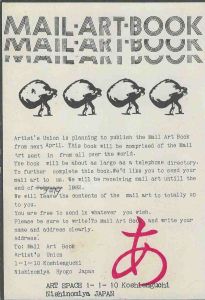
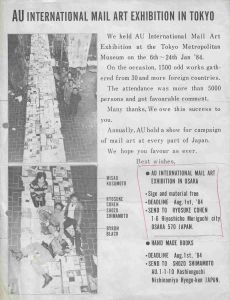
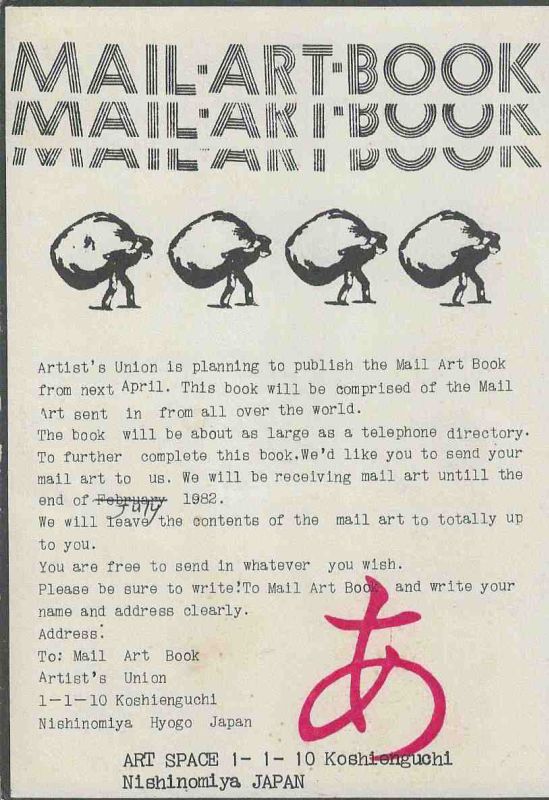
BIOGRAFIA EM PORTUGUÊSSh?z? Shimamoto, também registrado internacionalmente como Shozo Shimamoto, nasceu em 22 de janeiro de 1928 em Osaka, Japão, e morreu em 25 de janeiro de 2013 na mesma cidade. Artista japonês, pintor, performer, pesquisador de processos experimentais, editor e participante ativo das redes internacionais de Mail Art, foi um dos fundadores do Gutai Art Association e posteriormente tornou se uma figura de referência da Artists Union, conhecida pela sigla AU. Sua trajetória conecta a vanguarda japonesa do pós guerra, pintura gestual, performance, experimentação com matéria, arte sonora, cinema experimental, publicação de artista e Arte Postal. Sua relação com o Poema Processo brasileiro não decorre de participação no movimento, mas das redes internacionais de Mail Art que colocaram sua Artists Union em comunicação documental com artistas brasileiros vinculados à poesia experimental e ao Poema Processo, entre eles J. Medeiros, em Natal, Rio Grande do Norte.Shimamoto começou a aproximar se da arte em 1947, quando passou a frequentar o ateliê de Jiro Yoshihara, figura decisiva para o desenvolvimento da vanguarda artística japonesa depois da Segunda Guerra Mundial. Nesse período realizou os primeiros trabalhos da série Ana, termo japonês relacionado a buracos. As obras exploravam perfurações e a estrutura física do suporte, antecipando uma preocupação central de sua produção com matéria, gesto, destruição, espaço e processo. Em 1948 participou, com outros jovens artistas próximos de Yoshihara, da exposição Seven Avant Garde Artists, realizada na loja de departamentos Kintetsu, em Osaka. Em 1950 concluiu sua formação na Kansai Gakuin University.Em 1953 recebeu o Asahi Award na All Kansai Art Exhibition e o Association Award na exposição da Association of Modern Art. No mesmo ano participou da First Exhibition of the Genbi Group, realizada na Asahi Biru Gallery, em Kobe. O ambiente do Genbi reuniu vários artistas que pouco depois estariam relacionados à constituição do Gutai.Em 1954, sob a orientação intelectual de Jiro Yoshihara, Shimamoto participou da fundação do Gutai Art Association, um dos movimentos mais importantes da arte japonesa do pós guerra. A biografia institucional do artista atribui a Shimamoto a sugestão do nome Gutai e registra que sua casa passou a servir como sede do grupo. Nesse espaço eram impressos e distribuídos os primeiros números da revista Gutai, instrumento fundamental para divulgar internacionalmente as experiências do movimento. Essa atividade editorial antecipa a importância que comunicação, publicação e circulação assumiriam mais tarde em sua produção de Mail Art.Em janeiro de 1955 foi publicado o primeiro número da revista Gutai. No mesmo ano Shimamoto participou da Seventh Yomiuri Independent Exhibition, em Tóquio, e da Experimental Outdoor Modern Art Exhibition to Challenge the Midsummer Burning Sun, realizada na pineta de Ashiya. Nessa exposição ao ar livre apresentou uma chapa metálica perfurada e iluminada pela parte posterior, criando um campo visual semelhante a um céu estrelado. Também participou da First Gutai Exhibition no Ohara Kaikan, em Tóquio, onde apresentou Please, Walk on Here, instalação formada por tábuas montadas sobre um sistema instável de molas que exigia a participação física do visitante.Em 1956 realizou experiências decisivas para sua linguagem artística. Na Second Exhibition of Modern Art Outdoors apresentou uma ação na qual bolsas contendo tinta eram lançadas por meio de um dispositivo semelhante a um canhão. Na Second Gutai Exhibition no Ohara Kaikan colocou uma grande tela no chão, posicionou uma pedra sobre ela e lançou garrafas contendo tintas coloridas contra o obstáculo. Dessa experiência surgiu uma técnica de lançamento e quebra de recipientes de tinta que se tornaria uma das marcas de sua produção. O método deslocava a pintura do gesto controlado do pincel para um acontecimento envolvendo impacto, velocidade, matéria, acaso e performance.Em 1957 participou de Gutai Art on the Stage no Sankei Center, Osaka, desenvolvendo experiências com imagem, som e ação. Em 1958 apresentou trabalhos cinematográficos experimentais durante a segunda edição de Gutai Art on the Stage, utilizando películas de 35 milímetros modificadas diretamente por procedimentos físicos e gráficos. A aproximação de Gutai com o crítico francês Michel Tapié ampliou a inserção internacional do grupo e colocou seus integrantes em diálogo com diferentes vertentes da arte informal europeia e norte americana.Em 1959 ações de Shimamoto envolvendo lançamento de garrafas com tinta foram registradas pela BBC. Nesse mesmo período sua produção passou a circular de maneira crescente fora do Japão. Em 1961 participou do contexto de Continuité et avant garde au Japon no International Center of Aesthetic Research, em Turim. Em 1962 realizou sua primeira exposição individual na Gutai Pinacotheca, em Osaka.Durante a década de 1960 participou de importantes exposições internacionais relacionadas à arte japonesa e ao Gutai. Em 1965 integrou Nul Negentienhonderd vijf en Zestig, no Stedelijk Museum, Amsterdam. Em 1966 participou do II Salon International des Galeries Pilotes, no Musée Cantonal des Beaux Arts, Lausanne. Em 1969 esteve na IX Exposition d art japonais contemporain, em Tóquio.Em 1972 realizou duas exposições individuais documentadas, uma na Galeria Sobrad, em São Paulo, Brasil, e outra na Muramatsu, em Tóquio. A exposição brasileira constitui um ponto particularmente importante de sua presença histórica na América Latina. No mesmo ano, após a morte de Jiro Yoshihara, o Gutai foi dissolvido. A partir desse período Shimamoto voltou sua atenção de maneira crescente para a Mail Art e para sistemas de comunicação capazes de conectar artistas sem depender exclusivamente de museus e galerias.Entre 1975 e 1976 Shimamoto passou a participar das atividades da Artists Union. A organização reunia artistas de diferentes formações e tornou se uma plataforma para experimentações coletivas. Shimamoto foi eleito secretário geral e posteriormente assumiu posição de direção. Em depoimento posterior afirmou que, ao tornar se diretor da Artists Union em 1976, conheceu a Arte Postal e passou a comunicar se com milhares de artistas de diversas partes do mundo. Essa experiência modificou profundamente sua concepção de arte, reforçando a ideia do trabalho artístico como resultado de comunicação, colaboração e participação social.Shimamoto também estabeleceu uma continuidade conceitual entre Gutai e AU. Em texto publicado posteriormente, recordou que durante o período Gutai já enviava exemplares das revistas do grupo para artistas estrangeiros. Depois da dissolução do movimento começou a produzir experiências de Mail Art e, em 1976, a publicação AU passou a ser distribuída internacionalmente. Em agosto de 1985 a publicação já havia alcançado seu número 71.A Artists Union tornou se um dos núcleos japoneses de comunicação artística internacional. Por intermédio de AU, Shimamoto estabeleceu contato com artistas da Europa, América Latina, América do Norte e outras regiões da Ásia. A estrutura postal permitia que desenhos, colagens, poemas visuais, fotografias, impressos, carimbos, selos de artista, publicações e propostas conceituais atravessassem fronteiras e fossem incorporados a arquivos, exposições e publicações coletivas.Em 1982 Shimamoto organizou a Japan Art Unidentified Mail Art Exhibition no Art Space Gallery, em Hyogo, Japão. A cronologia internacional de Mail Art do Artpool registra Shozo Shimamoto como organizador e documenta a existência de convocatória e catálogo relacionados à Japan AU.Também em 1982 circulou internacionalmente a convocatória Mail Art Book, vinculada à Artists Union em Nishinomiya, Hyogo. O projeto pretendia reunir em uma grande publicação trabalhos de Mail Art recebidos de diversos países. Um exemplar dessa convocatória enviado do Japão a J. Medeiros em Natal constitui evidência material da conexão entre a rede japonesa de Shimamoto e artistas brasileiros ligados ao ambiente da poesia experimental. O documento estabelece uma ligação direta entre Nishinomiya e Natal no circuito internacional de Arte Postal no início da década de 1980.A série Japan AU Mail Art Book tornou se um importante produto editorial dessa rede. O primeiro volume apareceu em 1982, seguido por outros volumes em 1983 e 1984. Essas publicações devem ser compreendidas como empreendimentos coletivos da rede AU e não exclusivamente como livros individuais de Shimamoto. Outros agentes da Mail Art japonesa, entre eles Misao Kusumoto e Ryosuke Cohen, também desempenharam funções importantes em diferentes etapas editoriais e organizacionais.Em 1983 Shimamoto participou com outros cinco artistas da exposição 6 Gutai Artists Artists Union na Itami Municipal Art Gallery. No mesmo período continuava desenvolvendo as atividades internacionais da AU.Em 1984 realizou performance na Hundertmark Gallery, em Colônia, e participou de Gutai Works, com Shiraga, Motonaga, Murakami, Uemae, Kanayama e outros artistas, no Studio Morra, em Nápoles. Também colaborou com Bálint Szombathy na organização do projeto Art in the Bed, registrado no circuito de Mail Art de 1984 em Novi Sad e Zagreb, então Iugoslávia, e relacionado à publicação AU.Em 1985 participou de exposições em Antuérpia e Osaka e esteve na retrospectiva Reconstructions: Avant Garde Art in Japan 1945 1965, em Oxford. Também participou de Gutai Group: Pintura y Acción no Museo Español de Arte Contemporáneo, em Madrid, posteriormente apresentada em Belgrado e Kobe.Em 1986 convidou o artista italiano Guglielmo Achille Cavellini para o First Osaka Sister City Festival. A partir desse período intensificou uma das ações mais características de sua produção de Mail Art, utilizando sua própria cabeça raspada como suporte para mensagens recebidas e intervenções da rede postal. A cabeça transformava se em superfície de comunicação, publicação corporal e meio performático. No mesmo ano participou de Japon des avant gardes no Centre Georges Pompidou, em Paris, apresentando trabalhos relacionados ao som.Em 1987 participou em Dallas de uma performance relacionada ao centenário do nascimento de Marcel Duchamp, utilizando sua cabeça raspada como superfície para projeção de mensagens de paz e imagens cinematográficas. A associação entre corpo, comunicação, imagem e pacifismo tornou se progressivamente central em sua produção.Em 1990, durante a exposição Giappone all avanguardia. Il Gruppo Gutai negli anni Cinquanta, na Galleria Nazionale d Arte Moderna, Roma, Shimamoto retomou sua ação histórica de lançamento de garrafas de tinta, incorporando materiais enviados por participantes da rede de Mail Art. A pintura resultante combinava cor, arroz, conchas, areia e outros elementos recebidos da rede, aproximando a memória do Gutai de sua filosofia posterior de comunicação coletiva.Em 1996 foi indicado ao Prêmio Nobel da Paz em reconhecimento às suas atividades pacifistas, segundo a biografia institucional da Shozo Shimamoto Association. Sua defesa da comunicação internacional por meio da arte relacionava Mail Art, performance e ação pública a uma concepção de paz baseada no intercâmbio cultural.Em 1997 realizou Shozo Shimamoto, Gutai Works na Hundertmark Gallery, Colônia. Em 1998 a obra Holes integrou Out of Actions: Between Performance and the Object, 1949 1979, no Museum of Contemporary Art de Los Angeles, exposição que posteriormente circulou por Viena, Barcelona e Tóquio. Em 1999 participou novamente de atividades internacionais relacionadas à Bienal de Veneza, realizou o Shozo Shimamoto Italian Festival e esteve representado na retrospectiva Gutai na Galerie Nationale du Jeu de Paume, Paris.Em 2000 realizou na França uma performance de grande escala utilizando jornais provenientes de diferentes partes do mundo. A partir de um balão, lançou recipientes com tinta sobre uma grande superfície construída com folhas de jornais. Uma das obras produzidas foi apresentada na sede da UNESCO em Paris. No mesmo ano iniciou em Nishinomiya o projeto A Proof of Peace, concebido como monumento de longa duração.Em 2006 realizou em Piazza Dante, Nápoles, a performance Un arma per la Pace. Essa ação tornou se um ponto importante da fase final de sua carreira e contribuiu para a criação, em 2007, da Shozo Shimamoto Association, fundada na Itália e no Japão por Rosanna Chiessi, Laura Montanari e Giuseppe Morra com o objetivo de preservar, pesquisar e divulgar sua produção.Em 2011 apresentou trabalhos na Basilica di Santo Stefano, em Bolonha, em exposição com curadoria de Achille Bonito Oliva, realizou exposição individual na Fondazione Morra, em Nápoles, e participou de performances no Moderna Museet, Estocolmo, reinterpretando experiências históricas realizadas durante o Gutai. Em 2012 realizou exposição individual na Axel Vervoordt Gallery, em Antuérpia, entre 14 de março e 5 de maio.Shozo Shimamoto morreu em Osaka em 25 de janeiro de 2013. Sua documentação e sua obra continuaram sendo preservadas e estudadas pela Shozo Shimamoto Association e por museus, arquivos, coleções e instituições dedicadas à história do Gutai, da performance e da Mail Art. A bibliografia posterior inclui exposições e publicações dedicadas à revisão crítica de sua trajetória, entre elas Shozo Shimamoto: tra oriente e occidente, la vita materia dell arte, de 2014, Shozo Shimamoto: Do Something Interesting. See Something Old, de 2016, e Shozo Shimamoto Grandi Opere Major Works, publicado em 2022.Historicamente, Shimamoto ocupa uma posição singular por conectar dois momentos fundamentais da arte experimental do século XX. No Gutai participou da radical transformação da relação entre corpo, matéria, ação e pintura. Na Artists Union e na Mail Art ampliou essa experimentação para o território da comunicação, da publicação, do arquivo e da rede. Em ambos os contextos recusou a obra como objeto exclusivamente isolado e privilegiou processos, acontecimentos e relações entre pessoas.A relação documental de Shimamoto com o contexto brasileiro é especialmente significativa. Além de sua exposição individual em São Paulo em 1972, a circulação do material da Artists Union para J. Medeiros em Natal demonstra contato entre a Mail Art japonesa e artistas inseridos no ambiente histórico do Poema Processo. Não foi localizada comprovação de que Shimamoto tenha integrado formalmente o Poema Processo, portanto essa associação não deve ser apresentada como filiação. Sua importância para o arquivo brasileiro reside na rede de correspondência, na circulação de convites e publicações e nas afinidades históricas entre Gutai, Mail Art, poesia visual, arte conceitual, performance, publicação experimental e práticas processuais.
English
BIOGRAPHY IN ENGLISHSh?z? Shimamoto, internationally also recorded as Shozo Shimamoto, was born on January 22, 1928 in Osaka, Japan, and died on January 25, 2013 in the same city. A Japanese artist, painter, performer, experimental researcher, editor and active participant in international Mail Art networks, he was one of the founders of the Gutai Art Association and later became a leading figure in the Artists Union, commonly identified by the initials AU. His career connects the Japanese postwar avant garde with gestural painting, performance, material experimentation, sound art, experimental film, artists publications and Mail Art. His relationship with the Brazilian Process Poem Movement does not derive from membership in the movement, but from international Mail Art networks that placed his Artists Union in documented communication with Brazilian artists associated with experimental poetry and Poema Processo, including J. Medeiros in Natal, Rio Grande do Norte.Shimamoto began to develop a serious interest in art in 1947, when he started attending the studio of Jiro Yoshihara, a decisive figure in the development of the Japanese postwar avant garde. During this period he produced his earliest Ana works, whose title refers to holes. These works investigated perforation and the physical structure of the support, anticipating his lifelong concern with material, gesture, destruction, space and process. In 1948 he joined other young artists close to Yoshihara in the Seven Avant Garde Artists exhibition held at the Kintetsu department store in Osaka. In 1950 he graduated from Kansai Gakuin University.In 1953 he received the Asahi Award at the All Kansai Art Exhibition and the Association Award at the Association of Modern Art Exhibition. During the same year he participated in the First Exhibition of the Genbi Group at the Asahi Biru Gallery in Kobe. The Genbi environment brought together a number of young artists who would soon become associated with the formation of Gutai.In 1954, under the intellectual guidance of Jiro Yoshihara, Shimamoto participated in the founding of the Gutai Art Association, one of the most significant movements of Japanese postwar art. Shimamoto's institutional biography credits him with proposing the name Gutai and records that his house served as the official headquarters of the group. The Gutai journals were printed and distributed from this location, establishing an early system for the international circulation of the group's experiments. This editorial activity anticipated the importance that communication, publishing and distribution would later assume in his Mail Art practice.The first Gutai journal appeared in January 1955. During the same year Shimamoto participated in the Seventh Yomiuri Independent Exhibition in Tokyo and in the Experimental Outdoor Modern Art Exhibition to Challenge the Midsummer Burning Sun in the pine forest of Ashiya. There he presented a perforated metal sheet illuminated from behind, creating an effect similar to a star filled sky. He also participated in the First Gutai Exhibition at Ohara Kaikan in Tokyo, where he presented Please, Walk on Here, an installation made of wooden boards mounted on an unstable system of springs that required the physical participation of visitors.In 1956 he developed procedures that became fundamental to his artistic language. At the Second Exhibition of Modern Art Outdoors he staged an action involving bags filled with paint launched through a device resembling a cannon. At the Second Gutai Exhibition at Ohara Kaikan he placed a large canvas on the floor, positioned a rock at its center and threw bottles filled with different colors of paint against it. This experiment initiated the bottle crash technique that became closely associated with his work. The method displaced painting from the controlled gesture of the brush toward an event involving impact, speed, matter, accident and performance.In 1957 he participated in Gutai Art on the Stage at the Sankei Center in Osaka and experimented with image, sound and action. In 1958, during the second Gutai Art on the Stage event, he presented experimental film works using modified 35 millimeter film. Gutai's growing contact with French critic Michel Tapié contributed to the international visibility of the group and connected its members with European and North American informal art contexts.In 1959 the BBC documented an action by Shimamoto involving bottles filled with paint. His work increasingly circulated outside Japan. In 1961 he participated in the context of Continuité et avant garde au Japon at the International Center of Aesthetic Research in Turin. In 1962 he held his first solo exhibition at the Gutai Pinacotheca in Osaka.During the 1960s Shimamoto participated in major international exhibitions connected with contemporary Japanese art and Gutai. In 1965 he was included in Nul Negentienhonderd vijf en Zestig at the Stedelijk Museum in Amsterdam. In 1966 he participated in the II Salon International des Galeries Pilotes at the Musée Cantonal des Beaux Arts in Lausanne. In 1969 he took part in the IX Exposition d art japonais contemporain in Tokyo.In 1972 Shimamoto held two documented solo exhibitions, one at Galeria Sobrad in São Paulo, Brazil, and another at Muramatsu in Tokyo. The Brazilian exhibition represents an important historical point in his relationship with Latin America. Following the death of Jiro Yoshihara in the same year, Gutai dissolved. From this period onward Shimamoto became increasingly interested in Mail Art and in systems of communication capable of connecting artists beyond the traditional structure of museums and commercial galleries.Between 1975 and 1976 Shimamoto became involved with the Artists Union. The organization brought together artists from different backgrounds and developed into a platform for collective experimentation. Shimamoto was elected chief secretary and subsequently assumed a leading role. In a later interview he stated that when he became director of the Artists Union in 1976 he discovered correspondence art and began communicating with several thousand artists around the world. This experience profoundly influenced his understanding of art by strengthening his conception of artistic production as communication, collaboration and social participation.Shimamoto also established a conceptual continuity between Gutai and AU. In a later text he recalled that during the Gutai period he had already been involved in publishing magazines and sending them abroad. After the dissolution of Gutai he began producing Mail Art, and in 1976 the publication AU started to circulate internationally. By August 1985 AU had reached issue 71.Artists Union developed into an important Japanese center of international artistic communication. Through AU, Shimamoto established exchanges with artists in Europe, Latin America, North America and other parts of Asia. The postal system enabled drawings, collages, visual poems, photographs, printed matter, rubber stamps, artist stamps, publications and conceptual proposals to cross national borders and become part of archives, exhibitions and collective publications.In 1982 Shimamoto organized the Japan Art Unidentified Mail Art Exhibition at Art Space Gallery in Hyogo, Japan. The international Mail Art chronology maintained by Artpool identifies Shozo Shimamoto as organizer and records a call and a Japan AU catalogue associated with the exhibition.Also in 1982 the Mail Art Book call circulated internationally through Artists Union in Nishinomiya, Hyogo. The project sought to gather Mail Art received from different countries into a large collective publication. A surviving invitation sent from Japan to J. Medeiros in Natal provides material evidence of the connection between Shimamoto's Japanese network and Brazilian artists associated with experimental poetry. The document establishes a direct link between Nishinomiya and Natal within the international Mail Art circuit of the early 1980s.The Japan AU Mail Art Book series became an important editorial product of this network. The first volume appeared in 1982, followed by additional volumes in 1983 and 1984. These publications should be understood as collective projects of the AU network rather than exclusively as individual books by Shimamoto. Other important participants in Japanese Mail Art, including Misao Kusumoto and Ryosuke Cohen, played significant editorial and organizational roles during different phases of the project.In 1983 Shimamoto joined five other artists in the exhibition 6 Gutai Artists Artists Union at the Itami Municipal Art Gallery. During the same period he continued to develop the international activities of AU.In 1984 he presented a performance at the Hundertmark Gallery in Cologne and participated in Gutai Works, with Shiraga, Motonaga, Murakami, Uemae, Kanayama and other artists, at Studio Morra in Naples. He also collaborated with Bálint Szombathy on the organization of Art in the Bed, recorded in the 1984 Mail Art circuit in Novi Sad and Zagreb and associated with the AU publication.In 1985 Shimamoto participated in exhibitions in Antwerp and Osaka and was included in the retrospective Reconstructions: Avant Garde Art in Japan 1945 1965 in Oxford. He also participated in Gutai Group: Pintura y Acción at the Museo Español de Arte Contemporáneo in Madrid, subsequently presented in Belgrade and Kobe.In 1986 he invited Italian artist Guglielmo Achille Cavellini to the First Osaka Sister City Festival. From this period onward he intensified one of the most distinctive aspects of his Mail Art practice by using his shaved head as a support for messages and interventions received from the postal network. His head became a communication surface, bodily publication and performative medium. During the same year he participated in Japon des avant gardes at the Centre Georges Pompidou in Paris, where he presented works related to sound.In 1987 he participated in a performance in Dallas connected with the centenary of Marcel Duchamp's birth, using his shaved head as a projection surface for peace messages and film images. The relationship among body, communication, image and pacifism became increasingly central to his artistic practice.In 1990, during Giappone all avanguardia. Il Gruppo Gutai negli anni Cinquanta at the Galleria Nazionale d Arte Moderna in Rome, Shimamoto revived his historical bottle throwing action while incorporating materials sent by Mail Art participants. The resulting painting combined color, rice, shells, sand and other materials received through the network, connecting the historical memory of Gutai with his later philosophy of collective communication.In 1996 Shimamoto was nominated for the Nobel Peace Prize in recognition of his pacifist activities, according to the institutional biography maintained by the Shozo Shimamoto Association. His commitment to international artistic communication connected Mail Art, performance and public action with a concept of peace based on cultural exchange.In 1997 he presented Shozo Shimamoto, Gutai Works at the Hundertmark Gallery in Cologne. In 1998 his work Holes was included in Out of Actions: Between Performance and the Object, 1949 1979 at the Museum of Contemporary Art in Los Angeles, an exhibition that later traveled to Vienna, Barcelona and Tokyo. In 1999 he participated again in international activities related to the Venice Biennale, presented the Shozo Shimamoto Italian Festival and was represented in a Gutai retrospective at the Galerie Nationale du Jeu de Paume in Paris.In 2000 Shimamoto staged a large scale performance in France using newspapers from many parts of the world. From a hot air balloon he dropped paint filled containers onto a large surface composed of newspaper sheets. One of the resulting works was displayed at UNESCO headquarters in Paris. During the same year he initiated A Proof of Peace in Nishinomiya, conceived as a long duration monument.In 2006 he performed Un arma per la Pace in Piazza Dante, Naples. This action became an important event in the later phase of his career and contributed to the establishment of the Shozo Shimamoto Association in 2007. Founded in Italy and Japan by Rosanna Chiessi, Laura Montanari and Giuseppe Morra, the association was created to preserve, study and promote his artistic research.In 2011 works by Shimamoto were presented at the Basilica di Santo Stefano in Bologna in an exhibition curated by Achille Bonito Oliva. He also held a solo exhibition at Fondazione Morra in Naples and performed at Moderna Museet in Stockholm, revisiting historical Gutai actions. In 2012 he held a solo exhibition at Axel Vervoordt Gallery in Antwerp from March 14 to May 5.Shozo Shimamoto died in Osaka on January 25, 2013. His documentation and artistic legacy continue to be preserved and studied by the Shozo Shimamoto Association and by museums, archives, collections and institutions dedicated to the history of Gutai, performance and Mail Art. Later bibliography includes exhibitions and publications reconsidering his career, including Shozo Shimamoto: tra oriente e occidente, la vita materia dell arte in 2014, Shozo Shimamoto: Do Something Interesting. See Something Old in 2016 and Shozo Shimamoto Grandi Opere Major Works in 2022.Historically, Shimamoto occupies a distinctive position because his career connects two fundamental moments in twentieth century experimental art. Within Gutai he participated in the radical transformation of relationships among body, matter, action and painting. Through Artists Union and Mail Art he expanded this experimentation into communication, publishing, archives and networks. In both contexts he challenged the concept of the artwork as an isolated object and emphasized processes, events and relationships among people.Shimamoto's documented relationship with Brazil is particularly significant. In addition to his solo exhibition in São Paulo in 1972, the circulation of Artists Union material to J. Medeiros in Natal demonstrates contact between Japanese Mail Art and artists situated within the historical environment of the Process Poem Movement. No evidence has been located demonstrating that Shimamoto formally belonged to Poema Processo, and this relationship should therefore not be described as membership. His importance to the Brazilian archive lies in correspondence networks, the circulation of invitations and publications, and the historical affinities among Gutai, Mail Art, visual poetry, conceptual art, performance, experimental publishing and process based practices.
Currículo
CURRÍCULO EM PORTUGUÊSShozo Shimamoto desenvolveu uma trajetória iniciada na vanguarda japonesa do pós guerra, tornou se fundador do Gutai e posteriormente ampliou sua atuação para a Mail Art, performance, publicação experimental e redes internacionais de comunicação. A relação abaixo constitui uma lista consolidada das ocorrências documentadas nas fontes consultadas e não deve ser considerada inventário definitivo de todas as suas atividades.IDENTIFICAÇÃONome principal: Sh?z? ShimamotoGrafia internacional frequente: Shozo ShimamotoNascimento: 22 de janeiro de 1928Local de nascimento: Osaka, JapãoFalecimento: 25 de janeiro de 2013Local de falecimento: Osaka, JapãoNacionalidade: japonesaÁreas de atuação: pintura, performance, ação, arte experimental, cinema experimental, arte sonora, publicação de artista, Mail Art, comunicação artística e organização de redesMovimentos e grupos: Genbi, Gutai Art Association, Artists Union, AUPrincipais contextos: vanguarda japonesa do pós guerra, Gutai, Mail Art, performance, arte processual, publicação experimental e redes alternativas de arteFORMAÇÃO1947Início da frequência ao ateliê de Jiro Yoshihara em Osaka.Professor e orientador relacionado: Jiro Yoshihara.1950Conclusão de estudos na Kansai Gakuin University.PRIMEIRAS ATIVIDADES1947Realização dos primeiros trabalhos da série Ana, relacionados à investigação de perfurações e da materialidade do suporte.1948Participação em Seven Avant Garde Artists.Local: Kintetsu Department Store.Cidade: Osaka.País: Japão.1953Asahi Award na All Kansai Art Exhibition.Association Award na Association of Modern Art Exhibition.Participação na First Exhibition of the Genbi Group.Instituição: Asahi Biru Gallery.Cidade: Kobe.País: Japão.MOVIMENTOS, GRUPOS E COLETIVOS1954Fundação do Gutai Art Association com Jiro Yoshihara e outros artistas.Função documentada: fundador, organizador e participante.Shimamoto sugeriu o nome Gutai segundo sua biografia institucional.Sua residência foi utilizada como sede inicial do grupo e como local de produção e circulação da revista Gutai.1975 a 1976Ingresso nas atividades da Artists Union.Função: secretário geral e posteriormente posição de direção.Área: Mail Art, comunicação internacional e projetos coletivos.PUBLICAÇÕES E ATIVIDADE EDITORIAL1955Gutai, número 1.Tipo: revista do Gutai Art Association.Participação de Shimamoto: produção, circulação e reprodução de obra.Distribuição internacional.1976AU.Tipo: publicação relacionada à Artists Union e à rede internacional de Mail Art.Shimamoto registra que a publicação começou a ser enviada internacionalmente em 1976.Agosto de 1985AU alcança o número 71 segundo relato de Shimamoto.1982Japan AU Mail Art Book I.Tipo: publicação coletiva de Mail Art.Contexto: Artists Union e rede internacional de Arte Postal.Local relacionado: Nishinomiya e Hyogo, Japão.1983Japan AU Mail Art Book II.Tipo: publicação coletiva de Mail Art.Contexto: AU e Artists Union.1984Japan AU Mail Art Book III.Tipo: publicação coletiva de Mail Art.Participação editorial associada a Shozo Shimamoto, Misao Kusumoto e Ryosuke Cohen em documentação bibliográfica.As três publicações devem ser compreendidas como projetos coletivos da rede AU e não exclusivamente como obras individuais de Shimamoto.PROJETOS E COLABORAÇÕES1982Mail Art Book.Organização relacionada: Artists Union.Local: Nishinomiya, Hyogo, Japão.Objetivo: reunir trabalhos recebidos de artistas de diversos países para publicação coletiva.Circulação documentada no Brasil: convite enviado a J. Medeiros em Natal, Rio Grande do Norte.1984Art in the Bed.Colaboração organizacional: Bálint Szombathy e Shozo Shimamoto.Locais: Novi Sad e Zagreb, então Iugoslávia.Relação editorial: AU número 66.2000A Proof of Peace.Local: Nishinomiya Yacht Harbour.Cidade: Nishinomiya.País: Japão.Concepção: projeto e monumento de longa duração dedicado à paz.EXPOSIÇÕES INDIVIDUAIS1962Primeira exposição individual de Shozo Shimamoto.Instituição: Gutai Pinacotheca.Cidade: Osaka.País: Japão.1972Exposição individual.Instituição: Galeria Sobrad.Cidade: São Paulo.País: Brasil.1972Exposição individual.Instituição: Muramatsu.Cidade: Tóquio.País: Japão.1997Shozo Shimamoto, Gutai Works.Instituição: Hundertmark Gallery.Cidade: Colônia.País: Alemanha.2011Exposição individual.Instituição: Fondazione Morra.Cidade: Nápoles.País: Itália.2012Shozo Shimamoto.Instituição: Axel Vervoordt Gallery.Cidade: Antuérpia.País: Bélgica.Período: 14 de março a 5 de maio de 2012.EXPOSIÇÕES COLETIVAS1948Seven Avant Garde Artists.Kintetsu Department Store.Osaka, Japão.1953First Exhibition of the Genbi Group.Asahi Biru Gallery.Kobe, Japão.1955Seventh Yomiuri Independent Exhibition.Tokyo Metropolitan Museum.Tóquio, Japão.1955Experimental Outdoor Modern Art Exhibition to Challenge the Midsummer Burning Sun.Ashiya, Japão.1955First Gutai Exhibition.Ohara Kaikan.Tóquio, Japão.1956Second Exhibition of Modern Art Outdoors.Japão.1956Second Gutai Exhibition.Ohara Kaikan.Tóquio, Japão.1957Gutai Art on the Stage.Sankei Center.Osaka, Japão.1958Second Gutai Art on the Stage.Asahi Kaikan.Japão.1958International Art of a New Era. Informal and Gutai.Takashimaya Department Store.Japão.1959Arte Nuova.Palazzo Granieri.Turim, Itália.1961Continuité et avant garde au Japon.International Center of Aesthetic Research.Turim, Itália.1965Nul Negentienhonderd vijf en Zestig.Stedelijk Museum.Amsterdam, Países Baixos.1966II Salon International des Galeries Pilotes.Musée Cantonal des Beaux Arts.Lausanne, Suíça.1969IX Exposition d art japonais contemporain.Tóquio, Japão.1982Japan Art Unidentified Mail Art Exhibition.Organização: Shozo Shimamoto.Instituição: Art Space Gallery.Hyogo, Japão.Tipo: exposição coletiva de Mail Art.19836 Gutai Artists Artists Union.Itami Municipal Art Gallery.Itami, Japão.1984Gutai Works.Studio Morra.Nápoles, Itália.1985Reconstructions: Avant Garde Art in Japan 1945 1965.Museum of Modern Art.Oxford, Reino Unido.1985Gutai Group: Pintura y Acción.Museo Español de Arte Contemporáneo.Madrid, Espanha.Posteriormente apresentada em Belgrado e Kobe.1986Japon des avant gardes.Centre Georges Pompidou.Paris, França.1990Giappone all avanguardia. Il Gruppo Gutai negli anni Cinquanta.Galleria Nazionale d Arte Moderna.Roma, Itália.1998Out of Actions: Between Performance and the Object, 1949 1979.Museum of Contemporary Art.Los Angeles, Estados Unidos.Posteriormente apresentada em Viena, Barcelona e Tóquio.1999Retrospectiva Gutai.Galerie Nationale du Jeu de Paume.Paris, França.PERFORMANCES E AÇÕES1956Performance of Destruction.Procedimento: lançamento de bolsas contendo tinta com dispositivo semelhante a canhão.1956Ação de lançamento de garrafas de tinta.Second Gutai Exhibition.Ohara Kaikan, Tóquio.1959Ação com garrafas contendo tinta registrada pela BBC.1984Performance.Hundertmark Gallery.Colônia, Alemanha.1987Performance relacionada ao centenário de Marcel Duchamp.Dallas, Estados Unidos.Procedimento: projeção de mensagens de paz e imagens sobre a cabeça raspada do artista.1990Reinterpretação da ação histórica de lançamento de garrafas incorporando objetos enviados pela rede de Mail Art.Galleria Nazionale d Arte Moderna.Roma, Itália.2000Performance de grande escala com jornais internacionais e lançamento de tinta a partir de balão.França.2006Un arma per la Pace.Piazza Dante.Nápoles, Itália.2011Performances no Moderna Museet.Estocolmo, Suécia.Reinterpretação de ações históricas realizadas durante o período Gutai.ARTE POSTAL E MAIL ART1972Após a dissolução do Gutai, Shimamoto passa a dedicar crescente atenção à Mail Art.1976Assume posição de direção na Artists Union e passa a estabelecer comunicação postal com milhares de artistas internacionais.1976Início da circulação internacional da publicação AU segundo relato do próprio Shimamoto.1982Japan Art Unidentified Mail Art Exhibition.Art Space Gallery, Hyogo.1982Mail Art Book.Convocatória internacional da Artists Union.Correspondência documentada com J. Medeiros em Natal, Brasil.1986Intensificação do uso da cabeça raspada como suporte para intervenções e mensagens relacionadas à Mail Art.Convite a Guglielmo Achille Cavellini para o First Osaka Sister City Festival.PRÊMIOS E RECONHECIMENTOS1953Asahi Award.All Kansai Art Exhibition.1953Association Award.Association of Modern Art Exhibition.1996Indicação ao Prêmio Nobel da Paz segundo a biografia institucional da Shozo Shimamoto Association.INSTITUIÇÕES E ARTISTAS RELACIONADOSJiro YoshiharaKazuo ShiragaSaburo MurakamiAtsuko TanakaAkira KanayamaMotonao TakasakiYasuo SumiGuglielmo Achille CavelliniMisao KusumotoRyosuke CohenBálint SzombathyMichel TapiéRosanna ChiessiGiuseppe MorraAchille Bonito OlivaKansai Gakuin UniversityGutai PinacothecaStedelijk MuseumCentre Georges PompidouMuseum of Contemporary Art Los AngelesGalleria Nazionale d Arte ModernaFondazione MorraModerna MuseetAxel Vervoordt GalleryShozo Shimamoto AssociationARQUIVOS, ASSOCIAÇÕES E PRESERVAÇÃO2007Fundação da Shozo Shimamoto Association na Itália e no Japão por Rosanna Chiessi, Laura Montanari e Giuseppe Morra.Objetivo: pesquisa, preservação e divulgação da produção de Shimamoto mediante exposições, catálogos, vídeos e documentação.A documentação de Shimamoto está presente em arquivos dedicados ao Gutai e à Mail Art, incluindo registros de exposições, correspondências, publicações e materiais da Artists Union.BIBLIOGRAFIA SELECIONADA2013AU, part I III, 1976 2011.Documentação relacionada às atividades da AU.2013Gutai: Splendid Playground.Catálogo relacionado à revisão internacional do Gutai.2014Shozo Shimamoto: tra oriente e occidente, la vita materia dell arte.Autora: Gabriella Dalesio.Editora: Edizioni Morra.Nápoles.2016Shozo Shimamoto: Do Something Interesting. See Something Old.New York.De Buck Gallery.2016Shozo Shimamoto Exhibition: Avant garde shock.Karuizawa New Art Museum.2017Shozo Shimamoto.Edizioni Morra.2018Gutai: L Espace et Le Temps.Musée Soulages, Rodez.2020Shozo Shimamoto: Across the Borderlands of Art.Alien Art Centre, Taiwan.2022Shozo Shimamoto Grandi Opere Major Works.Edizioni Morra, Nápoles.RELAÇÃO COM O POEMA PROCESSONão foi localizada evidência de que Shozo Shimamoto tenha pertencido ao movimento Poema Processo brasileiro.A relação documental ocorre por intermédio da rede internacional de Mail Art.Uma convocatória da Artists Union para o projeto Mail Art Book foi enviada em 1982 para J. Medeiros em Natal, Rio Grande do Norte.J. Medeiros integra o contexto histórico da poesia experimental e do Poema Processo no Rio Grande do Norte.Esse documento conecta materialmente a rede japonesa de Shozo Shimamoto ao ambiente brasileiro do Poema Processo, sem implicar filiação formal de Shimamoto ao movimento.CRONOLOGIA1928Nascimento em Osaka.1947Início da frequência ao estúdio de Jiro Yoshihara.Primeiros trabalhos Ana.1948Seven Avant Garde Artists em Osaka.1950Conclusão da formação na Kansai Gakuin University.1953Prêmios Asahi Award e Association Award.Participação no Genbi.1954Fundação do Gutai Art Association.1955Publicação do primeiro Gutai.Primeiras grandes exposições do Gutai.1956Desenvolvimento das experiências com canhão e garrafas de tinta.1957Gutai Art on the Stage.1958Experimentos com cinema e projeção.1959Ação registrada pela BBC.1961Continuité et avant garde au Japon em Turim.1962Primeira exposição individual na Gutai Pinacotheca.1965Stedelijk Museum, Amsterdam.1966Lausanne.1969IX Exposition d art japonais contemporain.1972Exposições individuais em São Paulo e Tóquio.Dissolução do Gutai.Aproximação crescente com a Mail Art.1975 e 1976Ingresso e direção na Artists Union.1976Circulação da publicação AU.1982Japan Art Unidentified Mail Art Exhibition.Mail Art Book.Circulação documental para J. Medeiros no Brasil.19836 Gutai Artists Artists Union.1984Performance em Colônia.Gutai Works em Nápoles.Art in the Bed.1985Exposições em Oxford, Madrid, Belgrado, Kobe, Antuérpia e Osaka.AU chega ao número 71.1986Convite a Guglielmo Achille Cavellini.Japon des avant gardes no Centre Georges Pompidou.Uso da cabeça raspada como suporte de Mail Art.1987Performance em Dallas.1990Performance na Galleria Nazionale d Arte Moderna em Roma.1996Indicação ao Prêmio Nobel da Paz segundo fonte institucional.1997Shozo Shimamoto, Gutai Works em Colônia.1998Out of Actions em Los Angeles e itinerância internacional.1999Atividades relacionadas à Bienal de Veneza, Shozo Shimamoto Italian Festival e retrospectiva Gutai em Paris.2000Performance internacional com jornais.A Proof of Peace em Nishinomiya.2006Un arma per la Pace em Nápoles.2007Fundação da Shozo Shimamoto Association.2011Exposições e performances em Bolonha, Nápoles e Estocolmo.2012Exposição individual na Axel Vervoordt Gallery.2013Falecimento em Osaka em 25 de janeiro.
English
CURRICULUM IN ENGLISHShozo Shimamoto developed a career that began within the Japanese postwar avant garde, continued through his founding participation in Gutai and later expanded into Mail Art, performance, experimental publishing and international communication networks. The following curriculum is a consolidated list of occurrences documented in the consulted sources and should not be treated as a definitive inventory of every activity in his career.IDENTIFICATIONPrimary name: Sh?z? ShimamotoFrequently used international spelling: Shozo ShimamotoBorn: January 22, 1928Place of birth: Osaka, JapanDied: January 25, 2013Place of death: Osaka, JapanNationality: JapaneseFields: painting, performance, action, experimental art, experimental film, sound art, artists publications, Mail Art, artistic communication and network organizationMovements and groups: Genbi, Gutai Art Association, Artists Union, AUPrincipal contexts: Japanese postwar avant garde, Gutai, Mail Art, performance, process based art, experimental publishing and alternative art networksEDUCATION1947Began attending the studio of Jiro Yoshihara in Osaka.Related teacher and mentor: Jiro Yoshihara.1950Graduated from Kansai Gakuin University.EARLY ACTIVITIES1947Produced the first Ana works, investigating perforation and the material structure of the support.1948Participation in Seven Avant Garde Artists.Venue: Kintetsu Department Store.City: Osaka.Country: Japan.1953Asahi Award at the All Kansai Art Exhibition.Association Award at the Association of Modern Art Exhibition.Participation in the First Exhibition of the Genbi Group.Venue: Asahi Biru Gallery.City: Kobe.Country: Japan.MOVEMENTS, GROUPS AND COLLECTIVES1954Founding of the Gutai Art Association with Jiro Yoshihara and other artists.Documented role: founder, organizer and participant.Shimamoto proposed the name Gutai according to his institutional biography.His residence served as an early headquarters of the group and as a site for the production and circulation of the Gutai journal.1975 to 1976Became involved in Artists Union activities.Role: chief secretary and subsequently a leadership position.Fields: Mail Art, international communication and collective projects.PUBLICATIONS AND EDITORIAL ACTIVITIES1955Gutai, issue 1.Type: journal of the Gutai Art Association.Shimamoto's participation: production, distribution and reproduction of his work.International circulation.1976AU.Type: publication associated with Artists Union and the international Mail Art network.Shimamoto stated that the publication began international distribution in 1976.August 1985AU reached issue 71 according to Shimamoto's own account.1982Japan AU Mail Art Book I.Type: collective Mail Art publication.Context: Artists Union and the international postal art network.Related location: Nishinomiya and Hyogo, Japan.1983Japan AU Mail Art Book II.Type: collective Mail Art publication.Context: AU and Artists Union.1984Japan AU Mail Art Book III.Type: collective Mail Art publication.Editorial participation associated in bibliographic documentation with Shozo Shimamoto, Misao Kusumoto and Ryosuke Cohen.The three publications should be understood as collective AU network projects rather than exclusively as individual books by Shimamoto.PROJECTS AND COLLABORATIONS1982Mail Art Book.Related organization: Artists Union.Location: Nishinomiya, Hyogo, Japan.Purpose: to gather works received from artists in different countries for a collective publication.Documented circulation in Brazil: invitation sent to J. Medeiros in Natal, Rio Grande do Norte.1984Art in the Bed.Organizational collaboration: Bálint Szombathy and Shozo Shimamoto.Locations: Novi Sad and Zagreb, former Yugoslavia.Publication connection: AU issue 66.2000A Proof of Peace.Location: Nishinomiya Yacht Harbour.City: Nishinomiya.Country: Japan.Concept: long duration project and monument dedicated to peace.SOLO EXHIBITIONS1962First solo exhibition by Shozo Shimamoto.Institution: Gutai Pinacotheca.City: Osaka.Country: Japan.1972Solo exhibition.Institution: Galeria Sobrad.City: São Paulo.Country: Brazil.1972Solo exhibition.Institution: Muramatsu.City: Tokyo.Country: Japan.1997Shozo Shimamoto, Gutai Works.Institution: Hundertmark Gallery.City: Cologne.Country: Germany.2011Solo exhibition.Institution: Fondazione Morra.City: Naples.Country: Italy.2012Shozo Shimamoto.Institution: Axel Vervoordt Gallery.City: Antwerp.Country: Belgium.Dates: March 14 to May 5, 2012.GROUP EXHIBITIONS1948Seven Avant Garde Artists.Kintetsu Department Store.Osaka, Japan.1953First Exhibition of the Genbi Group.Asahi Biru Gallery.Kobe, Japan.1955Seventh Yomiuri Independent Exhibition.Tokyo Metropolitan Museum.Tokyo, Japan.1955Experimental Outdoor Modern Art Exhibition to Challenge the Midsummer Burning Sun.Ashiya, Japan.1955First Gutai Exhibition.Ohara Kaikan.Tokyo, Japan.1956Second Exhibition of Modern Art Outdoors.Japan.1956Second Gutai Exhibition.Ohara Kaikan.Tokyo, Japan.1957Gutai Art on the Stage.Sankei Center.Osaka, Japan.1958Second Gutai Art on the Stage.Asahi Kaikan.Japan.1958International Art of a New Era. Informal and Gutai.Takashimaya Department Store.Japan.1959Arte Nuova.Palazzo Granieri.Turin, Italy.1961Continuité et avant garde au Japon.International Center of Aesthetic Research.Turin, Italy.1965Nul Negentienhonderd vijf en Zestig.Stedelijk Museum.Amsterdam, Netherlands.1966II Salon International des Galeries Pilotes.Musée Cantonal des Beaux Arts.Lausanne, Switzerland.1969IX Exposition d art japonais contemporain.Tokyo, Japan.1982Japan Art Unidentified Mail Art Exhibition.Organizer: Shozo Shimamoto.Institution: Art Space Gallery.Hyogo, Japan.Type: group Mail Art exhibition.19836 Gutai Artists Artists Union.Itami Municipal Art Gallery.Itami, Japan.1984Gutai Works.Studio Morra.Naples, Italy.1985Reconstructions: Avant Garde Art in Japan 1945 1965.Museum of Modern Art.Oxford, United Kingdom.1985Gutai Group: Pintura y Acción.Museo Español de Arte Contemporáneo.Madrid, Spain.Subsequently presented in Belgrade and Kobe.1986Japon des avant gardes.Centre Georges Pompidou.Paris, France.1990Giappone all avanguardia. Il Gruppo Gutai negli anni Cinquanta.Galleria Nazionale d Arte Moderna.Rome, Italy.1998Out of Actions: Between Performance and the Object, 1949 1979.Museum of Contemporary Art.Los Angeles, United States.Subsequently presented in Vienna, Barcelona and Tokyo.1999Gutai retrospective.Galerie Nationale du Jeu de Paume.Paris, France.PERFORMANCES AND ACTIONS1956Performance of Destruction.Procedure: launching bags filled with paint through a cannon like device.1956Action involving bottles filled with paint.Second Gutai Exhibition.Ohara Kaikan, Tokyo.1959Paint bottle action documented by the BBC.1984Performance.Hundertmark Gallery.Cologne, Germany.1987Performance connected with the centenary of Marcel Duchamp.Dallas, United States.Procedure: projection of peace messages and images onto the artist's shaved head.1990Reinterpretation of the historical bottle throwing action incorporating objects sent through the Mail Art network.Galleria Nazionale d Arte Moderna.Rome, Italy.2000Large scale performance using international newspapers and paint dropped from a balloon.France.2006Un arma per la Pace.Piazza Dante.Naples, Italy.2011Performances at Moderna Museet.Stockholm, Sweden.Reinterpretation of historical Gutai actions.MAIL ART1972Following the dissolution of Gutai, Shimamoto developed increasing interest in Mail Art.1976Assumed a leadership position in Artists Union and began postal communication with thousands of artists internationally.1976Beginning of the international circulation of AU according to Shimamoto's own account.1982Japan Art Unidentified Mail Art Exhibition.Art Space Gallery, Hyogo.1982Mail Art Book.International call organized through Artists Union.Documented circulation to J. Medeiros in Natal, Brazil.1986Expanded use of his shaved head as a support for Mail Art interventions and messages.Invitation to Guglielmo Achille Cavellini for the First Osaka Sister City Festival.AWARDS AND RECOGNITION1953Asahi Award.All Kansai Art Exhibition.1953Association Award.Association of Modern Art Exhibition.1996Nominated for the Nobel Peace Prize according to the institutional biography of the Shozo Shimamoto Association.RELATED ARTISTS AND INSTITUTIONSJiro YoshiharaKazuo ShiragaSaburo MurakamiAtsuko TanakaAkira KanayamaMotonao TakasakiYasuo SumiGuglielmo Achille CavelliniMisao KusumotoRyosuke CohenBálint SzombathyMichel TapiéRosanna ChiessiGiuseppe MorraAchille Bonito OlivaKansai Gakuin UniversityGutai PinacothecaStedelijk MuseumCentre Georges PompidouMuseum of Contemporary Art Los AngelesGalleria Nazionale d Arte ModernaFondazione MorraModerna MuseetAxel Vervoordt GalleryShozo Shimamoto AssociationARCHIVES, ASSOCIATIONS AND PRESERVATION2007Foundation of the Shozo Shimamoto Association in Italy and Japan by Rosanna Chiessi, Laura Montanari and Giuseppe Morra.Purpose: research, preservation and dissemination of Shimamoto's artistic work through exhibitions, catalogues, videos and documentary activities.Shimamoto related documentation is preserved in archives concerned with Gutai and Mail Art, including exhibition records, correspondence, publications and Artists Union material.SELECTED BIBLIOGRAPHY2013AU, part I III, 1976 2011.Documentation related to AU activities.2013Gutai: Splendid Playground.Catalogue associated with the international reassessment of Gutai.2014Shozo Shimamoto: tra oriente e occidente, la vita materia dell arte.Author: Gabriella Dalesio.Publisher: Edizioni Morra.Naples.2016Shozo Shimamoto: Do Something Interesting. See Something Old.New York.De Buck Gallery.2016Shozo Shimamoto Exhibition: Avant garde shock.Karuizawa New Art Museum.2017Shozo Shimamoto.Edizioni Morra.2018Gutai: L Espace et Le Temps.Musée Soulages, Rodez.2020Shozo Shimamoto: Across the Borderlands of Art.Alien Art Centre, Taiwan.2022Shozo Shimamoto Grandi Opere Major Works.Edizioni Morra, Naples.RELATIONSHIP WITH THE PROCESS POEM MOVEMENTNo evidence has been located demonstrating that Shozo Shimamoto was a member of the Brazilian Process Poem Movement.The documented relationship occurs through the international Mail Art network.An Artists Union call for the Mail Art Book project was sent in 1982 to J. Medeiros in Natal, Rio Grande do Norte, Brazil.J. Medeiros belongs to the historical context of experimental poetry and Poema Processo in Rio Grande do Norte.This document materially connects Shozo Shimamoto's Japanese network with the Brazilian Process Poem environment without implying formal membership by Shimamoto.CHRONOLOGY1928Born in Osaka.1947Begins attending Jiro Yoshihara's studio.Produces the first Ana works.1948Seven Avant Garde Artists in Osaka.1950Graduates from Kansai Gakuin University.1953Receives the Asahi Award and Association Award.Participates in Genbi.1954Founding of the Gutai Art Association.1955Publication of the first Gutai journal.Major early Gutai exhibitions.1956Development of cannon and paint bottle experiments.1957Gutai Art on the Stage.1958Experimental film and projection works.1959Action documented by the BBC.1961Continuité et avant garde au Japon in Turin.1962First solo exhibition at the Gutai Pinacotheca.1965Stedelijk Museum, Amsterdam.1966Lausanne.1969IX Exposition d art japonais contemporain.1972Solo exhibitions in São Paulo and Tokyo.Dissolution of Gutai.Increasing engagement with Mail Art.1975 and 1976Participation and leadership in Artists Union.1976International circulation of AU.1982Japan Art Unidentified Mail Art Exhibition.Mail Art Book.Documented circulation to J. Medeiros in Brazil.19836 Gutai Artists Artists Union.1984Performance in Cologne.Gutai Works in Naples.Art in the Bed.1985Exhibitions in Oxford, Madrid, Belgrade, Kobe, Antwerp and Osaka.AU reaches issue 71.1986Invitation to Guglielmo Achille Cavellini.Japon des avant gardes at Centre Georges Pompidou.Use of the shaved head as a Mail Art support.1987Performance in Dallas.1990Performance at Galleria Nazionale d Arte Moderna in Rome.1996Nobel Peace Prize nomination according to institutional source.1997Shozo Shimamoto, Gutai Works in Cologne.1998Out of Actions in Los Angeles and subsequent international venues.1999Activities associated with the Venice Biennale, Shozo Shimamoto Italian Festival and Gutai retrospective in Paris.2000International newspaper performance.A Proof of Peace in Nishinomiya.2006Un arma per la Pace in Naples.2007Foundation of the Shozo Shimamoto Association.2011Exhibitions and performances in Bologna, Naples and Stockholm.2012Solo exhibition at Axel Vervoordt Gallery.2013Died in Osaka on January 25.