Elisabetta Gut - Roma - Italia
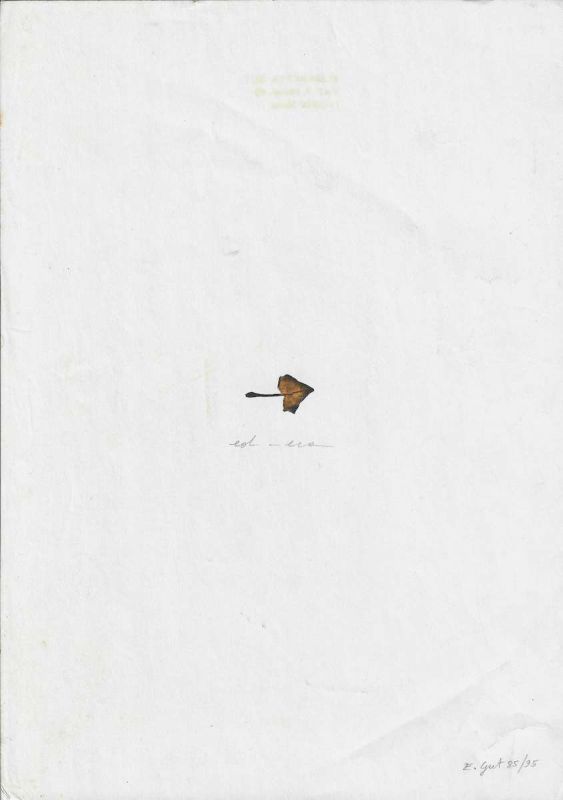
Local de nascimento: Roma, Italia
Data de nascimento: 1934
Local de falecimento: Roma, Italia
Data de falecimento: 16 de maio de 2024
BIOGRAFIA EM PORTUGUÊSElisabetta Gut foi uma artista e poeta visual italiana de origem familiar italiana e suíça, nascida em Roma em 1934 e falecida na mesma cidade em 16 de maio de 2024. Sua produção atravessou pintura, collage, assemblage, poesia visual, escultura, xerografia, arte postal, livro de artista, livro objeto, objeto poema, escrita, materiais naturais e experimentação gráfica. Ao longo de aproximadamente seis décadas, Gut desenvolveu uma linguagem centrada nas relações entre palavra, imagem, música, natureza, memória e materialidade do livro. O endereço Via P. A. Micheli 45, I 00197 Roma, Itália, aparece documentado em catálogo de arte postal que relaciona a artista entre participantes de uma rede internacional, confirmando sua inserção também nos circuitos de mail art.Elisabetta Gut nasceu em Roma, filha de mãe italiana e pai suíço alemão. Durante a Segunda Guerra Mundial passou parte da infância na Suíça e retornou à Itália em 1945. Fontes institucionais registram sua infância em Zurique e o contato precoce com museus e com ambientes culturais relacionados ao dadaísmo, surrealismo e abstração. De volta a Roma, frequentou o Istituto d'Arte e o curso de estudo do nu na Accademia di Belle Arti, referido também em outras fontes como Scuola libera del nudo.Sua primeira fase foi dedicada à pintura. Gut trabalhou inicialmente dentro de uma orientação pós cubista e posteriormente informal. Sua primeira exposição individual documentada ocorreu em 1956 na Galleria Cairola, em Milão, apresentada por Felice Casorati. Nesse período inicial ela chegou a utilizar Elisa como assinatura, forma abreviada de seu nome de batismo. A partir dos primeiros anos da década de 1960, sua pesquisa deslocou se progressivamente da pintura tradicional para investigações sobre signo, matéria, linguagem e identidade.Durante os anos 1960 Gut realizou atividades didáticas e também trabalhou com figurino e cenografia. Fontes relacionadas ao MUSINF de Senigallia registram sua colaboração em produções cinematográficas e documentais como Garcia Lorca, de 1970, Cosa avete fatto a Solange, de 1971, Ai Margini, de 1972, e Inizio73, de 1973. Essas atividades indicam uma prática que desde cedo ultrapassava os limites tradicionais da pintura e se relacionava com diferentes formas de construção visual.Um momento importante de sua trajetória foi a exposição individual na Galleria Il Carpine, em Roma. O Archivio Storico Istituto Luce registra documentalmente uma exposição de Elisabetta Gut nesse espaço em 1967, inclusive com imagens do catálogo, da artista, do público e das obras apresentadas. Outras fontes secundárias mencionam 1966 para uma exposição no mesmo espaço. Como o registro audiovisual do Istituto Luce é datado de 1967, essa data possui comprovação documental particularmente forte e deve ser preservada, registrando se a divergência nas fontes em pesquisas de catálogo raisonné.Durante a década de 1960 e sobretudo a partir dos anos 1970, Gut aproximou se das neo vanguardas verbo visuais italianas. A artista começou a explorar de maneira sistemática as relações entre imagem e escrita e passou a incorporar fragmentos de textos, páginas, linhas, fios, rendas, folhas, flores, sementes, madeira e outros materiais orgânicos. Collage e assemblage tornaram se procedimentos fundamentais de sua prática.O fio adquiriu importância particular em sua produção. Gut utilizou linhas de algodão como signos de escrita, ligação, costura, interrupção e cancelamento. Em determinadas obras o fio atravessa ou encobre textos impressos, criando aquilo que a crítica associada à sua obra denominou poesia cancellata. Esse procedimento faz desaparecer parcialmente a palavra e simultaneamente produz uma nova estrutura visual e tátil. A artista também relacionou fio, pentagrama, ritmo e vibração musical, convertendo elementos normalmente associados à escrita e à música em matéria plástica.Entre 1972 e 1978 Gut produziu séries de assemblages posteriormente apresentadas em diferentes contextos institucionais. Em 1973 realizou Gut no Palazzo Arengario, em Monza, de 7 a 18 de dezembro. Em 1977 participou da X Quadriennale Nazionale d'Arte di Roma, seção Artisti stranieri operanti in Italia, no Palazzo delle Esposizioni, realizada de 9 de junho a 10 de julho. Essas obras foram novamente contextualizadas em 1981 na exposição Elisabetta Gut 1956 1981: un filo ininterrotto, organizada em Macerata.A participação de Elisabetta Gut em Materializzazione del linguaggio, na 38ª Esposizione Internazionale d'Arte da Biennale di Venezia em 1978, constitui um marco de sua inserção na história internacional da poesia visual e das pesquisas de linguagem. A exposição reuniu 154 obras entre poesias, ilustrações, livros de artista e outras modalidades e incluiu, além de Gut, artistas como Mirella Bentivoglio, Neide Dias de Sá, Betty Danon, Irma Blank, Amelia Etlinger, Maria Lai, Lucia Marcucci, Ana Hatherly, Mira Schendel, Greta Schödl, Salette Tavares, Giovanna Sandri e Patrizia Vicinelli.A presença de Neide Dias de Sá na mesma exposição de 1978 é especialmente relevante para compreender uma conexão histórica entre Elisabetta Gut e o campo brasileiro relacionado ao Poema Processo. Não há documentação localizada que permita afirmar que Gut tenha integrado o movimento Poema Processo. Sua relação deve ser formulada no âmbito da poesia visual internacional, da arte postal, das publicações experimentais e das redes de artistas em que também circularam integrantes históricos do movimento brasileiro.A documentação de arte postal reforça essa dimensão internacional. Um catálogo de Mostra Internacional de Arte Postal registra Elisabetta Gut no endereço Via P. A. Micheli 45, I 00197 Roma, Italia, em uma relação que inclui artistas de diferentes países e brasileiros como Paulo Bruscky. O catálogo registra participação de 99 artistas. Esse documento é importante para estabelecer Gut não apenas como poeta visual e autora de livros objeto, mas também como participante das redes transnacionais de mail art e correspondência artística.Em 1981 realizou se na Pinacoteca e Musei Comunali de Macerata a exposição Elisabetta Gut 1956 1981: un filo ininterrotto, com curadoria e texto de Mirella Bentivoglio. A mostra assumiu importância retrospectiva ao reconstruir vinte e cinco anos da trajetória da artista e ao evidenciar a continuidade existente entre pintura, experimentação matérico visual, fio, escrita e objetos. O catálogo foi publicado em Macerata pela Coopedit e possui 47 páginas segundo registro bibliográfico localizado.Em fevereiro de 1981 a Galleria Il Luogo, em Roma, apresentou Filo logia, exposição coletiva que reuniu trabalhos relacionados ao fio e à linguagem. A documentação da Quadriennale di Roma registra a obra La città cancellata, de 1980, de Elisabetta Gut, ao lado de trabalhos de Francesca Cataldi, Maria Lai, Anna Paci, Renata Prunas e Franca Sonnino.A década de 1980 consolidou o livro como uma das estruturas centrais de sua produção. Gut passou a criar livros que não dependiam da leitura convencional e objetos nos quais folha, semente, ninho, gaiola, madeira e partitura musical substituíam ou transformavam as funções tradicionais de página, texto, capa e encadernação. Entre os tipos de trabalho reconhecidos em sua produção encontram se Book Leaf, Book Seed, Book Nest e Caged Book, além de páginas poéticas e objetos poema.A artista produziu também obras vinculadas diretamente à música. L'Ucello di fuoco, Da Stravinsky, de 1985, hoje pertencente ao National Museum of Women in the Arts, é uma obra tridimensional realizada com papel recortado e collage, concebida como representação visual da música e da dança associadas à composição de Igor Stravinsky. A presença recorrente de pautas musicais, fios, instrumentos, partituras e ritmos demonstra que Gut entendia a música não apenas como tema, mas como sistema de signos capaz de dialogar com a visualidade.Outra obra documentada é Arabesques, de 1984, preservada no arquivo da Quadriennale di Roma. Trata se de uma pasta contendo três serigrafias com intervenções manuais, medindo 18 por 18 centímetros, produzida em tiragem de dez exemplares. O exemplar documentado possui numeração 6 de 10 e assinatura da artista.Em 1986 Gut participou de Arte come scrittura na Quadriennale di Roma, exposição dedicada aos encontros entre escrita e práticas artísticas. Sua participação reforça a posição da artista no campo da escrita visual italiana ao lado de pesquisas que aproximavam poesia visual, arte conceitual e experimentação semiótica.A partir de 1987 sua obra passou também a integrar sistematicamente exposições do National Museum of Women in the Arts, em Washington. O museu registra sua participação em Book as Art I, de 1987, Book as Art II, de 1989, A Salute to Women e Book as Art IV, em 1991, Book as Art V, entre 1992 e 1993, Book as Art: Tenth Anniversary Exhibition, em 1997, Book as Art X, entre 1998 e 1999, Book as Art XII, em 2000, Book as Art XIII, em 2001, Insomnia: Landscapes of the Night, em 2003, The Book as Art: Twenty Years of Artists' Books from the National Museum of Women in the Arts, entre 2006 e 2007, Hard Copy: Book as Sculpture, entre 2009 e 2010, Trove: The Collection in Depth, em 2011, 25 x 25: Artists' Books from the NMWA Collection, em 2012, e Bound to Amaze: Inside a Book Collecting Career, em 2018.Em 1988 Gut participou de Volùmina, na Rocca Roveresca de Senigallia. Sua obra passou a ser preservada e apresentada no âmbito do Archivio della Poesia Visiva e del Librismo do MUSINF de Senigallia, instituição que conserva documentação relacionada às experiências de poesia visual, livro de artista, fotografia e comunicação experimental.Em 1994 sua produção foi apresentada em Fotoidea, relacionada à Bienal de São Paulo segundo as fontes biográficas consultadas. Esse registro amplia a relação da artista com o Brasil e com circuitos que já incluíam poesia visual e arte postal. Em 1998 participou de Post Scriptum. Artiste in Italia tra linguaggio e immagine negli anni 60 e 70, realizada no contexto da Biennale Donna de Ferrara.Em 2010 o National Museum of Women in the Arts realizou Books Without Words: The Visual Poetry of Elisabetta Gut, sua primeira exposição individual nos Estados Unidos. A mostra ocorreu de 10 de setembro de 2010 a 16 de janeiro de 2011 e reuniu mais de vinte obras, entre livros de artista, poemas collage, livros objeto e objetos poema. A curadoria foi de Krystyna Wasserman. O museu publicou também catálogo de 48 páginas com textos de Wasserman e Mirella Bentivoglio.Em 2012 ocorreu Cutting through: the art of Elisabetta Gut, na Maitland Regional Art Gallery, em Maitland, Austrália. A exposição integrou livros objeto, objetos, collages e pesquisas que sintetizavam as relações estabelecidas pela artista entre natureza, música, escrita e estrutura tridimensional.Em 2019 Gut apresentou Semi e segni na Galleria Cortese e Lisanti, em Roma, e participou de Threading spaces, exposição que colocou sua obra em diálogo com Franca Sonnino, Maria Lai e Nedda Guidi. No mesmo ano o projeto Three Approaches to Poetry reuniu Mirella Bentivoglio, Amelia Etlinger e Elisabetta Gut em Artissima, no Oval Lingotto de Turim.Elisabetta Gut morreu em Roma em 16 de maio de 2024. Após sua morte, seu trabalho passou por um processo de renovada investigação historiográfica. Em 2025 a Gramma Epsilon Gallery de Atenas realizou Elisabetta Gut: Alphabets, primeira retrospectiva explicitamente apresentada como tal, com curadoria de Paolo Cortese e Rosanna Ruscio. A mostra reuniu 70 obras produzidas ao longo de cerca de sessenta anos, incluindo pinturas, collages, esculturas e livros objeto. Foi acompanhada por catálogo com textos de Paolo Cortese, Rosanna Ruscio e Tommaso Silvestrini e contou com apoio do Istituto Italiano di Cultura di Atene.Também em 2025 o MUSINF promoveu Elisabetta Gut: Plume de Poète no Palazzetto Baviera, em Senigallia, apresentando obras vinculadas ao patrimônio do Archivio della Poesia Visiva e del Librismo. A mostra reforçou a posição de Gut dentro da história italiana da poesia visual e do livro objeto.A importância histórica de Elisabetta Gut reside na capacidade de transformar elementos mínimos como uma folha, uma semente, um fio, uma página, uma partitura, uma palavra ou uma gaiola em estruturas complexas de linguagem. Sua obra rompe a separação convencional entre literatura e artes visuais e aproxima corpo, escrita, natureza, memória, música e objeto. É particularmente relevante para pesquisas sobre poesia visual italiana, poesia experimental, livro de artista, livro objeto, arte postal, mail art, copy art, arte conceitual, produção artística feminina e redes internacionais de comunicação artística.
English
BIOGRAPHY IN ENGLISHElisabetta Gut was an Italian visual artist and visual poet of Italian and Swiss family background, born in Rome in 1934 and deceased in the same city on 16 May 2024. Her practice encompassed painting, collage, assemblage, Visual Poetry, sculpture, xerography, mail art, artists books, book objects, poem objects, writing, natural materials and graphic experimentation. Over approximately six decades, Gut developed a distinctive language centered on relationships among word, image, music, nature, memory and the material form of the book. The address Via P. A. Micheli 45, I 00197 Roma, Italy, is documented in an international mail art catalogue listing Gut among participants in a transnational correspondence network.Gut was born in Rome to an Italian mother and a Swiss German father. During the Second World War she spent part of her childhood in Switzerland and returned to Italy in 1945. Institutional and biographical sources associate her childhood with Zurich, where she encountered museums and the cultural atmosphere surrounding Dada, Surrealism and abstraction. Back in Rome, she attended the Istituto d'Arte and studied the nude at the Accademia di Belle Arti, also described in biographical sources as the Scuola libera del nudo.Her earliest artistic phase was devoted to painting. Gut initially worked within a post Cubist orientation before moving toward Informal Art. Her first documented solo exhibition took place in 1956 at Galleria Cairola in Milan and was introduced by Felice Casorati. During this early phase she sometimes signed her works Elisa, a shortened version of her given name. From the early 1960s onward, her practice progressively shifted away from conventional painting toward research involving sign, material, language and identity.During the 1960s Gut was involved in teaching and also worked with costume and set design. Documentation associated with MUSINF in Senigallia records collaborations on film and documentary projects including Garcia Lorca in 1970, Cosa avete fatto a Solange in 1971, Ai Margini in 1972 and Inizio73 in 1973. These activities reveal a practice that already extended beyond the conventional boundaries of painting.A significant moment in her career was her solo exhibition at Galleria Il Carpine in Rome. The Archivio Storico Istituto Luce preserves documentary film material dated 1967 showing the exhibition catalogue, Gut among visitors, the audience and examples of works on display. Some secondary sources date an exhibition at the same gallery to 1966. Since the Istituto Luce record is explicitly dated 1967, that date has particularly strong documentary support, while the discrepancy should remain noted in catalogue raisonné research.During the 1960s and especially from the 1970s onward, Gut became increasingly connected with Italian verbo visual and experimental poetry research. She systematically explored relationships between image and writing and incorporated fragments of text, pages, thread, lace, leaves, flowers, seeds, wood and other organic materials. Collage and assemblage became central procedures within her work.Thread acquired particular importance in Gut's practice. Cotton thread could function as writing, connection, stitching, interruption and cancellation. In certain works it crosses or conceals printed texts, producing what critical interpretations of her work describe as cancelled poetry. The procedure partially removes conventional linguistic readability while producing a new visual and tactile structure. Gut also connected thread with musical staff, rhythm and vibration, converting elements associated with writing and music into physical material.Between 1972 and 1978 Gut produced groups of assemblages that were subsequently shown in several institutional contexts. In 1973 she presented Gut at Palazzo Arengario in Monza from 7 to 18 December. In 1977 she participated in the X Quadriennale Nazionale d'Arte di Roma, in the section Artisti stranieri operanti in Italia, held at Palazzo delle Esposizioni from 9 June to 10 July. These works were later reconsidered in the 1981 exhibition Elisabetta Gut 1956 1981: un filo ininterrotto in Macerata.Gut's participation in Materializzazione del linguaggio at the 38th International Art Exhibition of the Venice Biennale in 1978 constitutes a major point in her position within the international history of Visual Poetry and language based art. The exhibition included 154 works consisting of poems, illustrations, artists books and other forms. Alongside Gut, participants included Mirella Bentivoglio, Neide Dias de Sá, Betty Danon, Irma Blank, Amelia Etlinger, Maria Lai, Lucia Marcucci, Ana Hatherly, Mira Schendel, Greta Schödl, Salette Tavares, Giovanna Sandri and Patrizia Vicinelli.The presence of Neide Dias de Sá in the same 1978 exhibition is particularly relevant when examining connections between Elisabetta Gut and the Brazilian Process Poem Movement. No documentation located in the sources consulted supports identifying Gut as a member of Poema Processo. Her relationship should instead be understood within the broader international fields of Visual Poetry, mail art, experimental publishing and artists networks in which historical participants of the Brazilian movement also circulated.Mail art documentation reinforces this international dimension. A catalogue for an International Mail Art Exhibition records Elisabetta Gut at Via P. A. Micheli 45, I 00197 Roma, Italia, within a list of artists from different countries that also includes Brazilian artist Paulo Bruscky. The catalogue records contributions from 99 artists. This evidence is important for understanding Gut not only as a visual poet and creator of book objects but also as a participant in transnational mail art and artistic correspondence networks.In 1981 the Pinacoteca and Musei Comunali in Macerata presented Elisabetta Gut 1956 1981: un filo ininterrotto, curated and critically framed by Mirella Bentivoglio. The exhibition retrospectively reconstructed twenty five years of Gut's career and emphasized continuity among painting, material experimentation, thread, writing and objects. A related catalogue was published in Macerata by Coopedit and is documented as a 47 page publication.In February 1981 Galleria Il Luogo in Rome presented Filo logia, a group exhibition focused on thread and language. Documentation from the Quadriennale di Roma records Gut's work La città cancellata from 1980 alongside works by Francesca Cataldi, Maria Lai, Anna Paci, Renata Prunas and Franca Sonnino.During the 1980s the book became one of the central structures of Gut's artistic language. She produced books that did not depend upon conventional reading and objects in which leaf, seed, nest, cage, wood and musical notation transformed the established functions of page, text, cover and binding. Recognized groups within her work include Poetry Pages and book objects such as Book Leaf, Book Seed, Book Nest and Caged Book, as well as sculptural poem objects.Music also became a recurring structural source. L'Ucello di fuoco, Da Stravinsky, from 1985, now in the collection of the National Museum of Women in the Arts, is a three dimensional work made with cut paper and collage and conceived as a visual interpretation of music and dance connected with Igor Stravinsky. The recurring presence of musical staffs, thread, instrument forms, scores and rhythmic structures demonstrates that Gut approached music as a system of signs capable of becoming visual language.Arabesques, dated 1984 and documented by the Quadriennale di Roma archive, consists of a portfolio of three screenprints with hand interventions measuring 18 by 18 centimeters and issued in an edition of ten. The documented copy is numbered 6 of 10 and signed by the artist.In 1986 Gut participated in Arte come scrittura at the Quadriennale di Roma, an exhibition devoted to relationships between writing and artistic practice. Her inclusion confirmed her place within Italian Visual Poetry and writing based experimentation at the intersection of poetry, Conceptual Art and semiotic research.From 1987 onward Gut's work was repeatedly exhibited at the National Museum of Women in the Arts in Washington. The museum documents her participation in Book as Art I in 1987, Book as Art II in 1989, A Salute to Women and Book as Art IV in 1991, Book as Art V in 1992 and 1993, Book as Art: Tenth Anniversary Exhibition in 1997, Book as Art X in 1998 and 1999, Book as Art XII in 2000, Book as Art XIII in 2001, Insomnia: Landscapes of the Night in 2003, The Book as Art: Twenty Years of Artists' Books from the National Museum of Women in the Arts in 2006 and 2007, Hard Copy: Book as Sculpture in 2009 and 2010, Trove: The Collection in Depth in 2011, 25 x 25: Artists' Books from the NMWA Collection in 2012, and Bound to Amaze: Inside a Book Collecting Career in 2018.In 1988 Gut participated in Volùmina at the Rocca Roveresca in Senigallia. Her works and documentation became associated with the Archivio della Poesia Visiva e del Librismo at MUSINF in Senigallia, an institution devoted to Visual Poetry, book art, photography and experimental communication.In 1994 her work was presented in Fotoidea, associated in the consulted biographical sources with the São Paulo Biennial. This record expands her documented relationship with Brazil and with circuits in which Visual Poetry and mail art had already established significant connections. In 1998 she participated in Post Scriptum. Artiste in Italia tra linguaggio e immagine negli anni 60 e 70, presented within the Biennale Donna in Ferrara.In 2010 the National Museum of Women in the Arts organized Books Without Words: The Visual Poetry of Elisabetta Gut, her first solo exhibition in the United States. Presented from 10 September 2010 to 16 January 2011, the exhibition brought together more than twenty artists books, collage poems, book objects and poem objects. It was curated by Krystyna Wasserman. A 48 page catalogue accompanied the exhibition with essays by Wasserman and Mirella Bentivoglio.In 2012 Cutting through: the art of Elisabetta Gut was presented at Maitland Regional Art Gallery in Maitland, Australia. The exhibition extended the international presentation of her work and included research based on book objects, collage, natural materials, music and writing.In 2019 Gut presented Semi e segni at Galleria Cortese e Lisanti in Rome and participated in Threading spaces, where her work was shown in dialogue with Franca Sonnino, Maria Lai and Nedda Guidi. The same year, Three Approaches to Poetry brought together Mirella Bentivoglio, Amelia Etlinger and Elisabetta Gut at Artissima in the Oval Lingotto in Turin.Elisabetta Gut died in Rome on 16 May 2024. Her death was followed by renewed historical and curatorial attention. In 2025 Gramma Epsilon Gallery in Athens organized Elisabetta Gut: Alphabets, presented as the first retrospective devoted to the artist. Curated by Paolo Cortese and Rosanna Ruscio, it brought together 70 works spanning approximately sixty years, including paintings, collages, sculpture and book objects. A catalogue accompanied the exhibition with texts by Paolo Cortese, Rosanna Ruscio and Tommaso Silvestrini under the patronage of the Italian Cultural Institute in Athens.Also in 2025 MUSINF organized Elisabetta Gut: Plume de Poète at Palazzetto Baviera in Senigallia, presenting works associated with the Archivio della Poesia Visiva e del Librismo and reaffirming her historical position within Italian Visual Poetry and book object research.Gut's historical significance lies in her ability to transform minimal materials such as a leaf, seed, thread, page, musical score, word or cage into complex structures of meaning. Her work challenges conventional divisions between literature and visual art and connects body, language, nature, memory, music and object. She remains particularly important for research on Italian Visual Poetry, experimental poetry, artists books, book objects, mail art, Conceptual Art, women's artistic practices and international alternative art networks.
Currículo
CURRÍCULO EM PORTUGUÊSElisabetta Gut desenvolveu uma trajetória de aproximadamente seis décadas entre pintura, poesia visual, collage, assemblage, escultura, livro de artista, livro objeto, arte postal, escrita, música e experimentação com materiais naturais. O currículo abaixo constitui uma lista consolidada das ocorrências documentadas nas fontes consultadas, seguindo o princípio de não apresentar como completa uma relação que ainda pode ser ampliada por pesquisa arquivística futura.IDENTIFICAÇÃONome principalElisabetta GutForma de assinatura inicial documentadaElisaNascimento1934Roma, ItáliaFalecimento16 de maio de 2024Roma, ItáliaOrigem familiarMãe italianaPai suíço alemãoNacionalidade e identificação cultural documentadaItalianaItalo suíçaCidade principal de atuaçãoRoma, ItáliaEndereço documentado em circuito de arte postalVia P. A. Micheli 45I 00197 RomaItaliaO endereço aparece em catálogo internacional de arte postal entre dados de participantes de uma rede composta por 99 artistas.Áreas de atuaçãoPinturaPoesia visualPoesia experimentalCollageAssemblageEsculturaXerografiaArte postalMail artLivro de artistaLivro objetoObjeto poemaSerigrafiaExperimentação gráficaFigurinoCenografiaMateriais naturaisRelações entre música e imagemEscrita visualFORMAÇÃODécada de 1940 e início da década de 1950Istituto d'ArteRomaItáliaPosteriormente realizou estudos do nu na Accademia di Belle Arti de Roma, também referidos pelas fontes como Scuola libera del nudo.ATUAÇÃO PROFISSIONALAnos 1960Atividade didáticaItáliaAtuação documentada paralelamente à produção artística.1970Colaboração em figurino ou cenografiaGarcia Lorca1971Colaboração em figurino ou cenografiaCosa avete fatto a Solange1972Colaboração em figurino ou cenografiaAi Margini1973Colaboração em figurino ou cenografiaInizio73DESENVOLVIMENTO ARTÍSTICO1950sPintura pós cubistaPosterior passagem pela pintura informal.Início dos anos 1960Progressivo abandono da pintura convencional e ampliação da pesquisa sobre signo, matéria e linguagem.Décadas de 1960 e 1970Experimentação com imagem e escritaCollageAssemblageFragmentos textuaisFioRendaMateriais vegetaisFolhasFloresSementesDécadas de 1970 e 1980Poesia visualPoesia cancellataRelações entre fio e escritaRelações entre fio, pauta musical e vibraçãoObjetosLivros objetoDécadas seguintesPoetry PagesBook LeafBook SeedBook NestCaged BookObjetos poemaInstrumentos musicaisAlfabetos imaginários relacionados a formas naturais, sinais e escritas.EXPOSIÇÕES INDIVIDUAIS DOCUMENTADAS1956Elisabetta GutGalleria CairolaMilãoItáliaPrimeira individual documentadaApresentação de Felice Casorati.1967Personale di Elisabetta GutGalleria Il CarpineRomaItáliaDocumentada pelo Archivio Storico Istituto LuceExiste referência secundária também a 1966 para exposição no mesmo espaço.1967Exposição documentada na Galleria VismaraMilãoItália.1973GutPalazzo ArengarioMonzaItália7 a 18 de dezembro de 1973.1981Elisabetta Gut 1956 1981: un filo ininterrottoPinacoteca e Musei ComunaliMacerataItáliaCuradoria e texto de Mirella Bentivoglio.2009Semi e segniGalleria Cortese e LisantiRomaItália.2010 a 2011Books Without Words: The Visual Poetry of Elisabetta GutNational Museum of Women in the ArtsWashingtonEstados Unidos10 de setembro de 2010 a 16 de janeiro de 2011Curadoria de Krystyna WassermanPrimeira individual da artista nos Estados UnidosMais de vinte obras entre livros de artista, poemas collage, livros objeto e objetos poema.2012Cutting through: the art of Elisabetta GutMaitland Regional Art GalleryMaitlandAustrália.2019La scuola delle coseMuseo delle Genti d'AbruzzoPescaraItáliaReferida entre as exposições recentes da artista.2025Elisabetta Gut: AlphabetsGramma Epsilon GalleryAtenasGrécia13 de março a 13 de junho de 2025Curadoria de Paolo Cortese e Rosanna RuscioExposição póstuma70 obrasPrimeira retrospectiva apresentada como tal pela instituição.2025Elisabetta Gut: Plume de PoètePalazzetto BavieraSenigalliaItália4 a 17 de abril de 2025Promoção do MUSINFExposição póstuma.EXPOSIÇÕES COLETIVAS E INSTITUCIONAIS DOCUMENTADAS1977X Quadriennale Nazionale d'Arte di RomaArtisti stranieri operanti in ItaliaPalazzo delle EsposizioniRomaItália9 de junho a 10 de julho de 1977.1978Materializzazione del linguaggio38ª Esposizione Internazionale d'ArteBiennale di VeneziaVenezaItáliaParticipação em exposição dedicada às práticas de linguagem154 obras de diferentes modalidadesParticipantes incluíram Mirella Bentivoglio, Neide Dias de Sá, Betty Danon, Irma Blank, Amelia Etlinger, Maria Lai, Lucia Marcucci, Ana Hatherly, Mira Schendel e outras artistas.1981Filo logiaGalleria Il LuogoRomaItália18 de fevereiro a 11 de março de 1981Obra documentadaLa città cancellata1986Arte come scritturaQuadriennale di RomaRomaItália.1987Book as Art INational Museum of Women in the ArtsWashingtonEstados Unidos.1988VolùminaRocca RoverescaSenigalliaItália.1989Book as Art IINational Museum of Women in the ArtsWashingtonEstados Unidos.1991A Salute to Women: Artists' Postcards and Albums from International Festivals in Copenhagen and NairobiNational Museum of Women in the ArtsWashingtonEstados Unidos.1991Book as Art IVNational Museum of Women in the ArtsWashingtonEstados Unidos.1992 a 1993Book as Art VNational Museum of Women in the ArtsWashingtonEstados Unidos.1994FotoideaRelacionada nas fontes consultadas à Bienal de São PauloSão PauloBrasil.1997Book as Art: Tenth Anniversary ExhibitionNational Museum of Women in the ArtsWashingtonEstados Unidos.1998Post Scriptum. Artiste in Italia tra linguaggio e immagine negli anni 60 e 70Biennale DonnaFerraraItália.1998 a 1999Book as Art XNational Museum of Women in the ArtsWashingtonEstados Unidos.2000Book as Art XII: Artists' Books from the Permanent CollectionNational Museum of Women in the ArtsWashingtonEstados Unidos.2001Book as Art XIII: Artists' Books about ArtistsNational Museum of Women in the ArtsWashingtonEstados Unidos.2003Insomnia: Landscapes of the NightNational Museum of Women in the ArtsWashingtonEstados Unidos.2006 a 2007The Book as Art: Twenty Years of Artists' Books from the National Museum of Women in the ArtsNational Museum of Women in the ArtsWashingtonEstados Unidos.2009 a 2010Hard Copy: Book as SculptureNational Museum of Women in the ArtsWashingtonEstados Unidos.2011Trove: The Collection in DepthNational Museum of Women in the ArtsWashingtonEstados Unidos.2011Poesia VisivaMARTRoveretoItália.201225 x 25: Artists' Books from the NMWA CollectionNational Museum of Women in the ArtsWashingtonEstados Unidos.2018Bound to Amaze: Inside a Book Collecting CareerNational Museum of Women in the ArtsWashingtonEstados Unidos.2019Threading spacesExposição com Elisabetta Gut, Franca Sonnino, Maria Lai e Nedda Guidi.2019Three Approaches to PoetryMirella BentivoglioAmelia EtlingerElisabetta GutArtissimaOval LingottoTurimItália.2023Books as ArtGramma Epsilon GalleryAtenasGrécia15 de junho a 20 de outubro de 2023Curadoria de Paolo Cortese.ARTE POSTAL E MAIL ARTElisabetta Gut aparece documentada em catálogo de Mostra Internacional de Arte Postal pelo endereço Via P. A. Micheli 45, I 00197 Roma, Italia.O mesmo catálogo relaciona 99 artistas de diferentes países e inclui também participantes brasileiros, entre eles Paulo Bruscky.A documentação confirma sua participação em circuitos internacionais de arte postal, embora a pesquisa realizada até o momento não permita reconstruir todas as convocatórias e correspondências das quais participou.OBRAS E SÉRIES DOCUMENTADAS1961Alla ricerca del tempo perdutoProustObra identificada em reconstrução retrospectiva de sua trajetória.1980La città cancellataApresentada posteriormente em Filo logiaGalleria Il LuogoRoma.1984ArabesquesPasta com três serigrafias e intervenções manuais18 por 18 centímetrosTiragem de 10 exemplaresExemplar documentado 6 de 10Arquivo da Quadriennale di Roma.1985L'Ucello di fuocoDa StravinskyPapel recortado e collageNational Museum of Women in the ArtsWashington.2018EgoObra utilizada em leitura retrospectiva da trajetória da artista.Séries e tipologias documentadasPoetry PagesBook LeafBook SeedBook NestCaged BookLivros objetoObjetos poemaInstrumentos musicaisPoesia cancellata.LIVROS DE ARTISTA E PUBLICAÇÕES DE ARTISTAGut produziu ao longo de décadas numerosos livros únicos, livros objeto e objetos derivados da estrutura física e simbólica do livro. O National Museum of Women in the Arts preserva e expõe regularmente exemplares dessa produção.Entre as tipologias documentadas estãoBook LeafBook SeedBook NestCaged BookLivros com sementesLivros com folhasLivros com partiturasLivros em gaiolasGaiolas construídas a partir da ideia de livro.CATÁLOGOS E PUBLICAÇÕES SOBRE A ARTISTA1981Mirella BentivoglioElisabetta Gut 1956 1981: un filo ininterrottoCoopeditMacerata47 páginasCatálogo da exposição retrospectiva de Macerata.2010Books Without Words: The Visual Poetry of Elisabetta GutNational Museum of Women in the ArtsWashington48 páginasTextos de Krystyna Wasserman e Mirella Bentivoglio.2025Elisabetta Gut: AlphabetsGramma Epsilon GalleryAtenasCuradoria de Paolo Cortese e Rosanna RuscioTextos de Paolo Cortese, Rosanna Ruscio e Tommaso Silvestrini.CRÍTICOS, CURADORES E ARTISTAS RELACIONADOSFelice CasoratiApresentou sua primeira individual em 1956.Mirella BentivoglioCrítica, curadora e importante interlocutora de sua produçãoCuradora de Elisabetta Gut 1956 1981: un filo ininterrottoAutora de texto para o catálogo de Books Without Words.Krystyna WassermanCuradora de Books Without Words no National Museum of Women in the Arts.Outros críticos que escreveram sobre sua produção incluem Nello Ponente, Giulia Niccolai, Marcello Venturoli, Luciano Marziano, Carmine Benincasa, Daniela Lanzer e Francesco Vincitorio.Artistas relacionados através de exposições e contextos de pesquisa incluem Mirella Bentivoglio, Neide Dias de Sá, Betty Danon, Irma Blank, Amelia Etlinger, Maria Lai, Lucia Marcucci, Ana Hatherly, Mira Schendel, Greta Schödl, Giovanna Sandri, Franca Sonnino e Francesca Cataldi.COLEÇÕES PÚBLICAS E ARQUIVOSNational Museum of Women in the ArtsWashingtonEstados UnidosPreserva obras de Elisabetta Gut e possui longa história de exposições dedicadas aos seus livros de artista e livros objeto.Archivio della Poesia Visiva e del LibrismoMUSINFSenigalliaItáliaPreserva documentação e obras relacionadas à artista.Quadriennale di RomaRomaItáliaArquivo com documentação e obras relacionadas a Gut, incluindo Arabesques, de 1984.Archivio Storico Istituto LuceRomaItáliaPreserva registro cinematográfico da exposição individual realizada na Galleria Il Carpine em 1967.RELAÇÃO COM O POEMA PROCESSONão foi localizada documentação que permita classificar Elisabetta Gut como integrante histórica do Poema Processo.A conexão documental ocorre no campo internacional da poesia visual, poesia experimental e arte postal.Em Materializzazione del linguaggio, Biennale di Venezia de 1978, Gut e Neide Dias de Sá participaram da mesma exposição.A presença de Gut em circuitos internacionais de arte postal também a aproxima das redes nas quais artistas brasileiros relacionados ao Poema Processo e à poesia experimental circularam.CRONOLOGIA1934Nascimento em Roma.Década de 1940Infância parcialmente vivida na Suíça durante a Segunda Guerra Mundial.1945Retorno à Itália.Década de 1950Formação artística em RomaExperiências iniciais com pintura pós cubista e informal.1956Primeira individual na Galleria Cairola, MilãoApresentação de Felice Casorati.1961Alla ricerca del tempo perduto.1967Individual na Galleria Il Carpine, RomaRegistro do Istituto Luce.1967Exposição na Galleria Vismara, Milão.1970 a 1973Colaborações em projetos cinematográficos e documentais.1973GutPalazzo ArengarioMonza.1977X Quadriennale Nazionale d'Arte di Roma.1978Materializzazione del linguaggioBiennale di Venezia.1980La città cancellata.1981Filo logiaRomaElisabetta Gut 1956 1981: un filo ininterrottoMacerata.1984Arabesques.1985L'Ucello di fuocoDa Stravinsky.1986Arte come scritturaQuadriennale di Roma.1987Início da longa série documentada de exposições no National Museum of Women in the Arts.1988VolùminaSenigallia.1994FotoideaSão PauloBrasil.1998Post ScriptumBiennale DonnaFerrara.2009Semi e segniRoma.2010 a 2011Books Without WordsNational Museum of Women in the ArtsWashington.2012Cutting throughMaitland Regional Art GalleryAustrália.2018Ego.2019Threading spacesThree Approaches to Poetry.2023Books as ArtAtenas.2024Falecimento em Roma em 16 de maio.2025Elisabetta Gut: AlphabetsAtenasElisabetta Gut: Plume de PoèteSenigallia.
English
CURRICULUM IN ENGLISHElisabetta Gut developed an artistic career spanning approximately six decades across painting, Visual Poetry, collage, assemblage, sculpture, artists books, book objects, mail art, writing, music and experimentation with natural materials. The curriculum below constitutes a consolidated list of occurrences documented in the sources consulted and does not claim to represent every exhibition or publication that may eventually be identified through further archival research.IDENTIFICATIONPrimary nameElisabetta GutEarly documented signatureElisaBirth1934Rome, ItalyDeath16 May 2024Rome, ItalyFamily backgroundItalian motherSwiss German fatherDocumented cultural and national identificationItalianItalian SwissPrimary city of activityRome, ItalyDocumented mail art addressVia P. A. Micheli 45I 00197 RomaItaliaThe address appears in an international mail art catalogue among participants in a network comprising 99 artists.Fields of activityPaintingVisual PoetryExperimental poetryCollageAssemblageSculptureXerographyMail artArtists booksBook objectsPoem objectsScreenprintingGraphic experimentationCostume designSet designNatural materialsRelationships between music and imageVisual writing.EDUCATION1940s and early 1950sIstituto d'ArteRomeItalyGut subsequently studied the nude at the Accademia di Belle Arti in Rome, also described in biographical sources as the Scuola libera del nudo.PROFESSIONAL ACTIVITIES1960sTeaching activityItaly.1970Costume or set design collaborationGarcia Lorca.1971Costume or set design collaborationCosa avete fatto a Solange.1972Costume or set design collaborationAi Margini.1973Costume or set design collaborationInizio73.ARTISTIC DEVELOPMENT1950sPost Cubist paintingLater transition toward Informal Art.Early 1960sProgressive movement away from conventional painting toward investigations of sign, material, language and identity.1960s and 1970sImage and writing researchCollageAssemblageText fragmentsThreadLacePlant materialsLeavesFlowersSeeds.1970s and 1980sVisual PoetryCancelled poetryRelationships between thread and writingRelationships among thread, musical notation and vibrationObjectsBook objects.Later decadesPoetry PagesBook LeafBook SeedBook NestCaged BookPoem objectsMusical instrumentsImaginary alphabets derived from natural forms, signs and writing systems.SOLO EXHIBITIONS1956Elisabetta GutGalleria CairolaMilanItalyFirst documented solo exhibitionIntroduced by Felice Casorati.1967Personale di Elisabetta GutGalleria Il CarpineRomeItalyDocumented by the Archivio Storico Istituto LuceA secondary source also gives 1966 for an exhibition at the same gallery.1967Documented exhibition at Galleria VismaraMilanItaly.1973GutPalazzo ArengarioMonzaItaly7 to 18 December 1973.1981Elisabetta Gut 1956 1981: un filo ininterrottoPinacoteca and Musei ComunaliMacerataItalyCurated and critically framed by Mirella Bentivoglio.2009Semi e segniGalleria Cortese e LisantiRomeItaly.2010 to 2011Books Without Words: The Visual Poetry of Elisabetta GutNational Museum of Women in the ArtsWashingtonUnited States10 September 2010 to 16 January 2011Curated by Krystyna WassermanFirst solo exhibition by Gut in the United StatesMore than twenty artists books, collage poems, book objects and poem objects.2012Cutting through: the art of Elisabetta GutMaitland Regional Art GalleryMaitlandAustralia.2019La scuola delle coseMuseo delle Genti d'AbruzzoPescaraItaly.2025Elisabetta Gut: AlphabetsGramma Epsilon GalleryAthensGreece13 March to 13 June 2025Curated by Paolo Cortese and Rosanna RuscioPosthumous exhibition70 worksPresented by the institution as the first retrospective devoted to Gut.2025Elisabetta Gut: Plume de PoètePalazzetto BavieraSenigalliaItaly4 to 17 April 2025Promoted by MUSINFPosthumous exhibition.GROUP EXHIBITIONS AND INSTITUTIONAL EXHIBITIONS1977X Quadriennale Nazionale d'Arte di RomaArtisti stranieri operanti in ItaliaPalazzo delle EsposizioniRomeItaly9 June to 10 July 1977.1978Materializzazione del linguaggio38th International Art ExhibitionVenice BiennaleVeniceItalyExhibition devoted to language based practices154 works in different formatsParticipants included Mirella Bentivoglio, Neide Dias de Sá, Betty Danon, Irma Blank, Amelia Etlinger, Maria Lai, Lucia Marcucci, Ana Hatherly, Mira Schendel and many others.1981Filo logiaGalleria Il LuogoRomeItaly18 February to 11 March 1981Documented workLa città cancellata1986Arte come scritturaQuadriennale di RomaRomeItaly.1987Book as Art INational Museum of Women in the ArtsWashingtonUnited States.1988VolùminaRocca RoverescaSenigalliaItaly.1989Book as Art IINational Museum of Women in the ArtsWashingtonUnited States.1991A Salute to Women: Artists' Postcards and Albums from International Festivals in Copenhagen and NairobiNational Museum of Women in the ArtsWashingtonUnited States.1991Book as Art IVNational Museum of Women in the ArtsWashingtonUnited States.1992 to 1993Book as Art VNational Museum of Women in the ArtsWashingtonUnited States.1994FotoideaAssociated in the consulted biographical sources with the São Paulo BiennialSão PauloBrazil.1997Book as Art: Tenth Anniversary ExhibitionNational Museum of Women in the ArtsWashingtonUnited States.1998Post Scriptum. Artiste in Italia tra linguaggio e immagine negli anni 60 e 70Biennale DonnaFerraraItaly.1998 to 1999Book as Art XNational Museum of Women in the ArtsWashingtonUnited States.2000Book as Art XII: Artists' Books from the Permanent CollectionNational Museum of Women in the ArtsWashingtonUnited States.2001Book as Art XIII: Artists' Books about ArtistsNational Museum of Women in the ArtsWashingtonUnited States.2003Insomnia: Landscapes of the NightNational Museum of Women in the ArtsWashingtonUnited States.2006 to 2007The Book as Art: Twenty Years of Artists' Books from the National Museum of Women in the ArtsNational Museum of Women in the ArtsWashingtonUnited States.2009 to 2010Hard Copy: Book as SculptureNational Museum of Women in the ArtsWashingtonUnited States.2011Trove: The Collection in DepthNational Museum of Women in the ArtsWashingtonUnited States.2011Poesia VisivaMARTRoveretoItaly.201225 x 25: Artists' Books from the NMWA CollectionNational Museum of Women in the ArtsWashingtonUnited States.2018Bound to Amaze: Inside a Book Collecting CareerNational Museum of Women in the ArtsWashingtonUnited States.2019Threading spacesExhibition with Elisabetta Gut, Franca Sonnino, Maria Lai and Nedda Guidi.2019Three Approaches to PoetryMirella BentivoglioAmelia EtlingerElisabetta GutArtissimaOval LingottoTurinItaly.2023Books as ArtGramma Epsilon GalleryAthensGreece15 June to 20 October 2023Curated by Paolo Cortese.MAIL ARTElisabetta Gut is documented in an International Mail Art Exhibition catalogue at the address Via P. A. Micheli 45, I 00197 Roma, Italia.The same catalogue records 99 participants from different countries and includes Brazilian participants such as Paulo Bruscky.This documentation confirms Gut's participation in international mail art networks, although the sources currently consulted do not permit reconstruction of every mail art call, correspondence exchange or postal project in which she participated.DOCUMENTED WORKS AND SERIES1961Alla ricerca del tempo perdutoProustWork identified within a retrospective reconstruction of her career.1980La città cancellataLater exhibited in Filo logiaGalleria Il LuogoRome.1984ArabesquesPortfolio containing three screenprints with hand interventions18 by 18 centimetersEdition of 10Documented copy numbered 6 of 10Quadriennale di Roma archive.1985L'Ucello di fuocoDa StravinskyCut paper and collageNational Museum of Women in the ArtsWashington.2018EgoWork discussed within a retrospective reconstruction of Gut's artistic trajectory.Documented series and types of workPoetry PagesBook LeafBook SeedBook NestCaged BookBook objectsPoem objectsMusical instrumentsCancelled poetry.ARTISTS BOOKS AND ARTISTS PUBLICATIONSThroughout her career Gut created numerous unique artists books, book objects and sculptural works derived from the physical and symbolic structure of the book. The National Museum of Women in the Arts preserves and regularly exhibits examples of this production.Documented types includeBook LeafBook SeedBook NestCaged BookBooks incorporating seedsBooks incorporating leavesBooks incorporating musical scoresBooks enclosed within cagesCage structures derived from the concept of the book.EXHIBITION CATALOGUES AND PUBLICATIONS ABOUT THE ARTIST1981Mirella BentivoglioElisabetta Gut 1956 1981: un filo ininterrottoCoopeditMacerata47 pagesCatalogue associated with the Macerata retrospective.2010Books Without Words: The Visual Poetry of Elisabetta GutNational Museum of Women in the ArtsWashington48 pagesEssays by Krystyna Wasserman and Mirella Bentivoglio.2025Elisabetta Gut: AlphabetsGramma Epsilon GalleryAthensCurated by Paolo Cortese and Rosanna RuscioEssays by Paolo Cortese, Rosanna Ruscio and Tommaso Silvestrini.RELATED CRITICS, CURATORS AND ARTISTSFelice CasoratiIntroduced Gut's first solo exhibition in 1956.Mirella BentivoglioCritic, curator and major interlocutor of Gut's workCurator of Elisabetta Gut 1956 1981: un filo ininterrottoAuthor of an essay for the Books Without Words catalogue.Krystyna WassermanCurator of Books Without Words at the National Museum of Women in the Arts.Other critics documented as having written on Gut include Nello Ponente, Giulia Niccolai, Marcello Venturoli, Luciano Marziano, Carmine Benincasa, Daniela Lanzer and Francesco Vincitorio.Artists connected through exhibitions and research contexts include Mirella Bentivoglio, Neide Dias de Sá, Betty Danon, Irma Blank, Amelia Etlinger, Maria Lai, Lucia Marcucci, Ana Hatherly, Mira Schendel, Greta Schödl, Giovanna Sandri, Franca Sonnino and Francesca Cataldi.PUBLIC COLLECTIONS AND DOCUMENTARY ARCHIVESNational Museum of Women in the ArtsWashingtonUnited StatesPreserves works by Elisabetta Gut and has presented her artists books and book objects in numerous exhibitions since 1987.Archivio della Poesia Visiva e del LibrismoMUSINFSenigalliaItalyPreserves works and documentation relating to Gut.Quadriennale di RomaRomeItalyPreserves archival documentation and material related to Gut, including Arabesques from 1984.Archivio Storico Istituto LuceRomeItalyPreserves film documentation of Gut's 1967 solo exhibition at Galleria Il Carpine.RELATIONSHIP WITH THE PROCESS POEM MOVEMENTNo documentation was located that supports identifying Elisabetta Gut as a historical member of the Brazilian Process Poem Movement.Her documented connection lies within the international fields of Visual Poetry, experimental poetry and mail art.Gut and Neide Dias de Sá participated in the same Materializzazione del linguaggio exhibition at the Venice Biennale in 1978.Gut's documented participation in international mail art networks also places her within communication circuits in which Brazilian experimental artists associated with Poema Processo and related practices circulated.CHRONOLOGY1934Born in Rome.1940sChildhood partly spent in Switzerland during the Second World War.1945Returned to Italy.1950sArtistic education in RomeEarly post Cubist and Informal painting.1956First solo exhibition at Galleria Cairola, MilanIntroduced by Felice Casorati.1961Alla ricerca del tempo perduto.1967Solo exhibition at Galleria Il Carpine, RomeDocumented by Istituto Luce.1967Exhibition at Galleria Vismara, Milan.1970 to 1973Collaborations in film and documentary projects.1973GutPalazzo ArengarioMonza.1977X Quadriennale Nazionale d'Arte di Roma.1978Materializzazione del linguaggioVenice Biennale.1980La città cancellata.1981Filo logiaRomeElisabetta Gut 1956 1981: un filo ininterrottoMacerata.1984Arabesques.1985L'Ucello di fuocoDa Stravinsky.1986Arte come scritturaQuadriennale di Roma.1987Beginning of the documented sequence of exhibitions at the National Museum of Women in the Arts.1988VolùminaSenigallia.1994FotoideaSão PauloBrazil.1998Post ScriptumBiennale DonnaFerrara.2009Semi e segniRome.2010 to 2011Books Without WordsNational Museum of Women in the ArtsWashington.2012Cutting throughMaitland Regional Art GalleryAustralia.2018Ego.2019Threading spacesThree Approaches to Poetry.2023Books as ArtAthens.2024Died in Rome on 16 May.2025Elisabetta Gut: AlphabetsAthensElisabetta Gut: Plume de PoèteSenigallia.