Maurizio Nannucci - Firenzi - Italia
Local de nascimento: Florença, Itália
Data de nascimento: 20 de abril de 1939
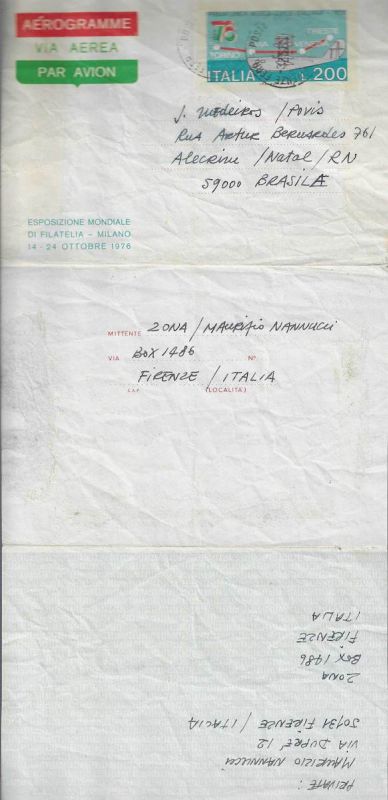
BIOGRAFIA EM PORTUGUÊSMaurizio Nannucci nasceu em Florença, Itália, em 20 de abril de 1939. Artista visual, poeta experimental, editor, pesquisador, arquivista e produtor de publicações e trabalhos sonoros, desenvolveu desde a década de 1960 uma prática situada nas relações entre linguagem, escrita, imagem, cor, luz, som, espaço e comunicação. Sua trajetória está associada à poesia concreta, poesia visual, arte conceitual, Fluxus, publicação de artista, livro de artista, múltiplos, arte sonora, práticas editoriais independentes e redes internacionais de intercâmbio artístico. Estudou na Academia de Belas Artes de Florença e também em Berlim. Trabalhou com grupos de teatro experimental como cenógrafo e frequentou cursos relacionados à música eletrônica. Na primeira metade dos anos 1960 começou a desenvolver os Dattilogrammi, trabalhos nos quais letras, palavras e sinais produzidos mecanicamente passam a funcionar simultaneamente como linguagem e imagem.Ainda durante os anos 1960, Nannucci estabeleceu contato com artistas relacionados ao Fluxus e aprofundou seu interesse pela poesia visual. Colaborou com o S 2F M, Studio di Fonologia Musicale de Florença, desenvolvendo experiências de música eletrônica e pesquisas com voz e palavra que posteriormente se estenderiam à instalação sonora. Em 1967 realizou sua primeira exposição individual no Centro Arte Viva, em Trieste, onde apresentou textos produzidos com luz neon. O emprego de palavras luminosas tornou se posteriormente um dos aspectos mais reconhecíveis de sua produção, embora sua obra permaneça profundamente ligada também à fotografia, ao som, ao vídeo, às edições, aos livros de artista, aos impressos e aos sistemas de circulação da informação.Em 1968 Nannucci fundou em Florença Exempla, iniciativa editorial dedicada às publicações e edições de artista. Sua atividade editorial tornou se inseparável de sua prática artística. Livros, revistas, discos, fotografias, cartões, cartazes, múltiplos, documentos efêmeros e materiais produzidos para circulação foram compreendidos não apenas como registros de obras, mas como meios autônomos de criação e distribuição artística. Ao longo dessa atividade esteve relacionado à edição ou circulação de trabalhos de artistas como Sol LeWitt, John Armleder, James Lee Byars, Robert Filliou e Ian Hamilton Finlay.Essa dimensão editorial aproximou Nannucci diretamente do universo da Mail Art. Sua relação com a arte postal não deve ser limitada à produção de cartões enviados pelo correio. Ela está integrada a uma concepção mais ampla de rede artística, baseada na circulação descentralizada de informações, publicações, convites, fotografias, selos, carimbos, correspondências e documentos entre artistas, editores, arquivos e espaços independentes. O arquivo associado a Maurizio Nannucci e Zona preserva justamente materiais efêmeros como convites, cartões postais, Mail Art, carimbos, cartazes, adesivos e trabalhos sonoros, documentação acumulada a partir da atividade artística e editorial iniciada por Nannucci na década de 1960.Em 1974 começou a experiência de Zona em Florença, espaço cultural sem fins lucrativos administrado por artistas e ativo até 1985. Zona funcionou como espaço de exposição, informação, encontro, arquivo, publicação e circulação internacional. Mais de duzentas exposições e eventos foram organizados durante seu período de atividade. Essa estrutura ocupou posição importante entre as iniciativas independentes europeias que questionavam os modelos institucionais tradicionais e procuravam criar formas diretas de contato entre artistas.Um episódio central para compreender a relação entre Nannucci, publicação experimental, arquivo e rede internacional foi Small Press Scene, organizada por Maurizio Nannucci em Zona em 1975. A exposição reuniu mais de 250 revistas independentes relacionadas à arte visual experimental, poesia concreta, arquitetura e nova música. Entre as publicações e iniciativas representadas encontravam se projetos ligados a Fluxus, Art and Language, Geiger, Futura, Dieter Roth, Hermann de Vries, Ian Hamilton Finlay e outras experiências editoriais internacionais. O projeto evidencia que Nannucci entendia a small press como território artístico e como infraestrutura de circulação de ideias.É nesse contexto que a correspondência de 1977 entre Maurizio Nannucci e J. Medeiros, em Natal, Rio Grande do Norte, assume especial relevância para a história das conexões entre as redes experimentais italianas e brasileiras. Em carta manuscrita datada de Firenze, 2 de setembro de 1977, Nannucci agradece a J. Medeiros o envio de um exemplar da revista brasileira POVIS. Informa que o exemplar havia chegado bastante danificado pelo serviço postal e pede novos exemplares dos números 1 e 2 da publicação.Na mesma carta, Nannucci apresenta Zona como uma organização cultural sem fins lucrativos e informa que mantinha um arquivo internacional dedicado a pequenas publicações independentes. Solicita que os exemplares de POVIS sejam enviados cuidadosamente acondicionados porque deveriam integrar esse arquivo e uma exposição planejada para um museu italiano. Registra ainda que essa seria a segunda exposição relacionada a esse tipo de material. Ao final da correspondência, Nannucci afirma que tentaria enviar uma contribuição para POVIS número 3 antes do final de setembro de 1977.A carta estabelece uma relação documental direta entre Maurizio Nannucci, Zona, Florença, J. Medeiros, POVIS, Natal e o Brasil. Ela demonstra que a publicação brasileira circulava dentro de uma rede europeia de pequenas revistas experimentais e que Nannucci pretendia incorporá la tanto ao arquivo de Zona quanto a um projeto expositivo. Mais importante, sua intenção de contribuir para POVIS número 3 mostra que o intercâmbio não era exclusivamente de coleta. Havia a possibilidade concreta de colaboração editorial entre Nannucci e a publicação vinculada a J. Medeiros.Essa correspondência constitui uma fonte primária particularmente relevante para pesquisas sobre a circulação internacional da poesia visual, arte postal, publicações experimentais e arte conceitual entre Brasil e Itália durante a década de 1970. No conjunto documental analisado, não foi localizada evidência suficiente para afirmar que Maurizio Nannucci tenha integrado formalmente o movimento Poema Processo brasileiro. A relação comprovada é de outra natureza e igualmente importante. Trata se de contato direto com J. Medeiros e POVIS dentro do circuito internacional de publicações experimentais e redes postais que possuía numerosas zonas de contato com a poesia visual e com artistas brasileiros ligados às práticas de vanguarda.A relevância histórica desse documento cresce quando relacionada ao desenvolvimento do Zona Archives. O arquivo formado em torno da atividade de Nannucci acumulou ao longo das décadas dezenas de milhares de documentos relacionados à arte contemporânea e às práticas de vanguarda. Uma apresentação posterior do Zona Archives no MAMCO de Genebra descreveu um conjunto superior a trinta mil documentos.Além de Exempla e Zona, Nannucci desenvolveu outras plataformas editoriais e sonoras. Entre elas encontram se Recorthings, relacionada a discos e experiências sonoras, Zona Archives Edizioni e a revista Mèla. Em 1981 criou Zona Radio, dedicada a trabalhos sonoros de artistas e música experimental. Essas atividades evidenciam a continuidade de sua investigação sobre distribuição, transmissão e comunicação como componentes da própria obra de arte.Na década de 1990, Nannucci intensificou projetos relacionados à arquitetura e ao espaço urbano, trabalhando com arquitetos como Auer e Weber, Mario Botta, Massimiliano Fuksas e Renzo Piano. Suas intervenções luminosas passaram a ocupar fachadas, bibliotecas, aeroportos, museus e equipamentos culturais, preservando o mesmo princípio que orientava seus trabalhos impressos e postais. A palavra é deslocada de seu contexto habitual para produzir novas relações entre leitura, percepção e espaço. Entre suas instalações permanentes encontram se trabalhos relacionados ao Auditorium Parco della Musica em Roma, ao Aeroporto de Fiumicino e à Bibliothek des Deutschen Bundestages em Berlim.Em 1998, juntamente com Paolo Parisi, Massimo Nannucci, Carlo Guaita, Paolo Masi e Antonio Catelani, participou da criação de Base Progetti per l arte, em Florença, retomando a experiência de espaço independente administrado por artistas e voltado à apresentação de projetos de outros artistas.Nannucci participou diversas vezes da Biennale di Venezia e esteve presente em Documenta, Kassel, além das bienais de São Paulo, Sydney, Istanbul e Valencia. Suas obras integram coleções internacionais como Museum of Modern Art, Nova York, Stedelijk Museum, Amsterdam, Centre Georges Pompidou, Paris, MAXXI, Roma, e Peggy Guggenheim Collection, Veneza.Em 2003 produziu Changing Place, Changing Time, Changing Thoughts, Changing Future para uma exposição organizada pela Peggy Guggenheim Collection no Foro Boario de Modena. Em 2004 o trabalho foi apresentado nos espaços externos da Peggy Guggenheim Collection em Veneza.Em 2015 o MAXXI, em Roma, apresentou Maurizio Nannucci. Where to Start From, exposição individual com curadoria de Bartolomeo Pietromarchi. A mostra reuniu trabalhos históricos e recentes, neons, múltiplos, livros, discos, fotografias, revistas e documentos efêmeros, abrangendo aproximadamente cinquenta anos de produção. Entre os trabalhos realizados para a ocasião estavam Sound Samples e More Than Meets the Eye, destinado à fachada do museu e incorporado à coleção do MAXXI.A obra de Maurizio Nannucci permite compreender a Mail Art como parte de uma estrutura muito mais extensa de comunicação artística. Correspondência, arquivo, edição, publicação, exposição, som, rádio e circulação de documentos constituem diferentes manifestações de uma mesma investigação sobre como a linguagem pode produzir relações. A carta enviada a J. Medeiros em 1977 materializa essa lógica em escala transatlântica e acrescenta uma conexão brasileira documentada à história de Nannucci. Ela relaciona Florença e Natal, Zona e POVIS, small press e exposição, arquivo e correspondência, demonstrando como publicações independentes brasileiras podiam entrar rapidamente em redes internacionais de arte experimental durante os anos 1970.
English
BIOGRAPHY IN ENGLISHMaurizio Nannucci was born in Florence, Italy, on 20 April 1939. A visual artist, experimental poet, editor, researcher, archivist and producer of publications and sound works, he has developed since the 1960s a practice centered on the relationships between language, writing, image, color, light, sound, space and communication. His career is associated with concrete poetry, visual poetry, conceptual art, Fluxus, artists publications, artists books, multiples, sound art, independent publishing and international networks of artistic exchange. He studied at the Academy of Fine Arts in Florence and also in Berlin. He worked as a set designer with experimental theater groups and pursued studies related to electronic music. During the first half of the 1960s he began producing his Dattilogrammi, works in which mechanically generated letters, words and signs function simultaneously as language and image.During the same decade Nannucci established relationships with artists associated with Fluxus and developed a strong interest in visual poetry. He collaborated with S 2F M, Studio di Fonologia Musicale in Florence, on electronic music and experiments involving voice and language that later developed into sound installations. In 1967, during his first solo exhibition at Centro Arte Viva in Trieste, he presented texts produced with neon light. Luminous language subsequently became one of the most recognizable aspects of his practice, although his work has remained equally connected to photography, sound, video, editions, artists books, printed matter and systems for circulating information.In 1968 Nannucci founded Exempla in Florence, an editorial initiative devoted to artists publications and editions. Publishing became inseparable from his artistic practice. Books, magazines, records, photographs, postcards, posters, multiples, ephemera and materials intended for circulation were understood not simply as documentation but as autonomous means of artistic production and distribution. Through these editorial activities Nannucci became associated with the publication and circulation of works by artists including Sol LeWitt, John Armleder, James Lee Byars, Robert Filliou and Ian Hamilton Finlay.This editorial dimension directly connected Nannucci with the field of Mail Art. His relationship with postal art should not be restricted to postcards or objects physically sent through the mail. It belongs to a broader conception of the artistic network based on decentralized circulation of information, publications, invitations, photographs, stamps, correspondence and documents among artists, editors, archives and independent spaces. The archival complex associated with Maurizio Nannucci and Zona preserves precisely this type of ephemeral material, including invitations, postcards, Mail Art, rubber stamps, posters, stickers and sound works accumulated through his artistic and editorial activities beginning in the 1960s.In 1974 the experience of Zona began in Florence. Active until 1985, Zona was a nonprofit cultural organization managed by artists and served as an exhibition space, information center, meeting point, archive and publishing platform. More than two hundred exhibitions and events were organized during its period of activity. Zona became part of an international constellation of alternative art networks that sought direct forms of communication among artists beyond conventional institutional and commercial structures.A crucial episode for understanding the relationship between Nannucci, experimental publishing, archives and international networks was Small Press Scene, organized by Maurizio Nannucci at Zona in 1975. The exhibition brought together more than 250 independent magazines related to experimental visual art, concrete poetry, architecture and new music. Publications and initiatives connected with Fluxus, Art and Language, Geiger, Futura, Dieter Roth, Hermann de Vries, Ian Hamilton Finlay and numerous other international experimental practices were represented. The project demonstrates that Nannucci regarded the small press as both an artistic territory and an infrastructure for circulating ideas.Within this context, the 1977 correspondence between Maurizio Nannucci and J. Medeiros in Natal, Rio Grande do Norte, Brazil, is particularly significant for the history of connections between Italian and Brazilian experimental networks. In a handwritten letter dated Florence, 2 September 1977, Nannucci thanks J. Medeiros for sending a copy of the Brazilian magazine POVIS. He explains that the copy had arrived severely damaged through postal handling and asks for new copies of issues 1 and 2.In the same letter Nannucci describes Zona as a nonprofit cultural organization and explains that it maintained an international archive devoted to small press publications. He asks Medeiros to package the copies of POVIS carefully because they were intended for the archive and for an exhibition being planned in an Italian museum. Nannucci indicates that this would be the second exhibition connected with this material. At the end of the letter he states that he would try to send a contribution for POVIS number 3 before the end of September 1977.The letter establishes a direct documentary relationship between Maurizio Nannucci, Zona, Florence, J. Medeiros, POVIS, Natal and Brazil. It demonstrates that the Brazilian publication circulated within a European network devoted to experimental small press and that Nannucci intended to incorporate POVIS into both the Zona archive and an exhibition context. His stated intention to contribute to POVIS number 3 is particularly significant because it shows that this was not merely an archival acquisition. The correspondence potentially opened a direct editorial collaboration between Nannucci and the Brazilian publication associated with J. Medeiros.This document is therefore a primary source for research into the international circulation of visual poetry, Mail Art, experimental publishing and conceptual art between Brazil and Italy during the 1970s. The material examined does not provide sufficient evidence to state that Maurizio Nannucci formally participated in the Brazilian Process Poem Movement. What is firmly documented is a direct relationship with J. Medeiros and POVIS within an international network of experimental publications and postal exchanges that intersected with visual poetry and Brazilian avant garde practices.The historical significance of this correspondence becomes even clearer when considered in relation to the subsequent development of Zona Archives. The archive formed around Nannucci and Zona eventually accumulated tens of thousands of documents concerning contemporary art and avant garde practices. A later presentation at MAMCO in Geneva described Zona Archives as comprising more than thirty thousand documents.Alongside Exempla and Zona, Nannucci developed other editorial and sound platforms, including Recorthings, Zona Archives Edizioni and the periodical Mèla. In 1981 he created Zona Radio, dedicated to artists sound works and experimental music. These activities demonstrate the continuity of his investigation into distribution, transmission and communication as constituent elements of artistic practice.During the 1990s Nannucci expanded his engagement with architecture and urban space through collaborations with architects including Auer and Weber, Mario Botta, Massimiliano Fuksas and Renzo Piano. His luminous textual interventions entered façades, libraries, airports, museums and cultural buildings while preserving principles already present in his printed and postal works. Language is displaced from its ordinary context and transformed through new relationships between reading, perception and space. Permanent installations include projects associated with the Auditorium Parco della Musica in Rome, Fiumicino Airport and the Bibliothek des Deutschen Bundestages in Berlin.In 1998 Nannucci joined Paolo Parisi, Massimo Nannucci, Carlo Guaita, Paolo Masi and Antonio Catelani in establishing Base Progetti per l arte in Florence, continuing the model of an independent space organized by artists for the presentation of other artists projects.Nannucci has participated several times in the Biennale di Venezia and has also taken part in Documenta in Kassel and the biennials of São Paulo, Sydney, Istanbul and Valencia. His work belongs to international museum collections including the Museum of Modern Art in New York, Stedelijk Museum in Amsterdam, Centre Georges Pompidou in Paris, MAXXI in Rome and the Peggy Guggenheim Collection in Venice.In 2003 he produced Changing Place, Changing Time, Changing Thoughts, Changing Future for an exhibition organized by the Peggy Guggenheim Collection at Foro Boario in Modena. In 2004 the work was installed at the Peggy Guggenheim Collection in Venice.In 2015 MAXXI in Rome presented Maurizio Nannucci. Where to Start From, a major solo exhibition curated by Bartolomeo Pietromarchi. Historical and recent works were presented together with neons, multiples, artists books, records, photographs, magazines and ephemera spanning approximately fifty years of activity. New works produced for the exhibition included Sound Samples and More Than Meets the Eye, a large work for the museum façade that entered the MAXXI collection.Maurizio Nannucci provides an important model for understanding Mail Art as part of a much larger communication structure. Correspondence, archives, editions, publications, exhibitions, sound, radio and documentary circulation are different manifestations of the same investigation into how language can generate relationships. The letter sent to J. Medeiros in 1977 materializes this logic on a transatlantic scale and adds a documented Brazilian connection to the history of Nannucci. It connects Florence and Natal, Zona and POVIS, small press and exhibition, archive and correspondence, demonstrating how an independent Brazilian experimental publication could enter international artistic networks during the 1970s.
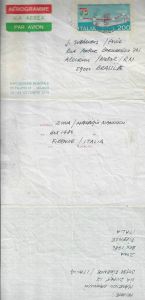
Currículo
CURRÍCULO EM PORTUGUÊSIDENTIFICAÇÃOMaurizio Nannucci. Nascido em Florença, Itália, em 20 de abril de 1939. Artista italiano atuante em arte conceitual, poesia concreta, poesia visual, arte postal, Mail Art, fotografia, vídeo, neon, instalação, arte sonora, livro de artista, publicação de artista, múltiplos, edição, arquivo e projetos relacionados à arquitetura e ao espaço urbano.FORMAÇÃOEstudos na Academia de Belas Artes de Florença e formação complementar em Berlim. Participação em cursos de música eletrônica. Trabalho inicial com grupos de teatro experimental como cenógrafo.PRIMEIRAS PESQUISASPrimeira metade da década de 1960. Desenvolvimento dos Dattilogrammi e investigação das relações entre arte, linguagem, escrita e imagem.Década de 1960. Contato com artistas relacionados ao Fluxus, aproximação com poesia concreta e poesia visual e colaboração com o Studio di Fonologia Musicale de Florença em experiências de música eletrônica, voz e palavra.EXPOSIÇÕES INDIVIDUAIS DOCUMENTADASPrimeira exposição individual no Centro Arte Viva, Trieste, Itália. Apresentação dos primeiros textos realizados com lâmpadas de neon.Exposição na Galleria Vismara, Milão, documentada por catálogo com texto de Gillo Dorfles.Exposição na Galerie Keller, Munique, documentada por catálogo com texto de Giulio Carlo Argan.Maurizio Nannucci. Where to Start From, MAXXI, Roma, de 26 de junho a 18 de outubro de 2015, curadoria de Bartolomeo Pietromarchi. A exposição reuniu trabalhos históricos e recentes, múltiplos, livros, discos, fotografias, revistas, ephemera, instalação sonora e neon.EXPOSIÇÕES COLETIVAS E PARTICIPAÇÕES INTERNACIONAIS DOCUMENTADASAmore mio, Palazzo Ricci, Montepulciano, Itália. Participação documentada pelo catálogo relacionado.L azione concreta, Villa Olmo, Como, Itália. Participação documentada em catálogo.Arte de sistemas, Museo de Arte Moderna, Buenos Aires, Argentina. Participação documentada pelo catálogo organizado no contexto das experiências conceituais e de sistemas.Volterra 73, Itália. Participação documentada por catálogo.Italian Visual Poetry, Finch Museum College, Nova York, Estados Unidos, com documentação crítica de Mario Diacono e Luigi Ballerini.Participações documentadas ao longo da carreira na Biennale di Venezia, Documenta em Kassel e nas bienais de São Paulo, Sydney, Istanbul e Valencia. As fontes institucionais consultadas confirmam essas participações, mas não fornecem em uma única página todos os anos e edições correspondentes, razão pela qual não são atribuídas datas não verificadas.2003 a 2004. Da Modigliani al contemporaneo. Scultura dalle Collezioni Guggenheim, Foro Boario, Modena, de 30 de novembro de 2003 a 7 de março de 2004, curadoria de Luca Massimo Barbero. Nannucci participou com Changing Place, Changing Time, Changing Thoughts, Changing Future, trabalho realizado em 2003.Themes and Variations. From the Mark to Zero, Peggy Guggenheim Collection, Veneza, de 21 de março a 17 de maio de 2009, curadoria de Luca Massimo Barbero.PUBLICAÇÕES, EDIÇÕES E INICIATIVAS EDITORIAISFundação de Exempla em Florença, dedicada a publicações, edições e projetos de artistas.Década de 1970. Desenvolvimento de Recorthings, iniciativa relacionada à publicação de discos e trabalhos sonoros.Zona Archives Edizioni. Atividade editorial ligada ao arquivo e à circulação de livros, múltiplos, discos e materiais de artistas. Entre os artistas relacionados às atividades editoriais de Nannucci encontram se Sol LeWitt, John Armleder, James Lee Byars, Robert Filliou e Ian Hamilton Finlay.1976 a 1981. Mèla Art Magazine. Periódico relacionado às práticas editoriais de Maurizio Nannucci.Maurizio Nannucci / Poemi Cromatici, Exempla Editions, Firenze, com introdução de Mario Diacono.Maurizio Nannucci. Where to Start From, catálogo publicado por Mousse Edizioni, Milão, editado por Bartolomeo Pietromarchi, 267 páginas, edição italiana e inglesa. O projeto gráfico do volume foi concebido por Maurizio Nannucci.Auto biblio biography, publicado pela Tonini Editore, documentado como livro de artista relacionado à autobiografia e bibliografia de Nannucci.ZONA E ARQUIVO1974 a 1985. Zona, Florença. Espaço cultural sem fins lucrativos organizado por artistas. Durante seu período de atividade foram organizadas mais de duzentas exposições, instalações, performances, apresentações e eventos envolvendo artistas italianos e internacionais.Small Press Scene, Zona, Florença. Curadoria de Maurizio Nannucci. Exposição dedicada a mais de 250 revistas de small press relacionadas à arte visual experimental, poesia concreta, arquitetura e nova música.A documentação de Zona registra a manutenção de um arquivo internacional dedicado a pequenas publicações experimentais. A carta enviada por Nannucci a J. Medeiros demonstra o esforço de ampliar esse arquivo com publicações brasileiras.Criação de Zona Radio, dedicada à música experimental e aos trabalhos sonoros produzidos por artistas.O Zona Archives formou um amplo conjunto documental de arte contemporânea e vanguardas com mais de trinta mil documentos segundo apresentação institucional posterior no MAMCO de Genebra.ARTE POSTAL, MAIL ART E CORRESPONDÊNCIA COM J. MEDEIROS2 de setembro de 1977. Firenze. Maurizio Nannucci envia carta a J. Medeiros, em Natal, Rio Grande do Norte, Brasil.Na correspondência, Nannucci agradece o recebimento da revista POVIS.Registra que o exemplar havia chegado seriamente danificado durante o transporte postal.Solicita exemplares de POVIS números 1 e 2.Identifica Zona como organização cultural sem fins lucrativos.Informa a existência de um arquivo internacional de pequenas publicações.Solicita embalagem resistente para os exemplares.Informa que os materiais seriam utilizados no arquivo e em uma exposição, descrita como a segunda iniciativa desse gênero, planejada para um museu italiano.Manifesta intenção de enviar uma contribuição para POVIS número 3 antes do final de setembro de 1977.O documento estabelece uma relação direta entre Maurizio Nannucci, Zona, J. Medeiros, POVIS, Firenze, Natal, Itália e Brasil e constitui evidência primária da inserção de uma publicação experimental brasileira na rede editorial e postal internacional de Nannucci.Não foi localizada, nas fontes consultadas, documentação suficiente para classificar Maurizio Nannucci como integrante formal do Poema Processo. Sua relação documentada com o contexto brasileiro estudado pelo acervo ocorre por meio de J. Medeiros, POVIS, redes de publicações experimentais, poesia visual e circulação postal.PROJETOS SONOROSDécada de 1960. Colaboração com o Studio di Fonologia Musicale de Florença.Décadas seguintes. Produção de trabalhos com voz, linguagem, gravação, instalações sonoras, discos e publicações sonoras.Zona Radio.Sound Samples, instalação sonora interativa apresentada no MAXXI.PROJETOS COM ARQUITETURA E ESPAÇO URBANODécada de 1990 em diante. Colaborações documentadas com Auer e Weber, Mario Botta, Massimiliano Fuksas e Renzo Piano.Instalações permanentes documentadas no Auditorium Parco della Musica, Roma, Aeroporto de Fiumicino, Roma, e Bibliothek des Deutschen Bundestages, Berlim.Changing Place, Changing Time, Changing Thoughts, Changing Future.More Than Meets the Eye, instalação para a fachada do MAXXI posteriormente incorporada à coleção do museu.ESPAÇOS INDEPENDENTES E COLABORAÇÕESFundação de Base Progetti per l arte, Florença, com Paolo Parisi, Massimo Nannucci, Carlo Guaita, Paolo Masi e Antonio Catelani. A iniciativa retomou o princípio de um espaço administrado por artistas para a apresentação do trabalho de outros artistas.COLEÇÕES PÚBLICAS DOCUMENTADASMuseum of Modern Art, Nova York.Centre Georges Pompidou, Paris.Stedelijk Museum, Amsterdam.Peggy Guggenheim Collection, Veneza.MAXXI, Roma.Neue Nationalgalerie, Berlim.Städtische Galerie im Lenbachhaus, Munique.Museum of Fine Arts, Boston.Kunstsammlung des Deutschen Bundestages, Berlim.CNAP, Paris.Essas e outras instituições são documentadas por fontes institucionais e editoriais relacionadas ao artista.ARQUIVOS E FUNDOS DOCUMENTAISMaurizio Nannucci e Zona Archives. Arquivo formado a partir das atividades artísticas, editoriais, curatoriais e de colecionismo de Nannucci desde os anos 1960. Preserva publicações, correspondências, convites, cartões postais, Mail Art, carimbos, cartazes, adesivos, documentação efêmera e materiais sonoros.Zona Archives relacionado ao MAMCO, Genebra. Conjunto de mais de trinta mil documentos sobre arte e práticas de vanguarda.BIBLIOGRAFIA SELECIONADAEmmett Williams. Anthology of Concrete Poetry. Something Else Press, Nova York. Nannucci aparece no contexto internacional da poesia concreta.Gillo Dorfles. Maurizio Nannucci. Catálogo da Galleria Vismara, Milão.Giulio Carlo Argan. Maurizio Nannucci. Catálogo da Galerie Keller, Munique.Mario Diacono. Introdução a Maurizio Nannucci / Poemi Cromatici. Exempla Editions, Firenze.Mario Diacono e Luigi Ballerini. Italian Visual Poetry. Finch Museum College, Nova York.Bartolomeo Pietromarchi, curadoria editorial. Maurizio Nannucci. Where to Start From. Mousse Edizioni, Milão, em associação com a exposição do MAXXI.CRONOLOGIANascimento em Florença em 20 de abril.Década de 1960. Estudos em Florença e Berlim, teatro experimental, música eletrônica, Dattilogrammi, poesia visual, relações com Fluxus e experimentação entre palavra e imagem.Primeira exposição individual no Centro Arte Viva, Trieste, com textos em neon.Fundação de Exempla em Florença.Exposição na Galleria Vismara, Milão.Exposição na Galerie Keller, Munique. Publicação de Poemi Cromatici.Participação em Arte de sistemas, Buenos Aires.Volterra 73. Italian Visual Poetry, Nova York.Início das atividades de Zona em Florença.Small Press Scene, curadoria de Nannucci em Zona, com mais de 250 publicações experimentais.Período inicial documentado de Mèla Art Magazine.Correspondência com J. Medeiros em Natal sobre POVIS, Zona, arquivo internacional de small press, exposição em museu italiano e possível contribuição para POVIS número 3.Criação de Zona Radio.Encerramento do período histórico de Zona.Década de 1990. Intensificação das relações entre linguagem, neon, arquitetura e paisagem urbana.Criação de Base Progetti per l arte.Changing Place, Changing Time, Changing Thoughts, Changing Future.Instalação da obra na Peggy Guggenheim Collection.Participação em Themes and Variations. From the Mark to Zero, Veneza.Exposição individual Where to Start From no MAXXI, Roma.Publicação de Auto biblio biography.A cronologia acima corresponde a uma lista consolidada das ocorrências documentadas nas fontes consultadas e no documento de 1977 preservado junto ao acervo relacionado a J. Medeiros. Não representa uma lista integral de todas as exposições e publicações realizadas por Nannucci ao longo de mais de seis décadas.
English
CURRICULUM IN ENGLISHIDENTIFICATIONMaurizio Nannucci. Born in Florence, Italy, on 20 April 1939. Italian artist active in conceptual art, concrete poetry, visual poetry, postal art, Mail Art, photography, video, neon, installation, sound art, artists books, artists publications, multiples, publishing, archives and projects involving architecture and urban space.EDUCATIONStudies at the Academy of Fine Arts in Florence and further studies in Berlin. Courses related to electronic music. Early professional experience as a set designer for experimental theater groups.EARLY RESEARCHFirst half of the 1960s. Development of the Dattilogrammi and investigation of relationships among art, language, writing and image.1960s. Contact with artists associated with Fluxus, engagement with concrete and visual poetry and collaboration with the Studio di Fonologia Musicale in Florence on experiments involving electronic music, voice and language.DOCUMENTED SOLO EXHIBITIONSFirst solo exhibition at Centro Arte Viva, Trieste, Italy. Presentation of his first texts made with neon lamps.Exhibition at Galleria Vismara, Milan, documented through a catalogue with a text by Gillo Dorfles.Exhibition at Galerie Keller, Munich, documented through a catalogue with a text by Giulio Carlo Argan.Maurizio Nannucci. Where to Start From, MAXXI, Rome, 26 June to 18 October 2015, curated by Bartolomeo Pietromarchi. The exhibition brought together historical and recent works, multiples, books, records, photographs, magazines, ephemera, sound installation and neon.DOCUMENTED GROUP EXHIBITIONS AND INTERNATIONAL PARTICIPATIONSAmore mio, Palazzo Ricci, Montepulciano, Italy. Participation documented through the related catalogue.L azione concreta, Villa Olmo, Como, Italy. Participation documented through the exhibition catalogue.Arte de sistemas, Museo de Arte Moderna, Buenos Aires, Argentina. Participation documented through the catalogue associated with the exhibition.Volterra 73, Italy. Participation documented through the related catalogue.Italian Visual Poetry, Finch Museum College, New York, United States, documented in relation to Mario Diacono and Luigi Ballerini.Nannucci has participated several times in the Biennale di Venezia and has also taken part in Documenta in Kassel and the São Paulo, Sydney, Istanbul and Valencia biennials. The institutional sources consulted confirm these participations but do not provide all corresponding years and editions in a single verified record, therefore dates have not been assigned without confirmation.2003 to 2004. Da Modigliani al contemporaneo. Scultura dalle Collezioni Guggenheim, Foro Boario, Modena, 30 November 2003 to 7 March 2004, curated by Luca Massimo Barbero. Nannucci participated with Changing Place, Changing Time, Changing Thoughts, Changing Future, produced in 2003.Themes and Variations. From the Mark to Zero, Peggy Guggenheim Collection, Venice, 21 March to 17 May 2009, curated by Luca Massimo Barbero.ARTISTS PUBLICATIONS AND EDITORIAL INITIATIVESFoundation of Exempla in Florence, devoted to publications, editions and artists projects.1970s. Development of Recorthings, an initiative associated with records and artists sound works.Zona Archives Edizioni. Editorial activity connected with the archive and with the circulation of books, multiples, records and artists materials. Artists associated with Nannuccis editorial activity include Sol LeWitt, John Armleder, James Lee Byars, Robert Filliou and Ian Hamilton Finlay.1976 to 1981. Mèla Art Magazine, an experimental periodical associated with Maurizio Nannuccis publishing practice.Maurizio Nannucci / Poemi Cromatici, Exempla Editions, Florence, with an introduction by Mario Diacono.Maurizio Nannucci. Where to Start From, exhibition catalogue published by Mousse Edizioni, Milan, edited by Bartolomeo Pietromarchi, 267 pages, Italian and English edition. The graphic design of the volume was conceived by Maurizio Nannucci.Auto biblio biography, published by Tonini Editore and documented as an artists book connected with Nannuccis autobiography and bibliography.ZONA AND ARCHIVAL ACTIVITY1974 to 1985. Zona, Florence. Nonprofit cultural space managed by artists. More than two hundred exhibitions, installations, performances, presentations and events involving Italian and international artists were organized during its period of activity.Small Press Scene, Zona, Florence. Curated by Maurizio Nannucci. Exhibition devoted to more than 250 small press magazines related to experimental visual art, concrete poetry, architecture and new music.Documentation from Zona records the existence of an international archive devoted to independent small press publications. Nannuccis letter to J. Medeiros demonstrates his effort to expand that archive through the acquisition of Brazilian experimental publications.Creation of Zona Radio, devoted to experimental music and artists sound works.Zona Archives eventually developed into a major documentary collection concerning contemporary art and avant garde practices. A later institutional presentation at MAMCO in Geneva described a group of more than thirty thousand documents.MAIL ART AND CORRESPONDENCE WITH J. MEDEIROS2 September 1977. Florence. Maurizio Nannucci sends a handwritten letter to J. Medeiros in Natal, Rio Grande do Norte, Brazil.Nannucci thanks Medeiros for sending the magazine POVIS.He reports that the copy arrived severely damaged during postal transportation.He requests copies of POVIS numbers 1 and 2.He describes Zona as a nonprofit cultural organization.He states that Zona maintains an international archive devoted to small press publications.He asks that the copies be carefully packaged.He explains that the material was intended for the archive and for an exhibition, described as the second project of this kind, planned for an Italian museum.Nannucci states that he would try to send a contribution for POVIS number 3 before the end of September 1977.The document establishes a direct relationship among Maurizio Nannucci, Zona, J. Medeiros, POVIS, Florence, Natal, Italy and Brazil and constitutes primary evidence for the integration of a Brazilian experimental publication into Nannuccis international editorial and postal network.No sufficient documentation was located in the sources consulted to classify Maurizio Nannucci as a formal participant in the Brazilian Process Poem Movement. His documented connection with the Brazilian context represented in this archive is established through J. Medeiros, POVIS, experimental publishing, visual poetry and international postal circulation.SOUND PROJECTS1960s. Collaboration with the Studio di Fonologia Musicale in Florence.Following decades. Production involving voice, language, recording, sound installation, records and sound publications.Zona Radio.Sound Samples, interactive sound installation presented at MAXXI.ARCHITECTURE AND URBAN SPACEFrom the 1990s. Documented collaborations with architects including Auer and Weber, Mario Botta, Massimiliano Fuksas and Renzo Piano.Permanent installations documented at Auditorium Parco della Musica in Rome, Fiumicino Airport in Rome and Bibliothek des Deutschen Bundestages in Berlin.Changing Place, Changing Time, Changing Thoughts, Changing Future.More Than Meets the Eye, installation for the façade of MAXXI that subsequently entered the museum collection.INDEPENDENT SPACES AND COLLABORATIONSEstablishment of Base Progetti per l arte in Florence with Paolo Parisi, Massimo Nannucci, Carlo Guaita, Paolo Masi and Antonio Catelani. The initiative continued the principle of an independent space managed by artists for the presentation of projects by other artists.PUBLIC COLLECTIONSMuseum of Modern Art, New York.Centre Georges Pompidou, Paris.Stedelijk Museum, Amsterdam.Peggy Guggenheim Collection, Venice.MAXXI, Rome.Neue Nationalgalerie, Berlin.Städtische Galerie im Lenbachhaus, Munich.Museum of Fine Arts, Boston.Kunstsammlung des Deutschen Bundestages, Berlin.CNAP, Paris.These institutions and others are documented through institutional and editorial sources concerning the artist.ARCHIVES AND DOCUMENTARY FONDSMaurizio Nannucci and Zona Archives. Archive formed through Nannuccis artistic, editorial, curatorial and collecting activities beginning in the 1960s. It preserves publications, correspondence, invitations, postcards, Mail Art, rubber stamps, posters, stickers, ephemera and sound materials.Zona Archives associated with MAMCO, Geneva. Documentary complex comprising more than thirty thousand documents concerning art and avant garde practices.SELECTED BIBLIOGRAPHYEmmett Williams. Anthology of Concrete Poetry. Something Else Press, New York. Nannucci appears within the international context of concrete poetry.Gillo Dorfles. Maurizio Nannucci. Galleria Vismara catalogue, Milan.Giulio Carlo Argan. Maurizio Nannucci. Galerie Keller catalogue, Munich.Mario Diacono. Introduction to Maurizio Nannucci / Poemi Cromatici. Exempla Editions, Florence.Mario Diacono and Luigi Ballerini. Italian Visual Poetry. Finch Museum College, New York.Bartolomeo Pietromarchi, editorial curator. Maurizio Nannucci. Where to Start From. Mousse Edizioni, Milan, associated with the MAXXI exhibition.CHRONOLOGYBorn in Florence on 20 April.1960s. Studies in Florence and Berlin, experimental theater, electronic music, Dattilogrammi, visual poetry, relationships with Fluxus and experimentation between language and image.First solo exhibition at Centro Arte Viva, Trieste, presenting neon texts.Foundation of Exempla in Florence.Exhibition at Galleria Vismara, Milan.Exhibition at Galerie Keller, Munich. Publication of Poemi Cromatici.Participation in Arte de sistemas, Buenos Aires.Volterra 73. Italian Visual Poetry in New York.Beginning of Zona activities in Florence.Small Press Scene, curated by Nannucci at Zona, presenting more than 250 experimental publications.Beginning of the documented period of Mèla Art Magazine.Correspondence with J. Medeiros in Natal concerning POVIS, Zona, an international small press archive, an exhibition in an Italian museum and a possible contribution to POVIS number 3.Creation of Zona Radio.End of the historical period of Zona.1990s. Expansion of projects relating language and neon to architecture and the urban environment.Establishment of Base Progetti per l arte.Changing Place, Changing Time, Changing Thoughts, Changing Future.Installation of the work at the Peggy Guggenheim Collection.Participation in Themes and Variations. From the Mark to Zero in Venice.Solo exhibition Where to Start From at MAXXI in Rome.Publication of Auto biblio biography.This chronology is a consolidated record of occurrences documented in the sources consulted and in the 1977 correspondence preserved in relation to J. Medeiros. It should not be interpreted as a complete list of every exhibition, publication and project developed by Maurizio Nannucci during more than six decades of activity.