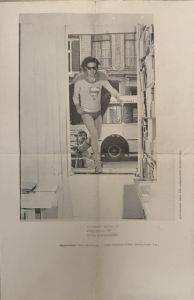
Raul Marroquim . Mad Enterprises Inc
Local de nascimento: Bogotá, Colômbia
Data de nascimento: 1948
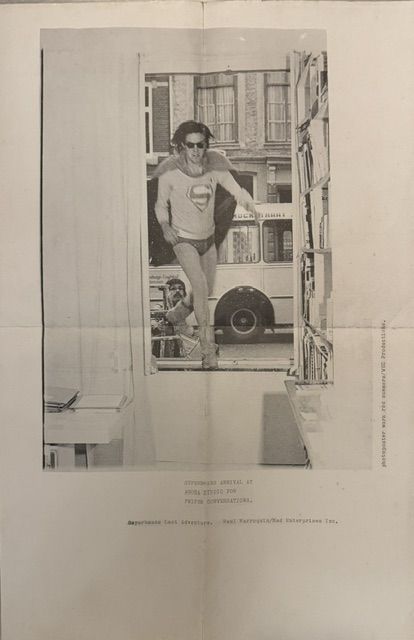
Raúl Marroquín nasceu em Bogotá, Colômbia, em 1948. É artista visual, artista conceitual, artista postal, editor, performer, produtor de vídeo e televisão experimental, pesquisador dos meios de comunicação e criador de projetos que integram fotografia, impressão, publicação de artista, quadrinhos, vídeo, transmissão televisiva, telecomunicação e redes digitais. Radicado nos Países Baixos desde 1971, tornou se uma das figuras pioneiras da videoarte neerlandesa e desenvolveu uma prática dedicada à circulação das imagens, à apropriação dos formatos da imprensa e da televisão e à transformação dos meios de comunicação em matéria artística. O presente cadastro organiza a obra Superbmans Arrival at Agora Studio for Fwiper Conversations e sua relação com Superbmans Last Adventure, Mad Enterprises Inc., Agora Studio e a arte postal segundo os critérios documentais solicitados para o sistema Salsa.O nome principal utilizado pelo artista é Raúl Marroquín, também registrado sem acentos como Raul Marroquin. O arquivo de De Appel registra ainda Juan Maranas como nome alternativo e identifica sua participação em Mad Enterprizes Inc. e Talking Back to the Media. A documentação apresenta variações entre Enterprises e Enterprizes. No impresso de 1977 aparece Mad Enterprises Inc., forma que deve ser preservada na catalogação desta obra.Marroquín estudou na Escola de Belas Artes da Universidade Nacional da Colômbia e depois na Jan van Eyck Akademie, em Maastricht, entre 1971 e 1974. Sua mudança para os Países Baixos permitiu contato direto com a arte conceitual europeia, a performance, as publicações alternativas, o vídeo e as redes internacionais de correspondência. O artista informa que trabalha com vídeo desde 1968 e que vive nos Países Baixos desde 1971.Durante seus estudos em Maastricht, criou Fandangos, revista de artista dedicada à circulação de trabalhos de poetas, músicos, performers e artistas experimentais. A publicação funcionava como obra coletiva, periódico alternativo e instrumento de intercâmbio internacional. Seus números reuniram artistas como Ulises Carrión, Anna Banana, Joseph Beuys, Nam June Paik, Charlotte Moorman, Michael Druks, Jorge Caraballo, Opal L. Nations, Rod Summers, Maurizio Nannucci e outros participantes das redes de arte conceitual, poesia visual e arte postal.Mad Enterprises Inc. foi uma estrutura artística e editorial associada a Raúl Marroquín e ao ambiente experimental de Maastricht. Funcionou como identidade de produção, selo editorial, organização fictícia e plataforma para impressos, performances, publicações, fotografias, ações e projetos de comunicação. O nome incorpora deliberadamente a linguagem empresarial, mas desloca sua função para um sistema artístico independente. O arquivo de De Appel confirma Marroquín como integrante de Mad Enterprizes Inc., enquanto documentos e publicações da década de 1970 utilizam Mad Enterprises Inc.A atuação de Mad Enterprises Inc. relaciona se ao Agora Studio, espaço de produção e apresentação de arte experimental em Maastricht. Documentos preservados registram programas de exposições, performances, boletins e projetos realizados pelo Agora Studio em colaboração com Mad Enterprises Inc. Durante a década de 1970, o espaço participou de uma rede que conectava Maastricht a centros culturais da Europa e da América Latina.Em 1975, o catálogo Agora Studio Traveling Exposition reuniu artistas europeus e latino americanos e acompanhou uma exposição apresentada no Centro de Arte y Comunicación em Buenos Aires, no Estudio Actual em Caracas e no Museu de Arte Contemporânea de São Paulo. Entre os participantes estavam Ulises Carrión, Klaus Groh, Michael Druks, Maurizio Nannucci, Raúl Marroquín, Rod Summers e outros artistas associados às redes de publicação, performance e arte postal. A circulação dessa exposição demonstra a inserção de Agora Studio e Mad Enterprises Inc. em intercâmbios com a América Latina.Superbman é uma personagem criada por Raúl Marroquín a partir da apropriação e transformação do arquétipo do super herói. O nome substitui Superman por Superbman e introduz uma diferença pequena, mas conceitualmente decisiva. A personagem não representa apenas força extraordinária ou heroísmo. Ela funciona como figura mediática, identidade performática e instrumento para investigar celebridade, espetáculo, narrativa popular, televisão, fotografia e produção institucional da imagem.A série Superbmans Last Adventure foi desenvolvida aproximadamente entre 1975 e 1977 em fotografias, impressos, ações e transmissões. O site do artista registra que um episódio da série foi transmitido ao vivo pela LOB, considerada a primeira rede de televisão a cabo de Amsterdã e dos Países Baixos. Essa experiência insere Superbman na história da televisão experimental, pois a personagem ultrapassou o suporte impresso e entrou em um sistema real de transmissão.A obra apresentada é identificada bibliograficamente como Superbmans Arrival at Agora Studio for Fwiper Conversations. Foi publicada por Mad Enterprises Inc. em Maastricht em 1977 e integra Superbmans Last Adventure. A impressão mostra Superbman entrando pela janela do Agora Studio. A edição documentada possui cinquenta exemplares assinados e numerados, impressos em preto sobre papel branco, com aproximadamente 29,9 por 45 centímetros. Também existiu uma versão dobrada e não assinada inserida em Ephemera número 2, publicação editada por Ulises Carrión. O trabalho fotográfico foi creditado a Rod Summers e VEC Productions.No exemplar apresentado, a imagem fotográfica ocupa a área central de uma folha vertical. Superbman aparece usando óculos escuros, camiseta com emblema no peito, roupa curta, botas e uma capa que se projeta para trás. A personagem atravessa uma janela aberta e parece entrar diretamente no espaço do observador. Ao fundo aparecem a fachada de um edifício, uma rua, uma pessoa parcialmente visível, um ônibus e elementos urbanos de Maastricht.A janela funciona como passagem entre a rua e o espaço artístico. Superbman não chega por uma entrada convencional. Sua aparição imita os modos espetaculares de entrada dos super heróis e converte a arquitetura cotidiana do Agora Studio em cenário de ficção. Ao mesmo tempo, a fotografia mantém visíveis a rua, o transporte público e o ambiente real, misturando acontecimento documentado e narrativa inventada.Abaixo da fotografia aparece a inscrição Superbmans Arrival at Agora Studio for Fwiper Conversations. A palavra Fwiper está visível no impresso e deve ser preservada exatamente como parte do título, mesmo que seu significado não esteja explicado na peça. Ela pode pertencer ao vocabulário inventado da narrativa, a uma denominação interna do projeto ou a uma alteração deliberada da linguagem. Não há evidência suficiente para substituí la por outra palavra.Na parte inferior lê se Superbmans Last Adventure, Raul Marroquin e Mad Enterprises Inc. Essa estrutura identifica simultaneamente a série, o artista e a entidade responsável pela produção. O objeto funciona como fotografia encenada, cartaz, publicação de artista, capítulo narrativo e material destinado à circulação.A obra não deve ser descrita apenas como retrato do artista vestido de super herói. A imagem constrói uma personagem e insere sua aparição em um sistema de episódios. O artista utiliza os códigos dos quadrinhos, da fotografia promocional, da imprensa popular e da televisão para criar uma narrativa distribuída por diferentes suportes.Superbmans Last Adventure também inclui a personagem Nicos Nukos The Worst, apresentada como principal inimigo de Superbman. Um impresso de 1977 mostra Nicos Nukos e possui a mesma identificação da série e de Mad Enterprises Inc. Essa associação confirma que o projeto foi estruturado como universo narrativo com protagonista, antagonista, episódios e documentos derivados.A participação de Rod Summers é relevante. Summers colaborou com Marroquín em diferentes projetos desde 1971. O crédito a Rod Summers e VEC Productions demonstra que Superbmans Arrival at Agora Studio for Fwiper Conversations resultou de colaboração entre performance, fotografia e produção editorial.A ligação com Ulises Carrión amplia a importância documental do impresso. A inclusão de uma versão em Ephemera número 2 inseriu a obra no circuito de publicações de artista e redes postais associadas ao editor mexicano radicado nos Países Baixos. Carrión foi figura central na reflexão sobre livros de artista, sistemas de distribuição, arquivos e comunicação. A circulação do cartaz como encarte permitiu que a imagem ultrapassasse a exposição e alcançasse colecionadores e correspondentes internacionais.A relação de Marroquín com a arte postal está presente tanto na distribuição de publicações quanto em trabalhos baseados no envio e no aprendizado a distância. Swimming by Mail, de 1973, apresenta uma personagem que recebe pelo correio instruções de natação e começa imediatamente a praticá las. A obra utiliza correspondência, performance, vídeo e humor para investigar como uma ação física pode ser mediada por mensagens enviadas a distância.A prática postal de Marroquín não se limita ao envio de objetos decorados. Ela está integrada a uma investigação ampla sobre transmissão, comunicação, recepção e resposta. Cartas, revistas, cartazes, boletins, televisão, vídeo, telefone e sistemas digitais aparecem como tecnologias sucessivas para aproximar pessoas e imagens.A obra Bizarre Edition Information Edition of Equipo Movimiento, Movement of the See, Original Edition, de 1972, preservada pelo Museum of Modern Art de Nova York, demonstra seu interesse inicial pela edição, pelo movimento e pela reorganização gráfica da informação. A peça foi executada em litografia com intervenções de lápis e lápis de cor, em edição de dez exemplares.Nas décadas seguintes, Marroquín continuou produzindo televisão experimental. Participou de projetos para Channel 4, BBC, Deutschland 3, Manhattan Cable, VPRO e redes locais dos Estados Unidos. Foi coeditor de Time Based Arts Television entre 1988 e 1990 e de Kanaal Zero entre 1990 e 1991. Criou ainda Strictly Digital Television e Black Hole Television no início da década de 1990.O artista também dirigiu De Hoeksteen Live Television, projeto de longa duração baseado em transmissões, convidados, participação remota e circulação audiovisual. Sua produção posterior incorporou comunicação online, telefonia móvel, mundos virtuais, animação digital, redes sociais e tecnologias de baixo custo. Esses desdobramentos prolongam questões já presentes em Fandangos, Mad Enterprises Inc. e Superbmans Last Adventure.Marroquín apresentou trabalhos em instituições como Van Abbemuseum, Centre Pompidou, Institute of Contemporary Arts de Londres, Museo Nacional Centro de Arte Reina Sofía, Art Institute of Chicago, Stedelijk Museum Amsterdam, Moderna Museet, Art Metropole, De Appel e Bonnefantenmuseum. Obras e documentos de sua produção são preservados pelo Museum of Modern Art, Stedelijk Museum Amsterdam, Centre Pompidou, Museo Reina Sofía, Museo La Tertulia, Museo de Arte Contemporáneo de Bogotá e outras coleções.Não há indicação de que Raúl Marroquín tenha integrado formalmente o movimento Poema Processo. Sua relação com esse campo ocorre pelas redes compartilhadas de poesia visual, arte postal, publicação experimental e arte conceitual. Fandangos reuniu artistas latino americanos e europeus, enquanto projetos do Agora Studio circularam por Buenos Aires, Caracas e São Paulo. Essa circulação aproxima Marroquín de práticas que também interessavam aos participantes do Poema Processo, como serialidade, participação, comunicação, apropriação, reprodução e transformação do suporte impresso.Superbmans Arrival at Agora Studio for Fwiper Conversations é relevante porque registra a convergência entre performance, fotografia, narrativa gráfica, publicação de artista, televisão experimental e circulação postal. A obra documenta uma personagem que entra fisicamente no espaço artístico, mas também representa a entrada da cultura de massa, do super herói e da televisão no campo da arte conceitual.A importância histórica de Raúl Marroquín está em tratar cada meio de comunicação não apenas como suporte, mas como sistema social. O cartaz, a revista, a televisão, o vídeo, o correio e a internet possuem modos próprios de produção, distribuição e recepção. Sua obra revela essas estruturas e cria situações nas quais o público participa da transmissão, interpreta personagens e acompanha narrativas dispersas entre diferentes canais.
English
BIOGRAPHY IN ENGLISHRaúl Marroquín was born in Bogotá, Colombia, in 1948. He is a visual artist, conceptual artist, mail artist, editor, performer, experimental video and television producer and researcher of communication media. His work brings together photography, printing, artists publications, comics, video, television broadcasting, telecommunications and digital networks. Based in the Netherlands since 1971, he became one of the pioneers of Dutch video art and developed a practice concerned with the circulation of images, the appropriation of press and television formats and the transformation of communication systems into artistic material.The artist primarily uses the name Raúl Marroquín, also recorded without accents as Raul Marroquin. The De Appel archive lists Juan Maranas as another name and identifies his membership in Mad Enterprizes Inc. and Talking Back to the Media. Documentation alternates between the spellings Enterprises and Enterprizes. The 1977 print carries the form Mad Enterprises Inc., which should be preserved in the catalogue record for this work.Marroquín studied at the School of Fine Arts of the National University of Colombia and later at the Jan van Eyck Akademie in Maastricht from 1971 to 1974. His move to the Netherlands placed him in direct contact with European conceptual art, performance, alternative publishing, video and international correspondence networks. The artist states that he has worked with video since 1968 and has lived in the Netherlands since 1971.While studying in Maastricht, he established Fandangos, an artists magazine devoted to circulating work by experimental poets, musicians, performers and visual artists. It operated simultaneously as a collective artwork, alternative periodical and international exchange instrument. Its issues included contributions by Ulises Carrión, Anna Banana, Joseph Beuys, Nam June Paik, Charlotte Moorman, Michael Druks, Jorge Caraballo, Opal L. Nations, Rod Summers, Maurizio Nannucci and other participants in conceptual art, visual poetry and mail art networks.Mad Enterprises Inc. was an artistic and editorial structure associated with Raúl Marroquín and the experimental environment of Maastricht. It operated as a production identity, publishing imprint, invented organization and platform for printed matter, performances, photographs, actions and communication projects. Its name deliberately adopted corporate language while redirecting it toward an independent artistic system. De Appel confirms Marroquín as a member of Mad Enterprizes Inc., while publications from the 1970s frequently use Mad Enterprises Inc.The activities of Mad Enterprises Inc. were connected with Agora Studio, a space for producing and presenting experimental art in Maastricht. Surviving records document exhibitions, performances, bulletins and projects organized through Agora Studio and Mad Enterprises Inc. During the 1970s, the space participated in a network connecting Maastricht with cultural centres in Europe and Latin America.In 1975, Agora Studio Traveling Exposition brought together European and Latin American artists and accompanied an exhibition presented at the Centro de Arte y Comunicación in Buenos Aires, Estudio Actual in Caracas and the Museu de Arte Contemporânea in São Paulo. Participants included Ulises Carrión, Klaus Groh, Michael Druks, Maurizio Nannucci, Raúl Marroquín, Rod Summers and other artists associated with publishing, performance and mail art networks. Its itinerary demonstrates the participation of Agora Studio and Mad Enterprises Inc. in exchanges with Latin America.Superbman is a character created by Raúl Marroquín through the appropriation and transformation of the superhero archetype. The name replaces Superman with Superbman and introduces a small but conceptually decisive difference. The character does not simply represent extraordinary strength or heroism. Superbman operates as a media figure, performative identity and device for investigating celebrity, spectacle, popular narrative, television, photography and the institutional production of images.The Superbmans Last Adventure series developed approximately between 1975 and 1977 through photographs, prints, performances and broadcasts. The artist records that one episode was transmitted live by LOB, described as the first cable television network in Amsterdam and the Netherlands. This placed Superbman within the history of experimental television because the character moved beyond printed matter and entered an actual broadcasting system.The presented work is bibliographically identified as Superbmans Arrival at Agora Studio for Fwiper Conversations. It was published by Mad Enterprises Inc. in Maastricht in 1977 and belongs to Superbmans Last Adventure. The print shows Superbman entering Agora Studio through a window. A documented edition consists of fifty signed and numbered impressions printed in black on white paper and measuring approximately 29.9 by 45 centimetres. An unsigned folded version was also inserted into Ephemera number 2, edited by Ulises Carrión. The photographic poster work was credited to Rod Summers and VEC Productions.In the presented example, the photograph occupies the central area of a vertical sheet. Superbman wears dark glasses, a shirt bearing an emblem, short clothing, boots and a cape extending behind him. He crosses an open window and appears to enter directly into the observer?s space. The background contains a building facade, a street, a partially visible person, a bus and elements of Maastricht?s urban environment.The window functions as a passage between the street and the artistic space. Superbman does not arrive through a conventional entrance. His appearance imitates the spectacular arrivals of comic book heroes and converts the ordinary architecture of Agora Studio into a fictional setting. At the same time, the photograph retains the visible street, public transport and actual urban surroundings, combining a documented event with an invented narrative.The printed caption below the photograph reads Superbmans Arrival at Agora Studio for Fwiper Conversations. The word Fwiper is visible on the print and should be preserved exactly as part of the title, even though its meaning is not explained. It may belong to the invented vocabulary of the story, an internal project designation or a deliberate alteration of language. Available evidence does not support replacing it with another word.The lower inscription identifies Superbmans Last Adventure, Raul Marroquin and Mad Enterprises Inc. This structure simultaneously identifies the series, artist and production entity. The object functions as a staged photograph, poster, artists publication, narrative episode and circulating document.The work should not be understood merely as a portrait of the artist dressed as a superhero. It constructs a character and places his appearance within an episodic system. Marroquín uses the codes of comics, promotional photography, popular journalism and television to create a narrative distributed across several media.Superbmans Last Adventure also includes the character Nicos Nukos The Worst, presented as Superbman?s principal enemy. A 1977 print portraying Nicos Nukos carries the same series and Mad Enterprises Inc. identification. This confirms that the project was organized as a narrative universe containing a protagonist, antagonist, episodes and related documents.The participation of Rod Summers is significant. Summers and Marroquín collaborated on different projects from 1971 onward. The credit to Rod Summers and VEC Productions demonstrates that Superbmans Arrival at Agora Studio for Fwiper Conversations emerged from collaboration among performance, photography and editorial production.Its connection with Ulises Carrión further expands the documentary importance of the print. The inclusion of a version in Ephemera number 2 placed it within the artists publication and postal distribution networks associated with the Mexican editor based in the Netherlands. Carrión became a central figure in discussions of artists books, distribution systems, archives and communication. Circulation as an insert enabled the image to move beyond the exhibition context and reach international correspondents and collectors.Marroquín?s relationship with mail art is present both in the distribution of publications and in works based on sending and distance learning. Swimming by Mail from 1973 presents a character who receives swimming instructions through the post and immediately begins practising them. The work combines correspondence, performance, video and humour to investigate how physical activity may be mediated through messages transmitted over distance.His postal practice is not restricted to decorated envelopes or cards. It belongs to a broader investigation of transmission, communication, reception and response. Letters, magazines, posters, bulletins, television, video, telephones and digital systems appear as successive technologies for connecting people and images.Bizarre Edition Information Edition of Equipo Movimiento, Movement of the See, Original Edition from 1972, held by the Museum of Modern Art in New York, demonstrates his early interest in editing, movement and the graphic reorganization of information. The work consists of lithography with pencil and coloured pencil additions and was produced in an edition of ten.During subsequent decades, Marroquín continued producing experimental television. He created projects for Channel 4, BBC, Deutschland 3, Manhattan Cable, VPRO and local networks in the United States. He was coeditor of Time Based Arts Television between 1988 and 1990 and Kanaal Zero from 1990 to 1991. He also established Strictly Digital Television and Black Hole Television during the early 1990s.He later directed De Hoeksteen Live Television, a long term project based on broadcasting, invited participants, remote contributions and audiovisual circulation. His later production incorporated online communication, mobile telephones, virtual worlds, digital animation, social platforms and low cost technology. These developments continued questions already present in Fandangos, Mad Enterprises Inc. and Superbmans Last Adventure.Marroquín has shown work at institutions including Van Abbemuseum, Centre Pompidou, the Institute of Contemporary Arts in London, Museo Nacional Centro de Arte Reina Sofía, Art Institute of Chicago, Stedelijk Museum Amsterdam, Moderna Museet, Art Metropole, De Appel and Bonnefantenmuseum. His works and documents are held by the Museum of Modern Art, Stedelijk Museum Amsterdam, Centre Pompidou, Museo Reina Sofía, Museo La Tertulia, Museo de Arte Contemporáneo de Bogotá and other collections.There is no evidence that Raúl Marroquín formally participated in the Brazilian Process Poem Movement. His relationship with this field emerges through shared networks of visual poetry, mail art, experimental publishing and conceptual art. Fandangos brought together Latin American and European artists, while Agora Studio projects circulated through Buenos Aires, Caracas and São Paulo. These exchanges connect Marroquín with practices also central to Process Poem, including seriality, participation, communication, appropriation, reproduction and transformation of printed supports.Superbmans Arrival at Agora Studio for Fwiper Conversations is historically relevant because it records the convergence of performance, photography, graphic narrative, artists publishing, experimental television and postal circulation. It documents a character physically entering an art space while also representing the entry of mass culture, superheroes and television into conceptual art.Raúl Marroquín?s importance lies in his treatment of each communication medium not merely as a support but as a social system. Posters, magazines, television, video, mail and the internet possess specific forms of production, distribution and reception. His work exposes these structures and creates situations in which audiences participate in transmission, interpret characters and follow narratives dispersed across different channels.
Currículo
CURRÍCULO EM PORTUGUÊSRaúl Marroquín é artista visual colombiano radicado nos Países Baixos, pioneiro da videoarte neerlandesa e produtor de projetos em arte conceitual, performance, fotografia, publicação de artista, televisão experimental, arte postal, telecomunicação e meios digitais. Sua trajetória está ligada à Universidade Nacional da Colômbia, à Jan van Eyck Akademie, ao Agora Studio, a Mad Enterprises Inc., à revista Fandangos, a De Appel e a diferentes redes internacionais de arte e comunicação.IDENTIFICAÇÃONome principal: Raúl MarroquínOutra grafia: Raul MarroquinNome alternativo documentado: Juan MaranasNascimento: 1948Local de nascimento: Bogotá, ColômbiaNacionalidade: colombianaCidade principal de atuação: Maastricht e posteriormente Amsterdã, Países BaixosResidência nos Países Baixos: desde 1971Período documentado de atividade: 1965 até o presenteÁreas de atuação: arte conceitual, videoarte, arte postal, performance, fotografia, instalação, publicação de artista, edição, televisão experimental, comunicação online, telecomunicação e arte digitalGrupos e estruturas relacionadas: Mad Enterprises Inc., Mad Enterprizes Inc., Talking Back to the Media, Agora Studio, Fandangos, Time Based Arts Television, Kanaal Zero e De Hoeksteen Live Television.FORMAÇÃOPeríodo não localizado: estudos na Escola de Belas Artes da Universidade Nacional da Colômbia, Bogotá, Colômbia1971 a 1974: estudos na Jan van Eyck Akademie, Maastricht, Países BaixosProfessores e qualificação obtida: não localizados nas fontes consultadas.ATUAÇÃO PROFISSIONALDesde 1968: produção em vídeoDesde 1971: residência e atividade artística nos Países Baixos1971 a 1974: criação e edição da revista Fandangos durante o período de estudos na Jan van Eyck AkademieDécada de 1970: produção de performances, fotografias, impressos, publicações, vídeo e projetos postaisDécada de 1970: atuação por meio de Mad Enterprises Inc.Década de 1970: colaboração com Agora Studio em MaastrichtFinal da década de 1970 em diante: palestras e oficinas sobre mídia tática, tecnologia acessível e inovação1988 a 1990: coeditor de Time Based Arts Television1990 a 1991: coeditor de Kanaal Zero1990 a 1991: criação de Strictly Digital Television1991: criação de Black Hole Television1990 em diante: direção de De Hoeksteen Live TelevisionPeríodo contemporâneo: produção com televisão, redes online, telefone móvel, animação digital, mundos virtuais e tecnologias de comunicação.MOVIMENTOS, GRUPOS E ESTRUTURASMad Enterprises Inc.Período documentado: década de 1970Local: Maastricht, Países BaixosFunção de Marroquín: criador, artista, editor e produtorAtividades: publicações, cartazes, performances, fotografia, exposições, projetos de comunicação e colaboração com Agora StudioOutra grafia institucional: Mad Enterprizes Inc.Agora StudioPeríodo documentado: década de 1970 e início da década de 1980Cidade: MaastrichtPaís: Países BaixosRelação: espaço associado a exposições, performances, produção editorial e projetos de Mad Enterprises Inc.Colaboradores documentados: Marjo Schumans, Anton Verhoeven, Bertil Petersson, Rod Summers e outros.Talking Back to the MediaPeríodo documentado: década de 1980Tipo: grupo e projeto relacionado à crítica e intervenção nos meios de comunicaçãoParticipação: Raúl Marroquín registrado como integrante pelo arquivo de De Appel.PROJETOS E COLABORAÇÕES1972: Equipo Movimiento, Movement of the See, Original EditionTipo: projeto gráfico e editorialObra relacionada: Bizarre Edition Information EditionTécnica da obra preservada pelo Museum of Modern Art: litografia com lápis e lápis de corEdição: dez exemplaresColeção: Museum of Modern Art, Nova York.1973: Swimming by MailTipo: vídeo, performance e projeto baseado em correspondênciaParticipante performática documentada: Sybke HuismansDescrição: instruções de natação chegam pelo correio e são executadas diante do públicoColeção registrada: Netherlands Media Art Institute.1974: Changing PersonalitiesAutores relacionados: Raúl Marroquín e Anton VerhoevenEditora: Mad Enterprises Inc.Cidade: MaastrichtTipo: livro de artistaDescrição: sequência de imagens de Anton Verhoeven em diferentes identidades e situações, acompanhadas por correspondência destinada a JaneDedicatória: Ulises CarriónTiragem documentada: mil exemplares.1974 e 1975: Phonomimic PerformancesEditora: Mad Enterprises Inc.Tipo: publicação de artistaTiragem documentada: mil exemplaresImpressão relacionada: Jan van Eyck Akademie.1975: Agora Studio Press BulletinConcepção relacionada: Raúl MarroquínParticipantes relacionados: Anton Verhoeven, Bertil Petersson e Marjo SchumansLocais de ações mencionados: Londres, Paris e MaastrichtEditores relacionados: Agora Studio e Mad Enterprises Inc.1975: Agora Studio Traveling ExpositionOrganização editorial: Agora Studio e Mad Enterprises Inc.Itinerário documentado: Centro de Arte y Comunicación, Buenos Aires, Estudio Actual, Caracas, Museu de Arte Contemporânea, São PauloParticipantes relacionados: Ulises Carrión, Klaus Groh, Michael Druks, Maurizio Nannucci, Rod Summers, Raúl Marroquín e outros.1975 a 1977: Superbmans Last AdventureTipo: série narrativa, performance, fotografia, cartaz, publicação e televisão experimentalPersonagem principal: SuperbmanPersonagem antagonista: Nicos Nukos The WorstEntidade produtora: Mad Enterprises Inc.Colaboradores: Rod Summers e VEC ProductionsTransmissão documentada: episódio transmitido ao vivo pela LOB em Amsterdã.1977: Superbmans Arrival at Agora Studio for Fwiper ConversationsSérie: Superbmans Last AdventureArtista: Raúl MarroquínEditora e produtora: Mad Enterprises Inc.Cidade: MaastrichtPaís: Países BaixosTipo: impressão fotográfica, cartaz e publicação de artistaImagem: Superbman entrando por uma janela do Agora StudioCrédito fotográfico: Rod Summers e VEC ProductionsDimensões documentadas: aproximadamente 29,9 por 45 centímetrosTiragem documentada: cinquenta exemplares assinados e numeradosVersão adicional: exemplar dobrado e não assinado inserido em Ephemera número 2, editado por Ulises Carrión.1977: Nicos Nukos The Worst, Arch Enemy of SuperbmanSérie: Superbmans Last AdventureEditora: Mad Enterprises Inc.Cidade: MaastrichtTipo: impressão fotográficaDimensões documentadas: aproximadamente 45 por 28,5 centímetrosTiragem documentada: cinquenta exemplares assinados e numeradosCrédito relacionado: Rod Summers e VEC Productions.1980: Worlds First TV ConventionLocal: Agora Studios e De Tiendschuur, MaastrichtPeríodo documentado da exposição: 16 de novembro a 7 de dezembro de 1980Tipo: projeto, exposição e cartaz de televisão experimental.1985: Artists Talking Back to the MediaColaborador relacionado: David GarciaTipo: projeto de crítica, comunicação e intervenção nos meios de comunicação.PUBLICAÇÕES DE ARTISTA E REVISTAS1971 a 1974 e período posterior: FandangosFundador e editor: Raúl MarroquínCidade: MaastrichtInstituição inicial relacionada: Jan van Eyck AkademieTipo: revista de artista, periódico experimental e plataforma internacionalColaboradores documentados em diferentes números: Ulises Carrión, Joseph Beuys, Anna Banana, Nam June Paik, Charlotte Moorman, Michael Druks, Jorge Caraballo, Opal L. Nations, Maurizio Nannucci, Rod Summers e outros.Número não localizado: Fun Dangos 5Editores relacionados: Raúl Marroquín e Marjo SchumansTipo: jornal de artista impresso em preto sobre papel azulCampos: arte, design, poesia concreta, arte postal e publicação experimentalColaboradores documentados: Anna Banana, Michael Druks, Jorge Caraballo, Ulises Carrión, Mad Enterprises Inc. e outros.1976: Fandangos 7Cidade: MaastrichtTipo: revista de artistaConteúdo documentado: Joseph Beuys, Nam June Paik, Anna Banana, Ulay, Charlotte Moorman, Chris Burden, Opal L. Nations, Peter Frank e outros.1977: versão de Superbmans Arrival at Agora Studio for Fwiper Conversations inserida em Ephemera número 2Editor: Ulises CarriónTipo: encarte e publicação de artista.EXPOSIÇÕES E PARTICIPAÇÕES DOCUMENTADAS1965 em diante: exposições em instituições internacionais, segundo currículo do artistaInstituições documentadas: Van Abbemuseum, Centre Pompidou, Institute of Contemporary Arts de Londres, Museo Reina Sofía, Art Institute of Chicago, Stedelijk Museum Amsterdam, Art Metropole, Palazzo dei Diamanti, Moderna Museet, De Appel e BonnefantenmuseumDatas e títulos individualizados: não consolidados integralmente nas fontes consultadas.1975: Agora Studio Traveling ExpositionTipo: exposição coletiva itineranteLocais: Buenos Aires, Caracas e São PauloParticipação: Raúl Marroquín entre os artistas documentados.1980: Worlds First TV ConventionLocal: De Tiendschuur e Agora Studios, MaastrichtPeríodo: 16 de novembro a 7 de dezembro de 1980Tipo: exposição e convenção de televisão experimental.Data não localizada: Hollandse WeekInstituição: De Appel, AmsterdãParticipação: apresentações e documentação audiovisual de Raúl MarroquínRegistros preservados: programa, textos de apresentação, vídeos e imagens dos artistas.PALESTRAS, OFICINAS E ATIVIDADES ACADÊMICASFinal da década de 1970 em diante: palestras e oficinas sobre mídia tática, inovação e tecnologias acessíveisInstituições documentadas: Buffalo State College, Cooper Union, New York University, Newcastle University, London School of Economics and Political Science, Massachusetts Institute of Technology, Art Institute of Chicago, University of Iowa, Universidad Nacional de Colombia, Universidad de Antioquia, Museo Jumex e outrasDatas individualizadas: não consolidadas nas fontes consultadas.COLEÇÕES PÚBLICASMuseum of Modern Art, Nova York, Estados UnidosObra documentada: Bizarre Edition Information Edition of Equipo Movimiento, Movement of the See, Original Edition, 1972Número de inventário: 539.2017.Stedelijk Museum Amsterdam, Países BaixosConteúdo: obras de Raúl MarroquínRelação individualizada de obras: não localizada nas fontes consultadas.Centre Pompidou, Paris, FrançaConteúdo: obras de Raúl MarroquínRelação individualizada de obras: não localizada nas fontes consultadas.Museo Nacional Centro de Arte Reina Sofía, Madri, EspanhaConteúdo: obras de Raúl MarroquínRelação individualizada de obras: não localizada nas fontes consultadas.Museo La Tertulia, Cali, ColômbiaConteúdo: obras de Raúl Marroquín.Museo de Arte Contemporáneo de Bogotá, ColômbiaConteúdo: obras de Raúl Marroquín.Bonnefantenmuseum, Maastricht, Países BaixosConteúdo: obras de Raúl Marroquín.ARQUIVOS E FUNDOS DOCUMENTAISDe Appel ArchiveCidade: AmsterdãPaís: Países BaixosConteúdo: vídeos, programas, fotografias, convites, textos e registros relacionados a Raúl Marroquín, Hollandse Week, Fandangos Evening News e Talking Back to the Media.Arquivo do artista Raúl MarroquínConteúdo: registros de vídeo, televisão experimental, arte postal, performances, fotografia, projetos digitais e documentação históricaLocalização pública integral: não determinada nas fontes consultadas.Museum of Modern ArtConteúdo: obra gráfica e registro de autoridade do artista.Netherlands Media Art InstituteConteúdo documentado: Swimming by Mail, 1973.RELAÇÃO COM A ARTE POSTAL E O POEMA PROCESSOParticipação formal no Poema Processo: não documentadaRelação com arte postal: circulação de Fandangos, impressos, cartazes, correspondências, Ephemera e projetos como Swimming by MailRelação com a América Latina: exposição itinerante do Agora Studio em Buenos Aires, Caracas e São Paulo, colaboração com artistas latino americanos e presença em redes editoriais compartilhadasCampos de afinidade com o Poema Processo: poesia visual, comunicação, serialidade, participação, apropriação, edição, reprodução gráfica, arte postal e circulação internacional.CRONOLOGIA1948: nascimento em Bogotá, Colômbia1965: início do período expositivo informado pelo artista1968: início do trabalho com vídeo1971: mudança para os Países Baixos1971 a 1974: estudos na Jan van Eyck Akademie em Maastricht1971 a 1974: criação e edição inicial de Fandangos1972: produção de Equipo Movimiento, Movement of the See, Original Edition1973: realização de Swimming by Mail1974: publicação de Changing Personalities por Mad Enterprises Inc.1974 e 1975: publicação de Phonomimic Performances1975: atividades do Agora Studio e Mad Enterprises Inc.1975: realização da Agora Studio Traveling Exposition em Buenos Aires, Caracas e São Paulo1975 a 1977: desenvolvimento de Superbmans Last Adventure1976: publicação de Fandangos 71977: produção de Superbmans Arrival at Agora Studio for Fwiper Conversations1977: produção de Nicos Nukos The Worst, Arch Enemy of Superbman1977: circulação de versão de Superbmans Arrival em Ephemera número 2Final da década de 1970: início de palestras e oficinas internacionais1980: realização de Worlds First TV Convention em Maastricht1985: projeto Artists Talking Back to the Media com David Garcia1988 a 1990: coedição de Time Based Arts Television1990 a 1991: coedição de Kanaal Zero1990 a 1991: criação de Strictly Digital Television1991: criação de Black Hole Television1990 em diante: direção de De Hoeksteen Live TelevisionDécadas seguintes: continuidade da produção com televisão, internet, telefonia móvel, mundos virtuais e tecnologias digitais.
English
CURRICULUM IN ENGLISHRaúl Marroquín is a Colombian visual artist based in the Netherlands, a pioneer of Dutch video art and a producer of conceptual art, performance, photography, artists publications, experimental television, mail art, telecommunications and digital media projects. His career is connected with the National University of Colombia, Jan van Eyck Akademie, Agora Studio, Mad Enterprises Inc., Fandangos, De Appel and international art and communication networks.IDENTIFICATIONPrimary name: Raúl MarroquínOther spelling: Raul MarroquinDocumented alternative name: Juan MaranasBorn: 1948Place of birth: Bogotá, ColombiaNationality: ColombianPrimary cities of activity: Maastricht and later Amsterdam, NetherlandsResident in the Netherlands: since 1971Documented period of activity: 1965 to the presentFields of activity: conceptual art, video art, mail art, performance, photography, installation, artists publishing, editing, experimental television, online communication, telecommunications and digital artRelated groups and structures: Mad Enterprises Inc., Mad Enterprizes Inc., Talking Back to the Media, Agora Studio, Fandangos, Time Based Arts Television, Kanaal Zero and De Hoeksteen Live Television.EDUCATIONDate not located: studies at the School of Fine Arts of the National University of Colombia, Bogotá, Colombia1971 to 1974: studies at the Jan van Eyck Akademie, Maastricht, NetherlandsTeachers and qualification obtained: not located in the consulted sources.PROFESSIONAL ACTIVITIESSince 1968: work with videoSince 1971: residence and artistic activity in the Netherlands1971 to 1974: creation and editing of Fandangos during his studies at the Jan van Eyck Akademie1970s: production of performances, photography, printed matter, publications, video and postal projects1970s: activity through Mad Enterprises Inc.1970s: collaboration with Agora Studio in MaastrichtLate 1970s onward: lectures and workshops concerning tactical media, accessible technology and innovation1988 to 1990: coeditor of Time Based Arts Television1990 to 1991: coeditor of Kanaal Zero1990 to 1991: creation of Strictly Digital Television1991: creation of Black Hole Television1990 onward: direction of De Hoeksteen Live TelevisionContemporary period: production involving television, online networks, mobile telephones, digital animation, virtual worlds and communication technologies.MOVEMENTS, GROUPS AND STRUCTURESMad Enterprises Inc.Documented period: 1970sLocation: Maastricht, NetherlandsMarroquín?s role: creator, artist, editor and producerActivities: publications, posters, performances, photography, exhibitions, communication projects and collaboration with Agora StudioOther institutional spelling: Mad Enterprizes Inc.Agora StudioDocumented period: 1970s and early 1980sCity: MaastrichtCountry: NetherlandsRelationship: venue associated with exhibitions, performances, editorial production and Mad Enterprises Inc. projectsDocumented collaborators: Marjo Schumans, Anton Verhoeven, Bertil Petersson, Rod Summers and others.Talking Back to the MediaDocumented period: 1980sType: group and project related to criticism and intervention in communication mediaParticipation: Raúl Marroquín recorded as a member by the De Appel archive.PROJECTS AND COLLABORATIONS1972: Equipo Movimiento, Movement of the See, Original EditionType: graphic and editorial projectRelated work: Bizarre Edition Information EditionMedium of the work held by the Museum of Modern Art: lithograph with pencil and coloured pencilEdition: tenCollection: Museum of Modern Art, New York.1973: Swimming by MailType: video, performance and correspondence projectDocumented performer: Sybke HuismansDescription: swimming instructions arrive through the post and are immediately performed before an audienceRecorded collection: Netherlands Media Art Institute.1974: Changing PersonalitiesRelated authors: Raúl Marroquín and Anton VerhoevenPublisher: Mad Enterprises Inc.City: MaastrichtType: artists bookDescription: sequence showing Anton Verhoeven in different identities and circumstances, accompanied by correspondence addressed to JaneDedication: Ulises CarriónDocumented print run: one thousand copies.1974 and 1975: Phonomimic PerformancesPublisher: Mad Enterprises Inc.Type: artists publicationDocumented print run: one thousand copiesRelated printer or institution: Jan van Eyck Akademie.1975: Agora Studio Press BulletinRelated conception: Raúl MarroquínRelated participants: Anton Verhoeven, Bertil Petersson and Marjo SchumansLocations of actions mentioned: London, Paris and MaastrichtRelated publishers: Agora Studio and Mad Enterprises Inc.1975: Agora Studio Traveling ExpositionEditorial organization: Agora Studio and Mad Enterprises Inc.Documented itinerary: Centro de Arte y Comunicación, Buenos Aires, Estudio Actual, Caracas, Museu de Arte Contemporânea, São PauloRelated participants: Ulises Carrión, Klaus Groh, Michael Druks, Maurizio Nannucci, Rod Summers, Raúl Marroquín and others.1975 to 1977: Superbmans Last AdventureType: narrative series, performance, photography, poster, publication and experimental televisionPrincipal character: SuperbmanAntagonist: Nicos Nukos The WorstProduction entity: Mad Enterprises Inc.Collaborators: Rod Summers and VEC ProductionsDocumented broadcast: episode transmitted live through LOB in Amsterdam.1977: Superbmans Arrival at Agora Studio for Fwiper ConversationsSeries: Superbmans Last AdventureArtist: Raúl MarroquínPublisher and producer: Mad Enterprises Inc.City: MaastrichtCountry: NetherlandsType: photographic print, poster and artists publicationImage: Superbman entering Agora Studio through a windowPhotographic credit: Rod Summers and VEC ProductionsDocumented dimensions: approximately 29.9 by 45 centimetresDocumented edition: fifty signed and numbered copiesAdditional version: unsigned folded copy inserted in Ephemera number 2, edited by Ulises Carrión.1977: Nicos Nukos The Worst, Arch Enemy of SuperbmanSeries: Superbmans Last AdventurePublisher: Mad Enterprises Inc.City: MaastrichtType: photographic printDocumented dimensions: approximately 45 by 28.5 centimetresDocumented edition: fifty signed and numbered copiesRelated credit: Rod Summers and VEC Productions.1980: Worlds First TV ConventionLocation: Agora Studios and De Tiendschuur, MaastrichtDocumented exhibition period: 16 November to 7 December 1980Type: experimental television project, exhibition and poster.1985: Artists Talking Back to the MediaRelated collaborator: David GarciaType: project involving media criticism, communication and intervention.ARTISTS PUBLICATIONS AND JOURNALS1971 to 1974 and later period: FandangosFounder and editor: Raúl MarroquínCity: MaastrichtInitial related institution: Jan van Eyck AkademieType: artists magazine, experimental periodical and international platformDocumented contributors across different issues: Ulises Carrión, Joseph Beuys, Anna Banana, Nam June Paik, Charlotte Moorman, Michael Druks, Jorge Caraballo, Opal L. Nations, Maurizio Nannucci, Rod Summers and others.Issue date not located: Fun Dangos 5Related editors: Raúl Marroquín and Marjo SchumansType: artists newspaper printed in black on blue paperFields: art, design, concrete poetry, mail art and experimental publishingDocumented contributors: Anna Banana, Michael Druks, Jorge Caraballo, Ulises Carrión, Mad Enterprises Inc. and others.1976: Fandangos 7City: MaastrichtType: artists magazineDocumented contents: Joseph Beuys, Nam June Paik, Anna Banana, Ulay, Charlotte Moorman, Chris Burden, Opal L. Nations, Peter Frank and others.1977: version of Superbmans Arrival at Agora Studio for Fwiper Conversations inserted in Ephemera number 2Editor: Ulises CarriónType: insert and artists publication.DOCUMENTED EXHIBITIONS AND PARTICIPATIONS1965 onward: exhibitions at international institutions according to the artist?s curriculumDocumented institutions: Van Abbemuseum, Centre Pompidou, Institute of Contemporary Arts in London, Museo Reina Sofía, Art Institute of Chicago, Stedelijk Museum Amsterdam, Art Metropole, Palazzo dei Diamanti, Moderna Museet, De Appel and BonnefantenmuseumIndividual dates and titles: not fully consolidated in the consulted sources.1975: Agora Studio Traveling ExpositionType: international travelling group exhibitionLocations: Buenos Aires, Caracas and São PauloParticipation: Raúl Marroquín among the documented artists.1980: Worlds First TV ConventionLocation: De Tiendschuur and Agora Studios, MaastrichtDates: 16 November to 7 December 1980Type: experimental television exhibition and convention.Date not located: Hollandse WeekInstitution: De Appel, AmsterdamParticipation: presentations and audiovisual documentation by Raúl MarroquínPreserved records: programme, introductory texts, videos and images of participating artists.LECTURES, WORKSHOPS AND ACADEMIC ACTIVITIESLate 1970s onward: lectures and workshops concerning tactical media, innovation and accessible technologiesDocumented institutions: Buffalo State College, Cooper Union, New York University, Newcastle University, London School of Economics and Political Science, Massachusetts Institute of Technology, Art Institute of Chicago, University of Iowa, National University of Colombia, University of Antioquia, Museo Jumex and othersIndividual dates: not consolidated in the consulted sources.PUBLIC COLLECTIONSMuseum of Modern Art, New York, United StatesDocumented work: Bizarre Edition Information Edition of Equipo Movimiento, Movement of the See, Original Edition, 1972Object number: 539.2017.Stedelijk Museum Amsterdam, NetherlandsContents: works by Raúl MarroquínIndividual works: not located in the consulted sources.Centre Pompidou, Paris, FranceContents: works by Raúl MarroquínIndividual works: not located in the consulted sources.Museo Nacional Centro de Arte Reina Sofía, Madrid, SpainContents: works by Raúl MarroquínIndividual works: not located in the consulted sources.Museo La Tertulia, Cali, ColombiaContents: works by Raúl Marroquín.Museo de Arte Contemporáneo de Bogotá, ColombiaContents: works by Raúl Marroquín.Bonnefantenmuseum, Maastricht, NetherlandsContents: works by Raúl Marroquín.ARCHIVES AND DOCUMENTARY FONDSDe Appel ArchiveCity: AmsterdamCountry: NetherlandsContents: videos, programmes, photographs, invitations, texts and records concerning Raúl Marroquín, Hollandse Week, Fandangos Evening News and Talking Back to the Media.Raúl Marroquín artist archiveContents: video records, experimental television, mail art, performances, photography, digital projects and historical documentationComplete public location: not established in the consulted sources.Museum of Modern ArtContents: graphic work and artist authority record.Netherlands Media Art InstituteDocumented content: Swimming by Mail, 1973.RELATIONSHIP WITH MAIL ART AND THE PROCESS POEM MOVEMENTFormal participation in the Process Poem Movement: not documentedRelationship with mail art: circulation of Fandangos, printed matter, posters, correspondence, Ephemera and projects including Swimming by MailRelationship with Latin America: Agora Studio travelling exhibition in Buenos Aires, Caracas and São Paulo, collaboration with Latin American artists and participation in shared editorial networksFields of affinity with Process Poem: visual poetry, communication, seriality, participation, appropriation, editing, graphic reproduction, mail art and international circulation.CHRONOLOGY1948: born in Bogotá, Colombia1965: beginning of the exhibition period reported by the artist1968: beginning of work with video1971: move to the Netherlands1971 to 1974: studies at the Jan van Eyck Akademie in Maastricht1971 to 1974: initial creation and editing of Fandangos1972: production of Equipo Movimiento, Movement of the See, Original Edition1973: creation of Swimming by Mail1974: publication of Changing Personalities by Mad Enterprises Inc.1974 and 1975: publication of Phonomimic Performances1975: Agora Studio and Mad Enterprises Inc. activities1975: Agora Studio Traveling Exposition presented in Buenos Aires, Caracas and São Paulo1975 to 1977: development of Superbmans Last Adventure1976: publication of Fandangos 71977: production of Superbmans Arrival at Agora Studio for Fwiper Conversations1977: production of Nicos Nukos The Worst, Arch Enemy of Superbman1977: circulation of a version of Superbmans Arrival in Ephemera number 2Late 1970s: beginning of international lectures and workshops1980: Worlds First TV Convention in Maastricht1985: Artists Talking Back to the Media with David Garcia1988 to 1990: coediting of Time Based Arts Television1990 to 1991: coediting of Kanaal Zero1990 to 1991: creation of Strictly Digital Television1991: creation of Black Hole Television1990 onward: direction of De Hoeksteen Live TelevisionFollowing decades: continued production involving television, the internet, mobile communication, virtual worlds and digital technologies.