Ken Friedman - USA
Local de nascimento: New London, Connecticut, Estados Unidos
Data de nascimento: 1949
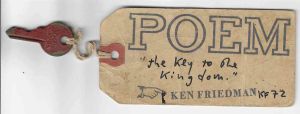
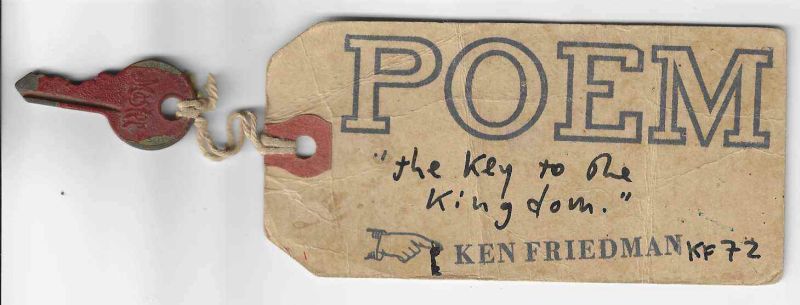
Ken Friedman, nascido em 1949 em New London, Connecticut, Estados Unidos, é artista, escritor, pesquisador, editor, professor e teórico norte americano associado ao Fluxus desde a década de 1960. Sua produção atravessa arte conceitual, eventos, instruções, performances, objetos, múltiplos, publicações de artista, arte postal, redes de correspondência e práticas intermedia. Friedman pertence à geração mais jovem incorporada ao Fluxus e teve papel relevante tanto na criação artística quanto na organização, circulação, documentação e posterior interpretação histórica do movimento. O Museum of Modern Art de Nova York o identifica como artista norte americano nascido em 1949 e conserva dezenas de seus trabalhos relacionados ao Fluxus.O presente cadastro toma como referência especial a obra The Key to the Kingdom, datada de 1972, identificada no acervo relacionado a Anchieta Fernandes como peça de Ken Friedman vinculada ao Fluxus. Segundo a informação de proveniência fornecida pelo acervo, a obra foi enviada ao artista brasileiro Anchieta Fernandes ou encontra se relacionada ao denominado Projeto 2. Como o documento visual ou a correspondência que permitiria distinguir definitivamente essas duas possibilidades não foi apresentado neste momento, a ligação específica com Anchieta Fernandes e Projeto 2 deve ser mantida como dado de proveniência do acervo ainda sujeito a confirmação documental. O procedimento segue o critério estabelecido para o Salsa de não transformar hipótese em fato e de registrar divergências ou lacunas quando a documentação não permite uma conclusão definitiva.Friedman aproximou se do Fluxus ainda muito jovem. Em 1966, George Maciunas, principal organizador histórico do Fluxus, reconheceu como arte algumas das atividades experimentais que Friedman vinha realizando e o incorporou ao circuito do grupo. Estudos sobre sua trajetória observam que ele não possuía então formação artística convencional e que sua aproximação ao Fluxus ocorreu justamente porque suas experiências com objetos, situações e ideias correspondiam à concepção expandida de arte defendida pelo movimento.A relação com George Maciunas tornou se fundamental. Correspondências de Friedman com Maciunas entre 1966 e 1975 estão preservadas nos arquivos da Gilbert and Lila Silverman Fluxus Collection no Museum of Modern Art. O mesmo arquivo conserva correspondência com Dick Higgins, Alison Knowles, Wolf Vostell, Knud Pedersen e outros participantes da rede Fluxus, demonstrando que Friedman não atuava de maneira isolada, mas dentro de uma extensa estrutura internacional de comunicação artística.Durante a segunda metade dos anos 1960, Friedman desenvolveu eventos, ações, múltiplos, objetos e publicações caracterizados pela economia de meios e pela transformação de situações comuns em proposições artísticas. Obras preservadas pelo MoMA incluem Garnisht Kigele, de 1966, Prototype for A Flux Corsage, de 1966, Open and Shut Case, realizado aproximadamente em 1966, além de Flux Post Kit 7, de 1968, A Flux Corsage, de 1969, Flux Clippings, de 1969, e Cleanliness Flux Kit, de 1969. Algumas dessas obras foram concebidas em diálogo direto com a estrutura editorial Fluxus organizada por Maciunas.Um aspecto fundamental de sua trajetória foi Fluxus West. Friedman desenvolveu atividades sob essa denominação na costa oeste dos Estados Unidos e contribuiu para ampliar a circulação geográfica de Fluxus para além do eixo Nova York e Europa. O arquivo do MoMA conserva newsletters de Fluxus West, correspondências, fotografias, programas e documentação produzida por Friedman durante esse período. A documentação inclui materiais relacionados a eventos, performances, contatos internacionais e à construção de redes que aproximavam arte, comunicação e circulação postal.Friedman utilizou intensamente o correio como meio artístico e organizacional. Cartões, listas de contatos, boletins, instruções, selos de artista, envelopes, publicações, textos e objetos enviados pelo sistema postal faziam parte de sua prática. Essa dimensão é particularmente importante para a compreensão de uma obra de 1972 que tenha chegado ao Brasil e ao arquivo de Anchieta Fernandes, pois a circulação internacional era constitutiva de sua concepção de arte e não apenas um método secundário de distribuição.A documentação de Friedman's papers no MoMA registra listas de contatos de 1971 a 1973 e grande quantidade de correspondência, mailings e materiais enviados a artistas de diferentes países. Em 1972 ele editou An International Contact List of the Arts, publicada em Regina, Saskatchewan, por Fluxus West e Image Bank. O próprio formato dessa publicação evidencia o interesse de Friedman em transformar redes de endereço e comunicação em infraestrutura para colaboração artística internacional.The Key to the Kingdom, 1972, deve ser compreendida dentro desse ambiente. Embora a pesquisa realizada não tenha localizado até agora uma ficha institucional independente para essa obra específica, título e data são coerentes com o período de intensa produção Fluxus de Friedman. Em 1972 ele publicava textos, eventos, propostas conceituais e materiais de circulação internacional, ao mesmo tempo em que mantinha correspondência com artistas e organizadores de diferentes países. O arquivo do MoMA preserva diversos conjuntos de trabalhos, correspondência, textos e efêmera de Friedman produzidos precisamente entre 1971 e 1972.A expressão The Key to the Kingdom também se insere adequadamente na lógica linguística característica dos eventos e objetos de Friedman, nos quais títulos, instruções e objetos cotidianos podem operar simultaneamente de maneira literal, metafórica e conceitual. No entanto, sem a análise física da peça, não se deve determinar sua técnica, dimensões ou constituição material por inferência. Esses campos devem permanecer não localizados até a incorporação de fotografia ou documentação primária da obra ao cadastro.Em 1972 Friedman publicou também The Aesthetics, em Regina, Saskatchewan, Events, Performances and Actions, em Berlim pela Edition Hundertmark, e o artigo Fluxus and Concept Art na revista Art and Artists. Essas atividades demonstram que naquele momento ele trabalhava simultaneamente como artista Fluxus, organizador de redes e autor de reflexões sobre as relações entre Fluxus e arte conceitual.O ano de 1972 também corresponde ao período do Fluxshoe, importante projeto itinerante organizado na Inglaterra entre 1972 e 1973 e documentado no arquivo da Tate. Os materiais da Tate incluem textos de Friedman como Chronology of Fluxus West, A Brief History of Fluxus West e Events, performances and Actions by Ken Friedman. O arquivo evidencia sua ligação com a circulação de Fluxus na Europa e com o ambiente editorial da Beau Geste Press.A relação entre Friedman e a Mail Art tornou se particularmente importante nos anos seguintes. Omaha Flow Systems, realizado em 1973, tornou se uma referência histórica para exposições abertas baseadas em correspondência, participação e interação entre artistas e público. Estudos posteriores identificam esse projeto como um momento decisivo para a transformação de práticas postais pessoais em modelos internacionais, abertos e participativos.Essa dimensão torna especialmente significativa a presença de uma peça de Friedman no Brasil em um arquivo associado a Anchieta Fernandes. Anchieta Fernandes foi participante do ambiente do Poema Processo no Rio Grande do Norte e manteve relações com artistas experimentais brasileiros e internacionais. Caso a documentação primária confirme que The Key to the Kingdom foi enviada diretamente por Friedman a Anchieta Fernandes, o objeto constituirá evidência importante de contato entre o circuito internacional Fluxus e um artista relacionado ao Poema Processo brasileiro. A existência física da peça no arquivo constitui um ponto de pesquisa relevante, mas a modalidade exata dessa relação deve ser estabelecida a partir do envelope, dedicatória, correspondência ou documento de Projeto 2.É importante não afirmar que Ken Friedman integrou o Poema Processo. Não existe evidência localizada de participação formal de Friedman nesse movimento brasileiro. A relação historiográfica ocorre pelas convergências e pela circulação documental entre Fluxus, arte conceitual, Mail Art, poesia visual, práticas intermedia e redes experimentais das quais artistas brasileiros também participavam. A eventual correspondência com Anchieta Fernandes acrescentaria um vínculo documental específico entre essas histórias, sem transformar Friedman em integrante do Poema Processo.Ao longo de sua trajetória, Friedman também se tornou historiador e teórico de Fluxus. Escreveu extensamente sobre o movimento, editou estudos acadêmicos e participou da consolidação de sua historiografia. Entre os projetos posteriores encontra se The Fluxus Reader, publicado em 1998, além de estudos desenvolvidos com pesquisadores como Owen Smith. Em 2006 Friedman e Smith organizaram um número duplo da revista Visible Language dedicado ao Fluxus.Sua carreira acadêmica desenvolveu se paralelamente. Friedman formou se na San Francisco State University em 1971 e posteriormente obteve doutorado na United States International University em San Diego em 1976. Atuou em instituições de ensino e pesquisa na Europa, Austrália, Estados Unidos e Ásia, dedicando se também aos estudos de design, inovação e teoria do conhecimento.A obra e a documentação de Ken Friedman encontram se representadas em importantes instituições internacionais. O Museum of Modern Art conserva extensa quantidade de obras e materiais provenientes da Gilbert and Lila Silverman Fluxus Collection. Seus arquivos incluem correspondência, obras, fotografias, textos, publicações, documentos de Fluxus West, event scores, materiais postais e documentação histórica produzida ao longo de várias décadas.O MoMA apresentou trabalhos de Friedman em exposições como Thing Thought: Fluxus Editions, 1962 a 1978, realizada entre 2011 e 2012, Artists Stamps and Stamp Images, em 1979 e 1980, Sound, em 1979, e Sound: Ken Friedman, no MoMA PS1, em 1980 e 1981.A importância histórica de Friedman deriva dessa combinação de funções. Ele foi artista Fluxus, produtor de eventos, organizador de redes, editor, pesquisador e posteriormente historiador de uma experiência da qual havia participado diretamente. Sua prática ajuda a compreender Fluxus não como estilo baseado em objetos semelhantes, mas como uma rede internacional de acontecimentos, ideias, publicações, correspondências, performances, instruções e relações sociais.The Key to the Kingdom, 1972, ganha relevância especial no contexto do acervo brasileiro justamente porque materializa essa circulação. Se confirmada documentalmente como obra enviada diretamente por Ken Friedman a Anchieta Fernandes, ela constitui um raro testemunho da aproximação física entre Fluxus e uma figura histórica relacionada ao Poema Processo. Se sua procedência estiver ligada ao Projeto 2, a documentação desse projeto deverá ser utilizada para esclarecer data de recebimento, contexto, participantes e mecanismo de circulação. Em ambos os casos, a peça deve ser preservada e indexada como documento relevante para pesquisas sobre Ken Friedman, Fluxus, Fluxus West, Mail Art, arte conceitual, poesia visual, redes internacionais de artistas, Anchieta Fernandes e as conexões entre a vanguarda experimental brasileira e internacional na década de 1970.
English
Ken Friedman, born in 1949 in New London, Connecticut, United States, is an American artist, writer, researcher, editor, professor and theorist associated with Fluxus since the 1960s. His work encompasses conceptual art, events, instructions, performances, objects, multiples, artists publications, Mail Art, correspondence networks and intermedia practices. Friedman belongs to the younger generation incorporated into Fluxus and played an important role not only in artistic production but also in the organization, circulation, documentation and subsequent historical interpretation of the movement. The Museum of Modern Art in New York identifies him as an American artist born in 1949 and preserves dozens of his Fluxus related works.This record focuses particularly on The Key to the Kingdom, dated 1972 and identified in archival information associated with Anchieta Fernandes as a work by Ken Friedman connected with Fluxus. According to provenance information supplied by the archive, the work was sent to the Brazilian artist Anchieta Fernandes or is associated with a project identified as Projeto 2. Since the primary document necessary to distinguish conclusively between these possibilities has not yet been presented, the precise connection with Anchieta Fernandes and Projeto 2 should remain recorded as archival provenance requiring further documentary confirmation.Friedman became associated with Fluxus at a remarkably young age. In 1966 George Maciunas, the principal historical organizer of Fluxus, recognized Friedman's experimental activities as art and invited him into the Fluxus context. Studies of Friedman's career emphasize that he had no conventional artistic training at that stage and that his experiments with objects, situations and ideas corresponded closely with the expanded conception of art developed within Fluxus.His relationship with George Maciunas became fundamental. Friedman's correspondence with Maciunas from 1966 to 1975 is preserved in the Gilbert and Lila Silverman Fluxus Collection Archives at the Museum of Modern Art. The same archive preserves correspondence with Dick Higgins, Alison Knowles, Wolf Vostell, Knud Pedersen and other participants in international Fluxus networks, demonstrating that Friedman worked within a broad structure of artistic communication rather than as an isolated individual.During the second half of the 1960s Friedman developed events, actions, multiples, objects and publications characterized by economy of means and by the transformation of ordinary situations into artistic propositions. Works preserved by MoMA include Garnisht Kigele from 1966, Prototype for A Flux Corsage from 1966, Open and Shut Case from approximately 1966, Flux Post Kit 7 from 1968, A Flux Corsage from 1969, Flux Clippings from 1969 and Cleanliness Flux Kit from 1969. Several of these works were developed in direct dialogue with the Fluxus publishing structure organized by Maciunas.A fundamental element of his career was Fluxus West. Friedman developed activities under this designation on the west coast of the United States and helped extend Fluxus circulation beyond the New York and European centers. The MoMA archive preserves Fluxus West newsletters, correspondence, photographs, programs and documentation produced by Friedman during this period. These materials concern events, performances, international contacts and networks connecting art, communication and postal circulation.Friedman made extensive use of the postal system as both an artistic and organizational medium. Cards, contact lists, newsletters, instructions, artists stamps, envelopes, publications, texts and objects circulated by mail formed part of his practice. This dimension is particularly relevant for understanding how a work dated 1972 could have reached Brazil and entered an archive associated with Anchieta Fernandes.The Friedman papers at MoMA include contact lists dating from 1971 to 1973 together with extensive correspondence, mailings and materials circulated internationally. In 1972 Friedman edited An International Contact List of the Arts, published in Regina, Saskatchewan, by Fluxus West and Image Bank. The publication demonstrates his interest in transforming addresses and communication networks into an infrastructure for international artistic collaboration.The Key to the Kingdom, 1972, should be understood within this environment. Although the present research has not located an independent institutional catalogue record for this specific work, its title and date correspond to a period of intense Fluxus production by Friedman. In 1972 he was producing event scores, conceptual propositions, publications and internationally circulated materials while maintaining correspondence with artists and organizers in several countries. MoMA preserves numerous groups of Friedman's works, writings, correspondence and ephemera dating precisely from 1971 and 1972.The title The Key to the Kingdom is also consistent with Friedman's use of language in event scores and conceptual objects, where titles, instructions and ordinary things can operate simultaneously at literal, metaphorical and conceptual levels. Without direct examination of the surviving object, however, its medium, dimensions and physical structure should not be inferred. These fields remain not located until photographic or primary documentary evidence is incorporated into the record.In 1972 Friedman also published The Aesthetics in Regina, Saskatchewan, Events, Performances and Actions through Edition Hundertmark in Berlin, and the article Fluxus and Concept Art in Art and Artists. These activities demonstrate that he was working simultaneously as a Fluxus artist, network organizer and writer examining relationships between Fluxus and conceptual art.The same period corresponds to Fluxshoe, the important travelling project developed in Britain during 1972 and 1973 and documented by Tate. Tate archival materials include Friedman's Chronology of Fluxus West, A Brief History of Fluxus West and Events, performances and Actions by Ken Friedman, establishing his involvement in the European circulation and interpretation of Fluxus.Friedman's relationship with Mail Art became increasingly important during the following years. Omaha Flow Systems, developed in 1973, became an important historical reference for open correspondence exhibitions based on participation and interaction. Later accounts identify this project as significant in transforming personal postal exchanges into open and international artistic networks.This dimension makes the presence of a Friedman work in a Brazilian archive associated with Anchieta Fernandes particularly significant. Anchieta Fernandes was connected with the experimental environment of the Process Poem Movement in Rio Grande do Norte and maintained relationships with Brazilian and international artists. If primary documentation confirms that The Key to the Kingdom was sent directly by Friedman to Anchieta Fernandes, the object will constitute important evidence of direct contact between the international Fluxus network and a Brazilian artist associated with the Process Poem Movement.Ken Friedman should not, however, be described as a member of the Process Poem Movement. No evidence located in the sources consulted establishes formal participation in that Brazilian movement. The historical relationship arises through convergences and documentary circulation among Fluxus, conceptual art, Mail Art, visual poetry, intermedia practices and experimental networks in which Brazilian artists also participated. Direct correspondence with Anchieta Fernandes would establish a specific documentary link between these histories without redefining Friedman as a Process Poem artist.Over the course of his career Friedman also became a historian and theorist of Fluxus. He wrote extensively on the movement, edited scholarly research and contributed to the consolidation of Fluxus historiography. His later projects include The Fluxus Reader, published in 1998, as well as research undertaken with scholars such as Owen Smith. In 2006 Friedman and Smith developed a double issue of Visible Language devoted to Fluxus.His academic career developed in parallel. Friedman graduated from San Francisco State University in 1971 and received a doctorate from United States International University in San Diego in 1976. He subsequently held teaching and research positions in Europe, Australia, the United States and Asia and developed extensive work in design research, innovation and knowledge theory.Works and documentary materials by Ken Friedman are preserved by major international institutions. The Museum of Modern Art holds an extensive body of works and papers through the Gilbert and Lila Silverman Fluxus Collection. These materials include correspondence, artworks, photographs, texts, publications, Fluxus West documents, event scores, postal material and historical records produced over several decades.MoMA has presented Friedman's work in exhibitions including Thing Thought: Fluxus Editions, 1962 to 1978, Artists Stamps and Stamp Images, Sound and Sound: Ken Friedman at MoMA PS1.Friedman's historical significance derives from this combination of roles. He was a Fluxus artist, event maker, network organizer, editor, researcher and later a historian of an experience in which he had participated directly. His practice helps define Fluxus not as a style based on similar objects but as an international network of events, ideas, publications, correspondence, performances, instructions and social relations.The Key to the Kingdom, 1972, therefore assumes particular importance within the Brazilian archive because it materializes this circulation. If documented as a work sent directly by Ken Friedman to Anchieta Fernandes, it represents an important material connection between Fluxus and a historical figure associated with the Process Poem Movement. If its provenance is instead connected with Projeto 2, documentation of that project should be examined to establish the date of receipt, participants, context and mechanism of circulation. In either case, the work should be indexed as an important document for research concerning Ken Friedman, Fluxus, Fluxus West, Mail Art, conceptual art, visual poetry, international artists networks, Anchieta Fernandes and connections between Brazilian and international experimental avant gardes during the 1970s.
Currículo
CURRÍCULO EM PORTUGUÊSIDENTIFICAÇÃONome principalKen FriedmanNascimento1949New London, Connecticut, Estados UnidosNacionalidadeNorte americanaÁreas de atuaçãoArte conceitualFluxusPerformanceEvent scoresArte postalMail ArtMúltiplosPublicação de artistaEscritaPesquisaDesignTeoriaEnsinoMovimentos e contextosFluxusFluxus WestArte conceitualIntermediaMail ArtRedes internacionais de artistasFORMAÇÃO1971San Francisco State UniversityEstados UnidosGraduação documentada.1976United States International UniversitySan DiegoEstados UnidosDoutorado.MOVIMENTOS, GRUPOS E COLETIVOS1966FluxusIngresso no ambiente Fluxus por meio da relação com George Maciunas.Década de 1960Fluxus WestEstados UnidosAtuação como organizador, artista, editor e articulador de redes.OBRAS E PROJETOS SELECIONADOS1966Garnisht KigeleMúltiplo FluxusPlastic box com botão metálicoDesigner George MaciunasPublisher FluxusMuseum of Modern Art, Nova York.1966Prototype for A Flux CorsageMúltiploMuseum of Modern Art.Aproximadamente 1966Open and Shut CaseCaixa plástica, etiqueta offset e cartãoDesigner George MaciunasPublisher FluxusMuseum of Modern Art.1968Flux Post Kit 7Com vários artistasPublicação e múltiplo Fluxus.1969A Flux CorsageFluxus.1969Flux ClippingsFluxus.1969Cleanliness Flux KitFluxus.1971Visa TouRistE Fluxfest PassportDocumentação preservada no MoMA.1972The Key to the KingdomObra identificada no acervo relacionado a Anchieta FernandesContexto FluxusData informada pelo acervoProcedência indicada como envio a Anchieta Fernandes ou associação ao Projeto 2Técnica e dimensões não localizadas nas fontes consultadasA confirmação definitiva da modalidade de envio depende da documentação primária da peça1972Shadow EventParticipação em Spatial Poem No. 4 de Mieko ShiomiDocumentação preservada no arquivo do MoMA.1973Omaha Flow SystemsProjeto participativo e de circulação postalOmahaEstados UnidosImportante para a história da Mail Art e das exposições abertas por correspondência.PUBLICAÇÕES E TEXTOS1972The AestheticsUniversity of SaskatchewanReginaCanadá.1972Events, Performances and ActionsEdition HundertmarkBerlimAlemanha.1972An International Contact List of the ArtsEditor Ken FriedmanFluxus West e Image BankReginaCanadá.1972Fluxus and Concept ArtArt and ArtistsLondres.1973EventsIntrodução de Jay BelloliNelson I.C. GalleryUniversity of California DavisEstados Unidos.1973Flowing in OmahaArt and ArtistsLondres.1973FluxusFlash Art.1998The Fluxus ReaderEditor Ken FriedmanPublicação de referência para estudos históricos e teóricos sobre Fluxus.ARQUIVOS E FUNDOS DOCUMENTAISMuseum of Modern ArtNova YorkGilbert and Lila Silverman Fluxus Collection ArchivesExtensa documentação de Ken Friedman incluindo correspondência com George Maciunas de 1966 a 1975, correspondência com Dick Higgins, Alison Knowles, Wolf Vostell, Knud Pedersen e outros, Fluxus West newsletters, fotografias, listas de contatos, textos, event scores, publicações, mailings, artistas stamps, efêmera e documentação de exposições.Tate ArchiveLondresMayor Fluxshoe Beau Geste Press ArchiveDocumentação de Friedman relacionada ao Fluxshoe, Fluxus West, publicações e eventos.EXPOSIÇÕES E APRESENTAÇÕES DOCUMENTADAS1973Ken Friedman: A Perspective ExhibitionNelson I.C. GalleryUniversity of California DavisEstados Unidos16 a 30 de novembro de 1973.1979SoundMoMA PS1Nova York.1979 a 1980Artists Stamps and Stamp ImagesMoMA PS1Nova York.1980 a 1981Sound: Ken FriedmanMoMA PS1Nova York.1995Adding It Up: Print Acquisitions 1970 a 1995Museum of Modern ArtNova York.1999Sight Gags: Grotesque, Caricature and Wit in Modern and Contemporary DrawingsMuseum of Modern ArtNova York.2011 a 2012Thing Thought: Fluxus Editions, 1962 a 1978Museum of Modern ArtNova York.RELAÇÕES ARTÍSTICAS DOCUMENTADASGeorge MaciunasDick HigginsAlison KnowlesWolf VostellKnud PedersenBen VautierRobert WattsMieko ShiomiJoseph BeuysJames RiddleDavid MayorFelipe EhrenbergMartha Hellion EhrenbergAs relações variam entre colaboração artística, correspondência, publicação, eventos e participação na rede Fluxus.RELAÇÃO COM ANCHIETA FERNANDES1972The Key to the KingdomPeça de Ken Friedman pertencente ao contexto Fluxus e preservada em conjunto documental relacionado a Anchieta Fernandes.A informação inicial do acervo indica que a obra foi enviada a Anchieta Fernandes ou se relaciona ao Projeto 2.Não foi localizada até o momento documentação externa suficiente para escolher definitivamente entre essas duas possibilidades.Se o envio direto for confirmado por envelope, dedicatória ou correspondência, o objeto constituirá evidência material de contato entre Ken Friedman e Anchieta Fernandes e de uma conexão documental entre Fluxus e um participante relacionado ao Poema Processo brasileiro.Ken Friedman não deve ser classificado como integrante do Poema Processo.COLEÇÕESMuseum of Modern ArtNova YorkGilbert and Lila Silverman Fluxus CollectionNumerosos trabalhos de Ken Friedman.Outras instituições mencionadas em documentação especializada incluem Solomon R. Guggenheim Museum, Tate, Hood Museum of Art e Staatsgalerie Stuttgart.CRONOLOGIA1949Nascimento em New London, Connecticut.1966Aproximação de George Maciunas e ingresso no contexto Fluxus.1966Garnisht Kigele.1966Prototype for A Flux Corsage.Aproximadamente 1966Open and Shut Case.1967Intensa atividade de Fluxus West e circulação de newsletters e eventos.1968Flux Post Kit 7.1969A Flux Corsage.1969Flux Clippings.1969Cleanliness Flux Kit.1971Conclusão de estudos na San Francisco State University.1971Visa TouRistE Fluxfest Passport.1972The Key to the Kingdom.Peça do contexto Fluxus preservada no acervo relacionado a Anchieta Fernandes.1972Publicação de The Aesthetics.1972Publicação de Events, Performances and Actions.1972Edição de An International Contact List of the Arts.1972Publicação do artigo Fluxus and Concept Art.1972Participação em Spatial Poem No. 4, Shadow Event, de Mieko Shiomi.1972 a 1973Circulação e documentação relacionada ao Fluxshoe.1973Omaha Flow Systems.1973Ken Friedman: A Perspective Exhibition na University of California Davis.1976Doutorado na United States International University.1979 a 1981Participações e apresentações no MoMA PS1 relacionadas a Sound e artistas stamps.1998Publicação de The Fluxus Reader.2011 a 2012Participação histórica representada em Thing Thought: Fluxus Editions, 1962 a 1978, no Museum of Modern Art.
English
CURRICULUM IN ENGLISHIDENTIFICATIONPrimary nameKen FriedmanBorn1949New London, Connecticut, United StatesNationalityAmericanFIELDS OF ACTIVITYConceptual artFluxusPerformanceEvent scoresMail ArtMultiplesArtists publicationsWritingResearchDesignTheoryEducationMOVEMENTS AND CONTEXTSFluxusFluxus WestConceptual artIntermediaMail ArtInternational artists networksEDUCATION1971San Francisco State UniversityUnited StatesDocumented university degree.1976United States International UniversitySan DiegoUnited StatesDoctorate.MOVEMENTS, GROUPS AND COLLECTIVES1966FluxusFriedman entered the Fluxus environment through his relationship with George Maciunas.1960sFluxus WestUnited StatesActivity as organizer, artist, editor and international network builder.SELECTED WORKS AND PROJECTS1966Garnisht KigeleFluxus multiplePlastic box containing metal buttonDesigner George MaciunasPublisher FluxusMuseum of Modern Art, New York.1966Prototype for A Flux CorsageMultipleMuseum of Modern Art.Approximately 1966Open and Shut CasePlastic box with offset label and cardDesigner George MaciunasPublisher FluxusMuseum of Modern Art.1968Flux Post Kit 7Multiple artist Fluxus publication and object.1969A Flux CorsageFluxus.1969Flux ClippingsFluxus.1969Cleanliness Flux KitFluxus.1971Visa TouRistE Fluxfest PassportDocumentation preserved at MoMA.1972The Key to the KingdomWork identified in the archival collection associated with Anchieta FernandesFluxus contextDate supplied by the archiveProvenance described as either a work sent to Anchieta Fernandes or associated with Projeto 2Medium and dimensions not located in the sources consultedDefinitive identification of the mode of transmission requires examination of the primary documentation1972Shadow EventContribution to Mieko Shiomi's Spatial Poem No. 4Documentation preserved in the MoMA Archives.1973Omaha Flow SystemsParticipatory correspondence projectOmahaUnited StatesHistorically significant for Mail Art and open correspondence exhibitions.PUBLICATIONS AND TEXTS1972The AestheticsUniversity of SaskatchewanReginaCanada.1972Events, Performances and ActionsEdition HundertmarkBerlinGermany.1972An International Contact List of the ArtsEdited by Ken FriedmanFluxus West and Image BankReginaCanada.1972Fluxus and Concept ArtArt and ArtistsLondon.1973EventsIntroduction by Jay BelloliNelson I.C. GalleryUniversity of California DavisUnited States.1973Flowing in OmahaArt and ArtistsLondon.1973FluxusFlash Art.1998The Fluxus ReaderEdited by Ken FriedmanMajor historical and theoretical publication concerning Fluxus.ARCHIVES AND DOCUMENTARY FONDSMuseum of Modern ArtNew YorkGilbert and Lila Silverman Fluxus Collection ArchivesExtensive Ken Friedman documentation including correspondence with George Maciunas from 1966 to 1975, correspondence with Dick Higgins, Alison Knowles, Wolf Vostell, Knud Pedersen and others, Fluxus West newsletters, photographs, contact lists, writings, event scores, publications, mailings, artists stamps, ephemera and exhibition documentation.Tate ArchiveLondonMayor Fluxshoe Beau Geste Press ArchiveDocumentation concerning Friedman, Fluxshoe, Fluxus West, publications and events.DOCUMENTED EXHIBITIONS AND PRESENTATIONS1973Ken Friedman: A Perspective ExhibitionNelson I.C. GalleryUniversity of California DavisUnited StatesNovember 16 to November 30, 1973.1979SoundMoMA PS1New York.1979 to 1980Artists Stamps and Stamp ImagesMoMA PS1New York.1980 to 1981Sound: Ken FriedmanMoMA PS1New York.1995Adding It Up: Print Acquisitions 1970 to 1995Museum of Modern ArtNew York.1999Sight Gags: Grotesque, Caricature and Wit in Modern and Contemporary DrawingsMuseum of Modern ArtNew York.2011 to 2012Thing Thought: Fluxus Editions, 1962 to 1978Museum of Modern ArtNew York.DOCUMENTED ARTISTIC RELATIONSHIPSGeorge MaciunasDick HigginsAlison KnowlesWolf VostellKnud PedersenBen VautierRobert WattsMieko ShiomiJoseph BeuysJames RiddleDavid MayorFelipe EhrenbergMartha Hellion EhrenbergThese relationships include artistic collaboration, correspondence, publishing, events and participation in Fluxus networks.RELATIONSHIP WITH ANCHIETA FERNANDES1972The Key to the KingdomWork by Ken Friedman from the Fluxus context preserved in documentary material associated with Anchieta Fernandes.Initial archival information indicates that the work was either sent to Anchieta Fernandes or connected with Projeto 2.No independent external documentation has yet been located that allows a definitive choice between these two possibilities.If direct transmission is confirmed through an envelope, dedication or correspondence, the work will constitute material evidence of contact between Ken Friedman and Anchieta Fernandes and a documentary connection between Fluxus and an artist associated with the Brazilian Process Poem Movement.Ken Friedman should not be classified as a member of the Process Poem Movement.PUBLIC COLLECTIONSMuseum of Modern ArtNew YorkGilbert and Lila Silverman Fluxus CollectionNumerous works and documents by Ken Friedman.Other institutions documented as preserving works or papers by Friedman include the Solomon R. Guggenheim Museum, Tate, Hood Museum of Art and Staatsgalerie Stuttgart.CHRONOLOGY1949Born in New London, Connecticut.1966Association with George Maciunas and entry into the Fluxus context.1966Garnisht Kigele.1966Prototype for A Flux Corsage.Approximately 1966Open and Shut Case.1967Extensive Fluxus West activities, newsletters and events.1968Flux Post Kit 7.1969A Flux Corsage.1969Flux Clippings.1969Cleanliness Flux Kit.1971Graduation from San Francisco State University.1971Visa TouRistE Fluxfest Passport.1972The Key to the Kingdom.Fluxus related work preserved in an archive associated with Anchieta Fernandes.1972Publication of The Aesthetics.1972Publication of Events, Performances and Actions.1972Editing of An International Contact List of the Arts.1972Publication of Fluxus and Concept Art.1972Contribution to Mieko Shiomi's Spatial Poem No. 4, Shadow Event.1972 to 1973Activity and documentation associated with Fluxshoe.1973Omaha Flow Systems.1973Ken Friedman: A Perspective Exhibition at the University of California Davis.1976Doctorate from United States International University.1979 to 1981Presentations at MoMA PS1 related to Sound and artists stamps.1998Publication of The Fluxus Reader.2011 to 2012Historical representation in Thing Thought: Fluxus Editions, 1962 to 1978 at the Museum of Modern Art.