Vagrich Bakhchanyan - Alexander Bakchanyan - USA
Local de nascimento: Kharkiv, então República Socialista Soviética da Ucrânia
Data de nascimento: 1938
Local de falecimento: New York , USA
Data de falecimento: 2009
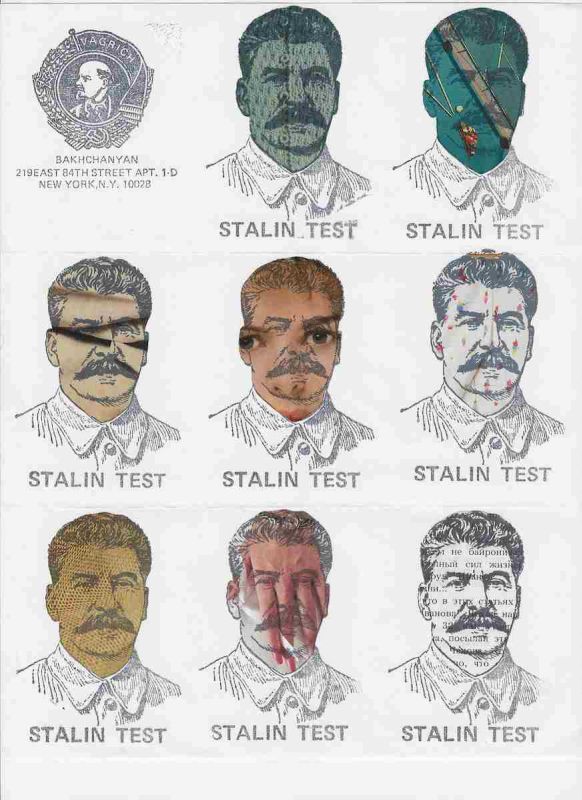
Alexander Bakhchanyan, identificado dessa forma em documentação relacionada ao circuito de Marcelo Dolabela e da Comissão BH 100 em Belo Horizonte, apresenta uma questão de identificação que exige atenção arquivística. A pesquisa internacional realizada até o momento localiza ampla documentação para Vagrich Bakhchanyan, também grafado Vagrich Bakhchanian, artista, escritor, poeta conceitual, designer gráfico e caricaturista nascido em Kharkiv, então República Socialista Soviética da Ucrânia, em 1938, e falecido em Nova York em 2009. Não foi localizada, entretanto, fonte institucional suficiente que confirme Alexander como nome alternativo de Vagrich Bakhchanyan. Por essa razão, a relação entre a identificação Alexander Bakhchanyan encontrada no contexto brasileiro e o artista Vagrich Bakhchanyan deve permanecer registrada como questão documental a ser confirmada.Vagrich Bakhchanyan foi uma figura importante da arte não oficial soviética e da literatura experimental russa da segunda metade do século XX. Artista de origem armênia, cresceu em Kharkiv e participou dos círculos artísticos e literários não oficiais da cidade. Frequentou formação artística e estudou em ambiente ligado a Alexei Shcheglov e a Vasyl Yermilov, importante representante do construtivismo ucraniano. Sua produção desde cedo aproximou desenho, caricatura, colagem, texto, humor, linguagem popular e referências às vanguardas históricas russas e europeias.Em 1965 participou da organização de uma exposição não oficial realizada em um pátio da Rua Sumskaya, em Kharkiv, episódio posteriormente reconhecido na história do underground artístico da cidade. Na segunda metade da década de 1960 mudou se para Moscou e passou a integrar o ambiente da arte alternativa soviética, relacionando se com artistas como Ilya Kabakov, Ülo Sooster, Erik Bulatov e outros representantes da produção não conformista. Trabalhou também para a Literaturnaya Gazeta, onde suas ilustrações, desenhos e intervenções gráficas circularam dentro de um veículo oficial, ao mesmo tempo em que desenvolvia uma produção independente e conceitualmente crítica.Sua produção ocupa posição importante na passagem entre o não conformismo soviético, o Sots Art e aquilo que posteriormente seria identificado como Moscow Conceptualism. Bakhchanyan trabalhou intensamente com linguagem, slogans políticos, frases feitas, propaganda, trocadilhos, provérbios, textos jornalísticos e símbolos da cultura soviética. Em vez de representar simplesmente a realidade política, desmontava os sistemas de linguagem através de humor, absurdo, substituição de palavras, montagem e deslocamento semântico.Esse procedimento aproxima sua obra tanto da tradição do Dada quanto do futurismo russo, da literatura do absurdo e posteriormente do conceitualismo. O Garage Museum of Contemporary Art o identifica como escritor conceitual e observa que grande parte de seus textos trabalha com clichês jornalísticos, expressões idiomáticas, propaganda soviética, fragmentação verbal e reorganização da linguagem para produzir novos sentidos. Sua obra literária e visual estabelece assim uma zona intermediária entre poesia, desenho, colagem, arte conceitual e crítica cultural.Bakhchanyan é também considerado por diferentes fontes um precursor do Sots Art. Antes que esse movimento fosse plenamente estabelecido por artistas como Vitaly Komar e Alexander Melamid, ele já apropriava símbolos, slogans, retórica estatal e estruturas visuais da cultura soviética para submetê los a processos de ironia e absurdo. A combinação de palavras e imagens tornou se uma das características centrais de sua produção.Em 1974 Bakhchanyan deixou a União Soviética e estabeleceu se nos Estados Unidos, vivendo em Nova York. Essa mudança marcou uma ampliação significativa de suas práticas. No ambiente artístico norte americano passou a desenvolver projetos relacionados à Mail Art, performance, ações conceituais, publicação independente, desenho gráfico e livros. Sua produção passou também a dialogar diretamente com Fluxus, arte processual, cultura popular norte americana e circuitos internacionais de correspondência.A Mail Art possui relevância especial para compreender sua conexão potencial com artistas latino americanos e brasileiros. Após sua chegada aos Estados Unidos, Bakhchanyan participou de projetos internacionais de correspondência, ações, publicações e redes que ultrapassavam os limites institucionais tradicionais. A Municipal Gallery de Kharkiv o identifica inclusive como um dos pioneiros da Mail Art soviética, destacando sua produção em performance, livros de artista, ações e arte baseada em comunicação.Durante as décadas de 1970 e 1980 seu nome passou a circular internacionalmente em exposições, publicações e projetos da arte não oficial soviética. Participou da chamada Dissident Biennale em Veneza em 1977. Em Nova York realizou performances e ações conceituais e teve trabalhos relacionados a instituições como o Museum of Modern Art. Em 1981 participou da publicação Kolkhoz No 1, projeto samizdat desenvolvido em Nova York em associação com Rimma Gerlovina e Valery Gerlovin, publicação posteriormente vinculada historiograficamente ao Moscow Conceptualism.Seu trabalho também aparece em A YA, revista fundamental para a divulgação internacional da arte não oficial russa. O número 2 de 1980 reúne Bakhchanyan ao lado de artistas e autores como Joseph Beuys, Ilya Kabakov, Oleg Vassiliev, Dmitri Prigov, Andrei Monastyrski, Erik Bulatov e outros nomes fundamentais da arte conceitual e não conformista soviética.A dimensão literária de Bakhchanyan é inseparável de sua produção visual. Ele publicou livros, textos, aforismos, poesia conceitual e prosa experimental. Muitas de suas frases transformaram a linguagem oficial soviética por meio de alterações mínimas capazes de produzir humor, crítica e absurdo. O Garage Museum registra onze livros de sua autoria e caracteriza sua escrita como parte importante do conceitualismo literário russo.Sua obra encontra se hoje preservada em importantes instituições. Fontes museológicas registram trabalhos de Vagrich Bakhchanyan na State Tretyakov Gallery em Moscou, State Russian Museum em São Petersburgo, National Art Museum of Ukraine, Zimmerli Art Museum da Rutgers University e outras coleções internacionais. O Museum of Modern Art de Nova York registra Bakhchanyan em sua base de artistas e possui documentação relacionada à publicação Russian Samizdat Art de 1986.A University of Notre Dame preserva as Vagrich and Irene Bakhchanyan Collections, importantes para o estudo de sua vida e obra. A descrição institucional confirma sua trajetória desde Kharkiv e Moscou até Nova York e registra sua atividade com Mail Art, performance, design gráfico, arte conceitual e colaboração com escritores e artistas russos emigrados.Em 2015 o Zimmerli Art Museum da Rutgers University apresentou Accidental Absurdity, considerada a primeira retrospectiva norte americana dedicada a Bakhchanyan. A exposição reuniu aproximadamente oitenta trabalhos, incluindo gravuras, colagens, composições literárias e performances conceituais, destacando o papel do humor e da crítica à propaganda soviética dentro de sua obra.A conexão brasileira encontrada no arquivo relacionado a Marcelo Dolabela e à Comissão BH 100 torna esse conjunto especialmente relevante para futuras pesquisas. Marcelo Dolabela atuou intensamente na poesia visual e experimental de Belo Horizonte e esteve associado a publicações e projetos da Comissão BH 100 nos anos 1990. Caso o Alexander Bakhchanyan registrado nesses materiais seja documentalmente confirmado como Vagrich Bakhchanyan, essa presença constituirá evidência importante da recepção e circulação brasileira de um dos nomes relacionados ao conceitualismo soviético, Sots Art e Mail Art internacional.Até que o documento primário esclareça essa identificação, o cadastro deve registrar com precisão que existe uma ocorrência do nome Alexander Bakhchanyan em material relacionado a Marcelo Dolabela e à Comissão BH 100, enquanto a trajetória histórica apresentada pelas fontes internacionais corresponde a Vagrich Bakhchanyan, 1938 a 2009. A eventual equivalência entre essas identidades não deve ser apresentada como fato sem comprovação documental.
English
Alexander Bakhchanyan, identified under this name in documentation connected with Marcelo Dolabela and Comissão BH 100 in Belo Horizonte, presents an archival identification issue that requires particular care. International research conducted to date reveals extensive documentation for Vagrich Bakhchanyan, also spelled Vagrich Bakhchanian, an artist, writer, conceptual poet, graphic designer and caricaturist born in Kharkiv in the Ukrainian Soviet Socialist Republic in 1938 and deceased in New York in 2009. No institutional source has yet been located confirming Alexander as an alternative given name used by Vagrich Bakhchanyan. The possible relationship between the Brazilian documentation identifying Alexander Bakhchanyan and the internationally documented artist Vagrich Bakhchanyan must therefore remain an open documentary question.Vagrich Bakhchanyan was an important figure in Soviet unofficial art and Russian experimental literature during the second half of the twentieth century. Of Armenian heritage, he grew up in Kharkiv and participated in the city nonofficial artistic and literary circles. He received artistic training in environments associated with Alexei Shcheglov and Vasyl Yermilov, an important Ukrainian constructivist artist. His early production combined drawing, caricature, collage, writing, humor, popular language and references to Russian and European historical avant gardes.In 1965 he participated in organizing an unofficial exhibition in a courtyard on Sumskaya Street in Kharkiv, an event subsequently recognized as important within the history of the city underground art movement. During the second half of the 1960s Bakhchanyan moved to Moscow, where he became involved in alternative Soviet art and associated with figures including Ilya Kabakov, Ülo Sooster, Erik Bulatov and other nonconformist artists. He also worked for Literaturnaya Gazeta, where his drawings and graphic compositions appeared within an official publication while he simultaneously developed an independent and conceptually critical artistic practice.His work occupies an important position between Soviet nonconformism, Sots Art and what later became known as Moscow Conceptualism. Bakhchanyan worked intensively with political slogans, clichés, propaganda, proverbs, newspaper language and symbols of Soviet culture. Rather than simply depicting political reality, he dismantled systems of language through humor, absurdity, verbal substitutions, montage and semantic displacement.His methods connect his practice with Dada, Russian Futurism, absurdist literature and conceptual art. Garage Museum of Contemporary Art describes Bakhchanyan as a conceptual writer whose texts frequently manipulate journalistic clichés, idioms, Soviet propaganda and verbal fragments in order to generate new and often absurd meanings. His literary and visual production therefore occupies an intermediate territory between poetry, drawing, collage, conceptual art and cultural criticism.Bakhchanyan is also considered by several sources to have anticipated important aspects of Sots Art. Before the movement was fully established through artists such as Vitaly Komar and Alexander Melamid, he was already appropriating Soviet symbols, slogans and official visual rhetoric and transforming them through irony and absurdist procedures.In 1974 Bakhchanyan emigrated from the Soviet Union to the United States and settled in New York. This relocation significantly expanded his artistic practices. Within the American environment he developed projects involving Mail Art, performance, conceptual actions, experimental publications, graphic design and artists books. His work also entered into dialogue with Fluxus, process based art and American popular culture.Mail Art is particularly relevant when considering his potential connection with Latin American and Brazilian experimental networks. After emigrating, Bakhchanyan participated in international correspondence projects, performances and publications that bypassed conventional institutional structures. The Municipal Gallery of Kharkiv describes him in relation to the development of Soviet Mail Art and emphasizes his pioneering use of communication, performance and artists publications.During the 1970s and 1980s his name circulated internationally through exhibitions and publications devoted to unofficial Soviet art. He participated in the Dissident Biennale in Venice in 1977. In New York he developed conceptual performances and actions and became connected with institutional contexts including the Museum of Modern Art. In 1981 he participated in Kolkhoz No 1, an experimental samizdat publication produced in New York in association with Rimma Gerlovina and Valery Gerlovin and subsequently positioned within the historiography of Moscow Conceptualism.His work also appeared in A YA, an important journal devoted to unofficial Russian art. Issue number 2 from 1980 includes Bakhchanyan together with Joseph Beuys, Ilya Kabakov, Oleg Vassiliev, Dmitri Prigov, Andrei Monastyrski, Erik Bulatov and other figures associated with conceptual and nonconformist art.Bakhchanyan literary production cannot be separated from his visual work. He authored books, texts, aphorisms, conceptual poetry and experimental prose. Many of his verbal works transformed official Soviet language through small alterations that produced humor, criticism and absurdity. Garage Museum documents eleven books by Bakhchanyan and positions his writing within Russian conceptual literature.His works are preserved in major institutional collections. Sources record works by Vagrich Bakhchanyan in the State Tretyakov Gallery in Moscow, State Russian Museum in Saint Petersburg, National Art Museum of Ukraine, Zimmerli Art Museum at Rutgers University and other international institutions. The Museum of Modern Art in New York includes Bakhchanyan in its artist database and documents his participation in Russian Samizdat Art from 1986.The University of Notre Dame preserves the Vagrich and Irene Bakhchanyan Collections. Its institutional description confirms his trajectory from Kharkiv and Moscow to New York and documents his activity in Mail Art, performance, graphic design, conceptual art and collaborative projects with Russian émigré writers and artists.In 2015 the Zimmerli Art Museum at Rutgers University presented Accidental Absurdity, described as the first United States retrospective devoted to Bakhchanyan. The exhibition brought together approximately eighty works including prints, collages, literary compositions and conceptual performances and emphasized the central role of humor and criticism of Soviet propaganda within his practice.The Brazilian connection found in material related to Marcelo Dolabela and Comissão BH 100 makes this documentation particularly significant for future research. Marcelo Dolabela was deeply involved with visual and experimental poetry in Belo Horizonte and participated in publications and projects connected with Comissão BH 100 during the 1990s. If the Alexander Bakhchanyan recorded in these materials can ultimately be documented as Vagrich Bakhchanyan, the material would constitute significant evidence of the reception and circulation in Brazil of an artist associated with Soviet conceptualism, Sots Art and international Mail Art.Until primary documentation resolves the identification, however, the Salsa record should state precisely that the name Alexander Bakhchanyan occurs in material related to Marcelo Dolabela and Comissão BH 100, while the internationally documented biography corresponds to Vagrich Bakhchanyan, 1938 to 2009. Their identification as the same person should not yet be presented as established fact.
Currículo
CURRÍCULO EM PORTUGUÊSIDENTIFICAÇÃONome documentado internacionalmenteVagrich BakhchanyanOutras grafiasVagrich BakhchanianVagrich BahchanyanVagrich Akopovich BakhchanyanPseudônimo documentadoBachNome encontrado no contexto brasileiroAlexander BakhchanyanEquivalência entre Alexander Bakhchanyan e Vagrich BakhchanyanNão confirmada documentalmenteNascimento1938KharkivRepública Socialista Soviética da UcrâniaUnião SoviéticaFalecimento2009Nova YorkEstados UnidosOrigemFamília armêniaÁreas de atuaçãoArtes visuaisLiteraturaPoesia conceitualDesenhoDesign gráficoCaricaturaColagemMail ArtPerformanceLivro de artistaPublicação experimentalArte conceitualMovimentos e contextosArte soviética não oficialNão conformismo soviéticoSots ArtMoscow ConceptualismMail ArtArte conceitualDadaFluxusVanguardas russasFORMAÇÃOKharkivEstudos artísticos em ambiente relacionado a Alexei ShcheglovContato formativo com Vasyl Yermilov e a tradição construtivista ucraniana.ATUAÇÃO PROFISSIONALDécada de 1960KharkivParticipação no circuito artístico e literário não oficial.1965KharkivParticipação na organização da exposição não oficial realizada em pátio da Rua Sumskaya.Segunda metade da década de 1960Mudança para Moscou.1967 a 1974MoscouAtuação na Literaturnaya Gazeta, especialmente com desenho, caricatura e produção gráfica.1974Emigração para os Estados Unidos.1974 a 2009Nova YorkAtuação como artista, escritor, designer, autor de livros, participante de Mail Art, performance e projetos conceituais.EXPOSIÇÕES INDIVIDUAIS DOCUMENTADAS1968Vagrich BakhchanyanBlue Bird CafeMoscouUnião Soviética.1973Vagrich BakhchanyanGalerie Charley ChevalierParisFrança.1974Vagrich BakhchanyanGalerie GrasVienaÁustria.1974Vagrich BakhchanyanGalerie SazenhofenSalzburgÁustria.1977Vagrich BakhchanyanGalerie GrasVienaÁustria.1977Save TimeNova YorkEstados Unidos.1982Vagrich BakhchanyanGalerie Micro Hall CenterEdewechtAlemanha.2003Not a Day Without a LineState Center for Contemporary ArtMoscouRússia.2015Accidental AbsurdityZimmerli Art MuseumRutgers UniversityNew BrunswickEstados UnidosRetrospectiva póstuma com aproximadamente oitenta trabalhos.EXPOSIÇÕES COLETIVAS E EVENTOS1977Dissident BiennaleVenezaItália.1979AgitpunktPerformanceMuseum of Modern ArtNova YorkEstados Unidos.PUBLICAÇÕESDécadas de 1970 e 1980Textos, desenhos, colagens e produção gráfica publicados em periódicos soviéticos e posteriormente em publicações da emigração russa.1980A YANúmero 2Publicação dedicada à arte russa não oficialParticipação ao lado de Joseph Beuys, Ilya Kabakov, Erik Bulatov, Dmitri Prigov, Andrei Monastyrski e outros.1981Kolkhoz No 1Nova YorkPublicação samizdat vinculada ao Moscow ConceptualismParticipação editorial com Rimma Gerlovina e Valery Gerlovin.1986Russian Samizdat ArtPublicação coletiva documentada pelo Museum of Modern ArtParticipação de Vagrich Bakhchanyan.2010SochineniyaVologdaGerman Titov407 páginasPublicação póstuma reunindo escritos de Vagrich Bakhchanyan na série Library of Moscow Conceptualism.LIVROSOnze livros de autoria de Vagrich Bakhchanyan são registrados pelo Garage Museum of Contemporary Art.COLEÇÕES PÚBLICAS DOCUMENTADASState Tretyakov GalleryMoscouRússiaState Russian MuseumSão PetersburgoRússiaState Center for Contemporary ArtMoscouRússiaNational Art Museum of UkraineKyivUcrâniaZimmerli Art MuseumRutgers UniversityNew BrunswickEstados UnidosMuseum of Modern ArtNova YorkEstados UnidosOutras coleções são mencionadas por fontes especializadas e devem ser confirmadas individualmente antes de incorporação definitiva ao catálogo raisonné.ARQUIVOSVagrich and Irene Bakhchanyan CollectionsUniversity of Notre DameEstados UnidosDocumentação relacionada à produção artística, escrita, Mail Art, performance, design gráfico e colaborações do artista.Garage Museum of Contemporary ArtMoscouDocumentação bibliográfica e arquivística relacionada a Vagrich Bakhchanyan e ao Moscow Conceptualism.RELAÇÃO COM MARCELO DOLABELA E COMISSÃO BH 100Década de 1990Belo HorizonteBrasilDocumentação informada pelo acervo relaciona o nome Alexander Bakhchanyan a Marcelo Dolabela e à Comissão BH 100.A identidade de Alexander Bakhchanyan como Vagrich Bakhchanyan ainda necessita de comprovação por documento primário.Caso essa identificação seja confirmada, o documento constituirá evidência de circulação ou recepção brasileira da obra de Vagrich Bakhchanyan dentro de um circuito relacionado à poesia visual, poesia experimental e produção gráfica de Belo Horizonte.CRONOLOGIA1938Nascimento em Kharkiv.1965Participação na exposição não oficial de Sumskaya, Kharkiv.Década de 1960Mudança para Moscou e integração aos circuitos artísticos não conformistas.1967 a 1974Trabalho na Literaturnaya Gazeta.1968Exposição individual no Blue Bird Cafe em Moscou.1973Exposição na Galerie Charley Chevalier em Paris.1974Emigração para os Estados Unidos.1974Exposições na Galerie Gras em Viena e Galerie Sazenhofen em Salzburg.1977Participação na Dissident Biennale em Veneza.1977Save Time em Nova York.1979Agitpunkt no Museum of Modern Art em Nova York.1980Participação em A YA número 2.1981Participação em Kolkhoz No 1.1982Exposição na Galerie Micro Hall Center na Alemanha.1986Participação em Russian Samizdat Art.Décadas de 1970 a 2000Continuidade de trabalhos em colagem, linguagem, literatura experimental, Mail Art, performance e arte conceitual.2003Not a Day Without a Line no State Center for Contemporary Art em Moscou.2009Falecimento em Nova York.2010Publicação póstuma de Sochineniya.2015Retrospectiva Accidental Absurdity no Zimmerli Art Museum.
English
CURRICULUM IN ENGLISHIDENTIFICATIONInternationally documented nameVagrich BakhchanyanAlternative spellingsVagrich BakhchanianVagrich BahchanyanVagrich Akopovich BakhchanyanDocumented pseudonymBachName found in Brazilian contextAlexander BakhchanyanEquivalence between Alexander Bakhchanyan and Vagrich BakhchanyanNot yet documentedBorn1938KharkivUkrainian Soviet Socialist RepublicSoviet UnionDied2009New YorkUnited StatesHeritageArmenian family backgroundFIELDS OF ACTIVITYVisual artLiteratureConceptual poetryDrawingGraphic designCaricatureCollageMail ArtPerformanceArtists booksExperimental publishingConceptual artARTISTIC CONTEXTSSoviet unofficial artSoviet nonconformismSots ArtMoscow ConceptualismMail ArtConceptual artDadaFluxusRussian avant gardesEDUCATIONKharkivArtistic training associated with Alexei ShcheglovFormative contact with Vasyl Yermilov and Ukrainian Constructivism.PROFESSIONAL ACTIVITIES1960sKharkivParticipation in unofficial artistic and literary circles.1965KharkivParticipation in the unofficial Sumskaya Street exhibition.Second half of the 1960sRelocation to Moscow.1967 to 1974MoscowWork for Literaturnaya Gazeta involving drawing, caricature and graphic production.1974Emigration to the United States.1974 to 2009New YorkActivity as artist, writer, designer, author and participant in Mail Art, performance and conceptual projects.SOLO EXHIBITIONS1968Vagrich BakhchanyanBlue Bird CafeMoscowSoviet Union.1973Vagrich BakhchanyanGalerie Charley ChevalierParisFrance.1974Vagrich BakhchanyanGalerie GrasViennaAustria.1974Vagrich BakhchanyanGalerie SazenhofenSalzburgAustria.1977Vagrich BakhchanyanGalerie GrasViennaAustria.1977Save TimeNew YorkUnited States.1982Vagrich BakhchanyanGalerie Micro Hall CenterEdewechtGermany.2003Not a Day Without a LineState Center for Contemporary ArtMoscowRussia.2015Accidental AbsurdityZimmerli Art MuseumRutgers UniversityNew BrunswickUnited StatesPosthumous retrospective presenting approximately eighty works.GROUP EXHIBITIONS AND EVENTS1977Dissident BiennaleVeniceItaly.1979AgitpunktPerformanceMuseum of Modern ArtNew YorkUnited States.PUBLICATIONS1980A YAIssue 2Unofficial Russian art reviewBakhchanyan appears together with Joseph Beuys, Ilya Kabakov, Erik Bulatov, Dmitri Prigov, Andrei Monastyrski and others.1981Kolkhoz No 1New YorkExperimental samizdat publication associated with Moscow ConceptualismEditorial participation with Rimma Gerlovina and Valery Gerlovin.1986Russian Samizdat ArtCollective publication documented by the Museum of Modern Art.2010SochineniyaVologdaGerman Titov407 pagesPosthumous collection of writings issued within the Library of Moscow Conceptualism series.BOOKSGarage Museum of Contemporary Art records eleven books authored by Vagrich Bakhchanyan.PUBLIC COLLECTIONSState Tretyakov GalleryMoscowRussiaState Russian MuseumSaint PetersburgRussiaState Center for Contemporary ArtMoscowRussiaNational Art Museum of UkraineKyivUkraineZimmerli Art MuseumRutgers UniversityNew BrunswickUnited StatesMuseum of Modern ArtNew YorkUnited States.ARCHIVES AND DOCUMENTARY FONDSVagrich and Irene Bakhchanyan CollectionsUniversity of Notre DameUnited StatesDocumentation concerning the artist's visual production, writings, Mail Art, performance, graphic design and collaborative projects.Garage Museum of Contemporary ArtMoscowBibliographic and archival documentation concerning Vagrich Bakhchanyan and Moscow Conceptualism.RELATIONSHIP WITH MARCELO DOLABELA AND COMISSÃO BH 1001990sBelo HorizonteBrazilArchival information supplied for the Salsa project connects the name Alexander Bakhchanyan with Marcelo Dolabela and Comissão BH 100.The identification of Alexander Bakhchanyan as Vagrich Bakhchanyan still requires confirmation through primary documentation.If confirmed, the material would constitute significant evidence of the Brazilian circulation or reception of Vagrich Bakhchanyan within a context of visual poetry, experimental poetry and graphic experimentation in Belo Horizonte.CHRONOLOGY1938Born in Kharkiv.1965Participation in the unofficial Sumskaya exhibition in Kharkiv.1960sRelocation to Moscow and participation in Soviet nonconformist artistic circles.1967 to 1974Work at Literaturnaya Gazeta.1968Solo exhibition at Blue Bird Cafe in Moscow.1973Exhibition at Galerie Charley Chevalier in Paris.1974Emigration to the United States.1974Exhibitions in Vienna and Salzburg.1977Participation in the Dissident Biennale in Venice.1977Save Time in New York.1979Agitpunkt at the Museum of Modern Art in New York.1980Participation in A YA issue 2.1981Participation in Kolkhoz No 1.1982Exhibition at Galerie Micro Hall Center in Germany.1986Participation in Russian Samizdat Art.2003Not a Day Without a Line at the State Center for Contemporary Art in Moscow.2009Death in New York.2010Posthumous publication of Sochineniya.2015Accidental Absurdity retrospective at the Zimmerli Art Museum.