Aerial Print - Kazuyoshi Takeishi editor - Tokio - Japão
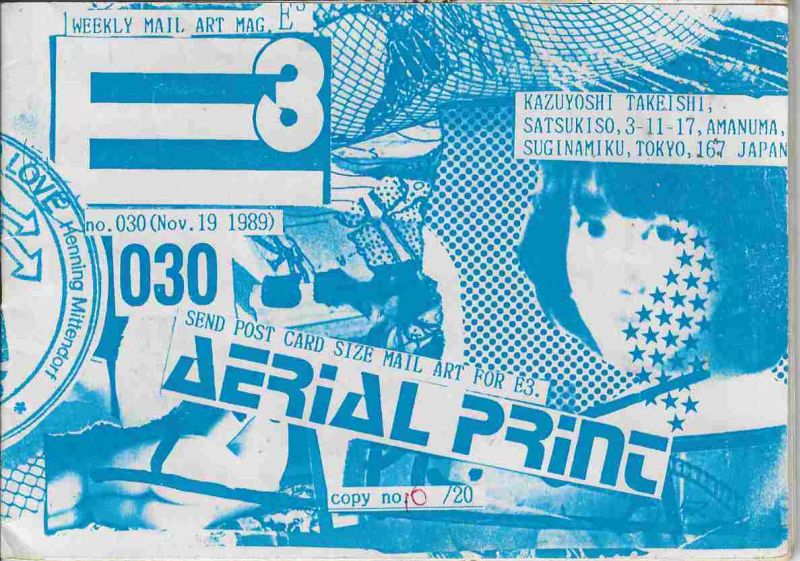 Aerial Print é uma publicação periódica e identidade editorial japonesa vinculada ao artista postal e editor Kazuyoshi Takeishi, ativo na rede internacional de Mail Art entre o final da década de 1980 e pelo menos a década de 1990. A documentação arquivística e bibliográfica localizada permite relacionar Aerial Print a Tóquio, Japão, à produção de periódicos independentes de arte postal, à reprodução de obras recebidas por correspondência e à circulação internacional de poesia visual, arte postal, arte gráfica, fotografia, colagem, desenho e outras formas de criação experimental. A publicação integra a história das redes alternativas que conectaram artistas japoneses a participantes da Europa, América do Norte, América Latina e outras regiões no período anterior à disseminação da internet.A identificação bibliográfica da publicação requer uma distinção importante. Aerial Print aparece documentado como título de periódico e também como denominação editorial utilizada por Kazuyoshi Takeishi. O Mark Bloch Postal Art Network Archive da New York University registra explicitamente Aerial Print, datado de 1989, na série de periódicos de seu acervo. O documento está catalogado entre revistas, zines, jornais, catálogos e newsletters reunidos por Mark Bloch entre 1978 e 2013.Paralelamente, o inventário Mail Art Periodicals, elaborado a partir da John Held Jr. Collection e Modern Realism Archive, registra Easy and Instant Mail Art Mag E3 como periódico editado por Kazuyoshi Takeishi e publicado por Aerial Print em Tóquio entre 1989 e 1990. A documentação demonstra, portanto, que Aerial Print operava também como nome editorial ou identidade de produção relacionada ao periódico E3.Essa dupla utilização do nome é confirmada por outras fontes históricas. O pesquisador e arquivista John Held Jr., em seu estudo Japanese Mail Art 1956 2014, inclui Kazuyoshi Takeishi entre os artistas postais japoneses responsáveis por periódicos distribuídos internacionalmente e associa a ele as publicações Mail Art Paper e Aerial Print. O levantamento posiciona sua atividade ao lado de outros editores japoneses da arte postal, como Eiichi Matsuhashi, Gianni Simone, Shigeru Nakayama e Yayoi Yoshitome.As fontes apresentam variantes na forma do nome do editor. O inventário de periódicos utiliza Kazuyoshi Takeishi. O Mark Bloch Postal Art Network Archive registra Kazuyoshi Takeishi associado a Aerial Print. O arquivo de John Held na Smithsonian Institution registra a forma K. Takeishi Tateno e identifica Aerial Print como nome associado ao correspondente. Já o estudo de John Held sobre arte postal japonesa apresenta Kazuyoshi Takashi Tateno. Como as fontes institucionais não utilizam uma forma única, a identificação recomendada para catalogação é Kazuyoshi Takeishi como nome principal, registrando Takeishi Tateno e Kazuyoshi Takashi Tateno como variantes documentais.O contexto de Aerial Print é o extraordinário desenvolvimento da arte postal japonesa durante as décadas de 1980 e 1990. Embora a história da Mail Art no Japão possua antecedentes anteriores, ligados inclusive às correspondências de Ray Johnson com Jiro Yoshihara e ao ambiente Gutai, uma geração posterior de artistas japoneses desenvolveu estruturas internacionais próprias de correspondência, revistas, publicações de montagem, Artistamps, carimbos, listas de endereços e projetos coletivos. John Held Jr. identifica a edição de periódicos como uma das estratégias utilizadas pelos artistas japoneses para superar distâncias geográficas e estabelecer conexões permanentes com a rede mundial.Aerial Print pertence precisamente a essa cultura editorial. Sua lógica não era a de uma revista comercial tradicional baseada em redação centralizada, distribuição em bancas ou seleção determinada por um mercado editorial. O conteúdo era alimentado pela própria rede postal. Artistas enviavam trabalhos ao editor, que os reproduzia, reunia e fazia circular novamente entre participantes. O periódico funcionava simultaneamente como publicação, arquivo provisório, documentação da rede e mecanismo para estabelecer novas conexões.Essa metodologia aparece de maneira especialmente clara em Easy and Instant Mail Art Mag E3. Uma convocatória de época descreve o projeto como publicação integralmente composta por cópias em preto e branco, sem tema e sem prazo fixo. Os artistas eram convidados a enviar trabalhos em tamanho de cartão postal. A cada participante seria encaminhado um novo exemplar de E3. O endereço indicado era Aerial Print, Kazuyoshi Takeishi, Satsukiso, 3 11 17 Amanuma, Suginami, Tokyo 167, Japan.Essas instruções revelam princípios centrais da Mail Art. Não havia um tema obrigatório capaz de limitar a contribuição. Não havia prazo funcionando como mecanismo rígido de seleção. O ato de enviar um trabalho conferia ao participante acesso ao resultado editorial. A publicação convertia correspondência recebida em conteúdo e posteriormente devolvia à rede uma nova montagem de materiais. Dessa forma, produção, circulação, documentação e recepção constituíam etapas de uma mesma operação artística.A técnica predominante era a fotocópia. A escolha possui relevância histórica e estética. Durante a década de 1980, fotocopiadoras permitiram que artistas produzissem pequenas edições com baixo custo e rapidez, sem depender de gráficas profissionais. A fotocópia também permitia converter cartas, desenhos, colagens, carimbos e fotografias em uma linguagem gráfica relativamente uniforme, criando uma superfície editorial compartilhada para trabalhos originalmente muito diferentes.O inventário de Mail Art Periodicals permite reconstruir diversas edições de E3 publicadas por Aerial Print em 1989. O número 005, datado de 7 de junho de 1989, possui 24 páginas, mede aproximadamente 10,8 por 14,6 centímetros e reproduz Mail Art recebida de Roman Muszynski, da Polônia, Shmuel, dos Estados Unidos, Jorge Caraballo, do Uruguai, Daniel Daligand, da França, entre outros. O exemplar catalogado corresponde ao número 4 de uma tiragem de apenas 20 cópias.O número 011, de 16 de julho de 1989, também possui 24 páginas e reúne contribuições de Makata Takamura, do Japão, Mumbles, dos Estados Unidos, Tamotsu Watanabe, do Japão, Ruggero Maggi, da Itália, Pierre Marquer, da França, entre outros. O exemplar documentado corresponde ao número 18 de uma edição de 20 cópias.O número 012, igualmente datado de 16 de julho de 1989, possui 24 páginas. Entre os participantes documentados estão Klaus Groh, da Alemanha, Oronzo Liuzzi, da Itália, FaGaGaGa, dos Estados Unidos, Shigeru Nakayama, do Japão, e Guy Bleus, da Bélgica. O exemplar catalogado corresponde ao número 12 de uma tiragem de 20 cópias.O número 015, datado de 17 de agosto de 1989, possui 24 páginas e aumenta a tiragem conhecida para 30 exemplares. Participam Henning Mittendorf, Shozo Shimamoto, Shmuel, Vittorio Baccelli, Antonio Gomez e outros artistas internacionais. O exemplar descrito no inventário é o primeiro da edição de 30 exemplares.Os números 017 e 018 foram produzidos em 10 de outubro de 1989. O número 017 possui 14 páginas e inclui FaGaGaGa, Guy Bleus e Henning Mittendorf, entre outros. O exemplar catalogado é o número 19 de uma edição de 20. O número 018 possui 16 páginas e contém contribuições de Ivica Culoak Catcherii, Le Peintre Nato, Kowa Kato e Shozo Shimamoto, entre outros, sendo o exemplar documentado o número 4 de uma edição de 20.Esses registros permitem perceber que a publicação possuía uma frequência extraordinariamente rápida. Entre 7 de junho e 10 de outubro de 1989, os números documentados avançam de 005 para 018. Essa numeração sugere uma produção contínua e intensa, embora não seja possível afirmar quantas edições efetivamente foram publicadas sem localizar a sequência integral. A tiragem reduzida, normalmente vinte ou trinta exemplares nos números preservados, reforça seu caráter de publicação destinada à circulação direta dentro da própria rede.A diversidade geográfica dos colaboradores é igualmente relevante. Polônia, Estados Unidos, Uruguai, França, Japão, Itália, Alemanha, Bélgica, Espanha e então Iugoslávia aparecem apenas nos poucos números documentados. Aerial Print deve, portanto, ser entendido como um ponto japonês de uma rede transnacional e não como publicação exclusivamente dedicada à cena local.Entre os participantes surgem figuras fundamentais da Mail Art e da poesia experimental. Shozo Shimamoto, ligado historicamente ao grupo Gutai e posteriormente extremamente ativo em arte postal, aparece em pelo menos dois números documentados. Guy Bleus, importante artista postal belga e arquivista da rede, aparece no número 012 e no número 017. Ruggero Maggi, artista italiano ligado à Mail Art, participou do número 011. Klaus Groh, figura importante das redes de arte alternativa e documentação internacional, aparece no número 012. Jorge Caraballo, artista uruguaio ligado à poesia visual e à arte postal latino americana, participa do número 005.A presença de Jorge Caraballo merece atenção particular dentro de uma plataforma dedicada ao Poema Processo e às vanguardas experimentais latino americanas. Caraballo integrou o ambiente uruguaio da poesia visual e da arte postal no qual também atuou Clemente Padín. Sua presença em uma publicação japonesa demonstra como, no final da década de 1980, redes construídas anteriormente na América Latina, Europa, Japão e Estados Unidos haviam se transformado em um circuito realmente internacional.Aerial Print aparece igualmente ligado a uma rede japonesa muito ativa. Entre os nomes documentados encontram se Makata Takamura, Tamotsu Watanabe, Shigeru Nakayama, Kowa Kato e Shozo Shimamoto. O contexto mais amplo incluía Ryosuke Cohen, Mayumi Handa, Teruyuki Tsubouchi, Seiko Miyazaki, Kazunori Murakami e vários outros artistas que mantiveram correspondência internacional intensa durante o período. O arquivo de John Held reúne correspondências japonesas de numerosos desses participantes, demonstrando a densidade dessa rede.A atividade de Kazuyoshi Takeishi e Aerial Print não se encerrou necessariamente em 1990. A Smithsonian Institution conserva no John Held papers relating to mail art correspondência de K. Takeishi Tateno, identificado como Aerial Print, proveniente de Marubayashi e datada de 1993 a 1995. Isso comprova a continuidade da identidade Aerial Print dentro da rede postal pelo menos até meados da década de 1990.Uma listagem internacional de artistas de 1994 registra K. Takeishi e Aerial Print em um endereço de Fujimi, Marubayashi, Tochigi, Japão. Esse documento sugere uma mudança em relação ao endereço de Tóquio utilizado na convocatória de E3 no final dos anos 1980. O endereço de Tóquio estava associado à fase de produção documentada de 1989, enquanto Marubayashi aparece nas fontes da década de 1990.A New York University também conserva correspondência de Kazuyoshi Takeishi, identificado como Aerial Print, dentro do Mark Bloch Postal Art Network Archive. O conjunto dedicado ao Japão cobre o período de 1982 a 2004 e inclui Takeishi juntamente com Ryosuke Cohen, Shozo Shimamoto, Kowa Kato, Shigeru Nakayama, Tamotsu Watanabe e dezenas de outros correspondentes japoneses.A importância de Aerial Print também é demonstrada por sua preservação separada como periódico na série de Serials do arquivo de Mark Bloch. O registro Aerial Print, 1989, ocupa uma pasta própria na coleção. Esse dado é particularmente relevante porque confirma que Aerial Print não deve ser interpretado exclusivamente como pseudônimo de Kazuyoshi Takeishi ou nome de uma pequena editora. Há sustentação arquivística para tratá lo também como publicação periódica.Ao mesmo tempo, o inventário de John Held demonstra que Aerial Print funcionou como estrutura editorial de Easy and Instant Mail Art Mag E3. Para uma catalogação rigorosa, portanto, é recomendável estabelecer a relação semântica entre as entidades. Aerial Print é publicação e identidade editorial associada a Kazuyoshi Takeishi. Easy and Instant Mail Art Mag E3 é outro título periódico editado por Takeishi e publicado sob Aerial Print em Tóquio entre 1989 e 1990.Aerial Print deve ser inserida historicamente na tradição das revistas de artistas, publicações de montagem, assembling magazines, zines e periódicos de Mail Art. Nessas práticas, a revista não é apenas um meio secundário usado para informar sobre arte. Ela própria constitui uma obra coletiva. Cada exemplar preserva uma configuração específica de relações internacionais que existia no momento da edição.Sua dimensão arquivística é igualmente significativa. Ao reproduzir trabalhos recebidos, Takeishi preservava imagens que poderiam desaparecer caso existissem apenas como correspondência individual. A pequena revista funcionava como microarquivo de uma comunidade temporária. Cada número documentava artistas, países, linguagens e relações que se modificavam rapidamente.A dimensão participativa de E3 também rompe com distinções tradicionais entre autor, editor, leitor e distribuidor. O correspondente enviava uma obra, tornava se colaborador, recebia de volta a publicação e podia colocá la novamente em circulação. O editor ocupava uma função de articulador da rede, reunindo materiais sem eliminar a multiplicidade de linguagens e origens.Embora Aerial Print não tenha relação de origem com o Poema Processo brasileiro, sua inserção no Salsa é historicamente pertinente por pertencer ao mesmo campo internacional que aproximou poesia visual, poesia experimental, arte postal e produção independente. As redes internacionais de Mail Art dos anos 1980 incorporaram artistas latino americanos vinculados às experiências de poesia visual e experimental desenvolvidas desde as décadas anteriores. A presença de Jorge Caraballo entre os colaboradores documentados de E3 é uma demonstração concreta dessa conexão transcontinental.Até o momento não foi localizada documentação que permita afirmar participação direta de Falves Silva em Aerial Print ou E3. Essa relação não deve ser criada sem um exemplar, correspondência ou registro que a comprove. Caso o exemplar pertencente ao acervo de Falves Silva apresente endereço, dedicatória, envelope ou marca postal identificando envio direto de Kazuyoshi Takeishi, esse documento acrescentará evidência primária de uma conexão específica entre a rede japonesa e Falves Silva.Aerial Print possui, portanto, importância para a história da Mail Art japonesa, das publicações de artista e da cultura editorial alternativa internacional. Sua pequena escala material contrasta com a amplitude de sua rede. Tiragens de vinte ou trinta exemplares podiam reunir artistas do Japão, Europa, Estados Unidos e América Latina, transformando uma fotocópia artesanal em ponto de convergência global.Sua relevância contemporânea é reforçada pela sobrevivência institucional de sua documentação. Aerial Print está registrada no Mark Bloch Postal Art Network Archive da New York University. Correspondência do editor e da identidade Aerial Print encontra se nos John Held papers relating to mail art da Smithsonian Institution. A publicação e E3 são descritos no inventário de periódicos de Mail Art da John Held Jr. Collection e Modern Realism Archive. Essas diferentes fontes permitem reconstruir uma entidade editorial que, em sua época, existia principalmente através de correspondências e pequenas tiragens.Aerial Print constitui, assim, um documento importante da passagem da correspondência privada para uma rede artística pública e distribuída. Sob a edição de Kazuyoshi Takeishi, a publicação transformou materiais enviados pelo correio em memória coletiva impressa. Sua história conecta Tóquio, posteriormente Marubayashi e Tochigi, artistas japoneses, colaboradores europeus, norte americanos e latino americanos e um dos períodos de maior expansão mundial da Mail Art antes da comunicação digital.