
Dobradura
Neide Sá
Categoria: Poema Processo
Acervo: 05028
Data: 1960s
Dimensões: 15 x 32 cm
TEXTO SALSA PORTUGUÊS
Dobradura, obra da artista brasileira Neide Sá, é uma composição experimental construída por meio de recortes, vincos, dobras e sobreposições de papel, organizada sobre uma superfície retangular horizontal. A obra integra as investigações da artista sobre a transformação do suporte em linguagem visual, estabelecendo relações com os princípios do movimento Poema Processo, do qual Neide Sá foi uma das participantes fundadoras em 1967.
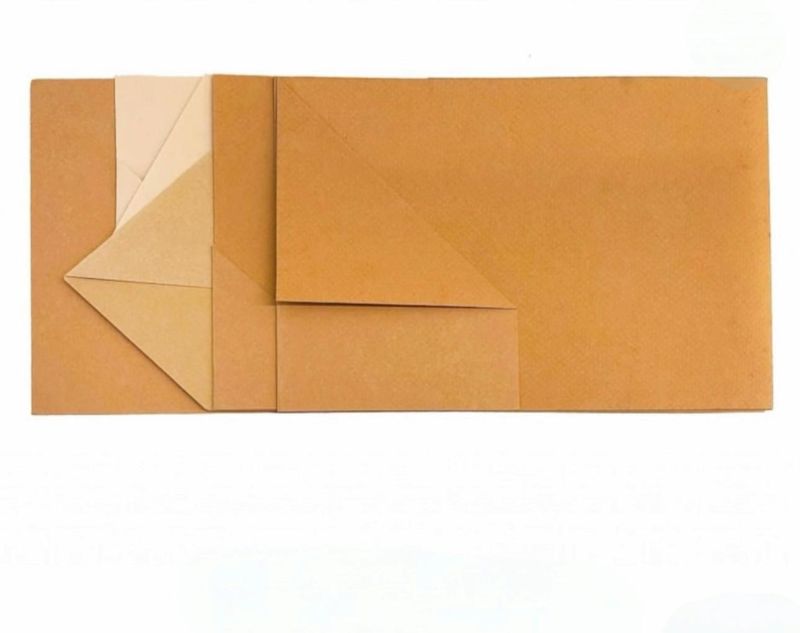
A composição apresenta uma superfície de tonalidade ocre, sobre a qual diferentes planos de papel são articulados por dobraduras geométricas. Na região esquerda, uma estrutura triangular projetada horizontalmente produz um vértice direcionado para a margem externa. Acima e abaixo desse elemento, outras superfícies dobradas formam planos triangulares e diagonais que se relacionam com faixas verticais e áreas retangulares.
Na região central, uma faixa vertical estabelece uma divisão entre os elementos dobrados da esquerda e a superfície mais ampla que ocupa a direita da composição. Um plano retangular sobreposto avança horizontalmente a partir dessa divisão, enquanto uma dobra diagonal pouco acentuada atravessa parte de sua superfície. Na área inferior, outro segmento retangular completa a articulação entre os diferentes planos.
A estrutura visual de Dobradura resulta da transformação física do papel. A artista utiliza o próprio suporte como elemento construtivo, fazendo com que cortes, vincos e deslocamentos de superfície produzam relações entre forma, profundidade e direção. A ausência de palavras e imagens impressas evidencia uma linguagem baseada na organização espacial da matéria.
A luz desempenha papel importante na percepção da obra. As dobras produzem pequenas diferenças de altura, enquanto as sombras projetadas junto às bordas e aos encontros dos planos acentuam a distinção entre superfícies. Conforme a incidência luminosa e o posicionamento do observador, a estrutura pode apresentar diferentes relações de continuidade, sobreposição e profundidade.
Neide Sá participou da criação do movimento Poema Processo, iniciado no Brasil em 1967, que investigou novas formas de construção poética por meio de estruturas visuais, procedimentos combinatórios e experiências de leitura independentes da organização verbal convencional. A pesquisa desenvolvida pela artista incluiu a exploração de materiais, suportes e configurações espaciais capazes de ampliar os limites tradicionais da poesia.
Em Dobradura, a articulação entre recorte e transformação do papel aproxima a obra das investigações sobre poesia visual, arte experimental e construção de objetos poéticos. O processo material de dobrar, abrir, sobrepor e reorganizar superfícies assume importância na constituição da imagem, permitindo compreender a composição como resultado de operações físicas sobre o suporte.
A obra evidencia uma dimensão relevante da produção de Neide Sá: a passagem da superfície plana para uma organização espacial na qual o papel deixa de funcionar exclusivamente como suporte e se torna o próprio elemento de construção artística. Dobradura estabelece, assim, uma relação entre matéria, geometria e percepção, características presentes nas experiências brasileiras de renovação das linguagens poéticas e visuais na segunda metade do século XX.
TEXTO SALSA INGLÊS
Dobradura, a work by Brazilian artist Neide Sá, is an experimental composition constructed through cuts, creases, folds, and overlapping paper surfaces arranged within a horizontal rectangular format. The work belongs to the artist's investigations into the transformation of the support into visual language, establishing relationships with the principles of the Poema Processo movement, of which Neide Sá was a founding participant in 1967.
The composition features an ochre-colored surface on which different paper planes are articulated through geometric folding. On the left, a triangular structure projects horizontally, forming a vertex directed toward the outer edge. Above and below this element, additional folded surfaces create triangular and diagonal planes interacting with vertical bands and rectangular areas.
In the central region, a vertical band establishes a division between the folded elements on the left and the broader surface occupying the right side of the composition. An overlapping rectangular plane extends horizontally from this division, while a subtle diagonal fold crosses part of its surface. In the lower section, another rectangular segment completes the articulation between the different planes.
The visual structure of Dobradura results from the physical transformation of paper. The artist uses the support itself as a constructive element, allowing cuts, creases, and displaced surfaces to generate relationships between form, depth, and direction. The absence of words and printed imagery emphasizes a language based on the spatial organization of material.
Light plays an important role in the perception of the work. The folds produce slight variations in height, while shadows along the edges and intersections of the planes accentuate the distinction between surfaces. Depending on lighting conditions and the viewer's position, the structure may reveal different relationships of continuity, overlap, and depth.
Neide Sá participated in the foundation of the Poema Processo movement, which emerged in Brazil in 1967 and investigated new forms of poetic construction through visual structures, combinatorial procedures, and reading experiences independent of conventional verbal organization. Her artistic research included the exploration of materials, supports, and spatial configurations capable of extending the traditional boundaries of poetry.
In Dobradura, the relationship between cutting and the physical transformation of paper connects the work with investigations into visual poetry, experimental art, and the construction of poetic objects. The material processes of folding, unfolding, overlapping, and reorganizing surfaces become central to the formation of the image, allowing the composition to be understood as the result of physical operations performed on the support.
The work demonstrates an important dimension of Neide Sá's artistic practice: the transition from a flat surface to a spatial organization in which paper ceases to function exclusively as a support and becomes the primary element of artistic construction. Dobradura thus establishes a relationship between material, geometry, and perception, characteristics present in Brazilian experiments that transformed poetic and visual languages during the second half of the twentieth century.
TEXTO DE OBSERVAÇÃO PORTUGUÊS
Obra de Neide Sá identificada pelo título Dobradura. A técnica apresentada consiste em recortes e dobraduras de papel que produzem uma composição geométrica com discretos efeitos de relevo. Não foram fornecidas informações que permitam estabelecer sua data de produção, dimensões ou localização atual.
A reprodução mostra uma estrutura retangular horizontal de tonalidade predominantemente ocre, com pequenas áreas mais claras nas regiões dobradas. A composição apresenta diferentes planos geométricos, construídos por operações de vincagem, sobreposição e deslocamento de partes do suporte.
Na região esquerda, destaca-se uma forma triangular com vértice orientado para fora do centro da composição. Essa estrutura apresenta uma dobra horizontal que divide sua superfície em dois planos. Na parte superior, uma área de papel claro aparece entre a borda superior e os elementos triangulares, sugerindo a presença de diferentes camadas.
Uma faixa vertical localizada aproximadamente no primeiro terço da largura estabelece uma separação entre o conjunto de dobras da esquerda e a região direita. A partir dessa área central, um plano retangular superior estende-se horizontalmente, acompanhado por outro plano retangular situado na região inferior.
As linhas diagonais presentes na composição parecem resultar principalmente dos vincos produzidos no papel. A iluminação evidencia pequenas diferenças de altura e sombras nas bordas dos elementos sobrepostos. A fotografia não permite determinar a profundidade exata dos relevos ou a quantidade definitiva de camadas utilizadas.
A superfície apresenta variações de tonalidade entre ocre, bege e creme. Essas diferenças podem decorrer das características dos papéis, da orientação das dobras e das condições de iluminação. Não há evidência suficiente para afirmar a utilização de pigmentos, pintura ou impressão.
A composição não apresenta palavras, números ou outros sinais verbais identificáveis. Sua organização depende das relações entre formas geométricas, divisões do espaço, direções das dobras e transformações físicas do suporte.
A vinculação da obra às investigações de Neide Sá no contexto do Poema Processo é pertinente à trajetória da artista e aos procedimentos visuais utilizados. Entretanto, a documentação apresentada não permite identificar a data de criação, eventual participação em exposições ou instruções específicas de manipulação.
Não foram apresentados registros de assinatura, inscrições no verso, número de inventário, proveniência específica, tiragem ou histórico de conservação. A análise material direta seria necessária para determinar os tipos de papel, as técnicas de fixação e a existência de eventuais alterações físicas.
TEXTO DE OBSERVAÇÃO INGLÊS
Work by Neide Sá identified by the title Dobradura. The technique consists of cutting and folding paper to produce a geometric composition with subtle relief effects. No information has been provided establishing its production date, dimensions, or current location.
The reproduction shows a horizontally oriented rectangular structure, predominantly ochre in color, with lighter areas visible within the folded sections. The composition features different geometric planes formed through creasing, overlapping, and displacement of portions of the support.
On the left, a triangular form stands out, with its vertex directed away from the center of the composition. A horizontal fold divides this structure into two planes. In the upper section, an area of lighter paper appears between the upper edge and the triangular elements, suggesting the presence of multiple layers.
A vertical band located approximately one third of the way across the composition separates the folded structures on the left from the broader right-hand area. From this central region, an upper rectangular plane extends horizontally, accompanied by another rectangular section in the lower area.
The diagonal lines visible in the composition appear to result primarily from creases in the paper. Lighting emphasizes subtle variations in height and shadows along the edges of overlapping elements. The photograph does not allow the exact depth of the relief or the total number of layers to be determined.
The surface displays tonal variations ranging from ochre to beige and cream. These differences may result from the characteristics of the paper, the orientation of the folds, and lighting conditions. There is insufficient evidence to establish the use of pigments, paint, or printing.
The composition contains no identifiable words, numbers, or other verbal signs. Its organization depends on relationships between geometric forms, spatial divisions, folding directions, and physical transformations of the support.
The association with Neide Sá's investigations within the Poema Processo movement is consistent with the artist's trajectory and the visual procedures employed. However, the available documentation does not establish the work's creation date, participation in specific exhibitions, or instructions for manipulation.
No records of a signature, inscriptions on the reverse, inventory number, specific provenance, edition details, or conservation history have been provided. Direct examination would be required to identify the types of paper, attachment techniques, and possible physical alterations.
Proveniência
Coleção Poema Processo
Inglês
Folding
Dimensions: 5,9 x 12,6 in