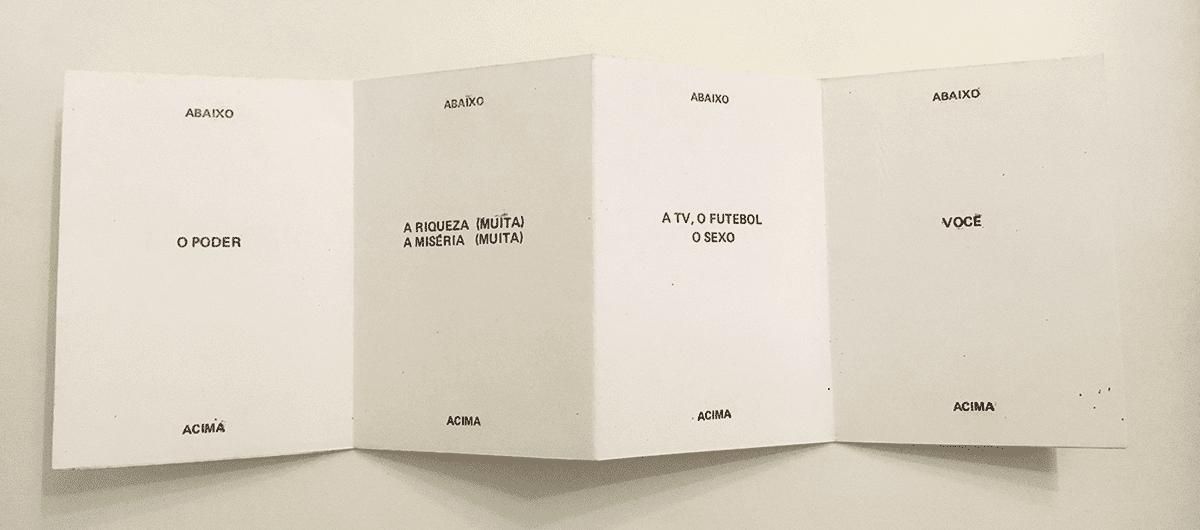
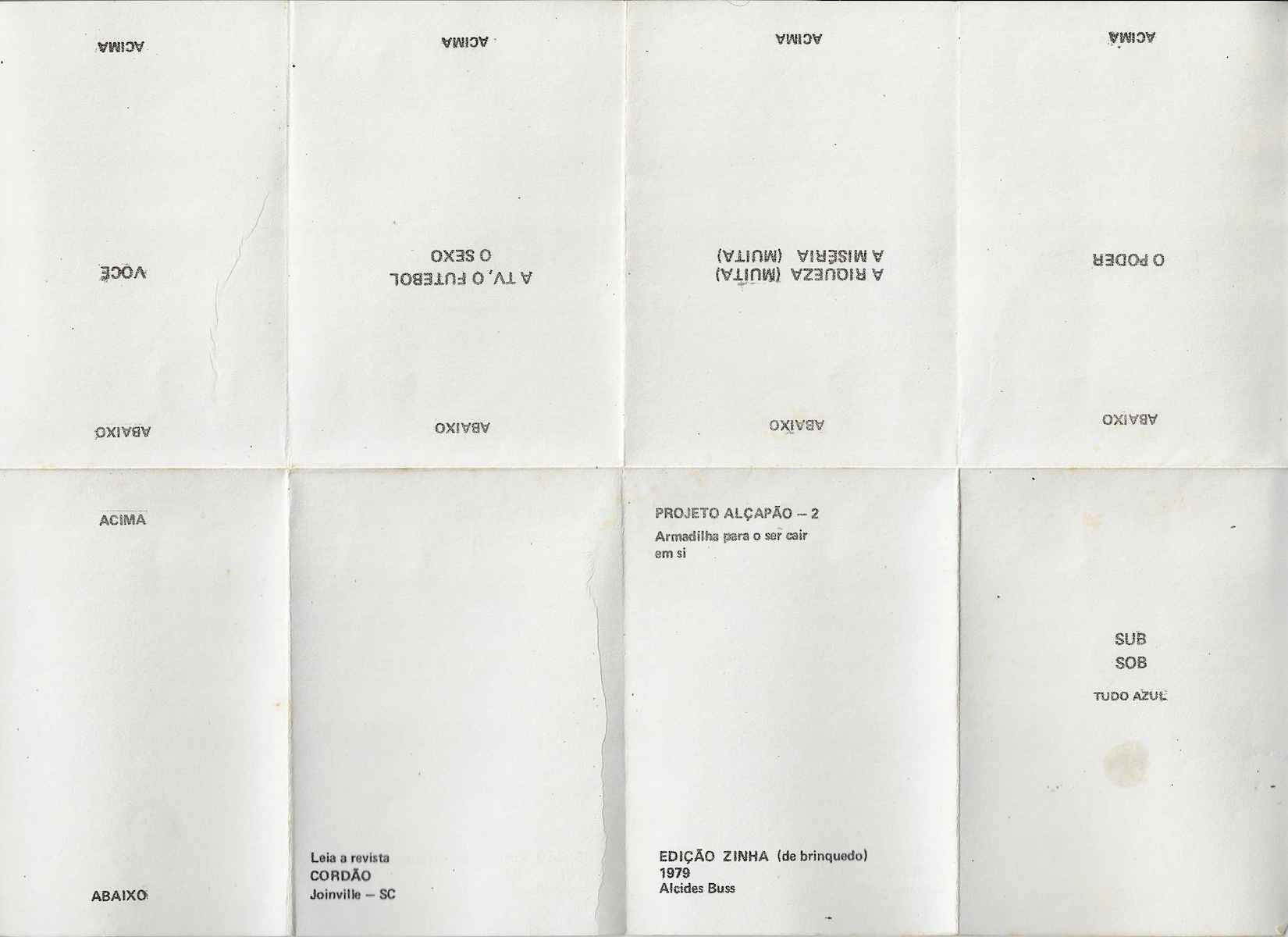
Livro de artista concebido por Alcides Buss em 1979, intitulado Projeto Alçapão 2, subtitulado Armadilha para o ser cair em si.
Alcides Buss
Categoria: Livro de Artista
Acervo: 00095
Data: 1979
Dimensões: 10,8 x 7,8 (fechado)
Livro de artista concebido por Alcides Buss em 1979, intitulado Projeto Alçapão 2, subtitulado Armadilha para o ser cair em si. A publicação apresenta estrutura dobrável composta por páginas que exploram relações espaciais e conceituais entre palavras e posições opostas, articulando os termos acima, abaixo, poder, riqueza, miséria, televisão, futebol, sexo e você. A obra propõe uma leitura participativa em que o manuseio físico do objeto determina diferentes percursos de interpretação. Inserido no contexto da poesia experimental brasileira do final da década de 1970, o trabalho investiga a materialidade da linguagem, a crítica aos mecanismos de poder e a construção simbólica das hierarquias sociais. A edição foi publicada em Joinville, Santa Catarina, vinculada ao circuito independente de poesia e às experiências editoriais que aproximaram literatura, arte conceitual e poesia visual. O livro constitui exemplo significativo da produção intermedia brasileira e das investigações poéticas realizadas fora dos circuitos editoriais convencionais.Artist book created by Alcides Buss in 1979, titled Projeto Alçapão 2, subtitled Trap for the self to fall into itself. The publication features a foldout structure composed of panels that explore spatial and conceptual relationships between words and opposing positions, articulating terms such as above, below, power, wealth, poverty, television, football, sex and you. The work proposes a participatory reading process in which the physical handling of the object determines different interpretive paths. Produced within the context of Brazilian experimental poetry during the late 1970s, the project investigates the materiality of language, critiques mechanisms of power and examines the symbolic construction of social hierarchies. Published in Joinville, Santa Catarina, the edition was connected to independent poetry circuits and editorial experiments that brought together literature, conceptual art and visual poetry. The book stands as a significant example of Brazilian intermedia production and of poetic investigations developed outside conventional publishing systems.
Exemplar da edição Projeto Alçapão 2 de Alcides Buss, publicada em 1979. Livro de artista em formato dobrável vinculado à poesia experimental brasileira e às publicações independentes do período. Contém indicação de edição artesanal e referência à revista Cordão de Joinville.Copy of Projeto Alçapão 2 by Alcides Buss, published in 1979. Foldout artist book associated with Brazilian experimental poetry and independent publishing practices of the period. Includes reference to an artisanal edition and to the literary magazine Cordão from Joinville.
Proveniência
Coleção Poema ProcessoInglês
Artist book created by Alcides Buss in 1979, titled Projeto Alçapão 2, subtitled Trap for the self to fall into itself.