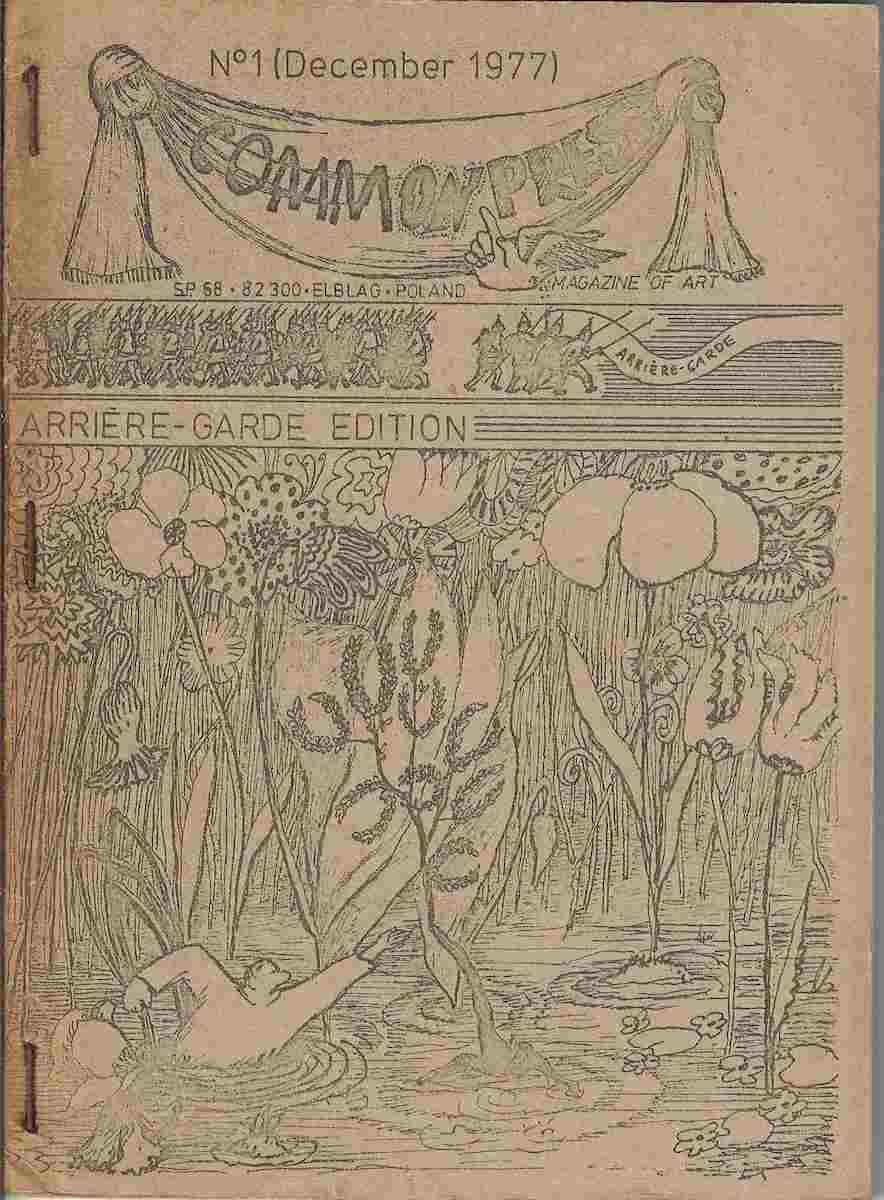
Commonpress Magazine of Art número 1 é a edição inaugural da publicação internacional de Arte Postal criada e editada pelo artista polonês Pawe Petasz em Elbl g, Polônia, em dezembro de 1977
Revista Commonpress - R. Prost - USA
Categoria: Revista
Acervo: 03940
Data: Dezembro de 1977
Dimensões: 19,5 x 14,2 cm
Texto para o programa Salsa em portuguêsCommonpress Magazine of Art número 1 é a edição inaugural da publicação internacional de Arte Postal criada e editada pelo artista polonês Pawe
Petasz em Elbl
g, Polônia, em dezembro de 1977. Identificada como Arrière Garde Edition, a revista estabeleceu um modelo editorial descentralizado no qual cada número deveria ser preparado por um participante diferente da rede internacional. A publicação articulava Arte Postal, poesia visual, desenho, colagem, impressão artesanal, publicação de artista e cooperação direta entre artistas.A capa apresenta as inscrições Commonpress, Magazine of Art, número 1, December 1977, Arrière Garde Edition e o endereço postal de Elbl
g, Polônia. O desenho superior mostra o nome Commonpress disposto sobre uma espécie de faixa ou tecido suspenso. A parte inferior é ocupada por uma composição gráfica de grande densidade, formada por vegetação, flores, figuras humanas, pássaros, água e linhas orgânicas.A imagem principal apresenta uma figura humana parcialmente submersa, segurando uma planta ou ramo diante de uma paisagem imaginária. Outra figura aparece à direita, integrada à vegetação. A abundância de linhas, texturas e pequenos elementos cria uma superfície próxima da ilustração fantástica, do desenho automático, da narrativa gráfica e da poesia visual. A capa é atribuída a Pawe
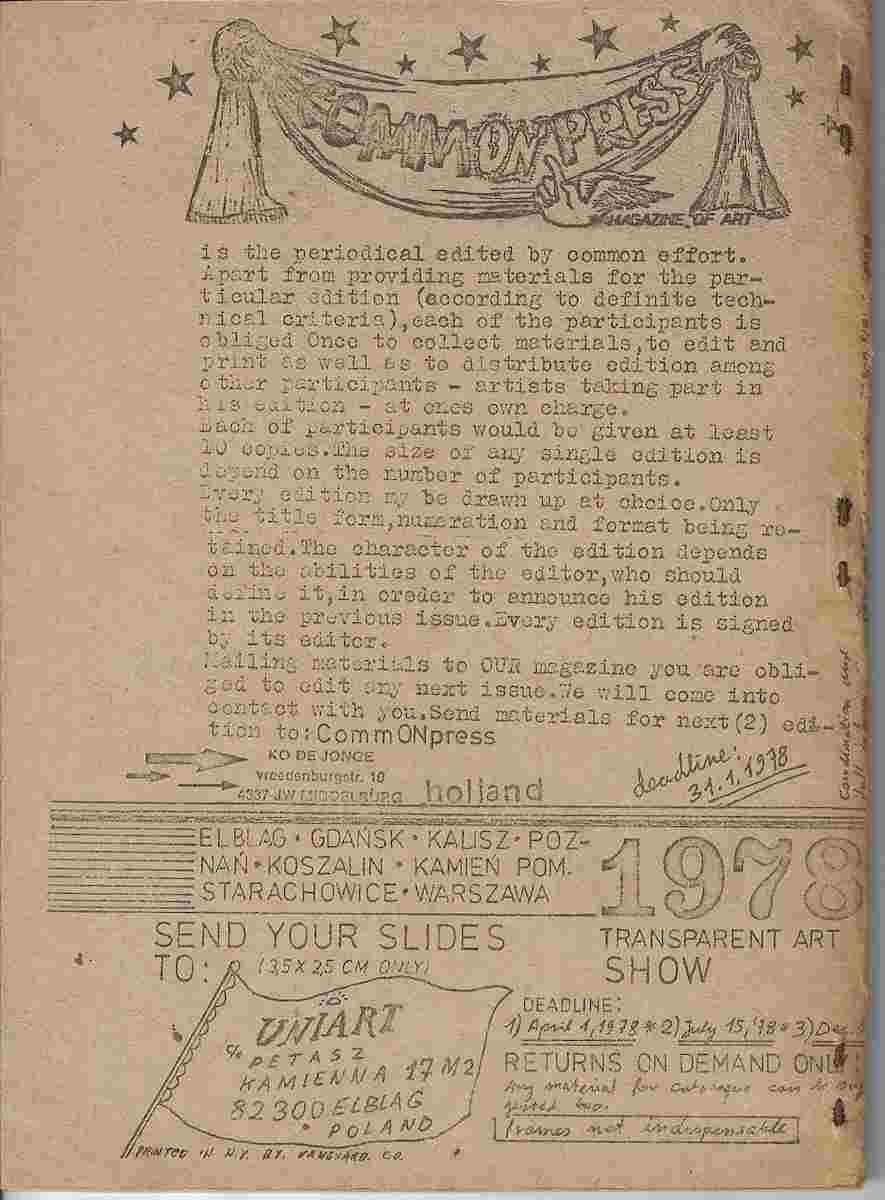
Petasz em documentação especializada sobre sua produção editorial.Commonpress não foi concebida como revista convencional dirigida por uma equipe editorial permanente. O texto de apresentação afirma que se tratava de um periódico editado por esforço comum. Os participantes deveriam enviar materiais produzidos conforme critérios técnicos definidos para cada edição e, em algum momento, assumir a responsabilidade de reunir contribuições, editar, imprimir e distribuir um número da revista.Cada editor deveria financiar sua própria edição e distribuir exemplares entre os demais participantes. O texto informa que cada colaborador receberia pelo menos dez exemplares. A quantidade final produzida dependeria do número de participantes, demonstrando que a tiragem era determinada pela própria estrutura colaborativa da rede.O título Commonpress, a numeração e o formato deveriam permanecer estáveis, mas o caráter visual, o tema, a organização e a técnica de cada edição podiam ser definidos pelo respectivo editor. Dessa maneira, a revista preservava uma identidade comum sem impor uma linguagem artística única.O responsável por uma edição deveria anunciar previamente sua proposta e seus critérios técnicos. Cada número seria assinado por seu editor. A autoria editorial circulava, transformando cada participante em potencial organizador, impressor, distribuidor e articulador internacional.Esse método distingue Commonpress de uma revista montada apenas por contribuições enviadas a um editor permanente. O projeto distribuía o trabalho editorial entre os membros da rede e transformava a própria sucessão de editores em parte de sua concepção artística. A publicação funcionava simultaneamente como revista, exposição portátil, arquivo, rede de contatos e obra coletiva.A primeira edição não possuía um tema específico, apesar do subtítulo Arrière Garde Edition. Pesquisas sobre periódicos de artistas registram que ela foi organizada em formato aproximado A5 e contou com dezessete participantes, que também poderiam tornar se editores de números posteriores.A designação Arrière Garde, que pode ser compreendida como retaguarda, inverte de maneira irônica a noção de vanguarda. Em vez de anunciar uma nova liderança artística centralizada, a publicação valorizava uma estrutura formada por artistas geograficamente dispersos, muitos deles atuando fora dos principais centros culturais.Na parte final da apresentação aparece o contato para a segunda edição de Commonpress. O endereço indica Ko de Jonge, nos Países Baixos, demonstrando que a transferência de responsabilidade editorial já estava planejada desde o primeiro número. Uma anotação manuscrita registra 31 de janeiro de 1978, provavelmente como prazo relacionado à edição seguinte.A transferência da edição da Polônia para os Países Baixos demonstra o princípio internacional do projeto. Commonpress não pertencia exclusivamente a uma cidade, editora ou instituição. Sua continuidade dependia da passagem voluntária da responsabilidade entre participantes de diferentes países.Pawe
Petasz, nascido em 1951 e falecido em 2019, foi artista, editor e um dos principais articuladores da Arte Postal polonesa. Ele lançou Commonpress em 1977 e coordenou a circulação de edições posteriores enquanto outros artistas assumiam temporariamente a função editorial.A publicação foi realizada em condições materiais limitadas na Polônia socialista. Seu formato artesanal, a reprodução em preto e branco, a montagem manual e a distribuição postal respondiam tanto às possibilidades econômicas quanto à necessidade de construir circuitos independentes de comunicação artística.A encadernação visível utiliza grampos ou elementos metálicos aplicados ao longo da margem esquerda. O papel apresenta tonalidade envelhecida e impressão monocromática. Essas características devem ser compreendidas como componentes da história material da publicação e não apenas como limitações técnicas.As fontes consultadas apresentam diferença na contagem física da edição. O Artpool registra Commonpress número 1 com quarenta e duas páginas, enquanto o Lomholt Mail Art Archive descreve um exemplar com vinte e três páginas e dimensões aproximadas de 19,5 por 14,3 centímetros. A divergência pode resultar de métodos distintos de contagem, variantes do exemplar ou registro de folhas em vez de páginas, não sendo possível resolvê la apenas pelas imagens apresentadas.Na parte inferior da página interna aparece também uma convocatória para Transparent Art Show, projeto associado a Uni Art e a Pawe
Petasz. A chamada solicita o envio de diapositivos ou transparências para Elbl
g e apresenta uma rede de possíveis cidades polonesas de circulação, incluindo Elbl
g, Gda
sk, Kalisz, Pozna
, Koszalin, Kamie
Pomorski, Starachowice e Warszawa.A convocatória informa que os materiais seriam devolvidos apenas mediante solicitação. O projeto de transparências amplia o campo editorial da página e demonstra que Commonpress também funcionava como instrumento para anunciar exposições, convocatórias e oportunidades de participação na rede.A presença conjunta da apresentação editorial e da convocatória para Transparent Art Show transforma a revista em infraestrutura de comunicação. O leitor não recebia apenas obras prontas. Recebia instruções para produzir, participar, enviar materiais, assumir futuras edições e integrar novos projetos.Commonpress número 1 constitui um documento central para a história dos periódicos de artistas e da Arte Postal internacional. Sua principal contribuição não reside somente nas imagens publicadas, mas no modelo de cooperação que distribuiu autoria, edição, custos, impressão e circulação entre os participantes.A revista substituiu a hierarquia editorial tradicional por uma sequência de responsabilidades compartilhadas. Cada edição podia refletir a linguagem, os recursos e o contexto cultural do novo editor, ao mesmo tempo que permanecia conectada à identidade Commonpress.A série continuou com numerosos números preparados em diferentes países. Ao longo de sua trajetória, reuniu temas, técnicas, formatos e participantes variados, tornando se uma das experiências mais reconhecidas de publicação descentralizada dentro da Arte Postal. O próprio projeto foi descrito como uma forma artística e um fórum de cooperação internacional, iniciado por Petasz em dezembro de 1977.Embora Commonpress não tenha pertencido ao movimento brasileiro Poema Processo, seu funcionamento apresenta relações conceituais com práticas processuais e experimentais. A obra não estava limitada ao objeto final. O envio, a convocatória, a escolha do editor, a montagem, a impressão, a distribuição e a resposta dos participantes constituíam etapas inseparáveis do trabalho.A publicação também se aproxima da poesia visual e do livro de artista ao tratar página, texto, imagem, sequência, formato e reprodução como elementos de criação. Sua circulação postal transformava cada exemplar em parte de uma rede internacional de relações.O exemplar apresentado preserva a capa, a introdução editorial, a convocatória para a edição seguinte, a chamada para Transparent Art Show, anotações manuscritas e sinais de envelhecimento. Esses elementos atribuem ao documento valor artístico, histórico, editorial e arquivístico.Commonpress Magazine of Art número 1 registra o momento em que Pawe
Petasz transformou uma rede informal de correspondência em uma estrutura editorial compartilhada. Publicada pela Arrière Garde Edition em Elbl
g, em dezembro de 1977, a edição inaugurou um sistema no qual a revista podia mudar de editor, país, tema e aparência sem perder sua identidade coletiva.Text for the Salsa program in EnglishCommonpress Magazine of Art number 1 is the inaugural issue of the international Mail Art periodical created and edited by the Polish artist Pawe
Petasz in Elbl
g, Poland, in December 1977. Identified as the Arrière Garde Edition, the magazine established a decentralized editorial model in which each issue was to be prepared by a different participant in the international network. The publication connected Mail Art, visual poetry, drawing, collage, handmade printing, artists publications and direct cooperation among artists.The cover contains the inscriptions Commonpress, Magazine of Art, number 1, December 1977, Arrière Garde Edition and the postal address in Elbl
g, Poland. Its upper drawing presents the Commonpress name across a suspended banner or fabric. The lower area is occupied by a densely worked graphic composition containing vegetation, flowers, human figures, birds, water and organic lines.The principal image shows a partially submerged human figure holding a plant or branch within an imaginary landscape. Another figure appears on the right, integrated into the vegetation. The abundance of lines, textures and small elements creates a surface connected with fantastic illustration, automatic drawing, graphic narrative and visual poetry. Specialist documentation concerning Petasz identifies the cover as his work.Commonpress was not conceived as a conventional magazine controlled by a permanent editorial team. Its introductory statement describes it as a periodical edited through common effort. Participants were expected to provide material according to the technical requirements established for a particular issue and, at some point, assume responsibility for collecting contributions, editing, printing and distributing an edition.Each editor was expected to finance the respective issue and distribute copies among the other participants. The text states that every contributor would receive at least ten copies. The final size of an edition depended on the number of participants, meaning that circulation was determined by the collaborative structure itself.The Commonpress title, numbering and format were intended to remain stable, while the visual character, theme, organization and technique of each issue could be defined by its editor. The magazine therefore preserved a shared identity without imposing a single artistic language.The person responsible for an edition was expected to announce the proposal and technical requirements in advance. Every issue would be signed by its editor. Editorial authorship circulated, turning each participant into a potential organizer, printer, distributor and international networker.This method distinguished Commonpress from assembling magazines controlled by a single permanent editor. The project distributed editorial labor among the members of the network and transformed the succession of editors into part of its artistic conception. The publication functioned simultaneously as magazine, portable exhibition, archive, contact network and collective artwork.The first issue had no specific theme despite its subtitle Arrière Garde Edition. Research on artists periodicals records that it was produced in an approximate A5 format and included seventeen contributors, each of whom could potentially edit a later issue.The designation Arrière Garde reverses the conventional concept of the artistic avant garde. Instead of announcing a centralized new artistic leadership, the publication emphasized a structure created by geographically dispersed artists, many of whom worked outside established cultural centers.The final section of the introduction provides contact information for the second issue of Commonpress. It identifies Ko de Jonge in the Netherlands, demonstrating that the transfer of editorial responsibility was planned from the beginning. A handwritten notation records January 31, 1978, probably as a deadline connected with the next edition.The transfer of the magazine from Poland to the Netherlands demonstrates its international principle. Commonpress did not belong exclusively to one city, publisher or institution. Its continuity depended on the voluntary movement of editorial responsibility among participants in different countries.Pawe
Petasz, born in 1951 and deceased in 2019, was an artist, editor and major organizer of Polish Mail Art. He launched Commonpress in 1977 and coordinated the circulation of later editions while other artists temporarily assumed editorial responsibility.The magazine was produced under limited material conditions in socialist Poland. Its handmade format, monochrome reproduction, manual assembly and postal distribution responded both to economic possibilities and to the need to create channels of artistic communication independent from conventional institutions.The surviving object is bound with staples or metal fasteners along the left margin. Its paper has aged and its images are printed in monochrome. These characteristics form part of the material history of the publication rather than representing only technical limitations.The consulted sources differ in their physical descriptions of the issue. Artpool records Commonpress number 1 as a publication of forty two pages, while the Lomholt Mail Art Archive describes a copy containing twenty three pages and measuring approximately 19.5 by 14.3 centimeters. This discrepancy may result from different counting methods, variant copies or the recording of leaves rather than printed sides and cannot be resolved from the available images alone.The lower area of the internal page also presents a call for Transparent Art Show, a project associated with Uni Art and Pawe
Petasz. The announcement requests slides or transparent artworks to be sent to Elbl
g and lists a network of possible Polish presentation sites, including Elbl
g, Gda
sk, Kalisz, Pozna
, Koszalin, Kamie
Pomorski, Starachowice and Warszawa.The call states that submitted material would be returned only upon request. The slide project extends the editorial field of the page and demonstrates that Commonpress also operated as a means of announcing exhibitions, calls and opportunities for participation.The combination of the editorial introduction and the Transparent Art Show call transforms the magazine into a communication infrastructure. Readers did not receive only completed artworks. They received instructions to produce, participate, send material, assume future editions and become involved in new projects.Commonpress number 1 is a central document in the history of artists periodicals and international Mail Art. Its primary contribution lies not only in the images it published but also in the cooperative model through which authorship, editing, costs, printing and distribution were shared among participants.The magazine replaced conventional editorial hierarchy with a sequence of distributed responsibilities. Each issue could reflect the language, resources and cultural circumstances of a new editor while remaining connected with the Commonpress identity.The series continued through numerous issues produced in different countries. Over time it incorporated varied themes, techniques, formats and participants and became one of the most recognized decentralized publishing experiments within Mail Art. The project itself was described as an artistic form and a forum for international cooperation initiated by Petasz in December 1977.Commonpress was not part of the Brazilian Process Poem Movement, but its operating structure has conceptual affinities with process based and experimental practices. The work was not restricted to the final object. Mailing, invitation, selection of the editor, assembly, printing, distribution and participant response were inseparable stages of the project.The magazine is also connected with visual poetry and artists books through its treatment of page, text, image, sequence, format and reproduction as creative elements. Postal circulation transformed each copy into part of an international network of relationships.The presented copy preserves the cover, editorial introduction, announcement for the following edition, Transparent Art Show call, handwritten notations and physical signs of aging. These features give the document artistic, historical, editorial and archival value.Commonpress Magazine of Art number 1 records the moment in which Pawe
Petasz transformed an informal correspondence network into a shared editorial structure. Published by Arrière Garde Edition in Elbl
g in December 1977, the issue inaugurated a system in which the magazine could change editor, country, theme and visual appearance without losing its collective identity.
Texto de observação em portuguêsCommonpress Magazine of Art número 1, publicada em dezembro de 1977 pela Arrière Garde Edition em Elbl
g, Polônia, sob edição de Pawe
Petasz. A edição inaugural apresenta capa desenhada, impressão monocromática, montagem artesanal e encadernação por grampos. O texto interno define Commonpress como periódico editado por esforço comum, no qual cada participante enviava materiais e poderia assumir a responsabilidade de reunir, editar, imprimir e distribuir uma edição posterior. O título, a numeração e o formato deveriam permanecer constantes, enquanto tema, linguagem e organização podiam variar conforme o editor. A edição reuniu dezessete participantes e anunciou Ko de Jonge, nos Países Baixos, como contato para o número seguinte. A página inclui também convocatória de Pawe
Petasz e Uni Art para Transparent Art Show em 1978, com envio de diapositivos para Elbl
g e possível circulação por diversas cidades polonesas. As fontes divergem sobre a extensão física do número, registrando vinte e três ou quarenta e duas páginas. O exemplar constitui documento inaugural de uma das principais experiências editoriais descentralizadas da Arte Postal internacional.Observation text in EnglishCommonpress Magazine of Art number 1, published in December 1977 by Arrière Garde Edition in Elbl
g, Poland, under the editorship of Pawe
Petasz. The inaugural issue presents a drawn cover, monochrome printing, handmade assembly and staple binding. Its internal statement defines Commonpress as a periodical edited through common effort in which each participant submitted material and could assume responsibility for collecting, editing, printing and distributing a later edition. The title, numbering and format were intended to remain constant, while the theme, artistic language and organization could change according to the editor. The issue included seventeen participants and identified Ko de Jonge in the Netherlands as the contact for the following number. The page also contains a call by Pawe
Petasz and Uni Art for the 1978 Transparent Art Show, requesting slides to be sent to Elbl
g for possible circulation through several Polish cities. Sources differ concerning the physical extent of the issue and record either twenty three or forty two pages. The copy is an inaugural document of one of the principal decentralized publishing experiments in international Mail Art.
Proveniência
Coleção Poema ProcessoInglês
Commonpress Magazine of Art number 1 is the inaugural issue of the international Mail Art periodical created and edited by the Polish artist Pawe Petasz in Elbl g, Poland, in December 1977
Dimensions: 7,7 x 5,6 in