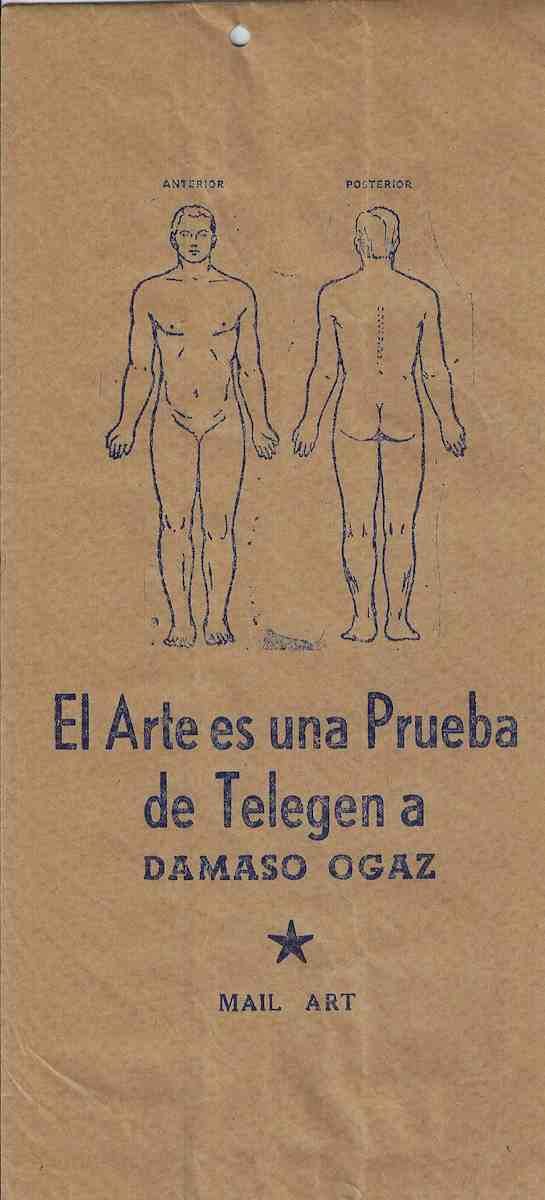
Envelope obra de arte postal de Dámaso Ogaz, artista, poeta e editor chileno radicado na Venezuela, vinculado à plataforma experimental Cisoria Arte. A composição apresenta o título El Arte es una Prueba de Telegenia, seguido pelo nome DAMASO OGAZ, uma estrela e a expressão MAIL ART.
Damaso Ogaz
Categoria: Mail Art
Acervo: 03856
Dimensões: 27,2 x 12,6 cm
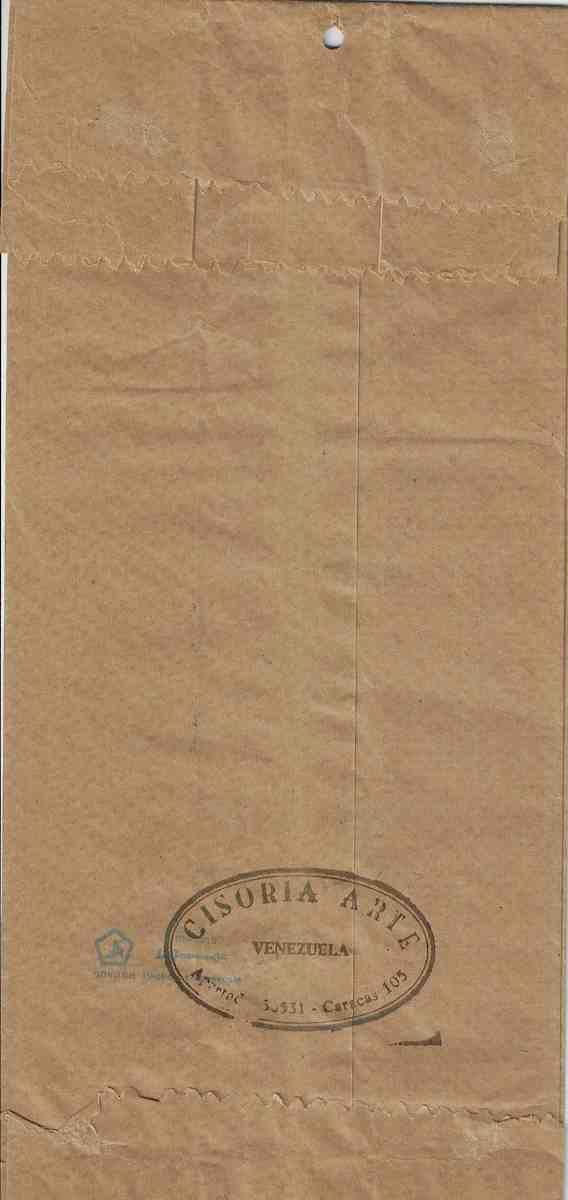
Envelope obra de arte postal de Dámaso Ogaz, artista, poeta e editor chileno radicado na Venezuela, vinculado à plataforma experimental Cisoria Arte. A composição apresenta o título El Arte es una Prueba de Telegenia, seguido pelo nome DAMASO OGAZ, uma estrela e a expressão MAIL ART.A frase em espanhol pode ser traduzida como A arte é uma prova de telegenia. O termo telegenia refere se à capacidade de uma pessoa, imagem ou objeto produzir impacto favorável por meio de sistemas de transmissão visual. No contexto da obra, a expressão estabelece uma relação crítica entre arte, imagem, corpo, comunicação de massa, televisão, reprodução técnica e circulação postal.Na parte superior aparecem duas representações esquemáticas do corpo humano masculino. A primeira mostra a vista anterior e a segunda a vista posterior, conforme as palavras ANTERIOR e POSTERIOR impressas sobre as figuras. As imagens possuem aparência de ilustração anatômica ou formulário médico, deslocado de seu contexto original e apropriado por Ogaz como elemento de uma composição conceitual.A presença simultânea das vistas frontal e dorsal transforma o corpo em objeto de exame. O indivíduo é apresentado como superfície observável, classificada e submetida a uma prova. A obra pode ser interpretada como comentário sobre a exposição pública do corpo e da identidade nos meios de comunicação, nos sistemas de vigilância, na medicina, na burocracia e na cultura visual.O título sugere que a arte também é avaliada por sua capacidade de aparecer, comunicar e circular. Ao relacionar arte e telegenia, Ogaz questiona os mecanismos que determinam o que se torna visível, reconhecido ou consumido. A imagem artística passa a ser comparada a um corpo submetido a julgamento visual.O suporte é um envelope estreito de papel pardo, semelhante a um saco comercial ou embalagem de uso cotidiano. Essa escolha aproxima a obra da materialidade da correspondência, da produção econômica e dos objetos descartáveis. Ogaz transforma um invólucro comum em publicação de artista e objeto de arte postal.Na parte inferior da frente, a estrela atua como sinal gráfico de separação entre o nome do artista e a expressão MAIL ART. O termo identifica diretamente a obra com a arte postal internacional e afirma que o envelope não é apenas um recipiente para transportar uma obra. O próprio envelope constitui a obra.O verso conserva a estrutura física original do saco ou envelope, incluindo emendas, dobras e linhas de fechamento. Próximo à parte inferior aparece um carimbo oval de CISORIA ARTE, VENEZUELA, com referência a Caracas 105 e à caixa postal utilizada pela iniciativa. Parte da numeração está desgastada, mas o documento confirma a associação com a plataforma editorial e postal de Dámaso Ogaz.Cisoria Arte funcionou como espaço de produção, intercâmbio e circulação de poesia visual, arte conceitual, colagem, publicação experimental e correspondência artística. O carimbo transforma a parte posterior do envelope em documento de procedência e integra a identidade da plataforma à obra.O objeto apresenta um pequeno furo circular próximo à margem superior. Esse elemento pode ter servido para pendurar, arquivar ou expor o envelope. A perfuração amplia sua condição híbrida, pois permite que o objeto postal também funcione como peça suspensa, material de exposição ou documento de arquivo.A obra reúne apropriação de imagens anatômicas, linguagem verbal, carimbo, papel industrial, identidade editorial e estrutura postal. O resultado aproxima arte, comunicação e exame do corpo, evidenciando o interesse de Ogaz pela crítica institucional, pela circulação alternativa e pela transformação de materiais cotidianos.Sua relação com o Poema Processo deve ser apresentada como proximidade conceitual e histórica. O envelope compartilha com práticas processuais a materialidade do suporte, a funcionalidade dos signos, a transformação de um objeto comum e a participação da circulação na construção do significado. O documento não comprova, porém, participação formal de Dámaso Ogaz no movimento brasileiro Poema Processo.Não há data visível, destinatário, endereço completo, selo ou carimbo de circulação postal nas imagens apresentadas. A obra deve ser catalogada como envelope obra, arte postal, publicação de artista, objeto conceitual e produção de Cisoria Arte, com data não localizada.Para fins de indexação, o documento pode ser identificado como Dámaso Ogaz, El Arte es una Prueba de Telegenia, Mail Art, Cisoria Arte, Venezuela, Caracas, envelope obra, arte postal venezuelana, poesia visual, arte conceitual, publicação de artista, apropriação de imagem anatômica, corpo humano, comunicação visual e rede internacional de mail art.Text for the Salsa program in EnglishMail art envelope work by Dámaso Ogaz, the Chilean born artist, poet and editor based in Venezuela and associated with the experimental platform Cisoria Arte. The composition presents the title El Arte es una Prueba de Telegenia, followed by the name DAMASO OGAZ, a star and the expression MAIL ART.The Spanish phrase may be translated as Art is a Test of Telegeny. The term telegeny refers to the ability of a person, image or object to create a favourable impact through systems of visual transmission. Within the work, the expression establishes a critical relationship among art, image, body, mass communication, television, technical reproduction and postal circulation.Two schematic representations of the male human body appear in the upper section. The first presents the anterior view and the second the posterior view, as indicated by the words ANTERIOR and POSTERIOR printed above the figures. The images resemble anatomical illustrations or medical forms removed from their original context and appropriated by Ogaz as elements of a conceptual composition.The simultaneous presentation of frontal and dorsal views transforms the body into an object of examination. The individual appears as an observable surface to be classified and subjected to a test. The work may be interpreted as a comment on the public exposure of the body and identity through mass media, surveillance systems, medicine, bureaucracy and visual culture.The title suggests that art itself is evaluated through its ability to appear, communicate and circulate. By connecting art and telegeny, Ogaz questions the mechanisms that determine what becomes visible, recognized or consumed. The artistic image is compared with a body undergoing visual judgement.The support is a narrow brown paper envelope resembling a commercial bag or everyday package. This choice connects the work with correspondence, economic production and disposable objects. Ogaz transforms an ordinary container into an artists publication and a mail art object.A star in the lower part of the front functions as a graphic separator between the artists name and the expression MAIL ART. The term directly identifies the work with the international postal art network and states that the envelope is not merely a container carrying an artwork. The envelope itself is the artwork.The reverse preserves the original physical structure of the bag or envelope, including seams, folds and closing lines. An oval CISORIA ARTE stamp appears near the lower section, together with the words VENEZUELA and Caracas 105 and a reference to the post office box used by the initiative. Part of the number is worn, but the document clearly confirms its association with the editorial and postal platform directed by Dámaso Ogaz.Cisoria Arte operated as a space for the production, exchange and circulation of visual poetry, conceptual art, collage, experimental publishing and artists correspondence. The stamp transforms the reverse of the envelope into documentary evidence of provenance and integrates the identity of the platform into the artwork.A small circular hole appears near the upper edge. It may have been used to hang, file or display the envelope. This perforation reinforces the hybrid condition of the object, allowing the postal item to function as a suspended artwork, exhibition material or archival document.The work combines appropriated anatomical imagery, verbal language, rubber stamping, industrial paper, editorial identity and postal structure. The result connects art, communication and the examination of the body and demonstrates Ogazs interest in institutional criticism, alternative circulation and the transformation of everyday materials.Its relationship with the Process Poem Movement should be described as a conceptual and historical proximity. The envelope shares with process based practices an emphasis on material support, functional signs, the transformation of ordinary objects and the role of circulation in the construction of meaning. The document does not, however, demonstrate formal participation by Dámaso Ogaz in the Brazilian Process Poem Movement.No visible date, recipient, complete address, postage stamp or postal cancellation appears in the presented images. The work should be catalogued as an envelope work, mail art, artists publication, conceptual object and Cisoria Arte production, with date not located.For cataloguing and indexing purposes, the document may be identified as Dámaso Ogaz, El Arte es una Prueba de Telegenia, Mail Art, Cisoria Arte, Venezuela, Caracas, envelope work, Venezuelan mail art, visual poetry, conceptual art, artists publication, appropriated anatomical image, human body, visual communication and international mail art network.
Objeto produzido sobre envelope ou saco estreito de papel pardo. A frente apresenta duas ilustrações anatômicas masculinas impressas em azul escuro. A figura da esquerda representa a vista frontal e está identificada pela palavra ANTERIOR. A figura da direita representa a vista dorsal e está identificada pela palavra POSTERIOR.Abaixo das imagens encontra se a inscrição El Arte es una Prueba de Telegenia. Em seguida aparece o nome DAMASO OGAZ, uma estrela de cinco pontas e a expressão MAIL ART.A leitura do título como Telegenia é a mais coerente com a palavra impressa e com o sentido geral da composição. A reprodução disponível apresenta pequena perda de definição na parte final do termo, mas não há indicação segura de outra palavra.O verso não apresenta texto narrativo. Próximo à região inferior existe um carimbo oval com as inscrições CISORIA ARTE, VENEZUELA e Caracas 105. Parte do endereço e da numeração da caixa postal encontra se fraca ou encoberta pelo desgaste.O envelope apresenta um furo circular próximo ao centro da margem superior. Há dobras verticais e horizontais, emendas do papel, áreas amassadas, manchas, escurecimento, desgaste nas bordas e pequenas perdas na região inferior.Não estão visíveis data, tiragem, destinatário, endereço de destino, selo postal ou carimbo de expedição. Não é possível confirmar, apenas pelas imagens, se o envelope circulou efetivamente pelo sistema postal ou se foi produzido para exposição e intercâmbio direto.Recomenda se preservar o objeto aberto e sem remoção das marcas físicas, pois o furo, as dobras, o carimbo, as emendas e o desgaste fazem parte de sua trajetória material e documental.Observation text in EnglishObject produced on a narrow brown paper envelope or bag. The front presents two male anatomical illustrations printed in dark blue. The figure on the left represents the frontal view and is identified by the word ANTERIOR. The figure on the right represents the rear view and is identified by the word POSTERIOR.Below the images appears the inscription El Arte es una Prueba de Telegenia. This is followed by the name DAMASO OGAZ, a five pointed star and the expression MAIL ART.Telegenia is the most coherent reading of the printed title and of the general meaning of the composition. The available reproduction presents a slight loss of definition at the end of the word, but there is no secure indication of a different term.The reverse contains no narrative text. An oval stamp appears near the lower section with the inscriptions CISORIA ARTE, VENEZUELA and Caracas 105. Part of the address and post office box number is faint or obscured by wear.A circular hole appears near the centre of the upper edge. The object also shows vertical and horizontal folds, paper seams, crushed areas, staining, darkening, edge wear and minor losses near the lower section.No date, edition size, recipient, destination address, postage stamp or postal cancellation is visible. The available images do not establish whether the envelope circulated through the postal system or was produced for exhibition and direct exchange.The object should be preserved without removing its physical marks. The perforation, folds, stamp, seams and wear form part of its material and documentary history.
Inglês
Mail art envelope work by Dámaso Ogaz, the Chilean born artist, poet and editor based in Venezuela and associated with the experimental platform Cisoria Arte. The composition presents the title El Arte es una Prueba de Telegenia, followed by the name DAMASO OGAZ, a star and the expression MAIL ART.
Dimensions: 10,7 x 5 in