Wanted Everywhere é um livro de artista e publicação experimental de Carsten Regild, artista sueco de origem dinamarquesa, publicado em 1976 pela Vargens Förlag em Hägersten, Suécia.
Carsten Regild - Suécia
Categoria: Livro de Artista
Acervo: 03762
Data: 1976
Dimensões: 29,7 x 21 cm
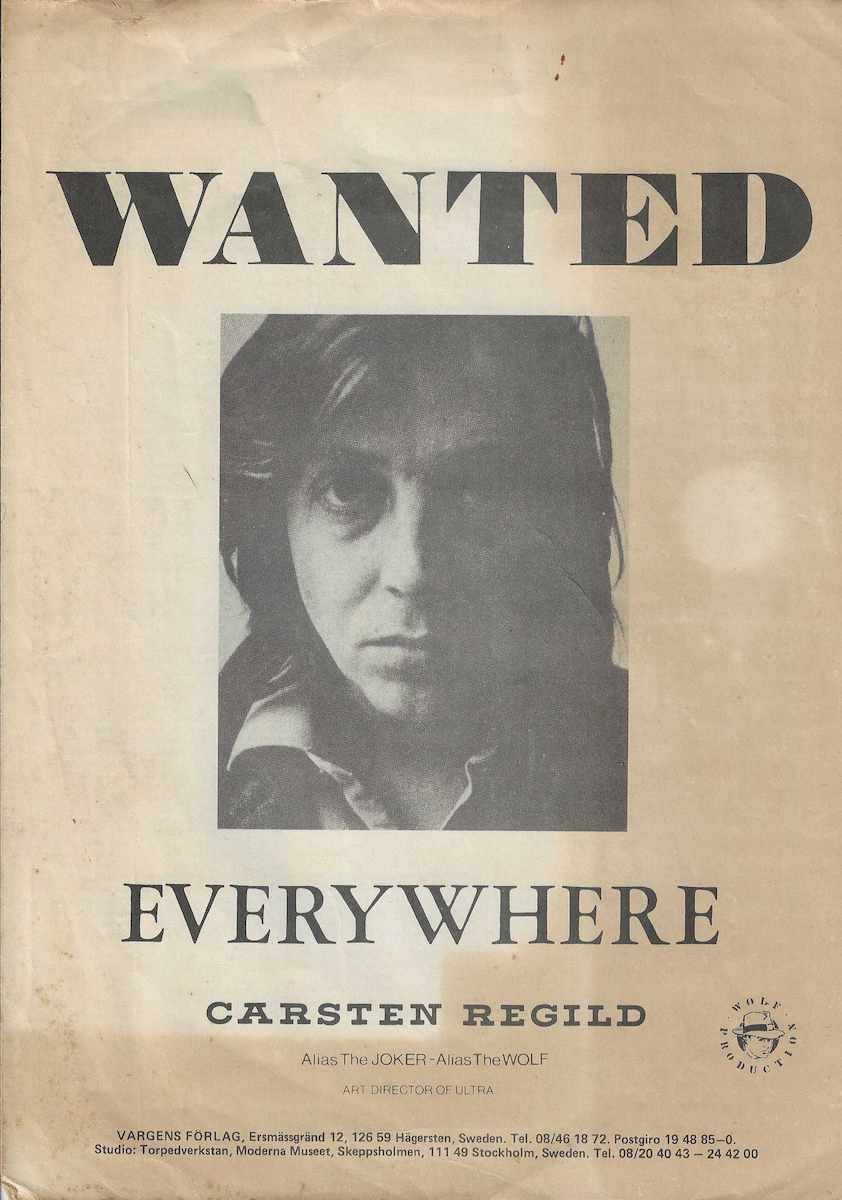
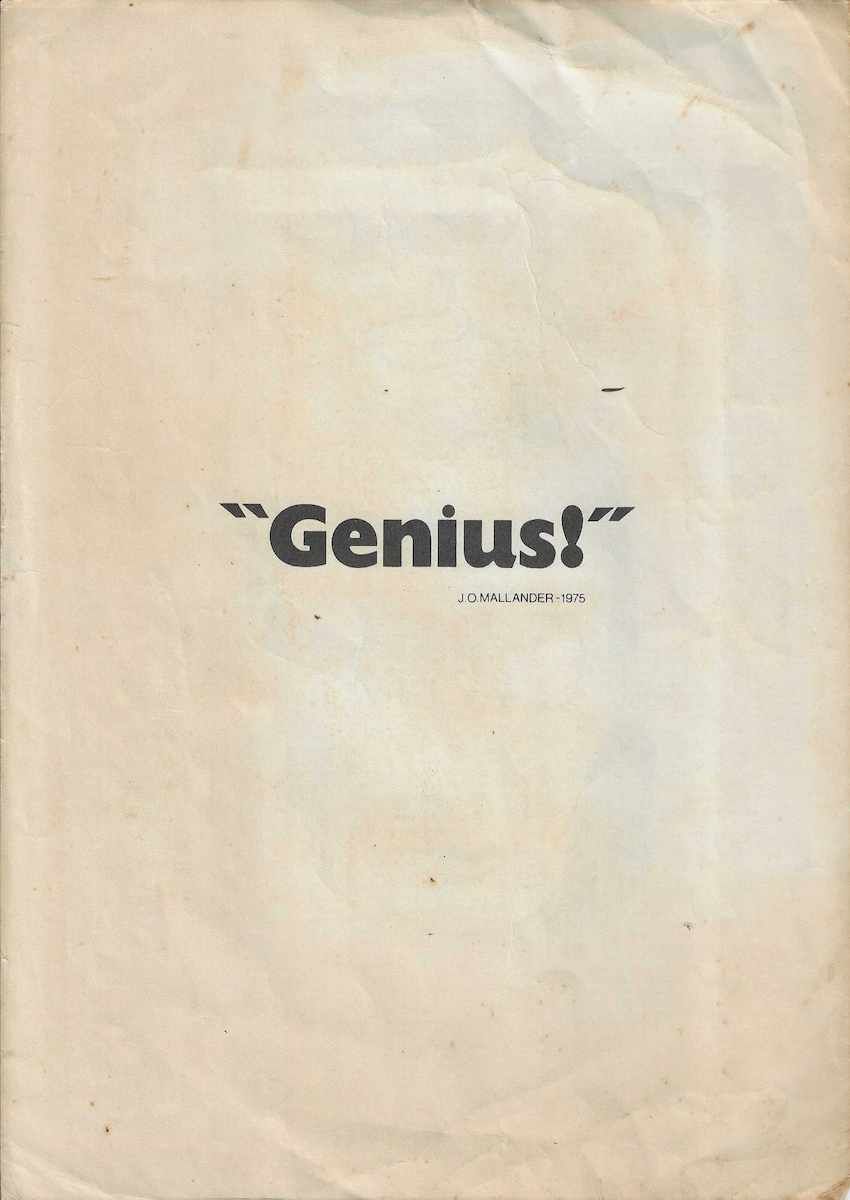
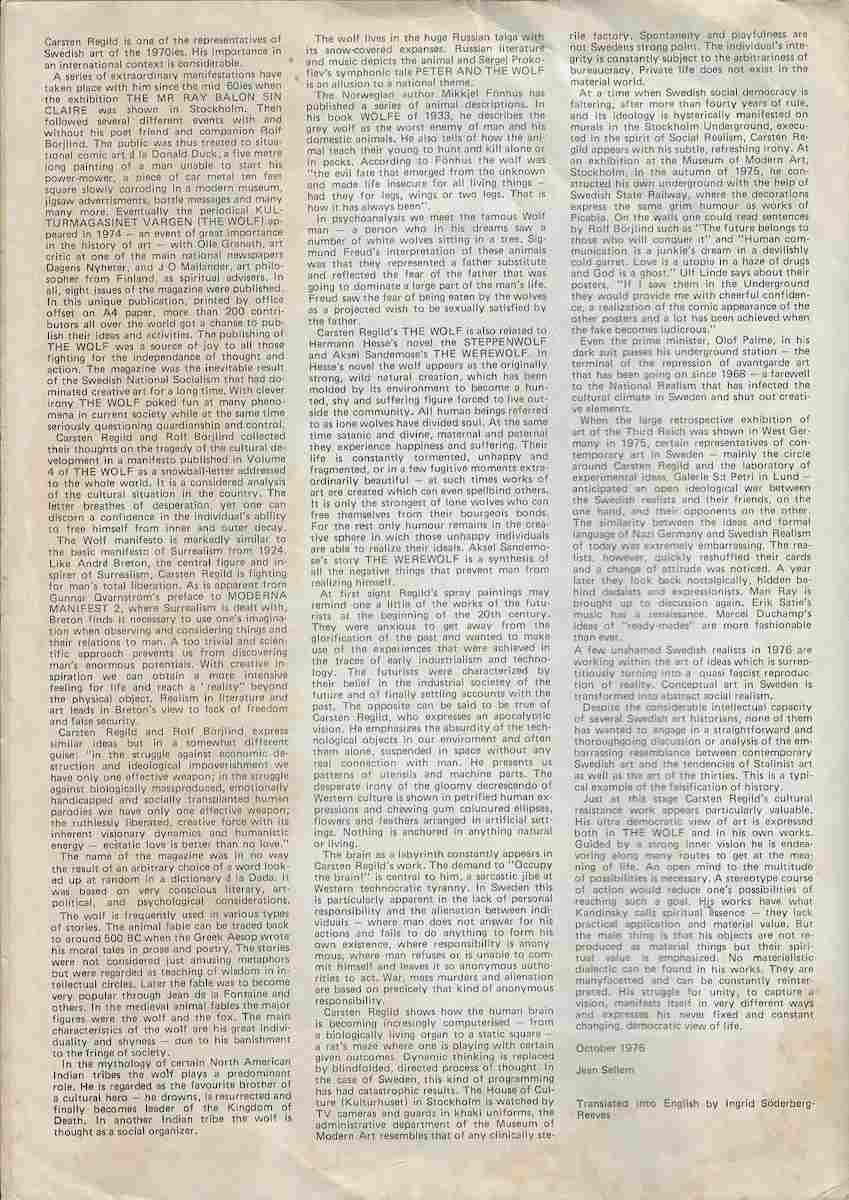
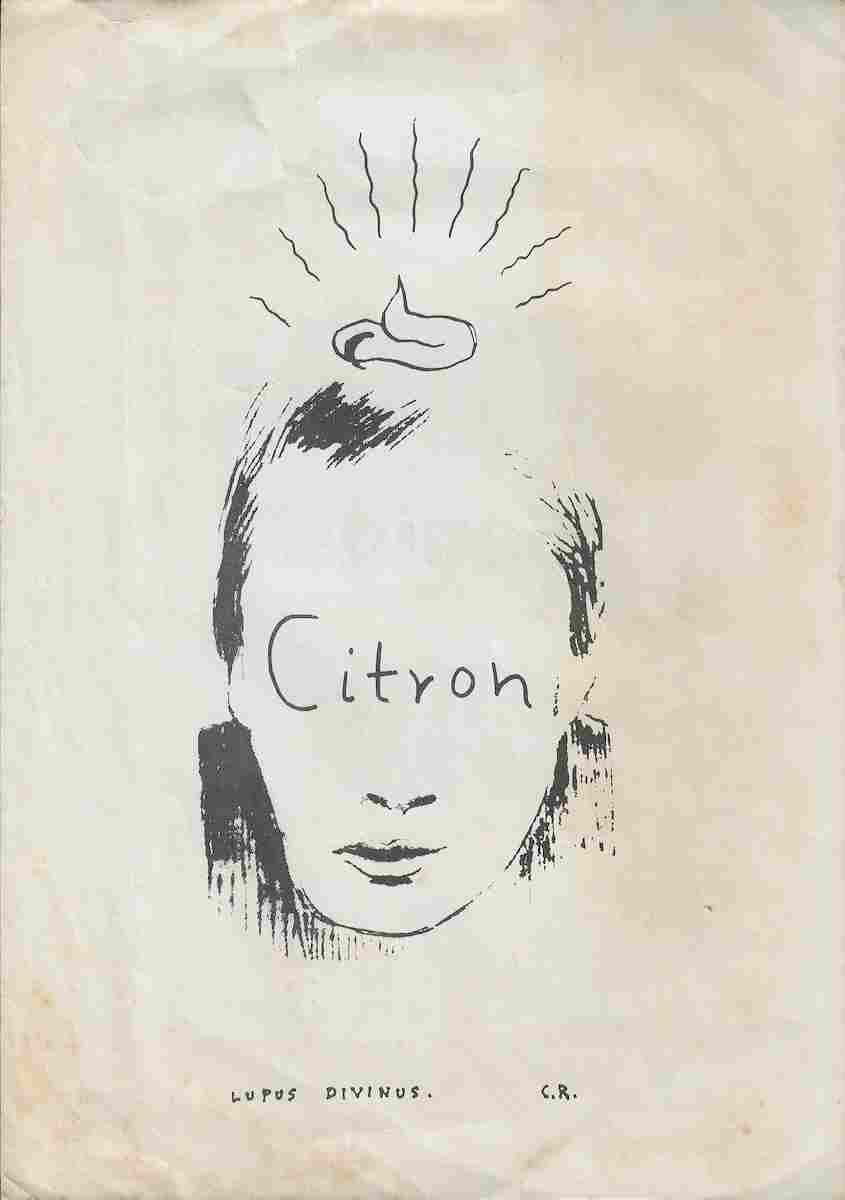
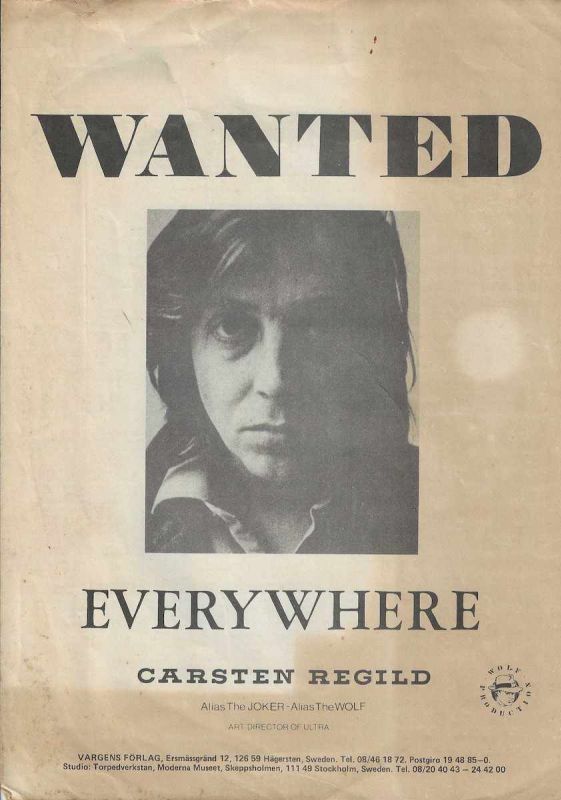
Wanted Everywhere é um livro de artista e publicação experimental de Carsten Regild, artista sueco de origem dinamarquesa, publicado em 1976 pela Vargens Förlag em Hägersten, Suécia. A obra apresenta Regild através de uma construção deliberadamente híbrida entre autorretrato, manifesto, publicação de artista, material gráfico, texto crítico, identidade artística e linguagem de comunicação de massa. A publicação é documentada externamente como Carsten Regild, Wanted Everywhere, Alias The Joker, Alias The Wolf, Art Director of Ultra, Vargens Förlag, Hägersten, 1976, com texto de Jean Sellem.A capa utiliza diretamente a linguagem gráfica dos cartazes policiais e dos anúncios de procura. A palavra WANTED ocupa a parte superior em grandes caracteres tipográficos e é combinada com uma fotografia frontal de Carsten Regild. Abaixo aparece EVERYWHERE, seguida pelo nome CARSTEN REGILD. O artista é identificado ainda pelas denominações Alias The JOKER, Alias The WOLF e ART DIRECTOR OF ULTRA. A construção visual transforma a identidade do artista em personagem e estabelece uma relação entre pessoa real, persona artística, ficção, cultura popular e meios de comunicação.A apropriação da fórmula Wanted Everywhere é coerente com a linguagem de Carsten Regild, cuja produção incorporava publicidade, tipografia, fotografia, quadrinhos, colagem, sinais, símbolos e imagens provenientes da cultura de massa. Sua experiência profissional inicial na publicidade teve influência profunda sobre sua produção artística, caracterizada por uma aparência fortemente gráfica e por um sistema recorrente de símbolos. Entre esses elementos aparecem o Joker, o Wolf, olhos, chaves, lâmpadas negras, personagens masculinos de chapéu e sobretudo e outras figuras provenientes de um repertório visual próximo da publicidade, do cinema e da cultura popular.Na parte inferior da capa aparecem informações editoriais e profissionais que acrescentam importantes dados documentais. A publicação identifica Vargens Förlag e apresenta endereço em Ersmässgränd 12, 126 59 Hägersten, Sweden. Também aparece um endereço de estúdio em Torpedverkstan, Moderna Museet, Skeppsholmen, Stockholm, Sweden. Esses dados situam materialmente Regild no ambiente artístico de Estocolmo e estabelecem uma conexão direta entre sua atividade editorial independente através da Vargens Förlag e sua proximidade com o Moderna Museet.A identificação Alias The Wolf possui particular importância dentro da trajetória do artista. O lobo, Vargen em sueco, tornou se uma das figuras centrais de seu sistema simbólico. O personagem atravessa obras, publicações, exposições e projetos editoriais e aparece diretamente no nome Kulturmagasinet Vargen e Vargens Förlag. Regild criou Kulturmagasinet Vargen com Rolf Börjlind, publicação experimental ativa principalmente em 1974 e 1975 e vinculada a uma extensa rede internacional de artistas. Registros do Lomholt Mail Art Archive demonstram que Vargen circulava dentro da Mail Art Network e reunia nomes como John Armleder, Ben Vautier, Ulises Carrión, Jorge Caraballo, Guillermo Deisler, Robin Crozier, Endre Tót, Klaus Groh, Ewa Partum, Robert Rehfeldt, Rod Summers e muitos outros.O verso interno apresentado no exemplar contém a palavra Genius! em grande destaque tipográfico, seguida pela atribuição J. O. Mallander e pela data 1975. J. O. Mallander, artista, crítico e participante do ambiente experimental finlandês, possuía relação documentada com Regild e também participou do projeto sonoro Voice of the Wolf, de 1975. A inserção de sua apreciação na publicação funciona simultaneamente como testemunho, comentário crítico e elemento gráfico.A publicação contém também um longo texto crítico de Jean Sellem, datado de outubro de 1976. O ensaio situa Carsten Regild como um dos representantes da arte sueca da década de 1970 e discute sua importância em um contexto que ultrapassa a Suécia. O texto recupera aspectos de sua trajetória desde a década de 1960 e analisa sua relação com publicidade, cultura visual, sociedade de consumo, política, museus, imprensa, comunicação e instituições culturais.Jean Sellem comenta o desenvolvimento da linguagem de Regild e a maneira pela qual o artista transformou elementos originários da publicidade em instrumentos de crítica cultural. O ensaio relaciona sua produção a um ambiente no qual imagens comerciais, estruturas burocráticas, cultura de massa e mecanismos institucionais tornam se matéria para a obra de arte. Também dedica atenção ao significado simbólico do lobo e à transformação dessa figura em componente central da identidade visual e conceitual de Regild.O texto de Sellem menciona ainda projetos e episódios anteriores da carreira do artista e insere sua produção na discussão da sociedade sueca dos anos 1970. A crítica aborda temas como individualidade, burocracia, democracia, sociedade de consumo, meios de comunicação e sistemas culturais. Dessa maneira, Wanted Everywhere funciona não apenas como apresentação biográfica, mas como documento da recepção crítica contemporânea da obra de Regild.A publicação deve ser compreendida também em relação a Vargen e à atividade editorial desenvolvida por Regild e Rolf Börjlind. Durante a primeira metade da década de 1970, Vargen estabeleceu uma estrutura internacional de circulação de contribuições, correspondências e materiais de artistas. A presença dessa experiência editorial ajuda a compreender Wanted Everywhere como parte de uma estratégia mais ampla na qual catálogo, livro de artista, revista, propaganda, manifesto e obra visual deixam de possuir fronteiras rígidas.Outra página do exemplar apresenta desenho de uma cabeça feminina estilizada. A palavra Citron aparece atravessando a região dos olhos ou da testa. Sobre a cabeça encontra se uma forma gráfica acompanhada por linhas radiantes. Na parte inferior está inscrito LUPUS DIVINUS e o monograma C.R. A expressão latina Lupus Divinus pode ser traduzida como Lobo Divino e reforça a centralidade do lobo no universo simbólico de Regild. A presença do monograma C.R. permite relacionar diretamente o desenho ao artista.A combinação da expressão Lupus Divinus com o personagem Wolf e com a identificação Alias The Wolf encontrada na capa transforma o lobo em uma espécie de alter ego ou entidade simbólica. Esse procedimento está de acordo com o sistema visual desenvolvido pelo artista, no qual personagens, objetos e sinais reaparecem continuamente e acumulam significados diferentes conforme o contexto.Wanted Everywhere foi produzido no mesmo período em que Carsten Regild expandia sua atividade entre artes visuais, publicação independente e experimentação sonora. Em 1975 ele produziu Voice of the Wolf, álbum que reuniu poesia sonora, música experimental, spoken word e materiais de diferentes artistas. Regild participa diretamente da gravação em peças como Home To My Baby e Typografi e aparece também com Rolf Börjlind em Nya Tider, Nya Änglar.A publicação de 1976 encontra se, portanto, em um ponto de convergência entre várias dimensões da carreira de Regild. Ela documenta o artista como criador visual, designer gráfico, editor, produtor cultural e construtor de personas. Também relaciona os nomes Carsten Regild, The Joker, The Wolf, Vargens Förlag, Jean Sellem, J. O. Mallander, Vargen, Moderna Museet, Hägersten e Stockholm dentro de uma mesma estrutura documental.Wanted Everywhere possui ainda relevância para o estudo de publicação de artista, livro de artista, arte conceitual, poesia visual, design experimental, cultura alternativa e redes de mail art. Embora a publicação não seja uma correspondência postal no sentido estrito, ela nasce no mesmo ecossistema de circulação independente em que Regild operava através de Kulturmagasinet Vargen e Vargens Förlag.Não foi localizada evidência de participação direta de Carsten Regild no movimento brasileiro Poema Processo. Entretanto, sua produção possui forte afinidade histórica com campos relacionados ao projeto Salsa, especialmente poesia visual, publicação experimental, arte conceitual, livro de artista, design gráfico alternativo e redes internacionais de mail art. Wanted Everywhere constitui um documento particularmente importante para compreender essa posição porque reúne em um único objeto sua identidade visual, suas personas, sua atividade editorial, sua recepção crítica e seu sistema simbólico em 1976.TEXT FOR THE SALSA PROGRAM IN ENGLISHWanted Everywhere is an artists book and experimental publication by Carsten Regild, the Swedish artist of Danish origin, published in 1976 by Vargens Förlag in Hägersten, Sweden. The work presents Regild through a deliberately hybrid construction combining self portraiture, manifesto, artists publication, graphic material, critical writing, artistic identity and the language of mass communication. Independent bibliographical documentation records the publication as Carsten Regild, Wanted Everywhere, Alias The Joker, Alias The Wolf, Art Director of Ultra, Vargens Förlag, Hägersten, 1976, with a text by Jean Sellem.The cover directly appropriates the graphic language of police wanted notices and public search posters. WANTED dominates the upper section in large typography and is combined with a frontal photograph of Carsten Regild. Below the photograph appears EVERYWHERE followed by the name CARSTEN REGILD. The artist is additionally identified through the designations Alias The JOKER, Alias The WOLF and ART DIRECTOR OF ULTRA. This visual construction transforms the identity of the artist into a character and creates an interplay between the real individual, artistic persona, fiction, popular culture and mass communication.The appropriation of the formula Wanted Everywhere is consistent with the visual language developed by Regild, whose practice incorporated advertising, typography, photography, comics, collage, signs, symbols and images derived from mass culture. His professional background in advertising strongly influenced a body of work characterized by graphic intensity and by a recurring symbolic vocabulary. The Joker and the Wolf appear within this vocabulary together with eyes, keys, black light bulbs, men wearing hats and overcoats and other figures derived from popular visual culture.The lower part of the cover contains important documentary information. The publication identifies Vargens Förlag and gives an address at Ersmässgränd 12, 126 59 Hägersten, Sweden. It also provides a studio address at Torpedverkstan, Moderna Museet, Skeppsholmen, Stockholm, Sweden. These details materially locate Regild within the Stockholm art environment and establish a direct connection between his independent publishing activity through Vargens Förlag and his proximity to Moderna Museet.The designation Alias The Wolf is especially significant in relation to the career of Regild. The wolf, Vargen in Swedish, became one of the central figures within his symbolic system. It crossed from painting into publications, exhibitions and editorial projects and appears directly in the names Kulturmagasinet Vargen and Vargens Förlag. Regild created Kulturmagasinet Vargen with Rolf Börjlind, an experimental publication active principally during 1974 and 1975 and linked to an extensive international network of artists. Records in the Lomholt Mail Art Archive demonstrate that Vargen circulated within the Mail Art Network and connected Regild with John Armleder, Ben Vautier, Ulises Carrión, Jorge Caraballo, Guillermo Deisler, Robin Crozier, Endre Tót, Klaus Groh, Ewa Partum, Robert Rehfeldt, Rod Summers and numerous other artists.One interior page of the surviving copy displays the word Genius! in prominent typography, followed by the attribution J. O. Mallander and the date 1975. J. O. Mallander, the Finnish artist and critic associated with experimental art, had documented connections with Regild and also participated in the 1975 sound project Voice of the Wolf. His statement in the publication functions simultaneously as testimony, critical comment and graphic element.The publication also contains an extensive critical essay by Jean Sellem dated October 1976. The text presents Carsten Regild as one of the representatives of Swedish art during the 1970s and considers his position within a context extending beyond Sweden. Sellem reviews aspects of the artist's career from the 1960s onward and discusses the relationship between his work and advertising, visual culture, consumer society, politics, museums, press, communication and cultural institutions.Sellem examines the development of the language of Regild and the manner in which the artist transformed elements originating in advertising into instruments of cultural criticism. His practice is situated within an environment where commercial imagery, bureaucratic structures, mass culture and institutional mechanisms could become material for artistic production. The essay also gives attention to the symbolic significance of the wolf and to its transformation into a central component of the visual and conceptual identity of Regild.The essay refers to earlier projects and episodes in the artist's career and places his production within discussions surrounding Swedish society during the 1970s. Themes addressed include individuality, bureaucracy, democracy, consumer society, communication media and cultural systems. Wanted Everywhere therefore functions not simply as a biographical presentation but also as a contemporary document of the critical reception of the work of Regild.The publication should also be understood in relation to Vargen and the editorial activity developed by Regild and Rolf Börjlind. During the first half of the 1970s, Vargen established an international structure for circulating contributions, correspondence and artists materials. This editorial experience helps explain Wanted Everywhere as part of a broader strategy in which catalogue, artists book, magazine, advertisement, manifesto and visual artwork no longer maintain rigid boundaries.Another page of the publication presents a drawing of a stylized female head. The word Citron crosses the region of the eyes or forehead. Above the head appears an organic graphic form surrounded by radiating lines. At the bottom is the inscription LUPUS DIVINUS together with the monogram C.R. The Latin expression Lupus Divinus may be translated as Divine Wolf and reinforces the central importance of the wolf within the symbolic universe of Regild.The combination of Lupus Divinus, the figure of the Wolf and the designation Alias The Wolf on the cover transforms the wolf into a form of alter ego or symbolic entity. This procedure corresponds closely with the visual system developed by Regild, in which characters, objects and signs recur continuously and accumulate different meanings according to context.Wanted Everywhere was produced during the same period in which Carsten Regild expanded his practice across visual art, independent publishing and sound experimentation. In 1975 he produced Voice of the Wolf, an album bringing together sound poetry, experimental music, spoken word and material by several artists. Regild himself appears on the recording in Home To My Baby and Typografi and together with Rolf Börjlind in Nya Tider, Nya Änglar.The 1976 publication therefore occupies a point of convergence between several dimensions of the career of Regild. It documents him as a visual artist, graphic designer, editor, cultural producer and creator of artistic personas. It also brings the entities Carsten Regild, The Joker, The Wolf, Vargens Förlag, Jean Sellem, J. O. Mallander, Vargen, Moderna Museet, Hägersten and Stockholm into a single documentary structure.Wanted Everywhere is relevant to the histories of artists publications, artists books, conceptual art, visual poetry, experimental graphic design, alternative culture and mail art networks. Although the publication is not itself postal correspondence in the strict sense, it emerged from the same independent communication environment in which Regild operated through Kulturmagasinet Vargen and Vargens Förlag.No evidence has been located establishing direct participation by Carsten Regild in the Brazilian Process Poem Movement. His relevance to the fields documented by Salsa lies instead in visual poetry related practices, experimental publishing, conceptual art, artists books, alternative graphic design and international mail art networks. Wanted Everywhere is an especially important document for understanding this position because it brings together his visual identity, artistic personas, publishing activity, critical reception and symbolic system within a single object produced in 1976.
Livro de artista e publicação experimental Wanted Everywhere, de Carsten Regild, publicado pela Vargens Förlag em Hägersten, Suécia, em 1976. A identificação bibliográfica externa confirma o título, autoria, editora, local, ano e texto de Jean Sellem. A capa utiliza a linguagem de cartaz de procurado e apresenta fotografia de Carsten Regild acompanhada pelas identificações Alias The Joker, Alias The Wolf e Art Director of Ultra. Também registra endereço da Vargens Förlag em Hägersten e endereço de estúdio relacionado a Torpedverkstan, Moderna Museet, Skeppsholmen, Estocolmo. O interior contém a palavra Genius!, atribuída a J. O. Mallander e datada de 1975, longo ensaio crítico de Jean Sellem datado de outubro de 1976 e desenho monogramado C.R. contendo a palavra Citron e a inscrição Lupus Divinus. O conjunto relaciona autorretrato, publicidade, persona artística, tipografia, desenho, crítica de arte, publicação independente e o símbolo recorrente do lobo. Wanted Everywhere constitui importante documento da produção de Regild durante a década de 1970 e de suas relações com Vargens Förlag, Kulturmagasinet Vargen, arte conceitual, publicação de artista e redes internacionais de comunicação artística.OBSERVATION TEXT IN ENGLISHArtists book and experimental publication Wanted Everywhere by Carsten Regild, published by Vargens Förlag in Hägersten, Sweden, in 1976. Independent bibliographical documentation confirms the title, author, publisher, place, year and a text by Jean Sellem. The cover adopts the visual language of a wanted poster and presents a photograph of Carsten Regild together with the identifications Alias The Joker, Alias The Wolf and Art Director of Ultra. It also records the address of Vargens Förlag in Hägersten and a studio address connected with Torpedverkstan, Moderna Museet, Skeppsholmen, Stockholm. The interior includes the word Genius!, attributed to J. O. Mallander and dated 1975, an extensive critical essay by Jean Sellem dated October 1976, and a drawing monogrammed C.R. containing the word Citron and the inscription Lupus Divinus. The publication combines self portraiture, advertising, artistic persona, typography, drawing, art criticism, independent publishing and the recurring symbol of the wolf. Wanted Everywhere is an important document of the production of Carsten Regild during the 1970s and of his connections with Vargens Förlag, Kulturmagasinet Vargen, conceptual art, artists publications and international artistic communication networks.
Proveniência
Coleção Poema ProcessoInglês
Wanted Everywhere is an artists book and experimental publication by Carsten Regild, the Swedish artist of Danish origin, published in 1976 by Vargens Förlag in Hägersten, Sweden.
Dimensions: 11,7 x 8,3 in