Field after Francis Ponge é um livro de artista e obra de poesia concreta do historiador da arte, crítico, curador e poeta britânico Stephen Bann, publicado pela Tarasque Press em Nottinghamshire, Reino Unido.
Stephen Bann - Reino Unido
Categoria: Livro de Artista
Acervo: 03748
Data: 1972
Dimensões: 12,7 x 12,9 cm
Field after Francis Ponge é um livro de artista e obra de poesia concreta do historiador da arte, crítico, curador e poeta britânico Stephen Bann, publicado pela Tarasque Press em Nottinghamshire, Reino Unido. A publicação utiliza como matéria verbal textos provenientes de Le pré, obra do poeta francês Francis Ponge, e os reorganiza por meio de procedimentos visuais e tipográficos, convertendo linguagem escrita em campo gráfico. O próprio colofão reproduzido no exemplar identifica Stephen Bann como autor, informa que os textos procedem de Le pré de Francis Ponge, registra tiragem de 250 exemplares e declara que 100 cópias seriam numeradas e assinadas pelo autor. O endereço editorial indicado é Tarasque Press, Apple Cottage, York Street, East Markham, Nottinghamshire. A obra é reconhecida em coleções especializadas como livro de artista e como exemplo importante da poesia concreta britânica. O Van Abbemuseum registra Field after Francis Ponge como artists book, com tiragem de 250 exemplares, impressão tipográfica e encadernação por grampos. O Centre des livres d
artistes na França descreve uma edição com 16 páginas, aproximadamente 12,8 por 12,8 centímetros, impressa tipograficamente em três cores, azul, laranja e preto, sobre papéis de diferentes cores, incluindo verde, azul esverdeado, azul claro e bege. A instituição também registra a informação editorial de que 100 dos 250 exemplares seriam numerados e assinados. A relação com Francis Ponge é estrutural e não apenas uma homenagem nominal. Bann parte de elementos textuais de Le pré e realiza um processo de concretização visual da linguagem, decompondo e reorganizando palavras, sinais e elementos tipográficos para transformar o texto em estrutura espacial. Registros especializados descrevem o procedimento como transformação das palavras de Ponge em campos de poesia concreta. Field after Francis Ponge deve ser situado no contexto da participação direta de Stephen Bann na poesia concreta britânica durante as décadas de 1960 e 1970 e de sua proximidade com a Tarasque Press, editora independente fundamental para a circulação de poesia visual e experimental no Reino Unido. A obra articula literatura francesa, poesia concreta, tipografia, livro de artista, publicação experimental e investigação das relações entre palavra e imagem. O formato reduzido, a capa verde, a composição tipográfica econômica e o emprego de diferentes cores e papéis fazem do próprio objeto editorial parte do processo poético. Há divergência bibliográfica quanto ao ano exato de publicação. Algumas referências comerciais e bibliográficas atribuem a obra a 1972, enquanto registros especializados ligados à história da Tarasque Press, incluindo Coracle, a datam de 1970, e a Bibliothèque nationale de France também a cataloga em 1970. Como o exemplar apresentado não imprime uma data visível no colofão, a data deve ser tratada catalograficamente com cautela. Para o registro do presente exemplar pode ser mantida a data de 1972 quando esta corresponder à proveniência ou catalogação do acervo, acrescentando a observação de que outras fontes especializadas registram 1970. Field after Francis Ponge constitui uma evidência material da atividade de Stephen Bann não apenas como historiador e crítico da poesia concreta, mas também como produtor de obras experimentais, inserido diretamente no circuito britânico que relacionava poesia concreta, poesia visual, pequenas editoras independentes e livros de artista.TEXT FOR THE SALSA PROGRAM IN ENGLISHField after Francis Ponge is an artists book and work of concrete poetry by the British art historian, critic, curator and poet Stephen Bann, published by Tarasque Press in Nottinghamshire, United Kingdom. The publication takes texts from Le pré by the French poet Francis Ponge as its verbal material and reorganizes them through visual and typographic procedures, transforming written language into a graphic field. The colophon visible in the present copy identifies Stephen Bann as the author, states that the texts derive from Le pré by Francis Ponge, records an edition of 250 copies and indicates that 100 copies were intended to be numbered and signed by the author. The publishing address is given as Tarasque Press, Apple Cottage, York Street, East Markham, Nottinghamshire. The work is recognized in specialist collections as an artists book and as an important example of British concrete poetry. The Van Abbemuseum catalogues Field after Francis Ponge as an artists book in an edition of 250 copies, produced by letterpress and stapled. The Centre des livres d
artistes in France describes an edition of 16 pages measuring approximately 12.8 by 12.8 centimeters, printed in three colors, blue, orange and black, on differently colored papers including green, blue green, pale blue and beige. The institution also records the publisher statement that 100 of the 250 copies were to be numbered and signed. The relationship with Francis Ponge is structural rather than merely commemorative. Bann extracts textual elements from Le pré and subjects them to a process of visual concretization, breaking down and rearranging words, signs and typographic elements so that the text becomes a spatial composition. Specialist records describe the work as transforming Ponge's words into fields of concrete poetry. Field after Francis Ponge belongs to the context of Stephen Bann's direct participation in British concrete poetry during the 1960s and 1970s and to his association with Tarasque Press, an independent publisher that played an important role in the circulation of visual and experimental poetry in Britain. The publication brings together French literature, concrete poetry, typography, artists books, experimental publishing and investigations into the relationship between word and image. Its small square format, green cover, restrained typographic composition and use of different colors and paper stocks make the physical publication itself an integral component of the poetic process. Bibliographical sources disagree over the exact publication date. Some bibliographic and bookselling records assign the work to 1972, while specialist sources connected with the history of Tarasque Press, including Coracle, date it to 1970, and the Bibliothèque nationale de France also catalogues the work under 1970. As no publication date is visible in the colophon of the copy presented here, the date should be treated with cataloguing caution. The date 1972 may be retained for this particular record when it corresponds to the provenance or existing classification of the collection, with an accompanying note that other specialist sources record 1970. Field after Francis Ponge provides material evidence of Stephen Bann's activity not only as a historian and critic of concrete poetry but also as a producer of experimental works directly involved in the British network connecting concrete poetry, visual poetry, independent publishing and artists books.
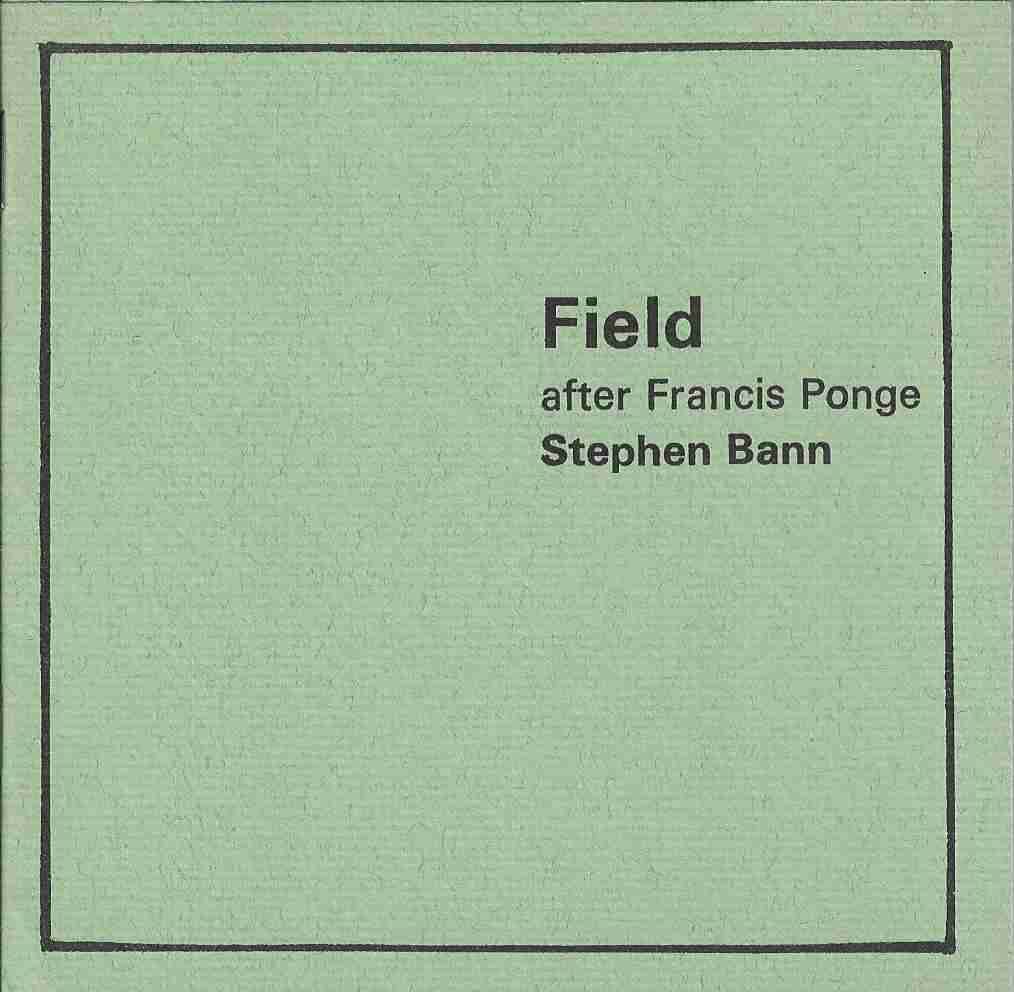
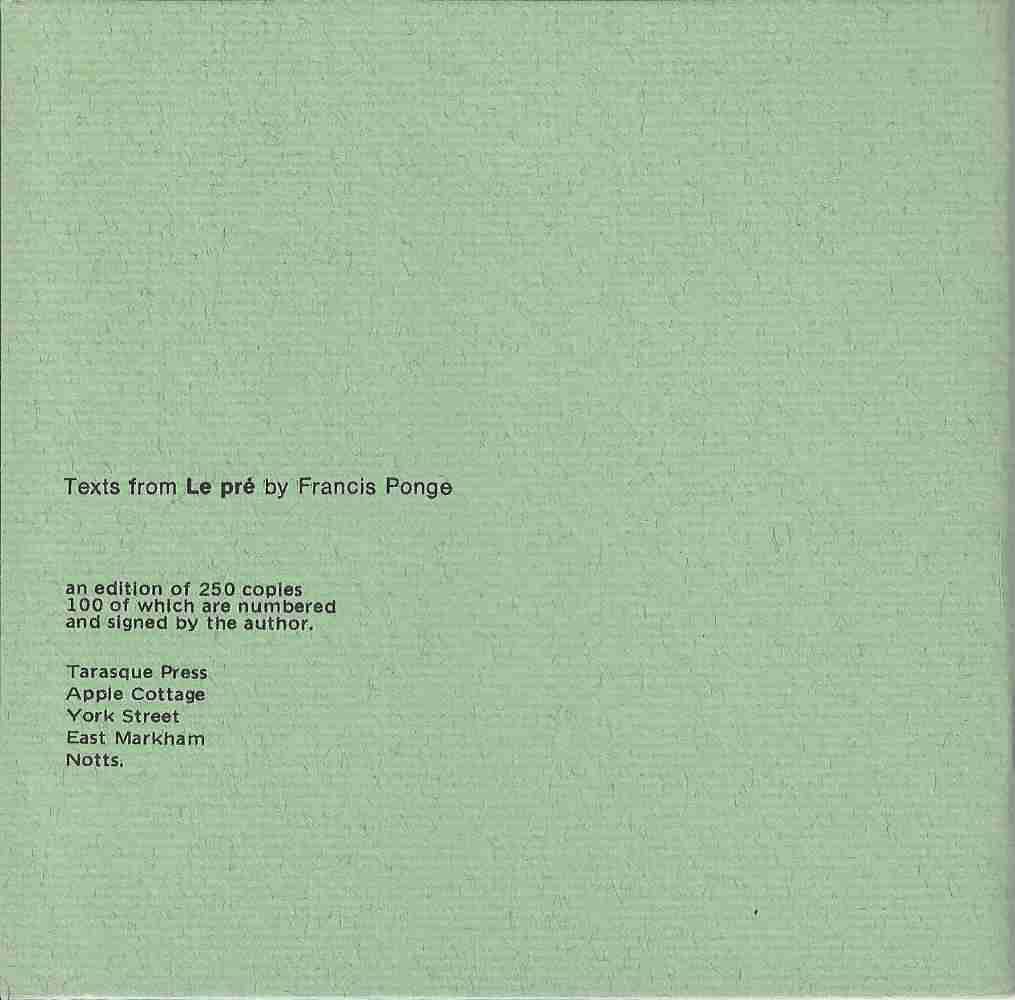
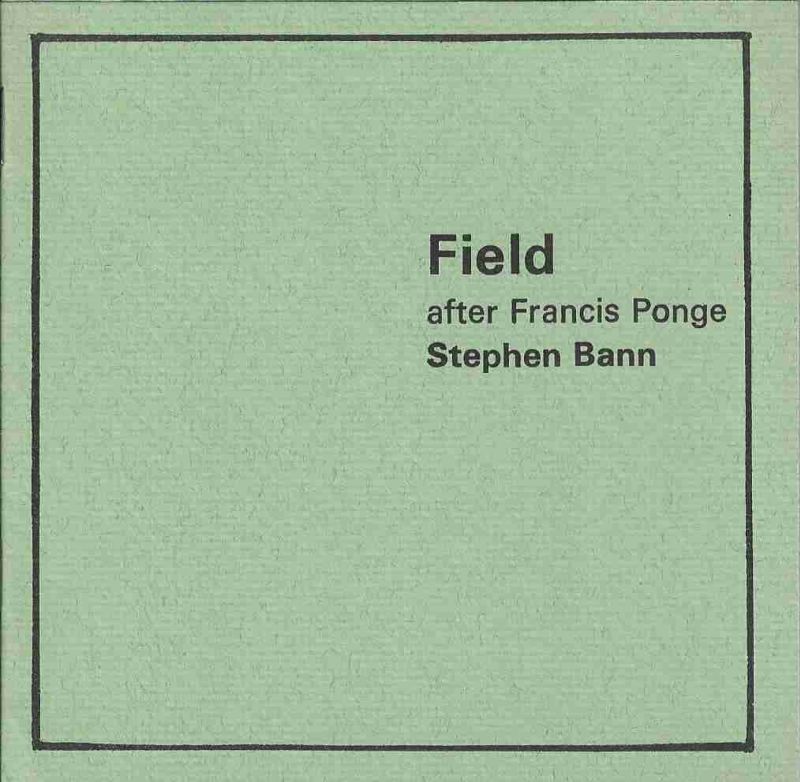
Exemplar de Field after Francis Ponge de Stephen Bann, publicado pela Tarasque Press, Reino Unido, em edição declarada de 250 exemplares. A capa apresenta fundo verde, moldura retangular preta e composição tipográfica concentrada na região superior direita com o título Field, a indicação after Francis Ponge e o nome Stephen Bann. No colofão aparece a informação Texts from Le pré by Francis Ponge, seguida da declaração de tiragem de 250 exemplares, dos quais 100 seriam numerados e assinados pelo autor, além do endereço Tarasque Press, Apple Cottage, York Street, East Markham, Notts. Esses elementos permitem identificar diretamente autoria, fonte textual, editora, tiragem e local de publicação. O livro é uma publicação experimental de pequena escala vinculada à poesia concreta britânica e à história do livro de artista. Registros museológicos confirmam tiragem de 250 exemplares e impressão tipográfica, enquanto o Centre des livres d
artistes informa formato aproximado de 12,8 por 12,8 centímetros, 16 páginas e impressão em azul, laranja e preto sobre papéis de várias cores. O procedimento artístico consiste em apropriar e reorganizar fragmentos de Le pré de Francis Ponge, convertendo matéria literária em organização espacial e visual. Assim, Field after Francis Ponge deve ser compreendido simultaneamente como poema concreto, livro de artista, publicação de artista e objeto gráfico. A obra é relevante para a trajetória de Stephen Bann porque comprova sua participação prática na poesia concreta, complementando sua atuação como crítico, editor, organizador de exposições e autor da antologia internacional Concrete Poetry. A Tarasque Press, responsável pela edição, integrou um importante circuito britânico de pequenas publicações experimentais associado a nomes como Simon Cutts, Stuart Mills, Ian Hamilton Finlay e outros agentes da poesia visual. Existe divergência quanto à data. O exemplar apresentado não mostra ano de publicação no colofão. Fontes como registros comerciais especializados atribuem 1972, enquanto Coracle e a Bibliothèque nationale de France registram 1970. Essa divergência deve permanecer registrada para preservar a precisão documental. Há também uma particularidade relacionada à tiragem assinada. O próprio impresso declara que 100 exemplares seriam numerados e assinados, mas um registro especializado de comércio de livros informa que o próprio Stephen Bann não se recordava de ter efetivamente numerado e assinado cem cópias naquele momento. Portanto, a declaração de tiragem deve ser registrada como informação impressa na publicação, sem pressupor que todos os cem exemplares tenham efetivamente recebido numeração e assinatura. Para o acervo relacionado ao Poema Processo, Field after Francis Ponge possui importância contextual por documentar o ambiente internacional da poesia concreta e visual com o qual as experiências brasileiras dos anos 1960 e 1970 mantiveram numerosos pontos de contato, embora a obra em si não seja uma produção do movimento Poema Processo.OBSERVATION TEXT IN ENGLISHCopy of Field after Francis Ponge by Stephen Bann, published by Tarasque Press in the United Kingdom in a stated edition of 250 copies. The cover has a green ground enclosed by a black rectangular border, with the typography concentrated toward the upper right and presenting the title Field, the attribution after Francis Ponge and the name Stephen Bann. The colophon states Texts from Le pré by Francis Ponge and records an edition of 250 copies, 100 of which were intended to be numbered and signed by the author. It also gives the publishing address as Tarasque Press, Apple Cottage, York Street, East Markham, Notts. These elements directly establish the authorship, textual source, publisher, edition size and place of publication. The book is a small scale experimental publication connected to British concrete poetry and the history of the artists book. Museum records confirm an edition of 250 copies and letterpress production, while the Centre des livres d
artistes records a format of approximately 12.8 by 12.8 centimeters, 16 pages and printing in blue, orange and black on several colored paper stocks. The artistic procedure consists of extracting and reorganizing material from Le pré by Francis Ponge and transforming literary language into spatial and visual organization. Field after Francis Ponge can therefore be understood simultaneously as a concrete poem, an artists book, an artists publication and a graphic object. The work is particularly relevant to Stephen Bann's career because it documents his practical involvement in concrete poetry, complementing his activities as critic, editor, exhibition organizer and editor of the international anthology Concrete Poetry. Tarasque Press belonged to an important British network of small experimental presses associated with Simon Cutts, Stuart Mills, Ian Hamilton Finlay and other figures in visual and experimental poetry. There is a bibliographical discrepancy concerning the date. The copy presented here does not display a publication year in its colophon. Specialist bookselling records assign the work to 1972, while Coracle and the Bibliothèque nationale de France record 1970. This discrepancy should remain visible in the catalogue record in order to preserve documentary accuracy. There is also a qualification concerning the signed portion of the edition. The publication itself states that 100 copies were to be numbered and signed, but a specialist bookselling record reports that Stephen Bann did not recall actually numbering and signing one hundred copies at the time. The edition statement should therefore be recorded as information printed in the publication without assuming that all one hundred copies were ultimately numbered and signed. Within an archive concerned with the Process Poem Movement, Field after Francis Ponge has contextual importance because it documents the international environment of concrete and visual poetry with which Brazilian experimental practices of the 1960s and 1970s shared important historical and formal connections, although the book itself is not a work of the Brazilian Process Poem Movement.
Proveniência
Coleção Falves SilvaInglês
Field after Francis Ponge is an artists book and work of concrete poetry by the British art historian, critic, curator and poet Stephen Bann, published by Tarasque Press in Nottinghamshire, United Kingdom.
Dimensions: 5 x 5,1 in