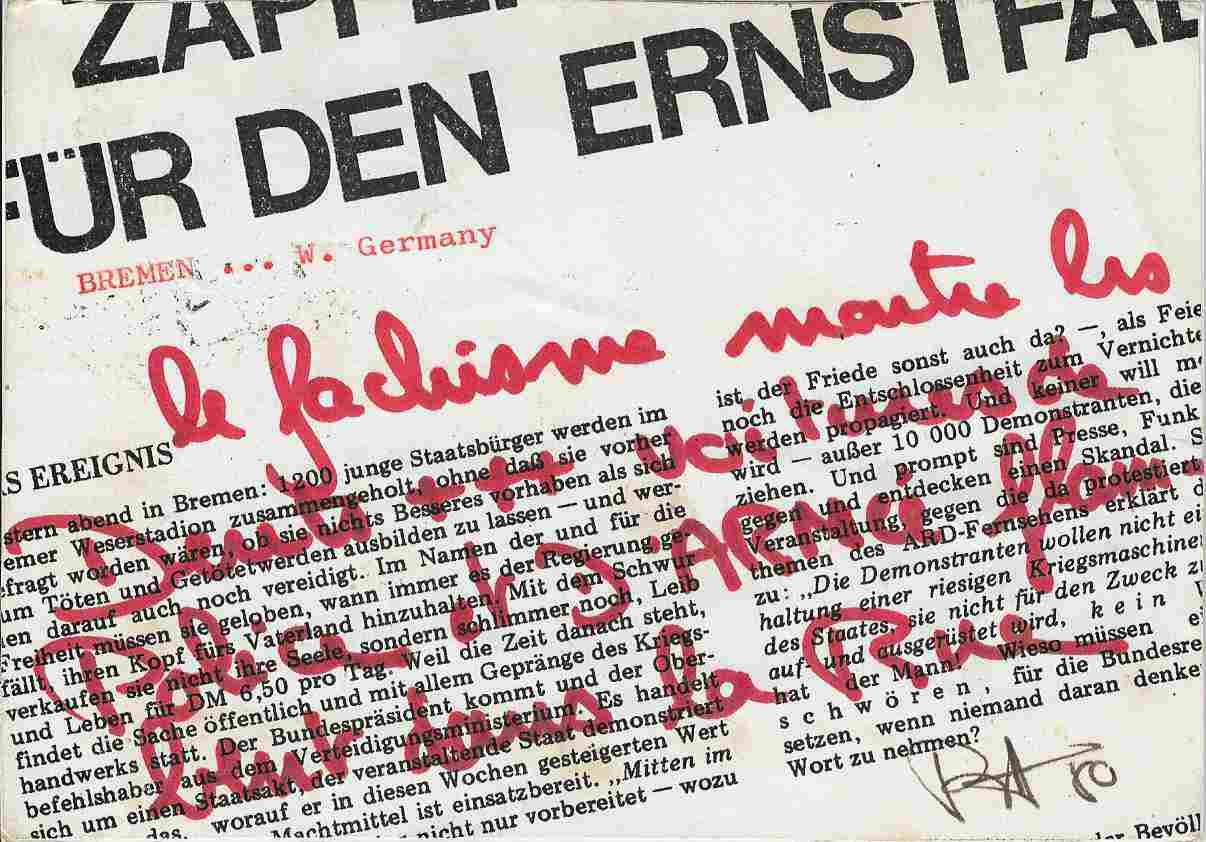
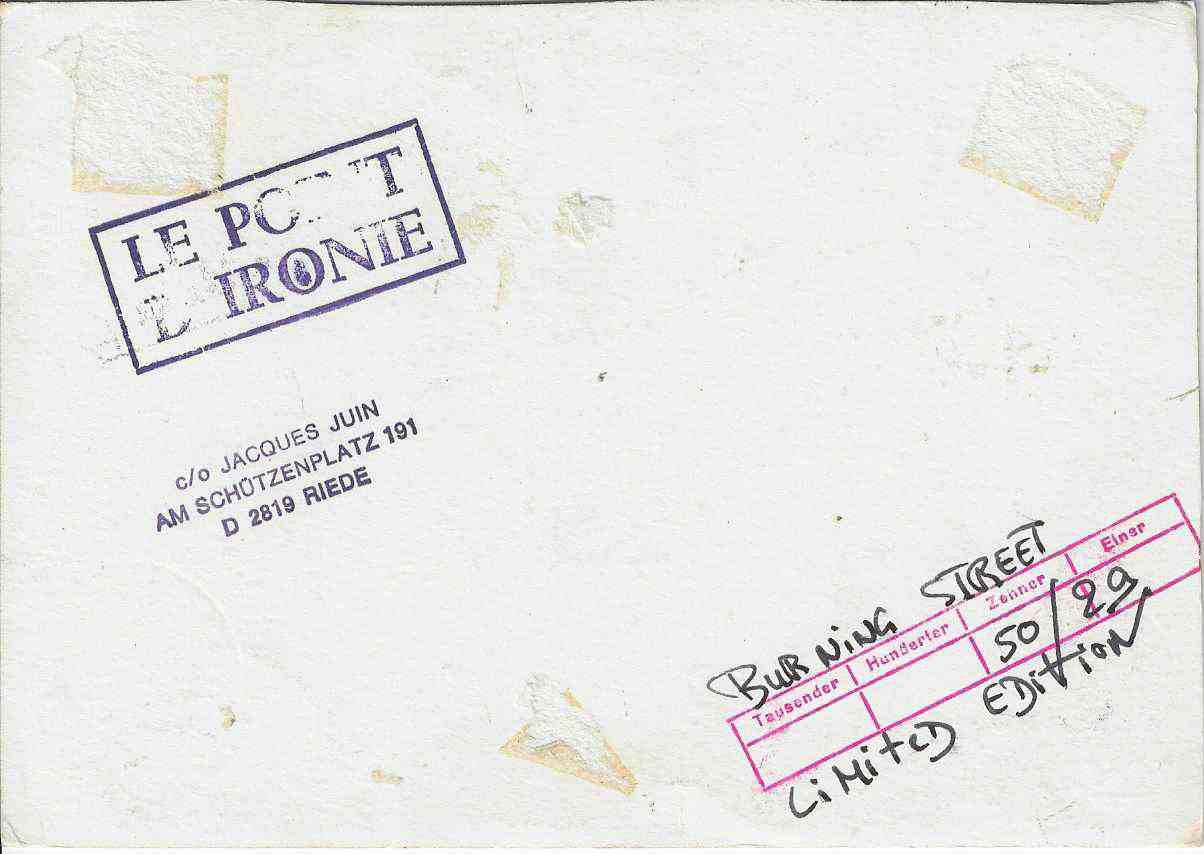
Le Point d Ironie, Jacques Juin, arte postal pacifista enviada de Riede, Alemanha, para Burning Street, Edimburgo, c. 1980
Le Point d´Ironie , Riede Alemanha
Categoria: Mail Art
Acervo: 03144
Data: 1980
Dimensões: 10,7 x 15,2 cm
Título oficial em portuguêsLe Point d Ironie, Jacques Juin, arte postal pacifista enviada de Riede, Alemanha, para Burning Street, Edimburgo, c. 1980TipoOutro: arte postal, correspondência artística internacional, documento gráfico postalTexto principal para SalsaDocumento de arte postal atribuído a Jacques Juin, enviado de Riede, Alemanha, para Burning Street, Edimburgo, c. 1980. A peça apresenta intervenção gráfica sobre recorte impresso em língua alemã, com inscrição manuscrita em vermelho e assinatura datada 80. No verso, aparecem carimbo Le Point d Ironie, endereço c/o Jacques Juin, Am Schützenplatz 191, D 2819 Riede, e indicação manuscrita Burning Street, Limited Edition, Edinburgh. A composição articula jornal, escrita manual, circulação postal, crítica política e linguagem pacifista, aproximando-se das práticas internacionais de Mail Art, arte conceitual, poesia visual e publicações independentes. A obra deve ser catalogada como correspondência artística internacional, relevante para o estudo das redes experimentais europeias de arte postal no final dos anos 1970 e início dos anos 1980.Official title in EnglishLe Point d Ironie, Jacques Juin, pacifist mail art correspondence sent from Riede, Germany, to Burning Street, Edinburgh, c. 1980TypeOther: mail art, international artist correspondence, postal graphic documentMain Salsa textMail art document attributed to Jacques Juin, sent from Riede, Germany, to Burning Street, Edinburgh, c. 1980. The piece features a graphic intervention over a German printed newspaper fragment, with a red handwritten inscription and a signature dated 80. The reverse includes the stamp Le Point d Ironie, the address c/o Jacques Juin, Am Schützenplatz 191, D 2819 Riede, and the handwritten destination Burning Street, Limited Edition, Edinburgh. The document combines press material, handwriting, postal circulation, political criticism and pacifist language, connecting it to international practices of Mail Art, conceptual art, visual poetry and independent publishing. It should be catalogued as international artist correspondence and as a relevant document for the study of European experimental mail art networks in the late 1970s and early 1980s.
ObservaçãoInformação confirmada: Le Point d Ironie, Jacques Juin, Riede, Germany, Burning Street, Edinburgh, assinatura e data 80.Leitura provável: peça de arte postal pacifista relacionada a redes internacionais de Mail Art.Hipótese curatorial: circulação entre Alemanha e Escócia dentro de circuitos alternativos de publicações, selos, carimbos e correspondência artística.Resumo curtoArte postal de Jacques Juin, Le Point d Ironie, enviada de Riede, Alemanha, para Burning Street, Edimburgo, c. 1980, com intervenção manuscrita, carimbo e referência pacifista.Curadoria identificadaNão identificadaOrganização identificadaLe Point d IronieInstituições participantesLe Point d IronieBurning Street, Limited Edition, EdinburghArtistas participantesJacques JuinObras identificadasDocumento postal com intervenção manuscrita sobre recorte impresso alemãoPublicações associadasLe Point d IronieBurning Street, Limited EditionDocumentos associadosCartão ou folha postal, frente e verso, com carimbo, endereço e intervenção manuscritaLugares citadosRiede, AlemanhaEdinburgh, EscóciaBremen, AlemanhaPaíses envolvidosAlemanhaEscóciaReino UnidoCidades envolvidasRiedeEdinburghBremenDatas identificadasc. 1980Assinatura datada 80PeríodoFinal dos anos 1970 ou início dos anos 1980Movimentos relacionadosArte PostalMail ArtArte ConceitualPoesia VisualPublicações IndependentesRedes internacionais de arte experimentalArte pacifistaTemas curatoriaisCorrespondência artísticaPacifismoImprensa e políticaCirculação postalCarimbo como linguagem artísticaTexto manuscrito e imagem impressaRedes alternativas europeiasPalavras chaveJacques Juin, Le Point d Ironie, arte postal, mail art, Riede Alemanha, Burning Street Edinburgh, poesia visual, arte conceitual, correspondência artística, arte pacifista, publicação independente, rede internacional de arteEntidades nomeadasJacques JuinLe Point d IronieBurning StreetEdinburghRiedeBremenGermanyConexões recomendadas para linkagem internaArte PostalMail ArtPoesia VisualArte ConceitualLivro de ArtistaPublicações IndependentesCorrespondência Artística InternacionalRedes Internacionais de Arte ExperimentalClusters recomendadosArte Postal e Mail ArtPoesia Experimental InternacionalPublicações IndependentesArte ConceitualSemiótica e Comunicação VisualCorrespondência Artística InternacionalRedes Internacionais de Arte ExperimentalSlug SEOle-point-d-ironie-jacques-juin-arte-postal-pacifista-riede-alemanha-burning-street-edinburgh-1980Meta title SEOLe Point d Ironie Jacques Juin Arte Postal Pacifista Riede Alemanha Burning Street Edinburgh c. 1980Meta descriptionArte postal de Jacques Juin, Le Point d Ironie, enviada de Riede, Alemanha, para Burning Street, Edimburgo, c. 1980, com intervenção manuscrita, carimbo e relação com Mail Art, poesia visual e redes internacionais de arte experimental.Alt textDocumento de arte postal Le Point d Ironie de Jacques Juin, com intervenção manuscrita vermelha sobre recorte de jornal alemão, enviado de Riede, Alemanha, para Burning Street, Edimburgo, c. 1980.Hidden SEO Layer IPTC XMPLe Point d Ironie, Jacques Juin, Riede Germany, Burning Street Edinburgh, arte postal, Mail Art, correspondência artística internacional, arte pacifista, poesia visual, arte conceitual, publicação independente, redes internacionais de arte experimental, c. 1980, Alemanha, Escócia, Reino Unido.Schema.org recomendadoCreativeWorkVisualArtworkArchiveComponentPersonOrganizationPlaceCollectionObservationConfirmed information: Le Point d Ironie, Jacques Juin, Riede, Germany, Burning Street, Edinburgh, signature and date 80.Probable reading: pacifist mail art document connected to international Mail Art networks.Curatorial hypothesis: circulation between Germany and Scotland through alternative networks of publications, stamps, rubber stamps and artist correspondence.Short summaryMail art by Jacques Juin, Le Point d Ironie, sent from Riede, Germany, to Burning Street, Edinburgh, c. 1980, with handwritten intervention, stamp and pacifist reference.SEO meta title in EnglishLe Point d Ironie Jacques Juin Pacifist Mail Art Riede Germany Burning Street Edinburgh c. 1980Meta description in EnglishMail art document by Jacques Juin, Le Point d Ironie, sent from Riede, Germany, to Burning Street, Edinburgh, c. 1980, with handwritten intervention, stamp and links to Mail Art, visual poetry and international experimental art networks.Main image alt text in EnglishLe Point d Ironie mail art document by Jacques Juin, with red handwritten intervention over a German newspaper fragment, sent from Riede, Germany, to Burning Street, Edinburgh, c. 1980.Keywords in EnglishJacques Juin, Le Point d Ironie, mail art, pacifist mail art, Riede Germany, Burning Street Edinburgh, visual poetry, conceptual art, artist correspondence, independent publishing, international experimental art networks.
Proveniência
Coleção Poema ProcessoInglês
Le Point d Ironie, Jacques Juin, pacifist mail art correspondence sent from Riede, Germany, to Burning Street, Edinburgh, c. 1980
Dimensions: 4,2 x 6 in