Billy Haddock
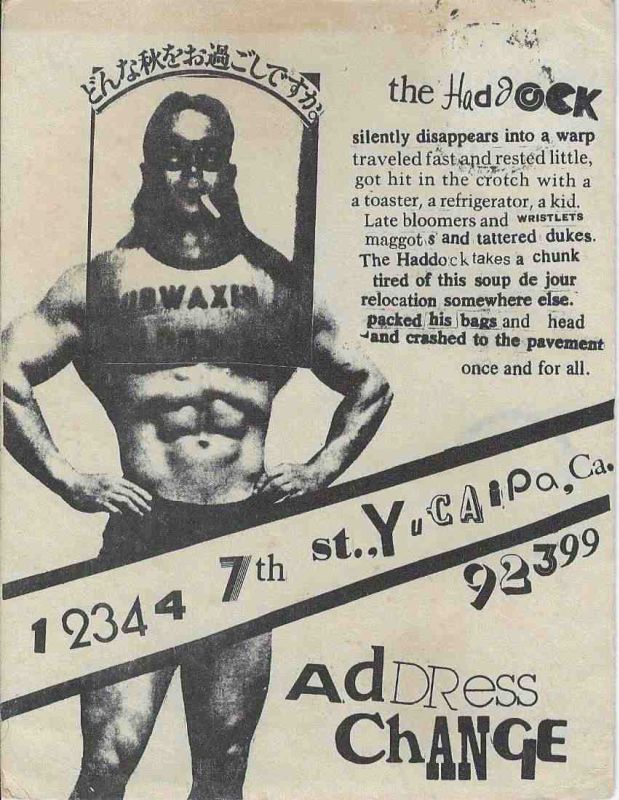 Billy Haddock, conhecido sobretudo como Eerie Billy Haddock e documentado também pelas variantes Billie Haddock, Wild Billy Haddock e Sub Waccin Haddock, é um artista norte americano ligado à Arte Postal, Mail Art, poesia visual, publicação experimental, colagem, desenho, humor gráfico, pequenas publicações independentes e cultura underground. Sua atuação está documentada desde o início da década de 1970, inicialmente nas redes internacionais de correspondência artística e posteriormente no ambiente gráfico e punk relacionado ao coletivo Art Maggots. Eugene, Oregon, Estados Unidos, foi um dos principais centros de sua atividade durante os anos 1970. As fontes atualmente localizadas não permitem estabelecer com segurança seu nome civil completo, data e local de nascimento, formação acadêmica ou eventual data de falecimento. Por essa razão, esses dados não devem ser acrescentados sem documentação primária ou institucional.A importância histórica de Billy Haddock decorre principalmente de sua participação precoce e duradoura na rede internacional de Mail Art. Al Ackerman, uma das figuras centrais da Arte Postal norte americana, recordou que começou a receber correspondência de Eerie Billy Haddock já no início da década de 1970. Ackerman situa Haddock ao lado de John M. Bennett entre seus correspondentes mais antigos e constantes, informação particularmente relevante porque demonstra que Haddock estava inserido na rede em um período relativamente inicial de expansão da correspondence art nos Estados Unidos.A Mail Art nesse período funcionava menos como movimento institucionalizado e mais como rede descentralizada de artistas que trocavam cartões, desenhos, colagens, poemas visuais, publicações, selos de artista, carimbos, fotografias, instruções, revistas, boletins e objetos através do correio. Nessa estrutura, o endereço do artista, a correspondência recebida e enviada, os pseudônimos e as pequenas editoras ou projetos individuais eram componentes do próprio trabalho artístico. A produção de Haddock deve ser compreendida nesse contexto, no qual criação, edição, comunicação e circulação podiam constituir uma única prática.Durante a década de 1970, Haddock esteve particularmente associado a Eugene, Oregon. Al Ackerman descreveu Oregon em meados dos anos 1970 como um importante núcleo de Mail Art e identificou explicitamente Haddock em Eugene desenvolvendo Art Maggots. No mesmo ambiente estavam Rhoda Mappo, Tom Cassidy conhecido como Musicmaster, Inex e, na região de Portland, artistas como Cees Francke, David Zack e Istvan Kantor. Genesis P Orridge e Cosey Fanni Tutti também passaram pelo Oregon durante uma viagem do grupo COUM. Esse testemunho coloca Haddock dentro de uma comunidade experimental que conectava Arte Postal, Dada, performance, publicações alternativas, identidades artísticas inventadas e posteriormente experiências relacionadas ao nascimento do Neoism.Art Maggots tornou se uma das principais identificações ligadas a Billy Haddock. O testemunho de Ackerman demonstra que a denominação já estava associada à atividade de Haddock em Eugene durante os anos 1970, portanto antes da fase mais conhecida do Art Maggots como coletivo gráfico ligado à cultura punk no início da década de 1980. A produção vinculada a Art Maggots utilizava recursos característicos da cultura postal e underground, incluindo apropriação de imagens, montagem gráfica, desenho, colagem, fotocópia, humor, circulação de pequenas publicações e materiais impressos de baixo custo.Rhoda Mappo foi uma colaboradora fundamental no ambiente artístico de Haddock. Documentos originais utilizam a denominação The Haddock and Mappo, e uma publicação preservada institucionalmente comprova atividade editorial conjunta dos dois artistas. A Ohio State University Libraries registra GGAGG Newslitter número 1, de 1977, como pequena publicação fotocopiada editada por Billie Haddock e Rhoda Mappo. O periódico reunia arte e textos relacionados ao Dada e incluía trabalhos de John M. Bennett, Al Ackerman e outros participantes. As contribuições de Bennett são classificadas pelo arquivo como poemas visuais e conceituais. Esse registro constitui uma das evidências institucionais mais importantes da atividade editorial de Haddock e Mappo.A colaboração entre Haddock e Mappo não se limitou a uma associação nominal. Correspondências do período mostram The Haddock and Mappo como identidade de remetente em Eugene, enquanto as redes de Mail Art documentam ambos individualmente. Essa configuração é característica do circuito postal, em que artistas podiam operar simultaneamente com seus próprios nomes, pseudônimos, projetos colaborativos e identidades editoriais.Um documento particularmente relevante para estabelecer o alcance internacional dessa rede é The Drawing Completion Test, publicação de 1978 ligada a Cabaret Voltaire e preservada pelo Lomholt Mail Art Archive. O projeto possui 104 páginas e sua documentação relaciona uma extensa rede de participantes, incluindo Sub Waccin Haddock, Rhoda Mappo, Falves Silva, Paulo Bruscky, John M. Bennett, Al Ackerman, Anna Banana, Ulises Carrión, Clemente Padín, Edgardo Antonio Vigo, Horacio Zabala, Cees Francke, Guglielmo Achille Cavellini, Robert Rehfeldt, Ruth Wolf Rehfeldt, Pat Fish, Leonhard Frank Duch e muitos outros artistas de diferentes países. Esse registro confirma documentalmente que Haddock, Mappo e Falves Silva integravam simultaneamente uma mesma rede internacional de Arte Postal em 1978.A relação de Billy Haddock com o brasileiro Falves Silva é ainda mais concreta graças à correspondência original preservada no arquivo de Falves. Um cartão Art Maggots enviado de Eugene para Falves Silva possui carimbo postal de 5 de setembro de 1978. O remetente aparece identificado como The Haddock and Mappo, no endereço 780 W. 28th, Eugene, Oregon 97405. A frente do cartão apresenta composição gráfica assinada Haddock, baseada na apropriação e reorganização de iconografia egípcia, acompanhada da inscrição Art Maggots.O verso desse documento possui importância excepcional para estabelecer a natureza da relação. Billy Haddock escreve diretamente a Falves Silva agradecendo o material recebido e afirmando ter apreciado muito seus desenhos. Portanto, não se trata apenas de um convite genérico, inclusão em lista postal ou correspondência enviada indiscriminadamente. O documento demonstra uma sequência de intercâmbio artístico: Falves Silva havia anteriormente enviado desenhos de Natal para Eugene, Haddock os recebeu e posteriormente respondeu ao artista brasileiro.Essa correspondência constitui evidência primária de uma relação direta entre Billy Haddock e Falves Silva em 1978. Ela conecta Eugene, Oregon, à cidade de Natal, Rio Grande do Norte, e demonstra como artistas brasileiros vinculados ao Poema Processo e à poesia experimental participavam de redes internacionais nas quais circulavam trabalhos de Mail Art, publicações independentes, colagens, desenhos e experimentações gráficas.A conexão com Falves é especialmente significativa porque aproxima duas genealogias experimentais distintas. Falves Silva participou do Poema Processo desde a década de 1960 e desenvolveu experiências com poesia visual, estrutura gráfica, projetos reproduzíveis e comunicação. Haddock emergiu em um contexto norte americano marcado pela Arte Postal, Dada, pequena imprensa, colagem, humor, pseudônimos e cultura underground. A correspondência permitiu que essas diferentes tradições dialogassem sem necessidade de uma galeria, museu ou mercado de arte como intermediário.O circuito de Haddock ultrapassava os Estados Unidos. Terry Reid, artista ligado às redes internacionais de Mail Art na Austrália, menciona Eerie Billy Haddock, Rhoda Mappo, Al Ackerman e outros artistas dentro do contexto de Foreighn Ingredients, projeto relacionado às atividades experimentais e postais que Reid acompanhava. A documentação demonstra que imagens produzidas e apropriadas dentro da rede eram frequentemente reenviadas, alteradas e reincorporadas por diferentes artistas, procedimento que ajuda a compreender o caráter coletivo e processual da produção de Haddock.A proximidade de Haddock com o ambiente que antecedeu o Neoism também é historicamente relevante. Al Ackerman descreveu Portland e seus arredores no final dos anos 1970 como um ambiente de intensa atividade postal onde conviviam David Zack, Istvan Kantor, Eerie Billy Haddock, Rhoda Mappo, Tom Cassidy, Cees Francke e outros. David Zack e Istvan Kantor desenvolveram naquele contexto elementos que contribuíram para a formação do Neoism e da identidade coletiva Monty Cantsin. A presença de Haddock nesse ambiente não significa que deva ser classificado automaticamente como fundador do Neoism, algo que as fontes não sustentam, mas demonstra sua proximidade com uma das redes experimentais que alimentaram esse desenvolvimento.Por volta de 1980, Art Maggots assumiu uma nova dimensão vinculada à cultura punk de Eugene. A história da produção gráfica musical reunida por Nels Jacobson registra que Art Maggots surgiu do ambiente punk de Eugene aproximadamente em 1980 e produzia panfletos mediante combinação e apropriação de imagens incomuns. Billy Haddock, Paul Sabal e Tony Carbonee foram identificados como integrantes dessa fase.No início da década de 1980, Haddock, Paul Sabal e Tony Carbonee transferiram parte das atividades para Austin, Texas. Ali foram posteriormente acompanhados por Andy Blackwood e Frank Kozik. Entre 1981 e 1984 o Art Maggots produziu panfletos de circulação informal e cartazes para Club Foot, importante espaço da cena musical alternativa de Austin. O trabalho combinava humor, apropriação, imagens de impacto e estratégias gráficas que mantinham afinidades com a cultura de colagem e reprodução desenvolvida na rede postal.Essa etapa liga Billy Haddock também à história inicial de Frank Kozik, posteriormente reconhecido internacionalmente pela produção de cartazes vinculados ao rock alternativo. Fontes especializadas em cartazes identificam Haddock, Paul Sabal, Tony Carbonee, Andy Blackwood e Frank Kozik como integrantes do Art Maggots. Assim, Haddock ocupa uma posição de conexão entre dois ambientes que frequentemente são estudados separadamente: a Mail Art internacional dos anos 1970 e a produção gráfica punk e musical dos Estados Unidos durante os anos 1980.A atividade de Haddock não desapareceu após esse período. Documentação posterior demonstra continuidade de seu nome dentro das redes experimentais. Em 2015 aparece material identificado como Haddocks New Ink e associado a Eerie Billy Haddock em Eugene, Oregon. Mais significativamente, em 2024 Eerie Billy Haddock aparece entre os artistas publicados em Synapse número 7, periódico da mOnocle Lash Anti Press dedicado a poesia visual, colagem, Mail Art, Fluxus, Neoism, escrita experimental e práticas de vanguarda. Entre os colaboradores estão também John M. Bennett e diversos artistas contemporâneos ligados à produção experimental. Essa ocorrência demonstra a permanência de seu trabalho ou de material atribuído a ele no campo editorial experimental décadas depois de sua primeira participação documentada na Mail Art.Billy Haddock também é associado à tradição dos pequenos folhetos conhecidos no circuito postal como Tacky Little Pamphlets. Um registro da International Union of Mail Artists identifica Wild Billy Haddock e John M. Bennett como nomes associados à origem dessa tradição de pequenas publicações artesanais, demonstrando outro aspecto de sua importância para a cultura editorial independente da Mail Art.Sua produção deve, portanto, ser compreendida para além da categoria convencional de artista plástico. Haddock atuou como mail artist, desenhista, colagista, produtor gráfico, editor independente, participante de pequenas publicações e integrante de redes coletivas. Seus pseudônimos, correspondências, cartões, impressos, Art Maggots e projetos colaborativos fazem parte de uma prática em que obra e sistema de circulação são inseparáveis.Para a história do Poema Processo e da arte experimental latino americana, sua importância está principalmente na conexão internacional documentada com Falves Silva. O cartão de 5 de setembro de 1978 prova uma troca bilateral de material artístico entre os dois. The Drawing Completion Test confirma que ambos participavam simultaneamente de uma ampla rede que reunia artistas brasileiros, latino americanos, norte americanos e europeus. A relação demonstra que a atuação internacional de Falves Silva alcançava núcleos experimentais do Oregon e ajuda a reconstruir a geografia mundial das trocas originadas a partir de Natal.Billy Haddock deve ser indexado semanticamente em relação a Eerie Billy Haddock, Billie Haddock, Wild Billy Haddock, Sub Waccin Haddock, Art Maggots, The Haddock and Mappo, Rhoda Mappo, Eugene, Oregon, Austin, Texas, Falves Silva, Al Ackerman, John M. Bennett, David Zack, Istvan Kantor, Cees Francke, Tom Cassidy, Paul Sabal, Tony Carbonee, Andy Blackwood, Frank Kozik, Mail Art, correspondence art, poesia visual, publicação experimental, Dada, Neoism, cultura punk, collage, xerox art, small press, artist publication, Poema Processo e redes internacionais de arte experimental.BIOGRAPHY IN ENGLISH