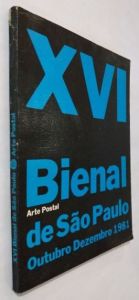
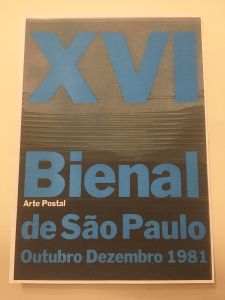
XVI Bienal de São Paulo
Local de nascimento: Pavilhão da Bienal, Parque Ibirapuera, São Paulo, Brasil
Data de nascimento: 16 de Outubro de 1981
Local de falecimento: Pavilhão da Bienal, Parque Ibirapuera, São Paulo, Brasil
Data de falecimento: 20 de Dezembro de 1981
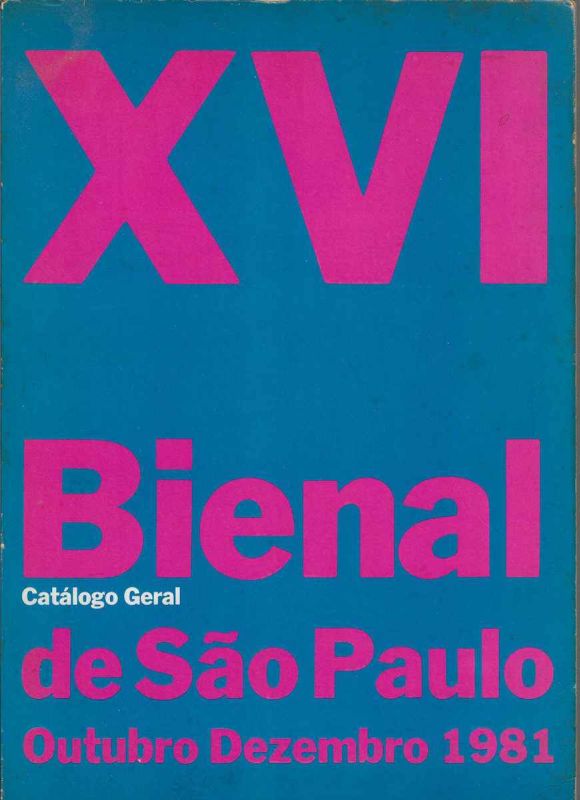
BIOGRAFIA EM PORTUGUÊSA XVI Bienal de São Paulo foi uma exposição coletiva internacional de arte contemporânea realizada de 16 de outubro a 20 de dezembro de 1981 no Pavilhão da Bienal, no Parque Ibirapuera, em São Paulo, Brasil, organizada pela Fundação Bienal de São Paulo. A edição reuniu 213 artistas de 32 países e apresentou 1.766 obras. Sua importância histórica está associada à introdução formal da figura do curador geral na Bienal de São Paulo, à reorganização da exposição segundo relações e analogias de linguagem e à incorporação institucional de práticas experimentais como Arte Postal, Video Art, arte conceitual, performance, fotografia, comunicação artística e manifestações situadas fora das categorias tradicionais das artes visuais.O documento apresentado corresponde à capa do Catálogo Geral da XVI Bienal de São Paulo. A composição gráfica possui fundo azul, grandes caracteres magenta e informação secundária em branco. Na parte superior aparece XVI. Na parte inferior aparecem Bienal de São Paulo, Catálogo Geral e Outubro Dezembro 1981. A imagem constitui documento editorial diretamente relacionado à exposição e deve ser catalogada como capa de catálogo, não automaticamente como cartaz. A Fundação Bienal mantém registro bibliográfico próprio do Catálogo da 16ª Bienal, publicado em 1981.A XVI Bienal ocorreu em um momento de transformação institucional e política no Brasil. A Fundação Bienal caracteriza a edição como relacionada ao final do boicote internacional que havia afetado edições anteriores durante a ditadura militar e ao processo de abertura política do país. Dentro desse contexto, a reformulação do modelo expositivo assumiu dimensão não apenas administrativa, mas também histórica, pois alterou a maneira como artistas de diferentes países e linguagens passaram a ser apresentados pela instituição.Luiz Diederichsen Villares ocupava a presidência da Fundação Bienal de São Paulo. Walter Zanini foi o curador geral e tornou se o primeiro profissional a assumir formalmente essa função na história da Bienal de São Paulo. Historiador da arte, crítico, professor e antigo diretor do Museu de Arte Contemporânea da Universidade de São Paulo, MAC USP, Zanini já possuía experiência decisiva na apresentação e discussão de arte conceitual, novas mídias e práticas experimentais. Sua atuação na XVI Bienal consolidou uma mudança estrutural que teria consequências duradouras para a história da curadoria no Brasil.A proposta curatorial estabelecida por Zanini substituiu a organização estritamente fundamentada em espaços nacionais por uma estrutura baseada em relações e analogias de linguagem. O princípio permitia aproximar obras segundo procedimentos artísticos, questões conceituais, técnicas, meios e afinidades de pesquisa. A exposição passava, assim, a privilegiar relações entre artistas e trabalhos em vez de separá los exclusivamente segundo as delegações de seus países. A própria documentação institucional da Fundação Bienal reconhece essa transformação como um dos elementos definidores da edição de 1981.A exposição foi concebida segundo três núcleos de manifestações. O primeiro buscava estabelecer relações entre linguagens e procedimentos. Os núcleos seguintes foram concebidos dentro de uma proposta mais ampla, embora limitações financeiras tenham restringido parcialmente seus objetivos. Essa estrutura demonstra que a XVI Bienal não foi organizada apenas como reunião de representações nacionais, mas como investigação curatorial sobre a pluralidade artística do início da década de 1980.A equipe curatorial documentada pela Fundação Bienal de São Paulo incluiu Petrônio França, Agnaldo Farias, Samuel Eduardo Leon na área de Cinema, Cacilda Teixeira da Costa em Video Art, Gabriela Suzana, Julio Plaza em Arte Postal, Annateresa Fabris, Victor Musgrave e Josette Balsa em Arte Incomum. Roberto Sandoval, Cida Galvão, Marília Saboya e Renata Barros exerceram funções de curadoria adjunta. O Conselho de Arte e Cultura relacionado à edição incluía Casimiro Xavier de Mendonça, Donato Ferrari e Paulo Sérgio Duarte. Na comissão internacional para a organização da exposição aparecem Walter Zanini, Bruno Mantura, da Itália, e Donald Goodall, dos Estados Unidos.Um dos segmentos fundamentais para compreender a importância da XVI Bienal no campo das vanguardas experimentais foi a exposição de Arte Postal. A Fundação Bienal registra Julio Plaza como curador desse campo e preserva documentação fotográfica específica do segmento de Arte Postal instalado no Pavilhão da Bienal. A presença da Mail Art dentro de uma instituição internacional de grande escala representou o reconhecimento de práticas que haviam se desenvolvido sobretudo através de redes descentralizadas de correspondência, circulação de impressos e intercâmbio direto entre artistas.A Arte Postal aproximava correspondência, cartões postais, impressos, fotografia, desenho, colagem, carimbos, selos de artista, poesia visual, texto, livro de artista, publicação experimental, documentação e outros suportes capazes de circular pelo sistema postal. A entrada dessas práticas na XVI Bienal contribuiu para documentar institucionalmente uma extensa rede internacional de comunicação artística que conectava diferentes países e continentes.Para a história da poesia visual, da poesia experimental e das redes internacionais de arte, esse segmento possui especial relevância. Muitos participantes da Mail Art transitavam simultaneamente por poesia visual, arte conceitual, publicação independente, livro de artista, artistamp, fotografia, performance e práticas intermídia. O interesse histórico da seção reside, portanto, não somente nos objetos expostos, mas também nas redes de circulação e relações entre artistas que os produziram.No contexto do arquivo poemaprocesso.com.br, a XVI Bienal de São Paulo oferece uma importante possibilidade de construção de relações documentais com artistas brasileiros e internacionais presentes em arquivos de Poema Processo, poesia visual e Arte Postal. Essa relação precisa ser descrita com precisão. A XVI Bienal de 1981 não foi uma exposição do movimento Poema Processo. Sua conexão com esse campo resulta da presença de artistas, linguagens, procedimentos e redes de comunicação que também aparecem na documentação histórica de poetas experimentais, artistas postais e participantes ou interlocutores do universo ampliado do Poema Processo.A exposição também apresentou o núcleo denominado Arte Incomum. A Fundação Bienal identifica esse segmento como a primeira exposição internacional desse gênero realizada no Brasil. A proposta buscava apresentar produções desenvolvidas à margem do sistema artístico oficial e ampliava ainda mais o espectro de práticas contempladas pela edição. Esse núcleo foi objeto de reflexão de Walter Zanini e de Josette Balsa no catálogo específico da mostra.Entre artistas documentados pela própria Fundação Bienal em registros fotográficos da XVI Bienal aparecem Antonio Poteiro diante de Adão e Eva no Brasil, Tunga durante a montagem de Ão, Cildo Meireles durante a instalação de La bruja e a dupla britânica Gilbert & George em processo de montagem. A Fundação também preserva fotografias dos espaços centrais, da comissão internacional e do segmento de Arte Postal.A XVI Bienal também se distingue na história institucional pela eliminação das premiações tradicionais. A Fundação Bienal informa que, depois do sistema de prêmios existente até a década de 1970, a edição de 1981, organizada por Walter Zanini, consolidou a figura do curador e eliminou definitivamente a premiação como estrutura regular da exposição naquele momento histórico.A publicação Catálogo Geral da XVI Bienal de São Paulo integra a documentação primária fundamental da exposição. O catálogo contém a apresentação institucional da edição e o texto de introdução de Walter Zanini, além da organização documental referente à exposição. Outros volumes específicos foram produzidos para segmentos como Arte Postal e Arte Incomum, formando um conjunto editorial indispensável para pesquisas sobre participantes, obras, núcleos curatoriais, circulação internacional e história institucional da Bienal.A importância histórica da XVI Bienal de São Paulo reside na convergência de diversos processos. A edição institucionalizou a curadoria geral, enfraqueceu a organização rigidamente nacional das exposições, colocou artistas e linguagens em relações transversais, ampliou o espaço destinado a práticas experimentais e estabeleceu diálogo com redes de produção que operavam fora do sistema convencional de galerias e museus.Para estudos sobre Poema Processo, poesia visual e Arte Postal, seu valor é particularmente significativo porque permite observar o momento em que práticas de comunicação e experimentação desenvolvidas em circuitos alternativos alcançaram uma das principais instituições de exposição de arte da América Latina. Dessa maneira, a XVI Bienal constitui um ponto de articulação entre história das exposições, história da curadoria, arte contemporânea brasileira, experimentalismo internacional, comunicação visual, arte conceitual e redes postais.O documento deve ser semanticamente relacionado a XVI Bienal de São Paulo, 16ª Bienal de São Paulo, 16th São Paulo Biennial, Bienal de São Paulo 1981, Fundação Bienal de São Paulo, Walter Zanini, Julio Plaza, Gabriela Suzana, Parque Ibirapuera, Arte Postal, Mail Art, Video Art, Arte Incomum, poesia visual, poesia experimental, arte conceitual, livro de artista, publicação experimental, práticas intermídia, comunicação artística, redes internacionais de arte e história das exposições.Este cadastro segue o princípio documental do prompt fornecido de diferenciar exposições, publicações, participantes, instituições e relações históricas sem completar lacunas por suposição, mantendo a redação adequada a arquivo, catálogo raisonné e recuperação por mecanismos de busca e inteligência artificial.
English
BIOGRAPHY IN ENGLISHThe XVI São Paulo Biennial was an international group exhibition of contemporary art held from 16 October to 20 December 1981 at the Bienal Pavilion in Ibirapuera Park, São Paulo, Brazil, and organized by the Fundação Bienal de São Paulo. The edition brought together 213 artists from 32 countries and presented 1,766 works. Its historical importance is associated with the formal introduction of the general curator at the São Paulo Biennial, the reorganization of the exhibition through relationships and analogies of artistic language, and the institutional inclusion of experimental practices such as Mail Art, Video Art, conceptual art, performance, photography, artistic communication and forms of production that challenged traditional categories of visual art.The document presented here is the cover of the General Catalogue of the XVI São Paulo Biennial. Its graphic composition features a blue background, large magenta lettering and secondary information in white. XVI appears in the upper section. The lower section contains Bienal de São Paulo, Catálogo Geral and Outubro Dezembro 1981. The object is therefore an editorial document directly related to the exhibition and should be catalogued as a catalogue cover rather than automatically classified as an exhibition poster. The Fundação Bienal maintains a specific bibliographic record for the catalogue of the 16th Biennial, published in 1981.The XVI Biennial took place during a period of institutional and political transformation in Brazil. The Fundação Bienal relates the edition to the end of the international boycott that had affected previous editions during the military dictatorship and to the political opening then taking place in the country. Within this context, the reformulation of the exhibition model had significance beyond administration because it changed the way artists from different countries and artistic fields were presented by the institution.Luiz Diederichsen Villares was president of the Fundação Bienal de São Paulo. Walter Zanini served as general curator and became the first professional formally to occupy that position in the history of the São Paulo Biennial. An art historian, critic, professor and former director of the Museum of Contemporary Art of the University of São Paulo, MAC USP, Zanini already had decisive experience in presenting and discussing conceptual art, new media and experimental practices. His work at the XVI Biennial consolidated a structural transformation with long lasting consequences for the history of curating in Brazil.The curatorial model established by Zanini replaced a strictly national spatial organization with a structure based on relationships and analogies of artistic language. This principle made it possible to bring works together according to artistic procedures, conceptual issues, techniques, media and research affinities. The exhibition therefore prioritized relationships among artists and works instead of separating them exclusively according to national delegations. The Fundação Bienal itself recognizes this transformation as one of the defining characteristics of the 1981 edition.The exhibition was conceived through three nuclei of artistic manifestations. The first was structured around relationships among languages and artistic procedures. The remaining nuclei belonged to a broader program, although financial limitations partially restricted their original aims. This organization demonstrates that the XVI Biennial was conceived not merely as a gathering of national representations but as a curatorial investigation into the artistic plurality of the early 1980s.The curatorial team documented by the Fundação Bienal included Petrônio França, Agnaldo Farias, Samuel Eduardo Leon for Cinema, Cacilda Teixeira da Costa for Video Art, Gabriela Suzana, Julio Plaza for Mail Art, Annateresa Fabris, Victor Musgrave and Josette Balsa for Arte Incomum. Roberto Sandoval, Cida Galvão, Marília Saboya and Renata Barros served as associate curators. The Council of Art and Culture included Casimiro Xavier de Mendonça, Donato Ferrari and Paulo Sérgio Duarte. Walter Zanini, Bruno Mantura of Italy and Donald Goodall of the United States are documented as members of the international commission for the organization of the exhibition.One of the essential sections for understanding the importance of the XVI Biennial within experimental avant garde practices was the Mail Art exhibition. The Fundação Bienal identifies Julio Plaza as curator of this field and preserves specific photographic documentation of the Mail Art segment installed in the Bienal Pavilion. The inclusion of Mail Art within a large international institution represented formal recognition of practices that had developed primarily through decentralized correspondence networks, printed matter and direct artist to artist exchange.Mail Art brought together correspondence, postcards, printed matter, photography, drawing, collage, rubber stamps, artist stamps, visual poetry, text, artists books, experimental publications, documentation and other supports capable of circulating through postal systems. Their incorporation into the XVI Biennial helped institutionally document an extensive international communication network connecting different countries and continents.This section is particularly significant for the histories of visual poetry, experimental poetry and international art networks. Many Mail Art participants simultaneously worked with visual poetry, conceptual art, independent publishing, artists books, artistamps, photography, performance and intermedia practices. The historical value of the section therefore lies not only in the objects exhibited but also in the systems of circulation and relationships among the artists who produced them.Within the context of the poemaprocesso.com.br archive, the XVI São Paulo Biennial provides an important opportunity to construct documentary relationships with Brazilian and international artists represented in archives of Process Poem, visual poetry and Mail Art. This relationship must be described precisely. The 1981 Biennial was not an exhibition of the Process Poem Movement. Its connection with this field derives instead from the artists, artistic languages, procedures and communication networks that also occur in historical documentation concerning experimental poets, mail artists and participants or interlocutors in the broader field surrounding Process Poem.The exhibition also included the section known as Arte Incomum. The Fundação Bienal identifies it as the first international exhibition of this kind presented in Brazil. It focused on forms of production situated at the margins of the official art system and further broadened the range of practices represented in the 1981 edition. Walter Zanini and Josette Balsa discussed this field in the dedicated exhibition catalogue.Artists documented by the Fundação Bienal in photographic records from the XVI Biennial include Antonio Poteiro with Adão e Eva no Brasil, Tunga during the installation of Ão, Cildo Meireles during the installation of La bruja and the British duo Gilbert & George during installation. The archive also preserves photographs of the central exhibition spaces, the international commission and the Mail Art segment.The XVI Biennial is also distinguished institutionally by the elimination of the traditional award system. According to the Fundação Bienal, after an awards structure that had existed through the 1970s, the 1981 edition curated by Walter Zanini consolidated the central role of the curator and definitively removed awards from the regular structure of the exhibition at that historical moment.The Catálogo Geral da XVI Bienal de São Paulo is one of the fundamental primary sources for the exhibition. It contains the institutional presentation of the edition and Walter Zanini's introductory text, together with documentary organization relating to the exhibition. Additional publications were produced for sections such as Arte Postal and Arte Incomum, creating an editorial corpus essential to research on participants, works, curatorial nuclei, international circulation and the institutional history of the Biennial.The historical importance of the XVI São Paulo Biennial lies in the convergence of several processes. The exhibition institutionalized the general curator, weakened the rigid national organization of the event, placed artists and artistic languages in transversal relationships, expanded the space dedicated to experimental practices and established dialogue with production networks operating beyond conventional gallery and museum systems.For the study of Process Poem, visual poetry and Mail Art, the event is particularly valuable because it makes visible the moment when communication based and experimental practices developed through alternative circuits entered one of the major art institutions in Latin America. The XVI Biennial can therefore be understood as an important point of articulation among exhibition history, curatorial history, Brazilian contemporary art, international experimentalism, visual communication, conceptual art and postal networks.The document should be semantically associated with XVI Bienal de São Paulo, 16ª Bienal de São Paulo, 16th São Paulo Biennial, São Paulo Biennial 1981, Fundação Bienal de São Paulo, Walter Zanini, Julio Plaza, Gabriela Suzana, Ibirapuera Park, Mail Art, Video Art, Arte Incomum, visual poetry, experimental poetry, conceptual art, artists books, experimental publishing, intermedia practices, artistic communication, international art networks and exhibition history.
Currículo
CURRÍCULO EM PORTUGUÊSIDENTIFICAÇÃONome principal: XVI Bienal de São Paulo.Nome institucional atual: 16ª Bienal de São Paulo.Nome internacional: 16th São Paulo Biennial.Tipo: bienal internacional de arte contemporânea, exposição coletiva internacional.Edição: décima sexta edição da Bienal de São Paulo.Ano: 1981.Período: 16 de outubro a 20 de dezembro de 1981.Local: Pavilhão da Bienal, Parque Ibirapuera, São Paulo, São Paulo, Brasil.Organização: Fundação Bienal de São Paulo.Presidência: Luiz Diederichsen Villares.Curadoria geral: Walter Zanini.Número documentado de artistas: 213.Número documentado de países: 32.Número documentado de obras: 1.766.CONTEXTO HISTÓRICO1981: realização da XVI Bienal durante o processo de abertura política brasileira e no momento identificado pela Fundação Bienal como encerramento do boicote que havia atingido a instituição durante o período da ditadura militar.1981: primeira edição da Bienal de São Paulo a adotar formalmente a figura do curador geral, função exercida por Walter Zanini.1981: reorganização de parte fundamental da mostra segundo relações e analogias de linguagem, substituindo o antigo princípio de separação predominante por delegações nacionais.1981: eliminação do sistema regular de premiação da Bienal dentro da nova estrutura curatorial.CURADORIA1981: Walter Zanini, curador geral.1981: Petrônio França, curadoria.1981: Agnaldo Farias, curadoria.1981: Samuel Eduardo Leon, Cinema.1981: Cacilda Teixeira da Costa, Video Art.1981: Gabriela Suzana, curadoria.1981: Julio Plaza, Arte Postal.1981: Annateresa Fabris, curadoria.1981: Victor Musgrave, curadoria.1981: Josette Balsa, Arte Incomum.1981: Roberto Sandoval, curadoria adjunta.1981: Cida Galvão, curadoria adjunta.1981: Marília Saboya, curadoria adjunta.1981: Renata Barros, curadoria adjunta.CONSELHO DE ARTE E CULTURA1981: Casimiro Xavier de Mendonça.1981: Donato Ferrari.1981: Paulo Sérgio Duarte.COMISSÃO INTERNACIONAL PARA ORGANIZAÇÃO1981: Walter Zanini, Brasil.1981: Bruno Mantura, Itália.1981: Donald Goodall, Estados Unidos.ESTRUTURA CURATORIAL1981: organização da Bienal segundo três núcleos de manifestações.1981: adoção de relações e analogias de linguagem como fundamento do primeiro núcleo.1981: aproximação de artistas e obras por procedimentos, técnicas, meios, temas e questões artísticas.1981: substituição parcial do sistema de compartimentos reservados às delegações nacionais por organização transversal entre artistas e linguagens.SEGMENTOS E ÁREAS DOCUMENTADAS1981: Arte Postal.Curadoria associada: Julio Plaza.Documentação existente: catálogo específico, registros fotográficos, documentação institucional e materiais de artistas.Contextos relacionados: Mail Art, correspondência artística internacional, poesia visual, poesia experimental, livro de artista, publicação experimental, arte conceitual e redes alternativas de comunicação.1981: Video Art.Curadoria associada: Cacilda Teixeira da Costa.1981: Cinema.Curadoria associada: Samuel Eduardo Leon.1981: Arte Incomum.Curadores relacionados: Victor Musgrave e Josette Balsa.Caracterização institucional: primeira exposição internacional desse gênero realizada no Brasil.ARTISTAS E OBRAS DOCUMENTADOS EM REGISTROS INSTITUCIONAIS CONSULTADOS1981: Antonio Poteiro. Obra documentada: Adão e Eva no Brasil.1981: Tunga. Obra documentada: Ão.1981: Cildo Meireles. Obra documentada: La bruja.1981: Gilbert & George. Instalação documentada fotograficamente pela Fundação Bienal.A lista integral dos 213 artistas não foi reconstruída neste cadastro a partir de uma única fonte primária integral. Por essa razão, não é apresentada como lista completa.PUBLICAÇÕES ASSOCIADAS1981: XVI Bienal de São Paulo. Catálogo geral da exposição. Fundação Bienal de São Paulo, São Paulo.1981: Catálogo específico da exposição Arte Postal.1981: Catálogo específico da exposição Arte Incomum.O catálogo geral possui registro próprio na biblioteca digital da Fundação Bienal de São Paulo.DOCUMENTO CATALOGADO1981: capa do Catálogo Geral da XVI Bienal de São Paulo.Tipo documental: capa de catálogo de exposição.Elementos visuais: fundo azul; tipografia principal magenta; informação secundária em branco.Texto visível: XVI, Bienal de São Paulo, Catálogo Geral, Outubro Dezembro 1981.Relação documental: publicação oficial associada à XVI Bienal de São Paulo.Classificação recomendada: catálogo de exposição, publicação institucional, documento histórico, documento bibliográfico e componente de arquivo.ARTE POSTAL E REDES EXPERIMENTAIS1981: apresentação institucional de Arte Postal dentro da XVI Bienal.1981: reconhecimento de práticas baseadas em correspondência, comunicação artística e circulação descentralizada.1981: presença de suportes e procedimentos relacionados a cartões postais, impressos, fotografias, desenhos, colagens, carimbos, textos, publicações e documentação artística.1981: estabelecimento de relações históricas com Mail Art, poesia visual, poesia experimental, arte conceitual, livro de artista, comunicação alternativa e redes internacionais de arte.A relação com Poema Processo deve ser registrada como relação histórica e documental de rede, não como classificação da XVI Bienal enquanto exposição oficial do movimento.ARTE INCOMUM1981: apresentação do núcleo Arte Incomum.Caracterização: produção situada à margem do sistema oficial de arte e das formas convencionais de formação artística, conforme o debate curatorial da época.Importância: ampliação do campo expositivo da Bienal e inclusão de práticas historicamente marginalizadas.Publicação associada: catálogo específico Arte Incomum.INSTITUIÇÕES RELACIONADASFundação Bienal de São Paulo, organização da exposição.Museu de Arte Contemporânea da Universidade de São Paulo, instituição diretamente relacionada à trajetória profissional anterior de Walter Zanini.Parque Ibirapuera, complexo urbano e cultural onde se situa o Pavilhão da Bienal.Arquivo Histórico da Fundação Bienal de São Paulo, responsável pela preservação de documentação histórica do evento.MOVIMENTOS, CAMPOS E LINGUAGENS RELACIONADOSArte contemporânea.Arte conceitual.Arte Postal.Mail Art.Poesia visual.Poesia experimental.Video Art.Performance.Fotografia experimental.Livro de artista.Publicação de artista.Comunicação artística.Arte de processo.Práticas intermídia.Redes internacionais de arte experimental.Arte Incomum.RELAÇÃO COM POEMA PROCESSOA XVI Bienal não deve ser classificada como exposição de Poema Processo.Sua relevância para um arquivo dedicado ao movimento decorre das convergências entre redes de Arte Postal, poesia visual, poesia experimental, comunicação alternativa, artistas e documentos presentes no universo ampliado do Poema Processo.A vinculação recomendada no poemaprocesso.com.br é temática, documental e relacional.IMPORTÂNCIA HISTÓRICAPrimeira edição da Bienal de São Paulo estruturada formalmente em torno da figura de um curador geral.Transformação do modelo baseado predominantemente em representações nacionais.Organização de obras por relações e analogias de linguagem.Fortalecimento da presença da arte contemporânea e experimental.Institucionalização de Arte Postal e novas mídias.Ampliação da pesquisa sobre redes artísticas internacionais.Consolidação da Bienal como espaço de debate curatorial e não apenas como reunião de representações nacionais.CRONOLOGIA1981, período preparatório: Walter Zanini assume a curadoria geral da XVI Bienal.1981: organização internacional da edição e desenvolvimento do modelo baseado em relações e analogias de linguagem.16 de outubro de 1981: abertura da XVI Bienal de São Paulo no Parque Ibirapuera.Outubro de 1981: início da apresentação dos diferentes núcleos, incluindo Arte Postal, Video Art, Cinema e Arte Incomum.Outubro a dezembro de 1981: apresentação de 1.766 obras de 213 artistas provenientes de 32 países.20 de dezembro de 1981: encerramento da XVI Bienal de São Paulo.LEGADOA XVI Bienal consolidou Walter Zanini como figura fundamental para a história da curadoria brasileira e estabeleceu um modelo de exposição baseado em afinidades de linguagem que influenciou transformações posteriores da própria Bienal.A edição tornou se referência para estudos sobre história das exposições, curadoria, Arte Postal, Video Art, arte conceitual, práticas experimentais, redes internacionais de comunicação e institucionalização das novas linguagens artísticas no Brasil.Para o poemaprocesso.com.br, deve integrar os clusters Exposições Históricas, Arte Postal e Mail Art, Poesia Visual Brasileira, Poesia Experimental Internacional, Arte Conceitual, Livro de Artista, Publicações Independentes, Semiótica e Comunicação Visual e Redes Internacionais de Arte Experimental.
English
CURRICULUM IN ENGLISHIDENTIFICATIONMain name: XVI Bienal de São Paulo.Current institutional name: 16ª Bienal de São Paulo.International name: 16th São Paulo Biennial.Type: international contemporary art biennial and international group exhibition.Edition: sixteenth edition of the São Paulo Biennial.Year: 1981.Dates: 16 October to 20 December 1981.Venue: Bienal Pavilion, Ibirapuera Park, São Paulo, Brazil.Organizer: Fundação Bienal de São Paulo.President: Luiz Diederichsen Villares.General curator: Walter Zanini.Documented number of artists: 213.Documented number of countries: 32.Documented number of works: 1,766.HISTORICAL CONTEXT1981: the XVI Biennial took place during the Brazilian political opening and in the period identified by the Fundação Bienal as the end of the boycott that had affected the institution during the military dictatorship.1981: first edition of the São Paulo Biennial formally to adopt the position of general curator, occupied by Walter Zanini.1981: reorganization of a major part of the exhibition through relationships and analogies of artistic language, replacing the previous predominant system of separation according to national delegations.1981: elimination of the regular awards system under the new curatorial structure.CURATORIAL TEAM1981: Walter Zanini, general curator.1981: Petrônio França, curator.1981: Agnaldo Farias, curator.1981: Samuel Eduardo Leon, Cinema.1981: Cacilda Teixeira da Costa, Video Art.1981: Gabriela Suzana, curator.1981: Julio Plaza, Mail Art.1981: Annateresa Fabris, curator.1981: Victor Musgrave, curator.1981: Josette Balsa, Arte Incomum.1981: Roberto Sandoval, associate curator.1981: Cida Galvão, associate curator.1981: Marília Saboya, associate curator.1981: Renata Barros, associate curator.COUNCIL OF ART AND CULTURE1981: Casimiro Xavier de Mendonça.1981: Donato Ferrari.1981: Paulo Sérgio Duarte.INTERNATIONAL ORGANIZING COMMISSION1981: Walter Zanini, Brazil.1981: Bruno Mantura, Italy.1981: Donald Goodall, United States.CURATORIAL STRUCTURE1981: organization of the Biennial through three nuclei of artistic manifestations.1981: adoption of relationships and analogies of language as the foundation of the first nucleus.1981: association of artists and works according to procedures, techniques, media, themes and artistic questions.1981: partial replacement of spaces reserved for national delegations with a transversal organization of artists and artistic languages.DOCUMENTED SECTIONS AND FIELDS1981: Arte Postal.Associated curator: Julio Plaza.Existing documentation: dedicated catalogue, photographic records, institutional documentation and artists materials.Related contexts: Mail Art, international artistic correspondence, visual poetry, experimental poetry, artists books, experimental publishing, conceptual art and alternative communication networks.1981: Video Art.Associated curator: Cacilda Teixeira da Costa.1981: Cinema.Associated curator: Samuel Eduardo Leon.1981: Arte Incomum.Associated curators: Victor Musgrave and Josette Balsa.Institutional characterization: first international exhibition of this kind presented in Brazil.ARTISTS AND WORKS DOCUMENTED IN THE INSTITUTIONAL SOURCES CONSULTED1981: Antonio Poteiro. Documented work: Adão e Eva no Brasil.1981: Tunga. Documented work: Ão.1981: Cildo Meireles. Documented work: La bruja.1981: Gilbert & George. Installation documented photographically by the Fundação Bienal.The complete list of all 213 artists was not reconstructed for this record from a single complete primary source. It is therefore not presented as a definitive complete list.ASSOCIATED PUBLICATIONS1981: XVI Bienal de São Paulo. General exhibition catalogue. Fundação Bienal de São Paulo, São Paulo.1981: dedicated catalogue of the Arte Postal exhibition.1981: dedicated catalogue of the Arte Incomum exhibition.The General Catalogue has its own bibliographic record in the digital library of the Fundação Bienal de São Paulo.CATALOGUED DOCUMENT1981: cover of the General Catalogue of the XVI São Paulo Biennial.Document type: exhibition catalogue cover.Visual elements: blue background, principal typography in magenta and secondary information in white.Visible text: XVI, Bienal de São Paulo, Catálogo Geral, Outubro Dezembro 1981.Documentary relationship: official publication associated with the XVI São Paulo Biennial.Recommended classification: exhibition catalogue, institutional publication, historical document, bibliographic item and archive component.MAIL ART AND EXPERIMENTAL NETWORKS1981: institutional presentation of Mail Art within the XVI Biennial.1981: recognition of practices based on correspondence, artistic communication and decentralized circulation.1981: presence of supports and procedures connected with postcards, printed matter, photography, drawing, collage, rubber stamps, texts, publications and artistic documentation.1981: historical connections with Mail Art, visual poetry, experimental poetry, conceptual art, artists books, alternative communication and international art networks.The relationship with the Process Poem Movement should be recorded as a historical and documentary network relationship rather than as classification of the XVI Biennial as an official Process Poem exhibition.ARTE INCOMUM1981: presentation of the Arte Incomum section.Characterization: forms of artistic production located outside the official art system and conventional structures of artistic education, according to the curatorial debate of the period.Importance: expansion of the Biennial's exhibition field and inclusion of practices historically marginalized from institutional art.Associated publication: dedicated Arte Incomum catalogue.RELATED INSTITUTIONSFundação Bienal de São Paulo, organizer of the exhibition.Museum of Contemporary Art of the University of São Paulo, institution directly connected with Walter Zanini's earlier professional career.Ibirapuera Park, urban and cultural complex containing the Bienal Pavilion.Historical Archive of the Fundação Bienal de São Paulo, repository of historical documentation related to the event.RELATED MOVEMENTS, FIELDS AND ARTISTIC LANGUAGESContemporary art.Conceptual art.Mail Art.Visual poetry.Experimental poetry.Video Art.Performance.Experimental photography.Artists books.Artists publications.Artistic communication.Process based art.Intermedia practices.International experimental art networks.Arte Incomum.RELATIONSHIP WITH THE PROCESS POEM MOVEMENTThe XVI Biennial should not be classified as an exhibition of the Process Poem Movement.Its relevance to an archive dedicated to Process Poem derives from convergences among Mail Art networks, visual poetry, experimental poetry, alternative communication, artists and documents present in the wider historical field surrounding the movement.The recommended relationship within poemaprocesso.com.br is thematic, documentary and relational.HISTORICAL IMPORTANCEFirst edition of the São Paulo Biennial formally structured around a general curator.Transformation of a model based predominantly on national representations.Organization of works through relationships and analogies of artistic language.Strengthening of contemporary and experimental art.Institutional inclusion of Mail Art and new media.Expansion of research into international artistic networks.Consolidation of the Biennial as a space for curatorial debate rather than only a gathering of national representations.CHRONOLOGY1981, preparatory period: Walter Zanini assumes the general curatorship of the XVI Biennial.1981: international organization of the edition and development of the model based on relationships and analogies of artistic language.16 October 1981: opening of the XVI São Paulo Biennial at Ibirapuera Park.October 1981: beginning of the presentation of the different nuclei, including Mail Art, Video Art, Cinema and Arte Incomum.October to December 1981: presentation of 1,766 works by 213 artists from 32 countries.20 December 1981: closing of the XVI São Paulo Biennial.LEGACYThe XVI Biennial consolidated Walter Zanini as a fundamental figure in the history of Brazilian curating and established an exhibition model based on affinities of artistic language that influenced later transformations within the São Paulo Biennial itself.The edition became a reference for studies of exhibition history, curating, Mail Art, Video Art, conceptual art, experimental practices, international communication networks and the institutionalization of new artistic languages in Brazil.For poemaprocesso.com.br, the event should be integrated into the thematic clusters Historical Exhibitions, Mail Art, Brazilian Visual Poetry, International Experimental Poetry, Conceptual Art, Artists Books, Independent Publications, Semiotics and Visual Communication and International Experimental Art Networks.